Dear friends in Christ,
The Old Testament can feel like a distant country to many readers. Its pages carry ancient names, long family histories, unfamiliar customs, kings and prophets, wilderness journeys, battles, songs, laws, tears, and visions. Some open it with eager faith and soon become overwhelmed. Others wonder why Christians still read writings that seem so far removed from modern life. Still others have heard only fragments: Adam and Eve, Noah’s ark, Moses and the Red Sea, David and Goliath, Jonah and the great fish.
Yet the Old Testament is not merely a collection of ancient stories. It is the sacred beginning of the great story of God’s love. It tells us where we come from, why the human heart is so beautiful and so broken, why the world longs for healing, and how God remains faithful even when His people forget Him.
The Old Testament is the story of God’s covenant love.
A covenant is more than a contract. A contract often depends upon what each person can give or receive. A covenant is a bond of faithfulness. It is a promise of belonging. In Scripture, God does not merely speak commands from a distance. He enters into relationship. He creates humanity in love, calls a people by name, delivers the oppressed, teaches them how to live, corrects them when they wander, and keeps opening a way home.
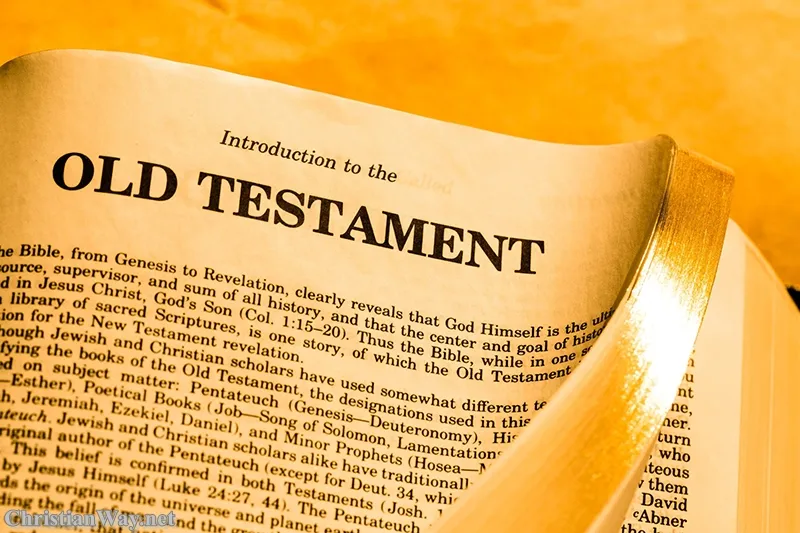
This does not mean that the Old Testament is a story of perfect people meeting a perfect God. It is, in many ways, the opposite. It is filled with people who doubt, fail, become afraid, make poor choices, become proud, forget mercy, and turn away from the One who loves them. Abraham struggles to trust. Jacob deceives. Moses loses patience. David falls into grievous sin. Kings misuse power. The people forget justice. Prophets grow weary. Families become divided. Nations are carried into exile.
And still, God remains faithful.
This is why the Old Testament speaks so deeply to the human heart. It does not offer a false picture of life. It knows the reality of family conflict, suffering, injustice, longing, disappointment, fear, and failure. But it also reveals a God whose mercy is stronger than human weakness.
For Christians, the Old Testament is read in the light of Jesus Christ. Jesus knew these Scriptures, prayed their Psalms, quoted their prophets, and fulfilled their deepest hopes. But Christians should also read the Old Testament with reverence for its own sacred witness and with respect for the Jewish people, whose Scriptures and faith are inseparably bound to these writings. The Old Testament is not a discarded beginning. It is the living testimony of God’s faithfulness, preparing hearts for the fullness of His saving work in Christ.
When we enter its pages slowly, prayerfully, and humbly, we discover that the same God who spoke to Abraham, delivered Israel, comforted the exiles, and called the prophets is still speaking to us. He still calls the fearful into trust. He still hears the cry of the oppressed. He still asks His people to love mercy, do justice, and walk humbly with Him.
Creation Begins With Love, Not Chaos
The Old Testament begins not with human sin, but with God’s goodness.
“In the beginning God created the heaven and the earth” (Genesis 1:1). These opening words are simple, but they carry a depth that no human heart can fully measure. Before there was fear, before there was violence, before there was grief or death, there was God. The world did not begin as a meaningless accident. It began in the creative will of the One who is good.
Again and again in the first chapter of Genesis, God sees what He has made and calls it good. Light is good. The earth is good. The sea is good. Plants, animals, sky, and stars are good. Human life is good.
This truth matters because many people today live as though their lives have no sacred meaning. They may feel like accidents, burdens, failures, or forgotten names in a crowded world. They may measure their worth only by achievement, money, appearance, or the approval of others. But the story of creation speaks another word.
You are created.
You are known.
Your life has dignity.
The world is wounded, but it was made good.
Human beings are created in the image of God. This does not mean that God has a human body like ours. It means that human life carries a special calling: to reflect God’s goodness, to care for creation, to seek truth, to love one another, and to live in communion with God.
The first pages of Genesis also teach that creation is not ours to exploit carelessly. Humanity is given responsibility, not permission for domination without mercy. The earth belongs to God. The waters, animals, forests, fields, and all living creatures belong first to their Creator. The human calling is stewardship: receiving creation with gratitude, tending it wisely, and refusing to treat God’s gifts as though they exist only for selfish gain.
Yet the beauty of creation is soon wounded by sin.
Adam and Eve are given freedom, and with freedom comes the possibility of turning away. Their disobedience is not merely about one forbidden fruit. It is the deeper human temptation to take life into our own hands, to distrust God’s goodness, and to seek wisdom, power, or fulfillment apart from Him.
Sin enters the story as separation.
Humanity hides from God.
People begin to fear one another.
Blame replaces honesty.
The ground itself becomes a place of struggle.
This is still the story of our world. We often hide when we have done wrong. We blame instead of taking responsibility. We fear vulnerability. We reach for control. We long for peace, yet contribute to conflict through pride, selfishness, anger, and indifference.
But even in the sorrow of the fall, God does not abandon humanity. He seeks Adam and Eve. He calls out, “Where art thou?” This question is not asked because God has lost sight of them. It is the voice of God calling frightened people out of hiding.
The same call continues today.
Where are you, beloved child?
Where have you hidden your grief?
Where have you become distant from love?
Where have you allowed fear to rule your heart?
The Old Testament begins with creation, but it also begins with mercy. Even after sin, God continues to seek the human family.
Noah and the Covenant With All Living Things
As the story of Genesis continues, human violence and corruption spread. The world becomes deeply wounded by sin. The account of Noah is difficult and solemn because it reveals that evil is not harmless. What people do to one another matters. Violence matters. Cruelty matters. The choices of the human heart affect not only individuals, but families, communities, and the whole fabric of creation.
Yet after the flood, God makes a covenant with Noah, his family, and every living creature.
This is one of the most beautiful moments in the Old Testament. God places the rainbow in the clouds as a sign of His covenant. He promises never again to destroy all life in the same way. The covenant is not only with one family or one people. It is with “every living creature.”
The rainbow becomes a sign that mercy is greater than destruction.
It reminds us that God’s faithfulness embraces the whole created world. The covenant is wide enough for humanity, animals, waters, and the earth itself. God’s love is not narrow or tribal. His care reaches farther than human imagination.
There are days when the world appears full of violence, division, and despair. News brings stories of war, exploitation, hunger, suffering, and environmental destruction. It is easy to feel that darkness is stronger than goodness. The covenant with Noah stands as a quiet testimony that God has not given up on His creation.
He has not abandoned the earth.
He has not forgotten the vulnerable.
He has not turned away from human brokenness.
The rainbow does not tell us that suffering is unreal. It tells us that God’s mercy remains present even after the storm.
Abraham: Faith Begins With Trusting a Promise
The covenant story becomes more personal in the call of Abraham.
God speaks to a man living in an ordinary place, within an ordinary life, and calls him to leave the familiar behind. “Get thee out of thy country, and from thy kindred, and from thy father’s house, unto a land that I will shew thee” (Genesis 12:1).
Abraham does not receive every detail of the future. He is given a promise.
God promises to bless him, to make of him a great people, and through him to bless all the families of the earth.
This is one of the great themes of the Old Testament: God’s blessing is never meant to end with one person. Abraham is blessed so that blessing may reach others. The covenant is personal, but it is never private. God calls one family so that His mercy may extend outward to the nations.
Abraham’s journey is a journey of faith, but it is not a journey without struggle.
He becomes afraid.
He waits for promises that seem impossible.
He questions how God’s word can be fulfilled.
He and Sarah grow old while still longing for the child they have been promised.
The story of Abraham is comforting because it shows that faith is not always certainty. Faith is often trust carried through uncertainty.
There are many people who know this kind of waiting.
They wait for healing.
They wait for work.
They wait for reconciliation in a family.
They wait for a child to return home.
They wait for clarity about a decision.
They wait for grief to soften.
They wait for prayer to become more than silence.
Abraham teaches us that waiting is not always emptiness. Sometimes it is the hidden place where trust is formed.
God’s promises do not always unfold according to our timetable. Yet the Old Testament repeatedly shows that delay is not abandonment. God remains faithful even when the path is unclear.
The life of Abraham also teaches that faith is not a possession. It is a journey. There are moments of courage and moments of fear. There are moments when we move forward and moments when we wonder whether we have misunderstood everything.
God does not choose Abraham because he is flawless. He chooses him because His grace is generous.
This is good news for every person who feels imperfect, uncertain, or unready. God often begins His greatest work not with the person who feels strong, but with the person willing to take one faithful step.
Jacob, Joseph, and the God Who Works Through Broken Families
The family story of Abraham continues through Isaac, Jacob, and Joseph. These stories are full of blessing, but they are also full of painful human weakness.
Jacob deceives his brother Esau. He manipulates his father. He spends years living with the consequences of his choices. His own sons later deceive him concerning Joseph. The family is marked by rivalry, jealousy, grief, favoritism, and betrayal.
Joseph is sold into slavery by his brothers. He is carried far from home. He suffers injustice and imprisonment. For many years, it appears that his life has been ruined by the cruelty of others.
Yet God does not abandon Joseph.
In time, Joseph is raised to a place where he can preserve life during famine. When he finally meets the brothers who betrayed him, he has the power to punish them. Instead, after great tears and struggle, he speaks words that reveal a heart shaped by grace: “Ye thought evil against me; but God meant it unto good” (Genesis 50:20).
This verse should be handled carefully. It does not mean that evil becomes good. Joseph’s brothers did wrong. Their betrayal was real. The years of pain were real. God does not approve of cruelty simply because He can bring good from it.
But the story reveals something hopeful: evil does not have the final word.
God can work even in broken family stories.
He can bring healing where there has been betrayal.
He can create mercy where resentment has lived for years.
He can give wisdom to those who have suffered.
He can turn wounds into places of compassion.
Many families carry painful histories. There may be old words that were never forgotten, disappointments that were never discussed, siblings divided by resentment, children hurt by parents, parents wounded by children, marriages strained by years of silence.
The story of Joseph does not give easy answers. Reconciliation takes time. Truth must be faced. Tears must be allowed. But it shows that God is able to work where human beings see only ruin.
The covenant love of God is not defeated by complicated families.
Exodus: God Hears the Cry of the Oppressed
The story of Exodus is one of the great declarations of God’s compassion in all of Scripture.
The descendants of Abraham become enslaved in Egypt. Their lives are marked by forced labor, suffering, fear, and the loss of freedom. They cry out under the weight of oppression.
God hears them.
At the burning bush, God says to Moses, “I have surely seen the affliction of my people which are in Egypt, and have heard their cry” (Exodus 3:7).
These words are sacred comfort for every person who has ever felt unseen.
God sees the affliction.
God hears the cry.
God knows the suffering.
The God of the Old Testament is not indifferent to oppression. He does not ask the enslaved merely to accept injustice quietly. He acts. He calls Moses. He confronts Pharaoh. He opens a way through the sea. He leads His people toward freedom.
The Exodus becomes a central memory of Israel’s faith. Again and again, God reminds His people that He brought them out of slavery. This memory is not meant only to make them grateful. It is meant to shape how they treat others.
Because they knew what it was to be strangers, they were called to care for strangers.
Because they knew oppression, they were called to resist oppression.
Because they had received mercy, they were called to show mercy.
This is a profound lesson for Christian life. We cannot truly worship a God who hears the cry of the oppressed while remaining careless about those who suffer around us.
Faith must become compassion.
Prayer must become service.
Worship must become justice.
The story of Exodus also reveals that freedom is not merely escape from something. It is freedom for something. Israel is delivered from slavery so that it may belong to God, worship Him, and become a people shaped by truth, mercy, and holiness.
In our own lives, we may need deliverance from many forms of slavery.
Some are enslaved by fear.
Some by anger.
Some by addiction.
Some by greed.
Some by the need for approval.
Some by resentment.
Some by the belief that their past can never change.
God still calls people out of slavery and into freedom.
The way may not always be easy. Israel enters the wilderness before reaching the promised land. Freedom often includes a journey of learning, healing, trust, and new habits. But God does not lead His people into freedom only to abandon them there.
He travels with them.
Sinai and the Law: A Path of Love and Justice
After the deliverance from Egypt, Israel comes to Mount Sinai. There, God gives the law.
Many modern readers hear the word law and think only of rules, restriction, punishment, or control. But within the Old Testament, the law is given as part of covenant relationship.
God does not give the commandments to a people He has not already loved. He first delivers them. Then He teaches them how to live as a free people.
The Ten Commandments are not a ladder by which people earn God’s love. They are a way of life for people who have already received His mercy.
“Thou shalt have no other gods before me.”
“Thou shalt not kill.”
“Thou shalt not steal.”
“Thou shalt not bear false witness.”
“Honour thy father and thy mother.”
These commandments protect the dignity of God and the dignity of human life. They teach that worship, truthfulness, family, faithfulness, rest, property, and the lives of neighbors matter.
The law reveals that love is not vague.
To love God means refusing idols that take His place.
To love our neighbor means refusing to lie, steal, exploit, betray, or harm.
To honor God means honoring the life He has given.
The Old Testament law also contains commands concerning widows, orphans, strangers, debt, harvests, and care for those in need. God’s people are repeatedly told not to forget the vulnerable.
This is one of the great beauties of the covenant. God is not interested in religious ceremonies that leave the poor behind. He desires a people whose worship becomes mercy.
The prophet Micah later asks what God truly desires and answers with words that have become beloved across Christian history: “What doth the Lord require of thee, but to do justly, and to love mercy, and to walk humbly with thy God?” (Micah 6:8).
This is not a rejection of worship. It is a reminder that worship without justice is empty.
A person may attend church, pray beautifully, and speak often about faith. But if that person is dishonest in work, cruel at home, indifferent to the poor, or eager to exploit others, something has been lost.
The law points toward a life made whole by love.
David, the Psalms, and the Honest Prayer of the Human Heart
The Old Testament tells the story of Israel’s kings, including Saul, David, and Solomon. These stories reveal both the hope and danger of human power.
David is remembered as a king who loved God, wrote songs of prayer, and trusted the Lord in difficult seasons. Yet David also sins deeply. He abuses power, commits adultery, and causes grave harm. The Scriptures do not hide this failure.
This honesty is one reason the Bible is trustworthy. It does not make its heroes flawless. It shows that even the gifted, beloved, and spiritually serious can fall when pride and desire rule the heart.
David’s story also reveals the importance of repentance.
After his sin is brought into the light, David does not excuse himself. He does not blame others. He cries out, “Create in me a clean heart, O God; and renew a right spirit within me” (Psalm 51:10).
This prayer has comforted countless people because it speaks to the heart that knows it has failed.
The Psalm does not say, “Pretend the sin was small.”
It does not say, “Hide from God.”
It says, “Create in me a clean heart.”
Repentance is not merely feeling guilty. It is returning to God and asking Him to remake what has been damaged within us.
The Psalms themselves are among the greatest gifts of the Old Testament. They are prayers for every season of life.
There are Psalms of praise when the heart is full of gratitude.
There are Psalms of lament when sorrow seems overwhelming.
There are Psalms of trust when the future is uncertain.
There are Psalms of repentance when the conscience is burdened.
There are Psalms of anger, fear, loneliness, and longing.
The Psalms teach believers that they do not have to hide their real emotions from God.
A person can say, “How long, O Lord?”
A person can say, “The Lord is my shepherd.”
A person can say, “Out of the depths have I cried unto thee.”
A person can say, “Bless the Lord, O my soul.”
All these prayers belong in a faithful life.
The Old Testament teaches that prayer is not pretending. Prayer is bringing the truth of the heart into the presence of God.
Wisdom for Ordinary Days
The wisdom books of the Old Testament remind us that faith is not only for dramatic moments. It belongs in ordinary life.
Proverbs speaks about work, speech, friendship, generosity, family, honesty, money, discipline, and self-control. It teaches that wisdom is not merely intelligence. A person can be clever and still foolish if pride guides the heart.
“The fear of the Lord is the beginning of wisdom” (Proverbs 9:10). This does not mean terror before God. It means reverence, humility, and the recognition that life is not centered on ourselves.
Wisdom begins when we stop imagining that we are self-sufficient.
It begins when we learn to listen.
It begins when we recognize that words can heal or wound.
It begins when we choose patience over quick anger.
It begins when we value integrity over short-term gain.
The Book of Ecclesiastes speaks to another kind of human longing. It looks honestly at success, wealth, pleasure, work, and achievement and asks whether any of these can finally satisfy the soul.
Its answer is sobering. Human beings may gain much and still feel empty. We may chase after recognition, possessions, and control, only to discover that these things cannot hold the weight of our deepest longing.
Ecclesiastes is not a book of despair. It is a book that clears away illusions. It tells us that life is a gift, not a possession. It teaches gratitude for simple things: food, work, companionship, the beauty of a day received from God.
Job speaks to suffering. It asks one of the oldest and deepest questions of the human heart: why do people suffer, especially when they have tried to live faithfully?
Job’s friends offer quick explanations, but they do not comfort him. Their speeches remind us that we should be careful when speaking to someone in pain. Not every sorrow has an explanation we can see. Not every hardship is punishment. Not every grieving heart needs advice.
Sometimes the most faithful response is to sit beside another person in silence.
The Book of Job teaches humility. God is greater than our explanations. Yet He is not absent from suffering. He hears Job’s cry. He does not condemn Job for asking hard questions. He meets him.
For every person who has wondered why life is painful, Job offers companionship. The Old Testament makes room for honest questions before God.
The Prophets: God’s Voice for Justice, Mercy, and Hope
The prophets are among the most powerful voices in the Old Testament.
They speak into times of corruption, idolatry, injustice, war, and spiritual decline. They call people back to God, but they also call them back to compassion.
Isaiah speaks of a God who desires justice and mercy.
Amos condemns those who worship while ignoring the poor.
Jeremiah weeps over a people who have forgotten the covenant.
Ezekiel speaks hope to those in exile.
Hosea reveals God’s faithfulness through the painful image of wounded love.
The prophets refuse to let religion become an excuse for selfishness.
Through Isaiah, God says, “Learn to do well; seek judgment, relieve the oppressed, judge the fatherless, plead for the widow” (Isaiah 1:17).
Through Amos, God calls for justice to “run down as waters, and righteousness as a mighty stream” (Amos 5:24).
These words remain urgent today.
A faith that does not care about the poor, the oppressed, the lonely, and the vulnerable has forgotten the heart of the covenant.
A faith that knows how to sing but does not know how to show mercy has become hollow.
A faith that speaks of holiness while tolerating dishonesty, exploitation, or cruelty has lost sight of God.
The prophets also bring hope.
They speak of a day when swords will be beaten into plowshares.
They speak of hearts made new.
They speak of dry bones receiving life.
They speak of a servant who will bear the sorrows of many.
They speak of a shepherd who will gather the scattered.
They speak of God writing His law upon the heart.
This prophetic hope becomes especially precious in seasons of darkness. The prophets do not deny the seriousness of sin or the pain of judgment. But they insist that God’s final purpose is not abandonment.
God disciplines in order to heal.
God calls in order to restore.
God judges in order to bring truth into the light.
The covenant love of God never becomes sentimental, but neither does it become hopeless.
Exile and the God Who Stays With His People
One of the most painful chapters of the Old Testament is the exile.
Because of generations of injustice, idolatry, violence, and unfaithfulness, Jerusalem falls and many people are carried away into Babylon. The temple is destroyed. The land is lost. The people feel as though everything that once gave them identity has been taken away.
Exile is more than a historical event. It is also a spiritual experience that many people understand.
A person can feel exiled after losing a loved one.
A family can feel exiled after moving far from home.
A person can feel exiled in illness, unemployment, loneliness, or grief.
Someone may sit in a familiar house and still feel far from everything that once felt safe.
The exiles asked whether God had forgotten them.
Through the prophet Jeremiah, God speaks words of hope: “I know the thoughts that I think toward you… thoughts of peace, and not of evil, to give you an expected end” (Jeremiah 29:11).
These words are often quoted quickly, but they were first spoken to a people living in displacement and uncertainty. God did not promise immediate escape from every difficulty. He promised that exile would not be the end of the story.
The prophet Ezekiel sees a valley full of dry bones and hears God ask, “Can these bones live?” The vision becomes a promise that God can breathe life into what seems dead.
This does not only speak to nations. It speaks to hearts.
Can hope return after grief?
Can trust return after betrayal?
Can prayer return after years of spiritual dryness?
Can a family find healing after conflict?
Can someone who feels empty become alive again?
The Old Testament does not always answer these questions quickly. But it teaches us to place them before God.
The God of covenant love is not only present in the temple, the celebration, or the place where life is easy. He remains with His people in exile.
The Old Testament and the Coming of Christ
For Christians, the Old Testament reaches toward Jesus Christ.
Jesus is not a stranger who appears without history. He is born within the story of Israel. He is the Son of David. He is the fulfillment of God’s promise to Abraham that all nations would be blessed. He is the true Passover Lamb. He is the Good Shepherd promised by the prophets. He is the One in whom the hopes of Scripture find their fulfillment.
Yet Christians should be careful not to speak as though the Old Testament has no value apart from quick references to Jesus. It is a sacred witness in its own right. It teaches us the holiness of God, the dignity of creation, the pain of sin, the meaning of covenant, the cry for justice, the beauty of prayer, and the hope of redemption.
Jesus Himself reads these Scriptures.
He prays the Psalms.
He speaks the words of Deuteronomy in the wilderness.
He reads Isaiah in the synagogue.
He weeps over Jerusalem.
He celebrates the Passover.
He fulfills the law not by abolishing God’s purposes, but by bringing them to their fullness in love.
The Old Testament prepares the heart to understand Christ.
Without Genesis, we cannot fully understand why creation matters.
Without Exodus, we cannot fully understand deliverance.
Without the Psalms, we cannot fully understand Jesus’ prayers and His cry from the cross.
Without the prophets, we cannot fully understand His call to justice, mercy, repentance, and hope.
Without the covenant with Abraham, we cannot fully understand the blessing intended for all nations.
The Old Testament is a path that leads us toward Christ, but it also teaches us how to remain faithful in the ordinary struggles of life.
Living the Covenant Love of God Today
The Old Testament is not a distant record of people long ago. It is a mirror for the human heart.
We recognize ourselves in Abraham’s waiting.
We recognize ourselves in Jacob’s conflict.
We recognize ourselves in Joseph’s tears.
We recognize ourselves in Moses’ fear.
We recognize ourselves in David’s repentance.
We recognize ourselves in Job’s questions.
We recognize ourselves in the Psalms’ cries.
We recognize ourselves in the exiles’ longing for home.
And we are invited to recognize God’s faithfulness in every part of our own story.
To live in covenant love today means remembering that faith is not merely private belief.
It means caring for the stranger.
It means speaking truthfully.
It means refusing to exploit others.
It means protecting the vulnerable.
It means honoring marriage and family life with patience and fidelity.
It means bringing our failures into the light rather than hiding from God.
It means receiving ordinary work as an opportunity for integrity.
It means praying honestly when the heart is tired.
It means trusting that God remains near even when life feels like exile.
The Old Testament repeatedly teaches that God’s people are called to remember.
Remember that God created you.
Remember that God has carried you.
Remember that you were once in need of mercy.
Remember that the poor and vulnerable matter.
Remember that freedom is a gift.
Remember that your life belongs to God.
Memory is holy because it protects the heart from pride. When we remember where we have been, we become more humble. When we remember the mercy we have received, we become more willing to show mercy to others.
Reflect and Pray
The Old Testament is the story of God’s covenant love.
It begins with a world created in goodness.
It tells of human beings who turn away, hide, struggle, and fail.
It reveals a God who does not abandon His creation.
He calls Abraham into trust.
He hears the cry of the enslaved.
He gives His people a path of justice and mercy.
He receives the repentant.
He speaks through prophets.
He stays with His people in exile.
He keeps alive the hope of redemption.
For Christians, the Old Testament prepares the way for Jesus Christ, in whom God’s covenant love is revealed in its fullest light. But its message remains deeply personal for every believer today.
God still sees those who feel forgotten.
God still hears those who cry out.
God still calls the wandering heart home.
God still brings hope into places of exile.
God still asks His people to do justice, love mercy, and walk humbly with Him.
Wherever you are today—whether you are waiting like Abraham, grieving like David, questioning like Job, longing for freedom like Israel, or searching for home in a difficult season—God has not forgotten you.
His covenant love remains.
Let us pray:
Faithful God,
You created the world in love
and never abandoned Your people
when they wandered far from You.
Teach us to trust You in seasons of waiting,
to seek justice when others are harmed,
to show mercy because we have received mercy,
and to return to You whenever we lose our way.
Comfort those who feel exiled or forgotten.
Strengthen those who carry hidden burdens.
Give hope to those whose hearts feel dry and weary.
Make us people who remember Your goodness
and reflect Your covenant love in our homes,
our work, our churches, and our daily lives.
Through Jesus Christ,
the fulfillment of Your promise
and the light of the world. Amen.
— Fr. John Matthew