Dear friends in Christ,
There are moments in every human life when the heart grows quiet enough to ask its deepest questions. We may ask them in the middle of sorrow, after a painful failure, beside a hospital bed, in the silence of an early morning, or in the restless hours when sleep will not come. Does God truly see me? Does He know the weight I carry? Is His love real when life is difficult? Can I still be forgiven? Is there hope beyond the fear, confusion, and brokenness that so often seem to surround us?
The Christian faith answers these questions not first with an idea, a rule, or a philosophy. It answers with a person: Jesus Christ.
To look upon Jesus is to see the heart of God turned toward humanity. In Him, God does not remain distant from our tears. He does not speak only from the heights of heaven while the world struggles below. He comes near. He enters our history, our weakness, our hunger, our grief, our fear, and even our death. He walks among the poor, touches those others avoid, receives the sinner, comforts the grieving, speaks truth to the proud, and gives His life for the world.
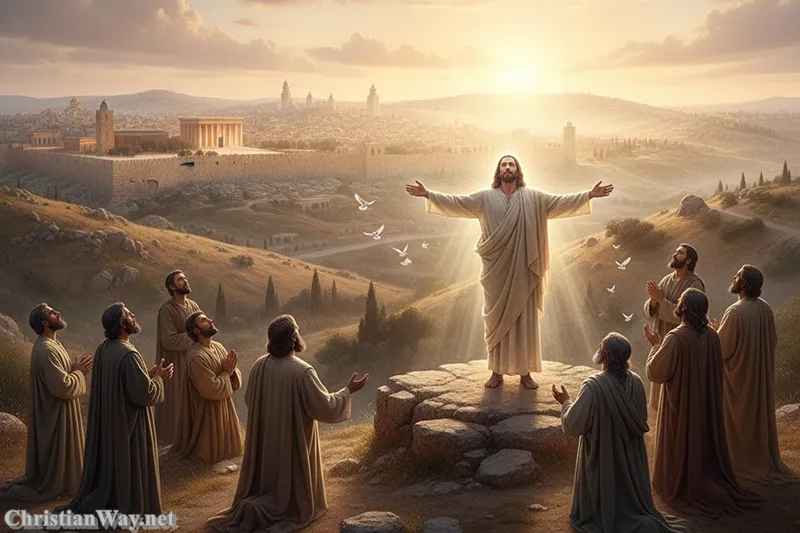
The Lord Jesus Christ is the living face of God’s love because in Him we see that God is not indifferent to human pain. He sees. He knows. He comes. He saves.
This is not merely a beautiful thought for religious moments. It is the center of Christian hope. When we do not know how to pray, we can look to Jesus. When we feel ashamed of our past, we can look to Jesus. When we are tired of trying to carry life by our own strength, we can look to Jesus. When the world seems harsh and the future uncertain, we can look to Jesus.
The Gospel does not tell us that every sorrow will disappear immediately. It does not promise that faithful people will never face illness, loss, betrayal, disappointment, or death. But it tells us something deeper: no sorrow is untouched by the presence of Christ. No darkness is beyond His light. No sinner is beyond His mercy. No human heart is too far away for His love to reach.
The Human Heart Longs to See God
Every human being, whether conscious of it or not, carries a longing for God.
Sometimes this longing appears as a desire for peace. Sometimes it appears as a restless search for success, approval, wealth, pleasure, knowledge, or control. We may spend years trying to fill an emptiness that no achievement can fully satisfy. We may think that another promotion, another possession, another relationship, or another beginning will finally bring rest to the soul.
Yet the heart remains hungry.
This hunger is not a weakness. It is a sign that we were made for more than temporary things. We were created not only to survive, but to know and love God. The deepest ache within us is often the soul’s quiet longing to return to the One from whom life came.
The Psalmist expresses this longing with simple beauty: “As the hart panteth after the water brooks, so panteth my soul after thee, O God” (Psalm 42:1). This is the cry of a heart that knows it cannot live on distractions forever. It needs living water.
Many people today are exhausted not only because they work hard, but because they carry too much alone. They carry anxiety about money, family, health, work, children, parents, relationships, and the future. They scroll through endless messages yet feel unseen. They meet many people yet remain lonely. They have more information than any generation before them, yet still struggle to know what is true, what is good, and what truly matters.
Into this weariness, Jesus speaks.
He says, “Come unto me, all ye that labour and are heavy laden, and I will give you rest” (Matthew 11:28).
Notice what He does not say. He does not say, “Come to me only when you have solved every problem.” He does not say, “Come when you are strong enough, holy enough, calm enough, or worthy enough.” He says, “Come unto me.”
This invitation is for the tired mother who feels she has nothing left to give. It is for the father who worries silently about providing for his family. It is for the young person who fears making the wrong choice. It is for the elderly person who feels forgotten. It is for the person who has sinned deeply and wonders whether forgiveness is still possible.
Jesus does not turn away from the weary. He receives them.
Jesus Reveals the Heart of the Father
One of the most beautiful truths in the Gospels is that Jesus does not merely speak about God. He reveals God.
When Philip said to Jesus, “Lord, shew us the Father,” Jesus answered, “He that hath seen me hath seen the Father” (John 14:9). These words are so profound that we can spend a lifetime pondering them.
To see Jesus welcome children is to see the tenderness of the Father.
To see Jesus weep at the tomb of Lazarus is to see that God is not cold before human grief.
To see Jesus forgive the woman caught in sin is to see the mercy of God.
To see Jesus touch the leper is to see that God is not repelled by our woundedness.
To see Jesus wash the feet of His disciples is to see the humility of God.
To see Jesus carry the cross is to see love that does not abandon us when the cost becomes great.
The Lord Jesus Christ is the living face of God’s love because His whole life reveals the character of the Father. God is holy, but His holiness is not harshness. God is just, but His justice is not cruelty. God is truthful, but His truth is not meant to crush the sinner. God is love, and this love reaches toward humanity with a strength deeper than our fear.
Jesus did not come to make people comfortable in sin. He called people to repentance. He told the truth. He exposed hypocrisy. He warned against pride, greed, hardness of heart, and religious show. But His truth was always joined to mercy.
When He met Zacchaeus, a man known for dishonesty and exploitation, He did not begin by humiliating him. Jesus entered his home. He gave him dignity before the crowd. And the grace of that encounter changed Zacchaeus from within. He responded by promising to give to the poor and make restitution for the wrong he had done.
This is how Christ transforms the heart. He does not excuse sin, but He does not reduce a person to sin either. He sees what is broken, speaks truth, offers mercy, and calls the person into a new life.
So many people believe that God looks at them only with disappointment. They imagine Him standing at a distance, waiting to accuse them. But Jesus shows us another way.
He is the shepherd who searches for the lost sheep.
He is the father who runs toward the returning son.
He is the physician who comes for the sick.
He is the friend who stays near when others leave.
The Word Made Flesh
The mystery of Jesus Christ begins before Bethlehem. Christians confess that He is the eternal Word of God, through whom all things were made.
The Gospel of John begins with these solemn words: “In the beginning was the Word, and the Word was with God, and the Word was God” (John 1:1). Then John gives us the astonishing message of the Christian faith: “And the Word was made flesh, and dwelt among us” (John 1:14).
God became human.
The Creator entered creation.
The One who formed the stars knew the darkness of a Bethlehem night.
The One who gives breath to every living thing breathed the air of this world.
The One who sustains all things allowed Himself to be held in the arms of His mother.
The mystery is too great for human language to fully contain. Yet it tells us something deeply personal: God has not rejected the human world.
Sometimes people imagine spirituality as an escape from ordinary life. They think faith is only about leaving behind the body, work, family, food, tears, weakness, and daily responsibility. But Jesus Christ shows us that God has entered the real world.
He sanctified ordinary life by living it.
He knew the hidden years of family life in Nazareth.
He worked with His hands.
He shared meals.
He walked dusty roads.
He rested when tired.
He felt compassion for crowds.
He attended weddings.
He sat beside wells.
He spoke with strangers.
He wept with friends.
This means that no part of your life is too ordinary for God.
Your kitchen can become a place of prayer.
Your work can become an offering.
Your patience with a difficult child can become an act of love.
Your care for an aging parent can become a quiet ministry.
Your honest labor can become worship.
Your tears can become prayer when you have no words left.
Jesus did not come only for the moments we call “religious.” He came for the whole human life.
He came for the body and the soul.
He came for the home and the workplace.
He came for the joyful and the grieving.
He came for the person who feels strong and for the person who barely knows how to go on.
Jesus Draws Near to the Wounded
One of the clearest signs of God’s love in the Gospels is the way Jesus responds to wounded people.
He does not keep His distance from those society has cast aside. He moves toward them.
He touches the leper.
He speaks with the Samaritan woman.
He eats with tax collectors.
He heals the blind beggar.
He receives the sinful woman who washes His feet with tears.
He notices the widow who gives two small coins.
He stops for the woman who has suffered for years.
He calls the dead man Lazarus from the tomb.
Again and again, Jesus sees the person others have overlooked.
This matters because many people carry wounds that no one else can see.
Some carry wounds from childhood.
Some carry the memory of betrayal.
Some live with shame over choices they regret.
Some feel lonely in a crowded home.
Some appear successful but are deeply afraid.
Some are exhausted by caring for everyone else.
Some smile in public and weep in private.
Christ sees these hidden places.
The Gospels show us that Jesus never treats suffering as an inconvenience. He does not rush past the hurting person to reach a more important destination. He stops. He listens. He asks. He touches. He speaks.
When Jesus meets Bartimaeus, the blind man by the roadside, He asks him, “What wilt thou that I should do unto thee?” (Mark 10:51). It may seem obvious what Bartimaeus needs. Yet Jesus still asks.
There is tenderness in this question. Jesus does not assume. He invites the wounded man to speak his longing.
Perhaps He asks us the same question.
What do you want Me to do for you?
Do you want healing?
Do you want courage?
Do you want freedom from bitterness?
Do you want peace in your home?
Do you want the strength to forgive?
Do you want the grace to begin again?
Sometimes we are so used to carrying pain that we no longer know how to bring it before God. We learn to survive, to stay busy, to hide our tears, to tell ourselves that nothing can change. But Christ invites us to speak honestly.
Prayer is not pretending to be strong before God. Prayer is bringing the truth of our heart into His presence.
The Cross: Love That Does Not Turn Away
The cross stands at the center of Christian faith because it reveals the depth of God’s love.
It is easy to speak about love when life is peaceful. It is harder to love when love requires sacrifice, patience, forgiveness, courage, or suffering. The cross shows us that God’s love is not shallow sentiment. It is self-giving.
Jesus knew that the road to Calvary would be painful. He knew the betrayal of Judas. He knew the fear of the disciples. He knew the cruelty of those who condemned Him. He knew the physical suffering of the cross. Yet He did not turn away.
This does not mean that suffering itself is good. Christianity never asks us to call evil good or injustice beautiful. The cross reveals the seriousness of sin, violence, betrayal, and human cruelty. It shows what happens when fear, power, hatred, and pride are allowed to rule the heart.
But the cross also reveals something greater: love is stronger than hatred.
Jesus does not answer violence with violence.
He does not answer mockery with mockery.
He does not answer betrayal with revenge.
Even from the cross, He prays, “Father, forgive them; for they know not what they do” (Luke 23:34).
These words do not make evil unimportant. They reveal the mercy of God even in the face of evil.
The cross tells us that there is no place of suffering where Christ has not gone before us.
When you feel abandoned, Christ knows abandonment.
When you feel misunderstood, Christ knows misunderstanding.
When you feel betrayed, Christ knows betrayal.
When you carry grief, Christ knows grief.
When you face death, Christ has entered death.
This does not remove every question. Sometimes we still ask why suffering has come. Sometimes we do not receive an explanation. But we are not left alone in the darkness.
The cross tells us that God is present there.
The Lord Jesus Christ is the living face of God’s love because He does not save humanity from a safe distance. He gives Himself.
The Resurrection: Love Stronger Than Death
If the cross were the end of the story, Christianity would be only a beautiful tragedy. But the Gospel proclaims that the cross is not the end.
Jesus Christ rose from the dead.
The resurrection does not mean that suffering never happened. The risen Christ still bears the wounds of the cross. His resurrection does not erase Good Friday. It transforms it.
This is important for every person who has known grief.
God does not ask us to pretend that loss does not hurt.
He does not tell us to smile when our hearts are breaking.
He does not shame us for tears.
Jesus Himself wept at the tomb of Lazarus, even though He knew resurrection was coming.
The resurrection teaches us that death is real, but it is not final.
Sin is real, but it is not final.
Failure is real, but it is not final.
Grief is real, but it is not final.
The risen Christ meets His disciples not as people who have been brave and faithful, but as people who have failed Him. Peter denied Him. The disciples fled. Thomas doubted. Yet Jesus comes to them with peace.
“Peace be unto you,” He says (John 20:19).
This peace is not merely the absence of conflict. It is the gift of Christ’s presence. It is the peace that enters a frightened room and says, “You are not abandoned.”
The resurrection also gives courage for daily life. It tells us that the future belongs not to death, fear, injustice, or despair, but to God.
There are many forms of death before physical death. A dream may die. A relationship may break. A season of life may end. A person may lose confidence, health, work, or a sense of direction. In these places, the resurrection speaks quietly: God can bring new life where we see only an ending.
This does not mean every story turns out as we desire. But it means no faithful act of love is wasted. No prayer is forgotten. No hidden sacrifice is unseen. No tear offered to God disappears into emptiness.
The resurrection is the promise that Christ is still at work.
Jesus Calls Us Into a New Way of Living
To believe in Jesus is not only to admire Him. It is to follow Him.
Following Christ does not mean becoming perfect overnight. It means allowing His life to shape ours, little by little. It means learning to see others as He sees them. It means learning to forgive, to speak truthfully, to serve quietly, to resist cruelty, to care for the weak, and to trust God when the path is unclear.
Jesus says, “If any man will come after me, let him deny himself, and take up his cross daily, and follow me” (Luke 9:23).
These words can sound difficult, and they are. But Christ does not call us to carry the cross alone. He walks with us.
To take up the cross daily is not to seek suffering for its own sake. It is to choose love when selfishness would be easier. It is to choose truth when dishonesty would bring advantage. It is to choose forgiveness when resentment feels more natural. It is to remain faithful in ordinary duties when no one notices.
A cross may look like caring for a sick family member with patience.
It may look like refusing to speak harshly when anger rises.
It may look like apologizing first.
It may look like choosing honesty in business.
It may look like staying close to someone who is grieving.
It may look like giving time to a lonely neighbor.
It may look like resisting the temptation to define yourself by wealth, status, praise, or success.
The Christian life is not a life of escape from the world. It is a life of love within the world.
Christ calls us not only to believe in Him, but to become His hands and feet for others.
The Church as the Body of Christ
Jesus Christ calls people into communion. Christianity is not meant to be lived in isolation.
The Church is not simply a building, a weekly event, or a religious organization. At its deepest, the Church is the Body of Christ: people gathered by grace, nourished by prayer, formed by Scripture, strengthened by worship, and sent into the world to love.
Saint Paul writes, “Now ye are the body of Christ, and members in particular” (1 Corinthians 12:27).
This means that every believer has a place.
Not everyone has the same gifts.
Not everyone has the same calling.
Not everyone speaks, teaches, leads, sings, or serves in the same way.
But every person matters.
The quiet person who prays faithfully matters.
The child learning the Lord’s Prayer matters.
The elderly believer who encourages others matters.
The person who prepares food for a grieving family matters.
The volunteer who visits the sick matters.
The teacher who helps children understand the Gospel matters.
The person who welcomes a stranger at the church door matters.
The Church is most beautiful when it becomes a place where people are seen, known, forgiven, and loved.
It should not become a place of competition, gossip, pride, or exclusion. It should not become a place where the strong are admired and the wounded are ignored. The Church belongs to Christ, and Christ came especially near to those who were poor, sick, outcast, burdened, and afraid.
Every Christian tradition has different forms of worship and ministry. Some gather around the Mass. Some celebrate the Divine Liturgy. Some worship through the Book of Common Prayer. Some gather for Bible preaching, hymns, and fellowship. Yet every church is called to point beyond itself to Jesus.
The Church is faithful when it helps people meet Christ.
Christ Meets Us in Ordinary Days
It is easy to think of Jesus only in great moments: at Christmas, Easter, a baptism, a wedding, a funeral, a retreat, or a time of crisis. But the living Christ meets us in ordinary days.
He meets us in the first quiet prayer of the morning.
He meets us in the patience we offer at home.
He meets us in the difficult conversation we do not avoid.
He meets us in the meal shared with gratitude.
He meets us in the person who needs our help.
He meets us in the forgiveness we offer after being hurt.
He meets us in the courage to begin again after failure.
Sometimes people wait for a dramatic spiritual experience before they believe God is near. But much of the Christian life is formed slowly and quietly.
It is formed when we open the Bible even when we do not feel inspired.
It is formed when we pray even when words come slowly.
It is formed when we go to worship even when our hearts are tired.
It is formed when we choose kindness in small moments.
It is formed when we remember that Christ is present in the person before us.
The Lord Jesus Christ is the living face of God’s love not only in the great miracles of the Gospel, but also in the hidden grace that sustains us day after day.
A mother who wakes in the night to comfort a child reflects something of Christ’s tenderness.
A father who works honestly and returns home with patience reflects something of Christ’s faithfulness.
A friend who sits quietly beside someone in grief reflects something of Christ’s compassion.
A person who chooses not to retaliate reflects something of Christ’s mercy.
A believer who prays for an enemy reflects something of Christ’s cross.
These acts may seem small, but they are not small in the Kingdom of God.
The Mercy of Christ for Those Who Have Failed
There are many people who believe they have gone too far from God.
They may carry guilt from a broken relationship, a dishonest choice, a bitter word, an addiction, a betrayal, an abortion, a refusal to forgive, a season of anger, or years of spiritual neglect. They may feel that everyone else belongs in church except them. They may believe that God can forgive others, but not them.
The Gospels tell a different story.
Jesus called Peter even though Peter would deny Him.
Jesus received Thomas even though Thomas doubted.
Jesus forgave the thief on the cross.
Jesus restored Peter after the resurrection.
Jesus welcomed the woman who had lived in shame.
Jesus told stories about lost sheep, lost coins, and lost sons because He wanted people to know the heart of God.
The Father rejoices when the lost return.
This does not make sin unimportant. Sin wounds us. It wounds others. It can leave deep consequences. Repentance is real. Healing may take time. Trust may need to be rebuilt.
But mercy is real too.
The love of Christ is not permission to remain in darkness. It is the light that helps us step out of darkness.
Perhaps today the most honest prayer you can offer is simply this:
“Lord Jesus Christ, have mercy on me.”
That prayer is enough to begin.
You do not need perfect words. You do not need to explain everything. You do not need to make yourself worthy before coming to Him.
Come as you are.
Bring the truth.
Bring the fear.
Bring the regret.
Bring the questions.
Bring the tears.
Christ already knows. And He does not turn away.
Reflect and Pray
The Lord Jesus Christ is the living face of God’s love.
In Him, we see that God has not forgotten humanity. He has come near.
In Him, we see mercy for the sinner, comfort for the grieving, welcome for the outcast, healing for the wounded, truth for the confused, and hope for those who fear that death or darkness will have the final word.
Jesus Christ is the Word made flesh.
He is the Good Shepherd.
He is the Lamb of God.
He is the Bread of Life.
He is the Light of the World.
He is the Way, the Truth, and the Life.
He is the One who carried the cross for us and rose again in glory.
When life is peaceful, may we remember to thank Him.
When life is difficult, may we remember to turn toward Him.
When we have failed, may we remember that mercy is still open.
When we feel alone, may we remember that He is near.
When the future is uncertain, may we remember that His love remains faithful.
Let us pray:
Lord Jesus Christ,
Living face of the Father’s love,
draw near to every weary and wounded heart.
Bring peace to those who are afraid,
forgiveness to those who carry guilt,
comfort to those who grieve,
and courage to those who feel weak.
Teach us to trust You in ordinary days,
to follow You when the road is difficult,
and to love others with the mercy
that You have shown to us.
May Your light guide our steps,
Your cross heal our wounds,
and Your resurrection fill us with hope.
Amen.
— Fr. John Matthew