Dear friends in Christ,
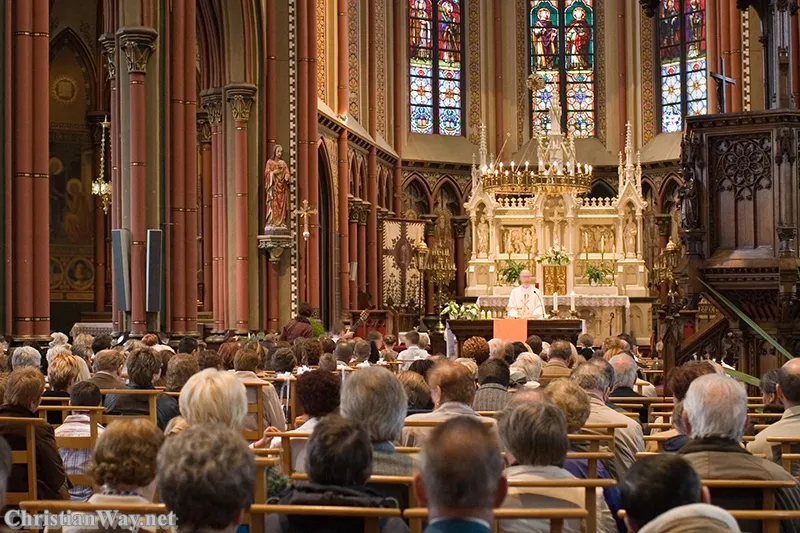
When people hear the word Church, they may first think of a building with stained-glass windows, a congregation gathered on Sunday morning, a priest or pastor speaking from a pulpit, or perhaps a familiar sound of bells calling people to prayer. These images are meaningful, for the Church is indeed seen in places of worship, in communities of believers, and in the shared life of prayer. Yet the Christian understanding of the Church reaches much deeper than any building, institution, or human organization.
The Church in Christianity is the people called by God, gathered around Jesus Christ, and sent into the world as witnesses of His love. It is the community of those who have received the Gospel, been drawn into faith, and are learning to live as disciples of the risen Lord. The Church is not perfect because its members are perfect. It is holy because Christ is holy, and because He continues to dwell among His people by His grace.
To speak about the Church is to speak about belonging. Every human heart longs for a place where it is known, welcomed, forgiven, and loved. Many people spend years searching for such a home. They seek it in family, friendship, work, success, or community. These are good gifts, yet the deepest home of the human soul is found in God. The Church exists to gather people into that home: not merely into a religious gathering, but into communion with the Father, the Son, and the Holy Spirit.
The Church has endured through centuries of joy and sorrow, holiness and failure, persecution and renewal. It has carried the Gospel across cultures, languages, and generations. It has built hospitals, cared for the poor, taught children, comforted the dying, defended the dignity of the forgotten, and proclaimed the name of Jesus Christ in places where hope seemed to have disappeared. Yet it has also known division, misunderstanding, and the painful reality that Christians have not always lived according to the love they profess.
To understand the Church rightly, we must look beyond both idealized images and harsh disappointments. We must look to Christ Himself. The Church is not finally the possession of any one nation, tradition, leader, or generation. It belongs to Jesus Christ. He is its Lord, its foundation, its shepherd, and its hope. In Him, the Church becomes what Scripture calls “the body of Christ,” alive in the world and called to reveal His mercy.
The Church Begins with the Call of Jesus
The Church did not begin as a human project created by people who wished to form a religious movement. It began with the call of Jesus Christ. Throughout the Gospels, Jesus calls ordinary men and women to follow Him. He calls fishermen beside the sea, tax collectors sitting at their tables, people burdened by illness, sinners searching for mercy, and disciples whose faith is often mixed with fear and uncertainty.
When Jesus called Simon Peter and his brother Andrew, He said, “Follow me, and I will make you fishers of men” (Matthew 4:19). These words reveal something important about the life of the Church. To follow Christ is never only a private matter. Those who are called by Him are also sent by Him. They are gathered into a community, formed by His teaching, and given a mission to share His love with the world.
Jesus chose twelve apostles, not because they were the most powerful or impressive people of their time, but because He desired to form a visible community around Himself. Their lives would become a sign that God was gathering a new people, not limited by tribe, wealth, status, or social standing. Among them were fishermen, a tax collector, zealots, and ordinary men who often struggled to understand what Jesus was teaching them.
Christ Is the Foundation of the Church
The Church is built upon Christ. This is why Christians cannot understand the Church merely as a social institution or cultural tradition. The Church is not sustained only by human ability, organization, or influence. Its true foundation is Jesus Himself.
When Jesus spoke to Peter, He said, “Thou art Peter, and upon this rock I will build my church; and the gates of hell shall not prevail against it” (Matthew 16:18). Christians have understood these words in different ways throughout history, particularly in discussions about the role of Peter and the ministry of Church leadership. Yet believers across many traditions recognize the central truth that the Church belongs to Christ. He is the One who builds it, preserves it, and gives it life.
Saint Paul expresses this truth with great clarity when he writes, “For other foundation can no man lay than that is laid, which is Jesus Christ” (1 Corinthians 3:11). The Church may have many customs, languages, styles of worship, and forms of leadership, but it has only one true foundation: Jesus Christ, crucified and risen.
This matters because Christians are sometimes tempted to place their deepest trust in institutions, leaders, traditions, or personalities. These may have an important place in the life of faith, but they cannot replace Christ. The Church remains faithful only when it continually turns back to Him, listens to His Word, receives His mercy, and follows His command to love.
The Church Is the Body of Christ
One of the most beautiful images of the Church in the New Testament is found in the letters of Saint Paul. He describes the Church as the body of Christ. This image is not simply poetic. It reveals the deep spiritual reality that believers are united to Christ and to one another.
Saint Paul writes, “Now ye are the body of Christ, and members in particular” (1 Corinthians 12:27). Just as a human body has many parts, each with its own purpose, so the Church has many members. Some preach, some teach, some serve quietly, some care for the sick, some lead in prayer, some raise children in faith, some comfort those who mourn, and some carry burdens that few people ever see.
No part of the body exists only for itself. A hand does not live apart from the body. An eye cannot say that it has no need of the foot. In the same way, Christians are called not to live in isolation, but in communion. The faith of one person strengthens another. The weakness of one person is meant to be carried by others. The joy of one member becomes a joy shared by the whole community.
Every Believer Has a Place
There are many people who feel that they have little to offer the Church. They may not preach, sing publicly, teach a class, or hold a visible ministry. They may be elderly, sick, quiet by nature, busy with work, or burdened by responsibilities at home. Yet in the body of Christ, no faithful act of love is small.
A mother praying for her children before dawn is serving the Church. A man who visits a lonely neighbor is serving the Church. A young person who refuses cruelty and chooses kindness at school is serving the Church. A worker who remains honest when dishonesty would be easier is serving the Church. A person who kneels quietly in prayer for someone who is suffering is serving the Church.
The body of Christ is not made alive only through visible leadership. It is made alive through the hidden faithfulness of ordinary believers. God often works through people whose names are not known beyond their homes, parishes, congregations, or neighborhoods. Their acts of mercy may seem simple, yet they reveal the presence of Christ in the world.
The Church in Christianity is therefore not a place where only the talented or confident belong. It is a family where every baptized believer is called to receive grace and share grace. It is a community in which every person is invited to grow, serve, forgive, and be transformed.
The Church Was Revealed at Pentecost
The Church’s public mission is especially connected to Pentecost, the day when the Holy Spirit came upon the disciples. Before Pentecost, the followers of Jesus were gathered in prayer, yet they were also afraid. They had seen their Lord crucified. They had witnessed His resurrection. They had received His promise. But they still needed the power of the Holy Spirit to become courageous witnesses.
The Book of Acts tells us that when the day of Pentecost had come, the disciples were gathered together. Then there came the sound of a rushing wind, tongues of fire rested upon them, and they began to speak in languages understood by people from many nations (Acts 2:1–4).
Pentecost reveals that the Church is born from the work of the Holy Spirit. It is not held together merely by common culture or human agreement. The Holy Spirit gives the Church life, courage, wisdom, and unity. He enables ordinary people to speak of Christ with boldness and love.
The Gospel Is for Every Nation
The miracle of Pentecost also reveals the universal mission of the Church. People from many lands heard the disciples speaking in their own languages. The Gospel was not given to one people alone. It was given for the whole world.
This is why the Church is called catholic in the ancient Christian sense of the word: universal. The word does not first refer to one particular denomination. It speaks of the Church’s calling to embrace people from every nation, culture, language, and background. In Christ, people who were once divided are invited into one family.
The Church has taken many forms across history. It has prayed in grand cathedrals and in humble homes. It has gathered in city centers and remote villages. It has spoken Greek, Latin, Syriac, Coptic, Armenian, English, Vietnamese, Spanish, Korean, Swahili, and countless other languages. The outward expressions may differ, but the heart of the Church remains the same: Jesus Christ is Lord.
This universality is a great gift, but it also calls believers to humility. No culture fully possesses Christ. No nation can claim Him as its private inheritance. The Church is larger than our preferences, habits, politics, and personal opinions. It is the family of God, gathered from every people and called to bear witness to the love of Christ.
The Church Is a Community of Worship
At the center of the Church’s life is worship. Christians gather not simply to hear encouraging words or meet friends, though fellowship and encouragement are important. They gather to worship the living God: Father, Son, and Holy Spirit.
In worship, the Church remembers who God is and who we are. We remember that God is holy, merciful, faithful, and near. We remember that human life is not self-created or self-sustaining. We receive again the truth that we belong to God.
The early Christians devoted themselves to “the apostles’ doctrine and fellowship, and in breaking of bread, and in prayers” (Acts 2:42). These simple words describe the enduring rhythm of Christian life: teaching, fellowship, communion, and prayer.
Prayer Forms the Heart of the Church
Prayer is the breath of the Church. Without prayer, religious activity can become empty routine. Without prayer, ministry can become merely human effort. Without prayer, even good works can lose their connection to the love of God.
The Church prays in many ways. It prays in silence and song, in ancient liturgies and spontaneous words, in private homes and public gatherings. It prays with psalms, hymns, Scripture readings, intercessions, tears, thanksgiving, confession, and praise.
Some Christian traditions place strong emphasis on liturgical worship, where prayers and readings are received from the long memory of the Church. Others emphasize free prayer and spontaneous praise, trusting the Holy Spirit to guide the congregation in the moment. Both can be meaningful expressions of faith when they lead people toward reverence, humility, and love.
The important question is not whether worship looks impressive to the world. The important question is whether hearts are being drawn toward Christ. True worship lifts the soul beyond self-centeredness. It teaches us to adore God, confess our sins, receive His mercy, and renew our commitment to live according to His will.
Baptism and Communion in the Life of the Church
Baptism has held a central place in Christian life since the earliest days of the Church. Jesus commanded His disciples to make disciples of all nations, “baptizing them in the name of the Father, and of the Son, and of the Holy Ghost” (Matthew 28:19).
Baptism is a sign of new life in Christ. It points to cleansing, rebirth, forgiveness, and belonging. Through baptism, believers are welcomed into the community of faith and marked as followers of Jesus.
Christian traditions differ in some details concerning baptism. Some baptize infants, trusting in the grace of God and the faith of the Church to surround the child from the beginning of life. Others baptize those who personally profess faith in Christ, emphasizing conscious repentance and discipleship. Yet Christians across these traditions recognize baptism as a sacred sign of being joined to Christ and His people.
The Table of the Lord
The Lord’s Supper, also called Holy Communion or the Eucharist, is another central gift in the life of the Church. On the night before His death, Jesus gathered with His disciples, took bread and wine, and gave them words that Christians have remembered ever since.
Jesus said, “This is my body which is given for you: this do in remembrance of me” (Luke 22:19). In the shared meal of the Church, believers remember the saving death of Christ, give thanks for His sacrifice, and receive spiritual nourishment for their journey.
Catholic, Orthodox, Anglican, Lutheran, Reformed, Baptist, Pentecostal, and other Christian traditions understand Communion in different ways. Some speak of the real presence of Christ in the bread and wine. Others emphasize the meal as a sacred memorial and proclamation of Christ’s death and resurrection. Yet all who come faithfully to the table are called to remember that Jesus gave Himself in love for the life of the world.
The table of Christ also reminds the Church that it cannot live in division, selfishness, or indifference. Saint Paul warns believers not to approach the Lord’s Supper carelessly while ignoring the needs of their brothers and sisters. Communion calls Christians to reconciliation. It teaches that receiving Christ must shape how we treat one another.
The Church Is Called to Love and Serve
The Church does not exist only for those already inside it. It exists for the sake of the world. Jesus said, “Ye are the light of the world” (Matthew 5:14). These words were not given to encourage pride. They were given as a calling. The Church is meant to carry the light of Christ into places of darkness, suffering, injustice, and despair.
When Christians care for the hungry, welcome the stranger, visit the sick, defend the weak, and comfort those who mourn, they are not simply performing good deeds. They are responding to Christ Himself. Jesus said, “Inasmuch as ye have done it unto one of the least of these my brethren, ye have done it unto me” (Matthew 25:40).
Faith Must Become Mercy
The Gospel is not only a message to be spoken. It is a life to be lived. A Church that speaks about love but does not practice love loses its witness. A community that sings about mercy but refuses to forgive is forgetting the heart of Christ. A congregation that teaches about justice but ignores the suffering of the poor is not fully listening to the Gospel.
The Church is called to be a place where people experience the kindness of God through human hands and voices. This may happen through food given to a hungry family, support offered to a grieving widow, care shown to children, friendship extended to someone lonely, or patient help given to a person struggling with addiction, poverty, illness, or fear.
There are countless quiet acts of Christian service that never receive public recognition. A parishioner pays the medical bill of someone in need. A youth group cleans a damaged home after a storm. A small congregation provides meals for elderly people. A Christian teacher gives time to a child who is falling behind. A believer chooses to listen instead of condemn.
These acts may seem ordinary, but they reveal something extraordinary: Christ is still at work in the world through His body.
The Church Is Holy, Yet Its Members Need Mercy
One of the most difficult questions people ask about the Church is this: If the Church belongs to Christ, why has it sometimes caused pain? Why have Christians failed? Why have there been scandals, divisions, abuses of power, hatred, and hypocrisy?
These questions must not be ignored. The Church is holy because it belongs to Christ and receives His grace. Yet its members are still human beings in need of repentance. Christians have not always reflected the love of their Lord. At times, they have wounded others instead of healing them. At times, they have sought power instead of service. At times, they have defended their own interests rather than the truth of the Gospel.
The presence of sin among Christians does not prove that Christ has failed. It reveals how much every Christian still needs Christ. The Church is not a museum for people who believe they are already perfect. It is a place of healing for those who know they need mercy.
Humility Is Part of Faithfulness
A faithful Church must be willing to confess its sins. It must listen to those who have been harmed. It must seek justice, repentance, and renewal. It must never use the name of Christ to protect wrongdoing or silence the suffering of others.
The Church grows more like Christ not when it hides its failures, but when it brings them into the light. Jesus said, “And ye shall know the truth, and the truth shall make you free” (John 8:32). Truth can be painful, but it is necessary for healing.
Christians are called to love the Church while also praying for its purification. To love the Church does not mean pretending that every action of every Christian leader has been holy. It means believing that Christ has not abandoned His people and that His grace can renew what human sin has damaged.
Every generation of believers is called to ask: Are we reflecting the heart of Jesus? Are we serving the poor? Are we welcoming the wounded? Are we speaking truth with love? Are we living as people who have been forgiven?
Unity Among Christians Is a Prayer of Christ
The Christian world contains many traditions: Catholic, Orthodox, Anglican, Lutheran, Reformed, Baptist, Methodist, Pentecostal, Evangelical, and many others. These traditions differ in history, worship, theology, leadership, and practice. Some differences are serious and cannot simply be ignored. Yet Christians across these traditions confess Jesus Christ as Lord and seek to follow Him.
On the night before His death, Jesus prayed for His followers, “That they all may be one; as thou, Father, art in me, and I in thee” (John 17:21). This prayer remains a holy challenge to every Christian.
Unity does not mean that every believer must speak, pray, or worship in exactly the same way. Nor does it mean pretending that important differences do not exist. But it does mean rejecting hatred, contempt, and pride. It means remembering that Christians are called to love one another even when they do not agree on every question.
A Witness of Love
In a divided and suspicious world, Christian unity can become a powerful witness. When believers from different traditions pray together, serve the poor together, defend the dignity of life together, and speak of Christ with humility, they show something of the unity Jesus desired.
The Church is strongest not when it competes for influence, but when it serves. It is strongest not when it speaks loudly about itself, but when it points faithfully to Christ. It is strongest when it remembers that the world does not need another source of division. It needs the healing love of Jesus.
There may be many branches, but Christ remains the vine. There may be different traditions, but the Gospel remains the good news of salvation. There may be different ways of expressing faith, but the command to love remains the same.
The Church Lives in the Ordinary Days of Life
It is easy to think of the Church only in terms of Sunday services, religious buildings, or major celebrations. Yet the Church is also present in the ordinary rhythm of daily life. It lives in kitchens where families pray before meals. It lives in hospital rooms where someone whispers the name of Jesus. It lives in classrooms where children are taught to love truth and kindness. It lives in workplaces where Christians try to act with honesty and compassion.
The Church is alive whenever believers carry the presence of Christ into the places where they live. A Christian does not leave the Church behind when leaving the sanctuary. The calling of discipleship continues in traffic, at work, in family disagreements, in financial struggles, in loneliness, and in moments of temptation.
Holiness Grows Through Small Faithfulness
Many people imagine holiness as something dramatic or distant. Yet much of holiness grows quietly. It grows when a person chooses patience rather than anger. It grows when someone forgives an offense that has been carried for years. It grows when a young person chooses integrity instead of following harmful pressure. It grows when a tired parent continues to love faithfully.
The Church helps believers live these ordinary acts of faithfulness. It gives them Scripture to guide them, sacraments and worship to strengthen them, fellow believers to encourage them, and a larger story in which their daily lives have eternal meaning.
When the world tells people that they must create their own value, the Church reminds them that they are already loved by God. When the world tells people that success is everything, the Church reminds them that humility and service matter more. When the world tells people to protect themselves at all costs, the Church points to Christ, who gave Himself in love.
The Church Looks Toward the Kingdom of God
The Church is alive in the world, but it also looks beyond the world as it is now. Christians believe that history is moving toward the Kingdom of God, where justice, peace, and love will be fulfilled in ways we cannot yet fully see.
The Church is not the Kingdom of God in its final perfection. It is a sign, servant, and foretaste of that Kingdom. It points toward the day when God will make all things new, when sorrow and death will be overcome, and when creation will be restored.
The Book of Revelation offers this promise: “And God shall wipe away all tears from their eyes; and there shall be no more death, neither sorrow, nor crying” (Revelation 21:4). These words give courage to believers who live in a wounded world.
The Church carries this hope into places of grief. It stands beside those who mourn. It prays for the dying. It comforts people who feel forgotten. It reminds the world that suffering is real, but it is not final. Christ has risen, and because He lives, hope remains.
Reflect and Pray
Dear friend, the Church in Christianity is not merely a building, a denomination, or a religious structure. It is the body of Christ alive in the world. It is made visible whenever believers gather in worship, receive grace, forgive one another, serve the poor, comfort the suffering, and proclaim the name of Jesus with humility and love.
Perhaps you have felt deeply at home in the Church. Perhaps you have been hurt by Christians or disappointed by religious institutions. Perhaps you are searching for a community where you can ask questions, grow in faith, and encounter the mercy of God. Wherever you are, Christ still calls you. He still gathers people into His family. He still gives life to His Church through the Holy Spirit.
Let us pray:
Lord Jesus Christ, You are the head of Your Church and the shepherd of Your people. Heal the divisions among Christians, forgive the failures of those who bear Your name, and renew Your Church in holiness, courage, and love. Teach us to serve one another with humility, to welcome the wounded with mercy, and to carry Your light into a world that longs for hope. May we live as faithful members of Your body, united in Your grace and guided by Your peace. Amen.
— Fr. John Matthew