Dear friends in Christ,
The story of the apostles begins not in a palace, a school of fame, or a place of earthly power, but beside lakes, along dusty roads, in ordinary homes, and among people who were learning to hope again. Jesus did not first gather the powerful and polished. He called fishermen whose hands were rough from work, a tax collector whose past made him unwelcome to many, men who carried questions, fears, strong opinions, and fragile faith. He called them not because they had already become saints, but because He desired to make them His own. In their lives we see one of the great consolations of the Gospel: Christ does not wait for us to become worthy before He comes near. He calls us, forms us, forgives us, and sends us forth by His grace.
The apostles were chosen witnesses of Christ’s living Word. They were not merely students listening to a teacher, nor were they only companions who happened to walk beside Jesus for a time. They were called to remain with Him, to see His mercy, to hear His teaching, to witness His death, to encounter Him risen from the grave, and then to proclaim what they had received. Their mission was born from a relationship. Before they were sent into the world, they were first invited to be with the Lord.
This is a truth that still matters deeply in our restless age. Many people feel pressured to accomplish, prove, build, persuade, and succeed. Even Christians can become so busy serving God that they forget to sit quietly before Him. But the apostles remind us that ministry without communion becomes empty, and activity without prayer loses its center. Christ did not merely give the apostles tasks. He gave them Himself. He taught them how to pray, how to forgive, how to serve, how to suffer, and how to trust the Father when the path ahead was hidden.
Their story is also a story of human weakness transformed by divine mercy. Peter denied the Lord. Thomas struggled to believe. James and John sometimes sought honor more than humility. The apostles fled in fear when Jesus was arrested. Yet the risen Christ did not abandon them in their failure. He came into the locked room where they were hiding and spoke words that still echo through the centuries: “Peace be unto you” (John 20:19). The Church was not built upon perfect men. It was built upon men who had been forgiven, restored, filled with the Holy Spirit, and made courageous by the love of Christ.
As we reflect upon the apostles, we are invited to see our own calling more clearly. Few of us will stand before crowds or travel to distant lands in the manner of Peter, Paul, John, or Thomas. Yet every Christian is called to bear witness to Christ. In a family, a workplace, a classroom, a hospital room, a village, a city, or a quiet corner of the internet, we are sent to carry something of His truth and tenderness into the world. The apostles show us that witness is not first about winning an argument. It is about having encountered the living Lord so deeply that His life begins to shine through our own.
Christ Calls Ordinary People Into an Extraordinary Friendship
The Gospels tell us that Jesus went up upon a mountain and called those whom He desired. “And they came unto him. And he ordained twelve, that they should be with him, and that he might send them forth to preach” (Mark 3:13–14). These few words reveal the heart of apostolic life. The apostles were chosen to be with Christ, and from that communion they were sent to speak in His name.
The Fishermen Who Left Their Nets
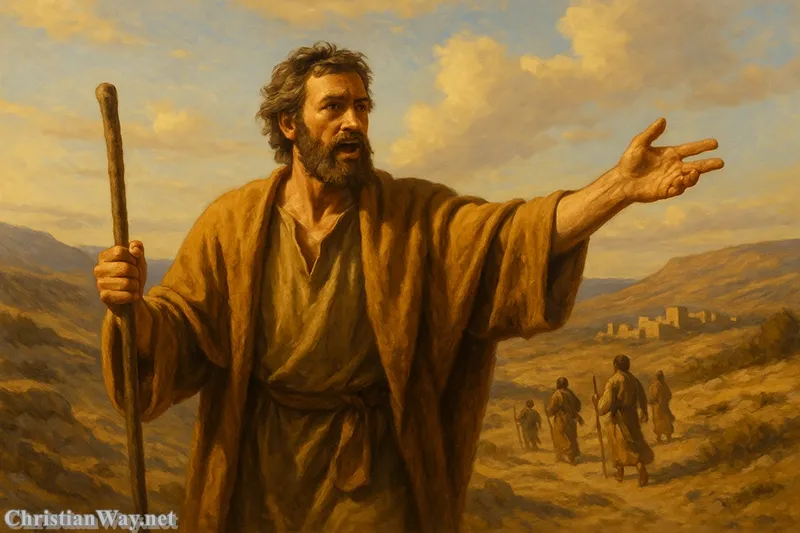
Peter and Andrew were fishermen when Jesus called them by the Sea of Galilee. James and John were also working with their father when the Lord invited them to follow Him. Their lives were not insignificant. Their labor fed families and sustained communities. Yet Christ looked upon their ordinary work and gave it a new horizon. “Follow me,” He said, “and I will make you fishers of men” (Matthew 4:19).
There is something tender in this calling. Jesus did not despise their past. He used the language of their daily lives to reveal their future mission. They knew nets, boats, storms, waiting, patience, and the uncertainty of catching fish. These experiences would become part of how they understood their new vocation. They would learn to cast the net of the Gospel into a world filled with longing souls. They would learn to endure storms without losing hope. They would learn that the harvest belongs to God, even when the night seems long and their efforts seem fruitless.
This is often how the Lord works in our lives as well. He does not erase the person we are. He takes our history, our gifts, our wounds, our work, and even our failures, then places them in the service of His Kingdom. A mother’s patient care, a teacher’s ability to explain, a worker’s faithfulness, a musician’s sensitivity, a friend’s capacity to listen—these ordinary gifts can become places where Christ is made known. The call of God does not always lead us away from ordinary life. Very often, it teaches us to live ordinary life with a new heart.
Matthew, also called Levi, was sitting at a tax booth when Jesus said simply, “Follow me” (Matthew 9:9). Tax collectors were often viewed with suspicion because they were associated with the Roman system of taxation and could profit from the burdens placed upon their own people. Yet Jesus saw beyond the label others gave him. He saw a man who could be changed. Matthew rose, left his booth, and followed the Lord.
How many people carry labels that have become prisons? “Too sinful.” “Too damaged.” “Too late.” “Too ordinary.” “Too ashamed.” The calling of Matthew tells us that Christ sees more than the world sees. He does not pretend that sin is unimportant, but He refuses to let sin have the final word. Grace calls us out of what we have been and leads us toward the life we were created to receive.
To Be With Jesus Before Being Sent by Jesus
The apostles were not sent immediately into public ministry. They walked with Jesus. They listened as He taught the crowds. They saw Him heal the sick, welcome children, forgive sinners, touch lepers, calm storms, and weep beside the tomb of Lazarus. They also watched Him withdraw to pray. They saw in Him a life entirely given to the Father.
The School of Presence
Before the apostles could speak about Christ, they had to know Him. Before they could tell the world that God is merciful, they had to witness mercy with their own eyes. Before they could proclaim forgiveness, they had to receive forgiveness themselves. Before they could preach the cross, they had to discover that the path of love passes through sacrifice.
This is the first school of every disciple: the school of presence. We cannot truly give what we have not received. We cannot offer peace if we have never allowed Christ to speak peace into our own fears. We cannot lead others toward prayer if our own souls never become quiet before God. We cannot speak of grace as an idea while refusing to admit our need for grace.
The apostles often misunderstood Jesus. They expected a Messiah who would bring visible triumph, defeat enemies, and restore Israel in ways they could easily recognize. But Jesus kept teaching them another way. He spoke of a kingdom not built upon domination, but service. He said, “Whosoever will be great among you, shall be your minister” (Matthew 20:26). He washed their feet. He welcomed the overlooked. He told them that the first would be last and the last would be first.
This must have been difficult for them to understand. It is difficult for us too. We live in a world that often measures greatness by influence, money, visibility, and control. Yet Christ reveals a different kind of greatness: the greatness of love that kneels, serves, listens, forgives, and gives itself away. The apostles did not learn this in one day. They learned it slowly, sometimes painfully, as they followed the One who “came not to be ministered unto, but to minister, and to give his life a ransom for many” (Mark 10:45).
The Christian life still begins here. Before our words, there must be prayer. Before our public witness, there must be an inner surrender. Before we tell others that Christ is Lord, we must allow Him to become Lord of our own fears, ambitions, habits, and hidden wounds. The apostles were not made strong because they trusted in themselves. They were made strong because they learned, little by little, to trust the One who had called them.
The Apostles Witnessed the Cross and the Empty Tomb
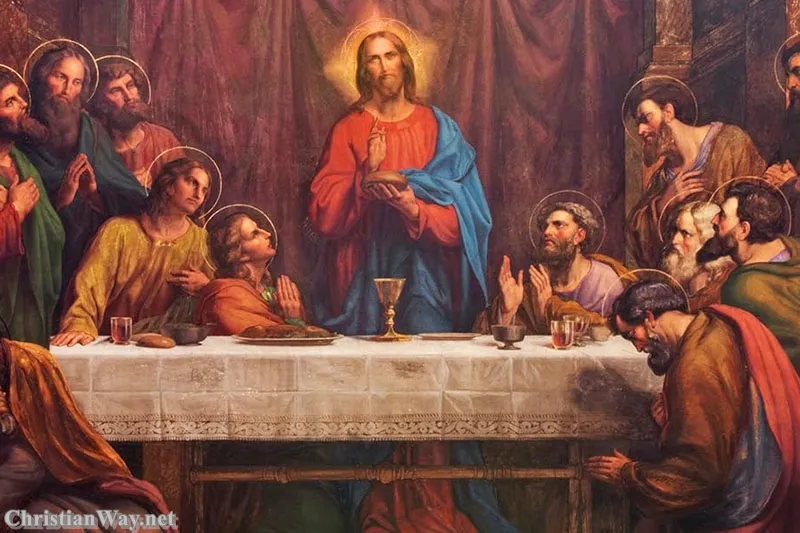
The apostles walked with Jesus through His public ministry, but the deepest test of their faith came in the final days before His crucifixion. At the Last Supper, Jesus spoke of betrayal, suffering, and a new covenant sealed in His blood. In the garden of Gethsemane, He asked His closest companions to remain awake and pray with Him. Yet they were overcome by weariness. When soldiers came to arrest Him, fear scattered them.
Failure Was Not the End of Their Story
Peter had declared boldly that he would never abandon Jesus. Yet before dawn, he denied even knowing Him. The Gospels do not hide this failure. They allow us to see Peter standing in the courtyard, frightened by the questions of others, denying the Lord three times. Then the rooster crowed, and Peter went out and wept bitterly.
This scene is painful because it is so human. Many of us know what it is to speak bravely when no danger is near, then become silent when courage costs something. We know what it is to say we trust God, then panic when life becomes uncertain. We know what it is to fail the people we love, to disappoint ourselves, and to wonder whether we can ever be restored.
But the Gospel does not end with Peter’s tears. After the resurrection, Jesus seeks him. By the sea, the risen Lord asks Peter three times, “Lovest thou me?” (John 21:15–17). Each question gently touches the place where Peter had denied Him. Yet Jesus does not humiliate Peter. He restores him. “Feed my lambs,” He says. “Feed my sheep.” The man who had failed is entrusted with a mission of care.
This is one of the most beautiful truths in the apostolic story. Christ does not build His Church by denying the weakness of His servants. He builds it by healing them. The Lord does not call Peter because Peter has never fallen. He calls Peter because mercy has reached him, and a forgiven heart can become a place of shelter for others.
Thomas also bears a name that has become almost a symbol of doubt. When the other disciples told him that they had seen the risen Lord, he struggled to believe. He wanted to see the marks of the nails. Yet when Jesus appeared and invited Thomas to come near, Thomas responded with one of the clearest confessions of faith in all the Gospels: “My Lord and my God” (John 20:28).
Thomas teaches us that honest questions need not separate us from Christ. There is a difference between a heart that asks in order to seek truth and a heart that refuses truth because it does not wish to be changed. Jesus did not reject Thomas for his struggle. He met him in it. Many believers carry questions that they are afraid to speak aloud. They wonder about suffering, unanswered prayer, death, doubt, guilt, or the silence of God. The risen Christ is not threatened by the questions of a searching heart. He invites us to bring them before Him.
The apostles became true witnesses because they encountered the risen Lord. They did not simply preserve a memory of a dead teacher. They proclaimed that Jesus Christ had conquered death. Their preaching was not built on a vague spiritual feeling. It was rooted in the conviction that the crucified Jesus was alive and that His resurrection had changed the meaning of everything.
Pentecost: The Spirit Gives Courage to the Fearful
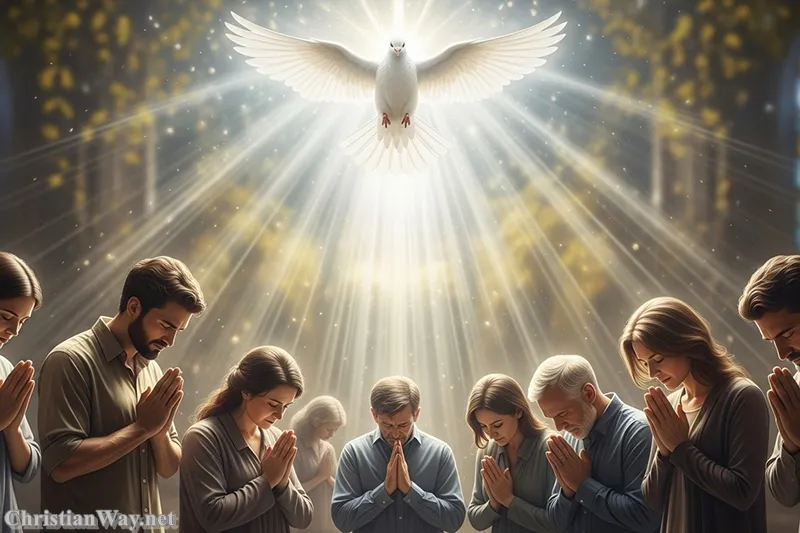
After the resurrection, Jesus instructed His disciples to wait for the promise of the Father. They had seen Him alive, yet they still needed the power of the Holy Spirit. The Church was not meant to survive merely through human enthusiasm, organization, or memory. She needed the breath of God.
From Locked Doors to Open Witness
The Book of Acts tells us that on the day of Pentecost, the apostles were gathered together when a sound like a rushing mighty wind filled the house. Tongues like fire rested upon them, and they began to speak in other languages as the Spirit gave them utterance (Acts 2:1–4). The fearful disciples who had once hidden behind locked doors now stood before crowds and proclaimed the mighty works of God.
Peter, who had denied Jesus in fear, now stood publicly and preached Christ crucified and risen. He explained that the promise of God had been fulfilled and called people to repentance and faith. On that day, many received the message and were baptized. The Church began to appear openly before the world as a community gathered around the risen Christ.
Pentecost reminds us that the mission of the Church is impossible without the Holy Spirit. We may have knowledge, plans, buildings, technology, and good intentions. Yet none of these can replace the life-giving work of the Spirit. The Spirit gives courage when we are afraid, wisdom when we are confused, consolation when we are wounded, and love when our hearts have grown cold.
The apostles did not become courageous because danger disappeared. In many ways, danger increased. They were opposed by authorities, imprisoned, mocked, threatened, and eventually scattered across the world. But their courage was no longer rooted in their own strength. It came from the certainty that Christ was alive and that the Holy Spirit was with them.
This is important for every Christian who feels inadequate. You may feel too quiet, too weak, too inexperienced, too burdened by the past, or too uncertain about the future. The apostles themselves knew fear. The question is not whether we feel strong enough. The question is whether we are willing to receive the strength God gives. The same Spirit who raised Jesus from the dead continues to work in the Church, in homes, in hidden acts of service, and in hearts that surrender themselves to God.
The Twelve and the Wider Circle of Witnesses
When we speak of the apostles, we often think first of the Twelve: Peter, Andrew, James, John, Philip, Bartholomew, Matthew, Thomas, James the son of Alphaeus, Thaddaeus, Simon the Zealot, and Judas Iscariot. After Judas betrayed Jesus and died, Matthias was chosen to take his place, preserving the symbolic fullness of the Twelve in relation to the twelve tribes of Israel.
The Church Was Built Through Many Faithful Servants
The Twelve held a unique place in the life of the early Church, but the apostolic witness was not limited only to them. The New Testament shows us a wider circle of faithful men and women who proclaimed the Gospel, served communities, supported the mission, and bore witness to the resurrection.
Mary Magdalene was among the first to encounter the risen Christ and to bring the news to the disciples. Women such as Mary the mother of Jesus, Priscilla, Lydia, Phoebe, and many others served the early Christian community with courage and devotion. Barnabas encouraged the Church and helped open doors for Paul’s ministry. Silas, Timothy, Titus, Luke, Mark, and many unnamed believers carried the Gospel into homes, towns, and nations.
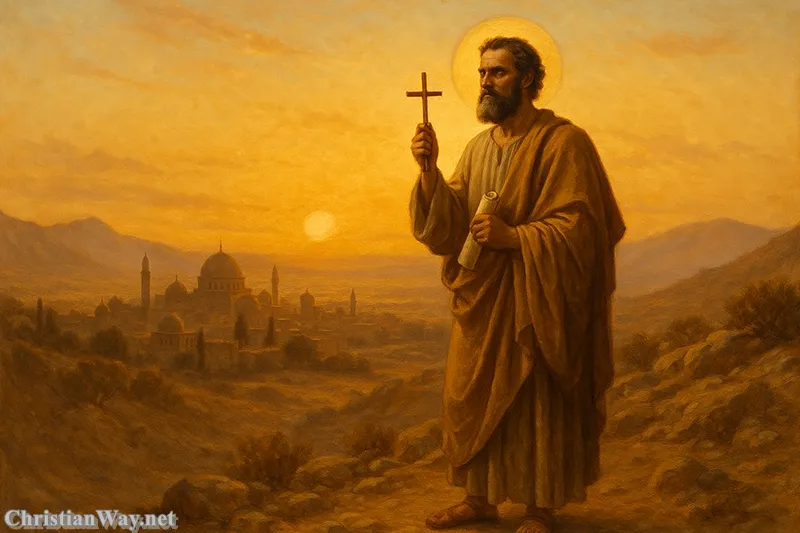
Saint Paul stands in a distinctive place among these witnesses. He was not one of the Twelve, and his encounter with Christ came after the resurrection, on the road to Damascus. Yet he spoke of himself as one called by the risen Lord to be an apostle to the Gentiles. His life shows again the surprising freedom of grace. Once a persecutor of Christians, Paul became one of the Church’s most tireless missionaries, theologians, and pastors.
The apostolic Church was never a community built around celebrity. It was a living body in which different members served different roles. Some preached. Some taught. Some cared for widows. Some opened their homes. Some traveled. Some prayed. Some endured suffering quietly. The Book of Acts describes believers sharing their lives, continuing in the apostles’ teaching, breaking bread, and praying together (Acts 2:42).
This remains a picture of what the Church is called to be. The Church is not only a building, a denomination, an institution, or a gathering on one day of the week. She is the people of God, called into fellowship with Christ and sent into the world in His name. The apostolic mission continues wherever believers speak the truth in love, feed the hungry, visit the lonely, raise children in faith, forgive those who have wronged them, and refuse to surrender hope.
The Apostles Preached Christ, Not Themselves
The apostles understood that their message did not begin with them. They were witnesses, not the source of the light. Their task was to point beyond themselves to Jesus Christ.
The Living Word Entrusted to Human Voices
After healing a man at the temple gate, Peter addressed the crowd and directed their attention away from himself. He asked, “Why look ye so earnestly on us, as though by our own power or holiness we had made this man to walk?” (Acts 3:12). Peter knew that the miracle was not proof of his own greatness. It was a sign of the living power of Jesus.
This humility is at the heart of apostolic witness. The apostles did not preach their opinions as if their own wisdom could save the world. They proclaimed Christ crucified, risen, and reigning. Saint Paul expressed this clearly when he wrote, “For we preach not ourselves, but Christ Jesus the Lord; and ourselves your servants for Jesus’ sake” (2 Corinthians 4:5).
The Church must always return to this truth. Whenever Christians become more concerned with promoting personalities, defending status, protecting influence, or building a human empire, the apostolic center is lost. The Church exists to make Christ known. Her ministers, teachers, leaders, writers, musicians, and servants are called to become signs that point beyond themselves.
The apostles also taught that the Gospel is not merely information. It is living truth that changes the heart. They did not call people only to agree with certain ideas. They called them to repentance, baptism, fellowship, prayer, holiness, and love. To receive Christ is to enter a new way of life.
This is why the apostolic word remains living. The Gospel continues to speak into modern loneliness, despair, injustice, family wounds, addiction, fear, and spiritual exhaustion. It reminds us that we are not accidents in an indifferent universe. We are created by God, sought by Christ, and invited into eternal life. The apostles spoke this message in marketplaces, prisons, homes, synagogues, public squares, and distant cities. We are called to live it today in our own places of responsibility.
The Apostles Learned That Leadership Means Service
Jesus did not hide from the apostles that they would have responsibility in the Church. He gave Peter a special pastoral charge, telling him to strengthen his brothers and to feed His sheep. He sent the apostles to baptize, teach, forgive sins in His name, and shepherd the communities that would grow through their preaching.
Yet Jesus continually warned them against confusing spiritual leadership with worldly power.
The Shepherd Must Remember the Lamb
At the Last Supper, when the disciples were still tempted to argue about greatness, Jesus rose from the table, took a towel, and washed their feet. Then He said, “I have given you an example, that ye should do as I have done to you” (John 13:15). This act became a permanent image of Christian leadership.
The apostolic ministry was never meant to be a place of privilege without sacrifice. Those entrusted with care for God’s people are called to serve, teach, protect, correct, console, and lay down their lives in love. Peter himself later wrote to church leaders, urging them to shepherd the flock willingly and not as those who lord over others, but as examples to the believers.
This message is needed in every generation. Christian leadership can become wounded when it seeks admiration rather than holiness, control rather than service, or comfort rather than sacrifice. The apostles call leaders back to the feet-washing Christ. Authority in the Church is not given for self-exaltation. It is given so that the weak may be protected, the confused may be guided, the wounded may be cared for, and the Gospel may be proclaimed faithfully.
But this calling is not limited to bishops, priests, pastors, elders, or teachers. Every Christian has some form of influence. Parents lead children. Older siblings guide younger ones. Friends shape one another. Employers and workers affect the lives around them. The apostolic example asks us: Do we use our influence to lift others up, or to make ourselves feel important? Do we speak with patience? Do we make room for the weak? Do we serve quietly when no one is watching?
The answer may not always be easy. Yet Christ’s way remains clear. The greatest among us must become the servant of all.
Apostolic Faith and the Unity of the Church
The apostles were not called merely to begin separate movements built around individual preferences. They were gathered into one body around one Lord. They preached one Gospel, broke bread in fellowship, prayed together, and cared for one another. The New Testament does not present a perfect community free from conflict. There were disagreements, misunderstandings, cultural tensions, and difficult decisions. Yet the early Church was continually called back to unity in Christ.
One Lord, One Faith, One Hope
Today, Christians belong to many traditions: Catholic, Orthodox, Lutheran, Anglican, Reformed, Baptist, Pentecostal, Evangelical, and many others. These traditions differ in history, worship, theology, and ecclesial structure. Such differences should not be ignored or treated as unimportant. They concern real convictions about Scripture, sacraments, ministry, authority, and the life of the Church.
Yet all who confess Jesus Christ as Lord are called to remember the apostolic prayer for unity. Saint Paul wrote, “There is one body, and one Spirit, even as ye are called in one hope of your calling; one Lord, one faith, one baptism” (Ephesians 4:4–5). This does not erase the pain of division, but it reminds us that Christ is greater than our divisions.
Catholic, Orthodox, and many Anglican Christians speak strongly of apostolic succession: the belief that the Church’s ministry continues through an unbroken historical and sacramental continuity with the apostles. Many Protestant Christians emphasize apostolic teaching: the conviction that the Church remains apostolic when she faithfully proclaims the Gospel found in Holy Scripture. These perspectives are not identical, and serious theological conversations remain necessary. Yet both seek, in different ways, to remain faithful to the witness of those first chosen disciples.
For every Christian, the deeper question remains: Are we living in the spirit of the apostles? Are we centered on Jesus Christ? Are we faithful to Scripture? Are we devoted to prayer? Are we humble enough to repent? Are we willing to serve? Are we able to love Christians who do not belong to our own community?
The apostles remind us that unity is not built by pretending that truth does not matter. It is built by seeking truth with humility and receiving one another as people for whom Christ died. The world is already filled with division, contempt, suspicion, and noise. The Church is called to offer something different: a living witness that truth and love belong together in the heart of God.
The Cost of Faithful Witness
The apostles did not preach Christ in a safe or easy world. Their witness brought them into conflict with religious authorities, political systems, social pressures, and spiritual opposition. They were imprisoned, beaten, mocked, exiled, and threatened. Many ancient traditions remember the apostles as dying for the faith they proclaimed.
Courage Rooted in Resurrection Hope
The apostles did not seek suffering for its own sake. Christianity does not glorify pain as though pain itself were holy. But the apostles were willing to endure suffering rather than deny Christ. Their courage came from knowing that death no longer had the final word.
When Peter and John were commanded not to speak in the name of Jesus, they answered, “We cannot but speak the things which we have seen and heard” (Acts 4:20). This is the heart of apostolic witness. They had seen and heard the living Lord. Silence would have been a betrayal of the truth they had received.
There are still places in the world where Christians face persecution, discrimination, imprisonment, and violence because they confess Christ. There are also quieter forms of suffering: the loneliness of refusing dishonesty in a workplace, the pain of being misunderstood for living according to conscience, the sacrifice of caring for a difficult family member, the hidden cost of forgiving someone who has deeply wounded us.
The apostles teach us that courage does not always look dramatic. Sometimes courage is simply remaining faithful in a small and unseen place. It is praying when prayer feels dry. It is being honest when dishonesty would be easier. It is choosing kindness when anger feels more natural. It is standing beside someone who is suffering when others have walked away.
The Church is apostolic whenever she remains faithful to this costly love. She does not overcome the world through domination, but through the witness of lives transformed by the resurrection.
The Apostles Speak Into Our Daily Lives
It can be easy to admire the apostles from a distance. Their names are spoken in churches, their images appear in sacred art, and their stories are read in Scripture. Yet they were real people who faced fear, disappointment, hunger, misunderstanding, conflict, and exhaustion. Their lives speak powerfully to the ordinary struggles we carry today.
Living as Witnesses Where God Has Placed Us
Perhaps you are a parent who feels unnoticed in the daily work of raising children. The apostles remind you that the Kingdom of God often grows quietly. A prayer whispered over a sleeping child, a patient conversation after a difficult day, a faithful example of forgiveness—these may become seeds of grace that bear fruit long after you have forgotten the moment.
Perhaps you are discouraged in your work. You may feel that your labor is small, repetitive, or without recognition. Remember the fishermen of Galilee. Christ called them in the midst of ordinary work. Your daily responsibilities can become an offering to God when they are carried out with integrity, gratitude, and love.
Perhaps you are burdened by past failure. Peter reminds you that tears of repentance are not the end of the story. Christ can restore what shame tells you is lost. He does not merely forgive in order to send us away. He forgives in order to draw us closer and to give us a new beginning.
Perhaps you have questions that trouble your faith. Thomas reminds you that Christ is not far from the searching heart. Bring your questions into prayer. Read the Gospels slowly. Speak with a wise Christian friend or pastor. Do not mistake unanswered questions for the absence of God. Sometimes faith grows not by receiving every answer quickly, but by remaining close to Christ while the heart learns to trust.
Perhaps you feel too weak to speak about your faith. Remember the disciples before Pentecost. They were afraid, uncertain, and hidden away. Yet the Holy Spirit transformed them. You do not need to speak perfectly about Christ. You need only speak truthfully. A simple word of hope, an act of patience, a willingness to pray with someone in pain, or a quiet refusal to join in cruelty can become a witness to the Gospel.
The apostles were chosen witnesses of Christ’s living Word, and through baptism, every believer is called into that same living mission. We are not asked to become copies of Peter, John, Mary Magdalene, Paul, or Thomas. We are asked to let the same risen Lord meet us, forgive us, fill us, and send us where we are.
Reflect and Pray
Dear friends, the apostles remind us that the Gospel is not a distant message from another age. It is the living Word of Christ still calling human hearts by name. The fishermen, the tax collector, the doubter, the denier, the former persecutor, the women who remained faithful near the cross, and the many unnamed servants of the early Church all testify to one beautiful truth: God delights in using imperfect people to make His perfect love known.
May we never imagine that we are too ordinary for Christ’s call. May we never believe that failure has placed us beyond His mercy. May we never become so busy with the work of faith that we forget to remain with the One who sends us. The apostles were changed because they stayed near Jesus, received His peace, and allowed the Holy Spirit to make them brave.
Let us pray.
Lord Jesus Christ, You called the apostles from ordinary lives into the joy and burden of Your mission. Call us again from fear, distraction, and self-reliance. Teach us to remain close to You in prayer, to receive Your mercy with humble hearts, and to bear witness to Your love in the places where You have placed us. Strengthen Your Church in truth, unity, courage, and compassion. May Your living Word shine through our words, our work, and our lives. Amen.
May the peace of Christ dwell richly in your heart, and may His love guide every step you take toward Him.
— Fr. John Matthew