Dear friends in Christ,
There are wounds that remain with us long after the moment of pain has passed. A cruel word may continue to echo in the mind. A betrayal may change the way we trust. A parent may remember years of neglect. A husband or wife may carry the sorrow of promises broken. A friend may feel abandoned at the very time companionship was most needed. Sometimes the person who wounded us has apologized. Sometimes there has been no apology at all. Sometimes the one who caused the pain is no longer living, and yet the hurt still seems to occupy a room within the heart.
In such moments, Christian forgiveness can sound beautiful but impossible. We may hear Jesus speak about mercy and quietly wonder whether He understands what truly happened to us. We may fear that forgiveness means pretending the wound was small, allowing someone to harm us again, or saying that injustice does not matter. We may wonder whether forgiving another person means forgetting what happened, giving up wise boundaries, or forcing a relationship to return to the way it once was.
The Gospel offers something far deeper than a command to ignore pain.
Christian forgiveness is not denial. It is not weakness. It is not a demand that the wounded person smile too soon. It is not permission for abuse, violence, manipulation, cruelty, or injustice to continue. Forgiveness does not call evil good, and it does not erase the need for truth, repentance, protection, or justice.
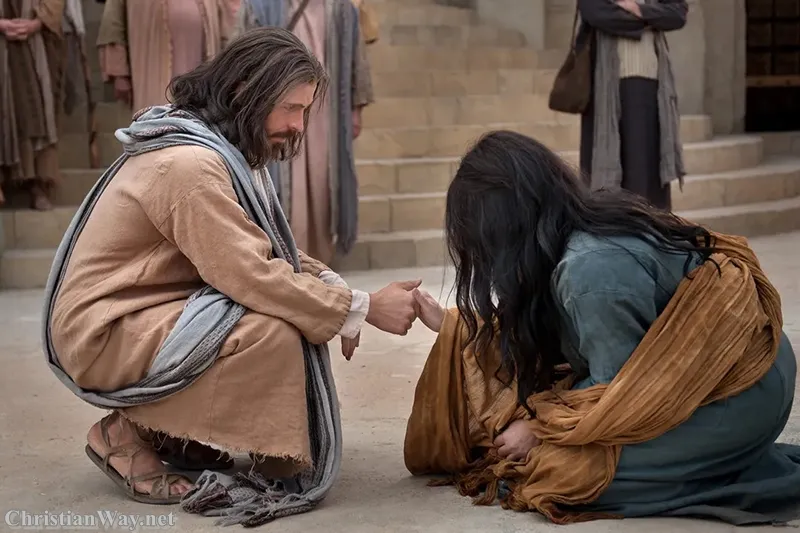
Instead, forgiveness is the costly grace by which we place the wound into the hands of God. It is the slow refusal to let another person’s sin become the ruler of our heart. It is the decision, renewed again and again, not to repay evil with evil. It is the willingness to release vengeance to God while asking Him to heal what bitterness has damaged within us.
At the center of the Christian faith stands Jesus Christ, who reveals the mercy of God not only in His words but in His whole life. He welcomes sinners, restores the ashamed, touches the suffering, speaks truth to the proud, and offers Himself upon the cross for a world that did not understand Him.
From the cross, Jesus prays, “Father, forgive them; for they know not what they do” (Luke 23:34).
These words do not make the cross less terrible. They reveal that love is stronger than hatred, that mercy is stronger than revenge, and that God’s heart remains open even in the darkest place of human sin.
Christian forgiveness is not easy because love is not shallow. Yet it is one of the most healing gifts Christ offers to the human heart. It does not always remove the memory of what happened. It does not always restore a damaged relationship. But it can free us from living forever under the weight of resentment, fear, and the desire to make someone else suffer as we have suffered.
The road of forgiveness may be long. For some wounds, it may be walked slowly, with tears, prayer, wise counsel, and time. But every step toward mercy becomes a step toward the freedom Christ desires for us.
Forgiveness Begins in the Mercy of God
Before Christians are called to forgive others, they are invited to receive forgiveness themselves.
This is where the Gospel begins. It does not begin with human beings climbing their way toward holiness through perfect effort. It begins with God coming near to people who cannot save themselves.
The Bible speaks honestly about sin. It does not hide human pride, cruelty, dishonesty, violence, selfishness, betrayal, or fear. It tells the truth about the ways people wound one another and turn away from God. But it also tells the greater truth that God does not abandon the sinner.
Again and again, Scripture shows a God who calls people back.
He calls Adam and Eve even after they hide.
He calls Israel back after wandering.
He sends prophets to a people who have forgotten justice and mercy.
He receives David after his sin.
He restores Peter after his denial.
He welcomes the prodigal son after his long journey away from home.
The parable of the prodigal son is one of the clearest windows into the mercy of God. The younger son takes his inheritance, leaves home, wastes what he has received, and eventually finds himself hungry, ashamed, and broken. When he begins his return, he expects only rejection or humiliation.
But Jesus tells us that while the son is still far off, his father sees him.
The father runs toward him.
He embraces him.
He clothes him.
He restores him.
He welcomes him home.
This does not mean that the son’s choices were unimportant. They caused real harm. The father does not pretend that nothing happened. Yet the father’s love is greater than the son’s shame.
This is the heart of divine mercy.
God does not merely tolerate the repentant person. He receives him.
He does not wait for the sinner to become perfect before offering love. He draws near and begins the work of healing.
Many people struggle to forgive others because, deep within, they have not yet believed that they themselves are forgiven. They may carry guilt over old mistakes, words spoken in anger, years wasted in selfishness, broken promises, neglected responsibilities, or choices that cannot be undone.
The mercy of Christ speaks into these hidden places.
A person is never only the worst thing he has done.
A person is never beyond the reach of grace.
Repentance matters. Truth matters. Repair matters where repair is possible. But the door of mercy remains open.
When we receive this mercy, we begin to understand why Jesus calls us to show mercy to others. We do not forgive because sin is small. We forgive because we have encountered a love greater than sin.
Jesus Makes Mercy the Heart of His Teaching
The life of Jesus is filled with encounters of mercy.
He does not move through the world looking for reasons to exclude people. He sees those whom others have ignored. He touches the leper. He speaks with the Samaritan woman. He eats with tax collectors. He welcomes children. He forgives the woman caught in sin. He notices the tears of the sinful woman who comes to Him with a broken heart.
Jesus never treats people as though they are only the sum of their failures.
He sees the truth of sin, but He also sees the person beneath the shame.
When religious leaders bring before Him a woman caught in adultery, they are ready to condemn her. Jesus does not declare that sin is good or meaningless. But He refuses to let cruelty pretend to be holiness. He says, “He that is without sin among you, let him first cast a stone at her” (John 8:7).
One by one, they leave.
Then Jesus speaks to the woman with both mercy and truth: “Neither do I condemn thee: go, and sin no more” (John 8:11).
This is the pattern of Christ’s mercy.
He does not crush the wounded person.
He does not excuse the sin.
He offers a new beginning.
The Christian call to forgiveness must always carry these same qualities. Mercy without truth can become shallow. Truth without mercy can become harsh. But in Jesus, truth and mercy meet.
The Lord’s Prayer places forgiveness at the center of Christian prayer: “Forgive us our trespasses, as we forgive those who trespass against us.”
These words can be difficult to pray honestly when someone has hurt us deeply. Yet Jesus places them on our lips because He knows that an unforgiving heart eventually becomes a prison.
When we refuse every movement toward forgiveness, the injury may begin to control us. The person who harmed us may continue to live within our thoughts, shape our reactions, disturb our sleep, harden our speech, and influence the way we treat people who never hurt us.
Resentment often promises protection, but it rarely brings peace.
It may feel like strength to hold tightly to anger. It may feel like loyalty to the pain we endured. But slowly, bitterness can take more from us than the original wound.
Jesus calls us toward mercy because He desires our freedom.
Forgiveness Does Not Mean Pretending Nothing Happened
One of the most important truths about Christian forgiveness is that it does not require falsehood.
Forgiveness is not pretending that betrayal was harmless.
It is not saying that abuse was acceptable.
It is not calling violence loving.
It is not telling a wounded person to remain in danger.
It is not demanding that someone trust again before trust has been rebuilt.
It is not forcing reconciliation when the other person remains unrepentant, manipulative, or unsafe.
God is merciful, but God is also truthful. The Gospel never asks people to lie about what they have endured.
Jesus Himself speaks clearly about evil, hypocrisy, injustice, and hardness of heart. He does not excuse those who exploit the vulnerable. He does not bless deception. He does not tell the oppressed that their suffering is unimportant.
Christian forgiveness begins by naming the wound honestly.
Something wrong was done.
A promise was broken.
A boundary was violated.
A child was neglected.
A person was humiliated.
Trust was abused.
A life was changed by someone else’s sin.
Naming this truth is not hatred. It can be the beginning of healing.
Forgiveness is not the same as reconciliation.
Reconciliation is the restoration of relationship. It usually requires truth, repentance, changed behavior, patience, and the rebuilding of trust over time. Forgiveness may be offered within the heart even when reconciliation is not yet possible.
Sometimes reconciliation becomes a beautiful gift. A parent and child may speak truthfully after years of silence. A marriage may slowly heal after betrayal when repentance is real and both people are willing to do the hard work of repair. Friends may rediscover trust after an honest apology.
But sometimes reconciliation cannot happen because the other person refuses truth, remains harmful, or has died. In those cases, forgiveness may still be possible as an inward release of vengeance into the hands of God.
To forgive does not mean placing yourself back into danger.
A person who has suffered abuse may forgive and still choose distance.
A person who has been manipulated may forgive and still keep firm boundaries.
A person harmed in business may forgive and still seek rightful legal protection.
A person betrayed by a friend may forgive and still decide that the friendship cannot continue in the same way.
Forgiveness is not the destruction of wisdom. It is the healing of the heart from hatred.
Mercy Is Not the Same as Forgetting
People sometimes say, “Forgive and forget.” But forgetting is not always possible, and it is not always wise.
Memory can protect us.
A child who remembers danger may learn to seek safety.
A person who remembers betrayal may learn to establish healthier boundaries.
A community that remembers injustice may work to prevent it from happening again.
The Christian call is not to erase memory. It is to ask God to heal the memory so that it no longer rules us with poison.
A healed memory is not a memory that says, “Nothing happened.”
A healed memory says, “Something painful happened, but it will not own my future forever.”
This is part of the healing power of mercy.
At first, a memory may bring anger, grief, fear, or the desire to strike back. Over time, through prayer and grace, the memory may still bring sadness, but it no longer controls every part of the heart.
The wound becomes part of the story, but not the whole story.
Jesus rose from the dead with the marks of the cross still visible in His hands and side. The resurrection did not erase the reality of suffering. It transformed its meaning.
In the same way, God may not erase every scar from our lives. But He can keep the scar from becoming a source of endless darkness. He can turn it into a place of compassion, wisdom, humility, and deeper dependence upon Him.
A person who has been healed by mercy often becomes more gentle with the wounds of others.
Someone who knows what it is to be forgiven may become less eager to condemn.
Someone who has walked through grief may learn how to sit quietly beside another person’s sorrow.
Someone who has endured betrayal may become more careful with the trust others place in him.
God does not waste the pain we place in His hands.
The Hard Work of Releasing Resentment
Forgiveness is often not one dramatic moment. It may be a decision that must be renewed many times.
A person may pray, “Lord, I forgive,” and then wake the next morning with anger still present. This does not mean the prayer was false. It may mean that healing takes time.
The heart often moves slowly.
Some wounds are deep because they were repeated over many years. Some injuries involve people we loved, trusted, or depended upon. Some pain is connected to childhood, family, marriage, friendship, or faith itself. These wounds cannot always be healed by a single conversation or a single act of will.
Christian forgiveness invites us to bring the wound repeatedly before God.
We may need to say, “Lord, I want to forgive, but I do not yet know how.”
This is an honest prayer.
We may need to say, “Lord, I release my desire to punish this person, but I still need You to heal my anger.”
This is an honest prayer.
We may need to say, “Lord, protect me, give me wisdom, and do not let this injury make me hard.”
This is an honest prayer.
God is not offended by the truth of our struggle.
The Psalms are filled with honest cries. They contain sorrow, confusion, anger, fear, and longing. They teach us that prayer does not require polished words. It requires an open heart.
Sometimes the first step toward forgiveness is not feeling kindness toward the one who hurt us. It is simply refusing to feed the desire for revenge.
It is refusing to rehearse the offense endlessly for the purpose of keeping anger alive.
It is refusing to celebrate when the other person suffers.
It is refusing to let bitterness become the language through which we speak to everyone else.
It is asking God to take from us the burden that we cannot carry alone.
This does not make us weak. It makes us free.
Forgiving Those Closest to Us
The hardest forgiveness is often required within the closest relationships.
It may be easier to forgive a stranger than a family member. The people closest to us know where we are vulnerable. Their words can reach deeper. Their failures can affect the very places where we expected safety.
Families carry many hidden wounds.
A son may feel unseen by his father.
A daughter may carry the pain of a mother’s harsh words.
Siblings may hold resentment from childhood.
A husband and wife may grow distant through years of disappointment, exhaustion, poor communication, or unspoken hurts.
Parents may carry regret over mistakes they made while trying to raise their children.
Adult children may struggle to forgive the limitations of parents who never knew how to love well.
Christian forgiveness does not ask families to pretend these wounds do not exist. It invites them to bring truth into the light.
Sometimes healing begins with a simple sentence: “I was hurt.”
Sometimes it begins with an apology: “I was wrong. Please forgive me.”
Sometimes it begins with listening without immediately defending oneself.
Sometimes it begins with allowing another person to speak their pain without being interrupted.
Sometimes it begins with a parent saying, “I did not know how deeply that affected you.”
Sometimes it begins with a child saying, “I know you were imperfect, but I do not want to carry this bitterness forever.”
These conversations can be difficult. They may need patience, wise guidance, counseling, pastoral care, and time. But truth spoken with humility can begin to open doors that anger has kept closed for years.
Jesus teaches, “Blessed are the merciful: for they shall obtain mercy” (Matthew 5:7).
Mercy does not mean allowing dysfunction to continue. It means refusing to let the failures of others destroy our capacity to love.
Forgiveness in Marriage and Friendship
Marriage and friendship are places of great joy, but also places where forgiveness becomes necessary.
No marriage survives without mercy.
No friendship remains strong without the willingness to apologize, listen, and begin again.
People disappoint one another. They become tired, distracted, selfish, defensive, impatient, and thoughtless. A small wound ignored for years can become a great distance between two hearts.
Forgiveness in marriage is often found not only in great moments, but in daily acts of humility.
It is found when one spouse says, “I spoke harshly. I am sorry.”
It is found when another replies, “I was hurt, but I do not want this to become a wall between us.”
It is found when both people learn to speak before resentment grows.
It is found when one listens without preparing a defense.
It is found when a husband or wife chooses tenderness at the end of a difficult day.
This does not mean that every marital wound can be solved easily. Betrayal, addiction, violence, emotional abuse, and serious dishonesty require truth, accountability, protection, and often professional support. Mercy must never be used to silence someone who needs help.
But where repentance is real and safety is protected, forgiveness can become part of the slow rebuilding of trust.
Friendship also needs mercy.
Friends may fail to show up when needed. They may speak carelessly, misunderstand, forget, compete, or withdraw. Sometimes a friendship ends because the wound is too deep or the other person refuses to change. But sometimes a friendship can be restored when two people choose honesty and grace over pride.
Christian forgiveness asks us not to treat every disappointment as a reason to close the heart forever.
Forgiving Ourselves Through the Grace of Christ
Many people find it easier to speak about forgiving others than forgiving themselves.
They carry regret over a decision they cannot reverse.
They remember a season when they were not the parent, child, spouse, friend, or believer they hoped to be.
They replay old failures until shame becomes a permanent voice in the mind.
They may believe in God’s mercy for everyone else, but not for themselves.
Yet the Gospel does not tell us that repentance is meant to become endless self-condemnation.
The Apostle Paul writes, “There is therefore now no condemnation to them which are in Christ Jesus” (Romans 8:1).
This does not mean our actions have no consequences. Sometimes we must apologize, repair damage, accept responsibility, seek help, or live with the results of choices we made. Grace does not erase the need for truth.
But grace does mean that failure is not the final name God gives us.
Peter denied Jesus three times. He failed in the moment when he most wanted to be courageous. Yet the risen Christ restored him. Jesus did not leave Peter trapped in shame. He asked him, “Lovest thou me?” and then entrusted him with a mission: “Feed my sheep” (John 21:15–17).
This is what mercy does.
It does not deny the failure.
It restores the person.
It gives a future.
Forgiving ourselves is not the same as excusing ourselves. It is receiving the forgiveness God offers and refusing to make shame into an idol.
Sometimes we hold onto shame because we believe it proves that we take our sin seriously. But God does not ask us to worship our failures. He asks us to repent, receive mercy, and follow Christ.
A person who has been forgiven can become more compassionate, more honest, and more attentive to the pain of others. The past may become a teacher, but it does not have to remain a prison.
Forgiveness and Justice Belong Together
Some people fear that forgiveness weakens the call for justice. But true Christian forgiveness does not make justice unnecessary.
God cares deeply about truth.
God hears the cry of the oppressed.
God sees violence, abuse, exploitation, corruption, and cruelty.
The prophets repeatedly speak against those who harm the poor, neglect the vulnerable, and use power for selfish gain. Jesus Himself speaks with seriousness about those who cause others to stumble or who use religion to hide hardness of heart.
Forgiveness means releasing personal vengeance to God. It does not mean abandoning the pursuit of justice.
A person may forgive and still testify truthfully.
A person may forgive and still seek protection for children.
A person may forgive and still report a crime.
A person may forgive and still ask that harmful behavior be stopped.
A person may forgive and still require repentance before reconciliation can be considered.
Justice seeks to name what is wrong, protect the vulnerable, and restore what can be restored. Forgiveness seeks to free the heart from hatred and revenge.
These are not enemies.
They can walk together.
The cross itself reveals both justice and mercy. Sin is not ignored. Its seriousness is revealed. Yet God responds not by abandoning humanity, but by offering reconciliation and new life through Christ.
Christian forgiveness does not say, “What happened does not matter.”
It says, “What happened matters so much that I place it before the God of truth and mercy.”
The Church as a School of Mercy
The Church is called to be a place where people learn forgiveness.
No Christian community can be faithful to Christ if it speaks often about doctrine but does not know how to show mercy. Churches are made up of human beings, and human beings bring their weaknesses with them. Misunderstandings happen. Pride appears. People are sometimes overlooked. Words are spoken carelessly. Expectations are disappointed.
This is why the Church must continually return to the mercy of Christ.
In Catholic and Orthodox traditions, confession is a visible place where believers bring sin honestly before God and receive the assurance of mercy. In many Protestant traditions, believers confess sins directly to God, within public worship, with pastors, elders, or trusted Christian friends. Though practices differ, the need is shared.
Every Christian needs to hear again that repentance is possible.
Every Christian needs to learn that grace is not cheap, but it is real.
Every Christian needs to practice forgiveness in the community of faith.
A church becomes a true witness to the Gospel when it welcomes the wounded, protects the vulnerable, corrects wrongdoing with honesty, and gives repentant people a path toward restoration.
It must never use forgiveness to cover abuse, silence victims, or avoid responsibility. That would not be mercy. It would be injustice wearing religious language.
Real mercy protects the weak.
Real mercy tells the truth.
Real mercy invites repentance.
Real mercy gives hope without denying harm.
The Church is most beautiful when it becomes a home for people who know they need grace.
“Seventy Times Seven”: Forgiveness as a Lifelong Practice
Peter once asked Jesus, “Lord, how oft shall my brother sin against me, and I forgive him? till seven times?” Jesus answered, “I say not unto thee, Until seven times: but, Until seventy times seven” (Matthew 18:21–22).
Jesus is not giving a number to count. He is teaching that mercy cannot be reduced to a calculation.
Forgiveness is not a limited resource to be carefully measured out until someone reaches the final allowed offense. It is a way of life formed by the mercy of God.
This does not mean Christians should remain in repeated harm without wisdom. The same Gospel that calls us to forgiveness also calls us to truth, accountability, and care for the vulnerable.
But it does mean that the heart of a disciple must remain open to mercy.
A person who receives God’s forgiveness is called to become someone who forgives.
Not because it is always easy.
Not because every relationship can be restored.
Not because every offender is repentant.
But because Christ has shown that love does not keep score in the way resentment does.
Sometimes forgiveness is a quiet daily practice.
It is choosing not to bring up an old wound merely to win an argument.
It is refusing to keep a private record of every failure.
It is praying for grace before speaking in anger.
It is allowing someone who has truly changed to be more than the worst thing they once did.
It is asking God to keep the heart tender.
This is not weakness. It is spiritual strength.
Mercy in a Wounded World
The world today is full of anger.
People are quick to judge, slow to listen, and often ready to divide others into categories of good and bad without knowing their stories. Families fracture. Communities harden. Online words become cruel. People carry resentments for years because they do not know where to place their pain.
In such a world, Christian forgiveness becomes a quiet but powerful witness.
It does not make Christians passive.
It does not make them blind.
It does not ask them to accept injustice.
But it refuses to let hatred become the final answer.
The person who forgives does not say that evil has won. The person who forgives says that Christ is greater.
Mercy can interrupt cycles of anger that pass from one generation to another.
A father who was wounded as a child can choose not to repeat the same harshness with his own children.
A daughter who experienced neglect can choose to become a patient and loving mother.
A person who has known betrayal can choose not to become deceitful.
A community that has endured conflict can choose to pursue healing rather than revenge.
This is how resurrection life begins to appear in ordinary places.
Not always through dramatic miracles, but through hearts that refuse to remain ruled by darkness.
Reflect and Pray
Christian forgiveness is the healing power of mercy in the heart of the Gospel.
It begins with God, who receives sinners and calls them home.
It is revealed in Jesus Christ, who forgives, restores, heals, and prays for His enemies even from the cross.
It does not deny the reality of pain.
It does not excuse abuse, violence, deception, or injustice.
It does not demand that wounded people return to unsafe relationships.
It does not mean forgetting what happened.
Instead, it is the slow work of placing the wound into God’s hands and refusing to let bitterness rule the heart forever.
Forgiveness may take time.
It may require tears.
It may require wise boundaries.
It may require truth, accountability, counseling, confession, and prayer.
But through grace, it can become a doorway to freedom.
The person who forgives is not saying, “What happened was acceptable.”
The person who forgives is saying, “What happened will not have the final word over my heart.”
Jesus Christ has the final word.
His mercy is deeper than shame.
His truth is stronger than deception.
His love is greater than hatred.
His resurrection is greater than every tomb we carry within us.
Let us pray:
Lord Jesus Christ,
You know every wound we carry
and every burden we struggle to name.
Give us the courage to bring our pain to You
without hiding, pretending, or losing hope.
Teach us to forgive as You have forgiven us,
not by denying what is wrong,
but by releasing hatred into Your merciful hands.
Protect those who are vulnerable.
Bring truth where there has been deception.
Bring healing where there has been betrayal.
Bring peace where anger has taken root.
Make our hearts tender,
our words truthful,
and our lives a witness
to the mercy that flows from Your cross.
Amen.
— Fr. John Matthew