Dear friends in Christ,
There are lives that seem to begin in one direction and, by the mercy of God, are turned completely around. Saint Paul is one of those lives. Before he became the great apostle whose words would nourish the Church for centuries, he was Saul, a zealous man convinced that he was defending the faith of his ancestors. Before he proclaimed Jesus Christ as Lord, he persecuted those who confessed His name. Before he carried the Gospel across cities, seas, prisons, and hardships, he was confronted on a road by the risen Christ and discovered that the God he thought he was serving was calling him into a love far greater than he had imagined.
The story of Saint Paul is not only the story of a brilliant missionary or a gifted writer. It is the story of grace. It is the story of a man whose certainty was broken open by mercy, whose strength was reshaped by humility, and whose life became a witness that no heart is beyond the reach of Christ. Paul did not become holy because he had always understood God perfectly. He became holy because, when Christ met him, he allowed himself to be changed.
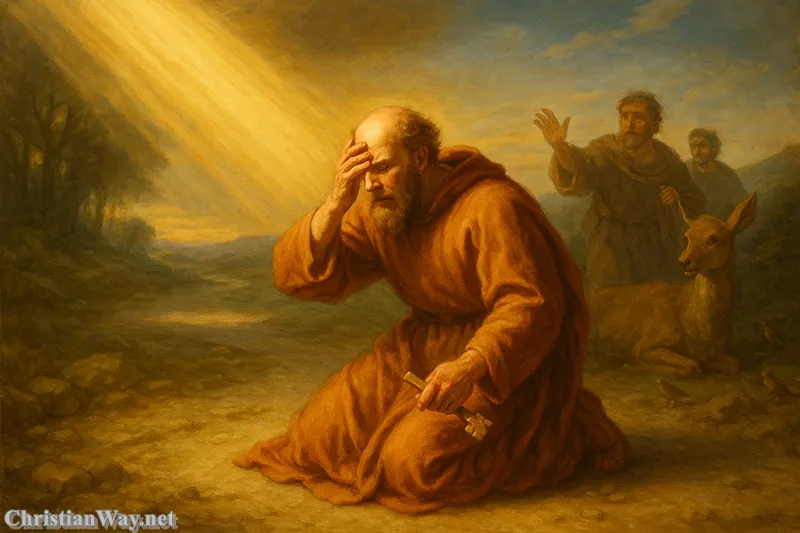
This is why Paul remains so close to every searching heart. Many of us know what it is to carry strong convictions, yet still feel uncertain within. We know what it is to try to prove ourselves through work, knowledge, discipline, success, or religious effort. We know what it is to look back at choices we regret and wonder whether God can truly make something new from what has been broken. Paul speaks into these fears with a voice both strong and tender: “Where sin abounded, grace did much more abound” (Romans 5:20).
The grace Paul preached was not an excuse to remain unchanged. It was not a soft word that ignored sin or avoided repentance. Grace was the power of God that meets us in our weakness and brings us into new life. It forgives, heals, strengthens, corrects, and sends. It takes the one who once caused harm and, through repentance, makes him a servant of mercy. It takes the proud heart and teaches it to kneel. It takes suffering and gives it a purpose in love.
Saint Paul became the missionary heart of the Church because his heart had first been captured by Christ. He understood that the Gospel was not merely a message to be discussed. It was a living power that could save, reconcile, gather, and transform. He spent his life carrying that message to Jews and Gentiles, to cities and households, to rich and poor, to those who were curious, those who were hostile, and those who felt forgotten by the world.
As we reflect on Saint Paul, we are invited to remember that the Church is still called to be missionary. We are still called to carry Christ into the places where people are burdened, lonely, confused, wounded, and hungry for hope. Some are sent across nations. Others are sent across the room, across the family table, across a difficult relationship, or into the quiet responsibilities of daily life. The mission remains the same: not to preach ourselves, but Jesus Christ as Lord.
Saul of Tarsus: A Man of Zeal and Conviction
Before he became known as Paul, the apostle was called Saul. He was born in Tarsus, a significant city in the Roman world, and he was raised within the deep religious inheritance of Israel. He understood himself as a faithful Jew, shaped by the Scriptures, the traditions of his people, and a passionate desire to honor God.
In his own letters, Paul spoke of his former life with remarkable honesty. He described himself as a Pharisee, zealous for the traditions of his ancestors, and deeply committed to the Law. In the Letter to the Philippians, he wrote that, according to zeal, he had persecuted the Church (Philippians 3:5–6). He did not hide this painful truth. He did not rewrite his past to make himself look better. He placed it in the light of grace.
Zeal Without Mercy Can Wound
Saul believed that the followers of Jesus were a dangerous threat to the faith of Israel. The early Christian community proclaimed that Jesus, who had been crucified, was the promised Messiah and the risen Lord. For Saul, this was not a small disagreement. It seemed to challenge everything he believed about God, worship, covenant, and faithfulness.
In the Book of Acts, Saul appears in connection with the persecution of the first Christians. He is present at the death of Stephen, the first Christian martyr, and he later seeks authority to arrest followers of “the Way” in Damascus. This is difficult to read, yet it reveals something important about the human heart. A person can be sincere and still be wrong. A person can believe he is defending truth while acting without the spirit of God’s love.
This is a warning for every generation of believers. Religious zeal can be beautiful when it is joined to humility, compassion, and obedience to Christ. But zeal can become dangerous when it loses love. We may defend doctrine, tradition, morality, or identity so fiercely that we forget the very Lord whose name we claim to honor. We may become more interested in defeating people than in leading them toward healing.
Paul’s early life teaches us that truth and love must never be separated. Truth matters deeply. The Gospel is not vague, and faith is not built upon whatever is easiest to believe. Yet the truth of Christ is always marked by mercy. Jesus never treated people as enemies to be crushed. He spoke clearly, corrected firmly, and called sinners to repentance, but He did so with a heart that desired their salvation.
Saul’s zeal was real. His intelligence was real. His discipline was real. But until he encountered Christ, his zeal had not yet been transformed by grace. This is why the Lord’s intervention on the road to Damascus was not merely a change in career. It was a conversion of the heart.
The Road to Damascus: When Christ Calls Us by Name
The conversion of Saint Paul is one of the most powerful scenes in the New Testament. Saul was traveling toward Damascus with authority to arrest Christians when a light from heaven surrounded him. He fell to the ground and heard a voice saying, “Saul, Saul, why persecutest thou me?” (Acts 9:4).
“I Am Jesus Whom Thou Persecutest”
Saul asked, “Who art thou, Lord?” The answer changed everything: “I am Jesus whom thou persecutest” (Acts 9:5).
In that moment, Saul discovered that Christ was not merely a memory held by a small group of followers. Jesus was alive. The one Saul believed to be defeated by crucifixion was the risen Lord. More than this, Saul learned something profound about the Church: to wound Christ’s people is to wound Christ Himself.
“I am Jesus whom thou persecutest.” These words reveal the intimate union between Christ and His Church. The believers Saul had chased, imprisoned, and threatened were not simply members of a new movement. They belonged to the living body of Christ. Their suffering mattered to Him personally.
This is one of the great mysteries Paul would later proclaim with such depth. The Church is the Body of Christ. Christians are not isolated individuals who happen to share a religious opinion. Through baptism, faith, worship, and the work of the Holy Spirit, they are joined to Christ and to one another. When one member suffers, all are called to care. When one member rejoices, all share in that joy. The Church is not perfect because her members are perfect. She is holy because Christ is present within her.
The light on the Damascus road blinded Saul. He who had thought he could see clearly was led by the hand into the city. For three days, he could not see. He did not eat or drink. It was a time of darkness, silence, and surrender.
There are moments in life when God allows the things we trusted to fall away. We may lose certainty. We may find ourselves unable to continue as before. We may face a failure, a grief, a question, or a truth we had tried to avoid. Such moments can feel like darkness, but they can also become the beginning of grace.
Saul’s blindness was not merely punishment. It was preparation. He had to stop seeing through the old lens before he could see the world through Christ. He had to be led before he could become a leader. He had to receive mercy before he could proclaim mercy.
Ananias: The Church Receives the One Who Once Caused Fear
While Saul prayed in Damascus, the Lord spoke to a disciple named Ananias. He told him to go to Saul, the very man whose name had become frightening to the Christian community. Ananias hesitated. He knew Saul’s reputation. He knew what Saul had done. He knew the danger.
Yet the Lord said to him, “Go thy way: for he is a chosen vessel unto me, to bear my name before the Gentiles, and kings, and the children of Israel” (Acts 9:15).
Grace Often Comes Through Another Person
Ananias went. He entered the house where Saul was staying. He placed his hands upon him and said, “Brother Saul.”
Those two words are among the most beautiful in the story of Paul’s conversion. Brother Saul. Before Saul had proven anything. Before he had preached. Before he had traveled. Before he had written letters or suffered for the Gospel. Ananias called him brother.
This is what grace does. It does not deny the past, but it refuses to make the past the final word. It sees what Christ can do in a person. It receives the repentant heart into a new family.
Scales fell from Saul’s eyes. He was baptized. He received food and strength. Then he began to proclaim that Jesus is the Son of God.
The Church’s role in Paul’s conversion should not be overlooked. Christ met Saul directly, but He also sent Ananias. The Lord could have restored Saul’s sight without anyone else. Yet He chose to work through a brother in faith.
This reminds us that God often heals us through the love of others. A wise pastor, a forgiving friend, a patient spouse, a praying parent, a teacher who believes in us, a community that receives us after failure—these can become instruments of grace. Christianity is never meant to be lived alone. Even Paul, whose conversion was so dramatic, needed Ananias. He needed the Church.
For those who have been wounded by other Christians, this part of the story can be difficult. Sometimes the Church has failed to act like Ananias. Sometimes people have met judgment when they needed mercy, or silence when they needed care. Yet the failure of Christians does not erase the beauty of Christ’s intention. The Church is called to become a home where repentant sinners are received, where truth is spoken, where healing is possible, and where no one is reduced forever to their worst mistake.
The Apostle of Grace
When Paul began preaching, he did not present himself as a spiritual hero. Again and again, he returned to grace. He knew that whatever good had come from his life was not the result of his own strength alone. It was the mercy of God at work in him.
In his First Letter to Timothy, Paul wrote, “Christ Jesus came into the world to save sinners; of whom I am chief” (1 Timothy 1:15). These words are not the language of despair. They are the language of gratitude. Paul remembered what he had been so that he could praise the grace that had found him.
Saved by Grace, Not Human Achievement
The heart of Paul’s message is clear: salvation is God’s gift. We are not saved because we have built a perfect spiritual record. We are not saved because we have earned God’s approval through effort, learning, or good works. We are saved because Christ has loved us, died for us, risen for us, and drawn us into new life.
Paul wrote to the Ephesians, “By grace are ye saved through faith; and that not of yourselves: it is the gift of God” (Ephesians 2:8). He knew that human beings could become trapped in fear when they imagined that salvation depended entirely upon their ability to perform.
Yet Paul’s teaching on grace never led him toward carelessness. Grace does not leave us unchanged. It makes us new. The same apostle who proclaimed salvation by grace also urged believers to “walk in newness of life” (Romans 6:4). Grace is not permission to remain in sin. It is the power to rise from sin.
This balance is precious for Christian life. We do not obey God in order to purchase His love. We obey because His love is already calling us into freedom. We do not serve others in order to prove ourselves holy. We serve because Christ has served us first. We do not repent because God wants to shame us. We repent because He desires to heal us.
Catholic, Orthodox, Lutheran, Anglican, and Protestant Christians have expressed the mystery of grace in different theological languages. Yet all faithful Christians are called to confess that salvation begins in the mercy of God. We are not self-made disciples. We are people rescued by Christ.
Paul’s voice is especially needed in a world that tells us to earn our worth. Many people measure themselves by income, beauty, success, productivity, intelligence, popularity, or the approval of others. Even religious people can fall into the trap of thinking that God loves them only when they are impressive.
Paul speaks gently but firmly into this burden. Our identity is not built upon what we achieve. It is received in Christ. We are loved before we succeed. We are called before we are ready. We are forgiven before we can repay anything. The Gospel is not a ladder we climb toward God. It is God’s mercy coming down to us.
“My Grace Is Sufficient for Thee”
Paul’s teaching on grace became even deeper through his experience of weakness. In his Second Letter to the Corinthians, he spoke of a “thorn in the flesh,” something that caused him suffering and remained despite his prayers for it to be removed.
He wrote that he pleaded with the Lord three times, and the answer came: “My grace is sufficient for thee: for my strength is made perfect in weakness” (2 Corinthians 12:9).
The Mystery of Strength Through Weakness
We do not know exactly what Paul’s “thorn” was. It may have been physical illness, emotional suffering, opposition, temptation, or some recurring burden that humbled him. Perhaps it is a gift that Scripture does not explain it fully. In that way, people of every age can recognize themselves in his words.
We all carry something we wish God would remove. It may be grief, illness, anxiety, loneliness, family pain, financial strain, regret, addiction, weakness, or a question that has not yet received an answer. We may pray sincerely and wonder why relief does not come as quickly as we hoped.
Paul does not tell us that suffering is easy. He does not pretend that pain is beautiful in itself. He tells us that Christ can be present in the place of weakness. The answer Paul receives is not first an explanation. It is a promise: “My grace is sufficient for thee.”
This is one of the most tender words in all of Scripture. God does not always remove the burden immediately, but He does not abandon us beneath it. He gives strength for the day. He gives light for the next step. He gives people to walk beside us. He gives grace that may not feel dramatic, but quietly keeps us from falling apart.
Paul learned not to boast in his strength, but in the mercy that sustained him. This is difficult for a world that admires self-reliance. We are often taught to hide weakness, to appear confident, to maintain control, to prove that we need no one. But the Gospel tells another story. The strongest person is not always the one who seems invulnerable. Sometimes it is the one who admits, “I cannot carry this alone,” and lets Christ meet them in the truth.
Paul the Missionary: Carrying Christ Beyond Familiar Borders
After his conversion, Paul became one of the most tireless missionaries in the history of Christianity. He traveled across the Roman world, preaching in synagogues, marketplaces, homes, public spaces, and places of prayer. He helped establish communities of believers in cities such as Philippi, Corinth, Ephesus, Thessalonica, Galatia, and Rome.
His journeys were not easy. They involved long travel, conflict, uncertainty, opposition, misunderstanding, imprisonment, and physical hardship. Yet Paul continued because he believed the Gospel belonged to every people and every nation.
Apostle to the Gentiles
Paul understood his mission especially as a calling to bring the message of Christ to the Gentiles, those who did not belong to the Jewish people. This was not a rejection of Israel. Paul never stopped grieving, praying, and longing for his own people. Rather, he came to see that the promise given through Israel was now opening outward to the nations through Jesus Christ.
In Christ, Paul proclaimed, the dividing walls between peoples were being broken down. In the Letter to the Galatians, he wrote, “There is neither Jew nor Greek, there is neither bond nor free, there is neither male nor female: for ye are all one in Christ Jesus” (Galatians 3:28).
These words do not erase the particular identities, histories, cultures, or gifts of people. They reveal something deeper: no one is excluded from the mercy of Christ. The Gospel is not the property of one class, race, nation, language, or social group. It is good news for the whole world.
This remains a challenge for the Church today. It is easy to make faith feel like the possession of people who look like us, speak like us, vote like us, or share our cultural habits. But Christ continually sends His people beyond familiar borders. He sends us toward those who are different, those who have been ignored, those who are poor, those who feel unwelcome, and those who may not yet know that God sees them.
Paul’s missionary heart teaches us that the Church cannot become inward-looking. The Church is nourished by worship, prayer, sacraments, fellowship, and Scripture, but she is also sent. She exists not only for those already gathered inside, but for those still searching outside.
The Gospel Meets People Where They Are
Paul did not preach the Gospel in exactly the same way to every audience. When he spoke in synagogues, he reasoned from the Scriptures of Israel. When he spoke in Athens, he began with the spiritual hunger and questions of the people around him. When he wrote to churches, he addressed their real struggles: division, pride, sexual immorality, suffering, poverty, false teaching, conflict, and discouragement.
This does not mean that Paul changed the Gospel to make it easier. It means that he learned to speak the truth in ways people could hear. He wrote, “I am made all things to all men, that I might by all means save some” (1 Corinthians 9:22).
The Church still needs this wisdom. To proclaim Christ faithfully does not mean speaking in ways that ignore the real wounds and questions of people’s lives. We must ask: What are people carrying? What fears keep them awake? What loneliness, grief, guilt, confusion, or hunger lies beneath their outward words? The Gospel must be preached not as a distant formula, but as the living mercy of Christ meeting real human need.
The Churches Paul Loved and Corrected
Paul did not only travel and preach. He loved the communities he founded. His letters reveal a pastor’s heart: sometimes joyful, sometimes frustrated, sometimes wounded, sometimes filled with gratitude, but always longing for believers to remain close to Christ.
He wrote to churches that were divided. He wrote to people who were struggling with moral questions. He wrote to communities tempted by pride or false teaching. He wrote to encourage those who were suffering and to remind them that Christ would not abandon them.
Truth Spoken With the Tears of a Pastor
Paul could be direct. His letters contain strong warnings. He did not treat sin lightly, and he did not pretend that division or false teaching would disappear on its own. But beneath his firm words was love.
He compared his care for believers to the care of a parent. He spoke of being in labor again until Christ was formed in them. He prayed for them. He remembered them in suffering. He rejoiced when they remained faithful.
This is an important lesson for all who serve in the Church. Teaching must be clear, but it must also be pastoral. Correction must be truthful, but it must never become cold or humiliating. A parent does not correct a child in order to feel superior. A shepherd does not guide the flock in order to control it. True spiritual care seeks the healing and growth of the other person.
Paul’s letters also remind ordinary Christians that community life is not always easy. The early Church was not a perfect community of people who never disagreed. There were tensions between Jews and Gentiles, disagreements over food and customs, divisions over leaders, questions about worship, and moments when believers failed to treat one another with love.
This should comfort us. When we see weakness in the Church today, we should not be surprised. The Church has always been made up of people in need of grace. The question is whether we are willing to return again and again to Christ, repent, forgive, and grow.
The Body of Christ: Paul’s Vision of the Church
One of Paul’s most beautiful images is the Church as the Body of Christ. In 1 Corinthians 12, he teaches that believers are joined together in one body, each with different gifts, each needed, each called to serve.
“The body is not one member, but many” (1 Corinthians 12:14).
No One Is Useless in the Kingdom of God
Paul knew that communities can become divided when people compare gifts, seek attention, or feel unnecessary. Some people may believe their role is too small. Others may believe they do not need anyone else. Paul answers both temptations.
The hand cannot say to the foot, “I have no need of thee.” The eye cannot say to the hand, “I have no need of thee.” Every member matters.
This is a word of healing for many people. Some feel overlooked in the Church. They may not preach, sing, lead, teach, or serve publicly. They may wonder whether their faithfulness matters. Paul tells us that hidden service is precious. The person who prays quietly, visits the sick, prepares food, gives generously, teaches a child, encourages the discouraged, or simply remains faithful through suffering is part of the Body of Christ.
The Church needs visible leaders, but she also needs hidden saints. She needs those who build, those who comfort, those who organize, those who listen, those who teach, those who give, those who intercede, and those who bear pain with patience.
Paul’s vision also challenges pride. No Christian is self-sufficient. We need one another. The person whose gifts are different from ours may be carrying something we lack. The Church becomes stronger not when everyone becomes the same, but when different gifts are offered in love.
This is especially important in a divided Christian world. Catholics, Orthodox Christians, Anglicans, Lutherans, Reformed Christians, Baptists, Pentecostals, Evangelicals, and many other communities carry different histories and theological convictions. These differences should not be ignored. Yet the prayer of Christ for unity remains before us.
Paul urges believers to “keep the unity of the Spirit in the bond of peace” (Ephesians 4:3). Christian unity cannot be built by pretending that doctrine does not matter. But neither can it be built through contempt. The Body of Christ is wounded when Christians forget that they are called to love even those with whom they disagree.
Love: The More Excellent Way
In the midst of his teaching about spiritual gifts, Paul turns to one of the most beloved passages in the New Testament: 1 Corinthians 13. He calls love “a more excellent way.”
He writes that even if a person speaks with the tongues of angels, possesses knowledge, gives away possessions, or has great faith, without love it is nothing.
“Charity Never Faileth”
Paul’s words about love are familiar because they are true. Love is patient. Love is kind. Love does not envy. Love does not boast. Love does not insist on its own way. Love bears all things, believes all things, hopes all things, endures all things.
These words are not sentimental poetry. They are a description of the life of Christ. They are also a measure by which every Christian community, family, ministry, and heart can be examined.
Do we love patiently, or only when people are easy to love? Do we speak kindly, or do we use truth as a weapon? Do we rejoice when others are blessed, or do we quietly resent them? Do we keep records of wrongs? Do we make room for people who are weak, slow, difficult, or different from us?
Paul knew that the Church could have powerful gifts and still lose the heart of the Gospel. A community can be busy, gifted, informed, and active, yet still fail to love. This is why love is not a secondary theme in Christian life. It is the atmosphere in which every gift must be used.
The missionary heart of the Church must therefore be a loving heart. We cannot preach Christ faithfully while treating people with contempt. We cannot speak about grace while refusing to forgive. We cannot proclaim the cross while seeking our own importance. Paul’s message always returns to this center: Christ gave Himself for us, and therefore we are called to live for one another.
Suffering, Joy, and the Strength of Hope
Paul’s missionary life was marked by suffering. He speaks of beatings, imprisonment, shipwreck, danger, hunger, sleepless nights, rejection, and anxiety for the churches. He knew what it was to be misunderstood and opposed.
Yet Paul also speaks constantly of joy.
Joy Is Not the Absence of Pain
This may seem surprising. How could a man who suffered so much write, “Rejoice in the Lord alway: and again I say, Rejoice” (Philippians 4:4)?
Paul’s joy was not based on comfortable circumstances. It came from belonging to Christ. He knew that hardship could not separate him from the love of God. In Romans 8, he asks a question that has comforted countless believers: “Who shall separate us from the love of Christ?” He names tribulation, distress, persecution, hunger, nakedness, danger, and sword. Then he declares that none of these can finally conquer the love of God in Christ Jesus our Lord.
This is not a promise that Christians will avoid suffering. It is a promise that suffering will not have the final word. The risen Christ has entered death and overcome it. Therefore, even in the darkest season, hope remains possible.
Paul’s witness is precious for those who are weary. He does not tell us to pretend that pain does not hurt. He tells us that Christ is present in it. He does not promise an easy path. He promises that God’s grace is sufficient.
For the person who is grieving, Paul offers hope. For the person who is sick, he offers companionship. For the person who feels weak, he offers the strange and beautiful truth that God’s strength can be revealed in weakness. For the person who is discouraged, he offers the reminder that “we walk by faith, not by sight” (2 Corinthians 5:7).
Paul’s Final Witness
The New Testament does not give every detail about Paul’s final years. The Book of Acts ends with him in Rome, preaching the Kingdom of God and teaching about the Lord Jesus Christ. Christian tradition remembers him as suffering martyrdom in Rome, giving his life for the Gospel he had once tried to destroy.
Whether we think of Paul on the Damascus road, speaking before crowds, praying in prison, writing letters by lamplight, comforting churches, or facing death with faith, the deepest truth remains the same: he belonged to Christ.
Near the end of his life, Paul wrote words of quiet confidence: “I have fought a good fight, I have finished my course, I have kept the faith” (2 Timothy 4:7).
A Life Poured Out for Christ
Paul’s life was not easy. It was not free from conflict, sorrow, or weakness. But it was no longer centered on himself. The man who once pursued his own understanding of religious righteousness became a servant of the crucified and risen Lord.
He could say, “For to me to live is Christ, and to die is gain” (Philippians 1:21). This does not mean Paul despised life. He loved the communities he served. He cared deeply for people. He rejoiced in friendship. But he knew that Christ was the center that held everything together.
This is the final invitation Paul offers us. What is at the center of our life? Is it success, control, fear, approval, comfort, or the desire to prove ourselves? Or is it Christ?
The answer may not come all at once. For most of us, conversion is not a single dramatic event. It is a lifelong turning. It is waking each morning and saying, “Lord, I belong to You.” It is bringing our weakness into His grace. It is allowing Him to reshape our priorities, soften our hearts, and send us wherever love is needed.
Saint Paul and the Mission of Every Christian
Not every Christian is called to travel across continents or preach before rulers. Yet every Christian shares in the missionary calling of the Church. We are sent to bear witness to Christ in the places where God has placed us.
The Mission Field May Be Closer Than We Think
For some, the mission field is a family wounded by silence or resentment. For others, it is a workplace where dishonesty has become normal. For others, it is a neighborhood where someone feels alone. For some, it is a child who needs patient guidance. For others, it is a friend who has lost hope.
Paul teaches us that mission is not first about having perfect words. It begins with belonging to Christ. A person who has received mercy can become merciful. A person who has been forgiven can become a witness of forgiveness. A person who has known the presence of God in suffering can sit beside someone else in pain without offering empty answers.
Mission also requires courage. We may be afraid to speak about our faith because we do not want to be judged, misunderstood, or rejected. Paul knew this fear. Yet he continued because he believed the Gospel was too precious to keep hidden.
This does not mean we force faith upon others. The Gospel is offered, not imposed. We speak with gentleness. We listen. We respect the dignity and freedom of every person. But we do not hide the hope that has been given to us.
Paul’s life teaches us that the world does not need Christians who are merely religious. It needs Christians who have been changed by grace. It needs people who can speak truth without pride, serve without seeking attention, forgive without pretending that wounds are small, and remain hopeful even when life is difficult.
Reflect and Pray
Dear friends, Saint Paul: The Apostle of Grace and the Missionary Heart of the Church is a story of conversion, courage, suffering, and love. It is a story that reminds us no past is too dark for the light of Christ. No weakness is too small for His strength. No life is too ordinary to become a vessel of grace.
Paul once believed he was serving God while he was hurting the people of Christ. Yet the risen Lord met him, blinded him, healed him, forgave him, and sent him. The persecutor became an apostle. The proud man became a servant. The one who caused fear became a father in faith to churches across the world.
Perhaps you carry a part of your past that you struggle to bring before God. Perhaps you are tired of trying to earn your worth. Perhaps you feel weak, uncertain, or unprepared for the calling before you. Let Saint Paul’s witness speak gently to you: Christ’s grace is sufficient. The Lord still calls people by name. He still turns hearts around. He still makes new things possible.
Let us pray.
Lord Jesus Christ, You met Saint Paul on the road and transformed his zeal into a life of mercy, truth, and mission. Meet us in the places where we are blind, proud, fearful, or weary. Teach us to receive Your grace, to trust You in weakness, and to carry Your love into the lives of those around us. Make Your Church faithful in witness, humble in service, courageous in truth, and gentle in compassion. May we live not for ourselves, but for You, who loved us and gave Yourself for us. Amen.
May the peace of Christ dwell richly in your heart, and may His love guide every step you take toward Him.
— Fr. John Matthew