Dear friends in Christ,
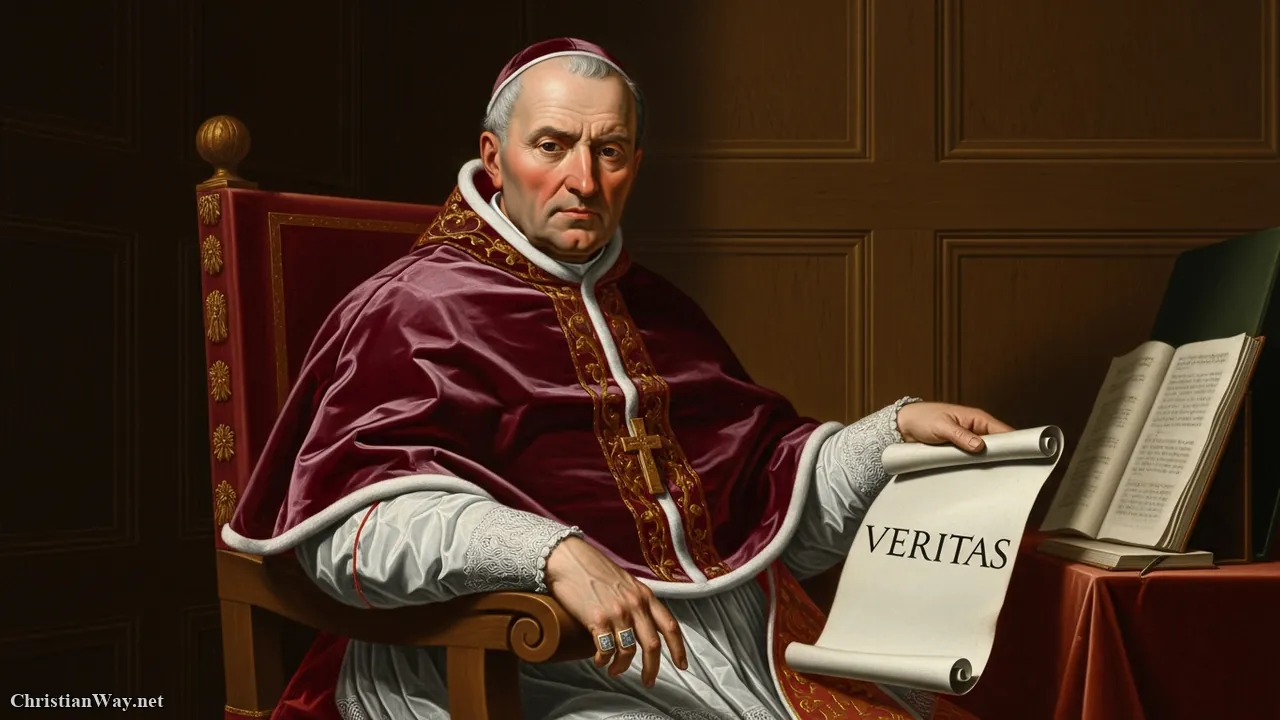
There are certain people whose presence seems to bring peace before they have spoken a word. Their strength does not come from noise, force, or the desire to be admired. It comes from a heart that has learned to trust God. Saint John XXIII was one of those souls. Known affectionately throughout the world as “the Good Pope,” he carried into the highest office of the Church the warmth of a parish priest, the patience of a father, and the quiet courage of a man who believed that the Holy Spirit had not ceased guiding the people of God.
His pontificate lasted less than five years, yet it changed the direction of Catholic life for generations. He called the Second Vatican Council, opened the Church more widely to dialogue with the modern world, encouraged Christians to seek unity, and wrote words of peace at a time when the world lived beneath the shadow of war and nuclear fear. But the deepest beauty of Saint John XXIII was not simply that he began important reforms. It was that he believed renewal begins in the heart. Before the Church can speak convincingly to the world, she must allow Christ to renew her from within.
Many people hear the word renewal and become uneasy. Some fear that renewal means abandoning the faith handed down by the apostles. Others believe that faithfulness requires preserving every habit simply because it is old. Saint John XXIII showed another way. He did not ask the Church to become less Christian in order to be accepted by the world. He asked the Church to become more fully herself: more faithful to the Gospel, more rooted in prayer, more attentive to human suffering, more willing to speak the truth with mercy, and more ready to carry the light of Christ into the wounds of the age.
His life is a consolation for those who feel small, tired, or uncertain. He reminds us that God often chooses people who do not appear extraordinary in the eyes of the world. He reminds us that holiness can be gentle. He reminds us that a smile can carry courage, that humility can become leadership, and that an elderly pastor can hear a new call from God when others assume his greatest work is already behind him.
As we reflect upon Saint John XXIII, we are invited to consider what renewal might mean in our own lives. Perhaps it is the renewal of prayer after years of distraction. Perhaps it is the renewal of hope after disappointment. Perhaps it is the renewal of a marriage, a family relationship, a parish, or a heart that has become tired of loving. The “Good Pope” teaches us that God is never finished calling His people forward.
The Humble Beginning of a Future Pope
Saint John XXIII was born Angelo Giuseppe Roncalli on 25 November 1881 in Sotto il Monte, near Bergamo in northern Italy. He came from a large farming family and was the fourth of thirteen children. His childhood was marked not by privilege or public importance, but by faith, work, simplicity, and the ordinary demands of family life. He was ordained a priest in 1904, carrying with him the practical wisdom and deep humanity of the rural home in which he had grown up.
There is something deeply beautiful in the beginning of his story. The Church did not receive a pope shaped only by palaces, books, or formal ceremonies. She received a shepherd shaped by the soil, by family prayer, by poverty, and by the ordinary struggles of ordinary people. Saint John XXIII knew the smell of the fields. He knew the labor of parents. He knew the faith of people who may not have spoken in theological language but who entrusted their lives to God through daily prayer, sacrifice, and trust.
This is a word of hope for every person who feels that their life is too hidden to matter. Perhaps your days seem small. Perhaps your work is unnoticed. Perhaps you wonder whether the long hours of caring for children, earning a living, serving your family, or quietly enduring hardship have any meaning in the sight of God. The life of Saint John XXIII tells us that God sees what the world overlooks. The Lord is able to form saints in kitchens, workshops, fields, schools, hospitals, and crowded homes.
Jesus Himself spent most of His earthly life hidden in Nazareth. Before He preached to the crowds, healed the sick, or carried the cross, He lived quietly with Mary and Joseph. The hidden years of Christ reveal that no faithful act is ever insignificant. A meal prepared with love, a burden carried patiently, a prayer whispered in exhaustion, a child taught to make the sign of the cross—these things may seem small, but they are seeds of holiness.
God Often Begins His Greatest Work in Hidden Places
Saint John XXIII understood that God does not usually begin with spectacle. He begins with a willing heart. The young Angelo Roncalli did not know that he would become pope. He did not know that he would one day stand before bishops from around the world and call the Church to a new season of renewal. He simply tried to be faithful to the grace given to him in the present moment.
This is how God often works in our lives as well. We may want to know the entire plan. We want to see where the road leads before we take the next step. Yet the Lord usually gives us enough light for today. He asks us to be faithful now: to pray now, forgive now, serve now, speak honestly now, begin again now.
The Psalmist says, “Thy word is a lamp unto my feet, and a light unto my path” (Psalm 119:105). A lamp does not reveal the entire road stretching into the distance. It gives light for the next few steps. Saint John XXIII walked in that kind of light. His life reminds us that faith is not always knowing where God will lead us. Faith is trusting the One who leads.
A Pastor Formed by Listening
Before becoming pope, Angelo Roncalli served the Church in many different places and roles. He worked as secretary to the Bishop of Bergamo, taught in the seminary, served as a military chaplain during the First World War, and later represented the Holy See in several countries. These years placed him among people of different cultures, languages, and religious traditions. They taught him to listen carefully, to understand before judging, and to recognize the humanity of people whose lives were very different from his own.
His long years of service formed in him a pastoral heart. He did not see the Church as an institution standing above humanity. He saw her as a mother called to walk beside humanity. He loved doctrine, tradition, prayer, and the sacraments. Yet he also understood that the truth of Christ must be spoken in a way that reaches the wounded, the poor, the anxious, and the searching.
This is one of the great gifts Saint John XXIII offers the Church today: the grace of listening. We live in a world where many people speak quickly but few listen deeply. Families speak over one another. Christians argue across divisions. Nations make judgments before understanding the pain of others. Even within our own hearts, we often listen more closely to fear than to God.
To listen is not weakness. It is a form of love. Jesus listened to the cries of the blind, the lonely, the sick, the sinner, and the grieving. He heard the woman who touched the hem of His garment. He heard Bartimaeus calling from the roadside. He heard the thief beside Him on the cross. Christ did not merely hear words; He heard hearts.
The Church Must Listen Before She Speaks
A renewed Church is not a Church that becomes silent about truth. It is a Church that listens deeply enough to speak the truth with compassion. Saint John XXIII understood that the Gospel must never be reduced to a collection of arguments. The Gospel is the living proclamation of Jesus Christ, who meets the human person in sin, suffering, confusion, longing, and hope.
There are people who have left the Church because they felt unseen. Some were wounded by harsh words. Some were treated as problems rather than persons. Some carry grief, shame, addiction, loneliness, or doubts they have never dared to speak aloud. The Church must never abandon the truth of Christ, but she must also never forget the tenderness of Christ.
When Jesus met the Samaritan woman at the well, He spoke truthfully about her life. Yet He did not begin by condemning her. He began by asking for water. He began with a human encounter. He allowed her to speak. He invited her into the truth slowly, personally, and mercifully.
This is the spirit Saint John XXIII desired for the Church: not compromise with sin, not fear of the world, but a maternal heart that knows how to welcome, listen, teach, heal, and guide.
The Pope Who Opened the Windows
When Angelo Roncalli was elected pope in 1958, many believed that he would serve as a gentle and transitional figure. He was already seventy-six years old. Yet God often surprises the world through people whom the world underestimates. Soon after his election, Pope John XXIII announced his intention to call an ecumenical council—a gathering of bishops from around the world to pray, discern, and consider how the Church might speak more clearly to the modern age.

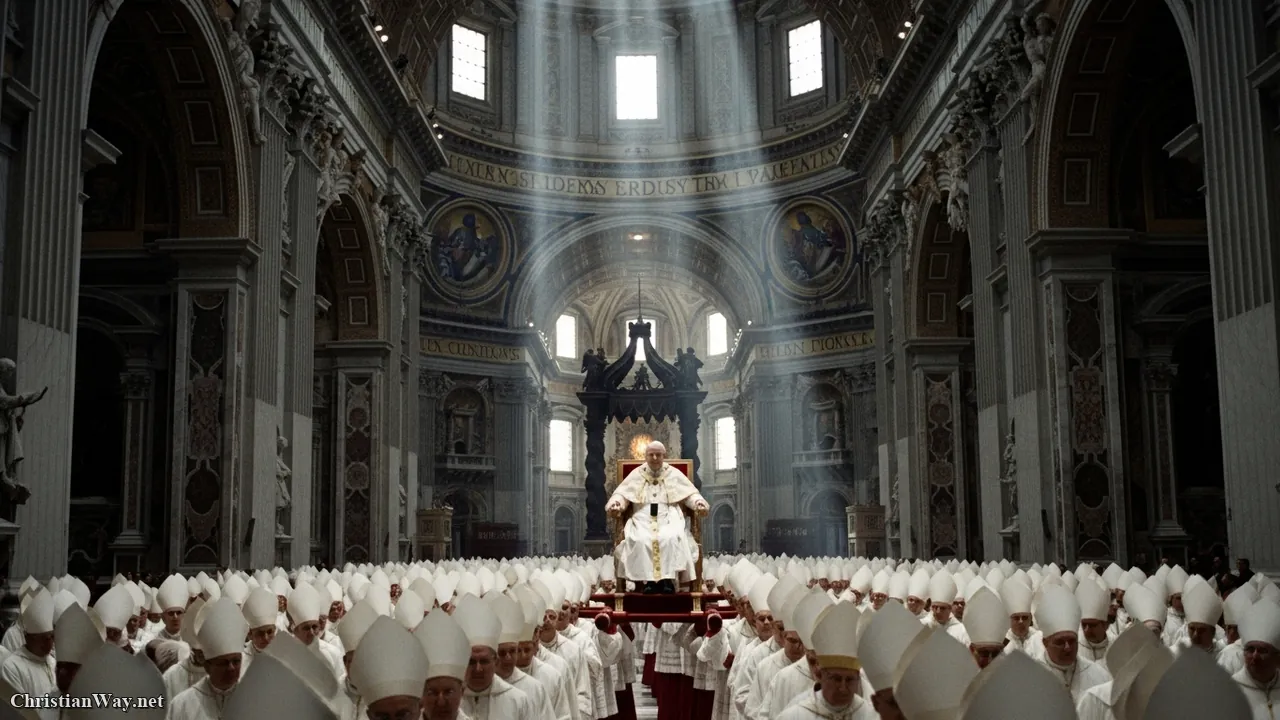
The Second Vatican Council opened on 11 October 1962. In the opening address, Saint John XXIII spoke of the joy of the Church as a mother and urged the Council Fathers to present the ancient faith in a way that could speak to the needs and questions of their time. He did not wish to alter the Gospel. He wished the Gospel to shine more clearly.
People often say that Saint John XXIII wanted to “open the windows” of the Church. The phrase captures something true, even if it can be misunderstood. He did not want to throw away the treasures of faith. He wanted fresh air to enter. He wanted the Church to look again at the world not with fear alone, but with the confidence that Christ is Lord of history.
The Church does not belong to one century, one culture, or one political movement. She belongs to Jesus Christ. For this reason, she must always remain rooted in the faith of the apostles, while also learning how to bring that faith into new languages, new wounds, and new questions.
Renewal Is Not the Same as Replacing the Faith
There is a temptation in every generation to confuse renewal with novelty. Some think that everything old must be discarded. Others think that anything new must be dangerous. Saint John XXIII offers a wiser path. True renewal is not forgetting who we are. It is returning more deeply to Christ.
A tree grows because its roots remain alive. If the roots are cut off, the tree does not become freer; it dies. In the same way, the Church can only bear fruit when she remains rooted in Scripture, the sacraments, the apostles, the saints, and the living tradition she has received from Christ.
Yet a healthy tree also grows new branches. It reaches outward. It bears fruit in new seasons. It offers shade to people who did not plant it. This is how renewal works in the Church. The truth remains the same, but the Church continually seeks better ways to speak that truth, live that truth, and share that truth with the world.
Saint John XXIII understood that the Church must never become a museum guarding precious objects while forgetting the people outside her doors. The Church is called to preserve the faith, yes—but she is also called to proclaim it. She is called to carry Christ into the streets, homes, hospitals, prisons, schools, workplaces, and lonely corners of the world.
The Spirit of Vatican II: Returning to Christ
The Second Vatican Council became one of the most important events in modern Catholic history. It called the Church to return more deeply to Scripture, to renew the liturgy, to strengthen the role of the laity, to seek Christian unity, to engage the world with hope, and to speak more clearly about the dignity of every human person.
Saint John XXIII did not live to see the Council completed. He died on 3 June 1963, after the first session had ended. Yet the spirit he brought to the Council continued through the work of Pope Paul VI and the bishops gathered from around the world. The Council was not an attempt to create a different Church. It was a call for the Church to rediscover the freshness of the Gospel.
At its heart, Vatican II reminded Christians that the Church is not merely a structure of authority. She is the Body of Christ. She is the People of God. She is a pilgrim people traveling through history toward the Kingdom of Heaven. Every baptized person has a place in her mission. The priest, the religious sister, the parent, the student, the worker, the elderly person, the sick person, and the child all belong to the life of the Church.
This truth is important because many Christians feel that holiness is for someone else. They may think that only priests, monks, nuns, or theologians are called to a deep spiritual life. But the Gospel calls every believer to holiness. The mother who prays while folding laundry, the father who remains honest in business, the young person who resists pressure to compromise, the elderly widow who offers her loneliness to God—all are called to become saints.
The Call to Holiness Belongs to Everyone
Saint Peter writes, “As he which hath called you is holy, so be ye holy in all manner of conversation” (1 Peter 1:15). Holiness is not an escape from ordinary life. It is the transformation of ordinary life through grace.
Saint John XXIII knew this from his own childhood. He had seen holiness in simple people. He had watched ordinary believers carry their crosses with dignity. He knew that faith was not only something spoken from pulpits; it was something lived in homes.
This is why renewal must begin personally. It is easy to speak about renewing the Church, renewing society, renewing politics, or renewing the world. But the first place God wishes to renew is the human heart. He asks each of us: Are you willing to forgive? Are you willing to pray again? Are you willing to let go of bitterness? Are you willing to serve rather than demand attention? Are you willing to love someone who cannot repay you?
The renewal Saint John XXIII desired was not a matter of slogans. It was a call to conversion. A Church renewed by the Holy Spirit is made up of people who are willing to repent, believe, forgive, serve, and begin again.
Christian Unity and the Desire of Christ
One of Saint John XXIII’s deepest hopes was for greater unity among Christians. The divisions among Catholics, Orthodox Christians, Anglicans, Protestants, and other Christian communities remain a sorrowful wound in the Body of Christ. We share baptism, Scripture, faith in Jesus Christ, and the longing for the Kingdom of God. Yet history, theology, politics, culture, and human sin have divided us.
Before His Passion, Jesus prayed for His disciples, “That they all may be one; as thou, Father, art in me, and I in thee” (John 17:21). Christian unity is not a fashionable idea. It is a desire that came from the heart of Christ Himself.
Saint John XXIII encouraged a new spirit of respect and dialogue. He understood that unity cannot come through pride, insults, or the denial of real differences. It must come through prayer, truth, repentance, friendship, and the work of the Holy Spirit.
True ecumenism does not mean pretending that doctrine does not matter. Doctrine matters because truth matters. But truth is not served by contempt. Christians do not honor Christ when they mock one another. We honor Him when we pray for one another, learn from one another, recognize the work of grace wherever it is found, and seek unity without abandoning faithfulness.
Unity Begins When We Stop Treating Others as Enemies
The divisions among Christians are mirrored in many homes and communities. Brothers and sisters stop speaking. Families divide over old hurts. Neighbors become enemies over politics. Christians sometimes speak of love but allow resentment to grow quietly in their hearts.
Saint John XXIII calls us back to the simplicity of the Gospel. Before we ask how the Church can be renewed, we might ask whether we are willing to make peace with the person we avoid. Before we speak about unity among Christians, we might ask whether there is someone in our own family whom we need to forgive.
Unity does not mean that every disagreement disappears. It means that love becomes stronger than the desire to win. It means that we choose to see another person first as someone made in the image of God.
The Church can speak credibly about unity only when Christians learn to practice unity in daily life. A parish renewed by love, a family renewed by forgiveness, a friendship renewed by humility—these are small signs of the Kingdom of God already breaking into the world.
Pacem in Terris: Peace Built on Truth and Love
Near the end of his life, Saint John XXIII gave the world one of his most enduring gifts: the encyclical Pacem in Terris, or Peace on Earth. Written in 1963 during a period of global fear and political tension, it spoke not only to Catholics but to “all people of good will.” It taught that true peace cannot be built upon fear, violence, domination, or lies. Peace must rest upon truth, justice, love, and freedom.
These words remain deeply needed today. Peace is often spoken about as though it simply means the absence of war. But Saint John XXIII saw more deeply. A nation may not be at war and yet many people may live without peace. There is no peace where families are crushed by poverty. There is no peace where workers are treated unjustly. There is no peace where children are unsafe. There is no peace where racism, hatred, corruption, violence, or exploitation are allowed to grow.
Peace begins with the recognition that every human being has dignity because every human being is created by God. This dignity does not depend upon wealth, race, ability, nationality, age, education, success, or usefulness. The unborn child, the elderly person, the poor family, the refugee, the prisoner, the sick person, and the forgotten person all carry the image of God.
Peace Begins in the Hidden Places of Life
It is easy to feel powerless when we look at war, division, injustice, and suffering in the world. Yet Saint John XXIII reminds us that peace is not only created in government buildings or international meetings. Peace begins in the home. It begins in the way we speak to our spouse. It begins in the way we correct our children. It begins in whether we spread rumors, carry resentment, speak dishonestly, or refuse to forgive.
A peaceful heart is not a heart without struggle. It is a heart that has learned to bring struggle to Christ. Jesus says, “Peace I leave with you, my peace I give unto you” (John 14:27). His peace is not fragile. It does not depend entirely upon favorable circumstances. It is the peace of a Savior who walks with us through storms.
Perhaps you are carrying conflict in your own heart. Perhaps there is someone whose name brings anger. Perhaps you are exhausted by worry. Saint John XXIII would gently point you toward Christ. Begin with a small prayer: “Lord, make peace in me.” Allow God to soften what has become hard. Allow Him to heal what has become bitter. Allow Him to teach you how to become an instrument of peace where you are.
The Good Pope Was Not a Naïve Pope
It is tempting to imagine that Saint John XXIII was simply cheerful and kind. He was indeed gentle, warm, and approachable. But his goodness was not naïve. It was the fruit of deep faith, prayer, discipline, and trust in God.
A truly good person is not someone who ignores evil. A good person sees evil clearly but refuses to become evil in response. A good person tells the truth without delighting in humiliation. A good person protects the vulnerable. A good person carries responsibility without becoming hard-hearted.
Saint John XXIII lived through war, political upheaval, division, and fear. He knew that human beings are capable of terrible things. Yet he never surrendered to despair. He believed that Christ remained Lord of history. He believed that the Holy Spirit still worked in the Church. He believed that the Gospel could still speak to a wounded world.
This is a needed lesson for our time. Many people are exhausted by constant bad news. They feel that the world is becoming colder, more divided, and less merciful. The temptation is to retreat into anger, cynicism, or indifference.
But the saints teach another way. They do not deny darkness. They carry light into it.
Goodness Requires Courage
The world often sees kindness as weakness. Yet it takes great strength to remain kind when one has been misunderstood. It takes courage to forgive when pride wants revenge. It takes grace to protect the dignity of someone who cannot offer us anything in return.
Saint John XXIII’s goodness was not a personality trait alone. It was a spiritual discipline. It came from his relationship with Christ. He prayed. He examined his conscience. He remained close to Scripture. He trusted the Church. He believed that holiness must be lived, not merely discussed.
This is why he remains so beloved. People sensed that he was real. He did not speak of mercy as an idea. He carried mercy in his manner. He did not speak of the poor as a distant social issue. He saw them as brothers and sisters. He did not speak of unity as political strategy. He desired unity because he loved Christ and loved the people for whom Christ died.
A Saint for Those Who Fear Change
Many of us fear change because we have been hurt by it. A job changes. A relationship changes. A child grows up. Health declines. A loved one dies. The Church itself may sometimes feel unfamiliar to us as generations change and cultures shift.
Saint John XXIII teaches that not all change is betrayal. Sometimes change is the way God leads us into deeper faithfulness. Abraham had to leave his homeland. Moses had to lead a frightened people through the wilderness. Mary had to say yes to a future she could not fully understand. Peter had to leave his fishing nets. The disciples had to learn that the risen Christ would send them beyond the places they knew.
Renewal does not mean abandoning what is sacred. It means allowing God to bring new life where fear has settled. A heart renewed by Christ does not become rootless. It becomes more deeply rooted in God.
Perhaps God is inviting you to renewal in a small way. Maybe you need to return to Sunday worship after a long absence. Maybe you need to open the Bible again. Maybe you need to ask forgiveness. Maybe you need to allow someone else to help you. Maybe you need to let go of a habit that has slowly taken peace from your heart.
Saint John XXIII would not ask you to change everything at once. He would likely encourage you to begin with prayer, humility, and trust. God is patient. He does not break the bruised reed. He does not extinguish the faintly burning wick. He leads gently, but He does lead.
In the Light of the Good Pope
Dear friends, Saint John XXIII teaches us that renewal is possible because Christ is alive. The Church is not renewed by anxiety, bitterness, or the desire to be fashionable. She is renewed when she returns again and again to Jesus Christ.
The “Good Pope” reminds us that holiness can be warm. It can smile. It can listen. It can welcome. It can speak truth without cruelty. It can carry the burdens of the world without losing hope.
May Saint John XXIII pray for the Church in every land. May he pray for pastors who are tired, for families who are struggling, for Christians divided from one another, and for all who long for peace. May he help us welcome the Holy Spirit with courage, humility, and joy.
Let us pray.
Lord Jesus Christ, You called Saint John XXIII to serve Your Church with gentleness, courage, and hope. Renew our hearts where they have become weary. Teach us to love Your Church more deeply, to seek peace more faithfully, and to welcome Your Holy Spirit with trust. Make us humble enough to listen, brave enough to speak the truth, and merciful enough to serve those who are wounded. May the joy of the Gospel shine through our lives, and may Your peace dwell richly in our hearts. Amen.
— Fr. John Matthew