Dear friends in Christ,
There are times when power seems so strong that ordinary people begin to believe it can decide everything. A ruler makes a demand, a wealthy person uses influence, a crowd insists that right and wrong should change according to convenience, and many hearts grow quiet because they fear the cost of speaking the truth. Yet the Gospel quietly reminds us that no earthly authority is greater than God, no human title is higher than the Lordship of Christ, and no person stands beyond the reach of the moral law.
Saint Nicholas I, remembered as Nicholas the Great, lived in such a time. He served as Bishop of Rome from 858 until his death in 867, during a difficult period when Christian rulers, bishops, and political factions often struggled for influence. His greatness did not come from wealth, military strength, or worldly ambition. It came from a steady conviction that kings, popes, bishops, and ordinary believers alike are answerable to the truth of God.
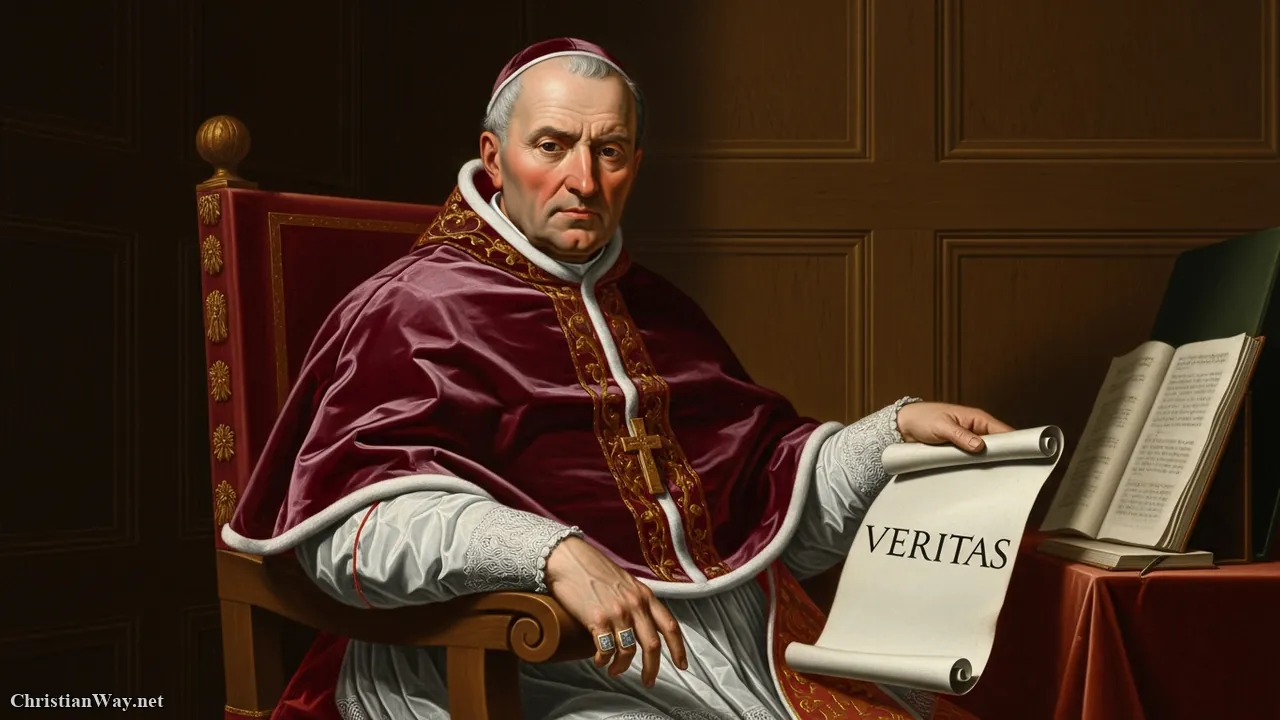
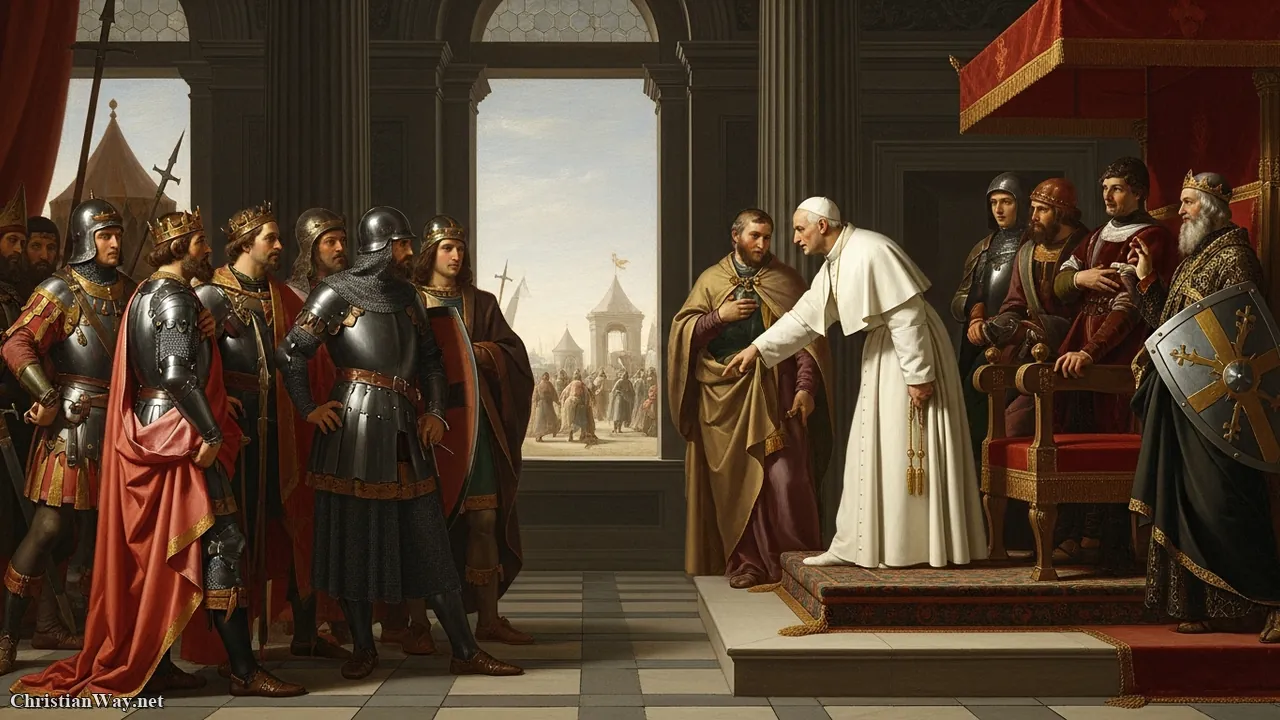
His life is especially remembered because he refused to allow royal pressure to overturn the sacred promises of marriage. When King Lothair II sought to set aside his wife, Queen Theutberga, in order to marry another woman, Nicholas defended the permanence of marriage despite immense political pressure. His stand became one of the clearest examples in the early medieval Church of a pastor insisting that divine law cannot be reshaped merely because the powerful desire another outcome.
To remember Saint Nicholas I is not merely to revisit an old dispute between a pope and a king. His witness speaks to every heart that must choose between convenience and conscience, between fear and faithfulness, between the approval of the world and the quiet voice of God. He reminds us that Christian courage is not harshness, pride, or rebellion. It is the humble willingness to stand beneath the authority of Christ, even when doing so costs us comfort, security, or praise.
A Shepherd in a Troubled Christian World
The ninth century was not an easy age for the Church. The great political unity once associated with the empire of Charlemagne had weakened. Rival kingdoms and regional powers competed for influence. Many bishops were caught between pastoral responsibility and political loyalties. Christian society was divided by ambition, family alliances, military conflict, and the desire of rulers to control religious life.
Nicholas was born into a respected Roman family and served the Church before becoming pope. He was elected in 858 and soon became known for his intelligence, pastoral energy, and firm understanding of the responsibilities entrusted to the Bishop of Rome. He did not think of his office as a private honor. He understood it as a service to the faith, to the unity of the Church, and to the protection of those whose voices might otherwise be ignored.
This was important because the Church does not exist merely to bless the decisions of the powerful. The Church exists to proclaim Jesus Christ. She is called to teach the truth, celebrate the sacraments, care for the poor, defend human dignity, and remind every generation that God’s commandments are not chains but paths toward life.
Saint Nicholas I knew that the Church could not remain faithful if bishops became servants of political convenience. A shepherd who changes the Gospel whenever a ruler becomes angry may preserve peace for a moment, but he will eventually lose the truth that gives peace its foundation.
The words of the Apostles in the Acts of the Apostles express this conviction with beautiful simplicity: “We ought to obey God rather than men” (Acts 5:29). These words do not teach Christians to despise civil authority, reject society, or live in constant conflict. Scripture also teaches respect for rightful authority and concern for the common good. But when human commands oppose the moral law, the Gospel, or the dignity of persons, the Christian conscience must remain faithful to God.
The Catechism expresses this same principle clearly: civil authority deserves respect, yet citizens are not bound in conscience to obey directives that contradict the moral order, fundamental human rights, or the Gospel.
Saint Nicholas lived this truth long before modern language about conscience and human rights became common. He understood that even a king could not declare evil to be good. Even a pope could not change what Christ had taught. Even a powerful churchman could not use authority to crush the weak.
Divine Law Is Not a Weapon of the Powerful
It is important to understand what divine law means. Some people hear the phrase and imagine rules imposed coldly from above, as though God were distant from human suffering and concerned only with punishment. But divine law is not the cruelty of a tyrant. It is the wisdom of a loving Father.
God’s law shows us how life is meant to flourish. It protects the dignity of persons. It guards the sacredness of marriage. It calls the strong to responsibility and the weak to hope. It warns us against betrayal, violence, deceit, exploitation, and pride because these things wound the human heart.
The moral law is not God’s way of making life smaller. It is His way of keeping us from destroying ourselves and one another. The Church teaches that moral law is rooted in divine wisdom and leads humanity toward its true good and final happiness.
Saint Nicholas I understood that law must never become a tool used only against the poor or powerless. It must be applied with truth and justice to everyone. A peasant could not break a marriage promise simply because he desired another life. Neither could a king.
This is why his witness remains so powerful. He did not uphold divine law only when it was easy. He upheld it when the person resisting it possessed armies, allies, wealth, and political influence.
Many of us will never stand before kings or emperors. Yet we encounter smaller versions of the same temptation every day. We may be urged to compromise our values to keep a job, gain approval, avoid embarrassment, or preserve a friendship. We may be pressured to remain silent when someone is treated unfairly. We may be tempted to excuse dishonesty because “everyone does it.” We may tell ourselves that a promise no longer matters because keeping it has become difficult.
Saint Nicholas asks us a quiet but searching question: What governs my choices when obedience becomes costly?
Is it the fear of losing comfort? Is it the desire to please others? Is it the pressure of public opinion? Or is it the love of Christ?
The Marriage of King Lothair II and Queen Theutberga
The most famous event in the life of Saint Nicholas I involved King Lothair II of Lotharingia and his wife, Queen Theutberga. Lothair wanted to leave Theutberga and marry Waldrada, a woman with whom he had already formed another relationship. Political concerns, personal desire, and the question of producing an heir all surrounded the case.
Local church assemblies supported Lothair’s effort to set aside Theutberga. Some bishops gave decisions favorable to the king, and pressure grew for Rome to approve what had already been arranged politically. To many observers, it may have seemed easier for Nicholas simply to accept the decision of the powerful.
But Nicholas refused.
He examined the case and rejected the attempt to overturn the marriage. He also refused to accept the judgment of the Council of Metz in 863, which had favored Lothair’s position. The pope’s decision brought conflict with influential bishops and provoked serious political tension, but Nicholas remained firm.
The significance of this moment is deeper than a medieval legal dispute. Saint Nicholas was defending the conviction that marriage is not merely a temporary arrangement controlled by status, wealth, or royal desire. Marriage is a covenant. It is a sacred promise in which two persons give themselves to one another before God.
Jesus Himself spoke with solemn clarity: “What therefore God hath joined together, let not man put asunder” (Mark 10:9).
These words are not meant to burden people who carry painful stories. They are not meant to become stones thrown at those whose marriages have been wounded, broken, or affected by abandonment, betrayal, violence, or grave suffering. Christ always sees the whole human heart. He never speaks without mercy.
But mercy is not the same as pretending that promises do not matter. True mercy does not deny the truth of love. It helps us face the truth with tears, repentance, courage, forgiveness, and hope.
Saint Nicholas defended Theutberga not because he wanted to create political conflict, but because he believed that a Christian marriage could not be discarded simply when a ruler desired a different future. In doing so, he defended not only a queen, but the dignity of every spouse whose faithfulness might be treated as less important than someone else’s power.
The Church continues to teach that marriage is marked by unity, fidelity, and permanence, reflecting the faithful love of Christ for His Church.
The Courage to Protect the Vulnerable
In every generation, there are people who appear strong because they possess titles, money, public influence, or many supporters. There are also people who seem weak because they lack protection, influence, or a powerful voice.
The Gospel teaches us to look beyond appearances.
The widow who prays alone may be stronger before God than a king surrounded by soldiers. The child who tells the truth may be stronger than the adult who uses fear to control others. The spouse who remains faithful in suffering may possess a courage the world cannot measure.
Saint Nicholas I stood beside a woman whose situation had become entangled in royal ambition. He did not treat her life as a political inconvenience. He did not accept the idea that her dignity could be sacrificed to preserve a ruler’s desires.
This is one of the most beautiful dimensions of his witness. He reminds us that Christian leadership must never protect only those who can repay it. The shepherd must care especially for those who are overlooked, silenced, or harmed by the decisions of the powerful.
Jesus tells us that the good shepherd lays down his life for the sheep. He does not abandon them when danger arrives. He does not choose the wealthy sheep over the wounded sheep. He does not turn away because protecting them may be inconvenient.
Many people today know what it feels like to be overlooked. Some are ignored within their families. Some are treated unfairly at work. Some carry the weight of a broken relationship while others tell them to “move on” without listening to their pain. Some are elderly, sick, poor, lonely, or quietly ashamed of their failures.
Saint Nicholas teaches us that no one should be treated as disposable.
A Christian community becomes truly beautiful when it refuses to measure people by usefulness, wealth, public image, education, or influence. Every person bears the image of God. Every person deserves respect. Every wounded heart deserves to be seen with compassion.
Authority Must Serve Truth
One of the greatest temptations in human life is to believe that authority belongs to us personally. A parent may think, “My children must obey because I am in charge.” A leader may think, “My employees exist to carry out my will.” A pastor may think, “My role gives me the right to dominate.” A political leader may think, “My office places me above criticism.”
But Christian authority is never meant to be domination.
Jesus said to His disciples, “Whosoever will be great among you, shall be your minister” (Matthew 20:26). He did not deny that leadership exists. He transformed its meaning. Greatness in the Kingdom of God is not found in controlling others, but in serving them.
Saint Nicholas I understood the papacy in this light. He exercised authority firmly, but he believed that authority was accountable to the faith received from Christ and handed down through the Apostles. He did not defend divine law because he wanted to make himself greater. He defended it because the Church belongs to Christ.
This is a lesson for every form of leadership.
Parents are called to guide their children not by fear, but by patient love. Teachers are called to educate not merely by giving orders, but by awakening wisdom and confidence. Priests and pastors are called to shepherd people toward Christ, not toward dependence on themselves. Political leaders are called to seek justice and the common good, not merely personal success.
Even in ordinary relationships, we exercise forms of authority. An older sibling can influence a younger one. A manager can shape the life of employees. A friend can influence another friend through words and example. The question is always the same: Do I use my influence to serve truth and love, or to satisfy myself?
Saint Nicholas reminds us that true authority bows before God.
The Church Must Be Free to Speak the Gospel
The life of Saint Nicholas I also teaches us about the freedom of the Church. The Church must be free to preach Christ even when Christ’s teaching is uncomfortable. She must be free to protect the sacraments, defend the dignity of marriage, call sinners to repentance, and speak for those who cannot speak for themselves.
This freedom does not mean that the Church should seek political domination. The Church is not called to become an empire. Christ Himself refused worldly power when it would have distracted from His mission.
But neither can the Church become merely an echo of whatever society already believes.
When the Church speaks only what is popular, she no longer speaks prophetically. When she changes her teaching whenever powerful people are displeased, she loses her ability to guide consciences. When pastors fear the reaction of the world more than they fear betraying Christ, the flock is left without clear direction.
Saint Nicholas knew that the Church must sometimes say “no.”
No, marriage cannot be treated as a disposable agreement.
No, power does not place anyone above truth.
No, bishops may not manipulate the faith for political favors.
No, the vulnerable cannot be abandoned so that the powerful may be satisfied.
No, conscience cannot be silenced whenever it becomes inconvenient.
Yet the Christian “no” is never the final word. God’s final word is always an invitation to return, to be healed, to receive mercy, and to begin again.
This is why the moral teaching of the Church must always be joined with pastoral love. Truth without compassion can become cold. Compassion without truth can become empty. In Christ, truth and mercy belong together.
A Difficult Relationship Between East and West
Saint Nicholas I also lived during tensions between Rome and Constantinople. One major conflict concerned the removal of Patriarch Ignatius of Constantinople and the rise of Photius as patriarch. The dispute involved questions of canon law, political pressure, ecclesial authority, and the relationship between the churches of East and West.
This history is complex, and Christians should approach it with humility. Catholic and Orthodox traditions do not always interpret the events of the ninth century in the same way. The conflict surrounding Ignatius and Photius became part of the longer and painful history of growing division between Eastern and Western Christianity.
Saint Nicholas believed that the Church’s order could not simply be altered by political force. He was concerned about the legitimacy of ecclesial decisions and the freedom of the Church to act according to canonical order rather than imperial convenience.
At the same time, the history of these divisions should make us humble. Christians are called to defend truth, but never to delight in separation. We are called to honor our convictions, but never to speak with contempt about fellow Christians. We are called to pray for unity, not because unity means ignoring every difference, but because Christ prayed that His disciples would be one.
Jesus prayed, “That they all may be one; as thou, Father, art in me, and I in thee” (John 17:21).
The divisions of history are painful. They remind us that human pride, political rivalry, cultural misunderstanding, and wounded memory can all become obstacles to the unity Christ desires. Saint Nicholas’s life therefore calls us not only to courage, but to prayerful humility.
We must never confuse firmness with hostility. We must never mistake agreement with unity, or disagreement with hatred. Christian truth should always be spoken with the gentleness of Christ.
What Divine Law Means for Our Daily Lives
The phrase “divine law above kings” can sound distant from ordinary life. Most of us do not live in royal courts. We do not receive letters from emperors. We are not asked to judge disputes between nations.
But every day, we face the question of what will govern our hearts.
Will we obey God when no one is watching?
Will we remain honest when dishonesty would make life easier?
Will we keep our promises when they become difficult?
Will we refuse to join in cruelty when others laugh at someone’s pain?
Will we respect marriage, family, life, and human dignity when the world tells us these things are negotiable?
Will we forgive when anger feels justified?
Will we pray when prayer feels dry?
Will we return to Christ when we have fallen?
These are not small questions. They are the places where holiness is formed.
Saint Nicholas I did not become great because he never faced fear. He became great because he did not let fear rule him. He did not allow pressure to replace conscience. He did not allow convenience to become his god.
The saints often seem extraordinary because they lived in dramatic times. Yet their holiness is usually built from ordinary faithfulness. They prayed. They listened to Scripture. They served. They repented. They endured criticism. They trusted God when the future was unclear.
This is the path open to us as well.
You may be a parent trying to raise children with faith in a world full of distraction. You may be a spouse trying to remain patient and loving in a difficult season. You may be a worker trying to stay honest in a workplace where others cut corners. You may be a young person trying to remain pure of heart when others mock your values. You may be older and carrying loneliness, illness, or grief.
In each of these places, Christ is near.
The Lord does not ask us to become famous. He asks us to become faithful.
Conscience Formed by Prayer and Truth
One of the greatest gifts God gives us is conscience. Conscience is not merely a feeling that tells us what we like or dislike. It is the inner sanctuary where the human person recognizes the call of truth and hears the voice of God.
Yet conscience must be formed.
A conscience shaped only by public opinion will shift with every trend. A conscience shaped only by fear will become anxious and weak. A conscience shaped only by self-interest will excuse almost anything.
But a conscience formed by Scripture, prayer, worship, repentance, wise counsel, and love becomes strong without becoming hard.
Saint Nicholas I was able to resist powerful pressure because his conscience was anchored in something greater than politics. He was not trying to preserve his personal reputation. He was trying to remain faithful to Christ.
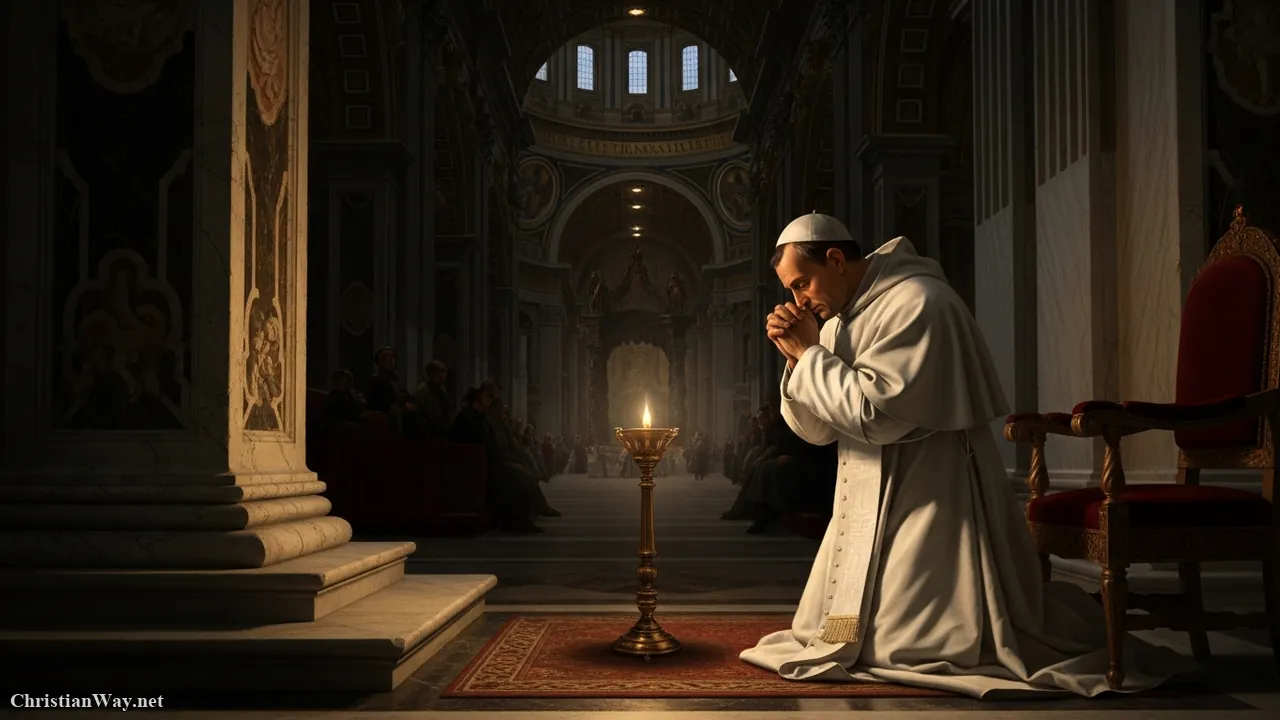
This is why prayer matters so much. Prayer helps us remember that God is God and we are not. It brings our desires into the light. It helps us see where pride has entered the heart. It gives us strength to say “yes” when love demands sacrifice and “no” when sin asks for permission.
A Christian who prays sincerely may still struggle, still make mistakes, and still need forgiveness. But the heart slowly becomes more free. It becomes less controlled by fear, applause, anger, desire, and the opinions of others.
Saint Nicholas invites us to ask: Is my conscience formed by Christ, or merely shaped by the loudest voice around me?
The Greatness of Moral Courage
The world often calls someone great because of military success, wealth, popularity, intellectual brilliance, or political influence. But in the Kingdom of God, greatness is measured differently.
Greatness is measured by love.
Greatness is measured by truthfulness.
Greatness is measured by the courage to protect the weak.
Greatness is measured by fidelity when compromise would be easier.
Saint Nicholas I is called “the Great” not because he conquered nations, but because he refused to let worldly power overturn the law of God. He stood firm when others wished him to yield. He defended a sacred promise when powerful people wished to dissolve it. He served the freedom of the Church when political pressure tried to make the Church obedient to royal desire.
Such courage is needed in every age.
Our world needs Christians who are gentle but not weak, compassionate but not confused, humble but not afraid. It needs fathers and mothers who teach their children that truth is beautiful. It needs priests and pastors who love their people enough to speak honestly. It needs young people who understand that purity is not shame, but freedom. It needs workers who refuse corruption. It needs families who pray together. It needs believers who defend human dignity without hatred.
Saint Nicholas I reminds us that holiness is not passive. Holiness does not simply avoid wrongdoing. It also stands beside what is good.
Reflect and Pray
Dear friends, Saint Nicholas I lived in a world where political pressure, personal ambition, and ecclesial conflict could easily have weakened the witness of the Church. Yet he remained faithful to Christ. He remembered that no king is above God, no promise is meaningless before the Lord, and no vulnerable person should be sacrificed to the desires of the powerful.
May his example give us courage in our own smaller but deeply important struggles. May we learn to obey God with humility, to speak truth with compassion, to honor our promises with faithfulness, and to protect those who are easily overlooked.
Let us pray:
Lord Jesus Christ,
You are the true King of every heart and every nation.
Teach us to love Your commandments
not as burdens, but as paths of freedom and peace.
Through the example of Saint Nicholas I,
give us courage when truth is difficult,
gentleness when others are wounded,
wisdom when we must make hard decisions,
and humility when we are tempted by pride.
Protect marriages, heal broken hearts,
strengthen families, guide Your Church,
and help us to obey You above every fear.
May Your grace make us faithful
in all that we promise, suffer, and love. Amen.
May the peace of Christ guard your conscience, strengthen your faith, and lead you always in the way of truth and mercy.
— Fr. John Matthew