Dear friends in Christ,
There are some figures in Christian history whose names seem to carry the weight of an entire age. Pope Innocent III is one of them. His pontificate unfolded at a time when kingdoms were rising and falling, when Europe was deeply shaped by the Christian faith, when monasteries, universities, parishes, and pilgrimages formed the spiritual landscape of ordinary life. Yet it was also a time of violence, political ambition, division, poverty, and human weakness. Into that complicated world came a pope who believed with unusual intensity that Christ must be honored not only in the sanctuary, but also in the conscience of rulers, the conduct of clergy, the care of the poor, and the moral life of the whole Christian people.
To speak of Pope Innocent III is to speak about authority. But it is not enough to speak about authority as power, influence, or the ability to command. The Gospel always asks a deeper question: What is authority for? Is it meant to exalt the person who possesses it, or is it meant to serve the people entrusted to that person’s care? Jesus Himself answered this question when He said, “You know that the rulers of the Gentiles lord it over them… It shall not be so among you. But whoever would be great among you must be your servant” (Matthew 20:25–26).
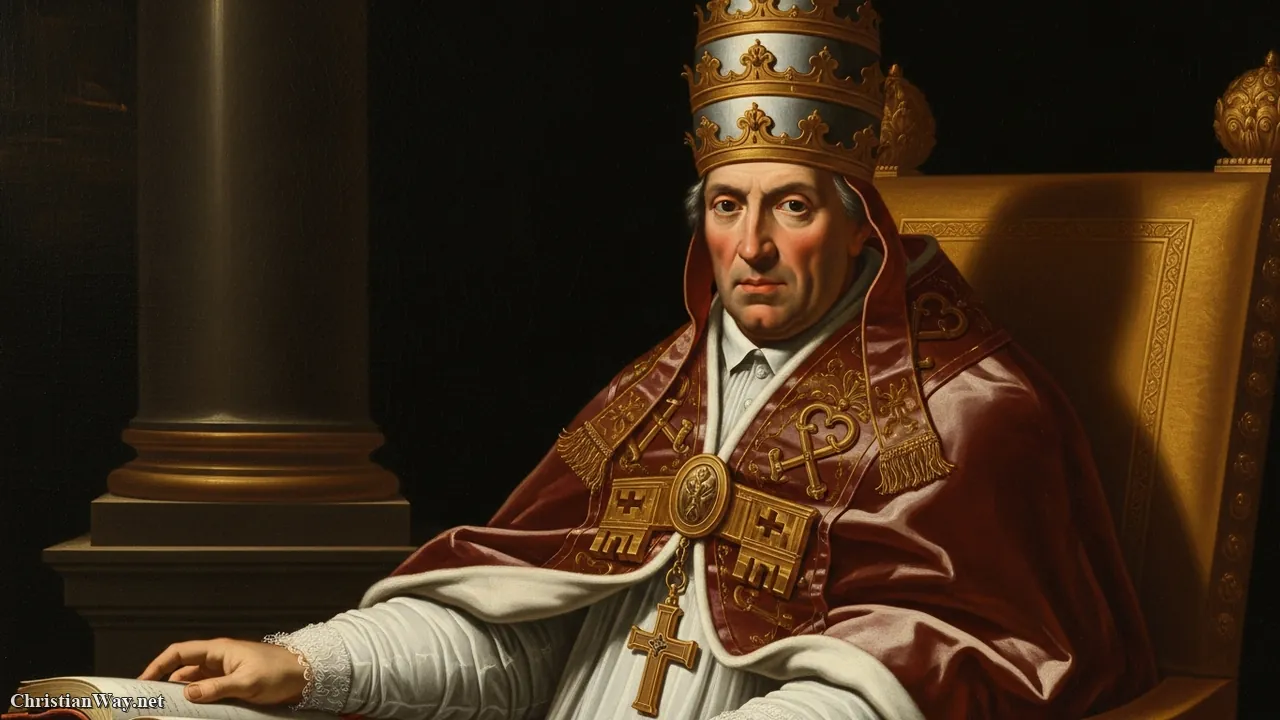
Pope Innocent III lived close to the tension between these two visions of authority. He was one of the most influential popes of the Middle Ages. He intervened in the affairs of kings, defended the freedom of the Church, called councils, encouraged reform, supported emerging religious movements, and helped shape the public life of Christian Europe. Yet his era also reminds us that whenever spiritual authority becomes entangled with political force, human ambition, fear, and conflict, the Church must return again and again to the face of Christ.
The story of Pope Innocent III is not a simple story of triumph. It is a story of grandeur and sorrow, reform and struggle, courage and complexity. It invites us to reflect upon the authority of the Church, the meaning of the papacy, the dangers of worldly power, and the enduring truth that every Christian leader must remain a servant beneath the Cross. For even the greatest authority in the Church finds its true meaning only when it leads souls closer to Jesus Christ.
A Young Pope in a Changing World
Pope Innocent III was born Lotario dei Conti di Segni around the year 1160. He received a serious education in theology, philosophy, law, and Church governance. Before becoming pope, he had already shown himself to be a gifted thinker and a man of deep spiritual seriousness. He wrote about the weakness of human life, the mystery of the Eucharist, the duties of clergy, and the responsibility of the Church to guide souls toward salvation.
When he was elected pope in 1198, he was still relatively young. Yet the years ahead would place him at the center of some of the greatest religious and political questions of medieval Europe. His pontificate lasted from 1198 until his death in 1216, and historians often describe it as one of the high points of medieval papal influence.
But we must remember that historical influence is not the same as holiness. A person may have power and still lack wisdom. A leader may be admired and still fail to love. A Church may possess outward strength and still need inner conversion. Pope Innocent III understood that the Church could never be reduced to a political institution, even though she existed within the political realities of the world.
The Church is the Body of Christ. She is a people gathered by grace, nourished by the Word of God, sanctified through the sacraments, and sent into the world to proclaim the Gospel. She must therefore be free to worship, to teach, to correct, to forgive, and to care for souls. This conviction was central to Pope Innocent III: the Church could not faithfully serve Christ if she became merely an instrument of kings, nobles, armies, or political factions.
In every century, this remains true. The Church must never belong to an ideology. She must never become the possession of a nation, a political party, a wealthy class, or a powerful family. Her deepest identity is found in Christ alone. When she remembers this, she becomes a light for the world. When she forgets it, she begins to lose the simplicity and freedom of the Gospel.
The Inner Life of a Man of Authority
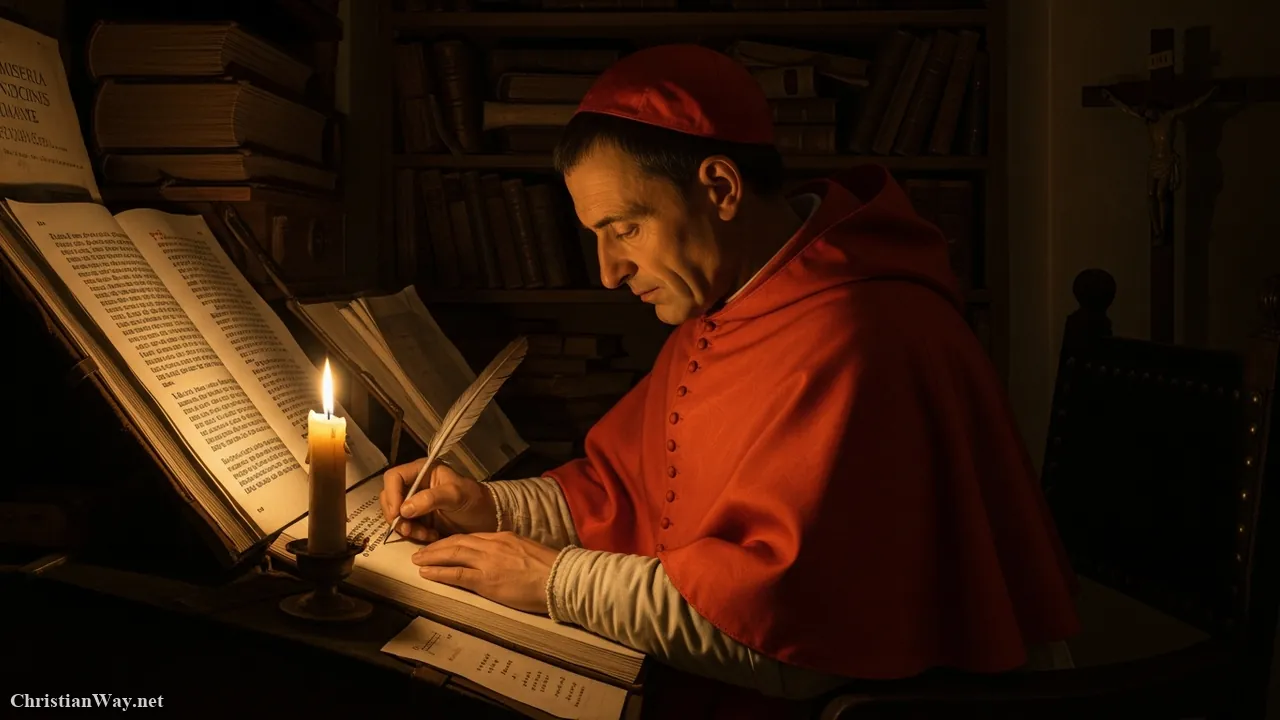
Before Pope Innocent III became known for his influence over kings and kingdoms, he was a man who wrote honestly about the frailty of human life. One of his early works, often translated as On the Misery of the Human Condition, reflects on mortality, weakness, sin, and the limits of earthly ambition.
This is important because it reveals something that can easily be forgotten when we look at powerful historical figures. Innocent III knew that no human being, however intelligent or influential, escapes death. No crown can save the soul. No title can erase sin. No political victory can satisfy the deepest hunger of the human heart.
The world often tells us that success is the highest good. It urges us to become important, admired, wealthy, strong, or influential. Yet the Gospel asks something more profound. It asks whether we have become humble. It asks whether we love God. It asks whether we have learned to forgive. It asks whether our lives are becoming more like Christ.
Pope Innocent III stood before kings, emperors, bishops, abbots, and nobles. But like every human soul, he also stood before God. This is the truth that gives spiritual meaning to authority: every person who leads must one day answer to the Lord for how that authority was used.
The father must answer for how he loved his family. The teacher must answer for how he formed the minds entrusted to him. The priest must answer for how he cared for souls. The bishop must answer for how he protected the flock. The ruler must answer for how he treated the weak. And every Christian must answer for whether he or she used the gifts of God for love or for self.
The Meaning of “Vicar of Christ”
The title associated with Pope Innocent III in this article is deeply significant: the Vicar of Christ. For Catholic Christians, the pope is understood as the successor of Saint Peter, called to serve the unity of the Church and to strengthen his brothers and sisters in faith. Jesus said to Peter, “You are Peter, and on this rock I will build my church” (Matthew 16:18). He also said, “I have prayed for you that your faith may not fail. And when you have turned again, strengthen your brothers” (Luke 22:32).
But the title Vicar of Christ should never be misunderstood. It does not mean that the pope replaces Christ. No bishop, priest, pastor, teacher, or Christian leader can take the place of Jesus. Christ alone is the true Head of the Church. Christ alone is the perfect Shepherd. Christ alone is the Savior of the world.
To be the Vicar of Christ is to be called to represent Christ’s care, Christ’s truth, Christ’s mercy, and Christ’s concern for unity. It is not a title of worldly glory. It is a title of spiritual responsibility. The pope is not called to gather honor around himself, but to point the Church toward the One who washed the feet of His disciples.
Pope Innocent III possessed a strong vision of papal authority. He believed that the Bishop of Rome had a unique responsibility to guard the unity and freedom of the Church. In his age, kings and emperors often tried to influence bishops, control Church offices, and use religious authority for political purposes. Innocent believed that the Church must be free to carry out her mission without being ruled by secular ambition.
This conviction was not without controversy. Christians from different traditions have understood the role of the papacy in different ways. Catholic Christians see the papacy as a ministry of unity rooted in the succession of Peter. Orthodox Christians honor the ancient primacy of Rome while differing over the later development of papal jurisdiction. Protestant Christians often emphasize the authority of Scripture and the shared priesthood of all believers, while remaining cautious about concentrated ecclesial power.
These differences should not lead us to hostility. They should lead us to prayer. For all Christians can agree on this: authority in the Church must be shaped by the humility of Christ. Wherever authority becomes proud, self-protective, cruel, or disconnected from the suffering of ordinary people, it has lost sight of the Gospel.
The Authority of the Cross
Jesus did not rule from a golden throne. He ruled from the Cross.
This is the mystery that must always stand at the center of Christian authority. The Cross reveals that the greatest power is love. The greatest victory is sacrifice. The greatest king is the One who gives His life for His people.
When Pope Innocent III defended the authority of the papacy, he did so because he believed that the Church needed freedom to fulfill her mission. But every Christian leader must remember that authority is never an end in itself. Authority exists so that the Gospel may be preached, the sacraments celebrated, the poor cared for, the truth defended, and sinners welcomed home.
The Cross protects us from worshiping power. It reminds us that Christian leadership is not domination. It is responsibility. It is patience. It is service. It is willingness to bear the burdens of others.
A mother who stays awake beside a sick child understands something of this authority. A father who sacrifices his comfort for the good of his family understands something of this authority. A priest who listens patiently to the broken-hearted understands something of this authority. A teacher who refuses to give up on a struggling student understands something of this authority.
The world may not call these people powerful. But heaven sees them differently.
The Zenith of Papal Power
The phrase “the zenith of papal power” is often used when speaking of Pope Innocent III. During his pontificate, the papacy reached a level of influence over European affairs that had rarely been seen before. Kings sought papal approval. Rulers feared papal censures. Disputes between kingdoms could be shaped by the judgment of Rome. Bishops, abbots, princes, and noble families all understood that the pope was no longer merely a distant spiritual figure.
Pope Innocent III became involved in the complex politics of the Holy Roman Empire, France, England, and other parts of Europe. He believed that rulers were accountable before God and that kings could not simply act as though their power were absolute. This was a bold claim in a world where rulers often treated their kingdoms as personal possessions.
One of the most famous conflicts of his pontificate involved King John of England. When King John resisted the appointment of Stephen Langton as Archbishop of Canterbury, Pope Innocent III placed England under an interdict in 1208. The interdict severely limited public sacramental life and created enormous pressure on the king. King John was later excommunicated, and the conflict continued until reconciliation was reached.
To modern readers, such actions can feel severe. We may rightly ask whether spiritual penalties should ever become instruments within political conflict. This is an important question, and it should not be dismissed. History teaches us that even when leaders act with sincere intentions, the use of spiritual authority can have painful consequences for ordinary people.
Yet we should also understand the world in which Innocent lived. Kings often controlled Church offices, seized Church property, manipulated bishops, and treated the Church as an extension of royal power. Innocent believed that the Church had to defend her freedom, not for the sake of privilege, but for the sake of the Gospel.
Still, the lesson for us is not that the Church should seek worldly dominance. The lesson is that spiritual freedom matters. The Church must be free to speak truth to the powerful. She must be free to defend the weak. She must be free to say that no king, no ruler, no government, and no wealthy person stands above the moral law of God.
When Power Becomes a Temptation
Every good thing can become distorted when it is separated from humility.
Authority can become control. Leadership can become pride. Discipline can become harshness. Loyalty can become blindness. Even religious language can be used to protect personal ambition.
This is why Pope Innocent III’s life invites us not only to admire the strength of the medieval papacy, but also to ask what kind of power Christians should desire today.
Do we desire the power to serve, or the power to be admired?
Do we desire influence so that we can protect the vulnerable, or so that we can win arguments?
Do we want the Church to be respected because she reflects Christ, or because we want her to dominate society?
These are difficult questions. But the Gospel is always difficult because it asks us to look honestly at our hearts.
Jesus warned His disciples not to imitate the rulers who “lord it over” others. He called them instead to become servants. This does not mean that Christian leaders should be weak or afraid. Sometimes love requires courage. Sometimes truth must be spoken clearly. Sometimes injustice must be confronted. But Christian strength must always remain close to mercy.
Pope Innocent III understood the need for firmness. The Church today must also understand the need for tenderness.
The Fourth Lateran Council: Reforming the Church from Within
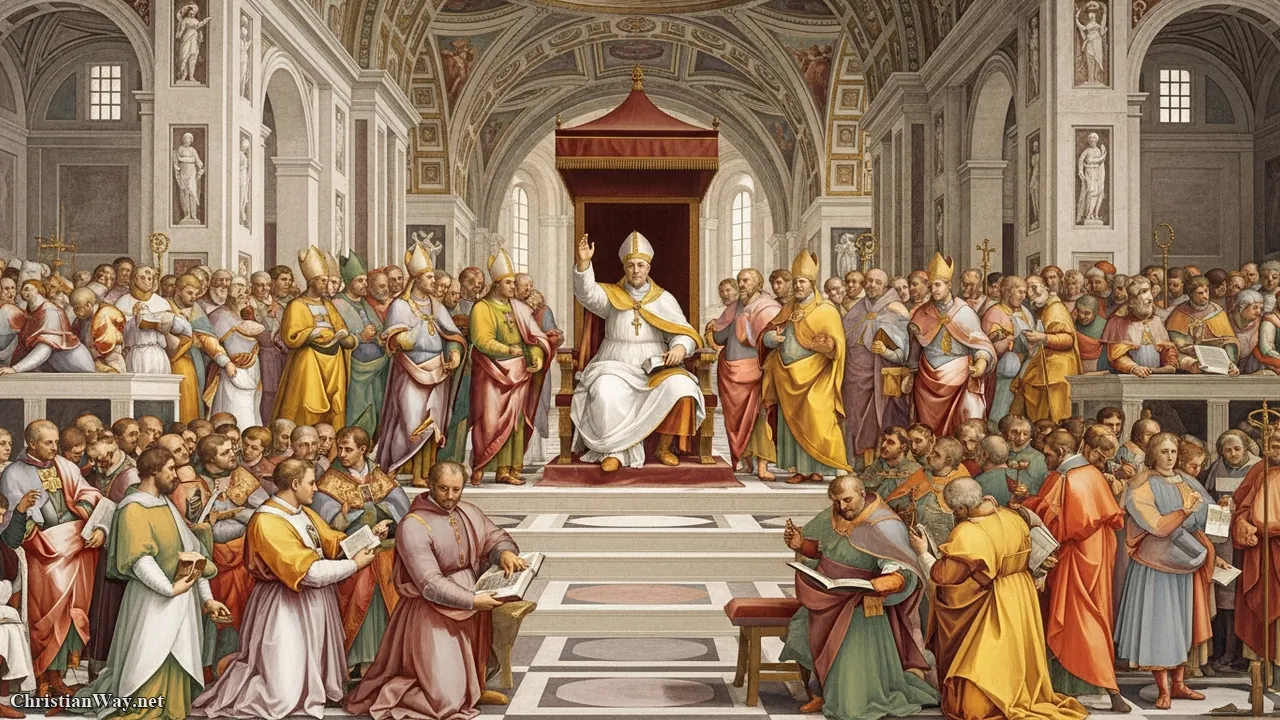
Perhaps the greatest spiritual legacy of Pope Innocent III was the Fourth Lateran Council, convened in 1215. It was one of the most important councils of the Middle Ages, bringing together bishops, abbots, religious leaders, and representatives of Christian Europe. The council addressed doctrine, worship, clerical life, preaching, reform, confession, and the moral life of the faithful.
The Fourth Lateran Council was not merely concerned with Church politics. At its heart was a desire for renewal. The Church needed better preaching. Clergy needed deeper formation. Christians needed more regular participation in the sacramental life. Bishops needed to take more seriously their responsibility to care for souls.
One of the council’s most enduring decisions was its call for Catholics who had reached the age of discretion to confess serious sins at least once a year and to receive Holy Communion during the Easter season. This was not meant to reduce faith to a minimum obligation. It was meant to remind Christians that the sacraments are not distant ceremonies but the living medicine of grace.
Confession is one of the quiet miracles of the Christian life. The world often tells us to hide our weakness, defend our mistakes, or blame others. But in confession, the soul is invited to step into the light. We do not confess because God needs information. He already knows us completely. We confess because we need healing. We need to name the sin that has wounded us. We need to receive mercy. We need to begin again.
The Fourth Lateran Council also affirmed the Church’s faith in the Eucharist. It spoke of the profound mystery by which Christ becomes truly present in the sacramental gift of His Body and Blood. For Catholic Christians, the Eucharist is not merely a symbol of Christ’s love. It is Christ giving Himself to His people.
This is why the Mass is so central to the Christian life. In the Eucharist, the Church does not simply remember something that happened long ago. She enters again into the mystery of Christ’s sacrifice, death, resurrection, and eternal love.
Reform Must Reach the Ordinary Christian
One of the beautiful things about the Fourth Lateran Council is that it did not speak only to kings, bishops, or scholars. It also spoke to ordinary believers.
The Church is not renewed only when leaders make decisions. She is renewed when families pray together. She is renewed when husbands and wives forgive each other. She is renewed when young people learn to love truth. She is renewed when Christians seek confession sincerely. She is renewed when the poor are treated with dignity. She is renewed when worship becomes more than habit and becomes an encounter with God.
Sometimes we imagine that reform must always be dramatic. We think of councils, movements, public speeches, great reforms, and famous leaders. But the deepest reform often happens quietly.
It happens when a person stops holding onto resentment.
It happens when a father admits that he has been impatient.
It happens when a mother returns to prayer after a long period of spiritual dryness.
It happens when a young person chooses honesty instead of compromise.
It happens when someone who has been far from the Church walks into a chapel and whispers, “Lord, I want to come home.”
Pope Innocent III understood that the Church needed reform. But the Church is not renewed only by laws. She is renewed by saints. She is renewed by repentance. She is renewed by prayer.
The Church Must Also Remember Her Wounds
We must speak honestly about history. The Fourth Lateran Council included important reforms, but some of its decrees also reflected the prejudices and harsh social attitudes of medieval Europe. Certain canons imposed discriminatory measures upon Jewish and Muslim communities, including requirements concerning distinctive dress. These measures are a painful reminder that Christians have not always lived faithfully according to the dignity and love taught by Jesus Christ.
The Gospel calls Christians to love the neighbor, welcome the stranger, and recognize the dignity of every human person. Jesus spoke with those whom society rejected. He touched the leper. He welcomed the sinner. He praised the faith of outsiders. He taught that love of God and love of neighbor cannot be separated.
Whenever Christians have treated other peoples with contempt, fear, or injustice, they have betrayed the spirit of Christ. This must be said clearly. The Church does not become weaker when she acknowledges the failures of her children. She becomes more truthful. And truth is always the beginning of healing.
Pope Innocent III lived in a world very different from ours. We should seek to understand his time without pretending that every decision of that era should be celebrated. Christian faith does not ask us to worship the past. It asks us to receive what is holy, repent of what was sinful, and allow the Holy Spirit to lead us more deeply into truth.
This is also important for our own lives. We are often quick to judge people from the past, while failing to see our own blind spots. We may condemn old forms of prejudice while ignoring the people we avoid today. We may criticize the cruelty of earlier centuries while speaking harshly about those who disagree with us. We may grieve historical injustice while remaining indifferent to the suffering near us.
The humble Christian does not only ask, “What did they do wrong?” The humble Christian also asks, “Lord, where am I still blind?”
Francis of Assisi and the Power of Holy Poverty
One of the most beautiful connections in the life of Pope Innocent III is his relationship with the early Franciscan movement. Saint Francis of Assisi appeared in Rome not as a prince, scholar, or powerful churchman, but as a poor man whose heart had been captured by the Gospel.
Francis and his companions desired to live simply, preach repentance, serve the poor, and follow Christ in poverty. Their way of life seemed radical. They had little wealth, little influence, and no worldly status. Yet they carried something that many powerful people lack: spiritual freedom.
Tradition remembers that Pope Innocent III gave approval to Francis and his first followers, allowing their movement to grow within the life of the Church. The early Franciscan community would become one of the great spiritual renewals of Christian history.
There is a deep lesson here. Pope Innocent III represented the height of papal authority. Francis represented the humility of evangelical poverty. One stood at the center of Church governance. The other walked barefoot through the countryside preaching peace.
Yet both were needed.
The Church needs order, teaching, sacraments, bishops, councils, and pastoral authority. But she also needs the witness of those who remind her that the Gospel is not about status. She needs saints who live simply enough to expose the false promises of wealth. She needs men and women who love Christ so deeply that they are not afraid to look foolish in the eyes of the world.
Saint Francis teaches us that the Church is not renewed merely by becoming more powerful. She is renewed by becoming more like Jesus.
The Smallness That Saves the Church
The world is impressed by size. It admires crowds, wealth, buildings, armies, platforms, and influence. But God often begins His greatest works through what seems small.
A child in Bethlehem.
A fisherman beside a lake.
A widow giving two small coins.
A poor man named Francis repairing a broken chapel.
A sinner kneeling in confession.
A mother praying beside a hospital bed.
A lonely person opening the Bible at night.
These are not small things in the eyes of God.
Pope Innocent III had to recognize this when he encountered Francis. The Church needed reform, but that reform would not come only from papal decrees or councils. It would also come through a poor man who had fallen in love with Christ.
Perhaps this is one of the greatest lessons of Pope Innocent III: authority must be humble enough to recognize holiness when it appears in unexpected places.
The Church must listen not only to scholars and leaders, but also to the poor, the suffering, the hidden, the faithful elderly woman praying the rosary, the young person quietly serving the homeless, the missionary in an unknown village, the family that remains faithful through hardship.
God still speaks through the small.
The Shadow of the Crusades
No honest reflection on Pope Innocent III can ignore the Crusades, especially the Fourth Crusade. Innocent called for a new crusade with the stated purpose of recovering the Holy Land. Yet the campaign became tragically diverted. Instead of reaching its intended destination, the crusading army became involved in attacks upon Christian cities, including the capture and sack of Constantinople in 1204.
The Fourth Crusade remains one of the most painful chapters in the history of Christian division. Constantinople was not merely another city. It was one of the great centers of Eastern Christianity. The sack deepened the wound between Latin and Greek Christians and left memories that would endure for centuries.
Historical evidence shows that Pope Innocent III did not intend the crusade to attack Constantinople and had opposed attacks upon Christian cities. Yet the tragic outcome unfolded during his pontificate, and his later response did not erase the suffering or division that had been caused.
This is a sober lesson. Even when leaders begin with a noble intention, events can move in destructive directions. Political interests, money, fear, rivalry, and human sin can corrupt a mission that once appeared righteous.
Christians must therefore be careful whenever religious language is attached to violence, conquest, or hatred. The name of Christ must never become a banner beneath which human ambition marches.
Jesus said, “Blessed are the peacemakers, for they shall be called sons of God” (Matthew 5:9). He told Peter to put away his sword. He forgave those who crucified Him. He entered Jerusalem not upon a warhorse, but upon a donkey.
The Church must always remember this.
A Call to Healing Between Christians
The divisions between Catholic, Orthodox, and Protestant Christians are not merely theological questions. They are wounds in the Body of Christ.
We should not ignore our differences. Truth matters. Doctrine matters. History matters. But love also matters. Jesus prayed that His disciples might be one “so that the world may believe” (John 17:21).
The Fourth Crusade reminds us how easily Christians can wound one another when power, fear, and rivalry take the place of charity. Today, we need a renewed spirit of humility among all Christians.
Catholics must listen with respect to the wounds remembered by Orthodox brothers and sisters. Orthodox Christians must be received not as strangers, but as beloved fellow disciples of Christ. Protestants must be honored as brothers and sisters who confess Jesus as Lord and seek to live according to the Gospel.
Unity will not come through pretending that our differences do not exist. It will come through prayer, repentance, honest dialogue, and a deeper desire to love Christ more than we love our own pride.
Pope Innocent III and the Need for a Free Church
One of the central concerns of Pope Innocent III was the freedom of the Church. He believed that the Church had been entrusted with a spiritual mission that could not be controlled by kings or reduced to political convenience.
This remains an important truth today.
The Church must be free to preach the Gospel even when the Gospel is unpopular.
She must be free to defend unborn life, the poor, the elderly, the migrant, the prisoner, and the forgotten.
She must be free to call people to repentance without becoming a servant of cultural fashion.
She must be free to tell the powerful that wealth does not make injustice acceptable.
She must be free to remind every nation that human dignity comes from God.
But freedom for the Church is not freedom from responsibility. The Church is free so that she may serve. She is free so that she may love. She is free so that she may be the conscience of the world, not its echo.
Whenever the Church becomes too comfortable with wealth, political influence, or public approval, she risks losing her prophetic voice. Whenever she becomes afraid to speak truth because she wants to preserve favor, she risks becoming silent where Christ calls her to speak.
Pope Innocent III saw the danger of secular rulers controlling the Church. Today we must also see the danger of the Church being controlled by ideology, money, celebrity culture, nationalism, or fear of criticism.
The Church belongs to Christ.
This is why she must always return to prayer.
Faith in Real Life: Authority in Our Homes and Hearts
Most of us will never stand before kings. We will never call a council. We will never govern a nation or lead a worldwide Church. But the spiritual questions raised by Pope Innocent III touch every one of us.
How do we use the authority we have?
A parent has authority in the home.
A teacher has authority in the classroom.
An employer has authority in the workplace.
An older sibling has authority over a younger child.
A friend may have influence over someone who is vulnerable.
A Christian may have authority simply because others listen to his or her words.
The question is always the same: Do we use our influence to serve, or to control?
A father who corrects his child with patience reflects the authority of Christ.
A mother who teaches her children to pray reflects the authority of Christ.
A manager who treats workers fairly reflects the authority of Christ.
A husband who listens to his wife with tenderness reflects the authority of Christ.
A wife who forgives with courage reflects the authority of Christ.
A young person who refuses to mock another student reflects the authority of Christ.
The deepest authority does not come from titles. It comes from holiness.
A holy person may speak softly, but their life carries weight.
A humble person may have no public power, yet their love changes a family.
A faithful person may never become famous, yet their prayers may save souls known only to God.
Pope Innocent III reminds us that authority matters. Saint Francis reminds us that humility matters. Christ teaches us that authority without humility is dangerous, while humility without courage can become weakness.
The Christian life calls us to both: courage and humility, truth and mercy, strength and gentleness.
Reflect and Pray
Dear friends, Pope Innocent III stands before us as a reminder that the Church must never forget her mission. She is called to guard the truth, celebrate the sacraments, protect the weak, call sinners to repentance, and proclaim Jesus Christ to the world.
His life also reminds us that authority is always a sacred trust. It can be used to build up or to wound. It can protect the Gospel or obscure it. It can become a path of service or a temptation to pride.
May we learn from the strengths of Pope Innocent III: his desire for reform, his defense of the Church’s freedom, his concern for the sacramental life, and his recognition that the Christian faith must shape the moral life of society.
May we also learn from the painful shadows of his age: that no human authority is perfect, that Christians must never use the name of Christ to justify hatred or violence, and that the Church is always called to repentance, humility, and deeper love.
Let us pray:
Lord Jesus Christ, You are the true Shepherd of Your people and the eternal Head of Your Church. Teach us to use every gift, every responsibility, and every form of authority in the spirit of Your Cross. Give us courage to defend the truth, humility to admit our failures, compassion for those who suffer, and a heart that seeks unity among all who call upon Your holy name. May Your Church remain free to serve You, and may our lives reflect Your mercy in the world. Amen.
May the peace of Christ guard your heart, the wisdom of Christ guide your decisions, and the humility of Christ lead you ever closer to His holy love.
— Fr. John Matthew