Dear friends in Christ,
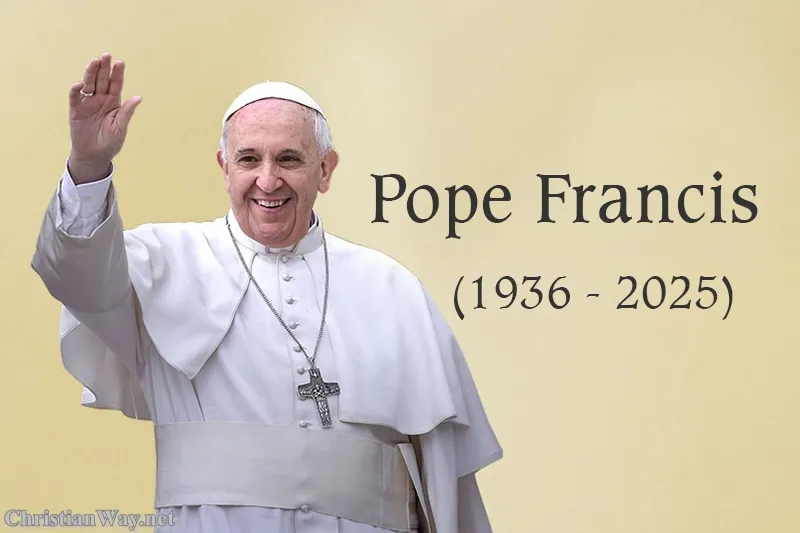
Many people, whether Catholic, Protestant, Orthodox, searching, or simply curious, have asked a question that reaches deeply into the life of the Church: Why do Catholics have a Pope? To some, the Pope appears as a distant religious leader dressed in white, speaking from Rome to millions of believers around the world. To others, he may seem like a symbol of authority, history, or tradition. Yet for Catholics, the Pope is meant to be something more personal and more spiritual: a servant called to help preserve the unity of the Church, strengthen believers in faith, and point all people toward Jesus Christ.
The Pope is not Jesus Christ. He is not another Savior. He does not replace the Bible, stand above God’s Word, or possess authority apart from Christ. Catholics believe that Jesus alone is Lord, Redeemer, Shepherd, and Head of the Church. The Pope is a human being, a sinner in need of mercy like every other Christian. His role is not to draw attention away from Christ, but to serve the Church in Christ’s name.
To understand why Catholics have a Pope, we must begin not with Rome, medieval politics, Vatican buildings, or papal ceremonies. We must begin with Jesus. We must begin with the Gospel. We must begin with a moment when Christ looked at a fisherman named Simon and gave him a new name: Peter.
That moment has shaped Christian history for nearly two thousand years. It has also remained a subject of discussion, devotion, disagreement, and prayer among Christians of different traditions. Yet beneath every question about the Pope lies a beautiful and essential truth: Christ loves His Church. He did not leave His followers as scattered individuals, each alone with their own interpretation, their own strength, and their own private path. He gathered a people. He formed a community. He gave shepherds to care for the flock. And He prayed that His disciples would be one.
The papacy, in Catholic understanding, is not meant to be a monument to human power. It is meant to be a ministry of unity, service, and faithfulness. It is meant to remind the Church that she belongs to Christ and that she is called to remain close to the apostolic faith handed down from the beginning.
Jesus Christ Is the True Head of the Church
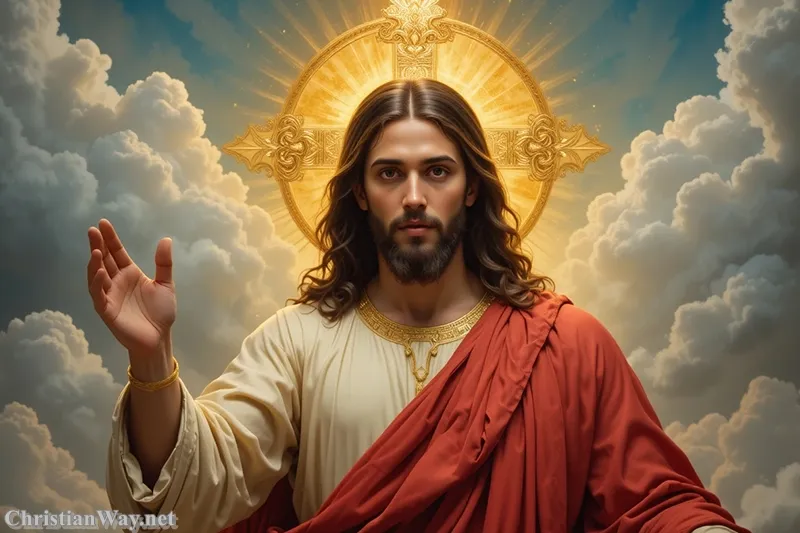
Before speaking about the Pope, it is necessary to say clearly that Jesus Christ alone is the head of the Church. Catholics do not believe that the Pope takes Christ’s place in the sense of replacing Him. The Church belongs to Jesus. He founded her, redeemed her through His Cross, gave her life through His Resurrection, and remains present within her through the Holy Spirit.
Saint Paul writes that Christ is “the head of the body, the church” (Colossians 1:18). This means that the Church is not ultimately held together by human intelligence, political organization, money, popularity, or personality. She is held together by Christ.
The Pope is therefore not the owner of the Church. He is a servant within the Church. He is called to guard what belongs to Christ, not to invent a different faith. He is called to preserve unity, not to create divisions. He is called to teach the Gospel, not to replace it with his own ideas.
This is why one of the traditional titles of the Pope is “Servant of the Servants of God.” It is a humble title. It reminds the world that Christian leadership is different from worldly power. In the world, leaders often seek honor, influence, comfort, and control. But Jesus taught His disciples another way.
When the apostles began to argue about who among them was the greatest, Jesus said, “Whosoever will be chief among you, let him be your servant” (Matthew 20:27). This is the heart of Christian authority. The greatest leader is not the one who is most admired, feared, or obeyed. The greatest leader is the one who serves most faithfully.
The Pope is called to live this kind of service. He is called to carry the burdens of the Church, pray for her, defend the poor, encourage the faithful, guide bishops, and preserve the truth entrusted to the apostles.
Of course, Popes are human. Some have been saints. Some have been wise teachers. Some have been courageous defenders of justice. Others have been weak, flawed, politically distracted, or personally sinful. Catholic faith does not claim that every Pope has been holy in every decision or perfect in every action.
The mystery is not that Popes are always extraordinary people. The mystery is that Christ continues to guide His Church through fragile human beings.
Peter: The Fisherman Chosen by Christ
The story of the Pope begins with Saint Peter.
Peter was not introduced to us in the Gospels as a polished scholar, a powerful ruler, or a man who had everything under control. He was a fisherman from Galilee. He worked with his hands. He knew the hardship of labor, the uncertainty of the sea, and the ordinary struggles of daily life.
When Jesus called him, Peter left his nets and followed. Yet Peter’s path was never simple. He loved Jesus deeply, but he also misunderstood Him. He spoke boldly, but he also acted impulsively. He promised loyalty, but he later denied Christ three times.
Peter was brave enough to step out of the boat onto the water, yet fearful enough to begin sinking when he looked at the storm instead of at Jesus. He was eager to defend Christ with a sword, yet unable to stand openly beside Him during the night of the Passion.
This is one of the reasons Peter is so dear to the Church. He was not chosen because he was perfect. He was chosen because Christ saw what grace could make of him.
Jesus did not wait until Peter had become flawless before entrusting him with responsibility. He called him, corrected him, forgave him, strengthened him, and sent him forth.
This gives hope to every Christian.
God does not call only the strong. He calls the willing.
God does not work only through those who have never failed. He works through those who return to Him.
God does not choose people because they never fear. He chooses people who learn to trust Him even when fear is present.
Peter’s life is therefore not merely a story of leadership. It is a story of mercy.
“Thou Art Peter”: The Promise of Christ
One of the most important passages for Catholics is found in the Gospel of Matthew. Jesus asks His disciples, “Whom say ye that I am?” After others offer different answers, Peter responds with a confession of faith: “Thou art the Christ, the Son of the living God” (Matthew 16:16).
Jesus then says to Peter:
“Thou art Peter, and upon this rock I will build my church; and the gates of hell shall not prevail against it. And I will give unto thee the keys of the kingdom of heaven” (Matthew 16:18–19).
For Catholics, these words are foundational. Jesus gives Simon a new name: Peter, meaning rock. This new name is not given casually. In Scripture, when God gives someone a new name, it often marks a new mission.
Abram becomes Abraham.
Jacob becomes Israel.
Simon becomes Peter.
Jesus declares that He will build His Church upon this rock. Catholics understand this not as a claim that Peter is the Savior, but as a sign that Christ gives Peter a special role in strengthening and serving the unity of the Church.
The Church is built by Christ. Christ is the true foundation. Yet Christ chooses to work through Peter in a visible way.
This is similar to the way God works throughout Scripture. God alone saves, but He calls Moses to lead Israel. God alone speaks truth, but He calls prophets to proclaim His word. God alone gives grace, but He works through human beings who become instruments of His love.
Peter is not the source of the Church. He is a servant within the Church.
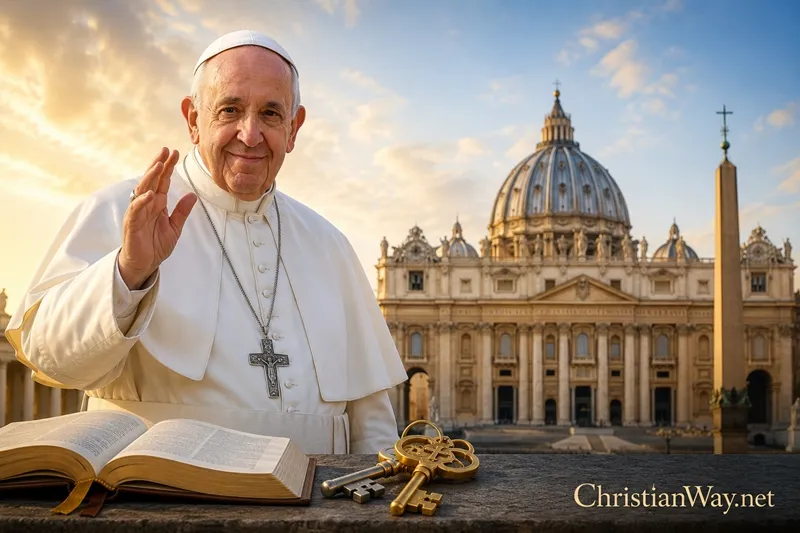
The image of the keys is also important. In the ancient biblical world, keys represented authority and responsibility. The person entrusted with keys was given a role of stewardship. He did not own the house. He cared for it on behalf of the true master.
The Pope, as successor of Peter, is understood in this light. He does not own the Church. He is entrusted with a responsibility: to guard the faith, preserve unity, and serve the people of God.
“Strengthen Thy Brethren”: Peter’s Mission of Faith
Another important passage appears in the Gospel of Luke. At the Last Supper, Jesus speaks directly to Peter and says:
“Simon, Simon, behold, Satan hath desired to have you, that he may sift you as wheat: but I have prayed for thee, that thy faith fail not: and when thou art converted, strengthen thy brethren” (Luke 22:31–32).
These words are tender and deeply revealing.
Jesus knows that Peter will fail. He knows Peter will deny Him. Yet Jesus does not abandon him. Instead, He prays for him. He tells Peter that after he has turned back, he must strengthen his brothers.
This is the heart of the Petrine ministry: strengthening the brethren.
The Pope’s role is not meant to be a display of superiority. It is meant to be a service of encouragement. In times of confusion, the Pope is called to strengthen believers. In times of division, he is called to call the Church back to unity. In times of fear, he is called to remind Christians of the faith passed down from the apostles.
There is something beautiful here. Peter, the one who denied Christ, becomes the one called to strengthen others.
The person who knew weakness becomes a source of encouragement.
The person who wept after failure becomes a witness to mercy.
The person who once trembled before a servant girl becomes the one who speaks boldly on Pentecost.
This is how Christ works. He does not erase Peter’s weakness as though it never happened. He transforms it. Peter’s failure becomes part of his humility. His brokenness becomes part of his compassion.
The Church needs this kind of leadership. Not leadership that pretends never to struggle, but leadership that knows the mercy of Christ.
“Feed My Sheep”: The Call to Shepherd
After the Resurrection, Jesus meets Peter by the Sea of Galilee. It is a quiet and moving scene. The risen Lord has prepared a meal for His disciples. After they eat, Jesus turns to Peter and asks him three times, “Lovest thou me?” (John 21:15–17).
Peter answers each time that he loves the Lord.
And each time, Jesus gives him a command:
“Feed my lambs.”
“Feed my sheep.”
“Feed my sheep.”
Many Christians see in this threefold question a healing of Peter’s threefold denial. Peter denied Christ three times. Now, three times, he is invited to confess his love.
But Jesus does not stop there. He gives Peter a mission. Feed the sheep.
The sheep do not belong to Peter. They belong to Christ.
Jesus says, “My sheep.”
This is important for understanding the Pope. The Pope is not the master of the Church. Christ is the Good Shepherd. The Pope is called to serve as a shepherd under Christ, caring for a flock that belongs to the Lord.
A shepherd protects, guides, feeds, and remains near the flock. A shepherd does not use the sheep for his own gain. A shepherd does not abandon them when wolves come. A shepherd does not lead them toward danger.
This is the ideal of the papacy. The Pope is called to be a visible sign of pastoral care for the whole Church.
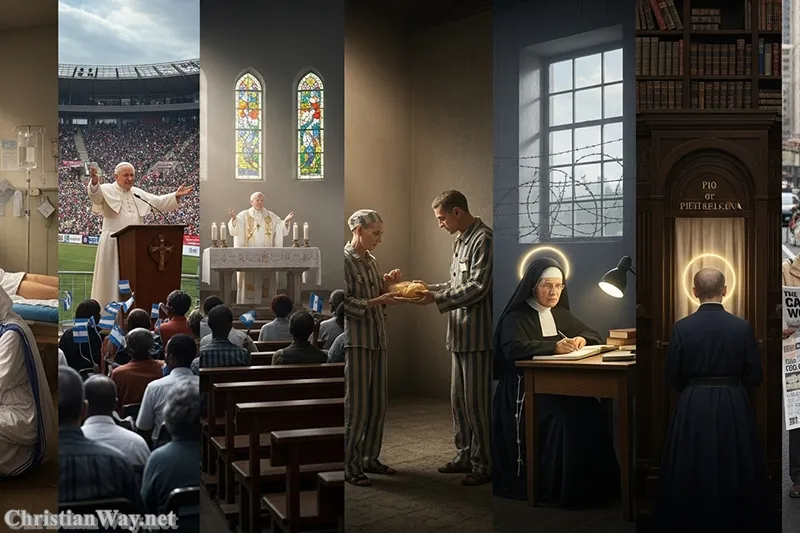
Throughout history, Popes have often spoken in defense of the poor, refugees, prisoners, the unborn, the elderly, families, workers, and people suffering from war or injustice. They have also called Christians to prayer, repentance, charity, and peace.
At his best, the Pope does not speak as a celebrity. He speaks as a shepherd who points toward Christ.
Why Catholics Believe the Pope Is the Successor of Peter
Catholics believe that Peter eventually came to Rome, preached the Gospel there, and was martyred for Christ. Rome became especially significant because Peter’s ministry and martyrdom were connected with that city.
The Bishop of Rome came to be seen as the successor of Peter, carrying forward Peter’s role of service to the unity of the Church.
This does not mean that the Pope is considered greater in holiness than every other bishop, priest, pastor, or Christian. Holiness is measured by love, not office. A humble grandmother who prays faithfully, forgives generously, and loves quietly may be far holier than a famous religious leader.
But the Pope has a particular ministry.
The Bishop of Rome is called to help preserve the visible unity of the Church throughout the world. Catholics believe that this ministry of unity belongs to the Church’s structure from the beginning, even though the way it developed and was exercised became clearer over centuries.
The early Church was not made up of isolated groups with no connection to one another. Christians wrote letters across regions. Bishops gathered to discuss controversies. Churches looked to apostolic teaching as a guide. Rome held a special place because of its connection to Peter and Paul, both of whom were remembered as having suffered martyrdom there.
The Church was universal from the beginning. Christians in Jerusalem, Antioch, Alexandria, Rome, Constantinople, North Africa, Gaul, Spain, and beyond understood that they belonged to one Body of Christ.
The Pope serves this visible unity. He reminds Catholics in every country that the Church is larger than one culture, one language, one nation, one political party, or one personal preference.
The Church belongs to Christ in every land.
The Pope Is Not a King Above the Gospel
Some people imagine that Catholics believe the Pope can simply create new truths whenever he wants. This is not what Catholic teaching says.
The Pope cannot change the Gospel.
He cannot rewrite the Ten Commandments.
He cannot make sin into virtue.
He cannot replace Christ.
He cannot invent a new Bible.
He cannot cancel the need for repentance, conversion, prayer, or holiness.
The Pope is bound to the faith of the Church. He is called to protect what has been handed down, not to reshape Christianity according to passing fashion or personal opinion.
This is why Catholic teaching often speaks about the “deposit of faith.” The deposit of faith is the Gospel entrusted by Christ to the apostles and handed down through Scripture and Tradition.
The Pope is not the author of this treasure. He is its guardian.
A good Pope is not one who creates a new religion for every generation. A good Pope is one who helps the Church remain close to Jesus Christ.
This does not mean the Church never develops in her understanding. Christians grow in their ability to explain the faith, respond to new questions, and apply ancient truth to new circumstances. But development is not the same as contradiction.
A tree grows larger, but it remains the same tree.
A child grows into adulthood, but remains the same person.
The Church may speak in new languages, address new social problems, and respond to new challenges, but she cannot abandon the Christ who gave her life.
What Catholics Mean by Papal Infallibility
One of the most misunderstood teachings about the Pope is papal infallibility.
Some people hear the word “infallibility” and imagine that Catholics believe the Pope never makes mistakes. But this is not true.
A Pope can make poor personal decisions.
A Pope can misunderstand a political situation.
A Pope can have weaknesses of personality.
A Pope can need advice.
A Pope can sin and need forgiveness.
Papal infallibility does not mean that every word a Pope speaks is perfect, inspired, or free from error.
Rather, Catholics believe that in very specific and rare circumstances, the Pope is preserved from error when formally defining a matter of faith or morals for the whole Church.
This teaching is connected to Christ’s promise to Peter: “I have prayed for thee, that thy faith fail not” (Luke 22:32).
The purpose is not to make the Pope seem impressive. The purpose is to protect the Church from losing the faith handed down by the apostles.
The Church believes that Christ does not abandon His people. He continues to guide them through the Holy Spirit. Papal infallibility is understood as one expression of that protection.
It is meant to serve faith, not replace faith.
It is meant to preserve truth, not create pride.
It is meant to protect the Church, not give one person unlimited power.
The Pope and the Bishops
The Pope does not govern the Church alone.
Catholicism is not meant to be one man speaking while everyone else remains silent. The Church is made up of bishops, priests, deacons, religious communities, missionaries, parents, children, scholars, workers, saints, and ordinary believers in every part of the world.
Bishops are successors of the apostles. They are called to teach, sanctify, and shepherd the people entrusted to them. Each bishop serves a local Church, often called a diocese.
The Pope is the Bishop of Rome, but he also has a special role in preserving the unity of bishops throughout the world.
The Church is therefore both local and universal.
It is local because faith is lived in parishes, families, villages, neighborhoods, schools, hospitals, and communities.
It is universal because Catholics around the world share one faith, one baptism, one Eucharistic life, and communion with the successor of Peter.
When a Catholic attends Mass in another country, even when the language is unfamiliar, there is still a deep sense of belonging. The same Scriptures are proclaimed. The same Eucharist is celebrated. The same Creed is professed. The same Lord is worshiped.
The Pope helps symbolize this unity.
He is not meant to erase the beauty of different cultures. The Church has room for many languages, customs, music, devotions, and traditions. Catholicism is not meant to make every Christian identical. It is meant to gather many peoples into one Body.
The Pope and Christian Unity
The existence of the Pope is also connected to the longing for Christian unity.
Jesus prayed that His followers might be one: “That they all may be one; as thou, Father, art in me, and I in thee” (John 17:21).
This prayer of Christ should always humble us.
Christians are divided in many ways. There are Catholics, Orthodox Christians, Anglicans, Lutherans, Baptists, Pentecostals, Methodists, Presbyterians, Evangelicals, and many others. Some divisions are rooted in painful history, theological disagreements, political conflicts, cultural misunderstandings, and human pride.
Catholics believe the Pope has a role in visible unity. Yet this must be spoken of with humility.
Orthodox Christians honor the ancient importance of Rome and Saint Peter, but do not accept the same understanding of papal authority as Catholics do. Many Protestant Christians believe that the Church should be guided more directly through Scripture, local communities, pastors, elders, or councils rather than through a universal Pope.
These differences are real. They should not be ignored or dismissed.
But Christians should speak of one another with respect. Every Christian who confesses Jesus Christ as Lord, seeks to follow the Gospel, and trusts in God’s mercy is someone we should receive with love.
The Pope’s ministry should never become a reason for arrogance.
Catholics should never say, “We have the Pope, so we do not need humility.”
The Pope himself is called to pray for unity, seek dialogue, and remind Christians that division wounds the Body of Christ.
The prayer for unity is not a call to erase truth. It is a call to seek truth with love. It is a call to repent of pride, contempt, and hostility. It is a call to remember that Jesus wants His followers to love one another.
Why the Pope Matters in a Confused World
Modern life is filled with voices.
Every day, we hear opinions from news channels, social media, politicians, celebrities, online teachers, friends, strangers, and algorithms that seem to know what will keep us watching.
It can become difficult to know whom to trust.
In such a world, many Catholics see the Pope as a visible point of reference. He is not a replacement for personal prayer, Scripture, conscience, or the local parish. But he can serve as a sign that the Church is not simply guided by whatever is popular in one moment.
The Pope calls Catholics to look beyond themselves.
He reminds believers that Christianity is not merely a private spirituality designed around personal comfort. Christianity is a communion. It is a faith received from others and handed on to others.
The Pope also reminds the Church that she must remain close to the poor, the forgotten, the suffering, and the wounded.
When the Church becomes too comfortable with wealth, power, or social approval, the Pope is called to remind her of the Cross.
When Christians become divided by politics or nationality, the Pope is called to remind them that their first citizenship is in heaven.
When believers become discouraged, the Pope is called to encourage them.
When the world forgets the dignity of human life, the Pope is called to speak for those who cannot speak for themselves.
This ministry is not always easy. Popes are often criticized. Sometimes criticism is fair. Sometimes it is unfair. Sometimes people expect the Pope to solve every problem, answer every question immediately, or make everyone happy.
But no Pope can do that.
Only Christ can heal the human heart completely.
Only Christ can bring final peace.
Only Christ can save the world.
The Pope’s task is to point beyond himself toward the One who can.
The Pope and the Weakness of Human Leaders
Some people struggle with the papacy because they know that Church history includes painful failures.
This is true.
There have been Popes who lived holy lives and served courageously. There have also been Popes who made serious mistakes, became entangled in politics, failed to respond wisely to crises, or lived in ways that did not reflect the Gospel.
The Church must never pretend that these failures did not happen.
But the failures of human leaders do not prove that Christ has abandoned His Church. In fact, they reveal something that should humble every Christian: God works through imperfect people.
Peter himself denied Christ.
The apostles argued among themselves.
Judas betrayed the Lord.
The early Church faced conflicts and misunderstandings.
Saint Paul and Saint Barnabas had disagreements.
Church history has never been a story of perfect people.
It is a story of grace working through weakness.
This does not excuse sin. It does not excuse abuse of power. It does not excuse corruption. Those who lead in the Church are accountable before God, and the wounds caused by sinful leadership must be faced with truth, repentance, justice, and care for those harmed.
Yet the Church survives not because her leaders are always strong, but because Christ is faithful.
The Church has endured persecution, war, scandal, division, political pressure, cultural change, and human failure. Through it all, Christ has remained.
The Pope is a reminder of this continuity. He stands in a long line stretching back through history, not because every Pope was perfect, but because Christ continues to call His Church to faithfulness.
The Pope as a Father in Faith
Catholics often call the Pope “Holy Father.” This title can be misunderstood.
It does not mean that the Pope is holy in the same way God is holy. God alone is perfectly holy. The title expresses a spiritual fatherhood, similar to the way Saint Paul spoke of himself as a father to those he had brought to faith.
A father is meant to protect, encourage, correct, and care for his family.
The Pope is called to be a fatherly figure for the universal Church.
This does not mean he is distant from ordinary people. At his best, a Pope speaks to the anxieties of families, the struggles of young people, the loneliness of the elderly, the suffering of the poor, and the cries of those affected by war.
The Pope is meant to remind the Church that God sees every person.
He is called to speak for those without influence.
He is called to strengthen those whose faith is weak.
He is called to call sinners back to mercy.
He is called to remind the world that every human life has dignity.
In this sense, the Pope’s ministry is deeply pastoral. It is not only about doctrine, documents, councils, and Church law. It is about souls.
A Call to Pray for the Pope
Because the Pope carries such a visible and difficult responsibility, Catholics are called to pray for him.
It is easy to criticize leaders. It is easy to speak harshly when we disagree. It is easy to forget that those in positions of authority are also human beings who carry burdens we cannot fully see.
Prayer does not mean pretending that leaders never make mistakes. Prayer means placing them before God.
The Pope needs prayer.
Bishops need prayer.
Priests need prayer.
Pastors need prayer.
Parents need prayer.
Teachers need prayer.
Every person who carries responsibility needs grace.
Jesus told Peter that He had prayed for him. This is one of the most comforting truths in the Gospel. Before Peter faced his failure, Christ was already praying for him.
Perhaps we can learn from this.
Instead of only complaining about the weaknesses of those who lead, we can pray that God gives them wisdom, humility, courage, and purity of heart.
Instead of treating every disagreement as a reason for bitterness, we can ask the Holy Spirit to guide the Church.
Instead of allowing division to grow, we can pray for unity.
The Church is not held together by our anger. She is held together by Christ.
What the Pope Can Teach Every Christian
Even for those who are not Catholic, the idea of the Pope can offer a deeper spiritual reflection.
Every Christian needs to ask: Who helps me remain faithful when I am confused?
Who corrects me when I am drifting?
Who reminds me that faith is not only about my own opinion?
Who calls me back to the Gospel when I am tempted to follow the world instead?
The Pope is one visible answer to these questions for Catholics. But the deeper need belongs to all Christians.
We all need community.
We all need the Scriptures.
We all need prayer.
We all need wise spiritual guidance.
We all need humility.
We all need to remember that we did not create the Gospel. We received it.
The Christian faith is not something we invent alone. It is a gift passed down through generations of believers who prayed, served, suffered, preached, sang, forgave, and trusted in Christ before us.
The Pope represents this continuity in a visible way.
He reminds Catholics that faith is larger than personal preference.
He reminds the Church that the Gospel belongs to every nation.
He reminds believers that Jesus Christ remains the center.
Reflect and Pray
Dear friends, Catholics have a Pope because they believe that Jesus gave Saint Peter a special mission to strengthen his brothers, feed Christ’s sheep, and serve the unity of the Church. The Pope, as Bishop of Rome and successor of Peter, is called to continue that ministry.
He is not Christ. He does not replace Christ. He is a servant of Christ.
He is not above the Gospel. He is called to guard the Gospel.
He is not meant to rule by pride. He is called to serve in humility.
The Pope is a visible sign that the Church belongs to something larger than any one country, culture, personality, or generation. He points Catholics toward the apostolic faith, toward the unity of the Church, and above all toward Jesus Christ.
Let us pray:
Lord Jesus Christ,
You are the Good Shepherd
who knows every sheep by name.
Thank You for gathering Your people into one Church
and for calling servants to care for Your flock.
Bless the Pope, the bishops, priests, pastors,
and all who carry responsibility in Your name.
Give them humility, courage, wisdom, and love.
Protect Your Church from division, pride, and fear.
Help us remain faithful to Your Gospel
and lead us ever more deeply into unity and peace.
May we always remember
that You alone are our Lord,
our Savior,
and the true Head of the Church. Amen.
May Christ, the Good Shepherd, strengthen your faith, guide your heart, and draw all His people ever closer to His love.
— Fr. John Matthew