Dear friends in Christ,
There are moments in history when evil seems to have gathered all its strength. Human beings are treated as numbers. Fear becomes a tool of power. Lies are repeated until people no longer recognize truth. Families are torn apart. The weak are despised. The innocent suffer. In such darkness, it may seem that hatred has become stronger than love.
Yet the Gospel tells us that love is never powerless.
Love may appear fragile. It may stand unarmed before cruelty. It may weep, suffer, and bear wounds. But the love that comes from Christ carries a strength the world cannot understand. It refuses to surrender the human heart to hatred. It refuses to let fear become lord. It believes that every person, even the most forgotten, remains precious in the eyes of God.
Saint Maximilian Kolbe became one of the clearest witnesses to this truth.
He was a Franciscan priest, a missionary, a writer, a builder of communities, a man deeply devoted to the Blessed Virgin Mary, and a servant of the Gospel in an age marked by violence and ideological hatred. But he is remembered above all for one act of love. In the Nazi German concentration camp of Auschwitz, he offered his life in place of another prisoner, a husband and father who had been selected to die.
This act was not the beginning of Maximilian Kolbe’s holiness. It was the final flowering of a life already shaped by prayer, humility, missionary zeal, love for the Immaculate Mother of God, and a desire to bring souls closer to Jesus Christ.
Saint Maximilian Kolbe: The Martyr of Charity and Knight of the Immaculata is not merely the story of a saint who died bravely. It is the story of a Christian who learned that the deepest purpose of life is not to protect ourselves at every cost, but to belong so completely to Christ that love becomes stronger than fear.
His witness speaks to those who feel overwhelmed by the cruelty of the world. It speaks to those who worry about their families, their future, their work, or the suffering they see around them. It speaks to Christians who wonder whether kindness can truly matter in a culture that often rewards anger, pride, and self-promotion.
Maximilian Kolbe reminds us that one faithful heart can become a place where the light of Christ enters even the darkest room.
A Child Who Learned to Give His Life to God
Maximilian Kolbe was born as Raymond Kolbe in Poland in 1894, into a family of modest means and deep faith. His parents were hardworking people who sought to raise their children with prayer, reverence, and trust in God. Like many saints, he did not begin as a figure admired by the world. He was a child growing up in an ordinary home, surrounded by ordinary struggles, ordinary hopes, and the quiet faith that often shapes a soul long before anyone notices.
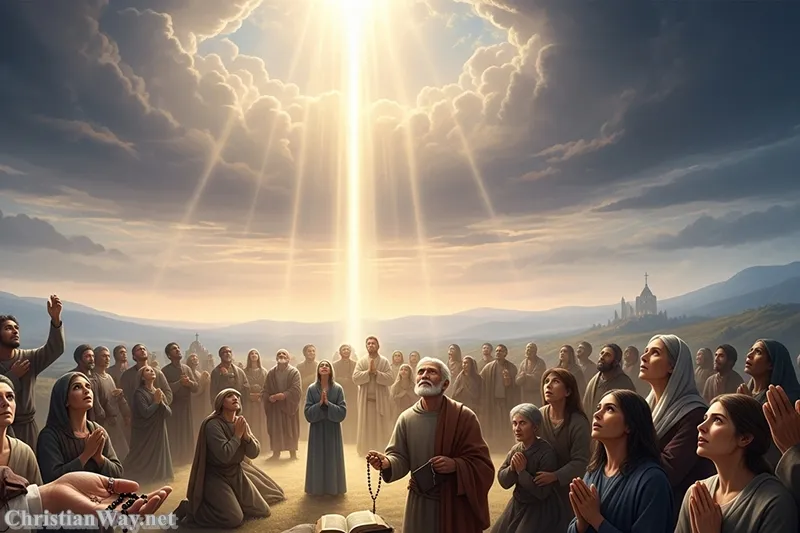
A cherished account from his childhood tells of a moment when he prayed before an image of the Virgin Mary after being corrected by his mother for mischief. In that prayer, he later said, Mary appeared to him holding two crowns: one white, representing purity, and one red, representing martyrdom. He accepted both.
Whether we reflect on this as a deeply personal spiritual experience or as a sacred memory handed down through his life, its meaning is clear. Maximilian understood early that love for Christ would not be a path of comfort alone. It would involve purity of heart, courage in suffering, and a willingness to place his whole life at God’s disposal.
This is not a lesson only for people called to extraordinary sacrifice. Every Christian is invited to place the future before God. We may not know where the road will lead. We may not understand the crosses that lie ahead. But we can pray, as Maximilian learned to pray, “Lord, let my life belong to You.”
The white crown can be understood as a call to purity of heart. Purity is not merely the absence of certain sins. It is the freedom to love without using others. It is the desire to see people as children of God rather than objects for pleasure, status, or advantage. It is a heart that wants to be undivided in its love for Christ.
The red crown can be understood as the willingness to suffer for love. Not because pain is good in itself, and not because Christians seek suffering as though it were an achievement, but because real love sometimes asks us to give more than we imagined possible.
Jesus says, “Greater love hath no man than this, that a man lay down his life for his friends” (John 15:13).
These words became the center of Saint Maximilian’s witness.
God Often Begins With What Looks Small
Many people think they must first become strong, successful, wealthy, educated, or admired before they can serve God meaningfully. They may look at their own lives and see only limitations. They may think their family is too ordinary, their work too tiring, their gifts too small, or their past too imperfect.
But God has always worked through what the world considers small.
David was a shepherd boy when God called him.
Mary was a young woman in Nazareth when she received the angel’s message.
The apostles were fishermen, tax collectors, and ordinary laborers.
Saint Francis of Assisi began as a restless young man before grace changed the direction of his life.
Saint Maximilian Kolbe began as a child who simply learned to pray.
The greatness of a life is not measured by how impressive it appears at the beginning. It is measured by whether the heart remains open to God.
Perhaps your own life feels hidden. Perhaps your days are filled with work, family duties, health concerns, financial worries, or responsibilities that leave little room for dreams of greatness. Do not be discouraged.
God can build holiness in a home, in a classroom, in a workshop, in a hospital room, in a quiet parish, in a difficult marriage, or in the hidden sacrifices of caring for someone who depends on you.
The question is not whether your life appears extraordinary.
The question is whether you are willing to offer it to Christ.
The Knight of the Immaculata
As a young man, Maximilian entered the Conventual Franciscan Order. He became a priest, studied deeply, and developed a missionary vision that was remarkable in both its boldness and its simplicity. He believed that the world needed Jesus Christ. He believed that the Gospel should reach people not through force, fear, or hatred, but through truth, beauty, prayer, sacrifice, and love.
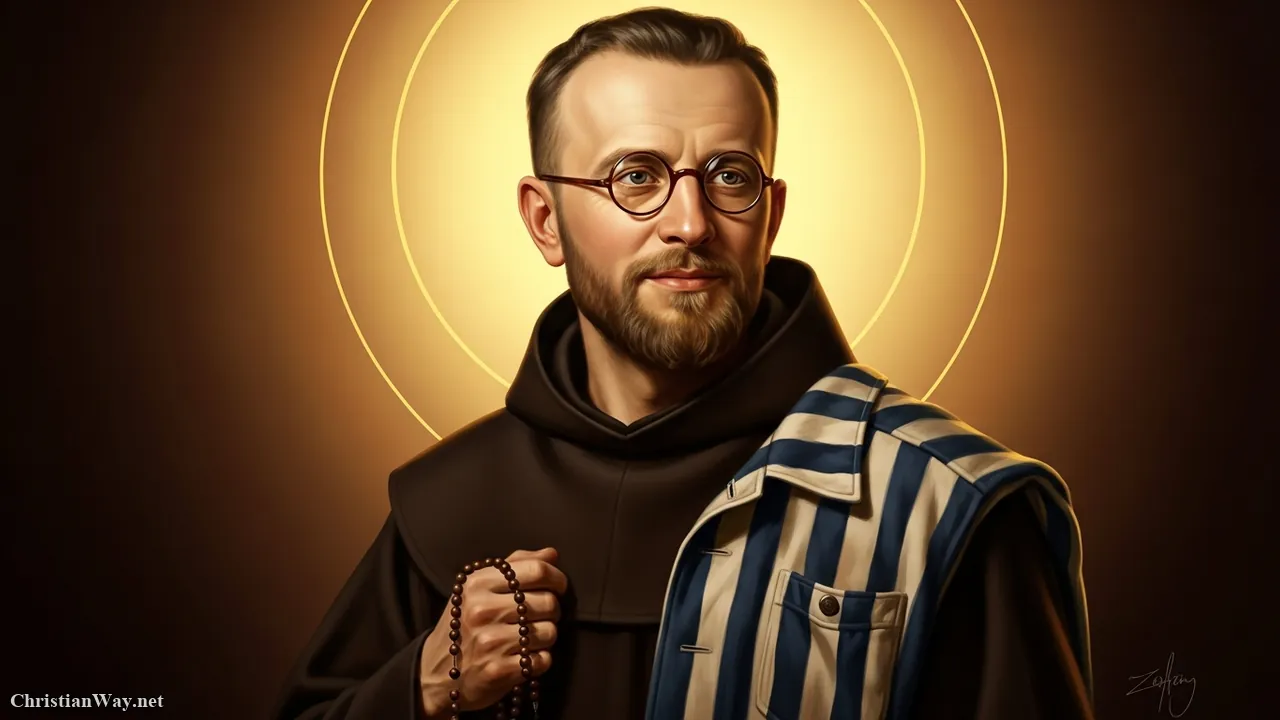
In 1917, while studying in Rome, he helped found the Militia Immaculatae, often called the Knights of the Immaculata. The name may sound military, but Maximilian did not envision an army of violence. He dreamed of a spiritual movement of Christians who would give themselves to God through the maternal care of Mary, seeking the conversion of hearts and the spread of the Gospel.
For him, the Immaculata was not a rival to Christ. Mary always led to Jesus.
She was the woman who said yes to God with complete trust: “Behold the handmaid of the Lord; be it unto me according to thy word” (Luke 1:38). She did not seek herself. She received Christ, bore Christ, and pointed others toward Christ.
This was the heart of Maximilian’s Marian devotion.
He wanted Christians to become more available to Jesus. He wanted them to be free from selfishness, fear, and sin. He wanted them to become instruments of grace in the world.
A Spiritual Battle Fought With Love
The language of a “knight” can be misunderstood if we forget the Gospel. Maximilian did not call people to conquer others. He called them to win hearts through love.
The weapons of the Christian are not hatred, manipulation, humiliation, or violence.
The weapons of the Christian are prayer.
The weapons of the Christian are truth.
The weapons of the Christian are mercy.
The weapons of the Christian are patience, sacrifice, forgiveness, and service.
Saint Paul writes, “For though we walk in the flesh, we do not war after the flesh” (2 Corinthians 10:3). Christians do not fight evil by becoming like evil. We resist darkness by choosing the light.
This matters greatly in our own time.
We live in a world where disagreement quickly becomes hostility. People are tempted to insult rather than listen, shame rather than understand, and treat those who disagree with them as enemies rather than fellow human beings.
Saint Maximilian Kolbe calls us to another way.
We can defend truth without becoming cruel.
We can speak clearly without humiliating others.
We can resist sin without despising sinners.
We can hold convictions without allowing pride to take control of the heart.
A knight of the Immaculata is not a person who wants to win arguments. It is a person who wants souls to know the love of Christ.
A Missionary Who Used the Tools of His Time
Maximilian Kolbe understood something that remains very important today: the Gospel must be carried into the places where people receive their ideas, form their opinions, and search for meaning.
In his time, this meant print, newspapers, magazines, radio, publishing, and missionary work. He did not fear modern tools. He saw them as gifts that could be used for good or for harm. Rather than complain that the world was changing, he asked how Christians could bring Christ into that changing world.
He began publishing The Knight of the Immaculate, a magazine that reached large numbers of readers in Poland. He later founded Niepokalanów, known as the “City of the Immaculate,” a Franciscan community devoted to prayer, formation, publishing, missionary service, and Marian evangelization.
At Niepokalanów, people worked with their hands, wrote articles, printed publications, prayed, cooked, repaired equipment, welcomed visitors, and carried out the daily labor needed for a community to serve the Church.
This was not simply a religious project. It was a vision of Christian life.
Everyone had a place.
The person who wrote had a place.
The person who printed had a place.
The person who cleaned had a place.
The person who prayed had a place.
The person who managed practical tasks had a place.
The person who quietly served without recognition had a place.
This is how the Church becomes alive.
The Gospel Needs Both Prayer and Skill
Sometimes Christians divide prayer from work. They imagine that the spiritual person prays, while the practical person handles ordinary tasks. But Maximilian Kolbe saw no such division.
Prayer gives direction to work.
Work becomes an offering through prayer.
A writer can serve God through words that carry truth.
A designer can serve God through beauty.
A teacher can serve God through patience.
A doctor can serve God through care for the sick.
A business owner can serve God through honesty.
A driver can serve God through responsibility.
A parent can serve God through hidden sacrifice.
A young person can serve God through courage and purity.
The question is not only, “What am I good at?”
The deeper question is, “How can I place what I have been given at the service of love?”
Maximilian Kolbe’s life reminds us that the Gospel does not ask us to abandon our gifts. It asks us to consecrate them.
A Mission Beyond Poland
Saint Maximilian’s heart was larger than one country. He believed that Christ’s love was for every people and every nation. His missionary desire led him beyond Poland, including to Japan, where he helped establish a Franciscan mission and began a Marian publication in Japanese.
This part of his life is especially moving because it reveals a man who was willing to leave familiar surroundings in order to serve where God opened a door. He did not wait until every condition was perfect. He trusted that grace would meet him in the unknown.
Missionary life is not only for those who travel to distant lands. Every Christian has a mission. For some, that mission may be lived in another country. For others, it is lived in the home, the parish, the workplace, the school, or the neighborhood.
A parent can become a missionary by teaching children to pray.
A teacher can become a missionary by treating students with patience and dignity.
A worker can become a missionary by refusing dishonesty.
A friend can become a missionary by listening to someone who has lost hope.
A teenager can become a missionary by choosing kindness where cruelty is popular.
A person who is ill can become a missionary by offering prayer for others.
Mission begins when love stops asking only, “What do I want from life?” and begins asking, “Lord, where are You sending me today?”
The Courage to Leave What Is Familiar
Many people feel called to something deeper but remain afraid because it may require change.
Perhaps God is calling you to forgive someone.
Perhaps He is asking you to leave a habit that is slowly harming your soul.
Perhaps He is inviting you to return to prayer after years of distance.
Perhaps He is asking you to use a talent you have hidden.
Perhaps He is calling you to serve someone in need.
Perhaps He is inviting you to speak honestly in a difficult situation.
The first step can feel frightening. We may not know how people will respond. We may fear failure. We may feel too old, too tired, too inexperienced, or too wounded.
But Christ does not always ask us to see the whole road.
Often, He gives only the next step.
Abraham was told to leave his homeland without knowing all that lay ahead.
Peter stepped out of the boat only after hearing Jesus call.
Mary said yes before she understood every consequence of her answer.
Saint Maximilian Kolbe reminds us that faith is not waiting until fear disappears. Faith is trusting God enough to move while fear is still present.
When Europe Entered Darkness
The world in which Saint Maximilian Kolbe lived was increasingly marked by hatred, nationalism, violence, and the rise of Nazi ideology. As the Second World War began and Poland came under German occupation, fear spread through communities and families. People were arrested. Homes were destroyed. Jewish people, Polish people, priests, religious, political prisoners, and many others were targeted, humiliated, displaced, imprisoned, and murdered.
We should speak of this history with reverence.
The Holocaust was not an abstract event. It was the systematic persecution and murder of Jewish people by Nazi Germany and its collaborators. Millions of lives were taken. Families were destroyed. Communities were erased. The suffering of the Jewish people must never be minimized, forgotten, or used merely as background for another story.
Saint Maximilian Kolbe’s witness must be remembered within this terrible reality.
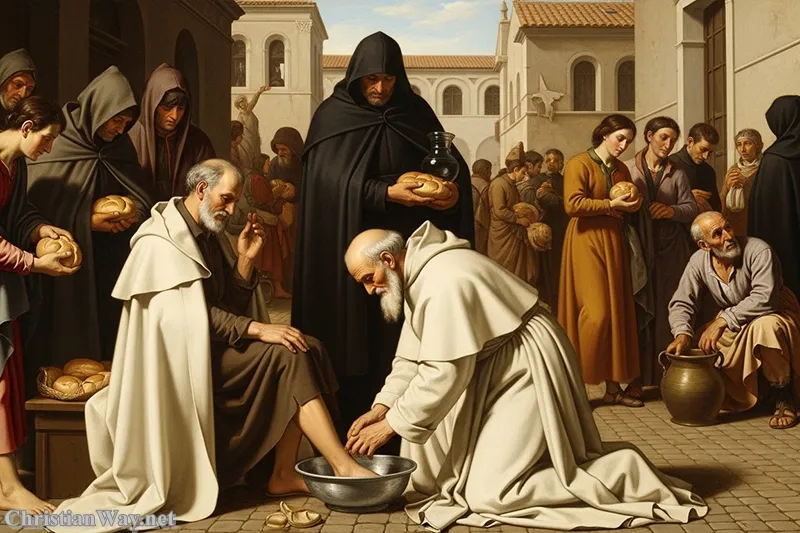
At Niepokalanów, the Franciscan community became a place of help for people in distress. Refugees and displaced persons were given assistance, and the friars sought to offer shelter and practical care during a time when human life was being treated as disposable.
This is what Christian charity looks like when fear is everywhere.
Charity does not ask first whether helping someone will be convenient.
Charity does not ask whether the suffering person belongs to our group.
Charity does not ask whether we will be thanked.
Charity sees a human being in need and remembers that Christ is near.
Jesus says, “I was an hungred, and ye gave me meat: I was thirsty, and ye gave me drink: I was a stranger, and ye took me in” (Matthew 25:35).
These words are not sentimental. They are a judgment upon our hearts.
When we see suffering, do we turn away?
When someone is treated unfairly, do we remain silent because helping may cost us?
When a person is lonely, poor, sick, displaced, or afraid, do we remember that Christ identifies Himself with the vulnerable?
Saint Maximilian Kolbe did not solve the evil of his age. No one person could. But he refused to become indifferent.
Auschwitz and the Gift of His Life
In 1941, Maximilian Kolbe was arrested and deported to Auschwitz, the Nazi German concentration camp in occupied Poland. There he was stripped of the freedom, dignity, and ordinary human security that every person deserves. He became a prisoner among prisoners.
Yet even there, his priestly heart remained alive.
He encouraged others.
He prayed.
He suffered with those who suffered.
He tried to bring peace into a place built to destroy peace.
It is difficult to imagine such a place. Auschwitz was created to dehumanize. People were reduced to numbers. Families were separated. Hunger, fear, violence, disease, exhaustion, and death became part of daily life.
In a world where cruelty sought to erase the human person, Maximilian continued to see people as beloved children of God.
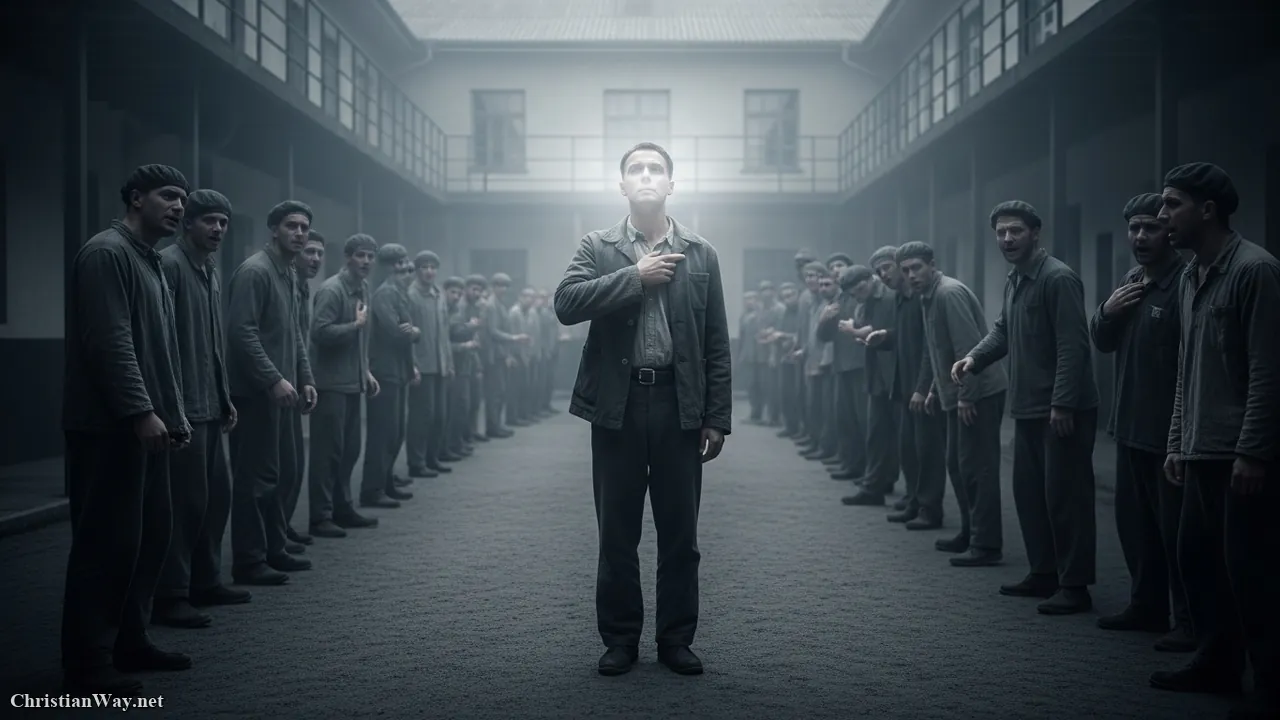
After a prisoner escaped from the camp, ten men were selected to die by starvation as punishment. One of the men chosen was Franciszek Gajowniczek, who cried out in anguish for his wife and children.
Maximilian stepped forward.
He offered himself in the place of this man.
The guard allowed the exchange.
This moment is one of the most powerful acts of Christian charity in modern history. Maximilian did not know Franciszek as a close friend. He did not offer his life for someone who could repay him. He saw a husband and father in despair, and he chose love.
The men were taken to a starvation cell. Days passed. Maximilian continued to pray and lead others in prayer. Finally, on August 14, 1941, he was killed by a lethal injection.
His body was destroyed, but his witness could not be destroyed.
“Greater Love Hath No Man”
It is easy to repeat the words of Jesus about laying down one’s life for friends. It is much harder to understand what they mean when the cost becomes real.
Saint Maximilian Kolbe did not seek death because he despised life. He loved life. He loved the Gospel. He loved the Church. He loved the people entrusted to him. He loved Mary because she led him to Jesus. He loved the person standing before him in suffering.
That is why his sacrifice was not despair. It was charity.
Pope John Paul II named him a martyr of charity because Maximilian’s death was an act of love shaped by Christ. He did not die merely because he was persecuted as a priest, though he was indeed a prisoner under a brutal regime. He died because he freely chose to give himself for another.
This is the mystery of Christian love.
Love does not always mean dying for someone. For most of us, it will mean living faithfully for others.
It may mean staying up with a sick child.
It may mean working honestly to support a family.
It may mean caring for an elderly parent.
It may mean forgiving an old wound.
It may mean visiting someone who has no one else.
It may mean speaking truth when silence would be safer.
It may mean refusing to laugh when someone is being mocked.
It may mean helping a person who cannot repay us.
The martyrdom of Saint Maximilian Kolbe should not make us think only of dramatic sacrifice. It should make us ask: “Where is love asking me to give myself today?”
Charity Is Stronger Than Hatred
The word charity is often misunderstood. Some people hear it and think only of giving money or helping the poor from a distance. These things matter, but Christian charity is much deeper.
Charity is the love of God poured into the human heart.
It is the love that allows us to see another person not as a problem, enemy, burden, or rival, but as someone for whom Christ died.
Saint Paul gives us a description of charity that still challenges every generation:
“Charity suffereth long, and is kind; charity envieth not; charity vaunteth not itself, is not puffed up” (1 Corinthians 13:4).
This kind of love is not weak.
It is patient when patience is difficult.
It is kind when kindness is costly.
It refuses pride.
It refuses revenge.
It does not rejoice in injustice.
It believes that another person’s dignity matters.
The world may call this weakness. But Saint Maximilian Kolbe shows us that charity is stronger than hatred.
Hatred can destroy bodies.
Hatred can imprison people.
Hatred can spread fear.
But hatred cannot create the kind of freedom that exists in a heart surrendered to Christ.
Only love can do that.
Do Not Let Evil Teach You to Become Evil
One of the greatest dangers in a wounded world is that we begin to imitate the very darkness we oppose.
Someone hurts us, and we become harsh.
Someone lies to us, and we decide truth no longer matters.
Someone humiliates us, and we begin looking for people we can humiliate.
Someone excludes us, and we become quick to exclude others.
This is how evil spreads.
But Christ interrupts this cycle.
He does not answer hatred with hatred.
He does not answer violence with revenge.
He does not deny evil, but He refuses to let evil define His heart.
On the Cross, Jesus prays, “Father, forgive them; for they know not what they do” (Luke 23:34).
Saint Maximilian Kolbe followed this path. He did not conquer Auschwitz by force. He conquered it by refusing to allow its hatred to take possession of his soul.
This is a calling for us as well.
We may not face the same terrible circumstances. But every day gives us smaller opportunities to resist hatred.
When someone speaks harshly, we can choose not to answer with cruelty.
When someone is excluded, we can welcome them.
When gossip begins, we can refuse to join.
When fear causes us to judge others unfairly, we can ask God for a more merciful heart.
When we feel anger rising, we can pause and pray before speaking.
These actions may seem small. But they are how love begins to overcome darkness.
Mary, the Immaculata, and the Way to Jesus
Saint Maximilian Kolbe’s love for Mary was central to his spirituality. He called her the Immaculata, the Immaculate One, and saw in her the perfect openness of a human heart to God’s grace.
For Catholics, Mary is honored not because she replaces Christ, but because she belongs so completely to Him. She is the first disciple, the woman who received the Word made flesh, the mother who stood near the Cross, and the one who always directs us toward her Son.
The Gospel reveals this clearly at Cana. Mary does not draw attention to herself. She says, “Whatsoever he saith unto you, do it” (John 2:5).
This was the heart of Maximilian’s devotion.
To belong to Mary was, for him, to become more available to Jesus.
To imitate Mary was to say yes to God more fully.
To ask Mary’s intercession was to seek the help of the mother who always leads her children toward Christ.
Christians from different traditions may express devotion to Mary differently. Yet all who love Jesus can recognize the beauty of her faith, her humility, her trust, and her willingness to remain near the Cross.
Saint Maximilian teaches us that devotion should never end with ourselves. True devotion makes us more humble, more charitable, more faithful, and more centered on Christ.
The Courage of Mary at the Cross
It is easy to imagine Mary only in peaceful scenes: the Annunciation, Bethlehem, the child Jesus in her arms. But the Gospel also shows her standing at the Cross.
She remained when many others fled.
She did not understand every detail of the suffering before her.
She could not remove the Cross.
But she remained close to Jesus.
This is a profound lesson for every person who loves someone in pain.
Sometimes we cannot fix what another person is going through.
We cannot remove a loved one’s illness.
We cannot take away someone’s grief.
We cannot solve every family conflict.
We cannot protect our children from every sorrow.
But we can remain.
We can pray.
We can listen.
We can offer practical help.
We can let the suffering person know they are not alone.
Mary’s presence at the Cross teaches us that faithful love does not always have answers. Sometimes it simply stays.
Saint Maximilian Kolbe learned this kind of love. In Auschwitz, he remained close to men who were afraid. He prayed with them. He shared their suffering. He bore witness to the fact that Christ had not abandoned them.
A Saint for the Age of Noise and Media
Saint Maximilian Kolbe lived before the internet, social media, smartphones, and the constant flood of information that shapes modern life. Yet his understanding of communication was remarkably relevant.
He knew that ideas form hearts.
He knew that words can wound or heal.
He knew that media can spread fear, falsehood, confusion, or hatred.
But he also knew that it could become a path for truth, beauty, encouragement, and evangelization.
Today, many people feel exhausted by noise. We scroll through bad news, arguments, images, advertisements, accusations, and endless comparisons. We may begin the day with a screen and end the day with a screen, while our hearts become more restless, more anxious, and less able to pray.
Saint Maximilian Kolbe asks us to consider how we use the tools we have been given.
Do our words bring peace or more division?
Do we share truth or repeat things we have not examined?
Do we use media to serve others or only to seek attention?
Do we allow constant noise to drown out the voice of God?
A Christian presence online should not become another form of anger. It should bear the spirit of Christ.
This does not mean avoiding difficult truths. It means speaking truth with charity.
It means refusing to treat people as targets.
It means remembering that behind every comment, profile, message, and disagreement is a person made in the image of God.
Silence Is Still Necessary
Maximilian used modern tools, but he was also a man of prayer. This balance is important.
We need to communicate, but we also need silence.
We need to learn, but we also need to listen.
We need to act, but we also need to rest in God.
Without prayer, even good work can become restless and proud.
Without silence, even religious words can become noise.
Without time before Christ, we may begin serving our own image instead of serving the Gospel.
Perhaps one small practice can help: before reading the news, before opening social media, before responding to a message that makes you angry, pause and pray:
“Lord Jesus, guard my heart. Let me receive truth with wisdom. Let me speak with charity. Do not let fear or anger rule me.”
This is a simple prayer, but it can change the spirit in which we live.
A Saint for Families and Those Who Feel Trapped
Saint Maximilian Kolbe is often remembered as a patron for prisoners, families, journalists, and those who struggle with addiction or feel trapped by difficult circumstances. This is fitting, because his life speaks deeply to people who know what it means to carry burdens they cannot easily escape.
Many people today feel imprisoned in ways that others cannot see.
Some are imprisoned by fear.
Some are imprisoned by debt.
Some are imprisoned by anxiety.
Some are imprisoned by an addiction that has slowly taken control of their life.
Some are imprisoned by grief.
Some are imprisoned by shame over the past.
Some are imprisoned by a relationship marked by pain.
Some are imprisoned by the belief that they will never change.
Saint Maximilian Kolbe does not offer easy answers. He does not tell us that prayer alone removes every hardship overnight. But he reminds us that even in a place of darkness, Christ can meet us.
There is no prison so deep that God cannot enter.
There is no shame so heavy that mercy cannot lift it.
There is no wound so hidden that Christ cannot see it.
There is no person so lost that grace cannot begin a new work.
Help Is Not a Sign of Weakness
If you feel trapped, do not carry it alone.
Prayer is essential, but God often sends help through other people.
A person struggling with addiction may need a doctor, counselor, recovery group, priest, pastor, family member, or trusted friend.
A person experiencing violence may need safety, protection, legal support, and a community willing to stand beside them.
A person carrying depression or despair may need compassionate care from trained professionals as well as prayer.
A family under financial strain may need practical assistance and wise guidance.
There is no shame in asking for help.
To say, “I cannot carry this alone,” is often the beginning of freedom.
Saint Maximilian Kolbe reminds us that love is not only about heroic sacrifice. It is also about allowing others to walk beside us when our strength is weak.
Faithfulness in the Small Cell of Daily Life
Most of us will never stand in a starvation cell. Most of us will not be asked to make a sacrifice known around the world. But every day gives us smaller places where faithfulness is tested.
There is a small cell of impatience when someone interrupts our plans.
There is a small cell of resentment when we feel unappreciated.
There is a small cell of fear when the future is uncertain.
There is a small cell of temptation when dishonesty would be easy.
There is a small cell of loneliness when no one seems to understand us.
There is a small cell of exhaustion when love asks something more from us.
In these moments, we may feel powerless. Yet even here, Christ can give grace.
We can choose one kind word.
We can offer one honest prayer.
We can forgive one insult.
We can complete one duty faithfully.
We can ask for help.
We can begin again after failure.
We can place one fear into the hands of God.
The holiness of Saint Maximilian Kolbe was not formed only in his final days. It grew through thousands of hidden choices: prayer, work, study, service, missionary effort, trust in Mary, love for the Eucharist, and a willingness to keep giving himself to God.
So it is with us.
A holy life is rarely built in one dramatic moment. It is built through many small acts of love.
The Final Victory of Love
The death of Saint Maximilian Kolbe was not the end of his story.
The Nazis intended Auschwitz to be a place where human dignity was erased. Yet the witness of people like Maximilian reveals that human dignity cannot finally be destroyed when it is rooted in God.
His sacrifice became known throughout the world. The man for whom he died survived the camp and later testified to what had happened. In 1982, Pope John Paul II canonized Maximilian Kolbe and declared him a martyr of charity.
But the deepest victory is not that he became famous.
The deepest victory is that love remained alive.
In a place built on hatred, he chose love.
In a place built on fear, he chose courage.
In a place built on despair, he chose hope.
In a place built to make people forget God, he bore witness to Christ.
This is the triumph of the Gospel.
Saint Paul writes, “Be not overcome of evil, but overcome evil with good” (Romans 12:21).
These words are not a command to pretend evil is small. Evil is real. It wounds. It kills. It destroys. But the Christian does not surrender to evil’s power.
We overcome evil through prayer.
We overcome evil through truth.
We overcome evil through courage.
We overcome evil through mercy.
We overcome evil through love that refuses to become hatred.
Saint Maximilian Kolbe: The Martyr of Charity and Knight of the Immaculata teaches us that the final word does not belong to fear. The final word belongs to Christ.
Reflect and Pray
Dear friends, perhaps you are carrying a burden that feels too heavy. Perhaps you are worried about someone you love. Perhaps you are tired of seeing anger, division, cruelty, and fear in the world. Perhaps you feel small before the darkness around you.
Do not lose heart.
Saint Maximilian Kolbe reminds us that God can use even a small act of love. A prayer offered in secret, a word of forgiveness, a meal prepared for someone in need, a moment of patience, a refusal to join in hatred, a hand extended to the lonely—these can become places where Christ enters the world.
You may not be able to change everything.
But you can choose love today.
You can choose truth today.
You can choose mercy today.
You can place your life once more in the hands of God.
Saint Maximilian Kolbe, martyr of charity and knight of the Immaculata, pray for us. Teach us to love Christ above fear. Help us to see every person as precious in the eyes of God. Give courage to those who suffer, comfort to prisoners and the oppressed, strength to families, hope to those who feel trapped, and mercy to hearts wounded by hatred. Lead us always toward Jesus through the gentle care of His mother.
Lord Jesus Christ,
You revealed the fullness of love upon the Cross.
Through the prayers of Saint Maximilian Kolbe,
make our hearts courageous, gentle, and free.
When fear rises within us, give us trust.
When hatred surrounds us, make us instruments of peace.
When another person suffers, teach us to remain near.
Give us grace to use every gift You have given us
for the service of truth, mercy, and love.
May we never be overcome by darkness,
but may we overcome evil with the goodness that comes from You. Amen.
May the witness of Saint Maximilian Kolbe fill your heart with courage, deepen your love for Christ, and help you become a quiet instrument of mercy in a wounded world.
— Fr. John Matthew