Dear friends in Christ,
There are words we use so often that they can begin to lose their warmth. Love is one of them. We speak of loving a meal, a song, a place, a possession, a moment, or an idea. Yet when the Gospel speaks of love, it speaks of something far deeper than preference, emotion, attraction, or passing affection. It speaks of the very life of God poured into the human heart. It speaks of the love that created the world, the love that sought humanity after sin, the love that took flesh in Jesus Christ, and the love that stretched out its hands upon the cross rather than abandon those who had turned away.
Christian love is not a fragile feeling that appears only when life is gentle. It is the quiet strength of Christ within us when we are tired, wounded, misunderstood, or afraid. It is the grace that teaches us to see another person not merely as a problem, a rival, a stranger, or a burden, but as someone known and loved by God. It is the love that does not deny truth, but carries truth with tenderness. It is the love that does not pretend evil is good, but refuses to let evil have the final word. It is patient enough to remain, humble enough to listen, and strong enough to forgive.

Every human heart longs to be loved in this way. We may seek it through success, admiration, romance, family, work, possessions, or the approval of others. Yet even the most beautiful human love can feel uncertain when it rests only upon changing emotions or fragile circumstances. The love revealed in Christ is different. It does not begin with our worthiness. It begins with God’s mercy. “We love him, because he first loved us” (1 John 4:19). Before we ever reached toward God, He was already reaching toward us. Before we learned how to pray, He knew the secret longings of our heart. Before we understood the cross, Christ had already given Himself for us.
This is why Christian love is truly the heartbeat of the Gospel. Without it, doctrine can become cold, worship can become empty habit, service can become self-promotion, and truth can become a weapon. But when love is alive, faith becomes radiant. The Scriptures become a living word. Prayer becomes communion. Mercy becomes possible. The Church becomes what she was meant to be: a people gathered around Jesus Christ, bearing His compassion into a world that is often lonely, divided, and weary.
To reflect on love is not to step away from the serious things of faith. It is to step into their center. The commandments, the sacraments, the call to repentance, the life of prayer, the pursuit of justice, the care for the poor, the courage to forgive, and the hope of eternal life all find their meaning in this holy love. For God is not merely loving in one part of His being. As Saint John writes with breathtaking simplicity, “God is love” (1 John 4:8).
Love Begins in the Heart of God
Before love becomes something we give, it is first something we receive. The Christian faith does not begin with humanity climbing toward heaven in search of God. It begins with God coming toward humanity. The story of salvation is the story of divine love seeking the lost, lifting the fallen, and drawing the wounded back into communion.
The Father Who Loves Before We Ask
When Jesus spoke of God as Father, He revealed not an image of distant power but the heart of One who knows, sees, and cares. In the parable of the prodigal son, the father does not wait coldly at the door, demanding that the returning child prove himself worthy. He sees his son while he is still far away. He runs to him. He embraces him. He restores him.
This parable is not merely a story about one broken family. It is a window into the heart of God. Many people imagine that God tolerates them only when they are strong, disciplined, successful, or spiritually impressive. Yet Jesus reveals a Father who meets His children in their repentance before they can even finish their rehearsed words. The son returns with shame, but the father responds with mercy. The son expects to be treated as a servant, but the father receives him as a beloved child.
This does not mean that sin does not matter. Sin wounds us. It wounds others. It breaks communion with God and distorts the beauty of the life for which we were created. But the mercy of God is greater than the ruin sin causes. Divine love does not excuse our darkness; it enters it with healing light. It calls us to turn back, not because God wants to humiliate us, but because He wants to restore us.
The first and deepest truth of love, then, is that we are loved before we deserve anything. We do not earn our place in the heart of God by spiritual performance. We receive it as grace. This is why the Gospel brings peace to the anxious soul. We may be weak, but we are not abandoned. We may be guilty, but we are not beyond forgiveness. We may feel forgotten, but the Father has not stopped looking toward the road where we may return.
The Son Who Makes Love Visible
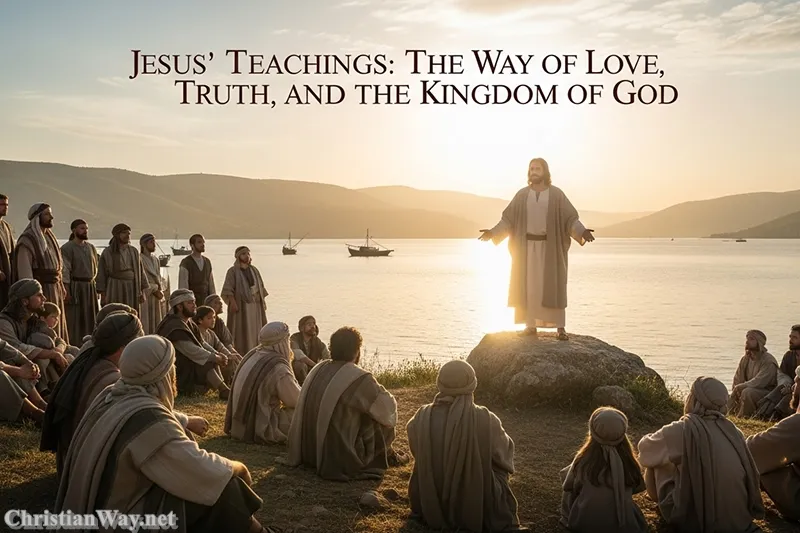
The love of God is not an abstract idea. It has a face. It speaks. It touches. It weeps. It heals. It suffers. That face is Jesus Christ.
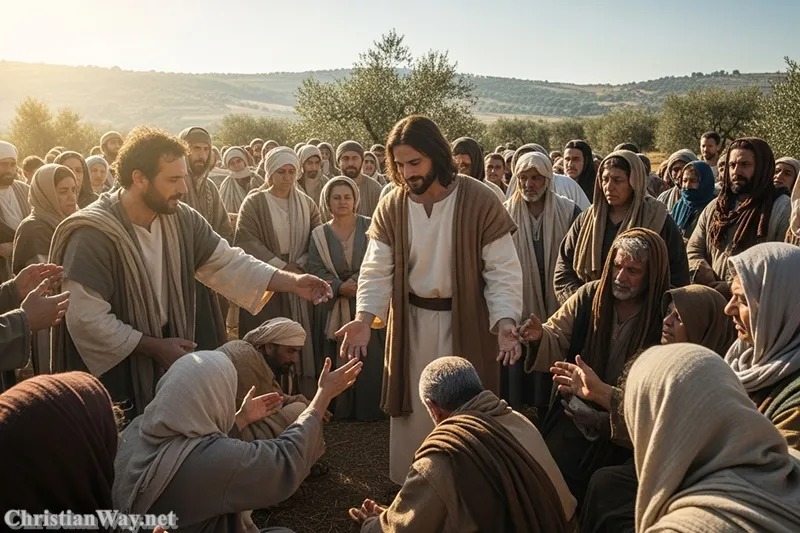
When Philip asked Jesus, “Lord, show us the Father,” Jesus answered, “He that hath seen me hath seen the Father” (John 14:9). To look upon Christ in the Gospels is to see what God’s love is like. We see Him receive children with gentleness. We see Him touch lepers whom others avoided. We see Him speak with the Samaritan woman beside the well. We see Him forgive the woman caught in sin while still calling her toward a new life. We see Him weep at the tomb of Lazarus. We see Him feed the hungry crowds, calm frightened disciples, and draw near to those who thought themselves too broken to be noticed.
Jesus does not merely teach love. He is love made visible in human life. His compassion is not weakness. His mercy is not indifference to truth. His gentleness is not avoidance of suffering. In Him, love has strength. It has courage. It has holiness. It has a heart willing to be pierced for the sake of those who do not yet understand what they are doing.
This is why every Christian reflection on love must eventually lead us to Christ. We may speak beautifully about kindness, tolerance, generosity, or peace. Yet the Gospel calls us beyond these things into the deeper mystery of self-giving love. Jesus does not ask merely, “What do you feel?” He asks, “Will you follow me?” Love becomes real when it takes the form of faithfulness, sacrifice, forgiveness, and service.
The Cross Reveals the Full Measure of Love
There is no clearer revelation of divine love than the cross. The cross is not a symbol of suffering for its own sake. It is the sign of a love that refuses to turn away when love becomes costly.
“Greater Love Hath No Man Than This”
On the night before His death, Jesus said to His disciples, “Greater love hath no man than this, that a man lay down his life for his friends” (John 15:13). These words were not a poetic thought offered from a safe distance. Within hours, Jesus would be betrayed, arrested, mocked, condemned, beaten, and crucified. The One who spoke of laying down His life would do so completely.
At the cross, Christ did not simply endure pain. He gave Himself. He carried into that suffering the sin, violence, hatred, betrayal, fear, and death that wound the human family. He allowed human cruelty to strike Him, but He did not answer cruelty with cruelty. He prayed, “Father, forgive them” (Luke 23:34). In that prayer, we see the unimaginable depth of divine mercy.
The cross tells us that love is not sentimental. It does not look away from evil. It does not pretend that betrayal is harmless or that sin leaves no wound. Love sees the truth clearly. Yet it chooses not to become hatred. It refuses to let bitterness rule the heart. It places judgment in the hands of God and continues to desire the healing of the one who has caused pain.
This kind of love is difficult. It is not possible through human willpower alone. We may be able to be polite, patient, or generous for a time. But to forgive deeply, to remain faithful when misunderstood, to love when no gratitude is returned, and to seek another person’s good when our own heart is wounded—this requires grace. It requires the life of Christ within us.
The cross also tells us that we are never loved more in our strength than in our weakness. Jesus did not die only for the wise, the righteous, the successful, or the spiritually mature. He died for sinners. He died for those who rejected Him. He died for those who did not yet know Him. Saint Paul writes, “God commendeth his love toward us, in that, while we were yet sinners, Christ died for us” (Romans 5:8).
This is the foundation of all Christian hope. We are not saved because we have managed to become lovable. We are saved because God’s love has come to us in Christ.
Love That Does Not Run Away
Many human relationships become difficult when suffering enters. A diagnosis comes. Money becomes scarce. A child struggles. A marriage passes through disappointment. A friendship is tested by misunderstanding. An aging parent needs care. A person we love becomes unrecognizable beneath grief, addiction, anger, or fear.
In these moments, love is no longer merely a feeling. It becomes a decision made again and again. It becomes the willingness to remain present. It becomes the strength to listen when there are no easy answers. It becomes the courage to say, “I am here,” even when we cannot fix what is broken.
This does not mean that love demands we remain in situations of abuse, danger, manipulation, or destruction. Christian love is not permission for another person to harm us without boundaries. There are times when love requires distance, protection, truthfulness, and wise help. Jesus Himself did not entrust Himself to those whose hearts were closed to truth. Love is not passive. It is holy. It seeks the genuine good of both the wounded and the one who wounds.
Yet even when healthy boundaries are necessary, the heart of Christ calls us away from hatred. We may say no to what is destructive while still praying for healing. We may protect ourselves or others while refusing to let resentment become our identity. We may grieve what has been lost while trusting that God can bring life even from places where we see only death.
The New Commandment of Jesus
At the Last Supper, Jesus gave His disciples a commandment that would become the mark of Christian life: “A new commandment I give unto you, That ye love one another; as I have loved you” (John 13:34).
These words are simple, but they are not easy. Jesus does not merely say, “Love one another when it feels natural,” or “Love those who make your life pleasant.” He says, “As I have loved you.” The measure of Christian love is not our comfort. It is Christ Himself.
Love as Christ Has Loved Us
To love as Christ loved means to see people with mercy. It means refusing to reduce them to their mistakes. It means remembering that every person carries a story we may not fully understand. It means treating the poor, the sick, the lonely, the elderly, the stranger, the child, and the forgotten as people whose dignity comes from God.
It also means speaking truth with gentleness. Love is sometimes misunderstood as never disagreeing, never correcting, or never naming what is harmful. But Jesus loved people too much to leave them imprisoned in falsehood. He forgave, but He also called people to repentance. He welcomed, but He also invited conversion. He healed, but He also said, “Go, and sin no more.”
Truth without love can become hard and cruel. Love without truth can become shallow and confused. In Christ, the two are united. He speaks truth because He loves. He corrects because He desires healing. He calls us away from sin because He wants us to live in freedom.
This is especially important in families, churches, workplaces, and friendships. We often avoid difficult conversations because we fear conflict. Yet silence can sometimes allow wounds to deepen. There is a way to speak honestly without humiliating another person. There is a way to name what is wrong without crushing someone’s spirit. There is a way to set boundaries without closing the door to grace.
To love as Christ loves is to ask not merely, “How do I feel about this person?” but, “What does their true good require of me?” Sometimes it requires patience. Sometimes it requires a word of encouragement. Sometimes it requires forgiveness. Sometimes it requires a courageous truth spoken quietly, without anger and without the desire to win.
Love Makes the Gospel Visible
Jesus said, “By this shall all men know that ye are my disciples, if ye have love one to another” (John 13:35). He did not say that the world would know His followers primarily by their wealth, their power, their arguments, their political influence, or even their knowledge. He said they would be known by love.
This does not diminish the importance of truth, worship, doctrine, or moral conviction. Rather, it reveals the spirit in which all these things must be lived. The Christian faith is meant to make Christ visible. When believers care for one another, forgive one another, bear one another’s burdens, and refuse to abandon the weak, the world catches a glimpse of the Kingdom of God.
The early Church grew not only because the apostles preached with courage, but because Christians learned to share their lives. The Book of Acts describes believers continuing in teaching, fellowship, prayer, and the breaking of bread. They cared for those in need. They understood that faith was not a private possession. It was a new way of belonging to God and to one another.
The Church still needs this witness today. In a world where many people feel isolated even while surrounded by noise, Christian communities can become places of welcome. In a world where people are quickly judged, churches can become places where truth and mercy meet. In a world divided by anger, suspicion, and fear, believers can show that reconciliation is possible through Christ.
Love God With All Your Heart
When Jesus was asked which commandment was greatest, He answered, “Thou shalt love the Lord thy God with all thy heart, and with all thy soul, and with all thy mind” (Matthew 22:37). Then He joined it with the command to love our neighbor as ourselves.
These two loves cannot be separated. To love God truly is to begin seeing His image in the people around us. To claim love for others while refusing God is to lose the deepest source from which love flows.
The Love That Begins in Prayer
Many people think of prayer mainly as asking God for help. And indeed, we are invited to bring our needs before Him. We may pray in fear, sickness, uncertainty, sorrow, or gratitude. But prayer is also the place where love is formed. It is where we learn to receive the gaze of God. It is where our restless heart becomes quiet enough to remember that we are not alone.
A person who remains close to Christ in prayer slowly begins to see differently. The person who once irritated us may begin to appear as someone carrying pain. The stranger may become a neighbor. The person we have judged may become someone for whom Christ died. The burdens we carry may not disappear, but they begin to rest within a larger mercy.
This is why the saints were often people of deep prayer. Their love for others did not arise merely from a naturally generous personality. It flowed from communion with God. Saint Teresa of Calcutta cared for the poorest because she saw Christ in them. Saint Francis of Assisi embraced poverty because he had encountered the poverty of Christ. Saint Vincent de Paul served the suffering because he recognized the face of Jesus in those abandoned by society.
The Church has always taught that love of God and love of neighbor belong together. The Catechism speaks of charity as the virtue by which we love God above all things and love our neighbor as ourselves for the love of God. This is not an escape from the world. It is the transformation of how we live in the world.
To love God with all the heart does not mean we will never feel distracted, dry, tired, or uncertain in prayer. It means we continue turning toward Him. It means we make room for Him in the midst of ordinary life. A whispered prayer while preparing a meal, a moment of silence before beginning work, a Psalm read before sleep, a prayer for someone who has hurt us—these small acts keep the heart open to grace.
Love Is Not Earned Through Religious Performance
There is a danger in religious life: we can begin to imagine that God loves us more when we are doing well and less when we are struggling. We may measure our worth by how often we pray, how disciplined we feel, how much we know, or how admired we are by others.
But God is not a merchant trading affection for religious effort. Our practices matter because they open us to grace, shape our desires, and draw us into communion. Yet they do not purchase God’s love. That love was already given in Christ.
When we understand this, prayer becomes less anxious. We stop trying to impress God. We begin simply to come to Him. We bring our gratitude, our confusion, our failures, our hopes, and our wounds. We allow Him to love us, and from that love we slowly learn how to love others.
Love Your Neighbor as Yourself
The command to love one’s neighbor is not an abstract ideal. It meets us in ordinary life: in homes, streets, workplaces, churches, schools, hospitals, and moments when someone needs more from us than we feel ready to give.
The Neighbor We Did Not Choose
Jesus answered the question “Who is my neighbor?” with the parable of the Good Samaritan. A wounded man lies beside the road, ignored by people who should have helped. Then a Samaritan, someone regarded by many as an outsider, stops. He sees the wounded man. He has compassion. He binds his wounds, carries him to safety, and ensures that he is cared for.
The meaning is clear: our neighbor is not only the person who resembles us, agrees with us, belongs to our group, or makes us comfortable. Our neighbor is the person whose need comes before us.
This can be difficult because love often interrupts our plans. The Good Samaritan had somewhere to go. He had responsibilities, limits, and a journey of his own. Yet he allowed another person’s suffering to become part of his day. Love is often like that. It asks us to be interrupted.
Sometimes our neighbor is an elderly parent who needs patience. Sometimes it is a child asking the same question again and again. Sometimes it is a colleague who is difficult because they are carrying pain. Sometimes it is a stranger whose need is obvious. Sometimes it is the person we would rather avoid.
Christian love does not demand that we solve every problem in the world alone. We are not God, and we have limits. But it does ask us not to become indifferent. It asks us to notice. It asks us to be willing to give what we can: time, attention, prayer, generosity, honest help, a listening ear, a meal, a visit, a word of hope.
Love in Family Life
The home is often the first place where love becomes real. It is easy to speak of love in public. It is harder to practice it when we are tired, rushed, frustrated, or disappointed. Family life reveals the truth about our patience, our humility, and our capacity to forgive.
A Christian home is not a home without conflict. It is a home where conflict is not allowed to become permanent bitterness. It is a place where apologies are spoken, where forgiveness is practiced, where children learn that they are loved not because they are perfect but because they belong.
Parents show love not only through sacrifice, but through presence. A child may not remember every gift they receive, but they will remember whether they were listened to, whether they were comforted, whether someone believed in them when they were afraid. Spouses show love not only in beautiful words, but in ordinary faithfulness: carrying burdens together, sharing responsibilities, speaking with respect, and refusing to let resentment grow in silence.
For those who carry wounds from family life, these words may feel difficult. Some people have known abandonment, harshness, violence, betrayal, or absence where love should have been. The Gospel does not deny these wounds. Christ Himself entered a world marked by broken relationships and human cruelty. He comes near to those who have been hurt. He does not ask them to pretend nothing happened. He invites them into a slow healing that may require time, wise counsel, prayer, boundaries, and the support of others.
Loving Enemies and Forgiving the Wounded Heart
Perhaps the most challenging teaching of Jesus is His command to love our enemies. “Love your enemies, bless them that curse you, do good to them that hate you” (Matthew 5:44). These words can sound impossible because they touch the places where our hearts are most defensive.
Forgiveness Is Not Forgetting
Forgiveness is often misunderstood. It does not mean pretending that evil was good. It does not mean trusting someone who remains unsafe. It does not mean returning immediately to a harmful relationship. It does not mean denying grief, anger, or the need for justice.
Forgiveness means refusing to let another person’s sin become the master of our heart. It means releasing the desire to repay harm with harm. It means placing judgment in God’s hands and asking Him to free us from the poison of bitterness.
This is a process. Some wounds do not heal in a single prayer. We may need to return to God again and again, saying, “Lord, I want to forgive, but I do not yet know how. Help me.” Even that prayer can be the beginning of healing.
Jesus teaches us to forgive because He knows what unforgiveness does to the soul. Resentment can become a prison. It can shape our identity, harden our memory, and make us unable to receive love from others. Forgiveness does not change the past, but it can prevent the past from controlling the future.
At the cross, Jesus prayed for those who wounded Him. This does not make their actions less serious. It reveals that mercy is stronger than hatred. When we forgive, we do not declare that the wound was small. We declare that Christ is greater.
Love That Seeks Reconciliation
Reconciliation is a beautiful gift, but it requires truth from both sides. It cannot be forced by one person alone. Sometimes reconciliation becomes possible when there is repentance, honesty, and a willingness to change. Sometimes it is not yet possible because the other person remains closed to truth or continues to cause harm.
Still, Christians are called to remain open in heart where possible. We pray for healing. We refuse to rejoice in another person’s downfall. We ask God to turn enemies into brothers and sisters. We leave room for grace.
This does not make us weak. It makes us free. The world often admires revenge because revenge feels powerful. But love that forgives is stronger. It is the strength of Christ, who overcame evil not by becoming evil Himself, but by carrying love all the way through suffering.
Christian Love in a Divided World
We live in a time of quick judgment. Words travel faster than reflection. People are easily reduced to labels. Differences in politics, culture, theology, class, nationality, and personal experience can become reasons to despise one another.
The Gospel speaks into this division with both tenderness and challenge.
Truth Without Contempt
Christians are called to hold convictions. Faith is not vague. The Gospel makes real claims about God, sin, grace, salvation, justice, and eternal life. Yet our convictions must never become an excuse for contempt.
Jesus spoke with people who disagreed with Him. He encountered Pharisees, Samaritans, Romans, sinners, doubters, and those who misunderstood Him. He did not dilute the truth, but neither did He treat people as disposable. His words could be strong, yet His purpose was always to call people back to life.
Christian love asks us to resist the temptation to speak about others as if they are beyond grace. It asks us to remember that the person we disagree with may be carrying fear, pain, history, and longings we do not see. It asks us to listen before we assume. It asks us to correct without humiliating.
The apostle Paul writes, “Speaking the truth in love” (Ephesians 4:15). These words belong together. Truth without love wounds. Love without truth confuses. But when truth is spoken in love, it can become a path toward freedom.
The Church as a School of Love
The Church is called to be more than a place where people gather for worship. She is called to be a school of love. In her life, believers are invited to learn patience, humility, service, prayer, generosity, repentance, and forgiveness.
This does not mean the Church is always perfect. Christians are still human. Churches can carry wounds, conflicts, failures, and disappointments. Yet Christ has not abandoned His people. He continues to call the Church back to Himself.
Wherever Christians serve the poor, welcome the stranger, care for the sick, defend the dignity of life, teach children, comfort the grieving, or pray for enemies, the love of Christ becomes visible. Wherever believers confess sin, seek reconciliation, and refuse to give up on one another, the Gospel shines.
The unity of Christians is also part of this witness. Catholics, Orthodox Christians, Anglicans, Lutherans, Evangelicals, Pentecostals, and many other Christian communities may differ in history, practice, and theology. These differences matter and should be addressed honestly. Yet all who confess Jesus Christ as Lord are called to remember His prayer “that they all may be one” (John 17:21).
Unity does not mean pretending that differences do not exist. It means refusing to let disagreement become hatred. It means praying for one another, serving the world together where possible, and allowing Christ to be greater than old suspicions.
Love in the Ordinary Rhythms of Life
Some people imagine love as something dramatic: a great sacrifice, a heroic act, a moment that changes everything. Such moments do exist. But much of Christian love is quieter. It is formed in the daily choices that no one applauds.
Small Acts That Carry Eternal Weight
Love is waking early to care for a child. It is calling someone who is lonely. It is doing honest work when no one is watching. It is choosing not to speak cruelly when anger rises. It is waiting patiently in a difficult conversation. It is giving a meal to someone in need. It is praying for a person who will never know you prayed.
These acts may seem small, but they are not small in the Kingdom of God. Jesus says that even a cup of cold water given in His name will not be forgotten. Love has a hidden fruitfulness. We may never know how one kind word, one act of patience, or one moment of generosity changes another person’s life.
In a world that measures value by visibility, this is good news. You do not need to become famous to love faithfully. You do not need a platform to serve Christ. The kitchen, the classroom, the office, the hospital room, the bus stop, the family table, and the quiet place of prayer can all become places where God’s love is made known.
Loving When We Feel Empty
There are days when love feels natural. There are also days when the heart feels tired, anxious, numb, or discouraged. We may wonder whether our love is real if we do not feel it strongly.
But mature love is not measured only by emotion. It is measured by faithfulness. A mother caring for a sick child at three in the morning may not feel joyful, but her love is real. A husband or wife choosing patience after a long day may not feel romantic, but love is present. A believer who continues to pray in dryness is still loving God. A person who chooses not to retaliate while carrying pain is walking in the footsteps of Christ.
Feelings matter. They are part of our humanity. But they are not the only guide. Love becomes deeper when it learns to remain even when emotion changes. This is not cold duty. It is a love strengthened by grace.
When we feel empty, we do not need to pretend. We can bring our emptiness to God. We can say, “Lord, I do not have enough love today. Love through me.” This prayer is humble, honest, and powerful. The love we give may be small, but in the hands of Christ, even five loaves and two fish can become enough.
The Hope of Love That Never Ends
The apostle Paul wrote one of the most beloved passages in Scripture when he described love as patient, kind, not envious, not proud, not self-seeking, not easily angered, and not keeping a record of wrongs. Then he concluded with words that remain a source of hope: “Charity never faileth” (1 Corinthians 13:8).
Everything else in this world will pass away. Success fades. Possessions are left behind. Reputation changes. Strength weakens. Even our most carefully arranged plans can be altered in a moment. But love remains.
Love Is the Preparation for Eternity
When we love God and neighbor, we are already beginning to live the life of heaven. Heaven is not merely a distant place after death. It is perfect communion with God, the fulfillment of every true desire, the healing of every wound, and the complete victory of love over sin and death.
The smallest act of love on earth is therefore not lost. It is gathered into eternity. The tears we shed in compassion, the kindness we offer in secret, the forgiveness we struggle to give, the prayers we whisper for others—all of these belong to the Kingdom of God.
This is why love gives courage in suffering. We may not understand every sorrow. We may not know why some prayers seem unanswered. But we know that the God who is love has entered suffering through Christ. We know that death did not have the final word at the cross. We know that resurrection is promised to those who belong to Him.
Christian love is not naive optimism. It is hope rooted in the risen Lord. It looks honestly at pain, yet refuses despair. It sees darkness, yet believes the light of Christ cannot be overcome.
Reflect and Pray
Dear friends, Christian Love: The Heartbeat of the Gospel is not merely a beautiful phrase. It is the calling placed upon every disciple of Jesus. We are loved by God so that we may become channels of His love. We are forgiven so that we may learn to forgive. We are comforted so that we may comfort others. We are received in mercy so that we may make room for those who feel far away.
Perhaps today the Lord is inviting you to receive His love more deeply. Perhaps you have been trying to carry life alone. Perhaps you are tired of proving yourself. Perhaps your heart has become guarded because of pain. Perhaps there is someone you need to forgive, someone you need to encourage, or someone you need to see with new compassion.
Bring all of this to Christ. Do not be afraid of your weakness. The love of God is not waiting at the end of your perfection. It is present now, meeting you where you are and gently leading you toward who you are meant to become.
Let us pray.
Lord Jesus Christ, You loved us to the end and revealed the mercy of the Father through Your cross and resurrection. Teach us to receive Your love with humble hearts. Heal the places within us that have become hard through fear, grief, or disappointment. Give us courage to forgive, patience to serve, wisdom to speak truth with gentleness, and compassion to see Your face in those around us. Make our homes, our churches, and our daily lives places where Your love may be known. Amen.
May the peace of Christ dwell richly in your heart, and may His love guide every step you take toward Him.
— Fr. John Matthew