Dear friends in Christ,
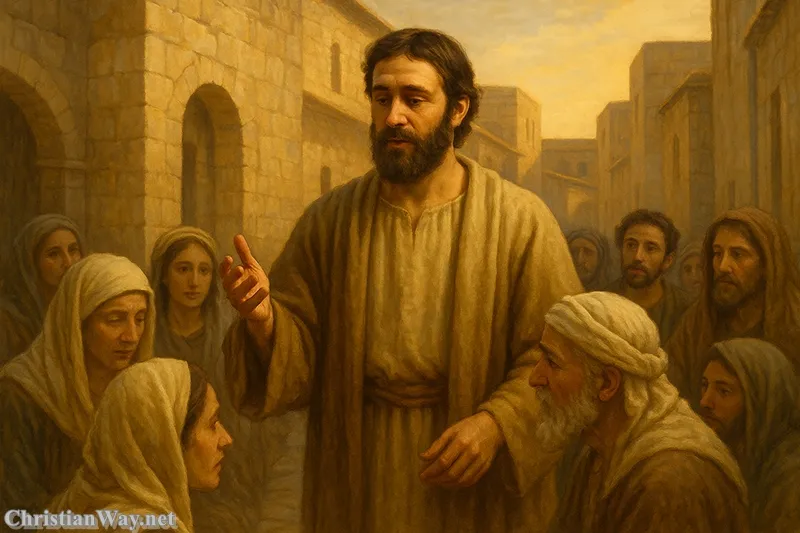
There are moments in the Gospel that seem almost too brief for the depth they contain. A few words are spoken, a life changes, and the world is never quite the same. The calling of Saint Matthew is one of those moments. Jesus passes by a customs post, sees a man seated there, and says only, “Follow me.” Matthew rises. He leaves his table. He walks after Christ. In that simple movement, a man once known for his profession becomes an apostle; a man associated with money and compromise becomes a witness to the Kingdom; and a life judged by many becomes a living testimony to the mercy of God.
Saint Matthew’s story speaks tenderly to every heart that has ever wondered whether it is too far from God, too stained by the past, too trapped in old habits, or too ordinary to be useful in the work of Christ. Matthew did not begin as one of the fishermen on the shore. He was not introduced to us as a religious scholar, a respected teacher, or a man admired by his neighbors. He sat at a tax booth, collecting money in a society where such work often carried the burden of distrust, resentment, and moral suspicion. Yet Jesus did not pass him by. Jesus saw him.
This is where the Gospel always begins: not with our effort to find God, but with God’s loving gaze finding us. Before Matthew could explain himself, defend himself, or prove that he deserved another chance, Christ looked upon him with mercy. That look did not deny Matthew’s past. It did not pretend that sin does not wound the human soul. But it revealed something far greater: the past does not have the final word when Christ calls a person by name.
The life of Saint Matthew invites us to stand quietly before this mystery. He was called from a table of accounts to become a servant of the eternal Word. He was called from measuring coins to proclaiming the immeasurable love of God. He was called from a place where people may have seen him as a traitor or sinner to a place among the Twelve Apostles, entrusted with the mission of carrying the Gospel into the world. His life tells us that grace is never merely a private comfort. When grace truly enters the heart, it changes the direction of a life and makes that life a gift for others.
A Man Sitting at the Customs Post
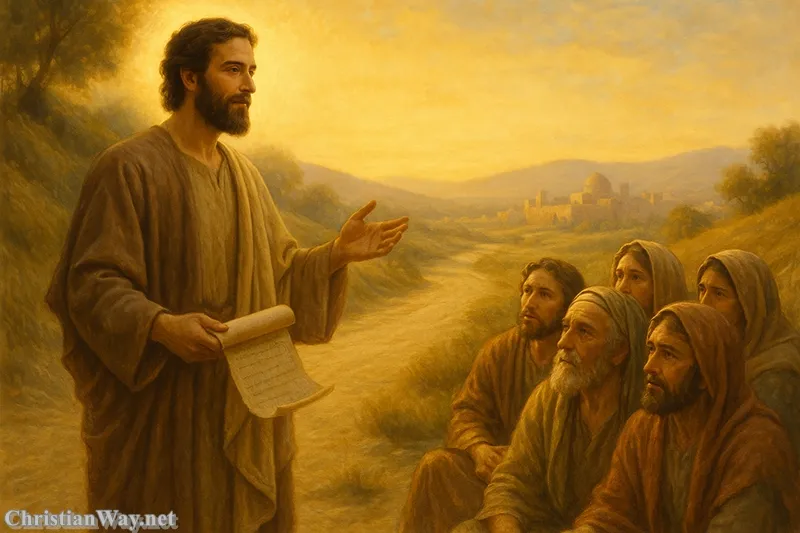
The Gospel of Matthew gives us the unforgettable image: “As Jesus passed on from there, he saw a man called Matthew sitting at the tax office; and he said to him, ‘Follow me.’ And he rose and followed him” (Matthew 9:9). The words are few, but they carry the weight of an entire conversion. Matthew was sitting. Jesus was passing. Then Jesus spoke, and Matthew rose.
In the world of first-century Palestine, a tax collector was not simply a person doing an unpopular job. Tax collection was tied to Roman political authority, and those who worked within that system were often regarded with deep suspicion. Many people considered them collaborators with an occupying power, and some tax collectors were associated with dishonesty or exploitation. The publican was often placed in the same moral category as those considered openly sinful. Pope Francis reflected that Matthew was viewed by many as a public sinner because he collected taxes on behalf of the Roman Empire.
It is important to understand this, not so that we may look down upon Matthew, but so that we may recognize the astonishing freedom of Jesus. Christ did not choose disciples according to the expectations of society. He did not build His apostolic community only from those whom people already admired. He called fishermen, zealots, men of strong temperaments, men of quiet faith, and even a tax collector whose very presence might have surprised or offended many.
Matthew’s calling reminds us that Jesus sees more deeply than the labels placed upon us. The world may reduce a person to a profession, a failure, a sin, a rumor, a mistake, a weakness, or a season of life they wish they could forget. But the Lord sees the person beneath the label. He sees the soul He created. He sees the possibility of holiness where others see only disappointment. He sees a future where others see only a past.
How many people carry hidden shame because they believe they are defined by the place where they have been sitting? Some sit at the table of resentment, unable to forgive an old wound. Some sit at the table of anxiety, counting every possible danger before it arrives. Some sit at the table of ambition, hoping success will finally quiet the restlessness within. Some sit at the table of secret sin, afraid that if others knew the truth, they would no longer be loved. Matthew sat at the customs post, perhaps surrounded by coins and documents, but his deepest need was not financial. His deepest need was Christ.
The Lord still passes by such places. He passes through the office, the classroom, the crowded street, the lonely room, the hospital bed, the home where family members no longer speak gently to one another, and the heart that has grown tired of pretending. He does not wait for us to become perfect before approaching us. He comes near first. He speaks first. He loves first.
The Gospels of Mark and Luke refer to the tax collector called by Jesus as Levi, while Matthew’s Gospel names him Matthew. Christian tradition has commonly understood these accounts to refer to the same man, the apostle who came to be known as Matthew. Whether we ponder him as Levi or Matthew, the spiritual truth remains the same: the man whom society had placed at a distance was brought near by Christ.
The Meaning of Being Seen
There is a sacred tenderness in the words, “Jesus saw a man.” Before the command came, there was the gaze. Before Matthew followed, he was seen. We often imagine conversion as beginning with a person suddenly deciding to seek God. Yet the Gospel reveals something more beautiful. Conversion begins because Christ has already looked upon us with love.
Jesus did not see Matthew as a useful recruit, a political advantage, or a problem to be solved. He saw him as a person capable of becoming a disciple. He saw beneath the dust of sin the image of God still present within him. He saw the apostle hidden within the tax collector. He saw the evangelist hidden within the publican.
This is the way Christ looks upon us. His gaze is truthful, but it is never cruel. He knows the parts of us that we conceal even from those closest to us. He knows our compromises, our fears, our selfishness, our failures in love, and the moments when we have chosen comfort instead of courage. Yet He does not turn away. He sees all of this, and still He speaks His invitation: “Follow me.”
For many people, the greatest obstacle to faith is not disbelief in God’s existence but disbelief in God’s mercy. They may believe that God is holy, powerful, and just, but they struggle to believe that He could truly welcome them. Saint Matthew stands before us as a gentle answer. The mercy of Christ is not reserved for those who have never fallen. It is offered to those who are willing to rise.
“Follow Me”: The Grace of a New Beginning
The call of Jesus to Matthew was simple, direct, and personal: “Follow me.” These two words did not merely ask Matthew to change professions. They invited him into a new way of living. To follow Christ meant leaving behind the old center of his life. It meant stepping away from the table where money, status, and security had perhaps governed his days. It meant trusting that the One who called him would also lead him.
Matthew rose immediately. The Gospel does not describe a long debate or a period of negotiation. It does not tell us that Matthew first asked Jesus for guarantees, explanations, or proof that life would become easier. He rose and followed Him. This does not mean that Matthew’s journey lacked struggle. Every disciple must grow slowly into faith. But the first movement of grace was clear: he did not remain seated.
There are times when Christ calls us in ways that are just as simple and just as demanding. He may call us to forgive someone we have held at a distance for years. He may call us to leave behind a dishonest habit that has become comfortable. He may call us to pray again after a long spiritual dryness. He may call us to serve quietly in a place where no one applauds. He may call us to speak truth with love, to repair a relationship, to seek reconciliation, to let go of pride, or to place our future into His hands.
Often we want the Lord to show us the entire road before we take the first step. But Christ usually gives enough light for the next step, not the whole journey. Matthew could not have known, while rising from his customs post, that his name would one day be spoken throughout the world. He could not have imagined that the Church would honor him as an apostle and evangelist. He simply knew that Jesus had called him, and that was enough.
This is the faith of a disciple. It is not the absence of questions, but the decision to trust the One who calls. Faith is not a map that removes every uncertainty. It is a hand placed into the hand of Christ. Saint Matthew teaches us that the first act of discipleship may be as humble as standing up from the place where we have been stuck.
We should not miss the courage hidden in his response. To leave a tax booth was to leave a familiar world. A fisherman might return to his nets after a difficult day, but a tax collector who walked away from his post could not easily return. Matthew’s response involved risk. It had the shape of surrender. He did not keep one foot in the old life while testing whether the new life would be more profitable.
This is why the story of Matthew is more than a pleasant account of a sinner receiving kindness. It is the story of a man who allowed mercy to change him. The mercy of God is never shallow sentiment. It heals, but it also calls. It embraces, but it also transforms. It forgives the past, but it also opens a new future.
Pope Benedict XVI noted that Matthew’s call reveals the transforming power of Christ’s mercy: a man associated with public sin becomes an apostle. The same mystery is present in every genuine Christian life. We are not saved merely from something; we are saved for something. We are not freed only from sin; we are freed to love, to serve, to witness, and to become more fully the people God created us to be.
The Table Where Mercy Became Visible
After Matthew followed Jesus, he prepared a meal in his home. The Gospel tells us that many tax collectors and sinners came and sat at table with Jesus and His disciples. When some Pharisees objected, Jesus answered with words that remain at the heart of the Gospel: “Those who are well do not need a physician, but the sick do.” Then He added, “I desire mercy, not sacrifice” (Matthew 9:12–13).
This meal is one of the most beautiful images of the Christian faith. Matthew did not keep his encounter with Christ to himself. The grace he received immediately became hospitality. He opened his home. He invited others who, like him, may have felt unwelcome in religious circles. And Jesus came to the table.
There is something deeply comforting in this scene. Christ does not only meet us in grand religious moments, in solemn ceremonies, or in places where everything appears spiritually perfect. He meets people around tables. He enters homes. He receives hospitality from imperfect hearts. He allows Himself to be present among those who are still learning how to live differently.
The Pharisees’ question was understandable within their religious world: “Why does your teacher eat with tax collectors and sinners?” Yet Jesus’ answer reveals the heart of God. He does not eat with sinners because sin does not matter. He eats with sinners because they matter. He comes close not to approve of darkness, but to bring light. He enters wounded places not to leave people wounded, but to heal them.
The Church must always remember this table of Matthew. Whenever Christians become tempted to believe that the Gospel belongs only to those who already appear respectable, disciplined, successful, or spiritually advanced, we must return to this scene. The Church is holy because Christ is holy; yet she is also a home for sinners who need mercy. Every Christian community is called to hold together truth and compassion, repentance and welcome, holiness and patience.
There are many people today who feel that they are standing outside the door of faith. Some believe they are too broken to enter. Some have been wounded by people in the Church. Some carry complicated family situations, failures, addictions, doubts, or questions they are afraid to speak aloud. Saint Matthew’s table tells them that Christ is not repelled by human weakness. He is the Physician of souls.
This does not mean that Jesus leaves us as we are. A physician who truly loves the sick does not simply sit beside them and ignore the disease. He brings healing. In the same way, Christ receives sinners with tender mercy and then leads them toward new life. He calls Matthew, eats with Matthew, and makes Matthew an apostle. Mercy is not permission to remain trapped; it is the power that enables us to walk free.
Mercy That Changes the Heart
The words “I desire mercy, not sacrifice” come from the prophet Hosea. In recalling them, Jesus teaches that religious practice without love is empty. Prayer, fasting, worship, service, and moral discipline are beautiful when they flow from a heart turned toward God. But when they become ways of judging others, protecting our pride, or proving our superiority, they lose their soul.
Matthew learned this lesson not in a classroom but through an encounter. He had experienced mercy personally. Therefore, he could never speak of God as though grace were an abstract idea. For him, grace had a face. It was the face of Jesus standing before his customs post. It was the voice of Jesus saying, “Follow me.” It was the presence of Jesus at his table.
This is why the Gospel attributed to Matthew carries such a powerful concern for righteous living. The man who had received mercy did not preach a cheap or careless grace. He proclaimed a Kingdom in which hearts are changed. He recorded the teaching of Jesus about forgiveness, purity of heart, reconciliation, humility, prayer, justice, and love of enemies. Matthew knew that mercy is not opposed to holiness. Mercy is the door through which holiness begins.
Saint Matthew Among the Twelve
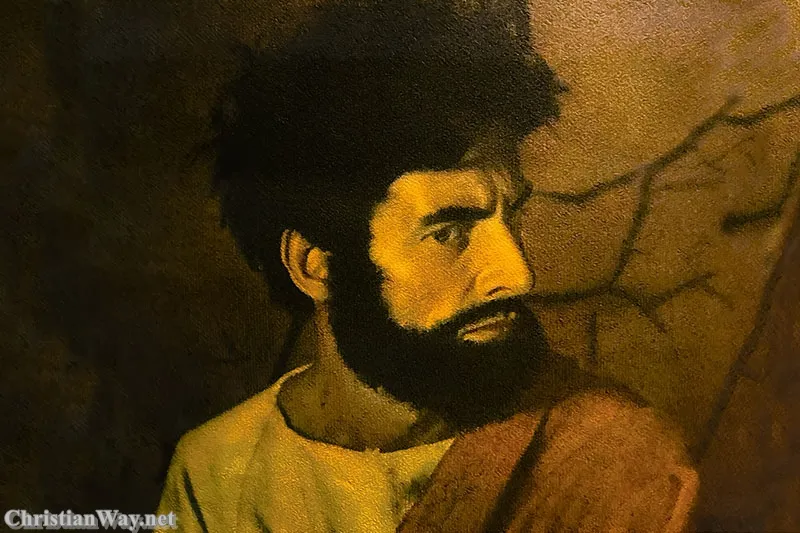
Matthew did not merely become a sympathetic follower of Jesus. He became one of the Twelve Apostles. In the list of apostles, the Gospel names him with striking humility as “Matthew the tax collector” (Matthew 10:3). This description is profoundly moving. Matthew does not hide his former identity. He does not erase the place from which Christ called him. Instead, the title becomes part of his witness.
There is a lesson here for all of us. When Christ forgives us, He does not necessarily erase every memory of our past. But He redeems it. What was once a source of shame can become a source of humility, gratitude, and compassion. Matthew’s past as a tax collector did not define his final identity, but it remained part of the story of mercy that glorified God.
Perhaps this is why people who have been deeply forgiven often become especially gentle toward others. They know how fragile the human heart can be. They know what it is to hide behind appearances. They know that the person who seems farthest from God may be only one encounter away from surrendering to grace.
Among the Twelve, Matthew stood with men very different from himself. There were fishermen accustomed to the sea and the labor of their hands. There was Simon the Zealot, connected to a movement that strongly opposed Roman rule. There was Matthew, who had worked within the Roman taxation system. Humanly speaking, such differences might have divided them. Yet Christ gathered them into one community.
This is a beautiful image of the Church. Christ does not create unity by making everyone identical. He calls people from different histories, temperaments, cultures, professions, wounds, and backgrounds. Then He teaches them to become brothers and sisters in Him. The unity of the Church is not a shallow agreement built on shared preferences. It is communion formed by the love of Christ.
Saint Matthew reminds us that no human past is too complicated for the unity Christ desires to create. In a world deeply divided by politics, economic differences, social resentments, family conflicts, and ideological battles, the apostolic community offers a different vision. At the center is not personal victory, but Jesus. At the center is not the triumph of one group over another, but the Kingdom of God.
The apostle is a person sent. Matthew was called out of one life so that he could be sent into another. He learned from Jesus, witnessed His ministry, heard His teachings, and eventually became a bearer of the Good News. The man who once collected taxes now proclaimed treasures that cannot be counted: forgiveness, adoption as children of God, the nearness of the Kingdom, the victory of the Cross, and the hope of resurrection.
The Evangelist Who Proclaimed Christ the King
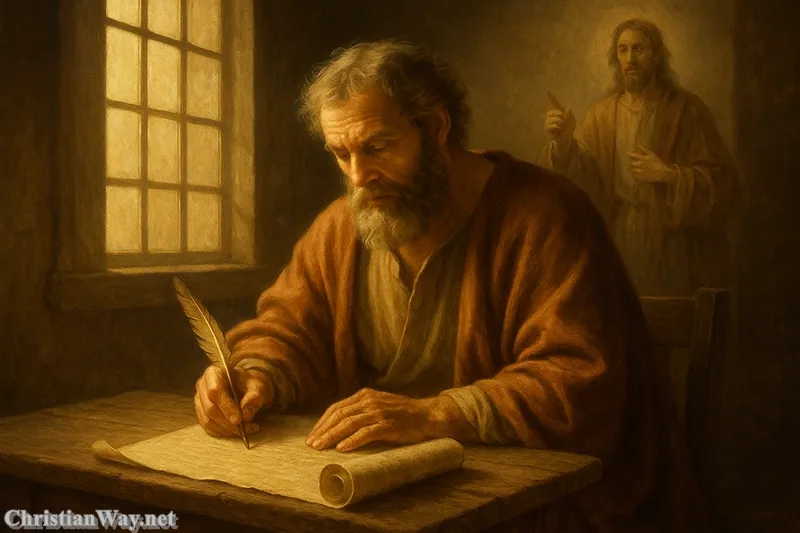
Christian tradition honors Saint Matthew not only as an apostle but also as an evangelist, associated with the Gospel that bears his name. This Gospel presents Jesus with particular depth as the fulfillment of God’s promises to Israel, the long-awaited Messiah, the teacher of divine wisdom, and the King whose Kingdom is not built upon earthly violence or worldly power.
The Gospel of Matthew begins with a genealogy. To modern readers, genealogies can seem difficult or distant. But spiritually, this opening is full of meaning. It tells us that Jesus enters a real human history. He comes through a family line marked by faithfulness, failure, exile, suffering, unexpected mercy, and divine promise. The Savior does not descend into an imaginary world of perfect people. He enters the broken story of humanity to redeem it from within.
Matthew’s Gospel repeatedly shows how Jesus fulfills the Scriptures. The Old Testament is not discarded; it finds its fullness in Christ. The promises made to Abraham, the law given through Moses, the hope announced by the prophets, and the longing of Israel all point toward the One who comes among us as Emmanuel, “God with us.”
This vision has great importance for every Christian. Faith is not the invention of a new spiritual idea. It is the fulfillment of God’s patient work throughout history. The God who called Abraham, delivered Israel, spoke through the prophets, and formed a people of covenant is the same God who comes to us in Jesus Christ. In Christ, the promises of God are not abandoned. They are fulfilled in love.
Matthew also gives us the Sermon on the Mount, one of the most beloved and challenging passages in all Scripture. Here Jesus teaches the Beatitudes: “Blessed are the poor in spirit,” “Blessed are the merciful,” “Blessed are the peacemakers” (Matthew 5:3–9). These words reveal the character of the Kingdom. It is not a kingdom of domination, pride, revenge, or self-promotion. It is a kingdom in which the poor are honored, the meek inherit the earth, those who hunger for righteousness are strengthened, and the merciful receive mercy.
Who better than Matthew could understand the beauty of such a Kingdom? He had known the world of accounts, transactions, power, and social judgment. But in Christ, he encountered a new economy of grace. In the Kingdom of God, the greatest treasure is not wealth but communion with the Father. The highest status is not self-exaltation but humble service. The true gain is not taking more for oneself, but receiving the mercy of God and sharing it with others.
A Gospel of Discipleship
The Gospel associated with Matthew does not allow us to admire Jesus from a distance. It calls us to become disciples. Jesus teaches not only what we should believe, but how we should live. He speaks about reconciliation before worship, prayer in secret, freedom from anxiety, generosity toward the poor, love for enemies, and trust in the Father who sees what is hidden.
Matthew’s own life makes this teaching credible. He had to leave behind an old way of living. He had to learn a new way of seeing people. He had to become a brother among the apostles, a servant of the Gospel, and a witness to the mercy that had transformed him.
Discipleship is always personal, but it is never private. Christ calls each of us by name, yet He calls us into a people. He teaches us to pray, “Our Father,” not merely “My Father.” He sends us to love our neighbors, forgive those who wrong us, care for the vulnerable, and bear witness through the integrity of our lives.
At the end of Matthew’s Gospel, the risen Jesus gives the Great Commission: “Go therefore and make disciples of all nations” (Matthew 28:19). The apostle who had once sat alone at a tax booth became part of the Church’s mission to bring Christ to the world. The man who had once been separated from many of his own people became a herald of a Gospel meant for every people.
This is the movement of grace. God takes what is closed and opens it. He takes what is isolated and makes it a bridge. He takes what is wounded and gives it a mission. He takes a tax collector and makes him an evangelist.
Saint Matthew and the Hope of Every Wounded Heart
The story of Saint Matthew is not simply about a man who lived long ago. It is about the way Christ continues to work in every generation. It is about the person who has become weary of being defined by the past. It is about the man who believes his mistakes have made him unworthy of love. It is about the woman who carries regret in silence. It is about the young person who feels lost between the expectations of others and the deep hunger of the soul. It is about all of us.
We live in an age filled with noise. We are constantly invited to measure ourselves by income, appearance, success, possessions, influence, and the approval of others. Like Matthew at his table, we can become accustomed to counting things that cannot finally save us. We count money, followers, achievements, failures, missed opportunities, and fears about the future. Yet Christ comes to us and asks a different question: Will you follow Me?
To follow Christ does not mean abandoning our responsibilities or despising the ordinary tasks of life. Matthew’s calling does not teach us that work, commerce, administration, or financial responsibility are evil. Rather, it teaches that no occupation should become the master of our heart. We may work in business, government, education, medicine, construction, technology, finance, or any other field, but our deepest identity must never be reduced to what we earn or achieve.
Matthew’s life is especially meaningful for those who work with money, responsibility, and public trust. His conversion reminds us that honesty, justice, compassion, and integrity are not separate from faith. A Christian conscience must shape the way we handle wealth, make decisions, treat employees, serve customers, pay debts, and use the resources entrusted to us. The Gospel does not remain inside a church building. It reaches the office desk, the business account, the marketplace, and every place where human dignity can either be honored or ignored.
Yet Matthew also reminds us not to judge others quickly. We may see only the outer appearance of another person. We may know their reputation, their past, their failures, or the stories others tell about them. But Christ sees the hidden work of grace. The person we dismiss today may become a powerful witness tomorrow. The one who appears far from faith may be closer to conversion than we imagine.
How much pain would be healed in families, parishes, workplaces, and communities if we learned to look at people with something of the gaze of Christ? This does not mean ignoring wrongdoing or avoiding difficult truths. Jesus never calls sin good. But it does mean refusing to reduce anyone to their worst moment. It means making room for repentance, growth, healing, and new beginnings.
Saint Matthew’s witness tells us that every Christian is called to become, in some small way, an evangelist. Not everyone writes a Gospel. Not everyone preaches publicly. Not everyone travels far from home. But every believer can speak the Gospel through a changed life. A forgiven person who forgives becomes an evangelist. A person who serves quietly becomes an evangelist. A parent who teaches a child to pray becomes an evangelist. A worker who chooses honesty when dishonesty would be easier becomes an evangelist. A suffering person who clings to hope becomes an evangelist.
The world needs such witnesses. It needs people who have been touched by mercy and therefore do not become harsh. It needs Christians who can speak truth without cruelty, hold convictions without pride, and welcome the wounded without abandoning holiness. It needs disciples who have risen from their old tables and begun to walk after Christ.
Reflect and Pray
Dear friends, Saint Matthew invites us to ask a quiet and personal question: Where am I still sitting when Christ is calling me to rise?
Perhaps the Lord is calling you from fear into trust. Perhaps He is calling you from resentment into forgiveness. Perhaps He is calling you from distraction into prayer, from isolation into community, from dishonesty into integrity, or from despair into hope. The call may feel small at first. It may come as a gentle stirring in the conscience, a desire to return to God, a need to seek reconciliation, or a longing to begin again.
Do not be afraid of the voice of Christ. He does not call you to diminish your life, but to receive it anew. He sees every wound, every failure, every hidden longing, and every possibility that grace can awaken. He knows your name. He knows the place where you have been sitting. And still He says, “Follow me.”
Let us pray:
Lord Jesus Christ,
You looked upon Saint Matthew with mercy
and called him from his old life into the joy of discipleship.
Look upon us with that same loving gaze.
Free us from all that keeps us seated in fear, sin, pride, or despair.
Give us courage to rise when You call,
to welcome others with mercy,
and to bear witness to Your Gospel in every part of our lives.
May Saint Matthew pray for us,
that we may follow You faithfully
and proclaim Your love through all that we are.
Amen.
May the peace of Christ dwell richly in your heart, and may His merciful gaze give you courage to rise and follow Him each day.
— Fr. John Matthew