Dear friends in Christ,
There are saints whose lives seem to stand before us like great mountains: commanding, immediately visible, impossible to overlook. Then there are saints whose holiness is revealed more quietly, through a few remembered words, a faithful step taken at the right moment, an honest question asked in the presence of the Lord. Saint Philip the Apostle belongs to this second kind of witness. The Gospels do not preserve long sermons from him, nor do they tell us much about his family, his work, or the hidden years of his life. Yet every time Philip appears, he draws our attention toward Jesus. He receives Christ’s call, brings another soul to meet Him, wrestles sincerely with the mysteries before him, and remains among those sent into the world as witnesses of the risen Lord.
This is why Saint Philip the Apostle speaks so tenderly to the human heart. Many of us know what it is to believe and still have questions. We know what it is to feel the greatness of God’s promise, yet wonder how it can be fulfilled in the circumstances of ordinary life. We may have moments of deep faith, followed by moments when we say, “Lord, show me more clearly. Help me understand. Help me see.” Philip teaches us that such questions do not have to become doors leading away from God. When they are brought humbly to Christ, they can become the beginning of a deeper friendship with Him.
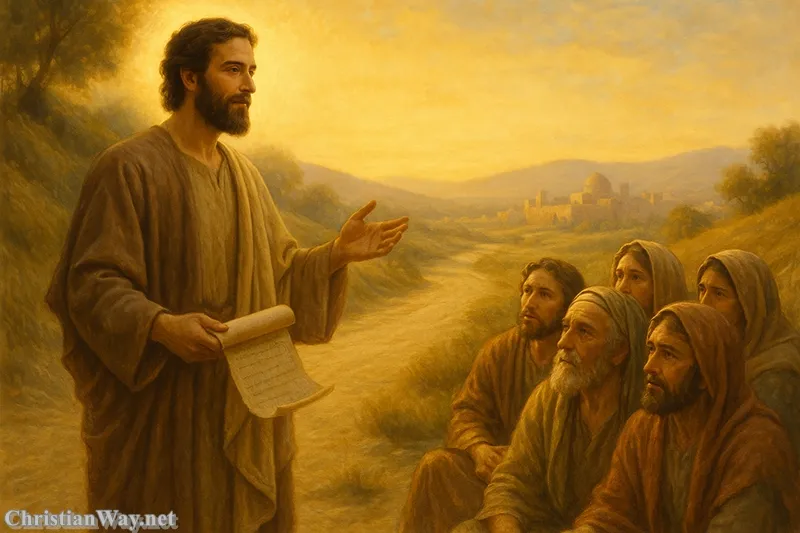
Philip was not presented to us as a man who had everything figured out. He was a disciple who walked close enough to Jesus to ask. He was a man who listened when Christ called him and who, in time, learned that the answer to the deepest longing of the human heart is not merely a set of explanations, but the very person of Jesus Christ. Through Philip, we see that faith is not the absence of uncertainty. Faith is the decision to remain near the Lord when we do not yet see the whole path.
The witness of this apostle is especially precious in an age filled with noise, distraction, and endless opinions. We are often tempted to believe that faith must always be expressed with perfect confidence, polished words, and immediate answers. Yet the Gospel gives us a gentler picture. It shows a disciple growing slowly beneath the gaze of Christ. It shows a man who first says, “Come and see,” and later hears Jesus reveal the heart of the Father. In Saint Philip the Apostle, we find a companion for the journey: one who reminds us that the Lord receives the searching soul with patience, truth, and love.
Called by Name into the Friendship of Christ
The first words spoken by Jesus to Philip in the Gospel of John are wonderfully simple: “Follow me” (John 1:43). There is no lengthy explanation before the call. There is no record of Philip negotiating the conditions of discipleship or asking for further proof before he obeys. Christ speaks, and Philip responds. In that brief encounter, the whole pattern of Christian life is already present. The Lord comes first. He calls us before we are prepared, before we understand fully, before we know what the road ahead will require. Our faith begins not with our search for God, but with God’s merciful search for us.
The Gospel tells us that Philip was from Bethsaida, the same town as Andrew and Peter. It was a place of fishermen, labor, ordinary conversations, and daily burdens. Philip did not live in a palace or study in the courts of Jerusalem. He came from the life familiar to so many people: work to do, responsibilities to carry, hopes for the future, and perhaps silent questions about whether God had truly remembered His people. Yet it was precisely there, in the ordinary landscape of his life, that Jesus found him.
This matters deeply for us. Sometimes people imagine that a call from God must arrive in a dramatic moment, marked by extraordinary signs. Certainly, God can speak through great events. But very often, He meets us in the places where we already stand. He comes into the routine of our work, the quiet of our home, the weariness of our responsibilities, the hidden ache beneath our busyness. He says, as He said to Philip, “Follow me.” Not necessarily by asking us to abandon every visible part of our life, but by inviting us to let every part of our life belong to Him.
To follow Christ is not simply to adopt a religious label or to agree with a collection of teachings. It is to place one’s life beneath the loving authority of the Lord. It is to let His word correct us, His mercy heal us, His commandments guide us, and His presence become more real than our fears. Philip’s response reminds us that faith begins with a movement of the heart. Christ calls; the disciple rises and walks behind Him.
There is also a quiet dignity in the way the Gospel presents Philip. Jesus did not call him because he had already become perfect. He called him because He loved him and desired to form him. That is the hope offered to every believer. The Church is not gathered from people who have mastered holiness by their own strength. It is gathered from those whom Christ has called, forgiven, instructed, and transformed. Philip’s life assures us that the Lord is not discouraged by our incompleteness. He sees what His grace can make of us when we remain faithful to His call.
The Grace to Begin Before We Understand Everything
There are moments when the soul delays because it is waiting for perfect certainty. A person may say, “I will pray seriously when my life is less crowded.” Another may say, “I will return to the sacraments when I feel more worthy.” Someone else may wait until every theological question has been answered before allowing the heart to surrender to Christ. But Philip did not begin with complete understanding. He began by following.
This is not a call to careless faith. Christianity does not ask us to abandon reason or to ignore our questions. God gave us minds, and He desires that we love Him with all our heart, soul, strength, and mind. Yet there is a difference between seeking understanding and demanding that God reveal everything before we trust Him. Philip teaches us to take the first faithful step. Understanding often grows along the road of obedience.
The Lord may be calling someone today to pray again after years of silence, to forgive a person who caused pain, to return to worship, to reconcile with a family member, to leave behind a sin that has become familiar, or simply to speak the name of Jesus with greater courage. The path may not be fully visible. But the first word remains the same: “Follow me.” Christ never calls us into darkness without also becoming the light beside us.
“Come and See”: The Simplicity of Philip’s Witness
Soon after Jesus calls him, Philip goes to find Nathanael. His words are filled with joy: “We have found him, of whom Moses in the law, and the prophets, did write, Jesus of Nazareth” (John 1:45). Philip does not keep the good news to himself. He does not think that his encounter with Christ is a private possession meant only for his own comfort. He immediately desires that another person should know the One he has found.
This is one of the most beautiful marks of genuine faith. When Christ becomes real to us, our hearts begin to widen. We begin to pray for others differently. We become more attentive to their burdens. We hope that they too may know the mercy that has touched us. Evangelization, at its deepest level, is not argument for argument’s sake. It is love that cannot remain silent. It is the humble desire to say, “There is One who has changed my life. There is One whose mercy has held me. Come and see.”
Nathanael’s first response is not enthusiastic. “Can there any good thing come out of Nazareth?” he asks (John 1:46). In those words, we hear the voice of human skepticism. Nazareth was not the place people expected the Messiah to come from. It seemed too small, too insignificant, too ordinary. Yet Philip does not react with anger. He does not ridicule Nathanael’s doubt. He does not overwhelm him with pressure or try to force a victory in conversation. He simply says, “Come and see.”
Those three words contain a whole spirituality of Christian witness. Philip understands that only Jesus can finally reveal Jesus. Philip can point the way, but he cannot replace the encounter. He can invite Nathanael, walk beside him, and bring him near to Christ. But the transforming word must come from the Lord Himself.
How much wisdom there is in this for Christians today. We live in a world where many people are suspicious of religion, wounded by the failures of believers, distracted by material concerns, or quietly uncertain whether God is real. Some may speak with sharpness about the Church. Others may carry questions they have never dared to say aloud. Philip teaches us not to meet every question with anxiety. We are called to bear witness with humility, patience, and truth.
To say “Come and see” may mean inviting someone to pray with us. It may mean offering a kind word when someone is grieving. It may mean sharing, without pride, how Christ has sustained us in a difficult season. It may mean welcoming a friend to worship, listening to their doubts without judgment, or showing by the gentleness of our life that the Gospel is not a burden but a source of freedom.
Faith Is Offered, Not Forced
The Christian message is urgent because the love of God is urgent. Yet the way of Christ is never manipulation. Jesus calls; He does not coerce. He knocks at the door; He does not break it down. Philip reflects this same spirit. His answer to Nathanael is an invitation, not a demand.
This is especially important in families. Parents may long for their children to remain close to the faith. A husband or wife may pray for a spouse who has grown distant from prayer. A friend may carry sorrow for someone who has become cynical or indifferent. Saint Philip reminds us that witness often begins with patient love. We speak truth, but we do not attempt to control another soul. We pray, we serve, we endure, and we continue to point toward Christ.
The strongest invitation may sometimes be the life we live. A heart that forgives when forgiveness is difficult, a home where prayer is natural, a person who remains peaceful in suffering, a believer who serves without seeking attention—these things quietly say, “Come and see.” They reveal that Christ is not merely an idea spoken about on Sunday. He is a living Lord whose grace touches the hidden places of life.
The Question of Bread and the God Who Provides
Saint Philip appears again in the account of the feeding of the five thousand. Jesus sees the crowd coming toward Him and asks Philip, “Whence shall we buy bread, that these may eat?” (John 6:5). The Gospel immediately adds that Jesus said this to test him, “for he himself knew what he would do” (John 6:6). Philip looks at the situation before him and answers with practical honesty: “Two hundred pennyworth of bread is not sufficient for them, that every one of them may take a little” (John 6:7).
It is easy to recognize ourselves in Philip. He sees the need clearly. There are too many people, too little food, too few resources. His response is reasonable. It is the response of someone who has counted the cost and found that the numbers do not add up. Yet Jesus is preparing to reveal that human limitation is not the final measure of what God can do.
Philip’s answer is not foolish. In fact, it is deeply human. He does what many of us do when faced with a difficult situation: he calculates. We calculate the money we have, the strength we have left, the time available, the people willing to help, and the possible outcomes. Sometimes such prudence is wise and necessary. But the Gospel gently invites us to ask whether our calculations have become a prison for our hope.
There are burdens that cannot be solved by our own resources alone. A family may face illness. A parent may wonder how to guide a struggling child. A person may carry grief that no practical advice can remove. Someone may see injustice in the world and feel overwhelmed by the scale of suffering. At such moments, the heart of Philip asks, “How can this possibly be enough?”
Christ does not shame Philip for his question. Instead, He receives the little that is offered: five barley loaves and two small fish. From that seemingly insufficient gift, He feeds the multitude. The miracle does not deny the reality of scarcity. It reveals the abundance of God in the midst of scarcity. What is small in our hands can become fruitful in the hands of Christ.
This is a message of consolation for anyone who feels that they have too little to offer. Perhaps you have only a few moments for prayer amid a demanding day. Perhaps your faith feels fragile. Perhaps your patience is limited, your energy is low, or your gifts seem ordinary compared with the needs around you. Bring what you have to Jesus. Do not despise the smallness of your offering. The Lord does not ask us to create miracles by ourselves. He asks us to place what we have in His hands.
When Our Resources Seem Too Small
Many people carry a hidden sadness because they compare their lives with others. One person sees another’s wealth, influence, talent, or visible success and begins to believe that their own life cannot matter much. But the Gospel does not measure faithfulness by worldly abundance. Jesus did not begin the miracle with a great storehouse. He began with a child’s simple meal, offered into His hands.
Saint Philip teaches us to be honest about our limitations, but not to let limitation become despair. We may say, “Lord, this is all I have.” And Christ may answer, “Give it to me.” The small act of kindness, the quiet prayer for someone in pain, the decision to remain faithful in a difficult marriage, the willingness to serve without recognition, the courage to speak truth gently—these can become bread for others when they are offered to the Lord.
The Christian life is not built upon the illusion that we are sufficient. It is built upon the certainty that God is faithful. “My grace is sufficient for thee,” the Lord says to Saint Paul, “for my strength is made perfect in weakness” (2 Corinthians 12:9). Philip’s question beside the hungry crowd becomes a lesson for all of us: when our hands feel empty, Christ is still able to provide.
“Show Us the Father”: The Longing Beneath Every Human Question
Perhaps the most tender moment in the Gospel account of Saint Philip the Apostle takes place during the Last Supper. Jesus is preparing His disciples for the sorrow of the Cross and the mystery of His return to the Father. He speaks to them of knowing God, of dwelling places in His Father’s house, and of the way that leads to eternal life. Then Philip says to Him, “Lord, show us the Father, and it sufficeth us” (John 14:8).
This is not merely an intellectual request. It is the cry of the human heart. Beneath all our striving, beneath our questions about success, safety, health, and purpose, there is a deeper longing: we want to see the Father. We want to know that we are not alone in the universe. We want to understand whether love is stronger than death, whether our lives are held by Someone, whether there is a home beyond the restlessness of this world.
Philip’s words are simple: “Show us the Father.” He believes that if he could truly see God, his heart would finally be at peace. “It sufficeth us,” he says. It would be enough.
Jesus responds with words that stand at the center of Christian faith: “Have I been so long time with you, and yet hast thou not known me, Philip? He that hath seen me hath seen the Father” (John 14:9). In Jesus Christ, the invisible God has made Himself known. The Father is not an unknown force hidden behind the world. He has revealed His heart in the face of the Son.
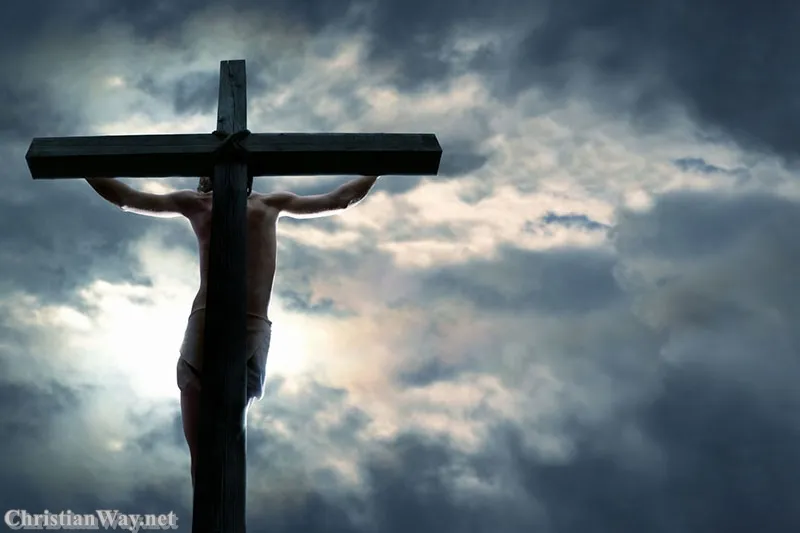
This is the glory of the Incarnation. Jesus is not merely a wise teacher pointing toward God from a distance. He is the eternal Word made flesh. He is the perfect image of the Father’s love. When we see Christ touching the leper, we see the compassion of the Father. When we see Him welcoming sinners, we see the mercy of the Father. When we see Him weeping at the tomb of Lazarus, we see the tenderness of the Father. When we see Him forgiving from the Cross, we see the self-giving love of the Father poured out for the salvation of the world.
Philip’s question becomes a doorway into one of the greatest mysteries of the Christian faith: God is not distant from us. In Christ, He has come near. The Father has spoken His final and fullest word not through an abstract idea, but through His Son.
The Face of Christ and the Healing of the Heart
There are seasons in life when God can feel hidden. A person may pray and hear no immediate answer. A family may experience suffering and wonder why heaven seems silent. A believer may carry an old sorrow that makes it difficult to trust. In such moments, Philip’s question can become our prayer: “Lord, show us the Father.”
The answer remains Christ. Not always through an instant solution, but through His abiding presence. We see the Father in the Gospel. We meet Him in prayer. We receive His grace in worship and the sacraments. We recognize His mercy in the forgiveness that lifts us after sin. We experience His faithfulness when He sustains us through a trial we once believed we could not bear.
To look upon Christ is not to escape reality. It is to see reality more truly. The Cross tells us that God does not remain far from human suffering. The Resurrection tells us that suffering and death do not have the final word. The wounds of Jesus remain visible even in His risen glory, reminding us that divine love does not erase our pain as though it never mattered. Rather, it enters pain and transforms it from within.
Saint Philip’s request is therefore a gift to every person who longs for God. He gives words to our deepest hunger. And Christ gives the answer: “He that hath seen me hath seen the Father.”
A Door Opened to the Nations
In another brief but meaningful moment, the Gospel tells us that certain Greeks came to worship at the feast in Jerusalem. They approached Philip and said, “Sir, we would see Jesus” (John 12:21). Philip then went and told Andrew, and together they brought the matter to Jesus.
This scene is filled with quiet significance. These Greeks were outsiders in a certain sense. They were not among the immediate circle of Israel. Yet they were drawn by a desire to see Jesus. Their request echoes across centuries. It is the request of every searching soul, every culture, every people, every person who has looked beyond the limits of the visible world and whispered, “I would see Jesus.”
Philip becomes a bridge. He does not stand between the Greeks and Christ as though he were the destination. He helps lead them toward the Lord. This is the true calling of every apostle and, in a different but real way, of every Christian. We are not called to make others dependent upon ourselves. We are called to help them encounter Jesus.
The Church has always been missionary because Christ is for all people. The Gospel is not the possession of one nation, one social class, one language, or one group of those who think they are already worthy. Jesus came for the poor and the powerful, the learned and the simple, the wounded and the confident, the near and the far. His saving love reaches beyond every human boundary.
Saint Philip’s role in this moment offers a beautiful image of Christian hospitality. There are many people who stand near the edge of faith. They may not yet know how to pray. They may feel embarrassed to enter a church. They may be carrying wounds caused by their past or uncertainty about whether they will be welcomed. Philip teaches us to become people who make room. We do not lower the truth of Christ, but we present that truth with the open arms of Christ.
“We Would See Jesus”
The words of the Greeks should remain in the heart of every Christian community: “We would see Jesus.” Not merely our preferences, our arguments, our social identities, or our personal importance. We would see Jesus.
A parish, a family, a ministry, or a friendship becomes fruitful when Christ is clearly present within it. People should be able to sense that He is loved, trusted, obeyed, and proclaimed. This does not mean that Christians must be flawless. It means that we must be sincere. We must be willing to repent, to forgive, to serve, and to speak His name with reverence.
In a world filled with many voices, Philip reminds us that the greatest gift we can offer is not ourselves. It is the One who has found us. Like Philip, we can say to the weary, the doubtful, the grieving, and the searching: “Come and see.” Come and see the mercy of Christ. Come and see the Savior who knows your wounds. Come and see the One who reveals the Father’s heart.
A Faithful Witness Unto the End
The Scriptures do not tell us in detail about the later missionary life or death of Saint Philip the Apostle. Christian tradition, however, has long remembered him as one who carried the Gospel beyond the first places of his calling and who bore witness to Christ with steadfast courage. Traditions concerning the precise places and circumstances of his ministry differ, but the Church’s memory is clear in its essential confession: Philip remained a faithful witness of the Lord he had first chosen to follow.
This is the deepest meaning of an apostle. An apostle is one who is sent. Philip was first called into the friendship of Jesus, but he was not called merely to remain in private comfort. He was sent to proclaim what he had seen and heard. The Gospel he carried was not a theory. It was the living proclamation that Jesus Christ had died, risen, and opened the way to the Father.
It is important to remember that Saint Philip the Apostle is distinct from Philip the Evangelist, who appears later in the Acts of the Apostles as one of the seven chosen to serve the Church. Both men bear the name Philip, and both remind us that the Church’s mission has always included service, proclamation, and obedience to the Holy Spirit. But Saint Philip the Apostle stands before us especially as one of the Twelve, called directly by Jesus and sent as a witness to the foundation of the Church.
The faithfulness of Philip was not built upon his personality alone. It was built upon grace. He had seen Christ’s works. He had heard Christ’s words. He had stood near the Cross, known the grief of loss, and then received the joy of the Resurrection. Like the other apostles, he was transformed by the gift of the Holy Spirit. The man who once asked how enough bread could be found for the crowd became part of the Church through whom the Bread of Life was proclaimed to the world.
This is the pattern of Christian maturity. We begin with questions. We grow through encounters with Christ. We are purified through trial. We receive strength through the Holy Spirit. Then we are sent, not necessarily to distant lands, but wherever God has placed us.
For some, the mission field is a family table where patience is needed. For others, it is a workplace where honesty is costly. For another, it may be a sickbed, a classroom, a lonely neighborhood, a difficult friendship, or a season of hidden service. To be a witness of Christ does not always mean speaking before crowds. Often it means allowing the Lord’s love to be visible in the way we endure, forgive, work, pray, and hope.
The Quiet Courage Needed in Our Own Time
Saint Philip the Apostle offers a particular word to those who feel that their faith is too simple, their gifts too small, or their questions too numerous. The world often celebrates those who appear certain of everything. But the Gospel honors a different kind of strength: the courage to remain with Jesus.
Philip did not walk away when he did not understand. He did not abandon the Lord because the mystery was greater than his mind could contain. He continued to listen. He continued to ask. He continued to follow. This is a profound lesson for Christians living in times of confusion.
There are many questions today that can trouble the heart. Why is there suffering? Why do good people endure pain? Why does prayer sometimes seem unanswered? How can faith remain strong in a culture that often forgets God? These questions should not be hidden in shame. They should be carried into the presence of Christ, as Philip carried his question at the Last Supper.
The Lord may not always answer in the way we expect. Sometimes His answer is not a full explanation, but a deeper revelation of Himself. He says, in effect, “Look at me. Remain with me. See the Father in me.” The heart begins to find peace not because every mystery has disappeared, but because it knows it is held by the One who is faithful.
Philip also teaches us that Christian witness begins close to home. He found Nathanael. He spoke to someone he knew. He invited one person to meet Jesus. We should not underestimate the holiness of such small acts. A gentle word spoken to a discouraged friend, a child taught to make the sign of the cross, a meal brought to a grieving neighbor, a quiet prayer offered for someone who has hurt us—these are not insignificant things. They may become, by grace, the beginning of another person’s journey toward Christ.
The Gospel does not require each of us to be famous. It asks us to be faithful. Saint Philip’s name remains beloved in the Church not because he sought greatness for himself, but because he pointed beyond himself to the Lord. His life says to us: let Christ be seen. Let Christ be heard. Let Christ be loved.
Reflect and Pray
Dear friends, the life of Saint Philip the Apostle is a gentle invitation to return to the simplicity of discipleship. Jesus calls. We follow. We meet others along the road and say, “Come and see.” We bring our honest questions to the Lord. We offer Him the little we have. We ask to see the Father, and in the face of Christ we discover that God has already drawn near.
Perhaps today you carry a question that has no easy answer. Perhaps you feel like Philip before the hungry crowd, looking at the needs around you and wondering how anything you have could be enough. Perhaps you are praying for someone you love, hoping that they too may come to know Christ. Do not lose heart. Stay near to Jesus. Let your question become prayer. Let your weakness become an offering. Let your life become a quiet invitation for another soul to see the Savior.
May Saint Philip the Apostle pray for us, that we may receive Christ’s call with willing hearts, speak of Him with humble joy, and remain faithful even when the road is not fully clear.
Lord Jesus Christ,
You called Saint Philip to follow You,
and You received the questions of his searching heart with patience and love.
Teach us to trust You when we do not understand,
to offer You what little we have,
and to lead others gently toward Your mercy.
Show us the Father through Your holy face,
and make our lives a faithful witness to Your Gospel. Amen.
May the peace of Christ dwell richly in your heart, and may His love guide every step you take toward Him.
— Fr. John Matthew