Dear friends in Christ,
There are moments in life when words seem too small. A hospital corridor grows quiet after difficult news. A family gathers around a grave. A friendship once trusted is wounded by betrayal. A person sits alone at night, carrying guilt, fear, grief, or a question that seems to have no answer. In such moments, we may wonder where God is. We may ask whether He sees the pain of the world, whether He understands the wounds we cannot explain, and whether love can truly survive in a world marked by cruelty, suffering, and death.
The Christian answer is not a quick explanation. It is not a promise that life will never break our hearts. It is not an invitation to pretend that suffering is easy. The Christian answer is a cross.
At the center of the Gospel stands Jesus Christ crucified. The Son of God, through whom all things were made, allowed Himself to be rejected, mocked, beaten, and nailed to a cross. He entered the place of shame, sorrow, violence, abandonment, and death. He did not stand at a distance from the human condition. He came into it. He carried it. He suffered within it. And from the cross, He revealed a love deeper than human hatred, stronger than sin, and more faithful than death.
The Crucifixion: The Mystery of Love Revealed on the Cross is not merely a title for an event remembered during Holy Week. It is a window into the heart of God. At Calvary, we see that God is not indifferent to our suffering. We see that sin is more serious than we often admit, yet mercy is greater than we dare to hope. We see that Christ does not save the world through force, domination, or revenge, but through self-giving love. The cross is not the end of the story, but it is the place where love goes all the way to the end.
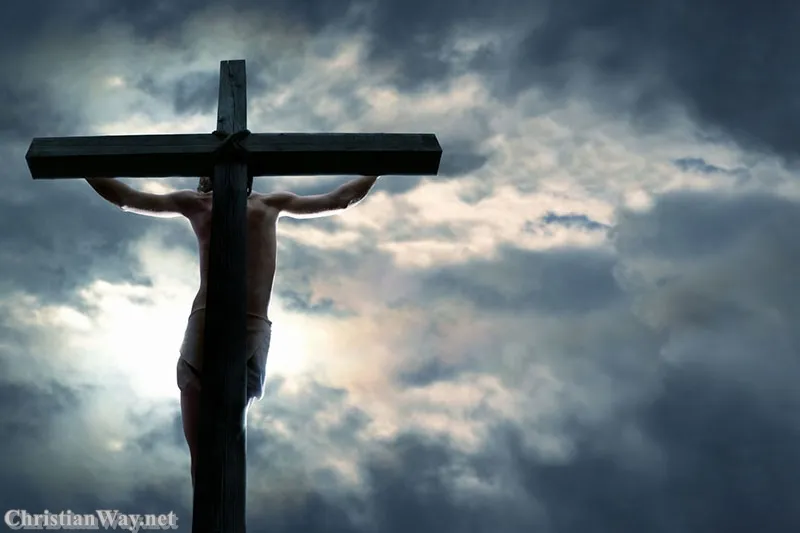
To gaze upon the crucified Christ is to enter a holy mystery. We do not look upon the cross as spectators examining an old event from a safe distance. We come as people whose lives are already touched by the things present at Calvary: fear, betrayal, injustice, loneliness, suffering, regret, and the longing to be forgiven. We come also as people who need to know that hope is real.
The cross meets us there. It tells us that there is no darkness into which Christ refuses to enter. There is no wound so hidden that He does not see it. There is no sin so deep that His mercy cannot reach the repentant heart. There is no grief so heavy that He is unable to carry it with us. The crucified Lord does not always remove suffering immediately, but He never leaves His children alone beneath it.
The Cross Stands at the Center of the Gospel
The crucifixion of Jesus was a real and painful event in history, but it is also the central mystery of Christian faith. The apostles did not preach merely that Jesus was a wise teacher who died tragically. They proclaimed that the crucified Jesus was the Messiah, the Son of God, and the Savior of the world.
What the World Saw as Defeat
To those who stood near the cross on that Friday afternoon, it may have seemed that everything had ended. Jesus had been welcomed into Jerusalem only days earlier. He had taught openly, healed the sick, fed the hungry, and spoken of the Kingdom of God. Yet now He was hanging between criminals. His disciples were scattered. His enemies appeared to have won. His mother stood in grief. The sky seemed dark.
Human eyes often see only the surface of suffering. We see loss and assume that hope is gone. We see failure and assume that a person’s story is over. We see weakness and assume that God is absent. But the cross teaches us that God can be at work even in places where we cannot yet see the meaning.
Saint Paul understood this deeply. He wrote, “The preaching of the cross is to them that perish foolishness; but unto us which are saved it is the power of God” (1 Corinthians 1:18). The cross does not look like power according to the standards of the world. It does not offer wealth, status, military victory, or public success. It offers something more difficult and more beautiful: love that refuses to abandon the beloved.
The world often admires those who can overpower others. Christ reveals another kind of strength. He is strong enough to forgive while being wounded. He is strong enough to remain faithful when abandoned. He is strong enough to carry the weight of human sin without answering sin with more sin. His power is the power of love that gives itself freely.
This does not mean that the cross makes suffering good in itself. Pain is not holy simply because it hurts. Violence is not sacred because Jesus endured violence. The cross reveals the evil of sin precisely because it shows what human cruelty can do to the innocent Son of God. Yet it also reveals that evil does not have the final word. God takes the darkest human act and makes it the place where redemption begins to shine.
The Love That Did Not Turn Away
Jesus did not stumble into the cross unaware. Throughout the Gospels, He spoke of the suffering that lay ahead. He knew that the path of love would lead Him toward rejection and death. In the garden of Gethsemane, He prayed with deep anguish, asking that the cup might pass from Him, yet surrendering Himself to the Father: “Not my will, but thine, be done” (Luke 22:42).
These words are precious because they show us that Christ’s obedience was not cold or mechanical. Jesus entered suffering with a real human heart. He knew fear. He knew sorrow. He knew what it meant to face a burden that seemed unbearable. Yet He entrusted Himself to the Father.
The cross was not forced upon Jesus as though He were powerless. He freely gave Himself in love. He said, “No man taketh it from me, but I lay it down of myself” (John 10:18). His death was not an accident outside the will of God. It was the willing gift of the Son, offered for the life of the world.
This is the mystery of Christian love: Christ did not love us only while we were easy to love. He loved us when we were lost. He loved us when we had turned away. He loved us even when human sin was lifting Him onto the cross.
The Long Road to Calvary
The crucifixion cannot be understood without remembering the path that led Jesus there. The cross was not isolated from His life. It was the final expression of the mercy He had shown throughout His ministry.
A Life Given for the Weak and Forgotten
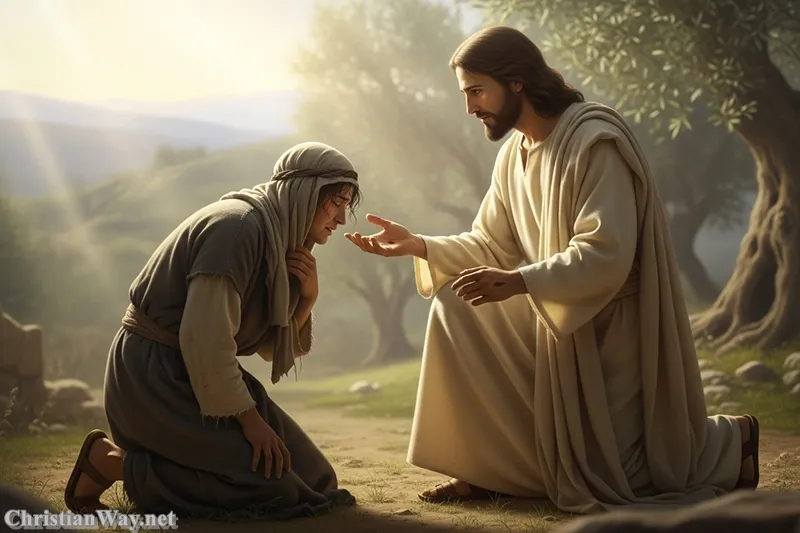
Jesus had spent His life moving toward those whom others often ignored. He touched lepers. He welcomed children. He spoke with women whom society overlooked. He ate with tax collectors and sinners. He wept with grieving friends. He healed people whose suffering had become part of their identity in the eyes of others.
Every act of mercy in the Gospels was already pointing toward the cross. Jesus came not to protect Himself from the brokenness of the world, but to enter it with compassion. He did not come only for the religiously successful. He came for the burdened, the ashamed, the poor, the sick, the frightened, and the lost.
At the Last Supper, on the night before His death, Jesus gave His disciples bread and wine and spoke words that Christians have remembered ever since: “This is my body which is given for you” and “This cup is the new testament in my blood” (Luke 22:19–20). He interpreted His coming death as a gift. His body would be given. His blood would be poured out. Love would take the form of self-offering.
Then He washed the feet of His disciples. He knelt before Peter, John, James, Thomas, Matthew, and even Judas, who would soon betray Him. The Lord of heaven took the posture of a servant. He showed that the cross was not a sudden interruption of His ministry. It was the fullest expression of the humility He had lived from the beginning.
Gethsemane and the Loneliness of the Soul
Before His arrest, Jesus went to Gethsemane and asked His closest disciples to remain awake and pray with Him. Yet they fell asleep. The Lord who had comforted so many entered His own hour of sorrow with only a few companions near Him, and even they could not fully remain with Him.
There is a loneliness known by many people that cannot be easily described. It is the loneliness of facing illness when others do not understand. It is the loneliness of carrying hidden grief. It is the loneliness of being surrounded by people while feeling unseen. It is the loneliness of praying for strength when no clear answer comes.
Jesus knows this loneliness. In Gethsemane, He did not merely teach about trust. He lived it. He prayed when His heart was troubled. He brought His anguish before the Father. He did not deny the weight of the cup before Him, but He entrusted Himself to the will of God.
This is a comfort for those who struggle to pray in suffering. You do not have to come before God with perfect words. You may come trembling. You may come tired. You may come with tears. You may simply say, “Father, help me.” The prayer of Jesus in Gethsemane teaches us that honest sorrow can become holy prayer.
The Cross Reveals the Seriousness of Sin
Sometimes people speak of sin as though it were a small mistake, a private weakness, or an unimportant part of life. Yet the crucifixion reveals that sin is never merely private. Sin wounds relationships. It breaks trust. It produces injustice. It creates fear, cruelty, greed, violence, and separation.
Every Form of Human Darkness Stands Near the Cross
At Calvary, we see betrayal in Judas. We see denial in Peter. We see cowardice in disciples who flee. We see religious hypocrisy in those who use sacred language without mercy. We see political fear in those who choose injustice in order to protect their position. We see violence in the soldiers. We see cruelty in the mockery of the crowd.
The cross gathers together the brokenness of the human heart. It reveals what happens when fear becomes more important than truth, when power becomes more important than justice, and when self-protection becomes more important than love.
But we must be careful when we reflect on the crucifixion. The death of Jesus must never be used to blame an entire people or to fuel hatred against anyone. Jesus was a Jew. His disciples were Jews. His mother was Jewish. The early Church was born within the history and hope of Israel. The responsibility for sin belongs not to one nation or group, but to the fallen human condition that exists in every heart.
The cross invites each of us to ask, not, “Who is guilty?” but, “Where do I need mercy?” We stand before the crucified Lord not as judges of others, but as people who know our own weakness. We have all known moments when we chose comfort over courage, resentment over forgiveness, silence over truth, or pride over love.
The cross does not leave us in shame. It reveals sin so that we may be healed from it. Christ exposes the wound because He desires to bind it. He calls us to repentance not to humiliate us, but to lead us back into freedom.
“Father, Forgive Them”
One of the most astonishing words spoken from the cross is the prayer of Jesus: “Father, forgive them; for they know not what they do” (Luke 23:34).
These words do not make the cruelty of the crucifixion less serious. Jesus does not call evil good. He does not say that betrayal, injustice, mockery, and violence do not matter. But He refuses to let hatred become His answer to hatred.
This is the heart of the Gospel. Christ does not save the world by becoming more violent than those who hurt Him. He saves the world by carrying love into the darkest place and refusing to let love die.
Forgiveness is not easy. It does not mean pretending that a wound was small. It does not mean trusting someone who remains dangerous. It does not mean refusing justice or denying the need for boundaries. But forgiveness means refusing to let another person’s sin rule our heart forever. It means placing judgment in God’s hands and asking Him to free us from bitterness.
Jesus speaks this forgiveness from the cross not only for those who stood beneath Him that day, but for all who have sinned. He speaks it for the proud and the ashamed, for the violent and the fearful, for the faithful and the fallen. His mercy reaches farther than we expect.
Christ Bears the Weight of Human Suffering
The cross is not only about sin. It is also about suffering. Jesus enters the deepest human pain and carries it within His own body and soul.
The God Who Does Not Remain Distant
One of the most difficult questions people ask is, “Where is God when I suffer?” The crucifixion does not answer every mystery surrounding pain. It does not explain why every illness comes, why every child suffers, why every disaster occurs, or why some prayers seem unanswered. Christians must be humble before these questions.
But the cross gives us one answer that changes everything: God is not absent from suffering.
In Jesus Christ, God enters our pain. He knows what it is to be betrayed by a friend. He knows what it is to be misunderstood. He knows what it is to be falsely accused. He knows physical agony. He knows abandonment. He knows grief. He knows death.
The prophet Isaiah spoke of the suffering servant who was “despised and rejected of men; a man of sorrows, and acquainted with grief” (Isaiah 53:3). Christians have long heard these words as pointing toward Christ. He is not only the Lord who reigns in glory. He is also the Savior who knows sorrow from within.
This means that when you suffer, you do not suffer before a distant God who simply watches. You suffer before the crucified Christ, who understands what it means to cry out in pain. He may not always remove the cross immediately, but He stands beside you beneath it.
“My God, My God, Why Hast Thou Forsaken Me?”
From the cross, Jesus cries, “My God, my God, why hast thou forsaken me?” (Matthew 27:46). These words are drawn from Psalm 22, a psalm that begins in anguish yet moves toward trust and praise.
This cry should give courage to anyone who has felt abandoned by God. There are seasons when prayer feels empty. We may feel that heaven is silent. We may wonder why God seems far away when we need Him most.
Jesus entered even this darkness. He prayed the prayer of the abandoned. He carried the cry of every wounded soul. Yet His cry was still addressed to “My God.” Even in the darkness, relationship remained. Even in suffering, the Son entrusted Himself to the Father.
There are times when faith is not the feeling of God’s nearness. Sometimes faith is simply continuing to turn toward God when we cannot see clearly. It is whispering His name when our heart feels empty. It is allowing the cry of Jesus to become our own prayer.
The cross tells us that God can be present even when He feels hidden.
The Words of Love Spoken From the Cross
The Gospels preserve several words spoken by Jesus during His crucifixion. Each word reveals something of His heart. Together, they become a sacred testimony to the love that remained faithful until the end.
A Prayer of Forgiveness
“Father, forgive them; for they know not what they do.”
Jesus begins not with a curse, but with intercession. He places those who hurt Him before the mercy of the Father. This prayer calls us to remember that every human person is more than the worst thing they have done. It does not remove responsibility, but it leaves room for repentance.
A Promise to the Repentant Thief
Beside Jesus were two criminals. One mocked Him. The other turned toward Him and said, “Lord, remember me when thou comest into thy kingdom.” Jesus replied, “Today shalt thou be with me in paradise” (Luke 23:42–43).
What tenderness is found in these words. A man whose life had been broken by sin turned toward Christ in his final hour, and Christ received him. This does not make sin unimportant. It shows that repentance is never useless. As long as a heart turns toward Jesus, mercy remains possible.
The repentant thief reminds us never to despair of another person. We do not know what grace may do in a final moment, a hidden prayer, or a heart that seems far away. God’s mercy is not limited by our imagination.
A Gift of Love to Mary and John
Standing near the cross were Mary, the mother of Jesus, and the disciple whom Jesus loved. Jesus said to His mother, “Woman, behold thy son,” and to the disciple, “Behold thy mother” (John 19:26–27).
Even in agony, Jesus creates a new family of love. He entrusts Mary and John to one another. The cross does not isolate us. It gathers us. Through Christ, those who receive His love become brothers and sisters, called to care for one another.
For Christians who honor Mary in a special way, this moment has long carried deep meaning. Mary stands near the cross not as someone untouched by suffering, but as a mother whose heart is pierced by grief. She teaches us the faithfulness of remaining near Jesus even when we do not understand all that is happening.
“It Is Finished”
Near the end, Jesus says, “It is finished” (John 19:30).
These words do not mean that hope is finished. They mean that the work entrusted to Him has been brought to its fullness. Jesus has remained faithful. He has loved to the end. He has entered the depths of human suffering without turning away from the Father.
The cross is not an incomplete attempt at salvation. It is the full self-giving of Christ. In Him, God has come all the way into the human condition. Nothing remains untouched by His redeeming love.
What the Cross Accomplishes
Christians have used many beautiful images to speak about what the cross means. No single image can contain the fullness of this mystery. The cross is deeper than any one explanation, because it reveals the infinite love of God.
Reconciliation With God
Saint Paul writes that “God was in Christ, reconciling the world unto himself” (2 Corinthians 5:19). Sin separates us from God, from one another, and even from the truth of who we are. Christ comes to bridge that separation.
Through the cross, Jesus opens the way back to the Father. He does not merely tell us that God is loving. He brings us into communion with that love. He carries humanity into the heart of God.
For many Christians, this is expressed through the language of sacrifice. Jesus is the Lamb of God who takes away the sin of the world. His life is offered in love, and through His self-offering, we are invited into forgiveness and peace.
Victory Over Sin, Death, and the Powers of Darkness
Other Christians speak of the cross as Christ’s victory over the powers that hold humanity captive. Sin, death, fear, the devil, and every force that opposes the Kingdom of God appear powerful, yet Christ enters their territory and defeats them from within.
The cross may look like defeat, but it becomes the beginning of victory. The one who is condemned rises. The one who is mocked becomes Lord. The one who dies destroys the power of death through His resurrection.
This is why the cross is not a symbol of hopeless suffering. It is the sign that darkness can be overcome. Christ has entered death, and death could not keep Him.
Healing for the Wounded Heart
The cross also reveals a love that heals. Many people carry wounds that cannot be seen: childhood pain, betrayal, shame, trauma, regret, loneliness, and grief. Christ does not always heal these wounds instantly, but He invites us to bring them into His presence.
His wounds remain visible after the resurrection. When He appears to Thomas, He does not hide the marks of the nails. His wounds have not disappeared; they have been transformed. They are no longer signs of defeat. They have become signs of love.
This gives hope to those whose lives have been marked by suffering. Your wounds do not have to define you forever. In Christ, they may become places where compassion grows, where grace becomes visible, and where you learn to recognize the pain of others with greater tenderness.
The Crucifixion and the Resurrection Belong Together
The cross cannot be separated from Easter morning. Good Friday is real, but it is not the final word. The crucified Christ is also the risen Lord.
Love Is Stronger Than Death
The resurrection does not erase the cross as though suffering never happened. Jesus rises with wounds still visible. The resurrection transforms the meaning of the cross. It reveals that love has not failed. Death has not conquered. Sin has not won.
This is the hope of every Christian. We do not worship a Savior who remained in the tomb. We worship the risen Christ, who has entered death and opened the way to eternal life.
When we carry a cross in our own lives, we do not always know how or when God will bring resurrection. Sometimes the answer comes in this life through healing, reconciliation, or unexpected strength. Sometimes we must wait in hope. But the resurrection assures us that every tear, every faithful act of love, every hidden sacrifice, and every prayer offered in darkness belongs to a larger story.
God can bring life from places where we see only death. He can bring peace from sorrow, mercy from failure, and new beginnings from what appears lost.
The Cross Gives Meaning to Christian Hope
Christian hope is not optimism that ignores reality. It is not the belief that everything will always work out according to our plans. Christian hope is trust in the risen Christ.
It is the confidence that God remains faithful even when we cannot understand His ways. It is the belief that love is stronger than hatred, mercy stronger than sin, and life stronger than death.
The cross teaches us that God’s victory often comes in forms the world does not expect. A seed falls into the ground and dies before it bears fruit. A heart is humbled before it becomes open. A person learns to forgive after carrying pain. A community becomes stronger after it has passed through sorrow together.
The resurrection does not make the cross easy. It makes the cross bearable because we know that Christ has gone before us.
The Cross in the Daily Life of Faith
The mystery of the cross is not only something we contemplate during worship. It shapes how we live each day.
Carrying the Cross With Christ
Jesus said, “If any man will come after me, let him deny himself, and take up his cross daily, and follow me” (Luke 9:23). These words do not mean that Christians should seek suffering or accept abuse as their destiny. Christ does not glorify oppression. He calls us to resist evil, protect the vulnerable, and seek justice.
To carry the cross means to remain faithful to love when love becomes costly. It means telling the truth when dishonesty would be easier. It means forgiving when bitterness feels more natural. It means serving when no one notices. It means choosing patience in a difficult home. It means remaining honest in a workplace where dishonesty is common. It means standing beside the weak when others walk away.
Sometimes the cross we carry is a burden we did not choose: illness, grief, limitation, or loss. Sometimes it is a sacrifice we freely make because we love another person. In both cases, Christ invites us not to carry it alone.
The cross becomes unbearable when we believe we must bear it without God. But the Lord who carried His cross walks beside us in ours.
Love With Wisdom and Boundaries
Christian love is often misunderstood. Some people hear the call to sacrifice and believe they must accept abuse, manipulation, or harm without protection. But the cross does not command us to remain in danger. Jesus gave Himself freely; His sacrifice was an act of love, not an invitation for others to justify cruelty.
There are times when love requires boundaries. There are situations in which a person must seek safety, legal protection, counseling, medical care, or support from trustworthy people. To leave a harmful situation may be an act of courage and wisdom.
Forgiveness can remain in the heart even when reconciliation is not yet possible. We can pray for someone while refusing to allow them to continue harming us. We can seek peace without surrendering truth. We can love without pretending that evil is good.
The cross teaches both mercy and wisdom. Christ’s love is never weak. It is holy, truthful, and free.
The Cross and the Unity of Christians
The cross should make Christians humble before one another. At the foot of Calvary, no one stands above another. Catholic, Orthodox, Anglican, Lutheran, Protestant, Evangelical, Pentecostal, and every believer who confesses Christ as Lord comes to the cross as a sinner in need of mercy.
One Savior, One Mercy
Christians have different traditions, theological expressions, worship practices, and understandings of how the mystery of salvation is explained. These differences matter, and honest theological dialogue remains important. But the cross calls us to remember the One who died for all.
Jesus prayed that His followers would be one, “that the world may believe” (John 17:21). Division among Christians remains a wound in the Body of Christ. We may not be able to solve every difference quickly, but we can refuse contempt. We can pray for one another. We can serve the poor together. We can speak about our convictions with humility. We can remember that the Lord we worship stretched out His hands for the whole world.
The cross does not ask us to abandon truth. It asks us to speak truth with love. It asks us to carry one another’s burdens. It asks us to remember that Christ died not only for those who belong to our own community, but for every person created in the image of God.
The Crucifixion Speaks to the Wounded Heart
The Crucifixion: The Mystery of Love Revealed on the Cross remains a word of hope for people who feel that life has become too heavy. Perhaps you are grieving someone you loved. Perhaps you are carrying guilt from the past. Perhaps you have been betrayed. Perhaps you are exhausted by a struggle no one else sees. Perhaps you are trying to believe that God has not forgotten you.
Look toward the cross.
Not because the cross gives an easy answer to every question, but because it shows you the face of a God who has entered human pain. Christ knows. Christ sees. Christ remains.
You may not feel strong enough to pray long prayers. Begin with one sentence: “Jesus, stay with me.” You may not know how to forgive. Begin with honesty: “Lord, I want to be free from this bitterness. Help me.” You may not know how to carry tomorrow. Ask only for grace for today.
The cross is not a demand that you become strong by yourself. It is the promise that Christ has already come near. His love reaches into the places where human strength ends.
Reflect and Pray
Dear friends, the cross is the place where we discover how far love will go. Jesus did not save us from a distance. He entered our darkness, carried our sin, bore our sorrow, and gave Himself completely. He did not answer hatred with hatred. He answered it with mercy. He did not abandon us in death. He opened the way to resurrection.
When life becomes painful, do not imagine that God has turned away from you. The crucified Christ is already present in the place where you suffer. He is not ashamed of your tears. He is not impatient with your weakness. He is not waiting for you to become perfect before He loves you.
Bring Him your fear. Bring Him your grief. Bring Him your guilt. Bring Him the wounds you have hidden for too long. The cross tells us that there is no part of the human heart Christ is unwilling to enter with mercy.
Let us pray.
Lord Jesus Christ, You revealed the depth of God’s love upon the cross. When we are wounded, draw us near to Your mercy. When we are burdened by guilt, lead us into repentance and forgiveness. When we face suffering, give us strength for the next step. When we are tempted by bitterness, teach us to forgive without denying truth. Make us people of humble love, courageous faith, and lasting hope. May Your cross remain before our eyes and Your resurrection fill our hearts. Amen.
May the peace of Christ dwell richly in your heart, and may His love guide every step you take toward Him.
— Fr. John Matthew