Dear friends in Christ,
There are people in the story of salvation whose presence is so quiet that we may almost overlook its depth. The Virgin Mary, Mother of Jesus, is one of them. She does not stand before us as a ruler, a military leader, or a public speaker seeking attention. She appears in the Gospels with humility, faithfulness, courage, and a heart open to God. Yet through her willing response to the Lord, the eternal Word took flesh. Through her, Jesus Christ entered our human story: born as a child, carried in a mother’s womb, held in human arms, nourished in a home, and loved within a family.
To reflect upon Mary is not to turn away from Jesus. It is to look more deeply at the mystery of Jesus coming near. Every true Christian reflection on Mary must lead us toward her Son. She never asks to become the center. In the Gospel, her most memorable instruction is simple: “Whatsoever he saith unto you, do it” (John 2:5). Her whole life points beyond herself. She receives Christ, carries Christ, contemplates Christ, follows Christ, suffers with Christ, and remains among those who pray for the coming of the Holy Spirit.
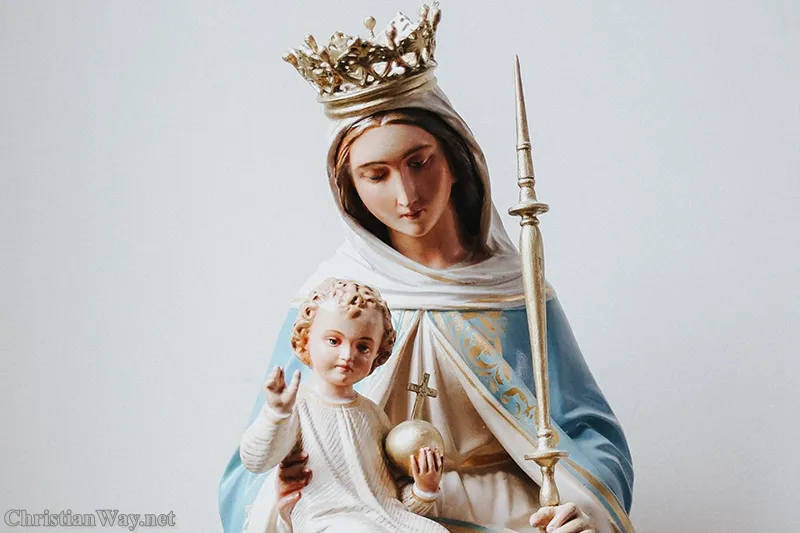
For some Christians, Mary is beloved as the Mother of God, the Theotokos, the ever-blessed Virgin whose prayers and intercession are sought with deep devotion. For others, she is honored especially as the faithful Jewish woman who gave birth to Jesus, believed the promise of God, and became a model of humble discipleship. These traditions do not always speak about Mary in the same way. Yet all Christians who confess the incarnation of Jesus Christ can recognize the truth proclaimed by Elizabeth: “Blessed art thou among women, and blessed is the fruit of thy womb” (Luke 1:42).
Mary matters because the incarnation matters. If Jesus truly became human, then He truly entered the world through a human mother. He did not merely appear to be human. He was born, grew, learned, prayed, suffered, and died. In the hidden life of Nazareth, the Son of God accepted the tenderness and vulnerability of childhood. The One through whom all things were made allowed Himself to be carried by Mary. The Lord of heaven received milk, shelter, care, and comfort from a mother’s love.
This holy mystery speaks gently to every weary heart. God did not save humanity from a safe distance. He came close. He entered a home. He entered the fragile world of family, work, sorrow, misunderstanding, and ordinary life. He knew the womb of a mother, the protection of a father, the shelter of a village, the prayers of His people, and the tears of those who loved Him.
The Virgin Mary, Mother of Jesus, therefore becomes a witness to the nearness of God. She reminds us that grace often enters quietly. It comes not always through what the world calls impressive, but through a heart that says yes to God. Her life shows us that faith is not first about having every answer. It is about trusting the One who calls us, even when the path ahead is hidden.
Mary in the Story of God’s Promise
Mary’s story begins within the larger story of Israel. She was a daughter of her people, shaped by the Scriptures, the prayers, the hopes, and the promises that had been carried through generations. The God who called Abraham, led Israel through the wilderness, spoke through the prophets, and promised a Messiah had not forgotten His people.
A Daughter of Israel Waiting for Redemption
The Gospel of Luke introduces Mary not as someone seeking fame or spiritual greatness, but as a young woman living in Nazareth, a small town in Galilee. Nazareth was not a place known for power or influence. It was ordinary, overlooked, and far from the centers of religious and political importance.
Yet God often begins His greatest works in places the world barely notices.
Mary was betrothed to Joseph, a descendant of David. This detail matters because the coming of Jesus fulfilled the promises God had made to Israel. The Messiah was expected to come from David’s line, and the Gospels carefully place Jesus within that sacred history. Mary’s life was not separate from the story of God’s covenant. She stood within the long line of faithful people who waited for God’s redemption.
When the angel Gabriel came to her, he did not speak as though God had suddenly remembered the world. The announcement was the fulfillment of a promise centuries in the making. The child Mary would bear would be called great. He would receive the throne of David. His kingdom would have no end. In these words, the hope of Israel was brought near.
Mary’s life teaches us that God is faithful over time. We often grow impatient because we want answers quickly. We want healing quickly, clarity quickly, and change quickly. But the story of salvation reminds us that God works across generations. He is never hurried, yet He is never absent. He prepares hearts quietly. He keeps promises even when human beings begin to wonder whether He has forgotten them.
Perhaps you are carrying a prayer that has not yet been answered. Perhaps you have waited for reconciliation, healing, work, peace in your family, or a deeper sense of God’s presence. Mary reminds us that waiting is not always empty. Sometimes God is preparing something within us before we are able to see what He is doing.
The Annunciation: Mary’s Courageous Yes
The Annunciation is one of the most sacred moments in the Gospel. The angel Gabriel comes to Mary and greets her with words of grace: “Hail, thou that art highly favoured, the Lord is with thee” (Luke 1:28). Mary is troubled, not because she lacks faith, but because the message is greater than anything she could have expected.
“Be It Unto Me According to Thy Word”
Gabriel tells Mary that she will conceive and bear a Son, and that His name will be Jesus. He will be called the Son of the Highest. He will reign forever. Mary asks, “How shall this be?” Her question is not a refusal. It is the honest question of someone who knows the limits of human understanding.
The angel answers that the Holy Spirit will come upon her and that the power of the Most High will overshadow her. Then Mary speaks the words that have echoed through Christian prayer for centuries: “Behold the handmaid of the Lord; be it unto me according to thy word” (Luke 1:38).
This is Mary’s great yes.
Her response was not passive weakness. It was courageous faith. She did not know every sorrow that would come. She did not know that Simeon would later speak of a sword piercing her soul. She did not know that her Son would be misunderstood, rejected, arrested, crucified, and buried. But she trusted God enough to receive the calling placed before her.
Mary’s yes was not merely a private decision. It became part of God’s saving work for the world. The Word became flesh. Jesus entered human history. Salvation came near.
Yet her response is also deeply personal. Every Christian, in a different way, is invited to say yes to God. We may not receive the same calling as Mary, but we are called to receive Christ into our lives. We are called to make room for His mercy, His truth, His peace, and His will.
Sometimes our yes is spoken with joy. Sometimes it is spoken through tears. Sometimes we say yes while still carrying questions. Sometimes we say yes after disappointment. Sometimes the heart can only whisper, “Lord, I do not understand, but help me to trust You.”
God does not demand that we understand everything before we obey. He asks us to trust Him enough to take the next faithful step.
The Virgin Birth and the Mystery of the Incarnation
The title Virgin Mary carries a central confession of Christian faith. The Gospels of Matthew and Luke proclaim that Jesus was conceived by the Holy Spirit and born of the Virgin Mary. This is not merely a detail added to make the story sound extraordinary. It points toward the mystery of who Jesus is.
Jesus Is Truly God and Truly Human
Christians confess that Jesus Christ is the eternal Son of God who became truly human for our salvation. He is not a human person who later became divine. He is not a heavenly spirit pretending to have a body. He is the Word made flesh.
The virgin birth points to the truth that the coming of Christ is God’s gift. Salvation does not begin with human achievement. It begins with divine grace. The Son is given. The Savior comes. God takes the initiative.
Yet the virgin birth also protects the truth of Christ’s humanity. Jesus truly receives His human nature from Mary. He is born from her body. He belongs to our human family. He knows hunger, fatigue, grief, friendship, suffering, and death.
This is why Christians have never treated Mary as an unimportant figure standing at the edge of the Gospel. The mystery of Jesus cannot be separated from the woman through whom He entered the world.
The ancient title Theotokos, often translated “Mother of God,” expresses this truth. It does not mean that Mary created God or existed before God. It means that the child she bore was truly God the Son made flesh. Mary is called Mother of God because Jesus Christ is one Person: fully divine and fully human.
This title was defended by the early Church because Christians wanted to protect the truth of Jesus. If Mary gave birth only to a human person separate from the eternal Son, then the mystery of the incarnation would be broken apart. But the Church confessed that the One born of Mary was the same One worshiped as Lord.
Mary’s honor, therefore, is never meant to compete with the glory of Christ. It exists because of Christ. The more clearly we confess who Jesus is, the more deeply we understand the sacredness of Mary’s calling.
Mary’s Visit to Elizabeth: Joy Recognizes Joy
After the angel’s message, Mary goes quickly to visit her relative Elizabeth. Elizabeth herself is carrying a child, John the Baptist, who will prepare the way for Jesus. When Mary enters the house and greets Elizabeth, the child in Elizabeth’s womb leaps for joy.
“Blessed Art Thou Among Women”
Elizabeth, filled with the Holy Spirit, cries out, “Blessed art thou among women, and blessed is the fruit of thy womb” (Luke 1:42). She then asks, “Whence is this to me, that the mother of my Lord should come to me?” (Luke 1:43).
This scene is filled with grace. Two women, each carrying a child connected to God’s saving plan, meet in a home. There is no public ceremony, no palace, no army, and no human display of power. There is simply joy, faith, recognition, and worship.
The kingdom of God often begins in places like this. It grows through prayerful homes, faithful friendships, hidden acts of courage, and people who recognize the work of God in one another.
Mary responds with the Magnificat, one of the most beautiful prayers in Scripture: “My soul doth magnify the Lord, and my spirit hath rejoiced in God my Saviour” (Luke 1:46–47).
This prayer reveals Mary’s heart. She does not magnify herself. She magnifies the Lord. She rejoices not in her own importance, but in God her Savior. She sees that God lifts the humble, remembers the poor, fills the hungry, and remains faithful to His promises.
The Magnificat is not a quiet song of private comfort alone. It is a proclamation that God overturns the values of a proud world. He scatters the proud. He lifts the lowly. He remembers those who have been forgotten. Mary’s prayer tells us that the Gospel is good news for the poor, the weary, the humble, and those who have been pushed aside.
For every person who feels unseen, Mary’s song offers hope. God notices what the world ignores. He sees the hidden tears, the quiet acts of love, the prayers whispered in small rooms, and the burdens carried without applause.
Bethlehem: The Humility of God Made Visible
Mary’s journey to Bethlehem leads to one of the most beloved and mysterious scenes in Christian faith: the birth of Jesus.
The Son of God is not born into wealth or worldly security. He is born in humility. He is laid in a manger. Shepherds come to see Him. The heavens proclaim peace. The eternal Word enters the world as a helpless child.
Mary Holds the Savior of the World
There is something almost overwhelming in this image. Mary holds the child who holds all creation in being. She looks upon the face of the One through whom the stars were made. She feeds the One who will become the bread of life. She protects the One who will become the Good Shepherd.
The humility of Bethlehem reveals the character of God. He does not come with force. He does not demand human admiration through spectacle. He comes in vulnerability. He comes close enough to be held.
Mary’s motherhood teaches us that God values ordinary human love. The care of a mother, the protection of a father, the warmth of a home, the tenderness of family life: these are not small things in the sight of God. The incarnation sanctifies the hidden work of care.
In a world that often treats caregiving as unimportant, Mary reminds us that love expressed through patience, sacrifice, feeding, listening, comforting, and remaining present is deeply sacred. The work done quietly for children, elderly parents, sick family members, or people who depend on us can become a place where Christ is served.
The shepherds come to Bethlehem because heaven has announced good news. They find not a palace, but a child with His mother. The God who saves the world does not begin by making people afraid. He begins by inviting them to come and see.
Mary Who Pondered in Her Heart
The Gospels tell us more than once that Mary treasured events and pondered them in her heart. After the shepherds speak of what they have seen and heard, Luke says, “Mary kept all these things, and pondered them in her heart” (Luke 2:19).
Later, after Jesus is found in the temple speaking with teachers, Mary again keeps these things in her heart.
The Quiet Work of Contemplation
Mary does not rush to explain everything. She does not pretend to understand every mystery immediately. She watches. She listens. She remembers. She prays.
This is an important lesson for modern life. We live surrounded by noise. We are pushed to react quickly, speak quickly, decide quickly, and form opinions quickly. Yet not every truth can be understood in a moment. Some things must be pondered.
Mary teaches us the spiritual value of silence. Silence is not emptiness. It can become a place where the Word of God sinks deeper into the heart. It can become a place where grief is brought before God, where questions become prayer, and where gratitude becomes worship.
There are moments in life that cannot be solved through explanation. A child is born. A loved one dies. A prayer is answered in a way we did not expect. A door closes. A new calling begins. A wound opens. A blessing arrives. We may not understand immediately what God is doing.
Mary invites us to keep these things in the heart. To ponder does not mean to become passive. It means to remain present before God. It means to trust that understanding may grow slowly.
In a restless age, this is a great gift. The soul needs time to listen.
Mary at Cana: Pointing Always to Jesus
The Gospel of John records Mary’s presence at the wedding in Cana, where Jesus performs His first public sign. When the wine runs out, Mary notices the need before others speak of it.
She tells Jesus, “They have no wine” (John 2:3).
“Whatsoever He Saith Unto You, Do It”
Mary’s words are simple. She does not command Jesus. She places the need before Him. Then she turns to the servants and says, “Whatsoever he saith unto you, do it” (John 2:5).
These words reveal the heart of Mary’s discipleship. She sees need. She brings it to Jesus. She directs others to obey Him.
This is why Christians who honor Mary deeply do not see true devotion to her as an alternative to Christ. Mary’s own words lead toward Christ. She does not say, “Look at me.” She says, “Do whatever He tells you.”
At Cana, Jesus transforms water into wine. The sign reveals His glory, and His disciples believe in Him. The abundance of wine becomes a sign of the joy, generosity, and new life that come through Christ.
Mary’s presence at Cana also teaches us something about intercession. She notices what others may overlook. She brings a need before Jesus. Many Catholic and Orthodox Christians understand this as a pattern for asking Mary and the saints to pray for them, just as Christians ask fellow believers on earth to pray for them.
Other Christians do not practice prayer through the saints, preferring to pray directly to God through Jesus Christ alone. Yet even where these practices differ, Mary’s example remains meaningful: she brings human need to Jesus and encourages obedience to Him.
Mary Beneath the Cross: The Mother of Sorrows
The most painful image of Mary in the Gospels is found at the cross. Jesus has been betrayed, condemned, beaten, and crucified. Many disciples have fled in fear. Yet Mary remains near.
The Gospel of John tells us that Mary stood beside the cross of Jesus with other faithful women and the beloved disciple (John 19:25).
A Love That Does Not Run Away
Mary cannot remove the cross. She cannot stop the soldiers. She cannot change the violence of the world in that moment. But she remains.
There are times when love means being present in a suffering we cannot fix. A mother sits beside a child in a hospital. A husband or wife remains faithful through illness. A friend stays near someone carrying grief. A son or daughter cares for an aging parent. A believer sits in silence beside someone whose heart has been broken.
Mary’s presence at the cross teaches us that love does not always have answers. Sometimes love is simply the courage to remain.
Simeon had once told Mary that a sword would pierce her soul. At Calvary, those words became terribly real. She watched her Son suffer. She heard His voice. She stood beneath the cross where the world’s cruelty was revealed and God’s mercy was poured out.
Yet Mary did not turn away.
This is why many Christians call her the Mother of Sorrows. She knows what it means to grieve. She knows what it means to watch someone beloved suffer. She knows what it means to trust God when the path is dark.
For those who have lost a child, carried a loved one through illness, endured betrayal, or stood helplessly beside suffering, Mary’s presence at the cross can bring comfort. She is not a distant figure untouched by pain. She is a mother whose heart has known sorrow.
At the cross, Jesus says to Mary, “Woman, behold thy son,” and to the beloved disciple, “Behold thy mother” (John 19:26–27). Christians have understood this passage in different ways. At the simplest level, Jesus entrusts His mother to the care of the disciple He loves. Yet many Catholic and Orthodox Christians also see in this moment a spiritual motherhood extending toward the Church.
Whatever tradition we belong to, this scene reminds us that the cross creates a new family. Those who belong to Christ are called to care for one another. Faith is not private. It gathers us into a community of compassion, responsibility, and shared hope.
Mary After the Resurrection and at Pentecost
The Gospels do not describe every moment of Mary’s life after the resurrection, but the Book of Acts tells us that she was present with the disciples after Jesus ascended into heaven.
“They all continued with one accord in prayer and supplication, with the women, and Mary the mother of Jesus” (Acts 1:14).
A Mother Praying With the Church
Mary is not presented as someone seeking authority over the apostles. She is simply there, praying with them. The woman who once received the Holy Spirit’s promise at the Annunciation now waits in prayer with the Church for the outpouring of the Spirit at Pentecost.
This is a beautiful image of Mary’s place in Christian faith. She belongs to the Church. She prays with the Church. She waits with the Church. She receives the joy of the Spirit with the Church.
Mary’s journey began with a yes to God. It continues in prayer. This is also the path of every disciple. We may begin with a moment of faith, but faith must become a lifelong life of prayer, worship, repentance, service, and hope.
Mary reminds us that no calling is complete without dependence on the Holy Spirit. We may have gifts, plans, education, experience, and good intentions. But the Church cannot live by human strength alone. We need the Spirit to make us humble, courageous, compassionate, and faithful.
Mary in Catholic, Orthodox, Anglican, and Protestant Faith
Christians honor Mary in different ways. These differences should be spoken about honestly, but also with respect. Mary herself belongs to the shared inheritance of the whole Church. She is named in the Gospels, praised by Elizabeth, remembered in the creeds, and loved by Christians around the world.
Catholic and Orthodox Devotion to Mary
Roman Catholics and Eastern Orthodox Christians honor Mary deeply as the Mother of God, the Theotokos. They ask for her prayers, celebrate feasts connected to her life, and see her as a model of faithful discipleship.
Catholic teaching also includes the doctrines of the Immaculate Conception and the Assumption. The Immaculate Conception refers to the belief that Mary was preserved by God’s grace from original sin from the first moment of her conception. It does not refer to the virgin conception of Jesus. The Assumption refers to the Catholic belief that Mary was taken body and soul into heavenly glory at the end of her earthly life.
Orthodox Christians honor Mary as the all-holy Theotokos and celebrate her Dormition, meaning her falling asleep in the Lord. Orthodox theology speaks differently about inherited sin and does not always frame Marian doctrines in the same way as Roman Catholic teaching, but Mary’s holiness and unique place in salvation history are deeply cherished.
For Catholics and Orthodox Christians, honoring Mary does not mean worshiping her. Worship belongs to God alone: Father, Son, and Holy Spirit. Mary is honored because of what God has done in her and through her.
Anglican and Protestant Approaches
Anglican Christians hold a range of views about Mary. Many Anglicans honor her as the Mother of God, affirm the virgin birth, celebrate major feasts such as the Annunciation and Christmas, and recognize her as a model of discipleship. Some Anglicans also share forms of Marian devotion similar to Catholic practice, while others place less emphasis on it.
Many Protestant Christians honor Mary as the blessed mother of Jesus, a faithful servant of God, and an example of trust. They affirm the virgin birth and cherish her place in the biblical story, while generally avoiding prayers directed to Mary or doctrines they believe go beyond the clear teaching of Scripture.
These differences are real. Yet Christians can still speak with charity. No faithful Christian should diminish Mary as though she were unimportant. Nor should anyone use devotion to Mary in a way that distracts from the unique saving work of Jesus Christ.
Mary’s own life gives us the right center. She leads us to Christ.
What Mary Teaches the Human Heart Today
Mary’s story is ancient, but it speaks gently into the needs of modern life. She knows what it is to face uncertainty. She knows what it is to receive a calling that changes everything. She knows what it is to care for a child, endure misunderstanding, flee danger, carry grief, and remain faithful when the future is unclear.
Faith in the Middle of Uncertainty
Mary did not receive a detailed plan for her life. She received a promise. God told her enough to invite trust, but not enough to remove every question.
Many of us want certainty before obedience. We want to know exactly what will happen before we say yes. We want guarantees before we take a step of faith. Yet God often leads us differently. He gives enough light for the next step, not always for the whole journey.
Mary teaches us that faith can live with unanswered questions. We can ask God honestly, “How shall this be?” We can bring Him our confusion and fear. But we can also say, “Let it be according to Your word.”
This is not blind faith. It is trust rooted in the goodness of God.
Humility Without Self-Hatred
Mary calls herself the handmaid of the Lord. Her humility is beautiful because it does not mean she believes she has no value. God has chosen her. God has filled her life with grace. God has entrusted her with a sacred calling.
True humility does not mean denying the gifts God has given us. It means receiving them with gratitude and offering them back to Him. It means knowing that whatever good we have comes from grace.
In a world where people often swing between pride and shame, Mary offers another path. We do not need to pretend we are greater than others. We also do not need to believe we are worthless. We are loved by God. We are called by God. We are invited to serve.
A Heart That Makes Room for Christ
Mary received Christ into her body and life in a unique way. Yet every Christian is invited to make room for Christ spiritually.
We make room for Christ when we pray instead of allowing anxiety to rule us. We make room for Him when we forgive rather than feeding resentment. We make room for Him when we care for the poor, welcome the lonely, tell the truth, and protect the vulnerable. We make room for Him when we read the Gospels and allow His words to shape our choices.
The world often tells us to fill life with noise, possessions, success, and constant distraction. Mary teaches us another way: make room for God.
Mary and the Dignity of Women
The story of Mary also reveals something beautiful about the dignity of women in God’s saving plan. The Gospel does not present women merely as background figures. Women receive the angelic message, proclaim praise, witness the cross, prepare Jesus’ body for burial, and become the first witnesses of the resurrection.
Mary stands at the beginning of the Gospel story, and women stand at the empty tomb when the resurrection is announced.
God Sees Those the World Often Overlooks
In the ancient world, women often lived with fewer public rights, less social power, and fewer opportunities than men. Yet God entrusted Mary with the most sacred human calling in salvation history: she became the mother of Jesus Christ.
This does not mean that every woman is called to the same kind of motherhood or that women must be valued only through motherhood. It means that God sees the dignity, faith, wisdom, courage, and spiritual strength of women.
Mary’s life challenges every culture that treats women as secondary, invisible, or unworthy of respect. The God who chose Mary sees the hidden faithfulness of women who pray, teach, care, work, endure, lead with wisdom, and serve without recognition.
The Church must continue to honor this dignity. Wherever women are silenced, abused, neglected, or treated as less than fully human, Christians are called to remember the Gospel. God’s grace does not support contempt. It restores dignity.
Mary and the Home
The hidden years of Jesus in Nazareth are not described in detail, but they matter. Jesus grew in a family. He lived under the care of Mary and Joseph. He experienced the ordinary rhythms of home: meals, work, conversation, prayer, celebration, learning, and rest.
Holiness in Hidden Places
The world often celebrates what is visible. It praises public achievement, wealth, influence, and recognition. Yet much of Mary’s life was hidden. She cared for Jesus in Nazareth. She lived quietly. She was faithful in ordinary responsibilities.
This hidden faithfulness is precious to God.
Many people spend their lives in work that will never become famous. They raise children. They cook meals. They care for aging parents. They work long hours to support family. They pray for people who may never know they are being prayed for. They clean, teach, repair, comfort, listen, and serve.
Mary reminds us that hidden love matters.
The home can become a place of holiness when it is shaped by patience, prayer, forgiveness, truth, and care. It does not need to be perfect. No family is free from struggle. But homes can become places where Christ is welcomed in small acts of mercy.
Reflect and Pray
Dear friends, the Virgin Mary, Mother of Jesus, stands before us not as a distant figure beyond human understanding, but as a woman of faith who trusted God in joy and sorrow. She received a calling greater than she could fully understand. She carried Christ into the world. She watched Him grow. She followed Him. She stood beneath His cross. She prayed with the Church.
Her life reminds us that God often works through the humble. He enters ordinary homes, ordinary towns, ordinary hearts, and ordinary acts of faithfulness. He does not always remove every question before He calls us. But He gives grace for the next step.
Mary’s deepest message remains simple: receive Christ, trust Christ, follow Christ, and do whatever He tells you.
Perhaps today you are carrying fear about the future. Perhaps you feel unseen in the hidden work of caring for others. Perhaps you are grieving someone you love. Perhaps you are waiting for an answer from God. Bring these things to Christ. Ask for the grace to trust as Mary trusted, to remain as Mary remained, and to make room for God’s love in the life you have been given.
Let us pray.
Lord Jesus Christ, You came into the world through the humble faith of Mary, Your blessed mother. Teach us to receive Your grace with open hearts. Give us courage when the future is uncertain, patience when we must wait, and faithfulness when love becomes costly. Comfort those who grieve, strengthen those who care for others, and draw Your Church ever closer to You. May we, like Mary, magnify Your name and follow Your word with humble joy. Amen.
May the peace of Christ dwell richly in your heart, and may His love guide every step you take toward Him.
— Fr. John Matthew