Dear friends in Christ,
There are seasons when prayer comes easily. The heart is full of gratitude, the path ahead seems clear, and we find words rising naturally within us. A new child is born, a long-awaited answer arrives, a burden is lifted, or a quiet morning seems filled with the goodness of God. In such moments, prayer may feel like breathing. We praise without effort because the heart has been touched by joy.
Yet there are other seasons when prayer feels difficult. We kneel, but our minds wander. We try to speak, but our words seem small. We ask God for help, and the answer does not come in the way we hoped. We carry grief, fear, disappointment, or exhaustion, and even the simplest prayer can feel beyond our strength. Sometimes we wonder whether God hears us at all.
The Christian faith meets us gently in both places. It tells us that prayer is not reserved for the spiritually strong, the emotionally peaceful, or the people who always know what to say. Prayer belongs to every child of God. It belongs to the joyful and the sorrowful, the certain and the questioning, the faithful and the weary. Prayer is not first a performance before God. It is the heart turning toward the One who already knows it completely.
Christian prayer is the heart’s conversation with God. It is speaking and listening, asking and receiving, resting and wrestling, rejoicing and weeping. It is a relationship before it is a routine. It is the soul learning, slowly and sometimes painfully, that it is safe in the presence of the Father.
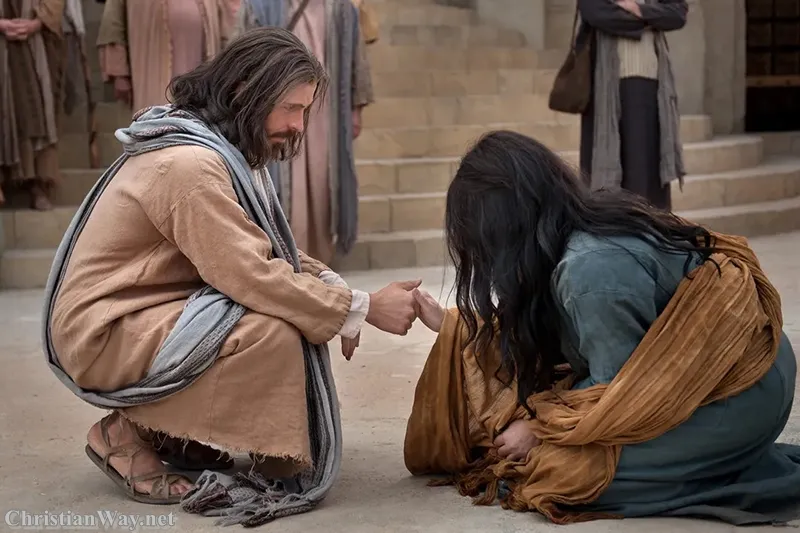
Jesus Himself shows us this way. Again and again in the Gospels, He withdraws to pray. Before choosing the disciples, He prays. Before facing the cross, He prays. In moments of joy, sorrow, pressure, and decision, He turns toward the Father. If the Son of God prayed, then prayer is not a sign that we are weak in faith. It is the place where faith becomes alive.
To reflect on Christian prayer is therefore to enter one of the deepest mysteries of the Christian life. We are invited to speak to the God who made us, redeemed us, sustains us, and knows every hidden part of our story. We are invited not merely to bring Him requests, but to bring Him ourselves. And in that holy conversation, our hearts begin to change.
Prayer Begins with God’s Invitation
Many people think prayer begins when a human being decides to seek God. But the deeper truth is that prayer begins with God. Before we speak His name, He already knows ours. Before we turn toward Him, He is already near. Before we ask for mercy, His mercy is already moving toward us.
The Bible reveals a God who speaks first. In the garden, after Adam and Eve hide in fear, God calls out, “Where art thou?” He does not ask because He lacks knowledge. He asks because He is seeking the human heart that has withdrawn from Him. Throughout Scripture, God continues to call His people back: through prophets, through promises, through acts of deliverance, through the law, through wisdom, and finally through His Son.
This changes the way we understand prayer. We do not pray in order to persuade a distant God to notice us. We pray because God has opened the door. He has made Himself known. He has drawn near in Jesus Christ. Prayer is our response to divine love.
The apostle Paul writes that the Spirit helps us in our weakness, “for we know not what we should pray for as we ought” (Romans 8:26). This is one of the most comforting truths in all of Scripture. Even when we do not know how to pray, God is not absent. Even when we cannot find the right words, the Holy Spirit is already at work within us.
There are days when the most honest prayer may be only a sigh. There are nights when the heart can say nothing more than, “Lord, help me.” There are moments of grief when tears become the only language we have. God does not reject such prayers. He receives them with tenderness.
God Sees the Hidden Heart
Jesus teaches His disciples, “When thou prayest, enter into thy closet, and when thou hast shut thy door, pray to thy Father which is in secret” (Matthew 6:6). These words are not a command to avoid praying with others. Jesus Himself prayed with His disciples, and the early Church gathered in prayer. Rather, He is teaching us that prayer must be true.
God is not impressed by eloquence without love, long prayers without humility, or religious language that hides an unchanged heart. He sees what others cannot see. He knows whether we are praying from trust, fear, pride, sorrow, gratitude, anger, or longing.
This can feel frightening at first, but it is also deeply freeing. We do not need to pretend before God. We do not need to hide our confusion, our questions, or our weakness. We can tell Him the truth.
The Psalms teach us this kind of honesty. They contain songs of praise, but also cries of distress. They speak of joy, but also loneliness. They ask why suffering continues. They plead for mercy. They rejoice in God’s faithfulness. They wait, struggle, and hope.
A praying heart is not a heart that never feels pain. It is a heart that brings pain into the presence of God.
Jesus Shows Us the Way of Prayer
When we wish to understand Christian prayer, we must look to Jesus. He is not only the One to whom Christians pray; He is also the One who teaches us how to pray.
The Gospels show Jesus praying in solitude. Before beginning His public ministry, He spends time in the wilderness. Before choosing the twelve apostles, He spends the night in prayer. After feeding the crowds, He withdraws again to be alone with the Father. His life is marked by action, teaching, healing, and service, yet none of these are separated from prayer.
Jesus does not pray because He is uncertain of the Father’s love. He prays because He lives in perfect communion with the Father. His prayer reveals relationship, trust, obedience, and love.
This is especially clear in the Garden of Gethsemane. As Jesus approaches the cross, He experiences deep sorrow and distress. He does not pretend that suffering is easy. He says, “My soul is exceeding sorrowful, even unto death” (Matthew 26:38). Then He prays: “O my Father, if it be possible, let this cup pass from me: nevertheless not as I will, but as thou wilt” (Matthew 26:39).
Here we learn something essential about prayer. Prayer is not always asking God to remove pain. Sometimes it is bringing pain to Him and trusting Him within it. Jesus does ask that the cup might pass, yet He also places Himself fully in the Father’s hands.
There are times when we pray for healing and receive healing. There are times when we pray for a door to open and see the answer clearly. But there are also times when we pray and must continue walking through a difficult path. In those moments, the prayer of Jesus becomes our strength: “Not as I will, but as thou wilt.”
Prayer Is Communion, Not Control
One of the great temptations in prayer is to treat God as though He were a servant of our plans. We may begin to believe that if we pray enough, with enough intensity, God must give us exactly what we ask. When the answer is delayed or different, we may feel abandoned.
But prayer is not a way to control God. It is a way to be drawn more deeply into His wisdom and love.
This does not mean that we should stop bringing our desires to God. Jesus tells us to ask, seek, and knock. He encourages persistence. He teaches us to pray for daily bread, forgiveness, protection, and strength. God welcomes our requests. He cares about the details of our lives.
Yet Christian prayer always leads us beyond our own limited vision. We see only a small part of the road. God sees the whole journey. We know what we want today. God knows what will form us for eternity.
Prayer does not make God more loving. It makes us more open to the love that is already there.
The Lord’s Prayer: A Pattern for Every Heart
When the disciples ask Jesus, “Lord, teach us to pray,” He does not give them a complicated method. He gives them words that have nourished Christians for centuries: the Lord’s Prayer.
“Our Father which art in heaven, Hallowed be thy name. Thy kingdom come. Thy will be done in earth, as it is in heaven” (Matthew 6:9–10).
These opening words are already a great act of faith. We begin not with ourselves, but with God. We call Him Father. This does not mean that every human experience of fatherhood has been easy or safe. For some, the word father carries wounds. Yet Jesus uses this name to reveal the tenderness, care, authority, and faithfulness of God.
To call God “Our Father” is also to remember that we do not come before Him alone. Prayer has a personal dimension, but it is never merely private. We belong to a family of faith. When we pray “our,” we carry others with us: the hungry, the grieving, the fearful, the lonely, the forgotten, and those we struggle to love.
“Thy kingdom come” teaches us to desire more than personal comfort. We ask for God’s justice, mercy, peace, and truth to enter the world. We pray for homes, communities, churches, nations, and hearts to be transformed by His love.
“Give us this day our daily bread” reminds us that we depend on God. We ask for physical bread, but also for spiritual nourishment. We ask for what we need today—not necessarily for every answer about tomorrow.
“Forgive us our debts, as we forgive our debtors” brings us into the difficult work of mercy. We ask God to forgive us, and we are called to forgive others. Forgiveness does not always mean that wounds disappear quickly or that trust is restored without wisdom. But it means that we refuse to let bitterness become the ruler of our heart.
“Lead us not into temptation, but deliver us from evil” teaches us humility. We recognize that we need God’s protection. We are not as strong as we imagine. We need grace to resist sin, courage to choose what is right, and strength to remain faithful when the road is hard.
The Lord’s Prayer Shapes the Whole Life
The Lord’s Prayer is not simply a prayer to repeat. It is a way of living.
When we pray, “Hallowed be thy name,” we ask that our lives may honor God. When we pray, “Thy kingdom come,” we ask to become people of peace and justice. When we pray, “Give us this day our daily bread,” we are reminded to care for those who lack bread. When we pray, “Forgive us,” we are invited to become forgiving people.
This is why Christians return to the Lord’s Prayer again and again. It gathers the whole Gospel into a few lines. It teaches us to begin with worship, move into trust, receive daily provision, seek mercy, and walk in dependence on God.
A heart shaped by this prayer becomes less centered on itself. It becomes more able to receive, forgive, serve, and hope.
The Many Forms of Christian Prayer
Christian prayer has many forms because the human heart has many needs. There are times for praise, times for confession, times for thanksgiving, times for asking, times for silence, and times for interceding for others.
Praise lifts the eyes toward God. It remembers His goodness even when life is difficult. Praise does not deny sorrow; it places sorrow within a larger truth. God remains faithful. God remains holy. God remains worthy of love.
Thanksgiving helps us notice grace in ordinary life. We thank God for food, friendship, work, family, protection, beauty, forgiveness, and even small moments of peace. Gratitude does not ignore what is painful, but it keeps pain from becoming the only thing we see.
Confession is the prayer of honesty. It is the moment when we stop defending ourselves before God. We name our sin, our selfishness, our anger, our dishonesty, our neglect, and our failure to love. Confession is not meant to push us into despair. It leads us toward mercy.
Intercession is prayer for others. We pray for the sick, the dying, the poor, the lost, the suffering, those in danger, those in leadership, those who have hurt us, and those we love. Intercession enlarges the heart because it teaches us to carry the burdens of others before God.
Petition is prayer for our own needs. We ask for wisdom, healing, work, peace, guidance, courage, forgiveness, patience, and strength. There is no shame in bringing our needs to God. Jesus invites us to do so.
Contemplative prayer is quiet attention to God. It is not emptying the mind into nothingness. It is resting in the presence of the Lord. Sometimes we have no words left. We simply sit before Him. We remember that He is God and that we are loved.
Silence Is Not the Absence of Prayer
Many people fear silence in prayer because silence can reveal what we have been avoiding. When the noise fades, worries rise. Memories return. Questions become louder. We may discover how restless our hearts truly are.
Yet silence can also become a place of healing. The prophet Elijah does not encounter God in the wind, earthquake, or fire, but in a “still small voice” (1 Kings 19:12). God is not always found in dramatic feelings. Sometimes He comes quietly, patiently, almost unnoticed.
A few moments of silence can be a form of trust. We stop trying to control the conversation. We allow God to search our hearts. We sit before Him without needing to explain ourselves.
This kind of prayer takes time. It may feel unproductive at first. But the heart slowly learns that being with God is not wasted time.
Prayer in Catholic, Orthodox, and Protestant Life
Christian traditions share a deep belief in prayer, though they may express it in different ways. These differences can be gifts when they lead believers more fully toward Christ.
Catholic prayer often draws deeply from Scripture, the liturgy, the sacraments, the Psalms, the prayers of the saints, and the rhythm of the Church year. Catholics may pray spontaneous prayers in their own words, but they also treasure prayers that have been handed down through generations. The Mass stands at the center of Catholic worship, where prayer becomes praise, thanksgiving, confession, intercession, and communion with Christ.
The Catholic tradition also values contemplative prayer. Saints such as Teresa of Ávila, John of the Cross, Thérèse of Lisieux, Francis of Assisi, and many others remind believers that prayer is not merely speaking about God, but learning to remain with Him in love.
Eastern Orthodox Christians often speak of prayer as entering into the mystery of God’s presence. Orthodox worship is filled with Scripture, chant, incense, icons, hymns, and reverence. The Jesus Prayer—“Lord Jesus Christ, Son of God, have mercy on me, a sinner”—has become a treasured prayer for many Orthodox believers and Christians beyond Orthodoxy. Repeated gently and sincerely, it becomes a way of returning the heart to Christ.
Protestant traditions often place strong emphasis on personal prayer, prayer rooted in Scripture, prayer in families, prayer in small groups, and spontaneous prayer shaped by the needs of the moment. Many Protestants treasure direct conversation with God, speaking plainly and honestly before Him. The practice of opening the Bible, reading it prayerfully, and responding in one’s own words has nourished countless believers.
These traditions are not enemies when they remain centered on Christ. They show different ways in which Christians have sought to love God with the mind, the heart, the body, the voice, and the whole life.
Prayer Draws Christians Toward Unity
Christians may differ in language, style, and tradition, but they share the same need for grace. Catholics, Orthodox Christians, Anglicans, Lutherans, Reformed Christians, Methodists, Baptists, Pentecostals, and many others all turn toward the same Lord.
Jesus prayed that His followers might be one (John 17:21). Christian unity does not mean pretending that differences do not matter. It means remembering that love must remain stronger than contempt.
Prayer can become a place where healing begins. When Christians pray for one another, they learn to see beyond labels. They remember that every believer is a person for whom Christ died. They ask God to bring truth, humility, repentance, and peace into His Church.
The more deeply we pray, the harder it becomes to despise another person.
Prayer When Life Hurts
Some of the most important prayers are prayed in pain.
When a loved one is sick, when a marriage is strained, when work disappears, when a child is struggling, when grief enters the home, when anxiety will not leave the mind, prayer can become difficult. We may feel that words are too small for what we carry.
Yet this is often where prayer becomes most real.
Jesus did not promise that His followers would avoid suffering. He promised that He would be with them. The Psalms do not hide anguish. Job does not hide questions. The prophets do not hide tears. Even Jesus weeps at the tomb of Lazarus.
Christian prayer does not ask us to pretend that pain is easy. It teaches us to bring pain to the God who entered pain Himself.
There are times when prayer is simply sitting beside a hospital bed and whispering the name of Jesus. There are times when prayer is holding a child and asking God for strength. There are times when prayer is saying, “I do not understand, but I will not let go of You.”
This kind of prayer is precious. It may not feel beautiful. It may be interrupted by fear and doubt. But it is still prayer.
When God Seems Silent
One of the hardest experiences in the spiritual life is silence from God. We pray for guidance, but the path remains unclear. We pray for healing, but the illness continues. We pray for peace, but the heart remains troubled. We ask, and nothing seems to change.
In such moments, it is important to remember that silence is not always absence. A seed grows in darkness. A child in the womb grows unseen. Much of God’s work in a human life happens beneath the surface.
This does not mean that every unanswered prayer has an easy explanation. There are mysteries we cannot solve. Christians should be careful not to offer quick answers to deep suffering. Sometimes the most faithful response is simply to sit with someone in pain and say, “I am here. God is near, even though we do not understand.”
The cross teaches us that God’s love can be present even in places that seem abandoned. On Good Friday, everything appeared lost. Yet resurrection was already drawing near.
Prayer in times of silence is not always confident. Sometimes it is simply faithful. It is returning to God when we feel nothing. It is lighting a candle, opening Scripture, repeating a short prayer, or sitting quietly before the Lord.
God is not offended by the weakness of a wounded heart.
Prayer in the Ordinary Rhythms of Life
Prayer is not meant to belong only to churches, monasteries, retreats, or moments of crisis. It is meant to enter the ordinary rhythm of daily life.
A simple morning prayer can shape the whole day: “Lord, thank You for this day. Guide my thoughts, words, and actions.” An evening prayer can become a gentle examination of the heart: “Where did I receive grace today? Where did I fail to love? What do I need to place into God’s hands?”
Families can pray together before meals, before sleep, before travel, or in times of difficulty. Parents do not need perfect words to teach children to pray. A child learns much from hearing a mother or father say, “Thank You, God,” or “Please help us,” or “Bless those who are sick.”
Prayer can also enter work. Before a meeting, a difficult conversation, or a long day, a believer can quietly ask for wisdom and patience. When pressure rises, a short prayer can return the heart to peace. “Lord, be with me.” “Give me grace.” “Help me to speak with kindness.”
Saint Paul writes, “Pray without ceasing” (1 Thessalonians 5:17). This does not mean speaking words every second of the day. It means living with a heart that remains open to God. It means carrying an awareness of His presence into the ordinary tasks of life.
Small Prayers Can Carry Great Grace
We do not always need long prayers. A short prayer spoken sincerely can carry great power.
“Jesus, have mercy.”
“Lord, give me peace.”
“Father, help me forgive.”
“Holy Spirit, guide me.”
“Thank You, Lord.”
These prayers can become anchors in difficult moments. They remind us that God is not far away. They bring the heart back to the present. They interrupt fear, anger, and distraction.
The purpose of prayer is not to fill the day with religious words. It is to help the whole day become an offering of love.
The Obstacles That Keep Us from Prayer
Almost every believer struggles with prayer at some point. Distraction is common. We sit down to pray and suddenly remember work, errands, messages, problems, and plans. Our minds become noisy. We may feel guilty and conclude that we are bad at prayer.
But distraction does not mean prayer has failed. It simply means we are human. When distractions come, we can gently return to God. There is no need for harsh self-judgment. Each return is itself an act of love.
Another obstacle is busyness. Many people live with full schedules and tired minds. They may feel they have no time to pray. Yet even a few minutes of honest prayer can change the tone of a day. Prayer does not always require ideal conditions. It begins wherever we are.
Some struggle with guilt. They feel unworthy to pray because they have sinned or drifted from God. But this is precisely when prayer is most needed. The prodigal son does not return home because he has become worthy. He returns because he remembers the father’s mercy.
Others struggle with disappointment. They prayed for something deeply important, and the answer did not come. Such wounds should be treated gently. God does not ask us to deny them. He invites us to bring them into His presence.
Faithfulness Matters More Than Feelings
There will be days when prayer feels full of peace, and days when it feels dry. Neither experience alone tells us the whole truth about our relationship with God.
Feelings are gifts, but they are not the foundation of faith. Sometimes God gives consolation. Sometimes He allows dryness so that we learn to seek Him rather than merely seek a pleasant experience.
A faithful prayer life is built not only on emotion, but on returning. Returning when we feel grateful. Returning when we feel tired. Returning when we feel close to God. Returning when we feel nothing.
The heart grows through this quiet perseverance.
Prayer Changes the One Who Prays
We often begin prayer hoping that God will change our circumstances. And sometimes He does. But prayer also changes us.
Prayer teaches patience because it reminds us that we are not in control of everything. Prayer teaches humility because we come before God as needy people. Prayer teaches compassion because interceding for others opens our hearts to their burdens. Prayer teaches gratitude because we begin to notice gifts we had overlooked.
Prayer also helps us see ourselves more truthfully. In God’s presence, we may recognize patterns of anger, pride, fear, or selfishness that we had avoided. Yet this truth is not meant to crush us. It is meant to heal us.
The closer we come to God, the more we understand that holiness is not becoming superior to others. It is becoming more loving. It is becoming more like Christ.
A praying person may still struggle. He may still feel fear. She may still carry wounds. But over time, something changes. There is more patience in the voice, more mercy in the heart, more courage in suffering, and more peace in the face of uncertainty.
Reflect and Pray
Dear friend, prayer does not require perfect words. It does not require a perfect life. It does not require that you understand every mystery of God.
It requires only a heart willing to turn toward Him.
Perhaps today your prayer is joyful. Give thanks. Perhaps it is sorrowful. Bring your sorrow. Perhaps it is full of questions. Ask them honestly. Perhaps you are too tired to say much at all. Rest in the presence of God, and let even your silence become a prayer.
The Lord who created you knows every hidden part of your heart. He is not impatient with your weakness. He is not distant from your tears. He is not deaf to your smallest cry.
Let us pray:
Lord Jesus Christ, teach us to pray with trust, humility, and love. When our hearts are joyful, make us grateful. When we are burdened, make us honest. When we are confused, give us light. When we are wounded, give us comfort. When we do not know what to say, let Your Holy Spirit pray within us. Draw us closer to the Father, strengthen us in faith, and make our lives a living conversation with Your grace. Amen.
May the peace of Christ dwell richly in your heart, and may every prayer—spoken, whispered, or silent—draw you nearer to the love of God.
— Fr. John Matthew