Dear friends in Christ,
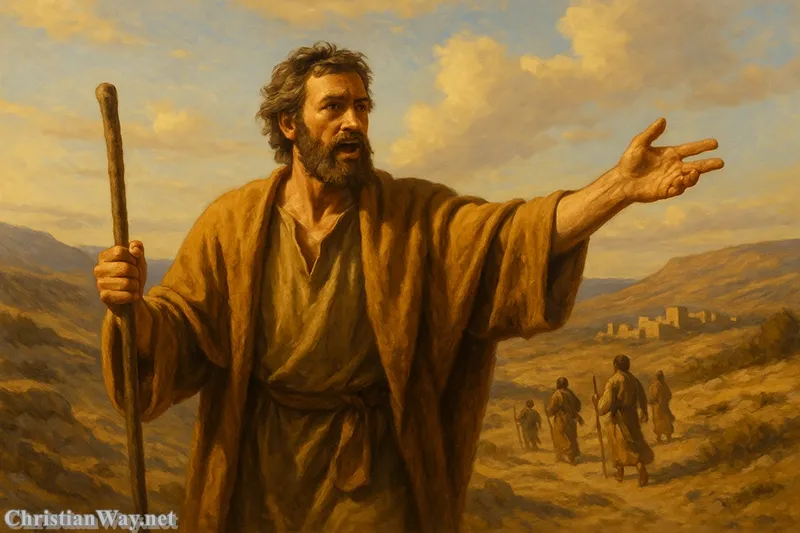
When we hear the names of the original twelve apostles, we may picture stained-glass windows, ancient icons, church calendars, or sacred stories told from childhood. Yet before they became names remembered across centuries, they were ordinary men called into an extraordinary friendship with Jesus. They were fishermen, a tax collector, men of quiet faith and strong opinions, men who sometimes understood little of what the Lord was doing, and men who often struggled to believe that God could truly work through them. They walked dusty roads with Christ. They ate with Him, listened to Him, questioned Him, misunderstood Him, and watched Him touch the broken places of human life with mercy.
The original twelve apostles stand at the beginning of the Church’s earthly mission, not because they were flawless or naturally heroic, but because Christ chose them. Their greatness did not begin in their strength. It began in the call of Jesus. He looked upon them with the same love with which He looks upon every human soul, and He said, in one form or another, “Follow me.” From that moment, their lives were no longer theirs alone. They became witnesses of the One who had come to reveal the Father’s love to the world.
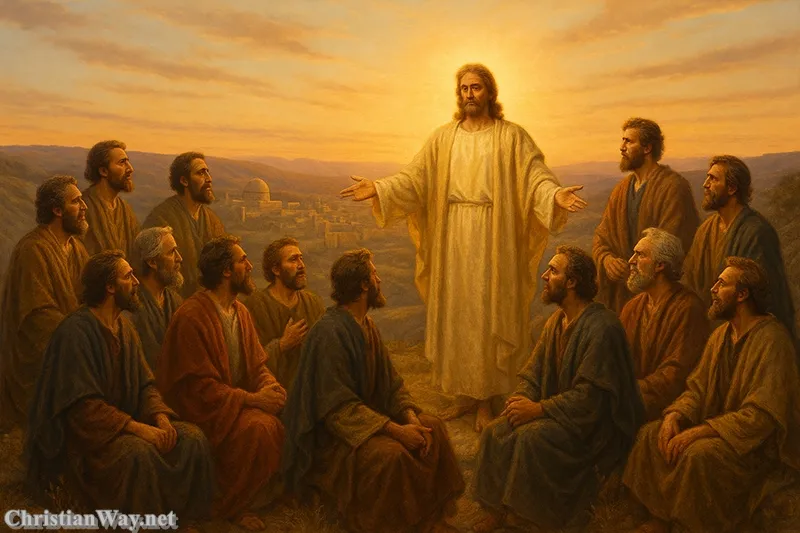
The Gospel tells us that Jesus “called unto him his disciples: and of them he chose twelve, whom also he named apostles” (Luke 6:13). The word apostle means one who is sent. But before the apostles were sent, they were invited to remain with Christ. Before they preached, they listened. Before they healed in His name, they received His mercy. Before they carried the Gospel into the world, they were formed by the living Word Himself. Their mission was born from communion.
This is why their story remains so important for us. The apostles remind us that Christian faith is not simply a collection of ideas or customs. It is a relationship with the living Christ. It is the grace of being called out of fear, self-reliance, sin, and spiritual weariness into a life shaped by His love. The apostles were not chosen because they had already mastered faith. They were chosen so that faith might slowly be born within them.
Their witness also speaks to a world that often feels divided, uncertain, and tired. We may wonder whether the Church can still bring hope, whether truth can still be spoken with gentleness, or whether ordinary people can make a difference in a wounded world. The original twelve apostles answer with their lives. They were not powerful by worldly standards. Yet because they had encountered the risen Lord and received the Holy Spirit, their witness became the foundation of a faith that would reach nations, languages, homes, and hearts across the earth.
To reflect on the apostles is to remember that Christ still calls imperfect people. He still takes ordinary lives and gives them a holy purpose. He still sends His people into the world, not to promote themselves, but to bear witness to His mercy, His truth, His cross, and His resurrection.
Christ Chose Twelve for a Holy Purpose
The number twelve was not chosen by accident. In the Scriptures of Israel, twelve carried a deep spiritual meaning because of the twelve tribes descended from the sons of Jacob. By choosing twelve apostles, Jesus was showing that God was gathering His people anew around Himself. He was not abandoning the promises made to Israel. He was fulfilling them and opening them outward toward the whole world.
A New People Gathered Around Christ
Jesus came not merely to offer private comfort to individuals, but to gather a people who would live under the reign of God. The apostles were a visible sign of this new gathering. They would become witnesses to the Kingdom of God, servants of the Gospel, and shepherds of the communities that would grow through their preaching.
Their calling reminds us that Christianity has always been both personal and communal. Christ meets each of us personally. He knows our name, our wounds, our failures, and our hidden hopes. Yet He also places us within a people. We are not meant to carry faith alone. We are called into the Church, into prayer with others, into shared worship, into fellowship, service, and mutual forgiveness.
The apostles themselves had to learn this slowly. They were different from one another in temperament and background. Peter was impulsive and passionate. John seemed contemplative and deeply affectionate. Matthew had worked as a tax collector. Simon was called the Zealot, a title that suggests strong political or religious intensity. Thomas asked difficult questions. Judas carried secrets in his heart. Jesus did not choose twelve men who were already alike. He gathered them around Himself and taught them to become one family through grace.
This remains one of the great challenges of Christian life. We often want community without difficulty, fellowship without forgiveness, and unity without the patience required to remain together when personalities clash. But Christ’s first disciples show us that unity is not built by finding people exactly like ourselves. It is built by allowing Christ to become greater than our pride, our preferences, our impatience, and our desire to be right.
The original twelve apostles were foundations of faith because they first learned to become a community centered on Jesus. They were not united by shared success or social status. They were united because they had heard the same call and were walking behind the same Lord.
Peter: The Rock Who Learned to Trust Mercy
Simon Peter is perhaps the most familiar of the apostles. A fisherman from Galilee, he was called by Jesus alongside his brother Andrew. Peter was strong, outspoken, quick to speak, quick to act, and sometimes quick to misunderstand. Yet Christ saw in him not only weakness, but a future shaped by grace.
“Thou Art the Christ”
At Caesarea Philippi, Jesus asked His disciples, “Whom say ye that I am?” Peter answered with one of the clearest confessions in the Gospel: “Thou art the Christ, the Son of the living God” (Matthew 16:16). This confession became central to the Church’s faith. Jesus is not simply a wise teacher, a prophet, or an inspiring example. He is the Christ, the promised Messiah, the Son of the living God.
Jesus then spoke words of profound significance to Peter: “Thou art Peter, and upon this rock I will build my church” (Matthew 16:18). Different Christian traditions understand the meaning and implications of this passage in different ways. Roman Catholics see in it a special pastoral role given to Peter and continued through the ministry of the bishops of Rome. Orthodox Christians honor Peter’s primacy of honor while emphasizing the shared apostolic authority of the bishops. Many Protestant Christians understand the “rock” chiefly as Peter’s confession of faith in Christ. Yet all Christians can recognize the beauty of this moment: Peter confessed Christ, and Christ promised that the gates of hell would not overcome His Church.
But Peter’s story does not stop with courage. He also denied Jesus three times during the night of the Lord’s arrest. The one who had promised never to leave Him became afraid before the questions of strangers. When the rooster crowed, Peter remembered the words of Jesus and went out weeping bitterly.
This is why Peter is so close to the human heart. He teaches us that faith is not proved by never falling. Faith is revealed when we allow Christ to restore us after we fall. After the resurrection, Jesus met Peter beside the Sea of Galilee. Three times He asked him, “Lovest thou me?” And three times He gave him a task: “Feed my lambs… Feed my sheep” (John 21:15–17).
Peter became a foundation of faith not because he never failed, but because mercy transformed him. Christ did not erase Peter’s weakness by pretending it had never happened. He healed it. He turned the place of shame into a place of renewed vocation. This is the hope offered to every believer who feels burdened by regret. The risen Christ does not merely forgive us and leave us behind. He restores us and gives us a new way to serve.
Andrew: The Apostle Who Brought Others to Jesus
Andrew, Peter’s brother, often appears quietly in the Gospels. He was one of the first disciples to follow Jesus, and his witness was marked by a simple but beautiful pattern: he brought people to Christ.
A Quiet Heart for Invitation
The Gospel of John tells us that Andrew first heard John the Baptist point toward Jesus and say, “Behold the Lamb of God” (John 1:36). Andrew then followed Jesus and spent time with Him. Afterward, he went to find his brother Simon and said, “We have found the Messias” (John 1:41). Then he brought Peter to Jesus.
This small act shaped the future of the Church. Andrew did not preach a great sermon in that moment. He did not build a movement. He simply brought his brother to Christ. Yet through Peter’s later ministry, countless lives would be touched.
Andrew appears again when he brings a boy with five loaves and two fish to Jesus before the feeding of the multitude (John 6:8–9). He also appears when some Greeks wish to see Jesus, helping bring them into contact with the Lord (John 12:20–22). In each moment, Andrew becomes a bridge.
There are many people whose ministry is like Andrew’s. They may not stand at the center of attention. They may not speak the loudest. Yet they have a holy gift for leading others gently toward Jesus. They invite a friend to pray. They listen without judgment. They introduce someone to the Scriptures. They bring a troubled person into a community where love is found. They notice the child, the stranger, the lonely neighbor, the quiet person who feels unseen.
Andrew reminds us that faith often spreads through small acts of invitation. A person may come to Christ because someone simply said, “Come and see.” We do not need to have every answer. We need only be willing to point beyond ourselves to the One who can heal, forgive, and save.
James and John: Sons of Thunder Transformed by Love
James and John, the sons of Zebedee, were fishermen called by Jesus while working beside their father. Their strong personalities earned them the name “Boanerges,” meaning “sons of thunder” (Mark 3:17). They were bold, ambitious, and deeply attached to Jesus.
Learning the Way of the Cross
At one point, James and John asked Jesus for places of honor in His coming kingdom. They wanted to sit at His right hand and His left. Their request revealed a common human temptation: to follow Christ while still hoping for personal greatness.
Jesus answered them with a question: “Can ye drink of the cup that I drink of?” (Mark 10:38). He was speaking of the cup of suffering, sacrifice, and faithful love that would lead Him to the cross. The path of discipleship was not a path toward worldly elevation, but toward humble service.
James would later become the first of the apostles to die as a martyr, killed under King Herod’s persecution as recorded in Acts 12:2. His life became a witness that the cup Christ spoke of was real. James did not merely admire Jesus; he gave his life in faithful witness to Him.
John’s story took another path. Tradition remembers him as the beloved disciple, the one who stood near the cross with Mary, the mother of Jesus. He is associated with the Fourth Gospel, the letters bearing his name, and the Book of Revelation. Whether in the tenderness of his Gospel or the depth of his theology, John’s witness continually brings us back to love.
“We love him, because he first loved us” (1 John 4:19). This simple sentence carries the heart of Christian life. John had once been called a son of thunder, yet he became known above all for speaking of divine love. His life reminds us that Christ does not merely restrain our roughness; He transforms it. He can take our intensity, our longing, even our anger, and teach us to become people whose strength is shaped by love.
Philip: The Apostle Who Wanted to See the Father
Philip was one of the first disciples called by Jesus. When the Lord found him, He said simply, “Follow me” (John 1:43). Philip then went to Nathanael and told him, “We have found him, of whom Moses in the law, and the prophets, did write, Jesus of Nazareth” (John 1:45).
“Show Us the Father”
Philip’s words show a heart searching for fulfillment. Later, during the Last Supper, Philip said to Jesus, “Lord, show us the Father, and it sufficeth us” (John 14:8). It was a deeply human request. Beneath so many of our desires is the same longing: to see God, to know God, to be certain that we are not alone in the universe.
Jesus answered Philip with tenderness: “He that hath seen me hath seen the Father” (John 14:9). In Christ, the invisible God is made known. In His compassion, His truth, His tears, His healing, His sacrifice, and His resurrection, we see the heart of the Father.
Philip’s question speaks to every believer who longs for clarity. We may wish God would reveal Himself more visibly, more quickly, more dramatically. Yet Jesus directs us toward Himself. To know Christ is to know the Father’s mercy. To gaze upon Christ in the Gospels is to see how God responds to sinners, sufferers, children, outsiders, the hungry, the grieving, and those who feel far away.
Philip teaches us that honest longing is not a weakness. It can become prayer. “Show us the Father” is a prayer for every heart that seeks more than temporary comfort. And Christ’s answer remains the same: Look to Me.
Bartholomew: The Apostle Who Came Without Deceit
Bartholomew is traditionally identified with Nathanael in the Gospel of John, though scholars continue to discuss the exact connection between the names. Nathanael was introduced to Jesus by Philip, and his first response was skeptical: “Can there any good thing come out of Nazareth?” (John 1:46).
A Skepticism That Became Faith
Philip did not argue with Nathanael. He simply said, “Come and see.” When Nathanael approached, Jesus said, “Behold an Israelite indeed, in whom is no guile!” (John 1:47). Nathanael was surprised that Jesus knew him, and he quickly confessed, “Rabbi, thou art the Son of God; thou art the King of Israel” (John 1:49).
There is something beautiful about this encounter. Nathanael did not begin with easy faith. He questioned. He doubted. He wondered whether anything holy could come from such an ordinary and overlooked place as Nazareth. Yet Jesus did not reject him for his hesitation. He saw the sincerity beneath it.
The Church has room for people who ask questions honestly. Faith is not the refusal to think. It is the willingness to bring our questions into the presence of Christ. Nathanael came, saw, and believed. His skepticism did not become a wall. It became a doorway through which he encountered Jesus more deeply.
Bartholomew reminds us that God delights in truthfulness of heart. We need not pretend before Him. We can bring our uncertainty, disappointment, confusion, and longing. He knows us already. And when we come honestly, He can lead us into a faith more real than borrowed certainty.
Matthew: The Tax Collector Called by Grace
Matthew’s calling is one of the most tender scenes in the Gospels. He was sitting at the receipt of custom, working as a tax collector, when Jesus said to him, “Follow me” (Matthew 9:9). Matthew rose and followed Him.
Grace That Sees Beyond a Person’s Past
Tax collectors were often despised because they were associated with Roman occupation and were known for practices that could burden their own people. Many would have seen Matthew only through the lens of his profession. But Jesus saw a man whom grace could transform.
After Matthew followed Jesus, he held a meal in his home, and many tax collectors and sinners came to sit with Christ. Religious leaders questioned why Jesus would eat with such people. The Lord answered, “They that be whole need not a physician, but they that are sick” (Matthew 9:12).
This is the Gospel in a single image. Jesus does not avoid the wounded places of humanity. He enters them. He sits at the table with sinners. He calls those whom others have rejected. He does not approve of sin, but neither does He abandon the sinner to shame.
Matthew’s life is a reminder that no person should be reduced to their worst decision, their past failure, their reputation, or the labels others place upon them. Christ sees what grace can do. He sees the person we are becoming when we allow His mercy to enter our lives.
Tradition associates Matthew with the Gospel that bears his name, a Gospel deeply shaped by the fulfillment of Scripture in Jesus Christ. Whether we reflect on his calling, his feast, or his witness through the Gospel, Matthew teaches us that the Kingdom of God is open to those who know they need mercy.
Thomas: The Apostle Who Met the Risen Lord
Thomas is often remembered only as “Doubting Thomas,” but this description is too narrow. He was also a man of courage, honesty, and profound confession.
“My Lord and My God”
When Jesus spoke of going to Lazarus after his death, Thomas said to the other disciples, “Let us also go, that we may die with him” (John 11:16). His words reveal a willingness to remain with Christ even when danger seemed near.
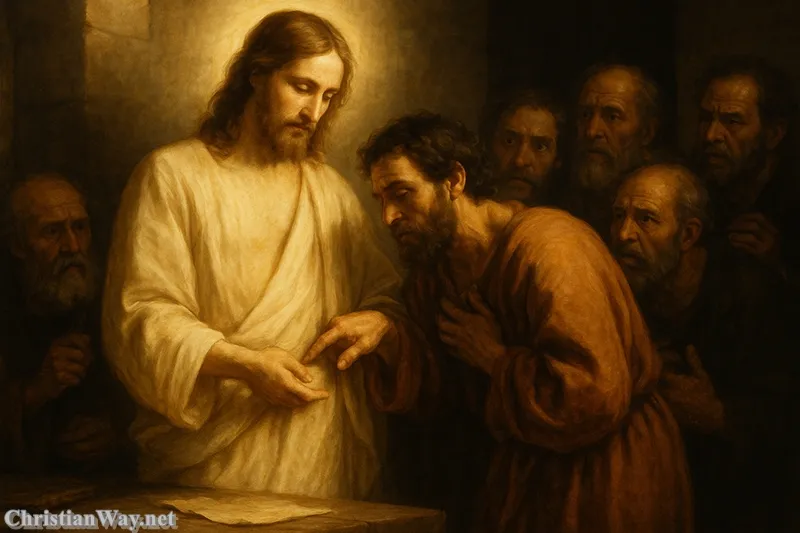
Later, after the resurrection, Thomas was absent when Jesus first appeared to the disciples. When they told him they had seen the Lord, Thomas struggled to believe. He wanted to see the wounds in Christ’s hands and side. A week later, Jesus appeared again and invited Thomas to come near. Thomas responded with one of the most powerful confessions in Scripture: “My Lord and my God” (John 20:28).
Thomas teaches us that faith is not always immediate. Sometimes it grows through struggle. Sometimes a wounded heart needs time to believe that joy is possible again. Sometimes people who have suffered deeply find it difficult to trust words of hope too quickly.
Jesus did not shame Thomas. He met him. He showed him His wounds. This is deeply important. The risen Christ still carried the marks of the cross. Resurrection did not erase the reality of suffering; it transformed it. In Christ, the wounds of love become signs of victory.
For every person who has questions, Thomas offers comfort. You may bring your uncertainty to Jesus. You may ask Him to help your unbelief. You may seek Him in Scripture, prayer, worship, and fellowship. The Lord who met Thomas is not distant from those who search sincerely for truth.
James the Son of Alphaeus: The Apostle of Quiet Faithfulness
James the son of Alphaeus is one of the lesser-known apostles. Scripture gives us few details about his life, and history has preserved fewer stories about him than about Peter, John, or Paul. Yet his place among the Twelve is not small in the eyes of God.
Known Fully by Christ
There is something consoling about James’s quiet presence in the apostolic list. Not every disciple is remembered for dramatic speeches, famous miracles, or visible leadership. Some serve quietly. Some carry the Gospel faithfully without being noticed by many. Some pray, endure, care for others, and remain steady in hidden places.
The Kingdom of God is filled with such lives. There are parents whose sacrifices are known only to their children. There are elderly believers who pray for their families in silence. There are workers who live honestly when dishonesty is easier. There are people who quietly visit the sick, feed the poor, encourage the discouraged, and forgive when no one is watching.
James the son of Alphaeus reminds us that Christ sees what the world overlooks. A quiet life of faithfulness is not less valuable because it is less visible. God knows every act of love offered in His name.
Thaddaeus, or Judas Son of James: The Apostle Who Asked for Understanding
One of the apostles is named Thaddaeus in some Gospel lists and Judas son of James in others. He is traditionally distinguished from Judas Iscariot. During the Last Supper, he asked Jesus, “Lord, how is it that thou wilt manifest thyself unto us, and not unto the world?” (John 14:22).
The Hidden Work of Christ
This question reveals a longing to understand how God works. Why does Christ reveal Himself to some hearts and not force Himself upon the whole world? Why does the Kingdom often seem hidden rather than overwhelming?
Jesus answered by speaking about love and obedience: “If a man love me, he will keep my words: and my Father will love him, and we will come unto him” (John 14:23). Christ’s presence is not imposed through spectacle. He enters the heart that receives Him in love.
Thaddaeus reminds us that God often works quietly. We may expect faith to arrive through dramatic signs, but the Lord frequently comes through simple things: a word of Scripture that speaks at the right moment, a prayer whispered in sorrow, a kindness received when we felt forgotten, a conscience awakened, a burden gradually lifted.
The Kingdom grows like a seed. It may begin unseen, but it becomes real in a heart that welcomes Christ.
Simon the Zealot: The Apostle Whose Passion Was Redirected
Simon is called “the Zealot” in the Gospel lists. The exact meaning of this title is discussed, but it likely indicates religious or political zeal. Whatever the background, Simon was a man of intensity.
From Human Zeal to the Zeal of Love
Christ did not reject Simon’s passion. He transformed it. Human zeal can easily become harshness. It can become the desire to defeat others, to force outcomes, to prove ourselves right, or to build a kingdom according to our own plans. Yet Christ teaches a different kind of zeal: zeal for truth joined to humility, zeal for justice joined to mercy, zeal for God’s Kingdom joined to the cross.
Simon’s place among the apostles is especially meaningful because he stood beside Matthew the tax collector. In ordinary circumstances, these two men might have been deeply divided. One was associated with Roman taxation; the other may have been linked to fierce resistance against Roman influence. Yet Jesus gathered them into one fellowship.
This is a living picture of the Church. Christ calls people from opposing backgrounds and teaches them to become brothers and sisters. He does not ask us to erase truth or ignore injustice, but He does ask us to surrender hatred. In Him, enemies can become family. In Him, zeal can become love.
Judas Iscariot: The Tragedy of Betrayal and the Mystery of Human Freedom
No reflection on the original twelve apostles can avoid the sorrowful story of Judas Iscariot. He was chosen by Jesus. He traveled with the disciples. He heard the teaching of Christ, witnessed miracles, and shared the Last Supper. Yet he betrayed the Lord for thirty pieces of silver.
A Warning for Every Human Heart
Judas’s story is painful because it reveals that outward closeness to holy things does not automatically transform the heart. A person may hear the Gospel, participate in worship, serve in religious work, and still resist the grace of God.
The betrayal of Judas does not mean that Christ failed to love him. Jesus knew what was in Judas’s heart, yet He still washed his feet. He still offered him bread at the table. He still allowed him to remain near. The mystery of Judas is not that Christ withheld mercy, but that Judas chose darkness when mercy stood before him.
We should not use Judas’s story to judge others harshly. Instead, we should let it search our own hearts. Where do we allow greed, resentment, hidden sin, or disappointment to grow? Where do we keep part of ourselves closed to Christ? Where do we want the blessings of faith without surrendering to the Lord of faith?
Judas reminds us that freedom is real and that love cannot be forced. Yet even this sorrowful story points us toward the mercy of Christ. The Lord knows the darkness of the human heart, and He still comes near. He still calls. He still offers forgiveness.
After Judas’s death, the early Church chose Matthias to take his place among the Twelve, as recorded in Acts 1. Matthias was not one of the original twelve called during Jesus’ public ministry, but his selection showed the Church’s desire to preserve the witness of the Twelve as a sign of God’s faithfulness.
The Apostles Witnessed the Cross
The apostles followed Jesus through His ministry, but their faith was tested most deeply at the cross. They had hoped for a Messiah who would bring triumph. Instead, they watched Him arrested, condemned, mocked, beaten, and crucified.
The Cross Changed Their Understanding of God
At the cross, many of the apostles fled. Fear overcame them. Peter denied Jesus. The disciple whom Jesus loved stood nearby with Mary, His mother, but the larger group was scattered and broken.
This failure is not hidden by the Gospels. It is written plainly, perhaps because the Church has always known that the truth of the apostles lies not in their perfection, but in the mercy that restored them.
The cross changed their understanding of power. They had imagined a kingdom of visible victory. But Christ revealed that the deepest victory of God was love that gives itself completely. The King wore a crown of thorns. The Savior stretched out His hands in forgiveness. The Son of God entered suffering so that no suffering person would ever be abandoned by Him.
The apostles would later preach the cross with courage because they had come to understand that it was not the defeat of Christ. It was the revelation of His love. Saint Paul would later write that “the preaching of the cross is to them that perish foolishness; but unto us which are saved it is the power of God” (1 Corinthians 1:18).
The Church can never move beyond the cross. We may be tempted to seek a faith that is always comfortable, successful, admired, and secure. But the apostles remind us that Christ is found in sacrificial love, in humility, in service, in forgiveness, and in the courage to remain faithful when the path becomes costly.
The Risen Christ Restored Their Hope
The resurrection changed everything. The apostles did not remain forever in the darkness of Good Friday. The risen Jesus came to them in their fear. He appeared in locked rooms, on roads, by the sea, and in the midst of ordinary human confusion.
“Peace Be Unto You”
When Jesus appeared to the disciples after His resurrection, His first word was often peace. “Peace be unto you” (John 20:19). This was not a shallow wish for calm feelings. It was the peace of a world changed by resurrection. Sin had not overcome Him. Death had not defeated Him. Fear would not have the last word.
The apostles became witnesses because they encountered the living Christ. They did not merely preserve the memory of a teacher who had died. They proclaimed that Jesus was alive, that He had conquered death, and that forgiveness of sins was now offered in His name.
The resurrection also gave new meaning to their failures. Peter’s denial was not forgotten, but it was redeemed. Thomas’s doubt was not erased, but it became a path toward a deeper confession. The apostles’ fear did not define their future. Christ’s mercy did.
This is the hope of every Christian. Our past does not have to imprison us. Our failures do not have to become our identity. The risen Lord can meet us in the places where we have locked ourselves away and speak His peace.
Pentecost and the Birth of Apostolic Witness
After the resurrection, Jesus told the disciples to wait for the promise of the Father. They needed more than memories of Jesus. They needed the power of the Holy Spirit.
Fearful Men Made Courageous
On the day of Pentecost, the Holy Spirit descended upon the apostles like a rushing wind and tongues of fire. They began to speak in other languages, and people from many nations heard the message of God in their own tongues (Acts 2:1–11).
This moment showed that the Gospel was not meant for one people alone. The message of Christ would reach every nation. The apostles were sent beyond familiar borders, beyond language, culture, and fear.
Peter, who had once denied Jesus before a servant girl, stood before the crowd and proclaimed the risen Christ. Thousands received the message and were baptized. The Church began to appear openly as a people filled with the Spirit.
Pentecost teaches us that the mission of the Church cannot be sustained by human strength alone. We may have plans, institutions, learning, music, buildings, and technology. All these can be useful. But without the Holy Spirit, they cannot create new life in the heart.
The apostles became bold not because they became naturally fearless, but because they knew Christ was alive and the Spirit was with them. This is still the source of Christian courage today.
The Apostles as Foundations of the Church
The Book of Revelation speaks of the heavenly Jerusalem having twelve foundations, “and in them the names of the twelve apostles of the Lamb” (Revelation 21:14). This image expresses the lasting place of the apostles in the life of the Church.
Apostolic Faith in Every Generation
Catholic, Orthodox, Anglican, Lutheran, and Protestant Christians may speak about apostolic continuity in different ways, but all recognize the importance of the apostolic witness. The Church remains apostolic when she remains faithful to the Gospel proclaimed by those first witnesses: that Jesus Christ is Lord, that He died for our sins, that He rose from the dead, and that through Him we are called into new life.
For Catholics and Orthodox Christians, apostolic succession expresses the continuity of ministry through bishops who stand in a historical and sacramental line connected to the apostles. For many Protestants, apostolic faith is especially understood as fidelity to the teaching of Scripture and the Gospel proclaimed by the apostles. These perspectives are not identical, but they share a deep desire to remain rooted in the faith once delivered.
The apostles are foundations because they point away from themselves toward Christ. They did not preach their own greatness. Peter said after healing a man, “Why look ye so earnestly on us, as though by our own power or holiness we had made this man to walk?” (Acts 3:12). The apostles knew that they were servants. The power belonged to Jesus.
This is the model for the Church in every age. We are not called to build a religion around personalities, popularity, wealth, or influence. We are called to proclaim Christ. “For we preach not ourselves, but Christ Jesus the Lord” (2 Corinthians 4:5).
The Apostles Speak Into Our Daily Lives
The original twelve apostles may seem far removed from our modern world. Yet their struggles are familiar. They knew fear, doubt, conflict, disappointment, ambition, exhaustion, and sorrow. They knew what it was to misunderstand God’s plan. They knew what it was to fail and need forgiveness.
Witness Begins Where We Are
Perhaps you feel ordinary, unnoticed, or unprepared. Remember Andrew, James the son of Alphaeus, and the many quiet servants of the early Church. Christ often works through people who do not seek attention.
Perhaps you are burdened by past choices. Remember Matthew and Peter. The Lord sees beyond shame and calls people into a new future.
Perhaps you are carrying questions about faith. Remember Thomas and Nathanael. Christ does not despise the searching heart. He invites it to come near.
Perhaps you feel divided from someone in your family, church, or community. Remember Matthew and Simon the Zealot. Christ can gather people from opposing worlds and make them brothers.
Perhaps you are afraid to speak about your faith. Remember the apostles before Pentecost. They were afraid too. But the Holy Spirit made them witnesses.
The apostles teach us that witness is not always a public sermon. Sometimes it is a faithful life. It is an act of patience. It is refusing bitterness. It is praying with a child. It is caring for a sick parent. It is doing honest work. It is speaking hope to someone who feels forgotten. It is forgiving when forgiveness costs something.
Every Christian is called, in some way, to become a witness of Christ’s living Word. We may not travel the world as the apostles did, but Christ sends us into the places where we already live. He sends us into our homes, our work, our friendships, our churches, and our communities.
Reflect and Pray
Dear friends, the original twelve apostles were not chosen because they were already strong enough for the mission ahead. They were chosen because Christ loved them, called them, formed them, forgave them, and filled them with His Spirit. Their lives show us that the Church rests not upon human perfection, but upon the faithfulness of the risen Lord.
Peter teaches us to trust mercy after failure. Andrew teaches us to bring others gently to Jesus. James and John teach us that zeal must become love. Philip teaches us to seek the Father in Christ. Bartholomew teaches us to bring our questions honestly. Matthew teaches us that grace can redeem the past. Thomas teaches us to bring our doubts to the risen Lord. The quieter apostles remind us that hidden faithfulness is precious in the sight of God. Even Judas warns us not to close our hearts against the mercy that stands before us.
May we, too, hear the call of Christ. May we remain close to Him in prayer. May we allow His mercy to heal our failures. And may we become humble witnesses of His love in the places where He has placed us.
Let us pray.
Lord Jesus Christ, You called the twelve apostles from ordinary lives into the joy and burden of Your mission. Call us again from fear, distraction, pride, and discouragement. Teach us to remain near You, to receive Your forgiveness with humble hearts, and to bear witness to Your love through our words and actions. Strengthen Your Church in truth, unity, courage, and mercy. May Your living Word shine through our homes, our work, our prayers, and our daily lives. Amen.
May the peace of Christ dwell richly in your heart, and may His love guide every step you take toward Him.
— Fr. John Matthew