Dear friends in Christ,
Some of the holiest lives in Scripture are described with many words. We hear their prayers, their failures, their questions, their sermons, and their final witness. Yet there are also saints whose silence becomes part of their message. Saint Simon the Zealot is one of these quiet apostles. His name appears among the Twelve chosen by Jesus, and he is present with the disciples in prayer after the Ascension, but the New Testament does not preserve a long story of his personality, his works, or his words. In this holy quietness, we are invited to look not merely at what Simon said, but at what his whole life became in the presence of Christ.
His name itself carries a fire: Simon the Zealot. It is a name that speaks of passion, intensity, longing, and wholehearted devotion. Yet the Gospel shows us that zeal, by itself, is not enough. Human zeal can become impatience. It can become anger. It can become pride, division, or even the desire to defeat those who disagree with us. But when zeal is surrendered to Jesus Christ, it becomes something beautiful. It becomes the courage to serve, the strength to endure, the willingness to forgive, and the burning desire that every human heart may know the love of God.
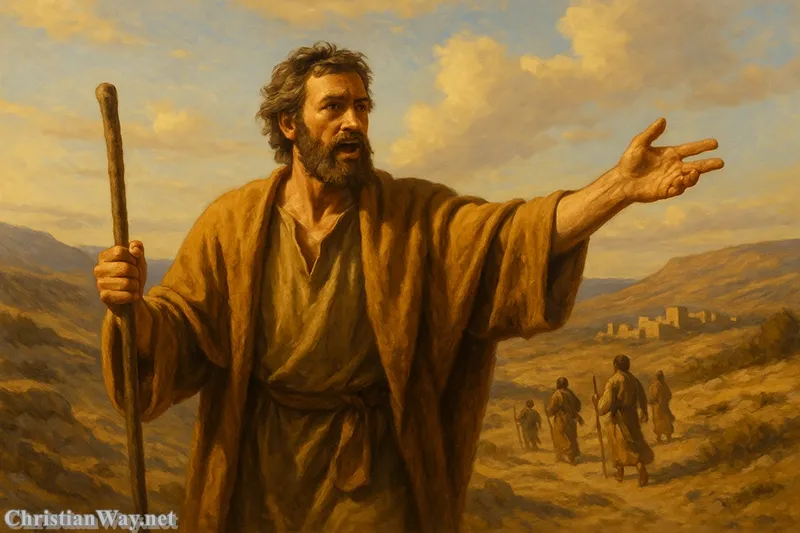
Saint Simon the Zealot reminds us that Christ does not destroy the deepest energies of the human heart. He purifies them. He does not call us to become cold, passive, or indifferent. He calls us to love God with all our heart, all our soul, all our mind, and all our strength. He takes the fire within us and teaches it to burn not for ourselves, but for His Kingdom. He transforms restless passion into holy mission.
In a world where anger spreads quickly, where people are often divided by politics, fears, wounded memories, and competing loyalties, the witness of Saint Simon speaks gently but powerfully. He reminds us that the greatest revolution is not the triumph of one side over another. The greatest revolution is the conversion of the human heart. Christ does not merely ask us to fight for what we believe. He asks us to become people who believe so deeply that we are willing to love, serve, sacrifice, and remain faithful even when the world does not understand.
A Quiet Apostle With a Burning Name
Saint Simon appears in the Gospel lists of the Twelve Apostles. Matthew and Mark call him Simon the Cananaean, while Luke and the Acts of the Apostles call him Simon the Zealot. These titles point to the same man, distinguishing him from Simon Peter, who is far more frequently mentioned in the Gospel accounts.
The word “Zealot” can be understood in more than one way. In the history of Israel, zeal often referred to a burning devotion to God, His covenant, His people, and His law. The Old Testament speaks of men and women whose love for God was so strong that they refused to allow idolatry, injustice, or spiritual compromise to rule their hearts. Zeal, at its best, was not mere emotional intensity. It was a desire that God alone should be worshiped and honored.
At the same time, the title “Zealot” may have carried political meaning in the first-century world. Some Jewish groups strongly resisted Roman occupation and longed for the restoration of Israel’s freedom. Yet scholars and biblical commentators caution that it is not fully clear whether Simon belonged to a formal Zealot movement during the earthly life of Jesus, or whether the title simply described his fervent devotion.
This uncertainty is not a weakness in the story of Saint Simon. It is, in a way, part of its spiritual beauty. We do not need to know every detail of his past in order to understand the greatness of what Christ did in him. Perhaps Simon had once carried intense political hopes. Perhaps he had longed deeply for freedom, justice, and the restoration of his people. Perhaps he had felt frustration at the suffering of Israel and anger toward those who oppressed them. These would have been understandable feelings in a wounded nation living beneath foreign power.
Yet then Simon met Jesus.
And Jesus was not the kind of Messiah many expected. He did not gather an army. He did not call His followers to strike down their enemies. He did not promise power in the ordinary sense of the word. Instead, He spoke about loving enemies, praying for those who persecute us, forgiving seventy times seven, serving the poor, welcoming sinners, and taking up the cross.
For a man known as a zealot, this must have been a profound spiritual conversion. Simon had to allow Christ to redefine what zeal truly means. He had to learn that the Kingdom of God does not advance through hatred. It advances through truth, mercy, sacrifice, and love.
Zeal Is Not the Same as Anger
There is a difference between zeal and anger, though they can sometimes feel similar within the human heart. Anger says, “I must win.” Zeal says, “God must be glorified.” Anger says, “My enemies must be defeated.” Zeal says, “May every heart be healed by the truth.” Anger seeks to overpower. Holy zeal seeks to serve.
This distinction is deeply important for us today. Many people are tired, disappointed, and frustrated. They see injustice in the world. They see families breaking apart, faith being mocked, children growing up without guidance, and human dignity being wounded in so many ways. These realities can awaken a strong response within us. Sometimes they should. A Christian should not become indifferent to suffering, lies, cruelty, or injustice.
But Saint Simon teaches us that our response must be purified by Christ. We may defend the truth, but never with contempt for people. We may speak against evil, but never forget that the person before us is still loved by God. We may work for justice, but we must never become unjust ourselves. We may stand firmly for faith, but we must not become proud, hard, or merciless.
The zeal of a Christian is not a loud desire to win arguments. It is a quiet and steadfast desire that Christ may be known, loved, and followed. It is not the fire that burns others. It is the fire that gives light.
Jesus Calls People From Very Different Lives
One of the most beautiful features of the Twelve Apostles is that they were not all alike. Jesus did not choose twelve men from the same background, profession, temperament, or social group. He called fishermen from Galilee. He called Matthew, a tax collector. He called Simon, known as the Zealot. He called men who were impulsive, quiet, questioning, practical, and deeply different from one another.
This is not accidental. Jesus was creating a new family, not based on social class, political agreement, personality, or human preference. He was gathering people around Himself. The center of the apostolic community was not Peter’s strength, John’s tenderness, Matthew’s past, or Simon’s zeal. The center was Christ.
Imagine what this meant for Simon. If he had once carried strong feelings about Roman rule and national freedom, then sitting beside Matthew the tax collector would have required grace. Matthew had worked within the Roman system that many faithful Jews deeply resented. Humanly speaking, Simon and Matthew may have represented opposing worlds. One may have been associated with resistance to Roman power; the other had been associated with collecting taxes for Rome.
Yet Jesus called them both.
This is one of the quiet miracles of the Gospel. Christ does not merely forgive individuals; He brings divided people together. He takes those who might have judged each other, distrusted each other, or avoided each other, and He makes them brothers. The Church begins not with perfect agreement among perfect people, but with Christ teaching imperfect people how to love.
How often do we see the opposite in our own lives? Families are divided over old disagreements. Friends stop speaking because of pride. Communities become cold because people cannot forgive. Christians sometimes forget that unity is not created by everyone thinking in the same way about every earthly matter. Unity is created when Christ becomes more important than our need to be right, admired, or victorious.
Saint Simon the Zealot invites us to ask: who is the “Matthew” in my life? Who is the person I find difficult to understand? Who represents a point of view I do not like? Who has hurt me, disappointed me, or challenged my sense of justice? Christ may not ask us to agree with everything such a person believes or does. But He does ask us to love. He asks us to pray. He asks us to resist the temptation to reduce another person to a label.
Christ Is Greater Than Our Divisions
The world often tells us that identity is built by opposition. We are taught to define ourselves by whom we reject, whom we blame, whom we fear, or whom we consider beneath us. But Jesus builds identity differently. He says, in effect, “You are Mine.” That is the deepest identity of every disciple.
Simon’s zeal had to pass through this transformation. He could no longer be defined only by the causes, conflicts, and expectations of his past. He was now an apostle of Christ. His passion belonged to the Kingdom. His strength belonged to mission. His life belonged to the One who had called him.
This is the freedom that Christ offers each of us. He does not erase our personality. He does not make a strong person weak or a passionate person dull. But He gives every gift a new direction. The strong become protectors of the vulnerable. The passionate become servants of the Gospel. The wounded become compassionate. The former sinner becomes a witness of mercy. The restless heart becomes a heart at peace in God.
There is much healing in this truth. Perhaps you have a strong temperament. Perhaps you feel things deeply. Perhaps injustice makes you angry, or suffering touches you more intensely than it seems to touch others. Do not be ashamed of the fire within you. Bring it to Christ. Ask Him to purify it. Ask Him to make it gentle without making it weak, courageous without making it cruel, and faithful without making it proud.
The Upper Room: Zeal Becomes Prayer
After the death, resurrection, and ascension of Jesus, Saint Simon appears again in the Acts of the Apostles. He is present in the Upper Room with the other apostles, together with Mary, the mother of Jesus, and the first Christian community. Scripture tells us that they “devoted themselves with one accord to prayer” (Acts 1:14).
This brief moment tells us something precious about the soul of Simon. The man known for zeal is now found in prayer. The man whose name may have suggested intense passion is waiting in stillness for the Holy Spirit. The apostle is no longer acting from human urgency alone. He is learning to receive the power of God.
This is the great lesson of Pentecost. Mission cannot begin merely from human enthusiasm. The apostles had seen the risen Christ. They had heard His teaching. They had received His command to bear witness. Yet they still had to wait. They had to pray. They had to become united. They had to receive the Holy Spirit.
How often do we forget this in the Church and in our personal lives? We see a need and immediately want to act. We encounter a problem and immediately want to solve it. We hear an argument and immediately want to respond. We may have good intentions, but without prayer our actions can easily become restless, anxious, and self-centered.
Saint Simon teaches us that true zeal begins on our knees.
Prayer does not make us passive. It makes us ready. Prayer does not extinguish mission. It gives mission its true source. Prayer does not silence the heart. It teaches the heart to listen to God before speaking to the world.
The Upper Room is where Simon’s zeal becomes apostolic zeal. It is no longer merely a fire within one man. It becomes part of the fire of Pentecost, the fire that sends the Church into the world to proclaim Jesus Christ. This is the zeal that does not depend on applause, success, or visible results. It is the zeal that remains faithful because it has been born from communion with God.
Waiting Is Also Part of Mission
Many people find waiting difficult. We want clarity immediately. We want answers quickly. We want God to show us the entire plan before we take the next step. But the apostles teach us that waiting can be holy when it is filled with prayer.
Simon waited with the others. He did not run ahead. He did not claim a separate mission before the Spirit was given. He remained in communion. This humility is beautiful. It reminds us that Christian mission is never merely “my work.” It is the work of Christ through His Church.
There may be seasons in your life when you feel that you are waiting in an Upper Room. You are waiting for healing. Waiting for work. Waiting for reconciliation. Waiting for guidance. Waiting for a door to open. Waiting for your heart to become stronger. In such seasons, do not believe that nothing is happening. God often prepares us in hidden places.
The silence before Pentecost was not empty. It was full of promise. The apostles were being formed in prayer, unity, and surrender. In the same way, God may be preparing you through a season that feels slow. He may be teaching you patience. He may be healing your motives. He may be freeing you from the need to control every outcome. He may be turning your restlessness into trust.
An Apostle Whose Mission Was Larger Than His Name
The New Testament gives us only a few direct references to Saint Simon the Zealot. This means that we must approach later stories about his missionary journeys with humility. Christian traditions have remembered him as a witness who carried the Gospel beyond his homeland, often associating him with courageous preaching and martyrdom. But the exact places, journeys, and circumstances are preserved differently across traditions and cannot be described with complete historical certainty.
Yet perhaps this uncertainty allows us to see something more important. Simon’s greatness does not depend on our knowing every road he traveled. His greatness is found in the fact that he belonged fully to Christ. He was chosen. He was formed. He prayed. He received the Holy Spirit. He was sent.
The word “apostle” means one who is sent. Simon was not called merely to remain close to Jesus during His earthly ministry. He was called to carry Christ into the world. The mission of the apostles was not simply to preserve memories of Jesus. It was to proclaim the living Lord: crucified, risen, and present among His people.
For Simon, mission would have meant leaving behind the safety of familiar places. It would have meant speaking of Christ in a world where the Gospel was not always welcome. It would have meant enduring misunderstanding, hardship, and perhaps persecution. Yet this is the fruit of holy zeal: the desire to give one’s life for something greater than oneself.
Saint Simon the Zealot shows us that mission does not begin when we stand before a crowd. Mission begins when Christ becomes more important than our comfort. It begins when we choose honesty over convenience, forgiveness over resentment, prayer over self-reliance, and service over recognition.
The Quiet Mission of Ordinary Faithfulness
Not every Christian is called to travel far from home. Not every believer is called to preach publicly or become known by many people. But every Christian is called to be sent in some way.
A mother who prays faithfully for her children is living a mission. A father who chooses patience after a difficult day is living a mission. A teacher who treats each child with dignity is living a mission. A worker who refuses dishonesty is living a mission. A young person who remains faithful to Christ among friends who do not understand is living a mission. An elderly person who offers suffering in prayer is living a mission.
The Gospel reaches the world through such hidden faithfulness. The Church has always been carried not only by famous saints, bishops, missionaries, and theologians, but also by ordinary believers who quietly love Christ in daily life.
Saint Simon may be remembered as an apostle of mission, but his witness begins with something simple: he stayed with Jesus. He remained among the Twelve. He remained in the Upper Room. He received the Spirit. He allowed his zeal to become obedience.
That is where our mission begins too.
Holy Zeal in a Distracted and Divided World
We live in an age of constant distraction. There are endless voices asking for our attention. News, entertainment, advertisements, arguments, social media, worries, financial pressures, and daily responsibilities can leave the heart exhausted. Many people are busy but not truly alive. They are moving constantly, yet they do not know where their soul is going.
Saint Simon speaks to this restlessness. His name reminds us that life needs zeal. We need a reason to rise in the morning. We need a love greater than comfort. We need a purpose that can survive disappointment. We need something worth giving our hearts to.
But the world often gives us false forms of zeal. It tells us to be zealous for success, for popularity, for wealth, for control, for victory over others, or for the approval of strangers. These things may give a brief feeling of importance, but they cannot sustain the soul.
The zeal of Saint Simon points us back to Christ. Jesus is not one interest among many. He is the center. He is the One who reveals who we are, why we are here, and where our lives are meant to go. When we love Christ deeply, every other part of life finds its proper place. Work becomes service. Family becomes a place of sacrificial love. Suffering becomes something we can carry with hope. Success becomes a gift to share. Failure becomes a place where grace can meet us.
Holy zeal does not mean doing everything. It means doing the will of God with love.
This is a difficult lesson for many of us. We can confuse exhaustion with faithfulness. We can think that being constantly busy means we are serving God. But Christ does not ask us to destroy ourselves in endless activity. He asks us to remain in Him. He asks us to bear fruit from communion with Him.
A zealot without prayer becomes restless. A worker without love becomes bitter. A believer without humility becomes harsh. But a disciple who remains close to Christ becomes a source of peace even in difficult places.
Zeal That Builds Rather Than Breaks
The world is full of people who know how to criticize. It is much rarer to find people who know how to build. Saint Simon’s zeal calls us to become builders.
Build peace in your home by speaking gently. Build trust by keeping your word. Build faith in your children by letting them see you pray. Build reconciliation by taking the first step. Build hope by encouraging someone who feels forgotten. Build the Church by serving where there is need, even when no one notices.
This is not weakness. It is the strength of Christ.
The Cross teaches us that love is not sentimental. Love is costly. Jesus did not save the world by avoiding suffering. He saved the world by entering suffering with perfect obedience to the Father. Saint Simon, like the other apostles, learned that the path of mission would eventually lead through sacrifice.
We may not be asked to suffer in the same way as the apostles. But every Christian will face moments when faithfulness costs something. It may cost pride. It may cost comfort. It may cost popularity. It may cost the desire to have the final word. Yet nothing offered to Christ is ever lost.
The Church Needs the Fire of Saint Simon
The Church today needs the zeal of Saint Simon the Zealot. She needs Christians who love the truth deeply but speak it with tenderness. She needs believers who care about holiness but remain humble about their own weakness. She needs people who are willing to serve without needing attention. She needs hearts that are strong enough to remain faithful in a changing world.
This zeal is especially needed in families. Children do not only need instruction; they need to see faith lived. They need to see parents who forgive, pray, speak truthfully, and treat one another with dignity. They need to know that Christ is not merely a topic for Sunday, but the light of the home.
This zeal is needed in workplaces. Christians should be known not merely for religious words, but for integrity. Let your work be honest. Let your promises be dependable. Let your treatment of others be just. Let your success never come at the cost of another person’s dignity.
This zeal is needed in moments of suffering. When we are hurt, disappointed, or afraid, we may feel our faith growing weak. Yet Saint Simon reminds us that zeal is not always loud. Sometimes it is simply the decision to keep praying. Sometimes it is the strength to say, “Lord, I do not understand, but I still belong to You.”
This zeal is needed in the Church’s mission. Many people today feel spiritually homeless. They may be surrounded by noise but starving for meaning. They may appear successful but feel empty within. They may have turned away from faith because of pain, scandal, disappointment, or misunderstanding. They need Christians who will not judge them from a distance, but meet them with the truth and mercy of Christ.
The mission of Saint Simon continues whenever a Christian chooses to bring Christ into the place where he or she has been sent.
Reflect and Pray
Dear friends, Saint Simon the Zealot leaves us with a quiet question: What is the fire within my heart serving?
Is it serving fear? Pride? Anger? The need to prove myself? The desire to control others? Or is it becoming a holy flame of love for Christ?
Perhaps you feel that your heart has grown cold. Perhaps you once prayed with joy, but now you feel tired or distracted. Perhaps you feel anger about the world, the Church, your family, or your own failures. Bring that fire to Jesus. Do not hide it from Him. Ask Him to purify it. Ask Him to turn it into courage, mercy, and mission.
Saint Simon did not become holy by losing his zeal. He became holy by giving his zeal to Christ.
Let us pray:
Lord Jesus Christ,
You called Saint Simon the Zealot
to leave behind every lesser loyalty
and to follow You with his whole heart.
Purify the fire within us.
Where we are angry, make us merciful.
Where we are restless, make us prayerful.
Where we are divided, make us instruments of unity.
Where we are afraid, make us courageous.
Teach us to love Your truth without pride,
to serve Your Church without seeking praise,
and to carry Your Gospel into every place
where You have sent us.
May Saint Simon the Zealot pray for us,
that our hearts may burn with love for You
and our lives may become a quiet witness
to Your mercy, peace, and mission.
Amen.
May the Lord Jesus fill your heart with holy zeal, give you courage in every trial, and make your life a gentle light for those who are seeking Him.
— Fr. John Matthew