Dear friends in Christ,
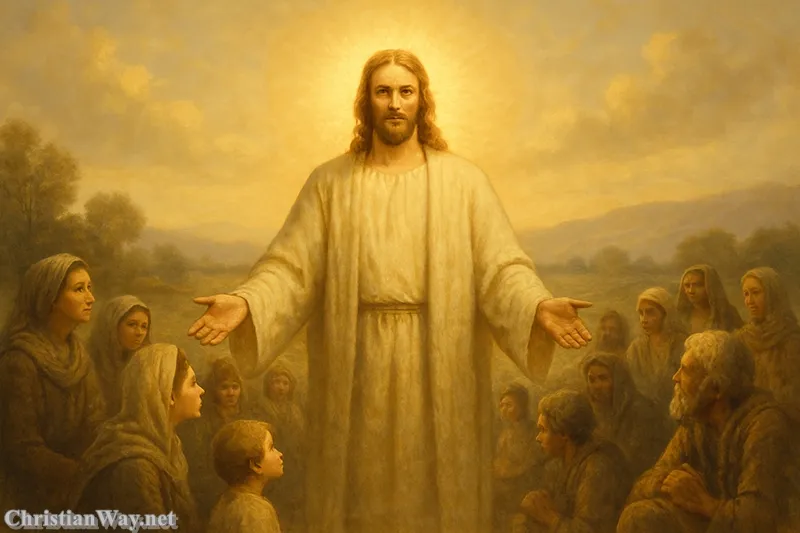
There are some people in the Gospel whose words are few, yet whose witness continues to speak across the centuries. Saint Bartholomew is one of them. The New Testament does not preserve long sermons from him. It does not tell us every detail of his later years. It does not show him standing at the center of many scenes as it does Peter, John, or Paul. Yet in the quietness surrounding his name, we are given something deeply beautiful: the image of a man who came to Jesus with an honest question, received the Lord’s gaze upon his life, and became a faithful apostle of the Gospel.
The title Saint Bartholomew – Apostle of Truth and Missionary to the East invites us to reflect on both sides of his witness. He is remembered as a man without deceit, a disciple whose heart was open enough to question and humble enough to believe. He is also remembered in Christian tradition as a missionary apostle, carrying the name of Christ beyond the familiar world of Galilee into distant lands and difficult roads.
His life speaks gently to those of us who want to believe but still carry questions. It speaks to those who feel that faith must begin only after every uncertainty has been solved. It speaks to those who fear that God will reject them because they are not polished, impressive, or spiritually certain. Bartholomew reminds us that Jesus is not frightened by an honest heart. The Lord sees beneath our surface. He knows the questions we have not yet learned how to pray. He knows the places where doubt and longing are woven together. And He still calls us.
In the Gospel of John, the man traditionally identified with Bartholomew is Nathanael. When Philip tells him that he has found the one spoken of by Moses and the prophets, Nathanael responds with a question that has echoed through the ages: “Can there any good thing come out of Nazareth?” Philip does not argue with him. He simply says, “Come and see” (John 1:46).
That simple invitation is the beginning of a transformed life.
Perhaps it is also the beginning of ours. We do not always come to Christ with perfect confidence. Sometimes we come with hesitation. Sometimes we come because another person has invited us. Sometimes we come because pain has brought us to the end of ourselves. Sometimes we come only because something within us still hopes that God may be real, that mercy may be possible, and that our lives may yet be renewed.
Saint Bartholomew’s story teaches us that Christ receives the one who comes honestly. He does not demand false certainty. He does not ask us to pretend. He asks us to come near enough to see Him.
The Apostle Whom Jesus Saw Before He Spoke
Bartholomew appears by name among the Twelve Apostles in the Gospel lists and in the Acts of the Apostles. The Gospel of John, however, tells the story of Nathanael’s encounter with Jesus. The Catholic liturgy for the Feast of Saint Bartholomew places this Gospel passage at the center of the celebration, reflecting the long Christian tradition that identifies Nathanael with Bartholomew.
When Nathanael approaches, Jesus says something striking: “Behold an Israelite indeed, in whom is no guile!” (John 1:47). These words are more than a polite greeting. Jesus sees something in Nathanael that the world may not have noticed. He sees sincerity. He sees a heart not built upon deception. He sees a man capable of questioning without becoming cynical, and capable of believing without surrendering his honesty.
Nathanael is surprised. “Whence knowest thou me?” he asks. Jesus answers, “Before that Philip called thee, when thou wast under the fig tree, I saw thee” (John 1:48).
The Gospel does not explain everything that happened beneath that fig tree. Perhaps Nathanael had been praying. Perhaps he had been reflecting on the Scriptures. Perhaps he had been carrying a private sorrow or hope known only to God. The mystery is left open, and perhaps this is fitting. Each reader is invited to remember the hidden places where Christ has seen us before we ever learned how to see Him.
There are moments in life when we realize that God has been near to us long before we consciously turned toward Him. We look back and see that He was present in a hardship that formed us, in a person who spoke a timely word, in a closed door that protected us, in a prayer that seemed unanswered but quietly changed the direction of our heart.
Jesus sees Nathanael before Nathanael understands Jesus. This is the grace that stands at the beginning of every Christian life. We do not discover God as though He had been lost. We awaken to the God who has already known us, loved us, and called us by name.
Christ Knows the Heart Without Humiliating It
The gaze of Christ is unlike the gaze of the world. The world often looks at people in order to judge, compare, accuse, or use them. Christ looks at the human heart in truth, but His truth is never cruel. He sees our weakness, but He does not turn away. He sees our failures, but He still calls us. He sees the motives we hide from others, yet He speaks not to crush us but to draw us into freedom.
Nathanael’s story is comforting because it shows us that Jesus welcomes honest questions. Nathanael’s first response to Philip is not polished faith. It is skepticism. Yet Philip does not shame him. He does not accuse him of being unspiritual. He does not demand that he silence every doubt before coming near. He simply invites him: “Come and see.”
This is often how faith begins. Not with the end of every question, but with a willingness to encounter Christ.
Some people fear that doubt is always the opposite of faith. But there is a difference between an honest question and a closed heart. A person who asks sincerely may be closer to faith than someone who speaks religious words without love or openness. Nathanael questioned, but he came. He did not remain at a distance. He allowed himself to meet the One whom Philip had proclaimed.
The Lord can work with that kind of heart.
Truth Without Deceit
The phrase “in whom is no guile” gives Saint Bartholomew a special place in Christian reflection. In a world where people are often taught to hide behind appearances, manage impressions, and protect themselves through falsehood, the witness of a truthful heart becomes rare and precious.
Truthfulness is not simply saying facts correctly. It is living without a divided heart. It is refusing to use words as weapons. It is allowing our inner life and outer life to come into harmony before God. It is not pretending to be holy while secretly feeding habits that destroy the soul. It is not speaking kindly in public while carrying cruelty in private. It is not using faith as a mask for pride.
Saint Bartholomew reminds us that the Christian life is not built on performance. It is built on truth.
Jesus does not praise Nathanael because he is perfect. He praises him because he is real. His question about Nazareth may not have been gracious, but it was honest. He does not flatter Philip. He does not pretend to understand what he does not understand. He says what is in his heart. And when he meets Christ, he is ready to be changed.
This is the beginning of discipleship. We come before God honestly. We tell Him where we are afraid. We confess where we have sinned. We admit where we do not understand. We stop trying to impress Him. We let Him search us.
The Psalms teach us this kind of prayer. “Search me, O God, and know my heart,” says Psalm 139. “Try me, and know my thoughts.” This is not a prayer of despair. It is a prayer of trust. It says, “Lord, You already know me. Help me become truthful before You.”
Truth Is Not Harshness
There is an important difference between truth and harshness. Some people speak bluntly and call it honesty, but their words leave wounds because they are not guided by love. Christian truth is not the freedom to say whatever we feel without mercy. It is the courage to speak what is right while remembering that every person before us is beloved by God.
Jesus is full of truth, but He is also full of grace. He does not hide sin, yet He does not treat sinners as hopeless. He speaks clearly, yet He speaks to restore. He corrects, yet He also heals. He calls people to repentance, but He never delights in their shame.
Saint Bartholomew’s witness invites us to seek this kind of truthfulness. We are called to become people whose words can be trusted, whose promises have weight, whose love is sincere, and whose faith is not merely external.
In family life, this may mean apologizing when we have spoken wrongly. In work, it may mean refusing dishonesty even when dishonesty seems profitable. In friendship, it may mean listening carefully instead of pretending we understand. In prayer, it may mean telling God the truth about what is happening inside us.
The person without deceit is not the person who never struggles. It is the person who does not hide from God within the struggle.
“Come and See”: The Beginning of Mission
Philip’s words to Nathanael are among the simplest and most beautiful words in the Gospel: “Come and see.”
He does not begin with a long argument. He does not try to force Nathanael into agreement. He does not give him a complete explanation of the mystery of Christ. He simply offers an invitation.
Christian mission begins here.
The Church is called to proclaim Jesus Christ, but the deepest proclamation is not manipulation. It is invitation. It is the humble witness of someone who has encountered Christ and longs for another person to know His mercy. It is saying, through word and life, “Come and see what God has done. Come and see the One who has changed me. Come and see the love that has held me when I could not hold myself.”
Saint Bartholomew first receives this invitation. Later, according to Christian memory, he becomes one who carries that invitation to others. The man who once came to see becomes a witness who helps others see.
This is the shape of every true vocation. We receive grace, and grace sends us. We encounter Christ, and Christ leads us outward. We are loved, and love becomes mission.
Mission does not always mean crossing oceans or preaching before great crowds. Sometimes mission is a quiet act of faithfulness in the place where God has planted us. A parent who teaches a child to pray is living mission. A worker who brings integrity into a dishonest environment is living mission. A friend who stays beside someone in grief is living mission. A believer who offers forgiveness instead of revenge is living mission.
Yet the missionary heart always carries the same desire: that others may know the goodness of Christ.
Saint Bartholomew and the Missionary Memory of the East
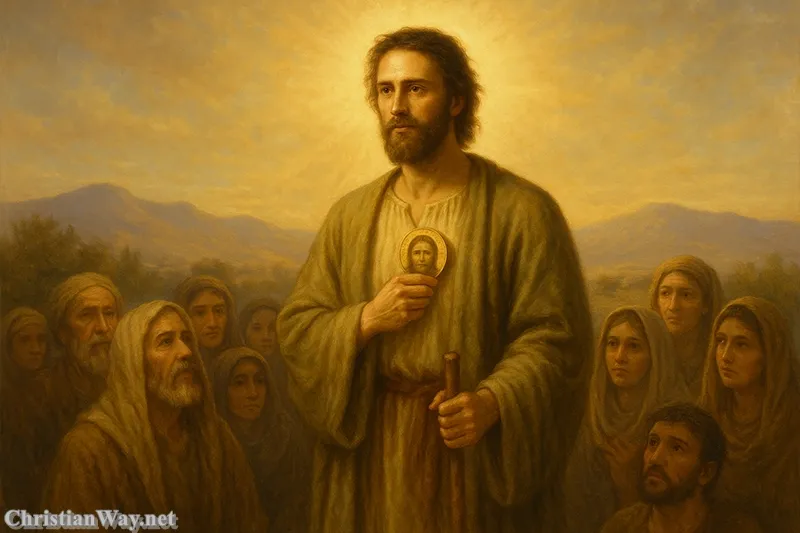
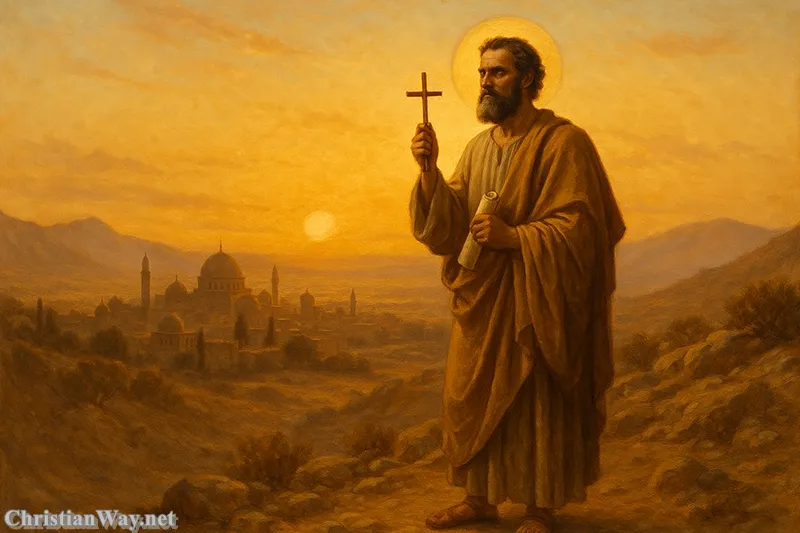
The Scriptures give only a few direct details about Bartholomew after the Resurrection. The Church therefore receives much of his later missionary story through ancient tradition. A fourth-century account preserved by Eusebius reports that Bartholomew had preached in a place called India and left behind a copy of Matthew’s Gospel; the precise geography meant by “India” in that early tradition remains uncertain.
Christian communities of the East have also held a deep memory of Saint Bartholomew’s missionary witness. The Armenian Apostolic Church venerates Saints Thaddeus and Bartholomew as apostles who brought the Gospel to Armenia and remembers them among the first illuminators of that land.
These traditions should be received with reverence and humility. The ancient world often used place names differently from the way we use them today. Historical records are incomplete, and not every detail of an apostle’s journey can be proved with the certainty we might desire. Yet the spiritual meaning of this memory remains clear: the Gospel did not remain confined to one village, one people, or one language.
Christ sent His apostles into the world.
The Church was born in Jerusalem, but it was never meant to stay only in Jerusalem. The Gospel crossed borders, seas, deserts, mountains, empires, and cultures. It entered homes and marketplaces. It was carried by apostles, martyrs, merchants, pilgrims, mothers, monks, teachers, and ordinary believers whose names have been lost to history but are known to God.
Saint Bartholomew’s remembered mission to the East reminds us that Christianity has always had a wide horizon. The faith of Christ belongs not only to one region or culture. It is for every people. It speaks in every language. It enters every land not to destroy what is good, but to redeem, heal, and fulfill the deepest longing of the human heart.
Mission Is Not Conquest but Witness
The word mission can sometimes feel difficult because human history contains painful examples of religion being tied to power, coercion, or cultural domination. Christians must speak honestly about these wounds. The Gospel should never be used as a tool for controlling others. Christ did not force people to follow Him. He invited, healed, taught, and loved. He called for repentance, but He did not manipulate the human heart.
The mission of the apostles was not conquest. It was witness.
A witness does not make himself the center. A witness points beyond himself. Saint Bartholomew, like the other apostles, was called to point toward Jesus: the crucified and risen Lord, the Savior who came not to be served but to serve.
This is still the heart of Christian mission today. We do not bring Christ to others as though He were our possession. We bear witness to the One who has already loved the world. We do not force faith. We offer the truth with humility. We do not despise other peoples or cultures. We recognize that every human person is made in the image of God and deserves respect.
A missionary life is therefore a life of service. It is willing to cross boundaries of fear. It listens before it speaks. It learns before it judges. It offers the Gospel not as a weapon, but as bread for the hungry soul.
The Courage to Leave What Is Familiar
One of the most striking things about the apostles is that they were willing to leave familiar ground. They began in the world they knew: the roads of Galilee, the language of their people, the customs of Israel, the memory of the prophets, the life of the synagogue, the hope for the Messiah.
But after Pentecost, they were sent outward.
To follow Christ often means leaving something familiar. It may mean leaving behind an old habit that has become comfortable but destructive. It may mean stepping out of a relationship built on dishonesty. It may mean forgiving someone when resentment feels safer. It may mean accepting a call to serve where we would rather remain hidden.
For Saint Bartholomew, tradition remembers this outward movement in a literal way: as a journey toward lands beyond his homeland. But each of us has an “east” to which Christ may send us. It may not be a country across the sea. It may be a difficult conversation. It may be a neighbor we have avoided. It may be a person whose pain makes us uncomfortable. It may be a place of service that stretches us beyond our natural strength.
Mission begins whenever love leads us beyond ourselves.
The Christian faith is never meant to become a private comfort that leaves the world unchanged. Christ gives peace, but He also sends. He gives mercy, but He also calls us to become merciful. He gives forgiveness, but He also teaches us to forgive. He gives truth, but He also asks us to speak it with love.
The Cost of Apostolic Witness
Christian tradition remembers Saint Bartholomew as a martyr. Accounts of his death vary in their details, as happens with many ancient stories. What remains constant in the memory of the Church is that he gave his life rather than deny the Lord he had come to know.
Martyrdom is not a love of suffering. It is not the search for danger. It is not a rejection of life. A martyr is one who loves Christ more than safety, reputation, comfort, or fear. The word itself means witness.
The martyrs remind us that faith is not always easy. In some parts of the world, Christians still face discrimination, violence, imprisonment, or loss because they confess the name of Jesus. In other places, the cost may be quieter but still real. A person may lose approval by refusing dishonesty. A young believer may be mocked for choosing purity or mercy. A worker may suffer because he will not take part in corruption. A family may face misunderstanding because they choose faithfulness over social pressure.
The witness of Saint Bartholomew encourages us not to be ashamed of Christ.
This does not mean that Christians should become argumentative or aggressive. Courage is not loudness. Sometimes the bravest witness is quiet faithfulness. It is continuing to pray when prayer seems unnoticed. It is continuing to love when love is not returned. It is continuing to tell the truth when lies appear easier.
The martyr’s heart says, “Christ is worth more than anything I may lose.”
The Cross Is the Measure of Christian Courage
Every apostle learned that the way of Christ leads through the cross. Jesus did not hide this from His disciples. He told them that those who wished to follow Him must take up their cross. Yet the cross is not the final word. It leads toward resurrection.
This is why Christian courage is never hopeless. The believer does not suffer because suffering itself is good. He remains faithful because the love of Christ is stronger than suffering. He does not seek death. He trusts the One who has conquered death.
Saint Bartholomew’s witness invites us to ask what we truly fear losing. Do we fear reputation? Comfort? Success? Control? The approval of others? These fears can quietly become masters of the heart.
But Christ calls us into freedom. He teaches us that the life built on Him cannot finally be destroyed. Even when the world takes much from us, it cannot take the love of God.
Saint Bartholomew and the Hidden Life
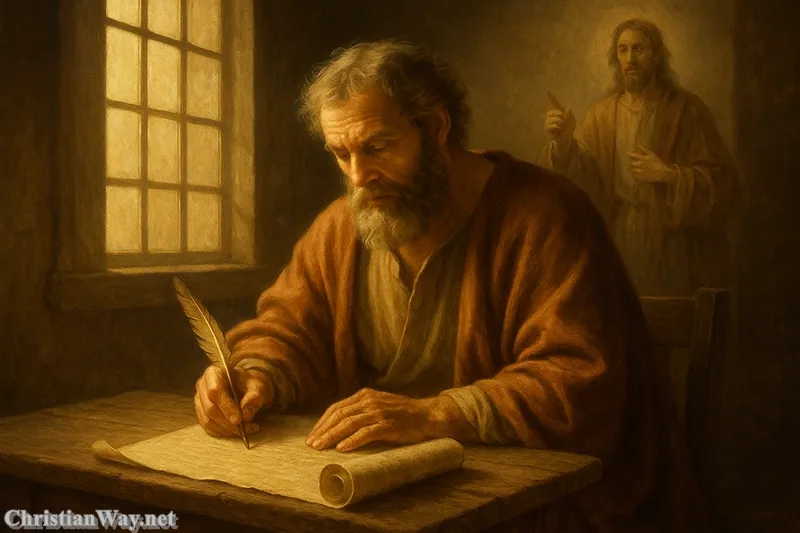
There is a tenderness in the fact that Saint Bartholomew is not given many words in Scripture. He is not known primarily for a long letter, a public sermon, or a dramatic miracle recorded in detail. His name is present. His response is real. His faith is remembered. His mission is honored.
This should encourage those who live hidden lives.
Not every faithful Christian will become widely known. Not every parent will be thanked for years of sacrifice. Not every caregiver will receive recognition. Not every teacher, worker, or servant will see the full fruit of what they have done. Many people spend their lives loving quietly, praying faithfully, and carrying burdens that no one else sees.
The kingdom of God is filled with such hidden holiness.
Jesus says that the Father sees in secret. He sees the prayer whispered in the night. He sees the sacrifice offered without applause. He sees the person who chooses kindness when anger would be easier. He sees the weary heart that continues to hope.
Saint Bartholomew stands among the apostles as a reminder that God does not measure human worth by fame. The world remembers a few names. Heaven knows every faithful heart.
Holiness Does Not Need an Audience
Modern life can make people feel that what is not seen does not matter. We are often tempted to measure worth by attention, followers, praise, income, status, or public success. Yet the Gospel quietly overturns these measures.
The greatest act in human history took place on a cross outside a city gate, witnessed by only a small number of people who understood it fully. The resurrection began in a garden before it was proclaimed to the nations. The Church was born not from worldly power but from the Holy Spirit poured out upon believers who had learned to wait and pray.
Saint Bartholomew’s hiddenness is therefore a gift. It teaches us not to confuse silence with insignificance. A life can be quiet and still bear eternal fruit.
Perhaps you are living in a season where no one seems to notice your faithfulness. You may be caring for family, trying to remain honest in difficult circumstances, praying for someone who has wandered far from God, or simply trying to keep your heart open in a world that often feels cold.
Do not lose heart. The Lord sees under the fig tree. He sees what is hidden. He knows your name.
The Apostle of Truth in an Age of Noise
We live in an age filled with words. News, opinions, images, messages, arguments, promises, and accusations pass before us every day. It can become difficult to know what is true, whom to trust, or how to keep the heart from becoming tired and suspicious.
Saint Bartholomew speaks into this confusion as an apostle of truth.
He did not begin as a man who accepted everything without question. He asked. He sought. He came. And when he encountered Christ, he made a confession of faith: “Rabbi, thou art the Son of God; thou art the King of Israel” (John 1:49).
This confession did not come from pressure. It came from encounter.
The truth of Christianity is not merely a collection of ideas. It is the truth of a Person. Jesus says, “I am the way, the truth, and the life” (John 14:6). To seek truth is therefore not simply to gather information. It is to draw near to Christ, who reveals the Father and shows us what love truly is.
This does not mean Christians should stop thinking, studying, or asking difficult questions. Faith does not fear truth because all truth belongs to God. The honest seeker does not threaten the Gospel. In many ways, Saint Bartholomew shows us that honest seeking can become the doorway to deeper faith.
But truth must be joined to humility. We do not possess truth as though it belongs to us. We receive it as a gift. We are called to live beneath it, not use it to elevate ourselves above others.
Truthfulness Begins in the Heart
It is possible to defend true doctrine while living without charity. It is possible to speak about Christ while failing to reflect His mercy. It is possible to win an argument and lose the heart of the person standing before us.
Saint Bartholomew’s witness calls us back to a simpler question: Are we truthful before God?
Do we allow Him to reveal the places where pride has entered our faith? Do we ask Him to remove deceit from our speech? Do we let Him heal the distance between what we say and how we live?
A truthful Christian is not someone who never makes mistakes. It is someone who returns to the truth when he falls. It is someone who confesses rather than hides. It is someone who seeks reconciliation rather than clings to resentment. It is someone who refuses to build a life upon appearance.
The truth of Christ is not meant to make us hard. It is meant to make us free.
Saint Bartholomew and the Unity of the Church
The memory of Saint Bartholomew belongs not only to one part of Christianity. He is honored in Catholic, Orthodox, Oriental Orthodox, Anglican, and many other Christian traditions. His apostolic witness reaches beyond later divisions and reminds believers of the faith they share in Christ.
This matters deeply in a divided world.
Christians do not all worship in the same way. They do not always use the same language for sacraments, saints, ministry, or Church authority. These differences are real and should be treated honestly. Yet Saint Bartholomew stands among the Twelve, before many of the divisions that later wounded Christian unity. He reminds us that the apostles were called not to build separate kingdoms, but to bear witness to the one risen Lord.
Jesus prayed that His followers might be one. This unity does not mean pretending that disagreements do not exist. It means seeking truth without contempt. It means speaking with humility. It means praying for one another. It means recognizing that every Christian who sincerely confesses Christ is called to love, serve, forgive, and bear witness to His mercy.
Saint Bartholomew’s missionary memory in the East also reminds Western Christians that the faith has always been broader than their own experience. Christianity has deep roots in the lands of the Middle East, Africa, Armenia, India, and Asia. The Church is not the possession of one culture. It is the family of God gathered from every people and language.
The more we remember this, the more humble we become.
What Saint Bartholomew Teaches the Searching Heart
Saint Bartholomew teaches us that faith can begin with a question.
He teaches us that Jesus sees us before we fully see Him.
He teaches us that truthfulness is more valuable than religious appearance.
He teaches us that mission begins with an invitation: “Come and see.”
He teaches us that the Gospel is meant to travel beyond the safe boundaries of our own comfort.
He teaches us that courage is not the absence of fear, but the decision to remain faithful to Christ.
He teaches us that hidden lives can carry eternal significance.
And he teaches us that every disciple is called to become, in some way, a witness.
Perhaps you are waiting for the moment when you will finally feel completely ready to follow Christ more deeply. But readiness rarely comes before obedience. Nathanael did not understand everything before he came. He simply came.
Perhaps you feel too uncertain to pray. Begin with honesty. “Lord, I want to believe. Help my unbelief.” Perhaps you feel too weak to serve. Begin with one act of mercy. Perhaps you feel too ordinary to be used by God. Remember that the apostles themselves were ordinary men made fruitful by grace.
The Lord is still calling people from under their fig trees. He calls us from places of prayer, doubt, loneliness, work, grief, hope, and hidden longing. He calls us not because we have already become holy, but because His grace can make us holy.
Reflect and Pray
Dear friend, Saint Bartholomew’s life begins with a question and becomes a witness. His story reminds us that Christ is not offended by the honest heart. He sees us in the hidden places of our lives. He knows the questions we carry. He knows the fears we rarely name. And He continues to call us into faith.
May we learn from Saint Bartholomew to come and see. May we seek truth without pride. May we speak honestly without cruelty. May we carry the Gospel beyond the boundaries of our comfort. And may we remember that every quiet act of faithfulness is seen by the Lord who knew Nathanael beneath the fig tree.
Let us pray:
Lord Jesus Christ, You saw Saint Bartholomew before he understood the fullness of Your call, and You drew him from honest questioning into faithful witness. Look upon us with the same mercy. Remove deceit from our hearts, strengthen us in truth, and teach us to follow You with courage. Give us the grace to carry Your love into the places where fear, loneliness, and confusion have grown. May our words be truthful, our service humble, and our lives a witness to Your Gospel. Amen.
May the peace of Christ dwell richly in your heart, and may the courage of Saint Bartholomew lead you to seek truth, love faithfully, and walk wherever the Lord calls you.
— Fr. John Matthew