Dear friends in Christ,
There are seasons in every human life when hope feels fragile. A person may carry a burden that has lasted for years: a family conflict that will not heal, a sickness that brings fear, a financial struggle that seems without an answer, a child who has wandered far from faith, or a quiet sorrow that no one else fully understands. In such moments, the heart may be tempted to believe that nothing can change, that prayer has become empty, or that God has forgotten the hidden pain we carry.
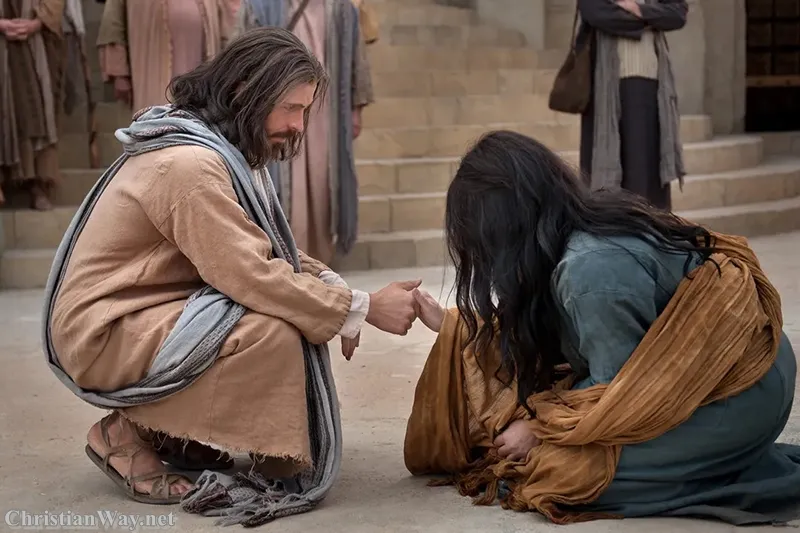
Yet the Gospel never leaves us alone in that darkness. Again and again, Christ comes near to those who have reached the end of their own strength. He touches the leper, restores the broken, forgives the sinner, lifts the fallen, and speaks peace to frightened disciples. The Christian faith is not built upon the belief that life will always be easy. It is built upon the certainty that Jesus Christ is present even when the road is difficult, and that His mercy can enter places where human strength can go no further.
Saint Jude Thaddeus has long been loved by Christians as an apostle of hope and, especially in Catholic devotion, as a patron of desperate or seemingly impossible causes. His name is often spoken in prayer by those who feel they have nowhere else to turn. Yet Saint Jude is not important because he offers a shortcut around suffering or because he promises that every desire will be fulfilled exactly as we wish. He is precious because his life points us toward Christ, the One for whom nothing is impossible and whose love remains faithful even when our own courage begins to fail.
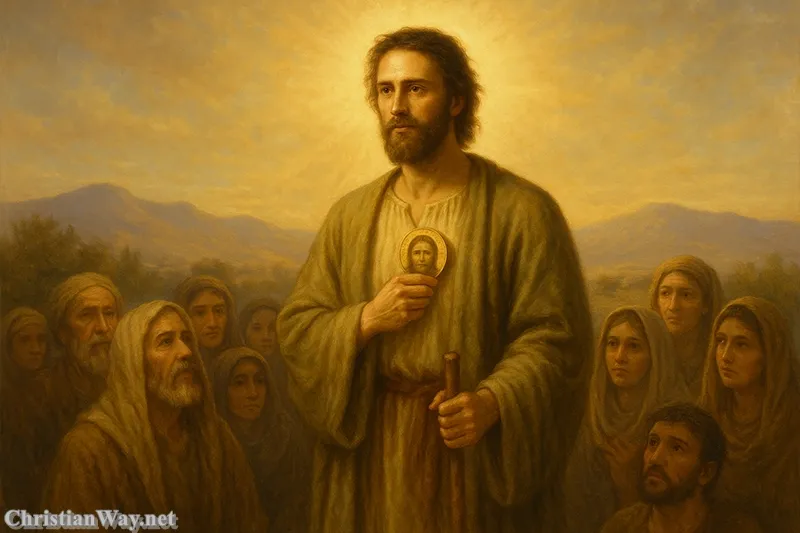
The witness of Saint Jude Thaddeus is gentle but powerful. He was one of the Twelve Apostles, chosen by Jesus to walk near Him, hear His teaching, witness His works, and later proclaim the Gospel to the world. In the Scriptures, he speaks only a few words, yet those words reveal a heart that longs to understand the Lord more deeply. In the tradition of the Church, he is remembered as a faithful servant who carried the name of Christ beyond the familiar places of his beginning and gave his life for the Gospel.
His story invites us to remember something essential: no prayer offered in faith is meaningless. No wounded heart is invisible to God. No person is too far away for grace to reach. And no situation is so dark that Christ cannot bring light into it.
Saint Jude Thaddeus: More Than a Name of Desperate Prayer
Saint Jude Thaddeus is sometimes confused with Judas Iscariot, the disciple who betrayed Jesus. This confusion has caused many people to overlook the quiet beauty of Saint Jude’s witness. But the Gospel makes clear that Jude Thaddeus was a different apostle, one who remained faithful to Christ.
The name “Jude” appears in several forms in the New Testament, and he is also called Thaddeus in the Gospel tradition. In the Gospel of Luke, he is named “Judas the brother of James” among the apostles (Luke 6:16). The Gospel of John also refers to him carefully as “Judas, not Iscariot” (John 14:22), preserving for us the distinction between the faithful apostle and the betrayer.
This small detail is deeply moving. Saint Jude lived with a name that could easily have been associated with betrayal, yet his own life became a witness of loyalty. He did not choose the name by which he was known, but he chose the Lord whom he followed. In this way, Saint Jude speaks to every person who feels defined by something painful: a past mistake, a family history, a wound caused by another, an unwanted label, or a story they wish could be changed.
The grace of Christ is stronger than the names others give us. The world may remember our weakness, but God sees the person we can become through mercy. Saint Jude did not live in the shadow of another man’s betrayal. He lived in the light of his own faithfulness to Jesus.
There is comfort in this for anyone who feels burdened by the past. Perhaps you are afraid that your failures will always define you. Perhaps you feel that people see only the worst thing you have done, the hardest season you have endured, or the family situation from which you came. Saint Jude reminds us that Christ calls each person personally. He sees beyond shame, beyond fear, beyond the stories that others tell about us. He calls us by name and invites us into a new life.
The Lord Sees the Heart
When Jesus chose His apostles, He did not choose men who were already perfect. He chose ordinary people with different personalities, different weaknesses, and different ways of understanding. Some were quick to speak. Some were slow to understand. Some were bold, some fearful, some practical, some deeply reflective. Yet Christ called them all.
Saint Jude was not chosen because he had great worldly importance. He was chosen because Jesus desired him. This is the beginning of every Christian vocation. Before we do anything for God, we are first loved by God. Before we serve Him, we are invited to receive His mercy. Before we speak His name to others, we are called to let His name become precious within our own hearts.
The world often teaches us to measure our worth by success, recognition, wealth, popularity, or achievement. But the Gospel reveals a different measure. Our deepest dignity is found in belonging to Christ. We are loved because God has created us, redeemed us, and called us to live as His children.
Saint Jude Thaddeus, the faithful apostle, reminds us that the life of faith begins not with our greatness, but with God’s grace.
A Quiet Question at the Last Supper
The Gospel of John preserves one brief but beautiful moment in which Saint Jude speaks directly to Jesus. During the Last Supper, Christ is preparing His disciples for the sorrow of His Passion. He speaks to them about love, obedience, and the mystery of His presence. He tells them, “He that hath my commandments, and keepeth them, he it is that loveth me” (John 14:21).
Then Jude asks Him, “Lord, how is it that thou wilt manifest thyself unto us, and not unto the world?” (John 14:22).
It is a sincere question. Jude wants to understand how Christ will reveal Himself. Why would the Lord show Himself to His disciples in a special way? Why would the world not immediately recognize Him? Jude is not speaking from disbelief, but from longing. He wants to see the truth of Christ more clearly.
Jesus answers not by promising outward power or worldly triumph. He says, “If a man love me, he will keep my words: and my Father will love him, and we will come unto him, and make our abode with him” (John 14:23).
What a beautiful answer. Christ reveals Himself in the heart that loves Him. The presence of God is not always shown through dramatic signs. Often, it is made known in the hidden life of faith: in obedience, in prayer, in forgiveness, in the grace to endure, in the quiet peace that enters a troubled soul.
Jude’s question is the question many people ask today. We look at the suffering of the world, the cruelty of human beings, the confusion of our time, and we wonder: “Lord, why do You not reveal Yourself more clearly?” We long for a sign that will remove all doubt. We want God to make everything plain.
But Jesus gently directs our attention inward. He tells us that He comes to dwell in the heart that loves Him. He reveals Himself in ways that the world often overlooks: in humility, in faithfulness, in mercy, in the Cross, and in the lives of those who carry His love into places of pain.
The Hidden Presence of Christ
There are people who expect God to appear only in extraordinary moments. They wait for a great miracle, a dramatic answer, or a sudden change that will remove every burden. God can certainly act in such ways. Nothing is beyond His power. But often, His presence is quieter.
He comes in the strength to rise after a difficult night. He comes in the patience to care for a sick family member. He comes in the courage to forgive someone who has caused pain. He comes in the unexpected kindness of a friend. He comes in a verse of Scripture that reaches the heart at exactly the right moment. He comes in the peace that cannot be explained by circumstances alone.
Saint Jude’s question at the Last Supper teaches us to look for Christ in the hidden places of life. We may not always see Him as we wish, but He is near. He is faithful. He is working even when we do not understand the path.
The Lord does not promise that the Christian life will be free from difficulty. But He promises something greater: “We will come unto him, and make our abode with him.” God does not merely visit the soul in passing. He desires to dwell within us.
The Meaning of Hope When Life Feels Impossible
Why has Saint Jude become so closely associated with difficult and desperate causes? Part of the answer lies in the way Christians have turned to him through generations of suffering. Those who feel forgotten, overwhelmed, or without human help have found comfort in asking this apostle to pray for them.
But Christian hope is not the same as wishful thinking. It is not simply the belief that everything will unfold according to our plans. Hope is the confidence that God remains good, that Christ remains present, and that no suffering can separate us from His love.
Saint Paul writes, “We know that all things work together for good to them that love God” (Romans 8:28). These words do not mean that every event in life is good. Illness is not good. Betrayal is not good. Death is not good. Sin is not good. But God is so great in mercy that He can bring grace even from what wounds us. He can bring compassion from sorrow, courage from weakness, humility from disappointment, and new life from what once seemed hopeless.
Saint Jude Thaddeus reminds us that when we pray in desperate moments, we are not praying to a distant God who is indifferent to our struggle. We are praying to the Father who knows our needs, to the Son who has carried the Cross, and to the Holy Spirit who strengthens the heart in hidden ways.
There are some burdens that cannot be solved by money, planning, intelligence, or hard work alone. A broken relationship may require grace. A soul trapped in addiction may need a miracle of mercy. A family torn by resentment may need healing deeper than human effort. A person facing grief may need a peace that no explanation can provide.
This is why people turn to Saint Jude. They do not turn to him because he replaces Christ. They turn to him because he points toward Christ and joins his prayer to theirs. The communion of saints is a reminder that we are not alone. The Church in heaven prays with the Church on earth. The faithful who have gone before us are not distant memories; they are living witnesses of the mercy of God.
Hope Does Not Deny Pain
It is important to say this gently: hope does not mean pretending that everything is fine. A person can have deep faith and still cry. A mother can pray with trust and still feel afraid for her child. A man can believe in God’s goodness and still struggle with grief. A Christian can say, “I know the Lord is with me,” while also saying, “Lord, I am tired.”
Jesus Himself wept at the tomb of Lazarus. He did not treat human sorrow as something beneath Him. He entered it. On the Cross, He carried the weight of sin, suffering, loneliness, and death. This is why Christian hope is not shallow optimism. It is rooted in the wounded and risen Christ.
When life feels impossible, we are invited not to hide our pain from God, but to bring it to Him. We can pray honestly. We can say, “Lord, I do not know what to do.” We can say, “I am afraid.” We can say, “Please help me.” Such prayers are not weak. They are the beginning of trust.
Saint Jude stands beside those who pray with tears. He reminds us that the Lord hears even the prayer that can barely be spoken.
The Letter of Jude and the Call to Remain in God’s Love
The New Testament contains a short but powerful letter bearing the name of Jude. Christian tradition has often connected this letter with Saint Jude Thaddeus, though readers across different Christian traditions may approach questions of authorship in different ways. What remains especially precious is the spiritual message preserved in this letter.
Near its conclusion, the Letter of Jude offers words of great encouragement: “But ye, beloved, building up yourselves on your most holy faith, praying in the Holy Ghost, keep yourselves in the love of God” (Jude 1:20–21).
These words are simple, but they contain a whole path of spiritual life. Build yourselves up in faith. Pray in the Holy Spirit. Remain in the love of God.
This is how hope is protected when life becomes difficult. Faith must be nourished. Prayer must not be abandoned. Love must remain the center.
A person who is suffering may feel tempted to stop praying because prayer seems unanswered. But Jude’s message invites us to continue. Not because God needs to be persuaded to care, but because prayer keeps our hearts open to the grace He desires to give.
To “keep yourselves in the love of God” does not mean that God’s love is fragile or that He will stop loving us when we struggle. God’s love is faithful. Rather, it means that we are called to remain close to the place where His love can heal and guide us. We remain in His love when we return to Him after sin. We remain in His love when we choose forgiveness instead of bitterness. We remain in His love when we keep praying, even through tears. We remain in His love when we trust that His mercy is greater than our fear.
The letter also says, “And of some have compassion, making a difference” (Jude 1:22). This is a beautiful command for the Christian life. Those who know the mercy of God are called to show mercy to others. The person who has suffered can become more compassionate. The person who has been forgiven can become more gentle. The person who has known weakness can become more patient with the weakness of another.
Hope Becomes Real Through Compassion
It is easy to speak about hope in general words. But hope becomes real when it takes flesh in acts of mercy.
A person may feel hopeless because they are lonely. Sometimes hope begins when someone visits, listens, or simply remembers their name. A family may be struggling financially. Sometimes hope begins when a neighbor offers practical help. A person may be ashamed of their past. Sometimes hope begins when someone speaks without judgment and says, “You are not beyond grace.”
Saint Jude’s call to compassion reminds us that we are often part of God’s answer to another person’s prayer. We may be the one called to offer patience, encouragement, food, time, forgiveness, or prayer.
The world can be harsh. People are often quick to condemn and slow to understand. Yet Christians are called to reveal another way: the way of Christ, who sees the broken and does not turn away.
When we pray to Saint Jude for impossible causes, we should also ask for the grace to become instruments of hope for others. Perhaps the miracle someone is waiting for begins with a small act of love offered through us.
Saint Jude and the Courage to Persevere
The apostles were not called to follow Jesus only in moments of joy. They followed Him through confusion, fear, the Cross, and the shock of the Resurrection. They learned that discipleship was not a path of comfort but a path of faithful love.
Saint Jude Thaddeus knew what it meant to remain with Christ when the world did not understand Him. He saw the hostility that gathered against Jesus. He witnessed the sorrow of the Passion. He lived through the frightening days when the disciples hid behind closed doors. Then he received the joy of the risen Lord and the power of the Holy Spirit.
This journey changed the apostles. The men who had once been afraid became witnesses. The men who had once struggled to understand became proclaimers of the Gospel. Their courage did not come from natural strength alone. It came from the Spirit of God.
The same is true for us. There are times when we want faith to remove all fear immediately. But often, the Lord gives courage gradually. He gives enough grace for today. Then He gives more grace tomorrow. He teaches us to walk one step at a time.
Perseverance is one of the quiet forms of holiness. It is the mother who continues to pray for her child after years of disappointment. It is the husband or wife who chooses patience in a difficult marriage. It is the person who continues to work honestly when shortcuts would be easier. It is the believer who returns to prayer even after seasons of dryness.
Saint Jude reminds us that a faithful life is not always dramatic. Sometimes it is simply the decision to remain close to Christ when we would rather give up.
The Grace to Keep Going
There are days when the most faithful prayer may be only a few words: “Jesus, help me.” There are days when we cannot see beyond the next hour. There are days when our strength is small.
But Christ does not despise small strength.
In the Gospels, Jesus speaks of faith like a mustard seed. It may seem tiny, but it carries life within it. The Lord is able to work through even the smallest act of trust. A person who says, “Lord, I do not understand, but I will not turn away from You,” has already taken a step of profound faith.
Saint Jude’s witness tells us not to measure our faith by how strong we feel. Feelings rise and fall. Some days we may feel close to God; other days we may feel empty. The deeper question is whether we will continue to turn toward Him.
Faithfulness often grows in hidden places. The world may not notice it. But heaven sees.
Patron of Impossible Causes: A Prayerful Understanding
The title “patron of impossible causes” can sometimes be misunderstood. It does not mean that Saint Jude is a source of magic, or that prayer is a way to force God to give us everything we desire. Christian prayer is not a transaction. It is a relationship of trust with the living God.
When people ask Saint Jude to intercede for an impossible cause, they are placing their need before the Lord with humility. They are saying, “God, I cannot solve this by myself. I need Your mercy. I need Your wisdom. I need Your help.”
This kind of prayer is deeply biblical. Throughout Scripture, people come to God in their helplessness. Hannah weeps before the Lord. David cries out in danger. The prophets plead for mercy. The disciples wake Jesus in the storm. The father of the troubled child says, “Lord, I believe; help thou mine unbelief” (Mark 9:24).
God does not ask us to come to Him only when we are strong. He invites us to come when we are weak.
There may be situations in which the answer to our prayer is a visible change: healing, reconciliation, provision, protection, or a new opportunity. We should never be ashamed to pray for such things. Jesus Himself tells us to ask, seek, and knock.
But there are also times when God’s answer comes in a different form. He may give strength before He gives escape. He may give peace before He changes the circumstance. He may use suffering to deepen compassion, humility, or trust. He may open a door we did not expect while closing the one we had been begging Him to open.
This does not mean that God is distant or cruel. It means His wisdom is deeper than ours. The Cross itself appeared to be defeat, yet it became the place of salvation. The tomb appeared to be the end, yet it became the doorway to the Resurrection.
Trusting God Beyond Our Own Plan
It is difficult to trust when we cannot see the whole path. Most of us want to know what will happen. We want to know whether the illness will end, whether the relationship will heal, whether the job will come, whether the child will return, whether the sorrow will ever lift.
God does not always reveal the future. But He gives us Himself.
This is the heart of Christian hope. We may not know what tomorrow brings, but we know that Christ will be there. We may not understand why a burden remains, but we know that the Lord can carry us through it. We may feel weak, but we know that His grace is stronger than our weakness.
Saint Jude teaches us to pray boldly and surrender humbly. We ask God for what we need. We plead for healing and help. We place impossible situations before Him. But we also say, “Lord, Your will be done. Give me the grace to trust You.”
That is not resignation. It is faith.
Saint Jude’s Witness in a World That Has Grown Tired
Our world is full of people who are tired. Tired of uncertainty. Tired of conflict. Tired of pressure, comparison, noise, and fear. Many people carry burdens that are hidden behind ordinary smiles. They may appear successful, yet feel empty. They may be surrounded by others, yet feel alone. They may have many possessions, yet lack peace.
Saint Jude Thaddeus speaks to this hidden weariness. He reminds us that hope is not found in controlling every part of life. It is found in surrendering ourselves to Christ.
The world tells us to be self-sufficient. The Gospel tells us to receive grace. The world tells us that weakness is shameful. The Gospel tells us that God’s strength is made perfect in weakness. The world tells us to protect ourselves at all costs. The Gospel tells us that love is stronger than fear.
This does not mean Christians become passive or careless. Faith calls us to work, to seek justice, to make wise decisions, to care for our families, and to use the gifts God has given us. But faith also reminds us that we are not God. We cannot carry the whole world on our shoulders.
There is great freedom in admitting this.
When we turn to Saint Jude, we are not admitting defeat. We are admitting dependence upon grace. We are saying that our lives are in the hands of a Father who loves us more deeply than we can understand.
Becoming People of Hope for Others
One of the most beautiful ways to honor Saint Jude is to become a person who gives hope.
Perhaps there is someone in your life who feels forgotten. Send a message. Offer a visit. Pray for them by name. Perhaps someone is struggling with shame. Speak to them with gentleness. Perhaps someone is overwhelmed by practical needs. Help where you can. Perhaps someone has drifted from faith. Do not judge quickly; pray patiently.
Hope is not always given through grand words. It often comes through small acts done with love.
Saint Jude’s life teaches us that Christians are called to be witnesses of Christ in a wounded world. We do this not by pretending that suffering does not exist, but by showing that suffering does not have the final word.
The Resurrection remains the center of our hope. Christ has conquered death. The love of God is stronger than sin. Mercy is stronger than shame. Grace is stronger than despair.
Reflect and Pray
Dear friends, Saint Jude Thaddeus reminds us that the impossible places in our lives are not hidden from God. The burden you carry, the prayer you have repeated, the sorrow you have not been able to explain, the person you love and worry about—Christ sees it all.
Perhaps today you feel that hope has become difficult. Perhaps you are tired of waiting. Perhaps you have prayed for a long time and do not know what else to say. Do not be ashamed of your weakness. Bring it to the Lord. Let Saint Jude’s faithful witness remind you that God is still near.
You may not yet see the answer. You may not understand why the road has been long. But you are not walking alone. The God who raised Jesus from the dead is still able to bring light into darkness, peace into fear, and new life into places that seem beyond repair.
May Saint Jude Thaddeus pray for us, that we may remain faithful in trial, compassionate toward those who suffer, and steadfast in the hope of Christ.
Lord Jesus Christ,
You called Saint Jude Thaddeus to follow You
and made him a faithful witness of Your mercy.
Strengthen us when our burdens feel too heavy,
give us hope when we are tempted to despair,
and teach us to trust You when the path is unclear.
Heal what is broken within us,
bring peace where there is fear,
and make us instruments of Your compassion for others.
May we remain always in the love of God
and walk in the light of Your Resurrection. Amen.
May the peace of Christ guard your heart, may hope rise again within you, and may the prayers of Saint Jude lead you ever closer to the mercy of God.
— Fr. John Matthew