Dear friends in Christ,
Every human heart carries a longing to know where it truly belongs. We may search for that belonging in our family, our work, our achievements, our nation, or the opinions of those around us. Yet even when life seems full, there can remain a quiet question within us: Where did I come from, and what is my life meant to become? Christianity speaks into this deep longing, not first by offering a system of ideas, but by telling a story of love. It tells of a God who created the world in goodness, who did not abandon humanity when it wandered, and who came near in Jesus Christ so that broken hearts might be restored.
The origin of Christianity is therefore more than a historical beginning. It is the unfolding of God’s promise across generations. Christianity began in the first century among the people of Israel, in a land marked by ancient faith, Roman occupation, longing for freedom, and hope for the Messiah. Yet Christians believe its deepest origin lies much earlier: in the eternal love of God, in the covenant He made with His people, and in the promise that He would one day bring healing to the world.
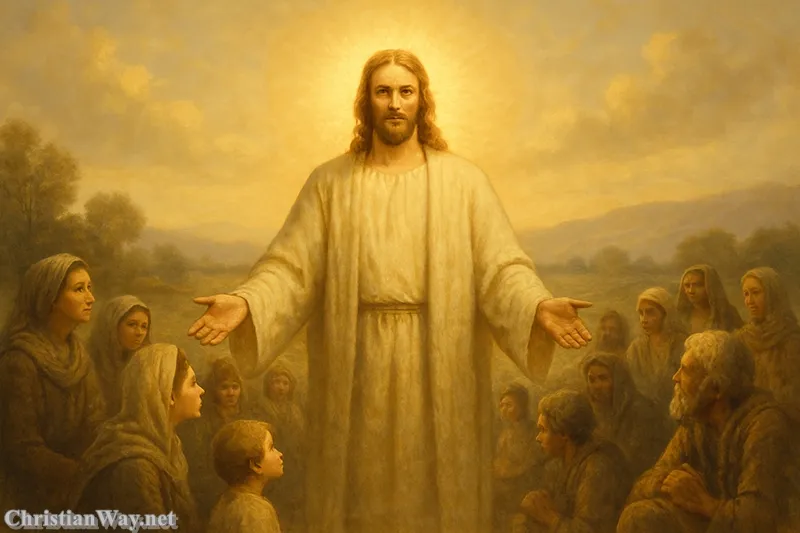
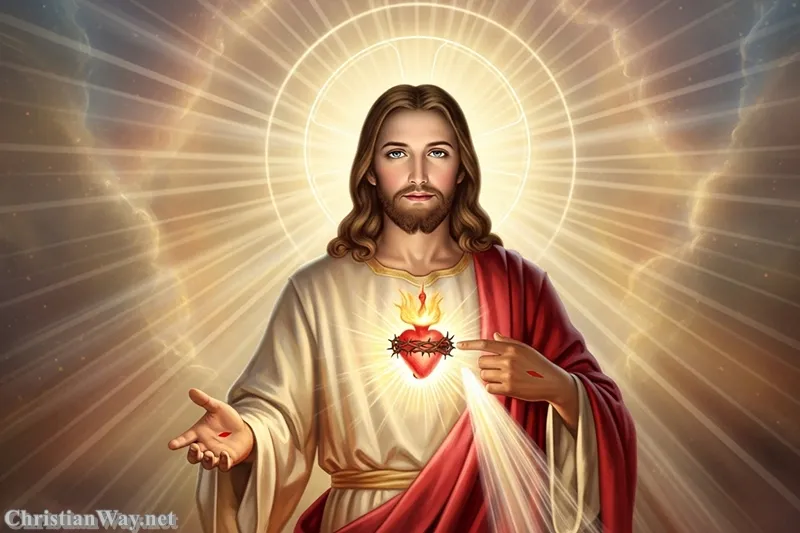
At the center of this story stands Jesus Christ. Christians believe that in Him, God’s Word became flesh. Jesus did not come simply to establish another religious movement or to give humanity a few new moral teachings. He came to reveal the Father’s heart, to forgive sins, to heal the wounded, to overcome death, and to establish the New Covenant promised through the prophets. His life, death, resurrection, and gift of the Holy Spirit became the dawn of Christianity.
To understand the origin of Christianity is to understand that Christian faith was born from a living encounter with Jesus. It began when ordinary men and women heard Him speak, saw His mercy, watched Him suffer, encountered Him risen from the dead, and received courage through the Holy Spirit to proclaim His name. The Christian Church did not arise because people wished to preserve an inspiring memory. It arose because they believed that Christ was alive.
This is why the beginning of Christianity still matters today. The Gospel is not only about a distant past. It is about the God who continues to seek people in every generation. It is about Christ meeting us in our fears, our sins, our loneliness, and our longing for a new beginning. The same covenant of love that opened before the disciples still reaches toward every searching heart.
Christianity Was Born Within God’s Covenant with Israel
The story of Christianity cannot be understood apart from the story of Israel. Christianity did not appear as though God had suddenly begun something unrelated to everything that came before. Jesus was born into the Jewish people. He prayed the Psalms, read the Scriptures of Israel, worshiped in the synagogue, celebrated the feasts, and spoke in the language of the covenant God had made with His people.
The Old Testament tells the story of a God who calls, rescues, forgives, guides, and remains faithful. God calls Abraham and promises that through his descendants all nations of the earth will be blessed. God delivers Israel from slavery in Egypt and makes covenant with them through Moses. God gives His commandments not as a burden meant to crush His people, but as a path of life, justice, worship, and love.
Again and again, the people of Israel struggle to remain faithful. They know seasons of obedience and seasons of wandering. They endure war, exile, division, grief, and uncertainty. Yet through every generation, God continues to speak through the prophets. He calls His people back from injustice, idolatry, violence, and spiritual forgetfulness. He reminds them that worship without mercy is empty, that sacrifice without justice is hollow, and that love for God must become love for neighbor.
The Promise of a New Covenant
Among the prophets, Jeremiah speaks with particular tenderness about a future promise of God. At a time when the people had known deep sorrow and exile, the Lord declared:
“Behold, the days come, saith the Lord, that I will make a new covenant with the house of Israel, and with the house of Judah… I will put my law in their inward parts, and write it in their hearts; and will be their God, and they shall be my people.”
— Jeremiah 31:31, 33
These words are important for understanding Christianity. God promises not merely to give His people more instructions from outside themselves. He promises to write His law upon their hearts. He promises a relationship shaped not only by outward observance, but by inward renewal. The New Covenant would be a covenant of forgiveness, communion, and transformed lives.
Christians believe that this promise is fulfilled in Jesus Christ. Yet this fulfillment should never be understood as contempt for the Jewish people or rejection of the Old Testament. The God who speaks through the prophets is the God revealed in Christ. The Old Testament is not a forgotten beginning; it is the sacred foundation that prepares the way for the Gospel.
Jesus Himself said, “Think not that I am come to destroy the law, or the prophets: I am not come to destroy, but to fulfil” (Matthew 5:17). In Christ, God’s promises are not erased. They reach their deepest purpose. The longing for forgiveness, righteousness, peace, and communion with God finds its fulfillment in the One who comes as the Messiah.
The World into Which Jesus Came
The origin of Christianity took place in a world that was both deeply religious and deeply wounded. Judea in the first century lived under Roman rule. Many people longed for political freedom. Others waited for a Messiah who would restore Israel. Some hoped for a king, some for a prophet, some for a priestly reformer, and some for a deliverer who would overthrow oppression.
There were also many spiritual voices and communities. The Pharisees emphasized faithfulness to the Law and the traditions of Israel. The Sadducees were connected with the priestly leadership of the Temple. The Essenes sought purity and separation from what they saw as a corrupt world. Zealots longed for resistance against Roman power. Ordinary people, meanwhile, carried the burdens familiar to every generation: work, illness, debt, grief, family responsibilities, fear, and hope.
Into this world came Jesus of Nazareth. He was not born into wealth or worldly influence. He entered human life in humility. He grew up in a family, worked with His hands, lived among ordinary people, and knew the realities of hunger, weariness, sorrow, friendship, rejection, and tears.
The Gospels present Jesus as both deeply rooted in the faith of Israel and astonishingly free in His love. He speaks with authority, yet He welcomes those whom others have dismissed. He honors the Law, yet He reveals that its true heart is mercy. He calls people to repentance, yet He eats with sinners. He teaches holiness, yet He touches those considered unclean. He speaks of the Kingdom of God not as distant political power, but as the saving reign of God breaking into human lives.
The Kingdom of God Draws Near
At the beginning of His public ministry, Jesus announces, “The time is fulfilled, and the kingdom of God is at hand: repent ye, and believe the gospel” (Mark 1:15). These words become a doorway into Christianity itself.
The Kingdom of God is not simply a place somewhere beyond the clouds. It is the reign of God’s love, truth, justice, and mercy. Wherever Christ heals, forgives, restores, and sets people free, the Kingdom becomes visible. Wherever people turn away from sin and learn to love, the Kingdom takes root.
Jesus heals the sick, restores sight to the blind, comforts the grieving, and welcomes children. He speaks to a Samaritan woman beside a well, though others might have ignored her. He calls Zacchaeus, a tax collector, down from a tree and enters his home. He forgives the woman caught in sin and calls her into a new life. He touches lepers and restores them to community.
These actions reveal that Christianity begins in the compassion of Christ. The Gospel is not primarily a message for the strong, successful, or socially admired. It is good news for those who know they need mercy. It is for the weary, the guilty, the lonely, the wounded, and the searching.
Jesus Christ Reveals the Heart of God
The origin of Christianity cannot be separated from the person of Jesus. His teaching matters deeply, but Christianity is not built only upon His teachings. His miracles reveal God’s compassion, but Christianity is not only a story of miracles. His example inspires believers, but Christianity is more than an invitation to imitate a good person.
Christians believe that Jesus reveals God Himself. The Gospel of John begins with these words:
“In the beginning was the Word, and the Word was with God, and the Word was God… And the Word was made flesh, and dwelt among us.”
— John 1:1, 14
This is the mystery at the center of Christian faith. Jesus is not merely one prophet among others. Christians confess Him as the eternal Word of God made flesh. In Him, God enters the world He created. He does not stand far away from human suffering. He comes close enough to feel hunger, tears, rejection, and death.
When Jesus looks upon the crowd with compassion, Christians see the compassion of God. When Jesus forgives the sinner, they see the mercy of God. When Jesus touches the outcast, they see that no human being is beyond God’s love. When Jesus weeps at the tomb of Lazarus, they see that God is not indifferent to grief.
Love Is the Center of Christ’s Teaching
Jesus teaches that the greatest commandment is to love God with all the heart, soul, mind, and strength, and to love one’s neighbor as oneself. This command is not a small addition to religion. It is the heart of the Christian life.
He tells the parable of the Good Samaritan, showing that neighborly love crosses boundaries of ethnicity, status, and religious hostility. He teaches His followers to forgive not only once, but again and again. He blesses the poor in spirit, the meek, the merciful, the peacemakers, and those who hunger for righteousness. He tells His disciples to love even their enemies and pray for those who persecute them.
Such teaching remains difficult because it reaches into the deepest places of the human heart. It asks us to examine the anger we hide, the pride we protect, the resentments we carry, and the ways we treat people who cannot give us anything in return. Christianity is not meant to become a badge of superiority. It is meant to make people more humble, more merciful, more truthful, and more like Christ.
Jesus does not merely tell people to love. He shows them what love looks like. He gives time to those who are overlooked. He receives those who come with tears. He defends the dignity of the weak. He speaks truth without cruelty. He calls people away from sin, not to shame them, but to set them free.
The Cross Is the Heart of the New Covenant
The path of Jesus leads toward Jerusalem, where His ministry reaches its deepest and most painful moment. He is betrayed by one of His disciples, arrested, questioned, mocked, condemned, and crucified. The cross is not an accident at the edge of the Gospel story. It stands at the center of Christianity because it reveals the depth of God’s love.
On the night before His death, Jesus gathers with His disciples for a final meal. He takes bread, gives thanks, breaks it, and gives it to them. Then He takes the cup and says, “This cup is the new testament in my blood, which is shed for you” (Luke 22:20).
These words reveal that Jesus understands His coming death as the establishment of the New Covenant. Through His self-giving love, He opens a way for humanity to be reconciled with God. The covenant promised by the prophets is now fulfilled in the blood of Christ.
Sin is more than individual wrongdoing. It is the deep rupture that enters human life whenever we turn away from God’s love. It appears in selfishness, greed, injustice, violence, dishonesty, hatred, and indifference to the suffering of others. It wounds our relationship with God, with one another, and even with our own hearts.
At the cross, Jesus enters this brokenness. He does not answer betrayal with betrayal. He does not answer violence with violence. He does not answer hatred with hatred. Instead, He prays, “Father, forgive them; for they know not what they do” (Luke 23:34).
Redemption Through Self-Giving Love
Christians speak of the cross as redemption. To redeem means to rescue, restore, and set free. Humanity cannot heal itself simply by trying harder or becoming more respectable. We need grace. We need forgiveness. We need a love stronger than our own weakness.
Saint Paul writes, “But God commendeth his love toward us, in that, while we were yet sinners, Christ died for us” (Romans 5:8). These words are full of comfort. Christ did not wait until humanity had become worthy before loving humanity. He loved us in our need. He loved us in our failure. He loved us while we were still far from home.
The cross reveals that God’s mercy is not shallow. It enters the darkest places. It reaches those burdened by guilt. It speaks hope to those who believe their past has already defined their future. It tells the fearful heart that no failure is beyond the reach of sincere repentance and divine grace.
This does not mean that sin is unimportant. Sin wounds love and brings real consequences. But the Gospel tells us that sin is not the final word. The final word belongs to Christ, whose mercy is deeper than our guilt and whose resurrection is stronger than death.
The Resurrection Becomes the Dawn of Christian Faith
Without the resurrection, Christianity would not exist as Christians know it. The disciples may have remembered Jesus as a wise teacher, a brave prophet, or a tragically executed leader. But Christianity was born because the first followers of Jesus came to believe that He had truly risen from the dead.
The Gospels tell of women arriving at the tomb in sorrow, only to find it empty. They tell of disciples overwhelmed by fear, grief, and confusion. They tell of the risen Jesus appearing to Mary Magdalene, to Peter, to the disciples gathered behind locked doors, to Thomas in his doubt, and to others who had known Him during His earthly ministry.
The resurrection is not simply a happy ending after a sad event. It is the beginning of a new creation. It is God’s declaration that death does not have the final word. It is the promise that sin, suffering, and despair are real, but they are not ultimate.
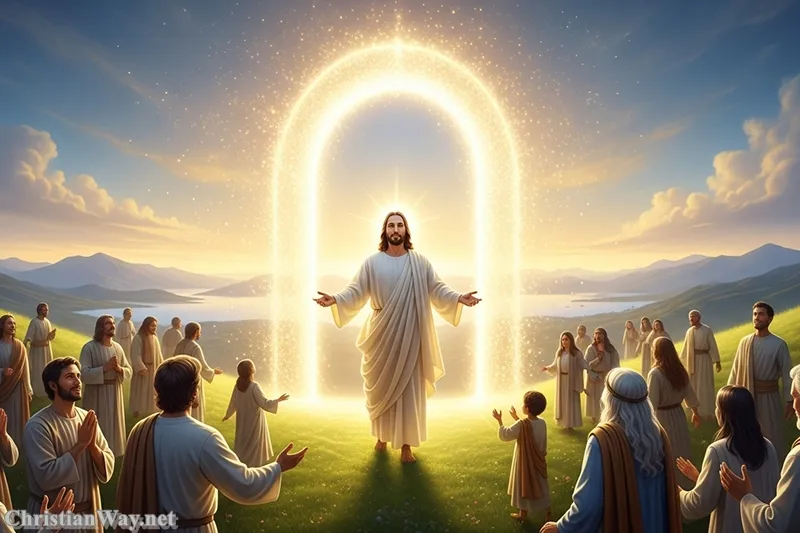
When Jesus appears to His disciples after the resurrection, He says, “Peace be unto you” (John 20:19). This greeting is deeply moving because the disciples had failed Him. They had fled when He was arrested. Peter had denied Him. They had hidden in fear. Yet the risen Christ does not first come with accusation. He comes with peace.
Christ Meets Us Behind Our Locked Doors
There are many moments when people feel like the disciples behind closed doors. We may carry shame over something we have done. We may fear the future. We may grieve someone we love. We may feel uncertain about our faith. We may believe that we have failed too deeply to begin again.
The resurrection tells us that Christ comes even into such places. He comes into the room of fear. He comes into the silence of grief. He comes into the heart that is unsure whether it can still hope. He does not always remove every difficulty at once, but He brings His presence. He speaks peace.
Saint Paul writes, “Therefore if any man be in Christ, he is a new creature: old things are passed away; behold, all things are become new” (2 Corinthians 5:17). This does not mean that a Christian instantly forgets the past or never struggles again. It means the past no longer has absolute power. In Christ, forgiveness becomes possible. Healing becomes possible. A new beginning becomes possible.
The resurrection gave courage to the first disciples. Those who had been afraid began to proclaim Christ openly. Those who had doubted began to bear witness. Those who had hidden behind locked doors became missionaries of hope.
Pentecost and the Birth of the Church
After His resurrection, Jesus promises His disciples that they will receive power from the Holy Spirit. He tells them not to rely only on their own strength. They are to wait, pray, and trust that God will equip them for the work ahead.
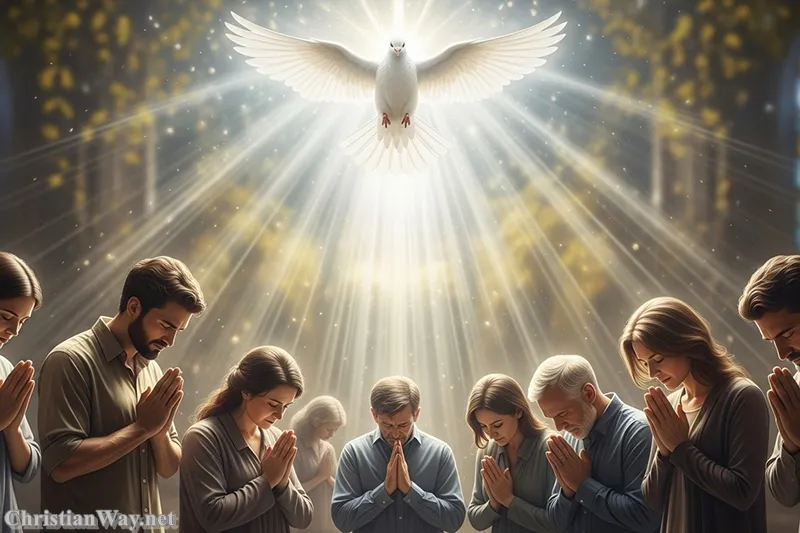
The Book of Acts describes the day of Pentecost, when the disciples are gathered together in prayer. The Holy Spirit comes upon them like wind and fire. They begin to speak, and people from many nations hear the message of God in their own languages.
Pentecost is often called the birth of the Church because it is the moment when the disciples move from fear into witness. The Church is not born from human confidence or careful planning. It is born from the power of the Holy Spirit. The same disciples who had struggled to understand Jesus now proclaim His death and resurrection with courage.
The miracle of Pentecost also reveals something beautiful about Christianity from its earliest days. The Gospel is not meant for one people, language, or nation alone. It is for the whole world. God speaks to human beings in the languages of their lives. He gathers people across boundaries that sin, pride, fear, and history have created.
A New Community of Grace
The earliest Christian community devoted itself to “the apostles’ doctrine and fellowship, and in breaking of bread, and in prayers” (Acts 2:42). This simple description remains a beautiful picture of Christian life.
The first Christians learned from the teaching of the apostles. They gathered for prayer. They broke bread together in remembrance of Christ. They cared for those in need. They shared their possessions, welcomed new believers, and sought to live as one body.
The Church was not perfect. The New Testament itself tells of disagreements, misunderstandings, fear, hypocrisy, and moments when believers struggled to remain faithful. Yet the Church was alive because Christ was alive. It was formed by grace, not by the illusion that its members had already become holy.
This remains true today. The Church is not a place only for people who believe they have no weakness. It is a people gathered around Christ, learning to receive mercy and offer mercy. It is a family of believers called to worship, serve, forgive, speak truth, and carry one another’s burdens.
The Name “Christian” and the Spread of the Gospel
The followers of Jesus were first known by several names. They were called disciples, believers, brothers and sisters, and followers of “the Way.” The Book of Acts tells us that “the disciples were called Christians first in Antioch” (Acts 11:26).
The name “Christian” means belonging to Christ. It is not simply a cultural label or family inheritance. At its deepest, it means that a person seeks to live under the love and lordship of Jesus Christ.
From Jerusalem, the Gospel began to spread across the Roman world. The apostles and early missionaries traveled through Judea, Samaria, Syria, Asia Minor, Greece, Rome, and beyond. Saint Paul became one of the most influential voices in this mission. Though he had once persecuted Christians, he encountered the risen Christ and became a tireless preacher of the Gospel.
The early Church faced many challenges. Christians were sometimes misunderstood, mocked, excluded, or persecuted. They lived in a world filled with many gods, powerful empires, social divisions, and deep inequality. Yet they continued to proclaim that Jesus Christ is Lord.
Their message was radical because it announced a different kind of kingdom. It did not place ultimate hope in Caesar, wealth, military power, social status, or human achievement. It placed hope in Christ, who had conquered death through love.
The Gospel Crosses Every Barrier
One of the most remarkable aspects of the origin of Christianity is the way the Gospel crossed boundaries. Jews and Gentiles, rich and poor, men and women, slaves and free people were invited into the same community of faith.
Saint Paul writes, “There is neither Jew nor Greek, there is neither bond nor free, there is neither male nor female: for ye are all one in Christ Jesus” (Galatians 3:28). These words do not deny the real differences among people. Instead, they proclaim that no human category is greater than the grace of God. In Christ, every person is invited into the same family.
This truth remains important in every generation. Christianity is betrayed whenever people use faith to justify hatred, racism, contempt, or exclusion. The Gospel calls believers to see every person as someone made in the image of God and loved by Christ.
The early Christians did not always live this calling perfectly. No generation has done so. Yet the Gospel continued to challenge them, calling them away from pride and toward the humility of Christ.
The New Testament Preserves the Witness of the First Christians
As the Christian faith spread, the teachings, memories, letters, and testimonies of the apostles were shared among churches. The New Testament emerged from the living faith of these communities. The Gospels preserved the story of Jesus. The letters guided believers in matters of worship, doctrine, forgiveness, suffering, holiness, and mission. The Book of Acts remembered the spread of the Gospel through the power of the Holy Spirit.
These writings were not created simply to preserve historical information. They were written so that people might believe, remain faithful, and grow in love. The Gospel of John says, “These are written, that ye might believe that Jesus is the Christ, the Son of God; and that believing ye might have life through his name” (John 20:31).
The New Testament gives Christians a living foundation for faith. It calls them again and again to Jesus: to His words, His mercy, His cross, His resurrection, and His promise to be with His people.
Christians may read Scripture in different ways according to their traditions. Catholic, Orthodox, Anglican, Protestant, Evangelical, Pentecostal, and other Christian communities bring different emphases, practices, and histories to the Bible. Yet all Christians are invited to receive the New Testament as a sacred witness to the saving work of Christ.
Scripture Is Meant to Lead Us to Encounter
It is possible to read the Bible only as a collection of religious information. Yet Scripture is meant to do more than inform the mind. It is meant to bring the heart into conversation with God.
When we read the Gospel stories, we are invited to see ourselves in the people who came to Jesus. At times, we may be like Peter: eager, sincere, but afraid. At times, we may be like Thomas: wanting to believe but struggling with doubt. At times, we may be like the prodigal son: far from home and ashamed to return. At times, we may be like Mary Magdalene: grieving deeply until the risen Christ calls us by name.
The Bible becomes alive when we allow its words to examine us, comfort us, correct us, and lead us toward Christ. It becomes a lamp for our path when we bring our actual lives before God: our homes, our work, our fears, our relationships, our regrets, and our hopes.
Christianity Is a Faith for Real Human Life
The origin of Christianity is not only a story about ancient history. It is the beginning of a faith that still meets people in ordinary life. The Gospel reaches into the places where human beings struggle: family conflict, financial pressure, illness, loneliness, temptation, disappointment, grief, fear, and the quiet ache of wondering whether life truly has meaning.
Christ did not come to remove people from the world. He came to bring the light of God into the world. Christianity does not ask believers to pretend that suffering is unreal. Jesus Himself wept at the tomb of Lazarus. He knew exhaustion. He knew betrayal. He knew the pain of being misunderstood. He knew the darkness of the cross.
Because of this, Christians can bring every sorrow to Him. When someone is grieving, Christ is near. When someone feels ashamed, Christ offers forgiveness. When someone feels unseen, Christ calls them by name. When someone feels overwhelmed, Christ says, “Come unto me, all ye that labour and are heavy laden, and I will give you rest” (Matthew 11:28).
A Faith That Becomes Love
Christianity becomes visible not only in what believers say, but in how they live. Jesus says, “By this shall all men know that ye are my disciples, if ye have love one to another” (John 13:35).
This love must take practical form. It appears when we forgive someone who has hurt us. It appears when we care for the poor and the lonely. It appears when parents patiently care for children, when friends remain present in times of grief, when a worker chooses honesty, and when a believer speaks truth without cruelty.
The Christian life does not require every person to do dramatic things. It calls each person to faithfulness where they are. A small act of kindness can become a witness to Christ. A prayer whispered in the middle of anxiety can become an opening for grace. A willingness to admit wrongdoing can begin reconciliation. A patient word can bring peace into a troubled home.
The New Covenant is written upon hearts so that love may become visible in daily life.
The Origin of Christianity Continues in Every Heart That Turns to Christ
The origin of Christianity took place in the ministry of Jesus, the cross, the resurrection, and Pentecost. Yet in another sense, Christianity begins anew whenever a person turns toward Christ in faith.
It begins when someone who has carried guilt hears that forgiveness is possible. It begins when a grieving person hears that death is not the final word. It begins when someone who feels empty discovers that God’s love is not based upon success. It begins when a young person asks honest questions about faith. It begins when an older person, after many years of struggle, finally rests in the mercy of Christ.
The Gospel is not an invitation to escape our humanity. It is an invitation to become truly human in the love of God. Christ does not ask us to hide our weakness from Him. He asks us to bring it to Him. He does not demand that we save ourselves before coming near. He comes near because we cannot save ourselves.
This is why Christianity remains a faith of hope. The world may change. Nations may rise and fall. Cultures may become distracted, divided, or weary. But the love revealed in Christ does not grow old. The cross still speaks forgiveness. The resurrection still speaks hope. The Holy Spirit still gives courage.
Reflect and Pray
Dear friend, the origin of Christianity is the dawn of God’s New Covenant in Jesus Christ. It is the story of a God who does not abandon His people. It is the story of a Savior who enters human suffering, carries sin upon the cross, rises from the dead, and gathers a people into a new life of grace.
Perhaps you have known the Christian faith for many years. Perhaps you are only beginning to ask what Christianity truly means. Perhaps you carry questions, disappointments, wounds, or a longing you cannot fully name. Bring these things to Christ. He is not distant from those who seek Him. He meets people with truth, mercy, and patient love.
Let us pray:
Lord Jesus Christ, You are the fulfillment of God’s promise and the light of the world. Draw us close to Your heart. Forgive us where we have wandered, heal us where we are wounded, and give us courage to trust in Your mercy. Teach us to live as people of Your New Covenant: faithful in truth, gentle in love, and hopeful in every season. May Your resurrection light guide our steps, and may Your peace remain within us always. Amen.
— Fr. John Matthew