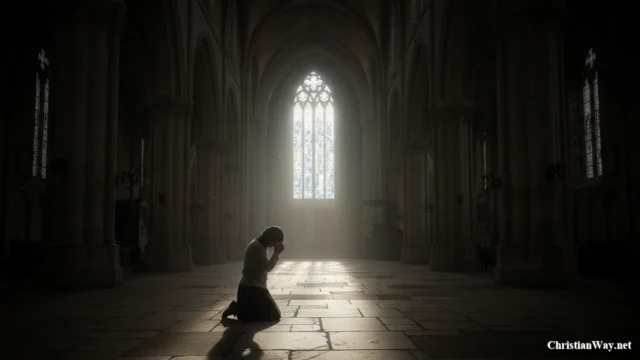
A reflection on the sacred calling of priests who serve as humble instruments of God’s grace and love in the world.
Dear friends in Christ,
Every generation looks for light—someone to speak with wisdom, to stand before the mystery of life and death, to help us make sense of the divine whisper that calls within. In every age, God has raised up men to serve His people in this way—priests who, though human and frail, become living bridges between heaven and earth. They are not men set apart for privilege, but for service; not to be admired from afar, but to walk among us as shepherds of souls, servants of the Word, and stewards of the sacred mysteries.
The priesthood, in all its forms throughout the Christian world, remains one of the most beautiful and demanding vocations. It is a calling not born of ambition, but of love—a love that desires to give everything so that others may find Christ. To be a priest is to stand daily before God and His people, offering prayer, forgiveness, and the Eucharist, not as one who possesses holiness, but as one entrusted with it for the sake of others.
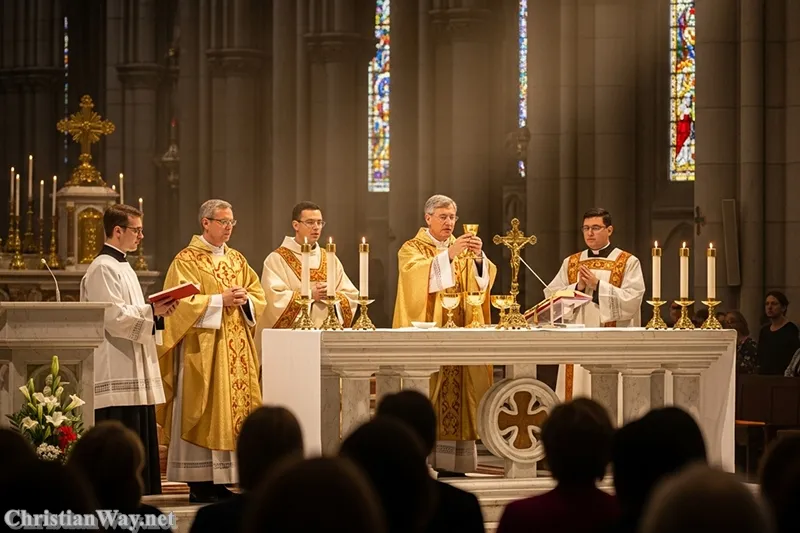
In this reflection, we will look more deeply into the mystery of the priesthood: its biblical roots, its spiritual meaning, its role in the life of the Church, and how the heart of every priest reveals the heart of Christ Himself—the Eternal High Priest.
The Priesthood in God’s Plan
From the earliest pages of Scripture, the idea of priesthood is woven into God’s relationship with humanity. A priest is, by nature, a mediator—one who stands between God and His people, offering sacrifices of praise, thanksgiving, and atonement.
In the Old Testament, priests were chosen from the tribe of Levi, set apart to serve in the Temple. Their work was sacred: offering sacrifices, maintaining purity, and interceding for the people. Yet these ancient priests pointed to something greater—the perfect priesthood that would one day be fulfilled in Jesus Christ.
As the Letter to the Hebrews proclaims:
“We have such a high priest, one who is seated at the right hand of the throne of the Majesty in heaven” (Hebrews 8:1).
Christ did not offer the blood of animals, but His own life. He became the bridge between heaven and earth, reconciling humanity with the Father. Every priest in the Church today participates in that same eternal priesthood—not as a replacement for Christ, but as His visible instrument in the world.
The Priest as an Icon of Christ
To understand the priest is to look not first at his human qualities, but at the One whom he represents. When the priest speaks the words of absolution—“I absolve you from your sins”—it is Christ who forgives. When he says, “This is My Body,” it is Christ who offers Himself anew in the mystery of the Eucharist.
A priest, therefore, is not simply a teacher or moral leader. He is a sacramental presence of Christ the Shepherd. Through his hands, the grace of God flows into the lives of the faithful. Through his words, the Gospel is proclaimed. Through his life, imperfect though it may be, the mercy of God is made visible.
In the Catholic and Orthodox traditions, this is understood through the concept of in persona Christi—the priest acts “in the person of Christ.” In Protestant and Anglican communities, though the theological understanding may differ, the pastoral heart remains the same: a priest is a servant of the Word, a shepherd of the flock, and a minister of God’s grace.
The priest stands at the altar, but he also walks with the poor, comforts the dying, counsels the troubled, and rejoices with those who rejoice. His vocation is not a role but a relationship—a lifelong covenant with God and His people.
Called to Serve, Not to Be Served
Christ gave the clearest model of priesthood at the Last Supper, when He washed the feet of His disciples.
“If I, your Lord and Teacher, have washed your feet, you also ought to wash one another’s feet” (John 13:14).
Here we see the essence of every priestly calling: humble service. The priest is not meant to dominate but to serve, not to seek honor but to lift others up. His power lies not in authority but in compassion.
In every tradition—whether Catholic, Orthodox, Anglican, or Protestant—the faithful look to their pastors and priests for guidance, not because they are perfect, but because they are willing to love with the heart of Christ. The priest’s strength is found in prayer, his joy in sacrifice, his fulfillment in seeing others come closer to God.
The Priest’s Inner Life
Behind every public ministry lies a private sanctuary—the priest’s own interior relationship with God. Without prayer, his ministry becomes hollow; without humility, his service becomes self-centered. A priest must live what he preaches: a life of daily conversion, gratitude, and surrender.
In the stillness of early morning, before the altar or in the quiet of his room, he carries the world in his heart: the sick, the sorrowful, the lost, and the hopeful. He intercedes for them not because he is better than they are, but because he has promised to stand before God on their behalf.
Saint John Vianney, the patron saint of parish priests, once said:
“The priesthood is the love of the heart of Jesus.”
This love is not sentimental. It is costly. It demands total self-giving—days spent in service, nights spent in prayer, years of quiet endurance when results seem invisible. Yet through it all, grace flows.
The Priest and the Sacraments
The sacraments are the heartbeat of the priestly ministry. Through them, God continues His work of salvation in the world.
When a priest baptizes, new life begins.
When he absolves, sins are forgiven.
When he anoints the sick, hope is renewed.
When he celebrates the Eucharist, heaven touches earth.
The hands of a priest are consecrated not for prestige, but for service—to lift the Host, to bless, to anoint, to comfort. Every sacrament he celebrates is an act of love: God reaching out through human touch.
The Priest in the Modern World
In our time, priests face new challenges. The world often misunderstands them, and scandals have wounded the Church’s witness. Yet in every generation, there remain countless priests who quietly serve with holiness and faithfulness—visiting hospitals, teaching children, listening to confessions, feeding the hungry, and bringing the light of Christ into hidden corners of the world.
The modern priest must be both a man of prayer and a man of compassion. He must understand the complexities of human life—family struggles, social injustice, doubt, and loneliness—while always pointing toward the hope that is found in Christ alone.
He lives not above the people, but among them. His calling is not to escape the world, but to sanctify it—to bring grace where there is pain, to bring presence where there is absence.
Priests Across Christian Traditions
Though Christian communities differ in theology and structure, the heart of priestly service remains universal.
- In the Catholic Church, the priesthood is sacramental, a continuation of Christ’s priesthood made visible in the Mass and the sacraments.
- In the Orthodox Church, the priest (or presbyter) is seen as a father of the community, deeply rooted in the liturgy and the mystery of the divine presence.
- In the Anglican tradition, priests stand in apostolic succession, combining the pastoral care of Protestant communities with the sacramental life of Catholicism.
- In Protestant churches, though the ordained ministry is often understood differently, pastors and ministers embody the same priestly heart—preaching the Word and caring for souls.
What unites all is the same Spirit, the same Christ who calls and sends, the same desire to serve God’s people with love.
The Cross and the Priest
Every priest must walk the way of the Cross. He bears the joys and sorrows of many, often unseen and unthanked. His greatest strength lies not in success, but in fidelity—in staying with Christ through the long night of faith.
Just as Christ offered Himself once for all, the priest offers his life daily: his time, his heart, his future. Each Mass he celebrates is both a memorial of the Cross and a mirror of his own life poured out in service.
It is in suffering that the priest becomes most Christ-like—not in eloquence or accomplishment, but in the quiet endurance of love.
The Priesthood and the People of God
A priest is never a priest alone. He exists for the Church—the Body of Christ. Without the prayers and faith of the people, his ministry cannot flourish. Likewise, without the priest, the people are deprived of the sacramental presence that sustains their spiritual life.
This relationship is one of mutual love and intercession. The people pray for their priest, and the priest prays for his people. Together they form a living communion, each part essential to the other.
As Saint Paul wrote:
“For we are God’s fellow workers; you are God’s field, God’s building” (1 Corinthians 3:9).
Reflect and Pray
Dear friends, as we reflect on the gift of the priesthood, let us give thanks to God for those who have dedicated their lives to serving Him and His Church. Let us pray for our priests, that they may remain faithful, joyful, and holy in their calling.
May every priest, in every Church and community, remember that he is not alone—that Christ Himself walks beside him. And may we, the people of God, recognize in their ministry the living presence of Jesus, the Eternal High Priest, who continues to love and save His people through human hands.
Let us close with a prayer:
Lord Jesus Christ,
You chose men from among us to be signs of Your presence in the world.
Strengthen our priests with Your grace,
fill them with the fire of Your love,
and keep them faithful to the work You have entrusted to them.
May their lives reflect Your compassion,
and may they always find joy in serving Your people.
Through You, who live and reign forever and ever. Amen.
— Fr. John Matthew, for Christian Way
Deeper Biblical, Historical, and Pastoral Context
The subject of Priests: Servants of God and Stewards of His Mysteries deserves more than a brief devotional summary. It touches Scripture, the historic confession of the Church, and the way Christians actually pray and live. The following sections deepen the article without changing its original focus. They also distinguish the shared inheritance of historic Christianity from questions on which Catholic, Orthodox, Anglican, and Protestant traditions use different theological language.
Priesthood Begins With the Priesthood of Christ
The New Testament presents Jesus as the definitive high priest, especially in Hebrews. Catholic, Orthodox, and Anglican traditions therefore understand ordained priestly ministry as derivative and ministerial rather than a rival to Christ. The priest serves because Christ is the source; no Christian minister possesses an independent sacred power.
For readers, this distinction matters because priesthood begins with the priesthood of christ can easily be reduced to a slogan. In a fuller Christian reading, doctrine, Scripture, worship, and daily discipleship interpret one another. The subject of Priests: Servants of God and Stewards of His Mysteries should therefore be approached with both conviction and humility: conviction where historic Christian teaching is clear, and humility where traditions use different language or draw different conclusions. Careful reading also prevents a pastoral mistake—turning a theological truth into a weapon against people whose questions are sincere.
The Common Priesthood of All the Baptized
Sacramental traditions also distinguish ordained ministry from the priestly vocation of the whole people of God. Christians offer prayer, praise, service, and their lives to God. Ordained priests serve this baptismal people through preaching, sacramental ministry, pastoral care, and leadership rather than replacing the vocation of lay believers.
This theme becomes clearer when individual verses are read within the whole biblical story rather than detached from their context. Christians have always interpreted Scripture in communities of worship, teaching, and prayer, even though those communities disagree about the authority of later traditions. For that reason, a responsible treatment of Priests: Servants of God and Stewards of His Mysteries names what is broadly shared, identifies real confessional differences, and avoids claiming more certainty than the sources support. Such precision is not a lack of faith; it is one way of honoring truth.
Why Some Protestants Avoid the Title Priest
Many Protestant churches prefer pastor, minister, elder, or presbyter because they emphasize Christ’s unique priesthood and the priesthood of all believers. Anglicans and some Lutherans may still use priest, while others reject the term. The disagreement reflects different readings of ministry and sacramental theology, not a simple difference between churches that value ministers and churches that do not.
Historically, Christians have expressed this point through creeds, catechisms, sermons, liturgies, and pastoral practice. Those forms are not interchangeable, and they do not carry the same authority in every tradition. Still, they show that the issue was never merely academic. Beliefs about why some protestants avoid the title priest shape how Christians pray, preach, organize communities, respond to suffering, and understand holiness. The practical question is always whether teaching leads more deeply into faith in Christ and love of neighbor.
Sacraments, Preaching, and Pastoral Care
In Catholic and Orthodox life, priests normally preside at Eucharistic worship and administer several sacraments under the authority of their bishop. Anglican priests likewise serve Word and sacrament according to Anglican order. Whatever the tradition, preaching, visitation, teaching, spiritual counsel, and care for the suffering are essential tests of faithful ministry.
A useful safeguard is to distinguish the core claim from popular exaggerations. Religious language can become imprecise when devotion, controversy, or internet debate compresses a complex doctrine into a few words. A stronger explanation asks what Scripture actually says, how major Christian traditions have received it, and what conclusions do or do not follow. Applied to Priests: Servants of God and Stewards of His Mysteries, this approach protects both theological fidelity and pastoral charity.
Celibacy, Marriage, and Different Disciplines
Christian churches do not share one discipline regarding clerical marriage. Latin Catholic priests are ordinarily celibate, with limited exceptions; Eastern Catholic and Orthodox churches may ordain married men under their own disciplines; Anglican clergy may marry. These are disciplinary differences and should not be confused with the deeper question of what ordained ministry means.
Holiness, Safeguarding, and Accountability
The sacred character of ministry can never excuse secrecy or abuse. Priests and church institutions require transparent safeguarding, competent supervision, financial accountability, and willingness to cooperate with legitimate civil authorities. Spiritual authority is credible only when it follows Christ’s pattern of truth, service, and protection of the vulnerable.
In daily Christian life, the truth of this teaching is tested by its fruits. A doctrine may be stated correctly and still be lived badly if it produces pride, fear, contempt, or indifference to suffering. The New Testament repeatedly joins sound teaching with love, holiness, patience, and service. Reflection on Priests: Servants of God and Stewards of His Mysteries therefore reaches completion only when it helps believers worship God more faithfully and treat other people with greater truthfulness and mercy.
Bringing the Teaching Back to Christ
Common Questions
Why does Priests: Servants of God and Stewards of His Mysteries matter for Christian faith?
Do all Christian traditions explain this subject in the same way?
How should a Christian study Priests: Servants of God and Stewards of His Mysteries responsibly?
A Short Rule for Reading This Topic Well
When studying Priests: Servants of God and Stewards of His Mysteries, keep three habits together. First, let clear biblical passages interpret more difficult ones rather than building a conclusion on a single phrase. Second, distinguish what a church formally teaches from what an individual Christian, preacher, website, or local custom may say. Third, notice the spiritual purpose of the doctrine. Christian teaching is not meant to produce curiosity alone; it should lead toward worship, repentance, faith, hope, and love. These habits are especially useful when a subject has been shaped by centuries of controversy. They allow readers to take differences seriously without turning every disagreement into hostility. They also make room for correction: if a cherished assumption cannot be supported by Scripture, historic sources, or the official teaching of the tradition being described, it should be revised rather than defended for the sake of habit.
Deeper Biblical, Historical, and Pastoral Context
The subject of Priests: Servants of God and Stewards of His Mysteries becomes clearer when its center is stated precisely: Christian priestly ministry across traditions that use the title priest or presbyter. This focus keeps the discussion from drifting into a generic summary of Christianity. It also helps readers distinguish the doctrine, biblical theme, or spiritual practice named here from neighboring topics that deserve their own treatment.
For Priests: Servants of God and Stewards of His Mysteries, the biblical and historical frame matters because the New Testament language of presbyter and episcopal oversight, early Christian ministry, sacramental theology, preaching, pastoral care, and Eucharistic presidency all belong to the history. Reading those sources in context prevents a single verse, later custom, or denominational slogan from carrying more weight than it can bear. Christian doctrine normally develops by holding several passages and practices together rather than by isolating one phrase.
A necessary guardrail in Priests: Servants of God and Stewards of His Mysteries is this: Catholic, Orthodox, Anglican, and some other churches understand ordained priesthood differently from many Protestant communities that prefer pastor or minister. That distinction is not a minor technicality. It protects the article from a common misunderstanding and helps separate what historic Christianity actually teaches from popular shorthand that may sound familiar but can be misleading.
The wider Christian context of Priests: Servants of God and Stewards of His Mysteries also deserves care. Catholic, Orthodox, Anglican, and Protestant Christians often share central biblical convictions while organizing secondary questions differently. Where a difference genuinely affects this topic, it should be named specifically; where it does not, the common Christian center should remain visible.
The practical consequence of Priests: Servants of God and Stewards of His Mysteries is not simply knowing another definition. A faithful response is to evaluate ministry by fidelity to Christ, Scripture, worship, pastoral care, holiness, accountability, and service rather than clerical status. Doctrine becomes spiritually useful when it forms worship, repentance, courage, mercy, patience, truthfulness, and service rather than remaining detached information.
It is also helpful to ask how Priests: Servants of God and Stewards of His Mysteries relates to the whole biblical story. Creation, covenant, Israel, Christ, the Spirit, the Church, and Christian hope are not separate compartments. Placing this subject inside that larger story prevents exaggeration and shows why the topic matters for salvation, discipleship, worship, or Christian community.
Historical humility strengthens Priests: Servants of God and Stewards of His Mysteries. Scripture, early Christian witnesses, creeds, councils, confessions, liturgical texts, and later devotional traditions do not all carry the same kind of authority in every communion. A careful reader should therefore distinguish direct biblical testimony, broadly shared doctrine, later theological development, local custom, and private devotion instead of treating them as interchangeable.
Finally, Priests: Servants of God and Stewards of His Mysteries should lead back to Christ rather than to religious self-congratulation. The point of deeper understanding is more faithful love of God and neighbor. Where the topic exposes sin, it should invite repentance; where it reveals grace, it should awaken gratitude; where Christians differ, it should encourage truth spoken with charity and a willingness to learn.
A further implication of Priests: Servants of God and Stewards of His Mysteries is that Christian maturity grows through repeated attention rather than a single explanation. Returning to the relevant biblical passages, praying within a trustworthy community, and testing one’s conduct against the teaching can uncover assumptions that a first reading misses. In this specific topic, that patient return helps keep Christian priestly ministry across traditions that use the title priest or presbyter connected with both truth and lived discipleship. Reflection 1 therefore deepens the subject without changing its original question.