Dear friends in Christ,
When people ask about the origin of Catholicism, they are often asking more than a historical question. They may want to know whether the Catholic Church began with Jesus Christ or emerged later as a human institution. They may wonder why Catholics speak of apostles, bishops, sacraments, the Eucharist, Peter, Mary, saints, and the long memory of the Church. They may be searching for a faith that is not merely private, but rooted in something older, deeper, and more enduring than the changing opinions of any one generation.
The Catholic answer begins not with a building in Rome, a council, a political power, or a later human leader. It begins with Jesus Christ.
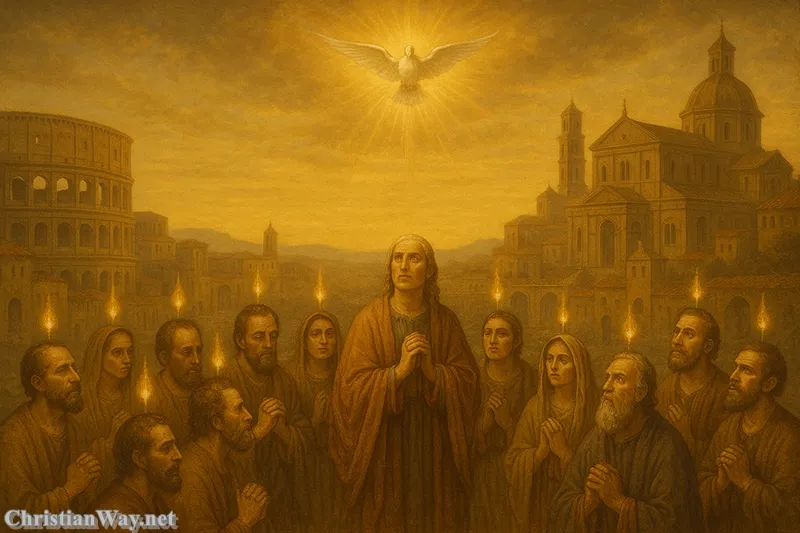
It begins with the Son of God gathering disciples around Himself. It begins with His call to repentance, mercy, faith, and love. It begins with the Twelve whom He chose to be with Him and whom He sent forth to proclaim the Gospel. It begins with the Last Supper, where He gave His Body and Blood. It begins with the Cross, where love gave itself completely. It begins with the Resurrection, where death was conquered. It begins with Pentecost, where the Holy Spirit transformed fearful disciples into a people ready to carry Christ’s name into the world.
To say that the Church was born from the heart of Christ is not merely poetic language. It is a way of confessing that the Church is born from His self-giving love. The Church is not first a human project trying to reach God. It is the fruit of God coming near to humanity in Jesus Christ.
The story of Catholicism is therefore not only about institutions, councils, doctrines, missionaries, or centuries of history. It is the story of a people called by grace. It is the story of sinners who have received mercy, pilgrims who have been given a home, wounded hearts invited into healing, and ordinary men and women asked to become witnesses of Christ in a wounded world.
This does not mean that the Church’s human members have always been faithful. The Church’s history contains holiness and failure, courage and compromise, saints and sinners, moments of mercy and moments when Christians have needed deep repentance. But the failures of Christians do not erase the faithfulness of Christ.
The origin of Catholicism is found in this mystery: Jesus Christ gathers a people to Himself, gives them His life, sends them into the world, and remains with them through the Holy Spirit.
Catholicism Begins With Jesus Christ
The Church Is Not an Idea Before It Is a People
Christianity begins with a person, not a theory.
Jesus does not simply leave behind a set of inspiring teachings for individuals to interpret alone. He gathers people. He calls disciples by name. He eats with them, prays with them, teaches them, corrects them, forgives them, and prepares them for a mission they cannot yet fully understand.
When Jesus calls Simon Peter, Andrew, James, John, Matthew, and the others, He is not creating an audience. He is forming a community.
This matters because the Christian faith is never meant to be only a private spiritual opinion. A person certainly meets Christ personally. Faith must enter the individual heart. Each believer must repent, pray, trust, and respond. Yet Jesus also calls people into communion.
He teaches them to pray, “Our Father.”
He tells them to love one another.
He gives them a shared meal.
He sends them together.
He promises to be present where two or three are gathered in His name.
The Catholic Church understands this visible communion of disciples as part of Christ’s own intention for His Church. Vatican II describes the Church of Christ as commissioned by the risen Lord to Peter and the other apostles, and as continuing in visible form within the Catholic Church under the successor of Peter and bishops in communion with him.
This claim should not be heard as an excuse for pride. It is not a reason for Catholics to imagine themselves superior to other Christians. Rather, it is a call to responsibility. If the Church is truly entrusted with the Gospel, then she must live the Gospel with humility, compassion, truthfulness, and love.
The Church exists not to draw attention to itself, but to draw people toward Jesus Christ.
The Twelve and the Beginning of an Apostolic People
Jesus chooses twelve apostles, a number that echoes the twelve tribes of Israel. This is not accidental. In the life of Christ, God is gathering His people anew, not by excluding others, but by opening the promise to the whole world.
The apostles are not chosen because they are already perfect.
Peter is impulsive and fearful.
Thomas struggles with doubt.
Matthew has a past connected with tax collection.
James and John can be ambitious.
Judas betrays Jesus.
The first leaders of the Church are not presented as flawless heroes. They are ordinary human beings who need grace.
This is one of the great comforts of Catholic faith. The Church is built not upon the perfection of human beings, but upon the faithfulness of Christ.
Jesus teaches the apostles, sends them to preach, gives them authority to serve, and forms them through love. He tells Peter, “Thou art Peter, and upon this rock I will build my church” (Matthew 16:18). Catholics see in these words a particular pastoral role given to Peter, not as a privilege for personal greatness, but as a service to unity and faithfulness.
Jesus does not promise Peter an easy life. Peter will know failure, fear, tears, and repentance. Before he can strengthen others, he must first be restored by mercy.
This is important. In Catholic understanding, authority in the Church is not meant to become domination. It is meant to become service.
Jesus says, “Whosoever will be great among you, let him be your minister” (Matthew 20:26).
The true origin of Catholic ministry is therefore not worldly power. It is Christ washing the feet of His disciples.
The Church Is Born From the Self-Giving Love of Christ
The Last Supper: A New Covenant in His Body and Blood
On the night before He dies, Jesus gathers His disciples for the Last Supper.
This meal is not merely a farewell dinner. It is a sacred act in which Jesus gives Himself to His people. Taking bread, He says, “This is my body which is given for you” (Luke 22:19). Taking the cup, He speaks of His blood, poured out for many.
Catholics believe that in the Eucharist, Christ gives more than a memory. He gives Himself.
The Eucharist becomes the heart of Catholic life because it joins the Church to the sacrifice, love, death, and resurrection of Jesus. Every Mass points back to Calvary and forward to the heavenly banquet where all things will be made new.
The Catholic Church does not understand the Eucharist as a human attempt to reach heaven. It is Christ’s gift to His people.
At the Last Supper, Jesus gives the Church a way to remain close to Him in every generation. Through bread and wine, through prayer and thanksgiving, through the gathering of believers, He continues to nourish His people with His grace.
This is why Catholic worship is deeply communal. No one receives Christ merely as a private possession. The Eucharist gathers believers into one Body.
A person may come to Mass carrying grief, exhaustion, shame, joy, confusion, gratitude, or fear. Yet all stand before the same Lord. The rich and poor, young and old, strong and weak, learned and simple, all come with empty hands.
The Eucharist reminds us that the Church is born from receiving, not from achieving.
The Pierced Side of Christ
The title The Church Born from the Heart of Christ comes from a deeply loved Christian meditation on the Cross.
In John’s Gospel, after Jesus has died, a soldier pierces His side, and blood and water flow out (John 19:34). From the earliest centuries, Christians saw in this moment a sign of the sacramental life of the Church: water recalling Baptism, and blood recalling the Eucharist.
Catholic tradition often speaks of the Church as being born from the pierced side of Christ, just as Eve came forth from the side of Adam in the Book of Genesis. Vatican teaching continues to describe the Church as born from Christ’s self-giving upon the Cross, where His love is poured out for humanity.
This image is not meant to reduce the Church to an institution or a theory. It teaches something tender and profound.
The Church comes from love.
The Church is born where Christ gives Himself.
The Church is sustained not by human achievement, but by mercy.
The Church is called to carry into the world the same love that flows from the wounded heart of Christ.
This is why the Church must never become comfortable with indifference toward suffering. If she comes from the heart of the Crucified One, she must remain close to the poor, the grieving, the forgotten, the wounded, the sinner who longs to return, and the person who feels there is no place left to go.
Whenever the Church forgets mercy, she forgets her own origin.
Pentecost: The Church Receives Breath and Mission
Fearful Disciples Become Witnesses
After the Resurrection, the disciples are still afraid.
They have seen Jesus die. They do not know what the future holds. They gather behind closed doors, uncertain and vulnerable. Yet the risen Christ comes among them and says, “Peace be unto you” (John 20:19).
Then, at Pentecost, the Holy Spirit descends upon the disciples.
The frightened become courageous.
Those who had hidden now speak publicly.
Those who had struggled to understand begin to proclaim the mighty works of God.
The Church is not born because the apostles suddenly become naturally brave. It is born through the gift of the Holy Spirit.
This is an essential part of the origin of Catholicism.
The Church is not only apostolic because she remembers the apostles. She is apostolic because she receives the mission entrusted to them: to proclaim Christ, baptize, teach, serve, forgive sins, care for the poor, and gather people into communion with God.
Pentecost also reveals the universal character of the Church.
People from many nations hear the Gospel in their own languages. The Spirit does not erase human cultures. He speaks within them. The message of Christ is not confined to one tribe, one language, one class, or one region of the world.
This is why Catholicism is called catholic, a word that means universal. The Catechism explains that “catholic” means universal or according to the whole, because Christ is present in His Church and because she is sent to every people, culture, and time.
The universality of Catholicism does not mean uniformity.
A Catholic in Vietnam may pray with customs shaped by Vietnamese family life and culture.
A Catholic in Italy may celebrate the faith with local saints, music, and traditions.
A Catholic in Africa may worship with rhythms, languages, and expressions deeply rooted in local communities.
A Catholic in Latin America may carry a rich devotion to Mary and the saints.
A Catholic in India may live the faith amid ancient spiritual and cultural traditions.
The Gospel does not destroy what is good in a people. It purifies, heals, and fulfills it.
The First Christian Community
Prayer, Teaching, Fellowship, and the Breaking of Bread
The Book of Acts gives a beautiful picture of the early Christian community.
The believers devote themselves to the apostles’ teaching, fellowship, the breaking of bread, and prayer. They care for one another. They share with those in need. They gather around the life of Christ.
This early community is not perfect. The New Testament is honest about conflicts, misunderstandings, questions, and failures. There are disagreements about mission, food, leadership, and the relationship between Jewish and Gentile believers.
But the Church continues because Christ remains at the center.
This is important for Catholics today. The Church has always been made up of human beings who need conversion. The presence of conflict does not mean Christ has abandoned His people. It means the Church must continually return to prayer, truth, humility, and the guidance of the Holy Spirit.
The first Christians do not simply gather because they share a philosophy. They gather because they believe Jesus Christ is risen.
They gather because they have received forgiveness.
They gather because the Eucharist makes them one body.
They gather because they have been sent into the world.
This is still the meaning of parish life today.
A parish is not merely a place where religious services happen. At its best, it becomes a family of faith. It becomes a place where children learn to pray, young people ask difficult questions, families receive support, the grieving find comfort, the poor are served, and people are reminded that they do not walk alone.
The Apostolic Ministry of Service
From the beginning, the Church recognizes particular forms of ministry.
The apostles preach and teach. They pray for the sick. They appoint others to assist in service. Bishops, priests, and deacons emerge in the life of the early Church as servants of unity, worship, teaching, and care.
Catholicism understands this apostolic continuity as more than historical succession. It is a living responsibility.
A bishop is not meant to be a distant administrator. He is called to be a shepherd.
A priest is not meant to seek honor. He is called to serve the people through prayer, preaching, sacraments, and pastoral care.
A deacon is not meant to be a symbol of status. He is called to remind the Church of Christ the servant, especially in care for those in need.
The more the Church remembers that ministry begins at the feet of Jesus, the more faithfully she lives her calling.
When Did the Name “Catholic” Begin?
A Word That Speaks of Wholeness
The word Catholic does not appear in the New Testament as a formal denominational label. The first Christians simply called themselves disciples, believers, brothers and sisters, followers of the Way, or members of the Church.
Yet very early in Christian history, the word Catholic began to be used to describe the whole Church gathered around Jesus Christ.
In the early second century, Saint Ignatius of Antioch wrote to the Christians in Smyrna, “Where Jesus Christ is, there is the Catholic Church.” In that context, the word points to the Church’s unity, fullness, and universal calling rather than to a modern denominational label.
This early use is important because it reveals what Catholic identity was meant to express.
Catholic does not mean merely Roman.
Catholic does not mean European.
Catholic does not mean belonging only to one ethnicity, one country, or one social class.
Catholic means that the Church belongs to Christ and is sent to the whole world.
The Church is catholic because Christ is for all people.
He is for the wealthy and the poor.
He is for the educated and the simple.
He is for those who have always believed and those who are only beginning to search.
He is for the person who feels holy and the person who feels ashamed.
He is for the nations near and far.
This universality is one of Catholicism’s greatest gifts and one of its greatest responsibilities. The Church must never close her heart to people because of language, nationality, social position, race, age, or past failure.
The Church is catholic only when she remembers that the mercy of Christ is larger than human boundaries.
Rome, Peter, and the Visible Unity of the Church
Why Rome Matters in Catholic Life
Many people associate Catholicism immediately with Rome and the Pope. This is understandable, because the Bishop of Rome serves as the visible center of unity for Catholics around the world.
But Catholicism is not simply “Roman religion.” It is the worldwide Church living in many rites, languages, cultures, and local communities. Latin Catholics are the largest group, but there are also Eastern Catholic Churches with their own liturgical traditions, spiritual expressions, and ancient roots.
Rome matters because Catholics understand the Bishop of Rome to stand in a particular pastoral relationship to the Church through the ministry entrusted to Peter.
Jesus says to Peter, “Feed my lambs” and “Feed my sheep” (John 21:15–17). Catholics see this as part of Peter’s unique service of strengthening the brethren and helping preserve unity in the Church.
The Pope is not meant to replace Christ.
He is not the source of salvation.
He is not greater than the Gospel.
He is a servant of Christ and a servant of the unity of the Church.
This truth is important because the Church’s visible structure only has meaning when it serves love. Authority without humility becomes a burden. Authority without truth becomes confusion. Authority without mercy becomes cold.
The Catholic vision of Peter’s ministry is meant to protect communion, not create spiritual distance between people and Christ.
Unity Is a Gift and a Task
Christian unity is not easy.
The history of Christianity includes painful divisions. Catholics, Orthodox Christians, Protestants, and many other Christian communities do not share full visible unity. These differences matter, and they should not be hidden beneath vague language.
Yet Catholics are called to speak of other Christians with respect and gratitude. Catholic teaching recognizes that many elements of sanctification and truth are found outside the Catholic Church’s visible structure.
This means that Catholics should never speak as though God is absent from other Christians.
A Protestant who loves Scripture, serves the poor, and trusts deeply in Jesus Christ should be treated with respect.
An Orthodox Christian who prays faithfully, preserves ancient worship, and bears witness to the holiness of God should be treated with respect.
Every Christian who confesses Christ should be met with charity, truth, and a desire for greater unity.
The origin of Catholicism in Christ should make Catholics more humble, not more proud. The Church is not her own achievement. She is Christ’s gift.
The Creed, the Councils, and the Protection of the Gospel
Why Doctrine Matters
Some people hear words such as doctrine, creed, council, and catechism and imagine something distant from ordinary life. Yet doctrine matters because it protects the truth about Christ.
If Jesus were only a moral teacher, He could inspire us, but He could not save us from sin and death.
If He were not truly human, He could not fully enter the wounds of human life.
If the Holy Spirit were only an impersonal force, He could not truly bring us into communion with God.
The early Church had to defend the truth that Jesus Christ is truly God and truly human, and that the Father, Son, and Holy Spirit are one God.
The creeds emerged from prayer, Scripture, worship, struggle, and the need to guard the Gospel from distortion.
When Catholics profess the Nicene Creed at Mass, they are not repeating empty words. They are joining their voices to generations of Christians who have confessed that Jesus Christ is “God from God, Light from Light, true God from true God.”
This confession is not only for theologians. It is for the person standing beside a grave, wondering whether death has the final word.
It is for the parent praying for a child.
It is for the sinner who needs forgiveness.
It is for the weary heart asking whether God is truly near.
The Church guards doctrine because doctrine guards hope.
Tradition Is a Living Memory of Christ
Catholicism speaks often of Tradition. This word can be misunderstood.
Tradition does not mean that every old custom is automatically holy. Nor does it mean that Catholics refuse to think, ask questions, or listen to the needs of the present world.
Holy Tradition means the living faith handed down from the apostles through Scripture, worship, teaching, sacraments, the saints, and the life of the Church.
Tradition is not a museum. It is memory made alive.
A family has traditions that help it remember who it is. Meals, prayers, stories, songs, photographs, and customs can hold a family together through generations. In a deeper way, the Church remembers Christ through the Eucharist, the Scriptures, Baptism, the creeds, the saints, and the rhythm of worship.
Tradition is meant to keep the Church close to the source.
And the source is Jesus Christ.
The Sacraments: Christ Meeting Us in Human Life
Grace Comes Near in Ordinary Things
Catholicism is deeply sacramental because Catholics believe that God meets human beings through the visible realities of human life.
Water becomes the sign of new life in Baptism.
Bread and wine become the sacred gift of Christ’s Body and Blood in the Eucharist.
Oil becomes a sign of healing and strengthening.
Human words of absolution become a sign of forgiveness in Reconciliation.
The love of husband and wife becomes a sacramental sign of covenant faithfulness in Matrimony.
The laying on of hands becomes a sign of service and mission in Holy Orders.
The sacraments do not mean that God is confined to rituals. God is free, merciful, and greater than every human structure. But the sacraments remind believers that grace is not merely an idea.
Grace touches bodies.
Grace enters time.
Grace meets people in childhood, illness, marriage, sorrow, repentance, vocation, and death.
This is why Catholic life is often marked by tangible signs: holy water, candles, ashes, bells, incense, bread, wine, anointing, gestures of reverence, and seasons of fasting and feasting.
These things are not meant to distract from Christ. They are meant to help the whole person turn toward Him.
The body kneels.
The voice sings.
The hands receive.
The eyes see.
The heart prays.
Catholicism understands that human beings are not disembodied souls. We need visible signs because God created us with bodies, senses, memories, and communities.
The Eucharist as the Heart of Catholic Identity
At the center of Catholic sacramental life is the Eucharist.
The Eucharist is where the Church remembers, receives, and becomes what she is called to be.
At Mass, Catholics hear the Word of God.
They confess their need for mercy.
They offer prayer for the world.
They give thanks.
They receive Christ.
Then they are sent forth.
This movement is important. A Catholic does not attend Mass merely to feel religious. The Eucharist sends believers back into the world to live differently.
A person who receives Christ is called to recognize Christ in the hungry.
A person who receives mercy is called to show mercy.
A person who receives peace is called to become a peacemaker.
A person who receives forgiveness is called to forgive.
The Eucharist is not an escape from life. It is the strength to live life in the light of Christ.
Mary and the Saints: A Family Formed by Grace
Mary’s Yes and the Beginning of the Incarnation
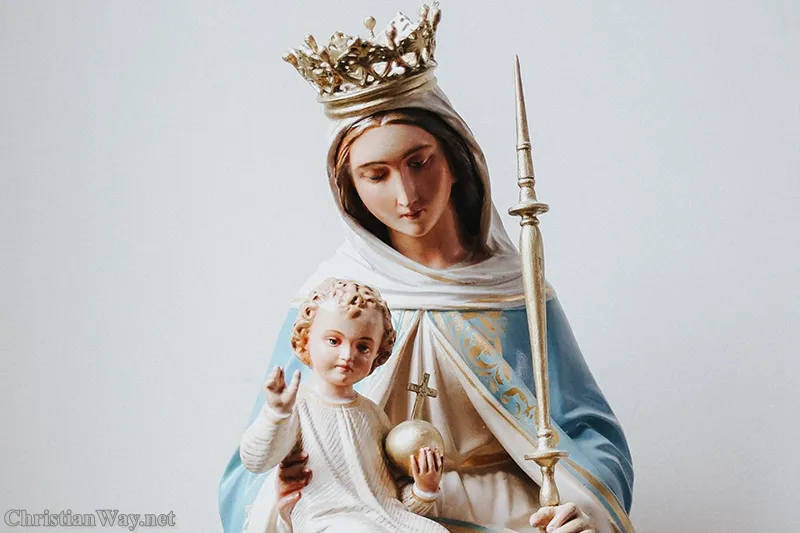
Catholicism gives a special place to Mary because she is the mother of Jesus Christ.
Her importance does not take anything away from Christ. It comes entirely from Christ.
Mary is honored because she receives God’s word with faith. When the angel announces that she will bear the Savior, she answers, “Be it unto me according to thy word” (Luke 1:38).
Her yes becomes a model of discipleship.
Mary does not seek attention for herself. In the Gospel, she points people toward her Son. At Cana, she says, “Whatsoever he saith unto you, do it” (John 2:5).
This remains the heart of Catholic devotion to Mary. She leads people toward Jesus.
For Catholics, Mary is not a distant figure from the past. She is a mother in faith, a witness of trust, and a sign that grace can transform an ordinary human life into a place where Christ is welcomed.
The Saints Show That Holiness Is Possible
The saints are not perfect people who never struggled. They are people who allowed grace to work in them.
Some were scholars.
Some were missionaries.
Some were parents.
Some were monks and nuns.
Some were young.
Some were elderly.
Some lived in great public service.
Some lived hidden lives of prayer and care.
Some carried deep wounds and became instruments of healing for others.
The saints remind Catholics that holiness is possible in every culture and every state of life.
A mother can become holy through patient love.
A worker can become holy through integrity.
A young person can become holy through courage.
A person who has suffered can become holy through mercy.
A priest can become holy through humble service.
A person who has sinned deeply can become holy through repentance.
The saints are not meant to make ordinary people feel small. They are meant to show that Christ can make ordinary lives radiant with grace.
The Origin of Catholicism Is Still Becoming Visible Today
The Church Is Born Again Wherever Mercy Is Lived
The origin of Catholicism is not only a memory of the first century. It becomes visible whenever the Church lives from the heart of Christ.
It appears when a parish welcomes a person who feels ashamed to enter.
It appears when a priest listens patiently to someone carrying grief.
It appears when a family prays together in a difficult season.
It appears when Catholics feed the hungry, visit the sick, care for the elderly, protect children, and serve people who cannot repay them.
It appears when someone goes to confession after years away and discovers that mercy is still open.
It appears when a young person begins to ask serious questions about faith.
It appears when a person kneels quietly before the Eucharist and places a heavy burden into the hands of Christ.
The Church is alive not because every Christian is strong, but because Christ is alive.
The Church may pass through seasons of weakness. She may face scandal, division, criticism, persecution, or spiritual dryness. Yet Christ has not abandoned His Bride.
He remains faithful.
He continues to call people.
He continues to forgive sinners.
He continues to nourish His people.
He continues to send the Holy Spirit.
The Catholic Church Must Always Return to Christ
Every Catholic generation must return to the source.
The Church must return to the Gospels.
She must return to the Cross.
She must return to the Eucharist.
She must return to the poor.
She must return to humility.
She must return to the mercy that first gathered her.
When the Church becomes proud, she must look again at Christ washing feet.
When she becomes cold, she must look again at Christ touching the leper.
When she becomes divided, she must look again at Christ praying that His disciples may be one.
When she becomes afraid, she must look again at the risen Lord saying, “Peace be unto you.”
The origin of Catholicism is not a reason to live in the past. It is a call to live faithfully in the present.
The Church is called to bring Christ into homes, streets, workplaces, schools, hospitals, prisons, villages, cities, and every place where human beings carry burdens.
She is called to speak truth without cruelty.
She is called to show mercy without denying justice.
She is called to defend human dignity without forgetting humility.
She is called to proclaim Christ, not herself.
Reflect and Pray
The origin of Catholicism is found in the love of Jesus Christ.
It is found in the disciples He called.
It is found in the apostles He sent.
It is found in the Last Supper, where He gave His Body and Blood.
It is found in the Cross, where His heart was opened for the life of the world.
It is found in the Resurrection, where death was defeated.
It is found in Pentecost, where the Holy Spirit gave courage and mission to the Church.
The Catholic Church is not meant to be a monument to human achievement.
She is meant to be a living witness to Christ.
She is meant to be a home for sinners who need mercy.
She is meant to be a people nourished by the Eucharist.
She is meant to be a community where the poor are remembered, the wounded are welcomed, the truth is spoken, and the love of God becomes visible.
Whether you have been Catholic all your life, are returning after many years, are curious about the Church, or are simply searching for Christ, remember this: the heart of Catholicism is not first a system. It is Jesus Christ.
He is the One who calls.
He is the One who forgives.
He is the One who gathers.
He is the One who gives Himself.
He is the One who remains.
Let us pray:
Lord Jesus Christ,
You gathered disciples around Yourself
and gave Your life for the salvation of the world.
Draw us ever closer to Your heart.
Teach Your Church to be humble, faithful, and merciful.
Give courage to those who are searching for truth.
Bring healing to those wounded by sin or disappointment.
Strengthen families, pastors, priests, religious, and all believers
to serve with the love You have shown.
May Your Church remain close to the poor,
faithful to the Gospel,
rooted in the Eucharist,
and open to the guidance of the Holy Spirit.
Make us people of prayer, truth, and compassion,
so that through our lives
others may come to know
the mercy that flows from Your heart.
Amen.
— Fr. John Matthew