Dear friends,
It is a profound joy to turn our hearts toward the constellation of holy men and women who have walked the soil of the Americas and are now shining examples of God’s grace. When we speak of ‘Saints,’ we are not simply recounting historical figures; we are encountering souls who allowed the Gospel of Jesus Christ to penetrate their lives so completely that their very existence became a living icon of the Divine. Their journeys—from the shores of the Atlantic to the vast plains and burgeoning cities—demonstrate that sanctity is not reserved for a distant past or a foreign land, but is the universal call of every baptized Christian, here, now, in our own communities.
The faith journey of the United States is one marked by immense challenges: waves of immigration, the complexities of justice and freedom, and the struggle to maintain spiritual focus amidst material abundance. The Saints and Blesseds of this land navigated these turbulent waters with unwavering conviction. They were doctors, teachers, pioneers, founders, and martyrs. They spoke many languages, hailed from diverse backgrounds, yet all were united by a singular, burning love for the Lord and for the least of His brethren. Their witness reminds us that the Holy Spirit is ceaselessly at work, raising up beacons of hope wherever the Good News is proclaimed.
As we reflect upon these ten remarkable lives, let us move beyond a mere biographical sketch and seek the spiritual lesson each offers to our own pilgrim walk. Let their fidelity comfort and challenge us, drawing us closer to the heart of the Risen Christ. These are the models of holiness for the New World, guiding lights for all who seek to live out the Beatitudes today. May their prayers accompany us on our own path to becoming a true, holy presence in the world, a true Christian Way.
Table of The Top 10 American Saints and Blesseds
| Rank | Name | Life Span | Primary Ministry/Focus | Canonization/Beatification Year |
|---|---|---|---|---|
| 10 | St. John Neumann | 1811–1860 | Bishop of Philadelphia, Pioneer of the Parochial School System | 1977 |
| 9 | St. Rose Philippine Duchesne | 1769–1852 | Foundress, Missionary to Native American Tribes (Potawatomi) | 1988 |
| 8 | Bl. Stanley Rother | 1935–1981 | Martyr, Missionary Priest in Guatemala | 2017 (Beatified) |
| 7 | St. Isaac Jogues & Companions | ~1607–1646 | Martyrs, Jesuit Missionaries to the Huron and Iroquois | 1930 |
| 6 | St. Damien of Molokai | 1840–1889 | Priest, Missionary to the Leper Colony in Hawaii | 2009 |
| 5 | St. Elizabeth Ann Seton | 1774–1821 | Convert, Foundress of the Sisters of Charity, Pioneer of Catholic Education | 1975 |
| 4 | St. Frances Xavier Cabrini | 1850–1917 | Foundress, Missionary to Italian Immigrants, First American Citizen Saint | 1946 |
| 3 | St. Katharine Drexel | 1858–1955 | Foundress of the Sisters of the Blessed Sacrament, Advocate for African and Native Americans | 2000 |
| 2 | St. Junípero Serra | 1713–1784 | Franciscan Missionary who founded missions in Alta California | 2015 |
| 1 | St. Kateri Tekakwitha | 1656–1680 | The “Lily of the Mohawks,” Virgin, Witness to Indigenous Peoples | 2012 |
The Journey of Sanctity: A Pastoral Reflection on American Holiness
As we journey deeper into the lives of these holy men and women, let us remember that they were human, just like us—full of struggles, doubts, and daily duties. Their sanctity lay not in their perfection, but in their perfect surrender to God’s will.
Top 10. St. John Neumann (1811–1860)
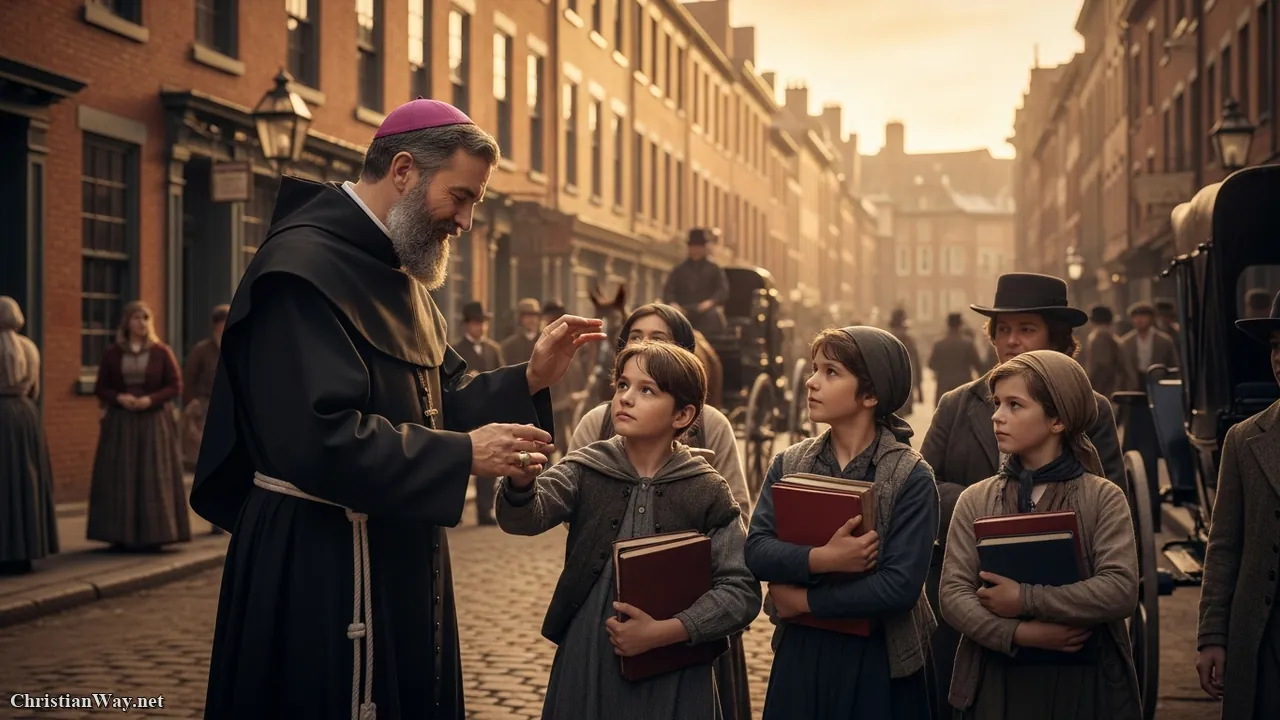
The Scene (Context): Imagine the bustling, chaotic streets of mid-19th century Philadelphia. Into this melting pot of immigrants, many poor and unfamiliar with the new land, steps Bishop John Neumann, a quiet, scholarly Redemptorist from Bohemia. He was a tireless pastor, known for his small stature but colossal spiritual energy. He mastered a dozen languages to hear confessions and minister to every ethnic group in his diocese—Irish, German, Italian, and more—making him a true apostle of unity in a fractured, growing nation.
The Theology (Meaning): St. John Neumann’s lasting legacy is the parochial school system. He grasped a profound theological truth: that faith, to be lived, must be known and understood from childhood. He saw education not merely as secular learning, but as a crucial means of grace, a way to catechize the whole person. This echoes the teaching of Christ in Mark 10:14, “Let the little children come to me, and do not hinder them, for the kingdom of God belongs to such as these.” His focus on the spiritual formation of the young ensured that the Church’s foundation in America would be strong and enduring.
The Application (Pastoral Care): For the modern believer, St. John Neumann is a challenge to prioritize spiritual education in a hyper-secularized age. His commitment to building schools, often in the face of poverty and anti-Catholic sentiment, reminds us that investing in the faith of the next generation is the most vital work we can undertake. He teaches us that true pastoral care is preventative, equipping souls for the trials of life through sound doctrine and constant prayer.
Spiritual Highlights
- The first American male to be canonized.
- Founded over 80 churches and 100 schools.
- Relevant Verse: “Train up a child in the way he should go; even when he is old he will not depart from it.” (Proverbs 22:6)
Top 9. St. Rose Philippine Duchesne (1769–1852)

The Scene (Context): Picture a privileged French nun, advanced in years, making an arduous transatlantic voyage to the American frontier in 1818. St. Rose Philippine Duchesne’s heart burned with an unquenchable desire to serve Native American peoples, whom she called “her children.” Despite her poor health and difficulty with English, she established the first convent of the Religious of the Sacred Heart in America and, finally, late in life, a mission school for the Potawatomi. The children lovingly nicknamed her “Quahkahkanumad,” which translates to “Woman Who Prays Always.”
The Theology (Meaning): Her life embodies the radical missionary mandate given by Christ: to go out to the ends of the earth (Acts 1:8). Even when her work seemed to produce little visible fruit, her profound, silent prayer was the true seed she planted. Her patience and trust in the providence of God, despite facing poverty and cultural barriers, testifies to the theological virtue of Hope. She understood that ministry is less about personal success and more about faithful presence, offering a space where the Holy Spirit can work.
The Application (Pastoral Care): St. Rose Philippine inspires us to find our missionary territory right where we are. Perhaps it is a difficult family member, a challenging workplace, or a lonely neighbor. Her example tells us that persistent prayer and gentle kindness—even when we cannot fully communicate or understand—is the most powerful language of the Gospel. We are called to be people who “pray always,” offering the silent witness of a life centered on Christ.
Spiritual Highlights
- Known as the “Woman Who Prays Always.”
- Established the first free school west of the Mississippi River.
- Her relic remains incorrupt in a small part of her body.
Top 8. Blessed Stanley Rother (1935–1981)
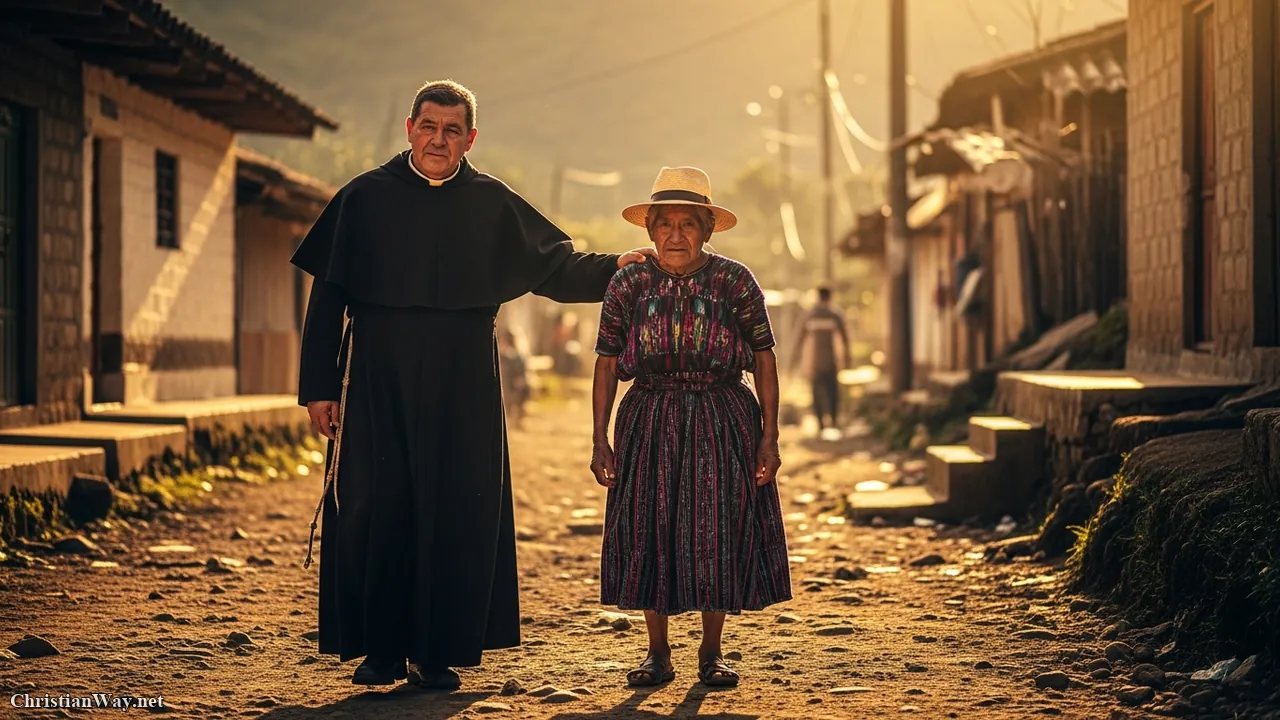
The Scene (Context): We move forward in time to the tumultuous 20th century, specifically the highland villages of Santiago Atitlán, Guatemala. Father Stanley Rother, a simple farm boy from Oklahoma, became a pastor, learning the Tzutujil language to serve his Mayan parishioners. He was not a political agitator, but a shepherd: a man who fixed tractors, built a hospital, and stood by his flock through political violence and oppression. He chose to remain with his people, saying, “The shepherd cannot run,” ultimately leading to his martyrdom by assassins.
The Theology (Meaning): Blessed Stanley’s life is a stark, moving reflection of John 10:11: “I am the good shepherd. The good shepherd lays down his life for the sheep.” He did not abandon his spiritual family when the wolves came. His is a theology of presence and self-gift, the ultimate witness to the Eucharist—the Body and Blood given up for others. His martyrdom, rooted in a refusal to leave the poor, speaks powerfully to the dignity of every human life and the preferential option for the poor.
The Application (Pastoral Care): We may not face assassins, but we are all called to stand by the vulnerable in our lives. Blessed Stanley Rother challenges us to recognize Christ’s face in the marginalized and to overcome fear with faith. His example encourages a spirituality of rootedness—to stay, to serve, and to sacrifice where we are planted, trusting that God’s grace is sufficient even unto death.
Spiritual Highlights
- First recognized martyr born in the United States.
- Loved by his parishioners for his humility and willingness to do manual labor.
- His heart remains enshrined in the church he served in Guatemala.
Top 7. St. Isaac Jogues & Companions (~1607–1646)
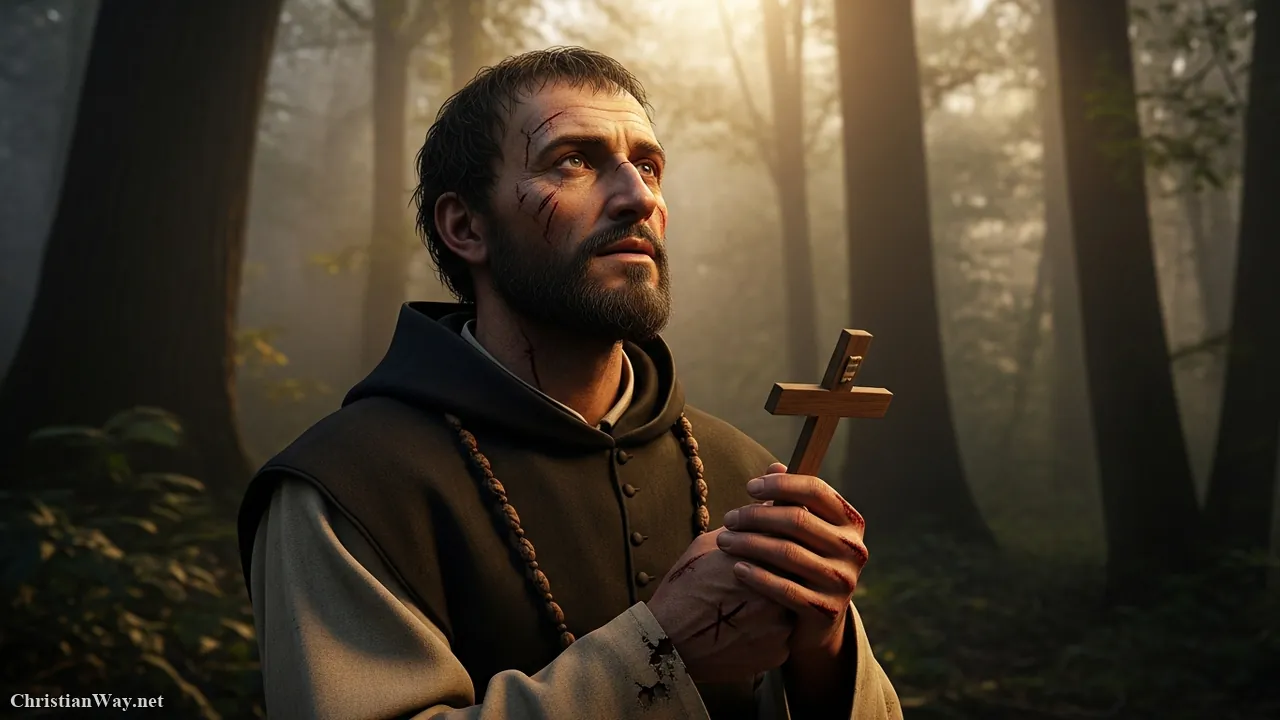
The Scene (Context): Travel back to the 17th-century forests and waterways of North America. Here, a group of Jesuit missionaries, including Father Isaac Jogues, lived, ministered, and died alongside the Huron and Iroquois nations. Their journey was one of brutal suffering; Jogues himself was captured, tortured, enslaved, and had his fingers mutilated. Though he eventually escaped, he returned to the mission, knowing the danger, because of his immense love for the souls there. He and his companions were ultimately killed, giving the ultimate witness.
The Theology (Meaning): Their martyrdom is a poignant manifestation of Romans 5:5: “…God’s love has been poured into our hearts through the Holy Spirit that has been given to us.” Their physical bodies bore the wounds of Christ, transforming their suffering into a participation in His Passion. Their persistent return to the people who had tortured them is a powerful theological statement on forgiveness and the enduring power of redemptive love. They saw every pain as a step closer to union with their crucified Lord.
The Application (Pastoral Care): St. Isaac Jogues and his companions teach us about the cost of discipleship. We are often tempted to avoid discomfort in our faith, but their lives remind us that true faith is often tested in the crucible of suffering. They call us to a radical commitment, one that places the spiritual well-being of others above our own comfort and safety. Their lives are a homily on carrying our cross daily.
Spiritual Highlights
- They are known as the North American Martyrs.
- St. Isaac Jogues was granted a special dispensation to continue celebrating Mass despite his mutilated hands.
- Martyred near Auriesville, New York.
Top 6. St. Damien of Molokai (1840–1889)

The Scene (Context): Journey across the Pacific to the Hawaiian island of Molokai, where the colonial government had established a harsh, isolated leper colony. When Father Damien arrived in 1873, it was a place of despair, lawlessness, and physical decay. He did not merely visit; he lived there, building homes, churches, and coffins. He became a man of the colony, ultimately contracting leprosy himself. He became, literally, one of the lepers, sacrificing his health and life to restore dignity and faith to the forsaken.
The Theology (Meaning): St. Damien’s work is the Gospel made flesh. He embodied the command of Christ to love the unlovable, as seen in the healing of the leper in Mark 1:40-42. His choice to enter the suffering and isolation of others is the definition of Christian solidarity. He is an enduring theological witness that the Incarnation means God is willing to enter fully into the brokenness of humanity. When he began his sermons with “We lepers,” he testified to the ultimate bond of fellowship with the suffering Christ.
The Application (Pastoral Care): He challenges us to dismantle the internal walls we build around ourselves to avoid the “untouchables” in our society—those who are marginalized by poverty, addiction, or mental illness. St. Damien calls us to courageous, physical charity that moves beyond mere sentimentality. We are reminded that true love always involves self-risk and the willingness to share in the burden of the one we seek to serve.
Spiritual Highlights
- Contracted leprosy after 16 years of service to the colony.
- He restored order and a sense of community to the neglected settlement.
- Patron Saint of those with leprosy/Hansen’s Disease.
Top 5. St. Elizabeth Ann Seton (1774–1821)

The Scene (Context): Behold a woman of great social standing in post-Revolutionary New York, who faces immense personal tragedy: widowhood, financial ruin, and a controversial conversion to Catholicism. St. Elizabeth Ann Seton embraced this cross, moving to Baltimore and founding the first American congregation of religious women, the Sisters of Charity. She then established the first free Catholic school for girls in the nation, effectively becoming the mother of American Catholic education and religious life.
The Theology (Meaning): Her life speaks to the transforming power of grace amidst the broken pieces of life. Her conversion, a difficult and often lonely journey, shows us the primacy of truth over comfort. She lived out the powerful declaration of St. Paul: “Therefore, if anyone is in Christ, he is a new creation; the old has gone, the new has come!” (2 Corinthians 5:17). Her faith was not a retreat from the world but an active, creative force that built institutions of mercy and learning where none had existed before.
The Application (Pastoral Care): St. Elizabeth Ann Seton is a powerful advocate for all who feel their lives have been irrevocably changed by loss or necessity. She shows us that God can take our greatest wounds—our widowhood, our poverty, our fear—and use them as the foundation for an unprecedented work of grace. She calls the layperson, the parent, and the educator to recognize that their daily duties are the very path to sanctity.
Spiritual Highlights
- The first native-born citizen of the United States to be canonized.
- Her Sisters of Charity opened hospitals and orphanages nationwide.
- Established the pattern for the modern American parish school.
Top 4. St. Frances Xavier Cabrini (1850–1917)

The Scene (Context): Imagine the docks and tenements of New York and Chicago at the turn of the 20th century, teeming with desperate Italian immigrants. Sent by Pope Leo XIII to “go not to the East, but to the West,” Mother Cabrini, a petite, driven Italian nun, arrived with her Sisters in 1889. She found squalor and neglect, but saw only souls. She established 67 institutions—schools, hospitals, and orphanages—across the Americas, from New York to Brazil, becoming an indefatigable champion for the marginalized.
The Theology (Meaning): Her unwavering trust in God’s provision, despite constant financial and logistical hurdles, perfectly illustrates the theology of divine providence. She never hesitated, knowing that if the mission was God’s will, He would provide the means. Her entire ministry was a practical response to the question posed by James 2:15-16: a faith without works is dead. She understood that caring for the body and the mind—the immigrant’s housing, health, and children’s education—was essential for saving the soul.
The Application (Pastoral Care): St. Frances Xavier Cabrini is the patron of immigrants, and her life offers a crucial lesson for our globalized world. She teaches us that our faith must translate into concrete action for those who are new, displaced, or struggling to find their footing. Her legacy challenges us to look past cultural differences and see the fundamental human dignity in every person who seeks a better life, welcoming them as we would welcome Christ Himself.
Spiritual Highlights
- The first American citizen to be canonized.
- Founded the Missionary Sisters of the Sacred Heart of Jesus.
- A powerful model of female leadership and entrepreneurial holiness.
Top 3. St. Katharine Drexel (1858–1955)
The Scene (Context): Consider a life of extraordinary wealth—a Philadelphia heiress with access to the highest echelons of society. Yet, St. Katharine Drexel gave it all away. After a private conversation with Pope Leo XIII, who challenged her to be a missionary herself, she used her vast inheritance to found the Sisters of the Blessed Sacrament. Her life’s work became the education and social uplift of African Americans and Native Americans, a monumental undertaking that included founding over 50 schools and institutions, most notably Xavier University of Louisiana, the only historically Black Catholic university in the US.
The Theology (Meaning): St. Katharine’s life is a magnificent, radical testament to the Beatitude: “Blessed are the poor in spirit, for theirs is the kingdom of heaven.” She embraced poverty by choice, proving that discipleship is about what we are willing to renounce for the sake of the Kingdom. Her work was a direct, prophetic condemnation of the racial prejudice that divided the American church and society, perfectly aligning with St. Paul’s teaching that in Christ, “there is neither Jew nor Greek, there is neither slave nor free man, there is neither male nor female; for you are all one in Christ Jesus” (Galatians 3:28).
The Application (Pastoral Care): She stands as a mighty challenge to all of us who cling to our material comforts. St. Katharine Drexel reminds us that our resources—whether financial, intellectual, or spiritual—are not for our sole benefit but are entrusted to us by God to further His kingdom, especially among the forgotten. Her dedication compels us to examine our own prejudices and actively work for true Christian unity and justice.
Spiritual Highlights
- Gave away an estimated $20 million fortune (in late 19th-century value).
- Her feast day is often observed during Black History Month.
- Founded Xavier University of Louisiana in 1925.
Top 2. St. Junípero Serra (1713–1784)
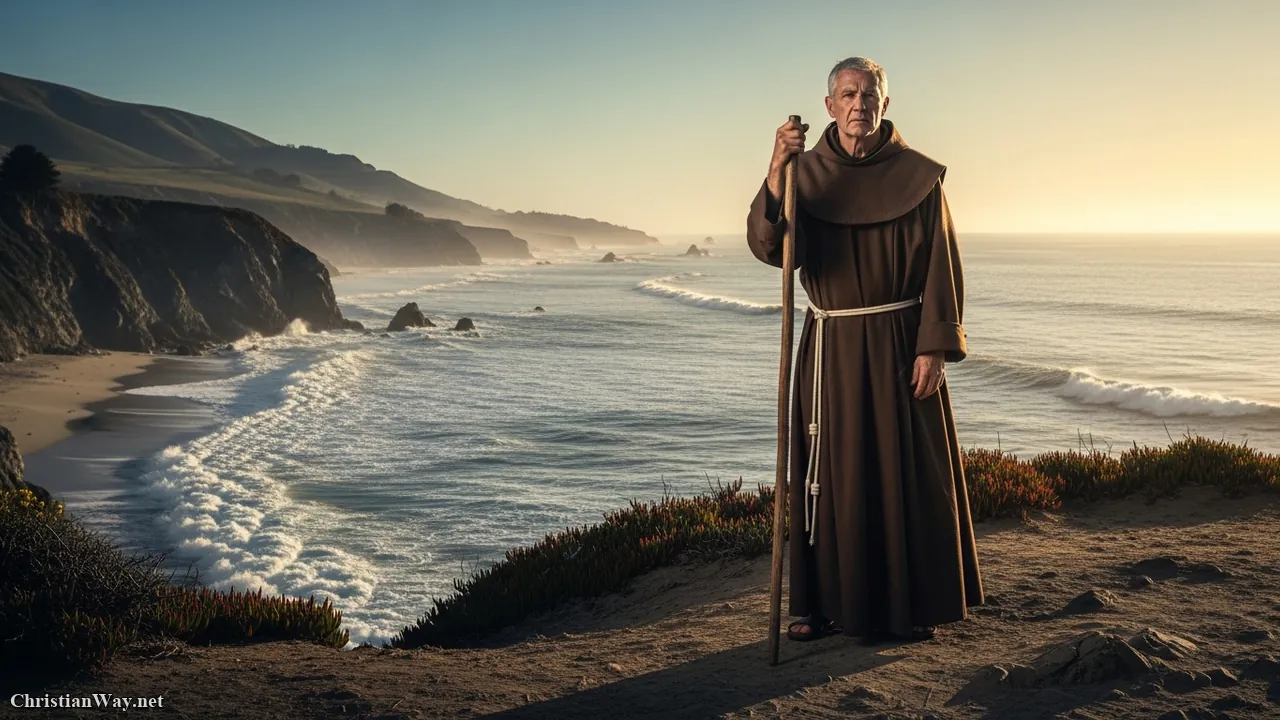
The Scene (Context): Imagine the rugged coastline of Alta California in the late 18th century, a wilderness waiting to be settled. Father Junípero Serra, a Franciscan friar from Spain, endured incredible hardship—a painful, chronic leg infection and vast, exhausting journeys on foot—to establish nine of the 21 historic Spanish missions. These missions were not just churches; they were communities that taught Christianity, agriculture, and new trades to the indigenous populations, seeking to integrate them into the Christian faith and European culture.
The Theology (Meaning): St. Junípero’s life is a picture of evangelical zeal and self-denial. His mantra, Siempre adelante, nunca atrás (“Always forward, never back”), perfectly captures the relentless forward motion of the Gospel message. His commitment to bringing Christ to the native peoples, even at immense personal cost, illustrates the urgency of the Great Commission (Matthew 28:19). While his work must be understood within the complex, painful history of colonialism, his personal holiness and desire to save souls remain a profound witness to the love of God that spurred him forward.
The Application (Pastoral Care): He teaches us a vital lesson about perseverance in ministry. When we encounter obstacles, frustration, or even physical pain in our service to the Lord, St. Junípero’s life urges us not to retreat. We are called to “press on toward the goal” (Philippians 3:14), maintaining a forward-looking spirit of faith, knowing that the harvest is eternal, even if the planting is difficult.
Spiritual Highlights
- Canonized in 2015 by Pope Francis in Washington, D.C.
- Known for his lifelong struggle with a severe leg infection.
- Established a mission chain stretching nearly 600 miles along the California coast.
Top 1. St. Kateri Tekakwitha (1656–1680)

The Scene (Context): Our final reflection takes us to the Mohawk village of Ossernenon in 17th-century upstate New York. Kateri, whose name means “She who bumps into things,” survived smallpox that scarred her face and left her vision impaired. She encountered the faith through Jesuit missionaries and was baptized at age 20. Faced with persecution from her own community for her devout prayer life and vow of perpetual virginity, she walked 200 miles to a Christian mission in Kahnawake, Quebec. Her life was a short, intense period of mysticism, penance, and profound piety.
The Theology (Meaning): St. Kateri Tekakwitha is the pure reflection of a soul that has found the “pearl of great price” (Matthew 13:45-46). Her deep devotion to Christ and the Blessed Sacrament, often praying before the cross for hours, shows us that the most powerful witness is often an interior one. She is a powerful theological icon of the Church’s universality—that Christ’s grace transcends every culture and nation. Her commitment to virginity testifies to the ultimate spiritual marriage of the soul with God, a life dedicated completely to the Divine Bridegroom.
The Application (Pastoral Care): The “Lily of the Mohawks” offers immense comfort to those who feel weak, isolated, or misunderstood for their faith. She reminds us that holiness is not about external power or public success, but about the depth of our intimate relationship with Jesus. St. Kateri calls us to courageously choose Christ, even when it means facing opposition from those closest to us, trusting that a deep interior life is our greatest strength.
Spiritual Highlights
- The first Native American woman to be declared a saint.
- Known for her extreme devotion to the Eucharist and the Cross.
- Her tomb became a place of pilgrimage and reported miracles soon after her death.
Reflect and Pray: The Timeless Call to Holiness
My brothers and sisters, these ten lives are a living Scripture for the Church in America. They are not distant figures on stained glass; they are our spiritual ancestors, beckoning us to a life of radical, intentional discipleship. They confirm that whether we are called to be martyrs in a foreign land, pioneers in education, or simply devoted souls in a suburban home, the path to heaven is open and accessible. May we ask for their intercession, that we, too, may find the courage to say “yes” to the Lord’s call, transforming our own corner of the world through faith, hope, and charity.
— Fr. John Matthew, for Christian Way