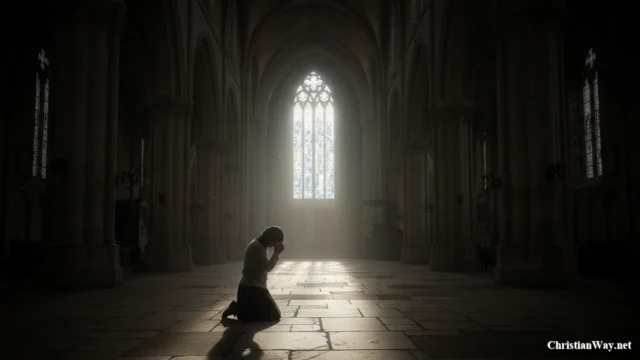
Many believers wonder why Christmas falls on December 25—this question touches history, faith, and how light enters the world through Christ.
Many people have asked me this same question over the years, often with a gentle curiosity rather than doubt. When we gather on December 25 to celebrate Christmas, we are not only marking a date on the calendar—we are stepping into a mystery where history, faith, and symbol come together. It is natural to wonder whether this day was chosen because it was truly the birthday of Jesus Christ, or for deeper spiritual reasons.
Historically speaking, the Bible does not tell us the exact date of Jesus’ birth. The early Christians, especially in the first centuries, were less concerned with celebrating birthdays and more focused on the Resurrection. Yet as the Church grew, believers felt a longing to honor the moment when God entered the world as a child. By the fourth century, December 25 had become widely accepted as the day to celebrate the Nativity. This was not about historical precision as much as it was about proclaiming a truth of faith: God truly became one of us.
There is also a beautiful symbolism woven into this date. In the ancient world, December 25 was closely associated with the winter solstice—the time when darkness is at its deepest, and the light begins to return. The Church saw something profoundly fitting here. As the days begin to grow longer, we proclaim that Christ is the Light who enters our darkest nights. As the Gospel of John tells us in simple but powerful words, “The light shines in the darkness, and the darkness has not overcome it.” What better moment to celebrate the birth of the Light of the world?
For us today, what matters most is not the exact calendar date, but the invitation December 25 gives us. Each year, Christmas asks us to welcome Christ anew—into our homes, our struggles, and our hopes. In the quiet of that holy night, we are reminded that God does not wait for perfect conditions. He comes gently, humbly, and faithfully, even when the world feels cold or uncertain. And so, we celebrate not just a birthday long ago, but a living presence among us now.
Reflection
As we celebrate Christmas on December 25, may we remember that Christ is born wherever hearts open to His light. In every season of darkness, His coming assures us that hope is never lost.
— Fr. John Matthew, for Christian Way.
Further Study: The Date Of Christmas
The Bible Does Not Give Jesus’ Exact Birthday
Neither Matthew nor Luke gives a calendar date for the birth of Jesus. The Gospels are interested in who Jesus is, how his birth relates to Israel’s hope, and what the incarnation means. Christians should therefore avoid claiming that Scripture proves Jesus was born on December 25.
When December 25 Appears in Christian Practice
By the fourth century, Christians in Rome were celebrating the Nativity on December 25. The precise path by which the date became established is debated by historians. Evidence must be handled carefully because explanations proposed many centuries later do not all carry the same historical weight.
The Calculation Theory
One important historical explanation connects Christmas with an older Christian calculation that linked the conception of Jesus to March 25, a date also associated in some traditions with the passion of Christ. Counting nine months from March 25 gives December 25. This theory shows that Christian calendrical symbolism may have developed internally rather than simply copying a pagan festival.
The Solstice and Roman Festival Question
December in the Roman world contained solstice symbolism and religious festivals, including the cult of Sol Invictus in late antiquity. Some scholars have argued that Christmas was placed on December 25 to offer a Christian alternative; others note that the evidence for a simple one-way borrowing is weaker than popular summaries suggest. The safest historical account presents the debate rather than a slogan.
Why the Date Can Be Theologically Meaningful Without Being Proven
Liturgical calendars do more than preserve exact anniversaries. They teach the faith by ordering time around events in salvation history. December 25 allows Christians annually to contemplate the incarnation: the eternal Son truly entering human history, receiving a human life from Mary, and being born into poverty.
Christmas in East and West
Not all Christians observe the Nativity on the same civil date. Some Eastern churches celebrate December 25 according to the Julian calendar, which currently falls on January 7 in the Gregorian calendar, while the Armenian Apostolic tradition commonly celebrates the Nativity and Theophany together on January 6. The differences are calendrical and liturgical, not evidence for different Christs.
What the Feast Actually Celebrates
Christmas is not merely a birthday celebration for a revered religious teacher. Historic Christian worship celebrates the incarnation: the Son of God becoming truly human without ceasing to be divine. The feast therefore belongs to the larger story that leads to Jesus’ ministry, cross, resurrection, and the gift of the Spirit.
How Christmas Traditions Grew Around the Feast
Cribs, carols, lights, gift-giving, fasting, feasting, processions, and family customs arose in different places and centuries. Some are explicitly liturgical, others devotional, and others cultural. Christians can receive customs gratefully while distinguishing the core theological feast from later social traditions.
How to Speak About Christmas History Honestly
A faithful Christian account does not need to prove that every Christmas custom is ancient or that December 25 is Jesus’ documented birthday. Christianity stands or falls on the reality of Christ, not on certainty about a calendar date. Historical honesty allows the feast to be celebrated without turning tradition into false evidence.
Questions Christians Often Ask
Was Jesus definitely born on December 25?
We do not know. The Gospels do not provide an exact date, and no surviving contemporary birth record settles the question. December 25 is the Church’s liturgical date for celebrating the Nativity, not a date that can be demonstrated from the New Testament.
Did Christians simply copy a pagan sun festival?
That claim is too simple. Roman solar observances are relevant to the late-antique setting, but historians also point to Christian chronological calculations that could explain December 25 from within Christian tradition. The available evidence supports a more nuanced discussion than a single-cause story.
Why do some Orthodox Christians celebrate Christmas on January 7?
Some Orthodox churches use the Julian calendar for fixed liturgical feasts. December 25 on that calendar currently corresponds to January 7 on the Gregorian civil calendar. They are still celebrating December 25 according to the calendar their church uses.
Why does the Armenian tradition often celebrate on January 6?
The Armenian Apostolic Church preserves an ancient combined celebration of Christ’s Nativity and Theophany on January 6. This illustrates the diversity of early Christian liturgical development and reminds readers that the Christian meaning of the feast is older than modern calendar uniformity.
Does the date matter to Christian faith?
The incarnation matters decisively; the exact civil date is secondary. Christians confess that Jesus was truly born in history. The annual feast helps the Church remember and worship, but faith does not depend on proving December 25 from the Bible.
What is the best way to answer claims that Christmas is 'pagan'?
Separate the origin of the Christian feast from the later adoption of cultural customs. Some customs have pre-Christian parallels, some emerged within Christian societies, and some are modern. A shared winter symbol does not automatically determine the theological meaning Christians give it.
How can Christians keep Christmas centered on Christ?
Worship, Scripture, prayer, generosity, reconciliation, and care for people in need help keep the feast connected to the incarnation. Cultural celebration need not be rejected, but it should not crowd out the mystery the feast exists to proclaim.
How to Continue Studying This Topic
Begin With Primary Sources
A careful study of the date of Christmas begins with primary sources. Read the relevant biblical passages in context, then compare how historic creeds, catechisms, confessions, liturgical texts, and responsible scholarship interpret them. This sequence helps prevent a modern summary from replacing the sources it is trying to explain.
Compare Traditions Carefully
Let Knowledge Become Practice
Finally, the spiritual value of studying the date of Christmas is tested in Christian life. Knowledge should deepen worship, humility, love of Scripture, patience with other believers, and care for neighbors. When study produces only argument or curiosity, the reader has not yet reached the pastoral purpose that Christian teaching is meant to serve.
Conclusion
The Date Of Christmas belongs within the larger Christian story of creation, covenant, Christ, the Holy Spirit, the Church, and the hope of eternal life. The most reliable approach combines careful reading, historical honesty, theological clarity, and a willingness to let truth shape prayer and conduct.
Questions of Language and Translation
Doctrine, History, and Devotion Are Not Identical
When considering the date of Christmas, it helps to separate three layers that often appear together: what a church formally teaches, how that teaching developed historically, and how ordinary believers express it in devotion. These layers can support one another, but a popular practice should not automatically be treated as the complete doctrinal position of an entire tradition.
A Pastoral Test for Interpretation
Christian interpretation of the date of Christmas should be both truthful and pastoral. It should not hide difficult evidence, exaggerate certainty, or describe another tradition in language that its own adherents would reject. Fair explanation creates room for conviction without caricature and helps readers make informed judgments.
Reading the Bible Canonically
Where the date of Christmas touches Scripture, individual verses should be read within the argument of the book and the wider biblical canon. Narrative, poetry, prophecy, Gospel, and apostolic teaching use language differently. The goal is not to collect proof texts but to hear how the whole biblical witness contributes to the question.
Deeper Biblical, Historical, and Pastoral Context
Why Is Christmas Celebrated on December 25? History and Traditions is best understood by distinguishing the Church’s confession of the incarnation from the many cultural forms that have gathered around Christmas. The central theological subject is why Western Christians celebrate Christmas on December 25 and how the date developed liturgically; customs, calendars, foods, decorations, music, and civic traditions belong to a second layer that can vary by place and period.
The biblical references already used in the discussion—the principal biblical texts already discussed above—should remain the anchor. They support the claim that the New Testament does not provide a calendar date for Jesus’ birth, and December 25 belongs to the later development of Christian liturgical commemoration. The Gospels are theological narratives, not modern birth certificates, so a faithful Christian account of Christmas should resist filling their silences with confident details borrowed only from later custom. In the specific setting of Why Is Christmas Celebrated on December 25? History and Traditions, this point should be read together with the biblical evidence already considered here and not detached into a general slogan.
Historical caution matters because simple claims that Christmas is merely a baptized pagan festival are too crude, while claims that the exact historical birthday has been proven are also too strong. Liturgical dates and popular customs often have complex histories. A practice can be meaningful without being apostolic in origin, and a Christian feast can develop within a culture without being reducible to every pre-Christian custom that happened to exist in the same season. In the specific setting of Why Is Christmas Celebrated on December 25? History and Traditions, this point should be read together with the biblical evidence already considered here and not detached into a general slogan.
Eastern and Western Christians also do not all celebrate according to the same civil date because calendars and liturgical traditions differ. Yet the shared confession remains the nativity of Jesus Christ. That common center allows local cultures to express joy and hospitality without making one country’s Christmas habits the standard by which all others are judged. In the specific setting of Why Is Christmas Celebrated on December 25? History and Traditions, this point should be read together with the biblical evidence already considered here and not detached into a general slogan.
In practice, treat December 25 as a liturgical date that gathers Christian reflection on the incarnation, while distinguishing historical chronology from theological celebration. The strongest Christmas traditions are those that direct attention toward Christ, prayer, reconciliation, generosity, hospitality, and care for people who experience the season through grief or loneliness as well as celebration. In the specific setting of Why Is Christmas Celebrated on December 25? History and Traditions, this point should be read together with the biblical evidence already considered here and not detached into a general slogan.
A second way to deepen this subject is to ask what would be lost if why Western Christians celebrate Christmas on December 25 and how the date developed liturgically were reduced to only one dimension. Biblical teaching usually holds together more than a modern slogan can contain: divine action and human response, truth and love, history and worship, personal conversion and communal life. In Why Is Christmas Celebrated on December 25? History and Traditions, the most faithful answer is the one that allows those dimensions to remain connected without pretending that every Christian tradition explains the connection in exactly the same terms.
The question also benefits from distinguishing direct biblical statements from later theological synthesis. The fact that Christians use a doctrinal term does not make the term unbiblical; often it is a concise way of protecting several biblical passages at once. Yet later vocabulary should remain accountable to Scripture. For this topic, that means returning repeatedly to the principal biblical texts already discussed above and asking whether the conclusion really follows from the whole context rather than from an isolated word. In the specific setting of Why Is Christmas Celebrated on December 25? History and Traditions, this point should be read together with the biblical evidence already considered here and not detached into a general slogan.
There is a pastoral danger on both sides of this question. One error makes the doctrine so abstract that it never touches ordinary life; the opposite error turns personal experience into the measure of truth. Why Is Christmas Celebrated on December 25? History and Traditions calls for a better balance: Christian experience should be interpreted by the Gospel, while doctrine should illuminate actual fear, suffering, worship, relationships, moral choices, and hope.
Humility is therefore part of theological accuracy. Where Scripture is clear, Christians can speak clearly. Where ancient evidence is incomplete, where traditions disagree, or where a mystery exceeds complete explanation, confidence should be qualified. Such restraint is not weakness. It keeps the discussion from promising more certainty than the sources provide and helps readers distinguish faith from speculation. In the specific setting of Why Is Christmas Celebrated on December 25? History and Traditions, this point should be read together with the biblical evidence already considered here and not detached into a general slogan.
A useful final test is whether the teaching leads toward Christlike love. The purpose of studying why Western Christians celebrate Christmas on December 25 and how the date developed liturgically is not to accumulate religious information or to win a denominational contest. It is to know God more truthfully, worship more faithfully, resist falsehood, repent where necessary, serve neighbors more generously, and remain steadfast in hope. That is the setting in which the doctrine becomes spiritually fruitful. In the specific setting of Why Is Christmas Celebrated on December 25? History and Traditions, this point should be read together with the biblical evidence already considered here and not detached into a general slogan.
Readers who come from another Christian tradition may use different vocabulary for parts of this subject. The fair response is not to erase the difference but to identify exactly where it lies. Agreement about Scripture or the creeds can be stated first; then the particular disagreement can be explained with the strongest responsible formulation on each side. This method is especially valuable for Why Is Christmas Celebrated on December 25? History and Traditions, where a familiar phrase can carry different historical assumptions in different communities.
Because this topic touches both belief and practice, it should be revisited over time rather than treated as a one-time definition. Reading the relevant biblical books in larger units, praying with the Church, and learning from trustworthy historical sources can correct impressions formed from short quotations. The result is a faith that is both more intellectually responsible and more patient with the complexity of Christian history. In the specific setting of Why Is Christmas Celebrated on December 25? History and Traditions, this point should be read together with the biblical evidence already considered here and not detached into a general slogan.
Finally, treat December 25 as a liturgical date that gathers Christian reflection on the incarnation, while distinguishing historical chronology from theological celebration. This is not an optional appendix to doctrine. Christianity consistently joins hearing and doing, confession and discipleship. A teaching that never reaches prayer, justice, mercy, fidelity, worship, or endurance remains incomplete in the life of the believer even when its vocabulary is technically correct. In the specific setting of Why Is Christmas Celebrated on December 25? History and Traditions, this point should be read together with the biblical evidence already considered here and not detached into a general slogan.
Further Reflection on Why Is Christmas Celebrated on December 25? History and Traditions
One further implication of why Western Christians celebrate Christmas on December 25 and how the date developed liturgically is that Christian understanding grows through repeated attention rather than instant mastery. The believer can return to the principal texts already discussed, compare how they are used in worship and teaching, and notice which questions the Bible answers directly and which require later theological reasoning. This patience is especially important here because simple claims that Christmas is merely a baptized pagan festival are too crude, while claims that the exact historical birthday has been proven are also too strong.
In daily discipleship, the teaching can be tested through a concrete response: treat December 25 as a liturgical date that gathers Christian reflection on the incarnation, while distinguishing historical chronology from theological celebration. Prayer and action do not replace careful doctrine, but they reveal whether doctrine has become more than vocabulary. The aim is a life increasingly shaped by truth, charity, courage, repentance, and hope in Jesus Christ.
Further Reflection on Why Is Christmas Celebrated on December 25? History and Traditions
— Fr. John Matthew, for Christian Way.