Dear friends in Christ,
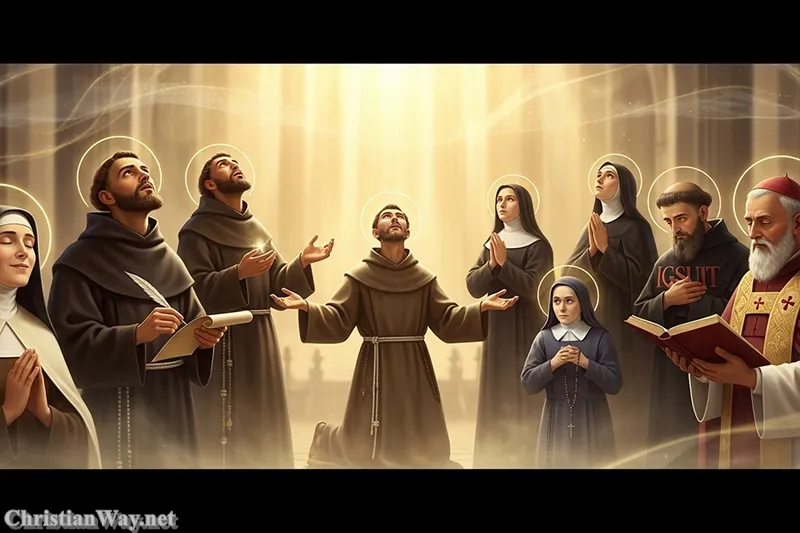
There are many holy men and women in the story of the Church whose lives shine like lamps along the road of faith. Saint Peter teaches us how failure can become humility. Saint Paul reminds us that grace can transform even the most wounded past. Saint Francis shows us the freedom of a heart that loves God more than possessions. Saint Monica teaches the patient tears of a mother who never stops praying. Saint Thérèse of Lisieux reveals that small acts of love, offered sincerely to God, can become a path to holiness.
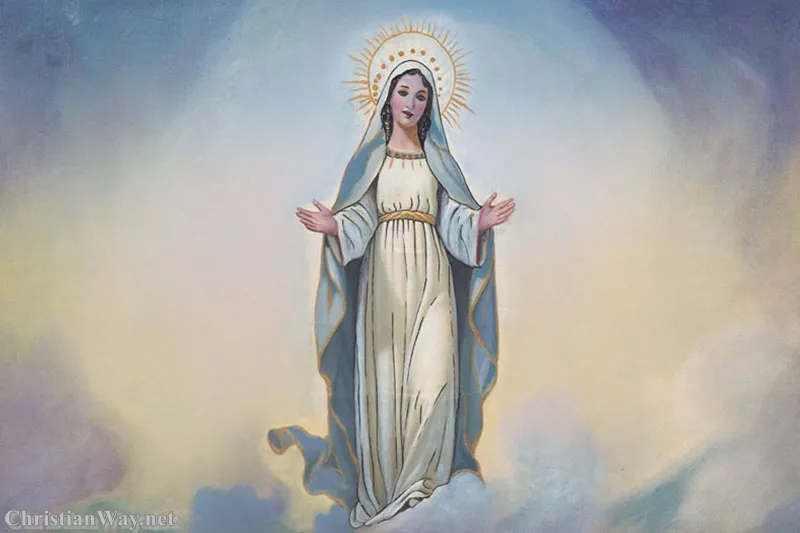
And yet, among all the saints, Mary holds a place unlike any other.
For many Christians, this can raise an honest question: How is Mary different from the other saints? Is she simply one saint among many, remembered because she was the mother of Jesus? Does honoring Mary take attention away from Christ? Why do Catholics and Orthodox Christians speak of her with such tenderness, while many Protestant Christians honor her more quietly? And what does Mary’s life mean for someone who simply wants to know and follow Jesus more faithfully?
The answer begins with a truth that must remain clear from the first moment: Mary is not God. She is not a second Savior. She does not stand beside Jesus as though she shares His divine power. She is a human person, a creature, a daughter of Adam, and someone who depends completely upon the grace of God. Christians worship the Father, the Son, and the Holy Spirit alone. Mary is not worshiped. She is honored because of what God has done in her and through her.
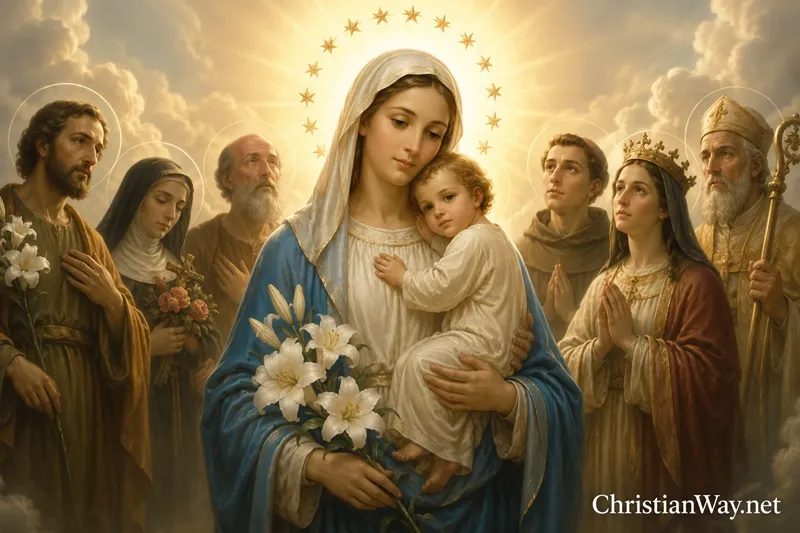
Yet Mary is different from every other saint because no one else received the vocation she received. No other saint carried the eternal Son of God in the womb. No other saint gave birth to Jesus Christ. No other saint held the infant Savior in her arms, raised Him within a human family, stood beside Him at the beginning of His public ministry, remained near Him beneath the Cross, and prayed with the first disciples as the Church awaited the Holy Spirit.
Mary’s greatness does not begin with herself. It begins with Christ.
Her beauty is the beauty of grace received.
Her holiness is the holiness of a heart fully open to God.
Her unique place among the saints is not meant to make us stop at Mary. It is meant to help us see more clearly the mystery of Jesus: true God, true man, born for our salvation.
Mary Is Unique Because She Is the Mother of Jesus Christ
The first and deepest reason Mary is different from every other saint is that she is the mother of Jesus.
This may sound simple, but within this truth lies one of the greatest mysteries of Christianity. Jesus is not merely a holy teacher or a prophet sent by God. Christians confess that He is the eternal Son of God, the Word made flesh, fully divine and fully human.
The Gospel of John says, “And the Word was made flesh, and dwelt among us” (John 1:14).
This Word, who existed before all things, entered our human world through Mary. He did not appear as an illusion. He did not simply descend from heaven as though human life did not matter. He took flesh from a woman. He entered a family. He grew within a mother’s womb. He was born as a child, cared for, fed, protected, and loved.
That woman was Mary.
For this reason, Catholics and Orthodox Christians call Mary Theotokos, a Greek word meaning “God-bearer” or “Mother of God.” This title can sound surprising at first, especially to those who fear it might suggest that Mary existed before God or somehow created the divine nature of Jesus. That is not what Christians mean.
Mary did not create the divinity of Christ.
She did not give God His beginning.
She did not become the source of the eternal Son.
Rather, the child born from her is truly God made flesh. Because Jesus is one divine Person, the Son of God, Mary can rightly be called the mother of the One who is God.
The title protects the truth of Jesus.
If Mary is only the mother of a human person separate from the Son of God, then the Incarnation becomes confused. But Christians confess that the child born in Bethlehem is not merely a man later joined to God. He is Emmanuel, “God with us.”
Mary’s unique dignity therefore comes entirely from the identity of her Son.
She is honored because Jesus is honored.
She is blessed because God chose her for a singular place in the saving work of Christ.
When Elizabeth greets Mary in the Gospel of Luke, she says, “Blessed art thou among women, and blessed is the fruit of thy womb” (Luke 1:42). Notice how these words hold Mary and Jesus together. Mary is blessed, but the deepest blessing is the fruit of her womb: Christ Himself.
Mary never becomes understandable apart from Jesus.
Mary’s “Yes” Was Unlike Any Other Human Response
Every saint has said yes to God in some way.
Abraham said yes when he left his homeland and trusted the promise of God.
Moses said yes when he returned to Egypt to lead Israel out of slavery.
Isaiah said yes when he answered, “Here am I; send me.”
Peter said yes when he left his nets to follow Christ.
Paul said yes when he allowed the grace of God to overturn his life.
But Mary’s yes is different because it stands at the moment when the Son of God enters the world in human flesh.
At the Annunciation, the angel Gabriel comes to Mary with a message beyond anything she could have expected. She is told that she will conceive and bear a son, that His name will be Jesus, and that He will be called the Son of the Most High.
Mary does not respond with pride.
She does not say, “Why should I be asked to carry such a burden?”
She does not demand proof that her future will be easy.
She asks a sincere question: “How shall this be?” (Luke 1:34). Then, after hearing the angel’s answer, she speaks the words that have echoed through Christian history:
“Behold the handmaid of the Lord; be it unto me according to thy word” (Luke 1:38).
This is not passive obedience. It is courageous trust.
Mary does not fully understand every sorrow that will come. She does not see the manger, the flight into Egypt, the misunderstanding, the Cross, the grief, the Resurrection, and the birth of the Church laid out before her in detail. Yet she gives herself to God.
Her yes is free.
Her yes is faithful.
Her yes opens her life completely to the will of God.
For this reason, many Christians have seen Mary as the new Eve. In the story of Genesis, Eve listens to the voice that leads humanity toward disobedience. In the Gospel, Mary listens to the word of God and receives it in faith. Where sin brought separation, Mary’s obedience becomes part of the path through which the Savior enters the world.
This does not mean Mary saves the world by her own power. Jesus alone saves. But God, in His goodness, chose to involve a human response in the mystery of salvation. Mary’s consent is real, humble, and filled with grace.
Her faith teaches us that God often works through small and hidden acts of trust.
A young woman says yes to a difficult calling.
A father says yes to caring for his family when he feels exhausted.
A mother says yes to loving a child through a painful season.
A person says yes to forgiveness when anger feels easier.
A believer says yes to prayer when the heart feels dry.
Most of these yeses will never appear in history books. Yet in the hands of God, they become part of a larger story of grace.
Mary shows us that holiness often begins not with great achievements, but with a heart that says, “Let it be according to Your word.”
Mary Is the First and Most Perfect Disciple of Christ
Mary is different from the other saints not only because she gave birth to Jesus, but because she believed in Him and followed Him with extraordinary faith.
It is possible to be physically close to someone without truly knowing their heart. Mary, however, was not merely the mother of Jesus in a natural sense. She received His word, trusted His mission, and remained faithful even when she did not understand everything that was happening.
The Gospel tells us that after the shepherds came to Bethlehem and spoke of what they had seen, “Mary kept all these things, and pondered them in her heart” (Luke 2:19).
This simple sentence reveals something very beautiful about her. Mary did not rush to explain every mystery. She did not force herself to understand every detail immediately. She received the events of her life, held them before God, and pondered them.
Many people today feel anxious because they believe they must understand everything at once. We want immediate answers. We want to know why a prayer has not been answered, why a relationship is difficult, why illness has come, why the future feels unclear, or why God sometimes seems silent.
Mary teaches another way.
She teaches us to ponder.
To carry questions without abandoning faith.
To wait without losing hope.
To trust that God can still be at work even when the full meaning of our lives has not yet been revealed.
Mary’s discipleship is especially clear at Cana. When the wine runs out at a wedding feast, Mary notices the need. She says to Jesus, “They have no wine” (John 2:3). She does not demand that He act. She does not command Him. She simply places the need before Him.
Then she turns to the servants and says, “Whatsoever he saith unto you, do it” (John 2:5).
These are Mary’s last recorded words in the Gospel.
They are also the clearest summary of her entire life.
Do whatever Jesus tells you.
Mary does not draw people away from Christ. She points them toward Him.
She does not make herself the center. She directs others toward the One who can transform water into wine, sorrow into hope, weakness into grace, and death into life.
This is why Mary is called the first disciple. Before the crowds followed Jesus, Mary had already received Him in faith. Before the apostles preached His name to the nations, Mary had already trusted the word of God. Before the Church was born at Pentecost, Mary was present in prayer with the disciples.
She is not greater than Christ.
She is the one who received Christ most completely.
Mary Is Honored Above the Saints, but She Is Not Worshiped
One of the most important distinctions Christians must make is the difference between worship and honor.
Worship belongs to God alone.
The Father, the Son, and the Holy Spirit are eternal, uncreated, all-powerful, and worthy of our complete adoration. Christians worship God because God alone is the source of all life, all grace, all mercy, and all salvation.
Mary is not worshiped.
The saints are not worshiped.
They are honored because they reflect the grace of God.
A saint is like a stained-glass window. The window does not create the light. It receives the light and allows it to shine through in a particular beauty. Saint Francis reflects the light of Christ through poverty and joy. Saint Augustine reflects the light through repentance and wisdom. Saint Thérèse reflects it through small acts of love. Mary reflects it with a singular brightness because her whole life is so deeply joined to the mystery of Christ.
Catholic theology uses different words to describe these distinctions. Worship is given to God alone. The saints are given honor and reverence. Mary receives a special honor because of her unique role as Mother of God and first disciple of Christ.
But even this special honor must always lead back to Jesus.
A healthy devotion to Mary makes a person more faithful to the Gospel.
It leads someone to prayer, humility, repentance, mercy, and love.
It does not make Mary a substitute for Jesus.
It does not make her a separate source of salvation.
It does not make her equal to God.
If someone speaks about Mary in a way that makes Christ seem distant, harsh, or unapproachable, then something has gone wrong. Jesus is not distant. He is full of mercy. He says, “Come unto me, all ye that labour and are heavy laden, and I will give you rest” (Matthew 11:28).
Mary’s role, understood rightly, is always to bring us closer to this merciful Christ.
Mary’s Holiness Is Entirely a Gift of Grace
Another way Mary is different from other saints is the unique grace Christians recognize in her life.
The angel Gabriel greets her with the words, “Hail, thou that art highly favoured, the Lord is with thee” (Luke 1:28). These words have led Christians through the centuries to contemplate the special grace given to Mary.
Catholics believe that Mary was preserved from original sin from the first moment of her conception through the saving grace of Jesus Christ. This teaching is called the Immaculate Conception. It does not mean that Mary did not need a Savior. It means that she was saved by Christ in a unique and preventive way, by grace given before sin could take hold in her life.
Mary herself says in the Magnificat, “My spirit hath rejoiced in God my Saviour” (Luke 1:47). These words matter deeply. Mary does not stand outside salvation. She is saved by God. She is redeemed by Christ. Every grace in her life comes from Him.
Orthodox Christians also honor Mary as the All-Holy One, often speaking of her holiness with great reverence and love. However, Orthodox theology often describes original sin, human inheritance, and Mary’s holiness in ways that are not identical to Catholic formulations. Many Orthodox Christians do not express the mystery through the later Latin definition of the Immaculate Conception, even while affirming Mary’s exceptional purity and grace.
Many Protestant Christians honor Mary as blessed among women, affirm the virgin birth of Christ, and recognize her as an example of faith. Yet they may not accept the Immaculate Conception as a biblical or necessary doctrine.
These differences should be approached with respect.
The important point is this: no Christian tradition that honors Mary rightly sees her holiness as independent from Jesus. Mary is holy because God is holy. Mary is full of grace because grace has filled her. Mary is blessed because the Lord has looked upon her with love.
Her purity is not self-created.
Her faith is not self-made.
Her greatness is not an achievement that separates her from humanity.
It is the triumph of grace in a human life.
This gives us hope. We may not share Mary’s singular vocation, but every Christian is invited to open the heart to grace. God does not ask us to become another Mary. He asks us to receive Christ as Mary received Him: with faith, humility, and love.
Mary Is the Virgin Mother in a Unique Way
Every Christian saint had a particular mission. Some were married. Some lived as monks or nuns. Some were teachers, missionaries, martyrs, rulers, mothers, fathers, workers, or servants of the poor.
Mary’s vocation is unlike all of these because she is the Virgin Mother of Jesus.
The historic Christian creeds proclaim that Jesus was conceived by the Holy Spirit and born of the Virgin Mary. This truth is central to Christianity because it expresses that the Incarnation is God’s initiative. Jesus does not come into the world merely as the result of human planning or human power. He comes as the gift of God.
Mary’s virginity points to the mystery that Jesus is truly from God, while also being truly human.
Jesus is born of Mary.
He receives human flesh from her.
He enters the world through her.
Yet His conception is the work of the Holy Spirit.
Catholics and Orthodox Christians, along with many Christians throughout history, also believe in Mary’s perpetual virginity: that she remained a virgin before, during, and after the birth of Christ. Some Protestant traditions have also accepted this belief, while many other Protestant Christians understand the biblical references to Jesus’ brothers and sisters in a different way and do not hold to perpetual virginity.
These differences are real, but they need not become occasions for hostility.
At the heart of the matter is the mystery of Christ. Mary’s virginity is not meant to suggest that marriage or family life is less holy. Scripture honors marriage, and the Church honors the calling of husbands, wives, fathers, mothers, and children. Rather, Mary’s virginity points toward the unique newness of the Incarnation.
Her whole life belongs to God in a singular way because she is called to receive the Savior into the world.
Mary’s motherhood and virginity together reveal that God can do what human strength cannot do. He brings life where there seems to be no way forward. He fulfills promises beyond what people can imagine. He enters the ordinary life of a humble woman and changes the history of the world.
Mary Remained Faithful Beneath the Cross
Many people are drawn to Mary because she did not leave Jesus when suffering came.
The Gospels show us the disciples struggling to understand the Passion. Some flee. Peter denies Jesus. Fear scatters many of those who had followed Him.
But Mary remains.
The Gospel of John tells us that Mary stood near the Cross of Jesus (John 19:25).
This is one of the most painful and beautiful images in all of Scripture.
She had received the promise that her son would be great.
She had heard the words of Simeon that a sword would pierce her soul.
She had watched Jesus preach, heal, forgive, and gather disciples.
Now she stands near Him as He suffers.
Mary does not stop the Cross.
She does not understand every mystery unfolding before her.
She does not offer easy explanations.
She remains.
There are times in life when love cannot remove suffering. A mother cannot always take away a child’s illness. A husband cannot always spare his wife from grief. A friend cannot always solve another person’s pain. A child cannot always prevent the aging or death of a parent.
But love can remain.
Mary teaches us this kind of faithful presence.
She teaches us to stay near those who suffer.
To sit beside the sick.
To visit the lonely.
To pray with those who are grieving.
To refuse to abandon people when their pain becomes uncomfortable.
At the Cross, Jesus says to Mary, “Woman, behold thy son.” Then He says to the beloved disciple, “Behold thy mother” (John 19:26–27).
Catholics and Orthodox Christians have long reflected on these words as having a wider spiritual meaning. Jesus entrusts Mary to the beloved disciple, but He also gives Mary a motherly place among His followers. She becomes a sign of maternal care within the Church.
This does not mean Mary replaces God the Father.
It does not mean that Christians cannot go directly to Jesus.
It means that the compassion of motherhood is not absent from the family of faith.
Mary’s presence at the Cross reminds us that God does not despise tenderness. He does not consider mercy weak. He does not reject the tears of those who love.
In Mary, many believers see a mother who understands grief because she stood beneath the Cross.
Mary’s Intercession Is Maternal, but Never Independent of Christ
Catholics and Orthodox Christians often ask Mary to pray for them. This can be misunderstood by those who come from traditions where prayer is addressed directly to God alone.
The word “intercession” simply means praying for another person.
When we ask a friend to pray for us, we are asking them to intercede. When a family prays for someone who is sick, they are interceding. When a church prays for peace, it is interceding.
Catholics and Orthodox Christians believe that death does not separate those who are alive in Christ from the love of the Church. They believe that the saints in heaven can pray for those still walking on earth. Mary’s intercession is considered unique because of her singular closeness to Jesus as His mother and faithful disciple.
Yet Mary does not answer prayers by her own divine power.
God alone gives grace.
God alone heals.
God alone forgives sins.
God alone saves.
Mary’s intercession is entirely dependent on Christ. It is like the prayer of a mother who brings the needs of her children to the One who can truly help them.
The wedding at Cana offers a beautiful image of this. Mary sees that the wine has run out. She brings the need to Jesus. Then she tells the servants, “Whatsoever he saith unto you, do it.”
Mary notices.
Mary brings the need to Christ.
Mary points people toward obedience to Christ.
This is the pattern of her intercession.
For someone who asks Mary to pray, the prayer is not meant to be: “Mary, replace Jesus for me.” It is meant to be: “Mary, pray that I may follow your Son more faithfully.”
For someone who does not ask saints for intercession, Mary can still be honored as a model of faith, obedience, and love. Christians do not need to argue bitterly over the exact language of devotion. We should seek to understand one another’s deepest desire: to honor Jesus Christ and remain faithful to Him.
Mary Is Not the Savior, but She Leads Us to the Savior
One of the clearest ways Mary differs from all the saints is that her vocation is directly tied to the Incarnation. Yet this must never lead us to confuse her with Christ.
Jesus is the Savior.
Jesus is the Redeemer.
Jesus is the Lamb of God who takes away the sin of the world.
Jesus is the one mediator between God and humanity in the unique and saving sense described by Scripture.
Mary is not another mediator alongside Jesus as though Christ were incomplete without her. She is a servant of His saving work. Her role is received from Him and ordered toward Him.
The Church has sometimes used titles for Mary that can sound unfamiliar or difficult, such as “Mediatrix” or “Co-redemptrix.” These titles, when used carefully in Catholic theology, are never meant to place Mary on the same level as Christ. They are intended to express that she cooperated with God’s grace in a unique way, especially through her consent at the Annunciation and her faithful presence at the Cross.
But language must always be handled with care.
No title for Mary should confuse the truth that Christ alone redeems the world.
No devotion should make her seem necessary in the same way Christ is necessary.
No Christian should ever believe that Jesus is unwilling to hear us unless Mary persuades Him.
Jesus is already mercy.
Jesus is already love.
Jesus is already near.
Mary’s role is not to soften an unwilling Savior. She points us toward the Savior whose heart is already open to every wounded soul.
Mary and the Other Saints Belong to One Communion
Mary is unique, but she is not isolated.
She belongs to the communion of saints.
She is part of the great family of believers who have trusted God, suffered with faith, served others, and now rejoice in the presence of Christ.
The saints do not compete with Mary.
Mary does not compete with the saints.
Saint Joseph does not compete with Mary.
Saint Peter does not compete with Saint Paul.
Saint Francis does not compete with Saint Dominic.
Saint Thérèse does not compete with Saint Teresa of Ávila.
The saints are not rival spiritual figures trying to gain attention. Their holiness comes from one source: the grace of God.
Mary’s special place does not make the other saints less important. Rather, her life helps us understand what every saint reveals in a different way: God can transform a human life when that life is surrendered to Him.
The saints show the many colors of grace.
Some reveal courage.
Some reveal wisdom.
Some reveal patience.
Some reveal repentance.
Some reveal service.
Some reveal joy.
Mary reveals receptivity: the heart that receives God completely.
She is the open door of faith through which the Word enters our world.
She is the humble handmaid who magnifies the Lord rather than herself.
This is why the Magnificat is so important. Mary sings:
“My soul doth magnify the Lord,
And my spirit hath rejoiced in God my Saviour” (Luke 1:46–47).
Mary magnifies the Lord.
She does not magnify herself.
A magnifying glass does not create the object it reveals. It helps us see it more clearly. Mary’s life is like this. When we look at her rightly, we should see Christ more clearly.
Mary’s Assumption and the Hope of Resurrection
Catholics believe that at the end of her earthly life, Mary was taken body and soul into heavenly glory. This belief is known as the Assumption of Mary.
Orthodox Christians celebrate the Dormition of the Theotokos, remembering Mary’s falling asleep in the Lord and her passage into glory. Though the language and theological emphasis may differ, both Catholic and Orthodox traditions honor Mary’s final destiny as deeply connected to the hope of resurrection.
Many Protestant Christians do not accept the Assumption as a doctrine required by Scripture. They may honor Mary’s faith without affirming this particular teaching.
Whatever differences Christians hold, the deeper hope remains the same: death does not have the final word for those who belong to Christ.
Mary’s life points toward the destiny God desires for all His children. The God who entered human flesh through Mary does not abandon human flesh to death forever. Christ rose bodily from the grave. He promises resurrection to those who are united with Him.
Mary’s place in glory, as understood by Catholic and Orthodox Christians, is therefore not meant to make her distant from us. It is meant to give hope.
She is a sign that the grace of Christ truly leads somewhere.
It leads beyond death.
It leads beyond sorrow.
It leads beyond the brokenness of this world.
It leads into the fullness of life with God.
What Mary Teaches Us About Daily Christian Life
Mary’s difference from the other saints is not only a theological truth. It has a gentle and practical meaning for daily life.
She teaches us to listen before we speak.
In a world full of noise, Mary invites us to make room for the word of God.
She teaches us to say yes to God even when the future is unclear.
In a world that wants guarantees before obedience, Mary shows us the courage of trust.
She teaches us to care for unnoticed needs.
At Cana, she notices that the wine has run out before the embarrassment becomes public. She teaches us to see what others may be carrying silently.
She teaches us to remain near those who suffer.
At the Cross, she does not flee. She teaches us that love is often shown simply by staying.
She teaches us to pray with the Church.
After the Ascension, Mary is found with the disciples in prayer. She reminds us that Christian life is not meant to be lived alone.
She teaches us humility.
In the Magnificat, she does not celebrate herself. She gives glory to God.
This may be one of the greatest lessons Mary offers to the modern world. So much of life is built around being noticed, praised, admired, and affirmed. We are tempted to measure our worth by attention. Mary shows another path.
True greatness is not making everyone look at us.
True greatness is helping others see God.
Mary’s life says, quietly and beautifully: “My soul magnifies the Lord.”
Reflect and Pray
Dear friends, Mary is different from the other saints because her life is uniquely joined to the mystery of Jesus Christ. She is the mother of the Son of God made flesh. She is the woman whose yes welcomed the Savior into the world. She is the first disciple who received God’s word in faith, remained near Jesus in suffering, and prayed with the first Church.
Yet all of her greatness comes from grace.
Mary is not God.
She is not the Savior.
She is not separate from Christ.
She is the most beautiful example of what a human life can become when it is fully open to the love of God.
Whether we ask for her prayers or simply honor her as a model of faith, Mary always points us toward Jesus. Her message remains the same as it was at Cana: “Whatsoever he saith unto you, do it.”
Let us pray:
Lord Jesus Christ,
You came into our world through the humble faith of Mary.
Teach us to receive Your word with open hearts,
to trust You when the path is unclear,
and to remain faithful when life becomes difficult.
Thank You for the witness of Mary,
who magnified Your name,
stood near Your Cross,
and prayed with Your disciples.
May her example lead us closer to You,
that we may love You more deeply,
serve others more generously,
and live each day in the peace of Your grace. Amen.
May the faith of Mary teach your heart to trust Christ more fully, love Him more deeply, and follow Him with quiet courage.
— Fr. John Matthew