Dear friends, peace be with you.
In my years of priesthood, I have often sat with young people who feel that the call to holiness is a burden too heavy for their shoulders, or perhaps a path that requires them to abandon their joy, their passions, or their unique personalities. There is a quiet misconception that to be a saint, one must be old, distant, and utterly detached from the world we live in. But history—and the heart of God—tells a very different story.
The vitality of the Church has always been renewed by the young. When we look at the lives of the saints, we do not see carbon copies of a rigid piety; we see blazing fires of individuality. We see teenagers who loved nature, played sports, struggled with their parents, navigated sickness, and utilized the technology of their time, all while holding the hand of Christ. These young men and women did not wait until they were “settled” to take their faith seriously. They understood that youth is not a waiting room for adulthood; it is a battlefield for the soul.
As we explore this list, I invite you to open your heart. Whether you are a student facing peer pressure, a young professional seeking purpose, or simply a soul longing for something more than the fleeting distractions of the digital age, these friends are here for you. They remind us that the Gospel is not just ancient text; it is the most modern, radical, and life-giving force on earth. Let us journey together with Christian Way into the lives of these spiritual giants who, though young in years, were giants in love.
Table of The Top 10 Young Saints Who Inspire the Youth Today
| Saint / Blessed | Age at Death | Patronage / Key Virtue | Feast Day |
|---|---|---|---|
| 10. St. Agnes of Rome | ~13 | Purity, Girls, Betrothed Couples | Jan 21 |
| 9. St. Stanislaus Kostka | 17 | Determination, Novices | Nov 13 |
| 8. St. Aloysius Gonzaga | 23 | Care for the Sick, Youth | June 21 |
| 7. St. José Sánchez del Río | 14 | Persecuted Christians, Courage | Feb 10 |
| 6. St. Dominic Savio | 14 | Choirboys, Holiness in Ordinary Life | May 6 |
| 5. St. Maria Goretti | 11 | Forgiveness, Purity | July 6 |
| 4. St. Thérèse of Lisieux | 24 | The “Little Way,” Missionaries | Oct 1 |
| 3. Bl. Chiara Luce Badano | 18 | Joy in Suffering, Youth | Oct 29 |
| 2. Bl. Pier Giorgio Frassati | 24 | Young Adults, Mountaineers, Social Action | July 4 |
| 1. Bl. Carlo Acutis | 15 | Internet, Computer Programmers, Eucharist | Oct 12 |
Top 10. St. Agnes of Rome: The Courage of a Lion Heart
We begin our journey in the ancient world, yet the story of St. Agnes feels strikingly relevant to the modern struggle for identity. A young girl of perhaps twelve or thirteen in 4th-century Rome, Agnes was possessed of a beauty that drew the attention of the city’s most powerful men. Yet, amidst a culture that viewed women as property and power as the ultimate god, she stood firm in her autonomy, declaring that she was already betrothed to a heavenly Spouse, Jesus Christ.
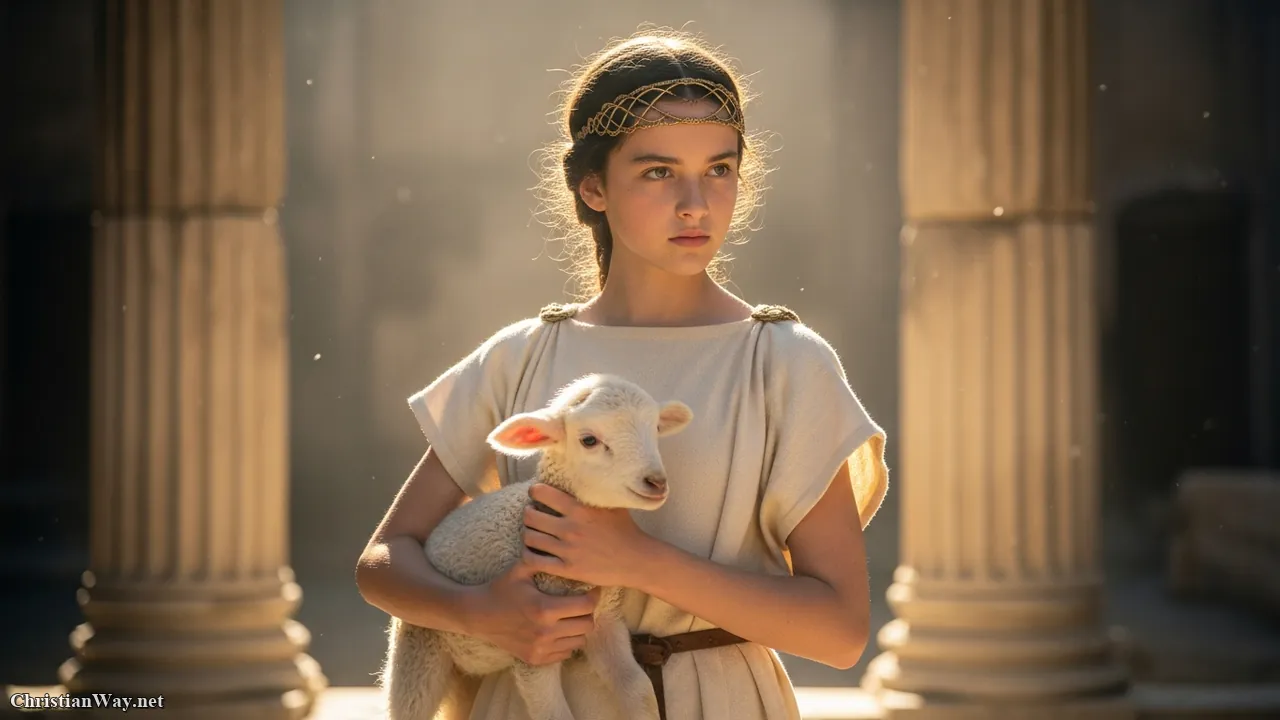
Theologically, Agnes teaches us the supreme value of *witness* (martyria). Her refusal to compromise her faith for social status or safety resulted in her martyrdom, but her spirit remained unbroken. She exemplifies the scriptural truth that “God chose what is weak in the world to shame the strong” (1 Corinthians 1:27). Her purity was not merely a rejection of the flesh, but a total, undivided commitment of her heart to God, proving that true freedom is found in belonging wholly to Christ.
For the youth of today, Agnes is a powerful sister. In a world that constantly pressures you to sell your image, your body, or your values for “likes,” popularity, or acceptance, Agnes stands as a beacon of integrity. She whispers that your dignity is not found in who desires you, but in the God who created you. She challenges us to be brave enough to say “no” to the culture when it asks for our soul.
Spiritual Highlights
- Symbol: A Lamb (representing purity and her name, Agnus).
- Key Lesson: Peer pressure has no power over a heart fixed on God.
- Scripture: “Let no one despise your youth, but set the believers an example in speech, in conduct, in love, in faith, in purity.” (1 Timothy 4:12)
Top 9. St. Stanislaus Kostka: The Determined Pilgrim
Stanislaus Kostka was a Polish nobleman with a future of comfort laid out before him, but his heart burned with a different fire. At 17, facing fierce opposition from his father who wanted him to pursue a worldly career, Stanislaus did the unthinkable: he ran away. He walked 400 miles from Vienna to Rome, begging for food along the way, simply because he felt called to enter the Society of Jesus (the Jesuits). He died shortly after arriving, his mission complete not in years, but in intensity.
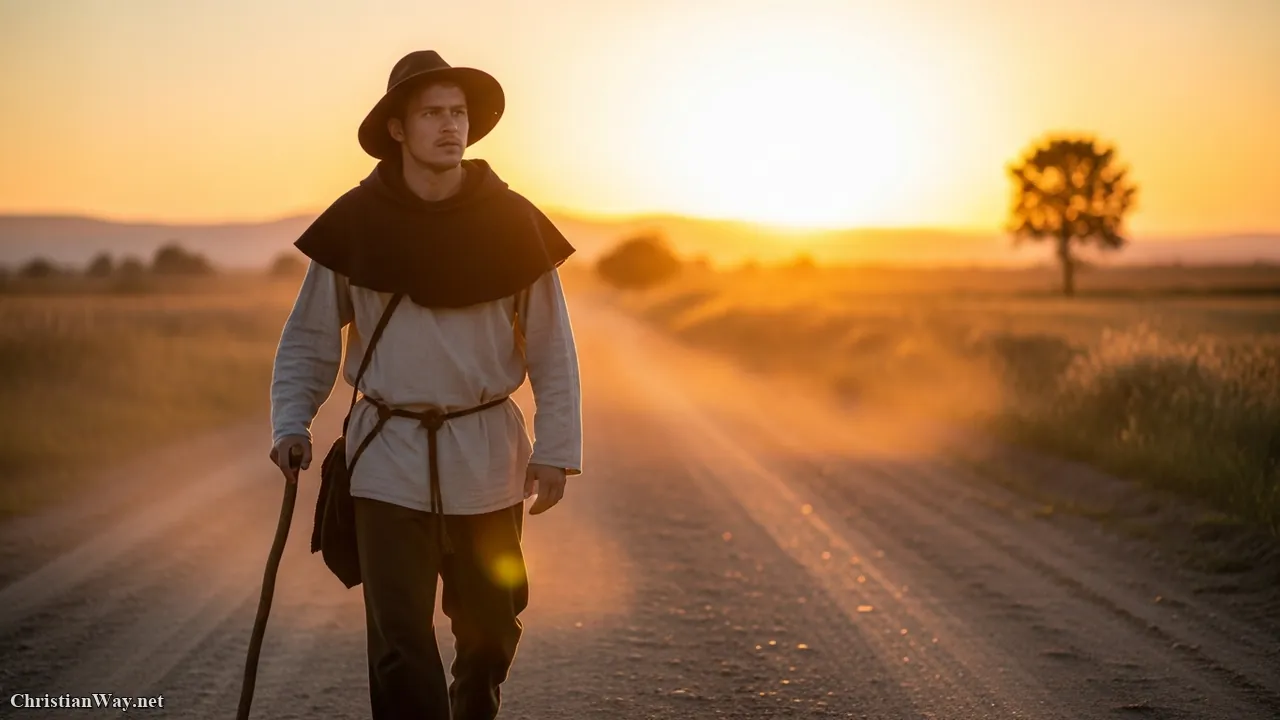
His life is a testament to the virtue of magnanimity—greatness of soul. Stanislaus famously said, “I was born for greater things.” This was not pride; it was a realization that the human soul is made for the Infinite. He refused to settle for the mediocrity of a comfortable life when the difficult path of God’s will beckoned. He teaches us that obedience to God sometimes requires a holy rebellion against the expectations of the world.
Pastoral care for the young often involves helping them discern their vocation amidst noise. Stanislaus is the patron saint of that discernment. If you feel a tug toward a noble goal—whether it is a vocation to priesthood, marriage, or a specific service—but feel paralyzed by the fear of what others will think, look to Stanislaus. He reminds us that the journey to God is worth every step, even if we must walk it alone.
Spiritual Highlights
- Famous Quote: “Ad maiora natus sum” (I was born for greater things).
- Key Lesson: Determination in pursuing God’s will despite family opposition.
- Scripture: “I press on toward the goal for the prize of the upward call of God in Christ Jesus.” (Philippians 3:14)
Top 8. St. Aloysius Gonzaga: The Healer in the Plague
As we turn to St. Aloysius, we encounter a young man who renounced a princely inheritance to join the Jesuits. While he is often depicted in art with a lily and downcast eyes, the real Aloysius was a man of steel spine and immense compassion. When a plague swept through Rome in 1591, leaving victims dying in the streets, Aloysius did not hide. He went out, lifted the sick onto his shoulders, washed them, and fed them. He eventually contracted the plague himself and died at the age of 23.
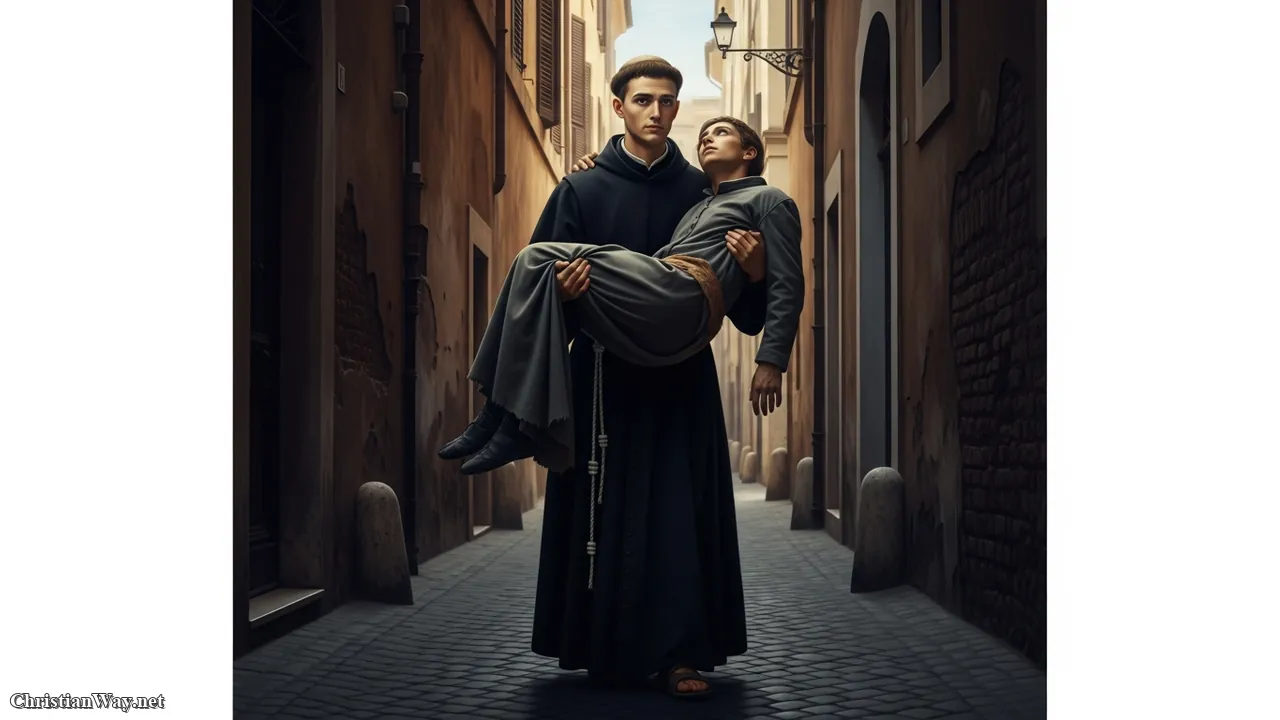
This act of self-sacrifice is a profound reflection of the Incarnation—entering into the suffering of others. Aloysius did not love “humanity” in the abstract; he loved the specific, smelling, infectious person in front of him. He shows us that purity of heart is naturally linked to charity of hand. To be pure is to see God, and to see God is to serve Him in the poor.
In our post-pandemic world, where fear of contagion or inconvenience can easily make us isolate ourselves, Aloysius challenges us to step out. He asks the modern youth: Who is the “leper” in your school or workplace? Who is the person everyone else avoids? Holiness is found in crossing that gap and offering a hand of friendship.
Spiritual Highlights
- Patronage: Patron of plague victims and caregivers.
- Key Lesson: Love requires getting your hands dirty.
- Scripture: “Greater love has no one than this, that someone lay down his life for his friends.” (John 15:13)
Top 7. St. José Sánchez del Río: The Boy with the Unshakable Faith
Moving to the 20th century in Mexico, we find the gripping story of “Joselito.” During the Cristero War, when the government brutally persecuted the Church, 14-year-old José joined the resistance—not as a combatant, but as a flag-bearer. Captured by government forces, he was ordered to renounce his faith. He refused. They tortured him, flaying the soles of his feet and forcing him to walk to his grave, all while mocking him. His only response was to shout, “Viva Cristo Rey!” (Long live Christ the King!).
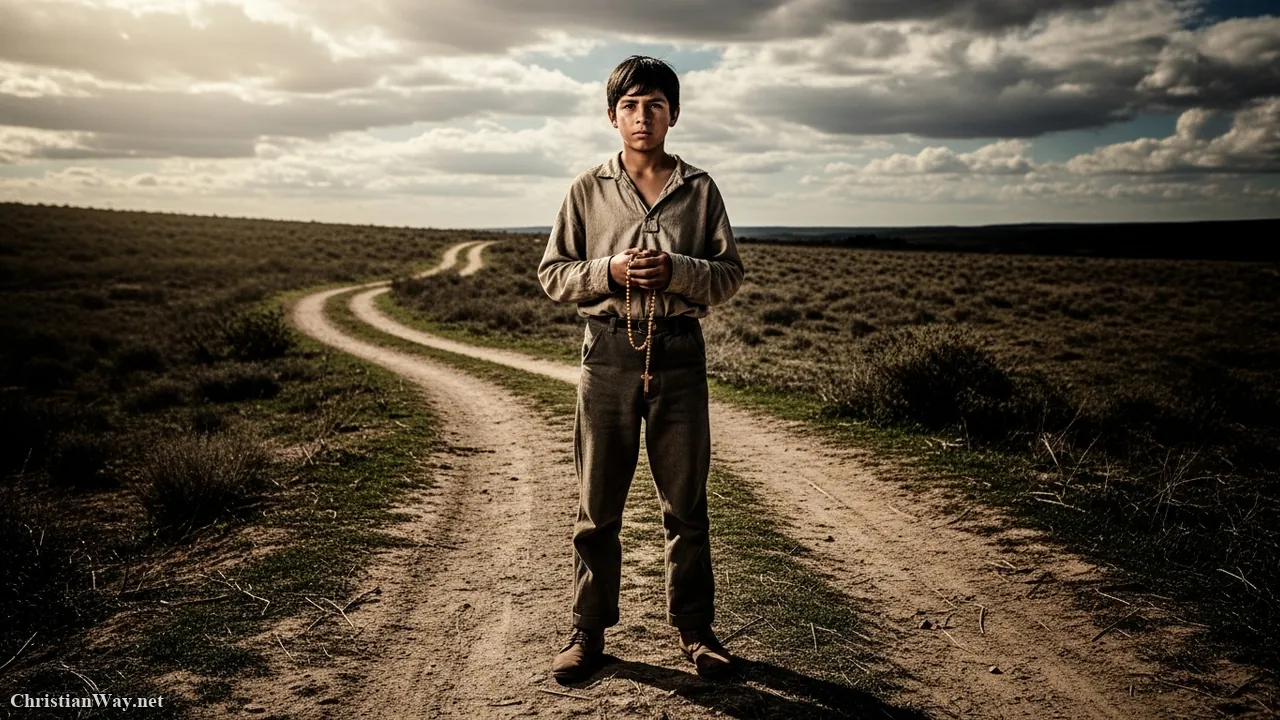
This is a heavy story, but one of immense theological weight. It demonstrates the *kingship of Christ* over all earthly powers. José understood that there are things worth dying for, which means there are things worth living for. His martyrdom was not a tragedy; it was a triumph of the spirit over the flesh, a witness that the soul cannot be chained by political tyranny.
You may not face a firing squad, but you will face a culture that demands you renounce your Christian identity to fit in. You will be asked to compromise your beliefs for a grade, a promotion, or a relationship. St. José stands beside you in those moments, whispering courage into your ear. He teaches us that loyalty to Christ is the ultimate badge of honor.
Spiritual Highlights
- Key Phrase: “Viva Cristo Rey!”
- Key Lesson: Courage to stand for truth when it is unpopular or dangerous.
- Scripture: “Be faithful unto death, and I will give you the crown of life.” (Revelation 2:10)
Top 6. St. Dominic Savio: The Saint of the Playground
St. Dominic Savio was a student of St. John Bosco, and he is a delightful contrast to the martyrs we have just discussed. Dominic didn’t die by the sword; he died of illness at 14, but he lived with an intensity that amazed his teachers. His secret? He believed that holiness consisted of being very cheerful and doing his ordinary duties perfectly. He once broke up a fight between two boys by holding up a crucifix and asking them to throw stones at him instead.
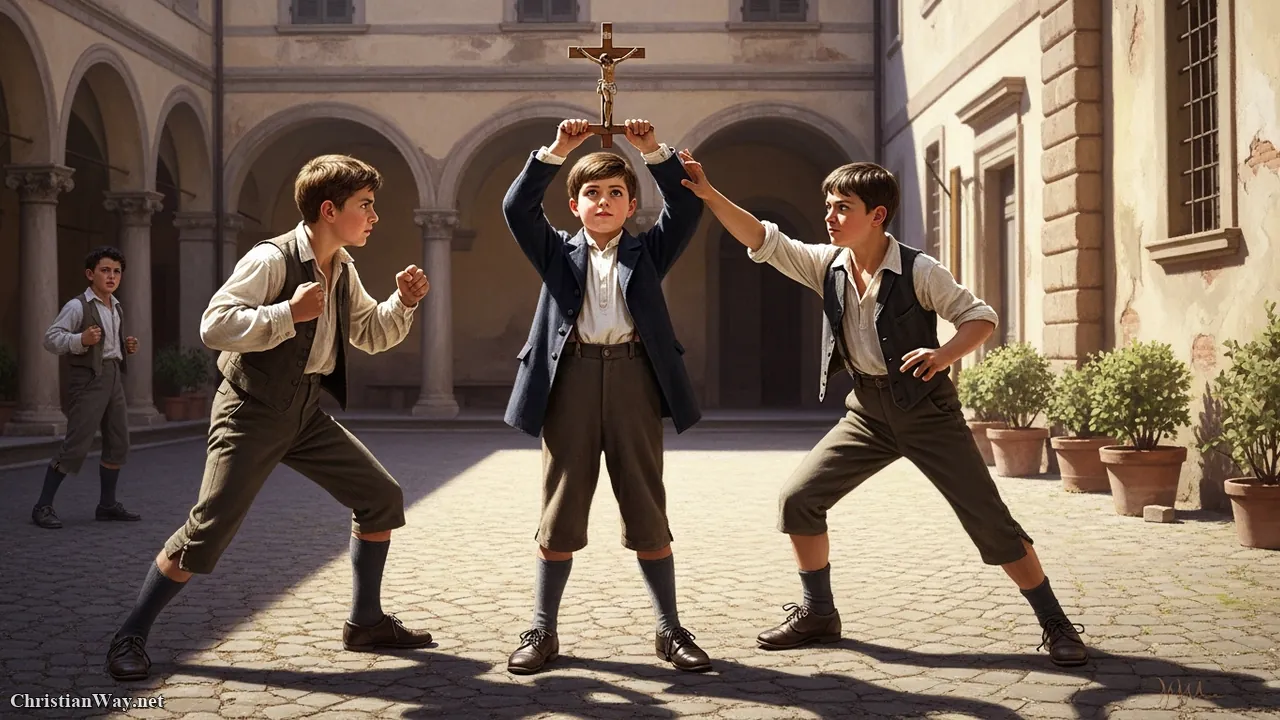
Dominic’s theology is the theology of the *everyday*. He understood that we don’t need to perform miracles to please God; we just need to study well, play fairly, and treat others with kindness. He proves that the playground and the classroom are altars where we can offer sacrifices to God. He famously said, “Here we make holiness consist in being always cheerful.”
For the student drowning in homework or the teenager navigating drama in their friend group, Dominic is the perfect guide. He removes the intimidation factor from sainthood. He tells you: You don’t have to be a monk. You just have to be a good friend, a diligent student, and keep a smile on your face because you know Jesus loves you.
Spiritual Highlights
- Motto: “Death, but not sin.”
- Key Lesson: Holiness is found in cheerfulness and doing ordinary things with extraordinary love.
- Scripture: “Serve the Lord with gladness.” (Psalm 100:2)
Top 5. St. Maria Goretti: The Miracle of Forgiveness
The story of Maria Goretti is often focused on her purity, but its true power lies in her mercy. At age 11, she was attacked by a neighbor, Alessandro, who intended to violate her. When she resisted to protect her soul, he stabbed her repeatedly. On her deathbed, with her final breaths, she did not curse him. Instead, she said, “I forgive him, and I want him to be with me in heaven.”

This is the radical heart of the Gospel. It is the theology of the Cross: “Father, forgive them, for they know not what they do.” Maria’s forgiveness wasn’t just words; it changed history. Alessandro was eventually converted in prison after dreaming of Maria, and he later attended her canonization next to her mother. Maria shows us that forgiveness is the most powerful force in the universe—it can break the cycle of violence and redeem the unredeemable.
Many young people today carry deep wounds—from broken families, bullying, or betrayal. The bitterness can feel like a poison. St. Maria Goretti invites you to let go of that poison. She does not ask you to forget the hurt, but to invite Christ into it so that it does not destroy you. She teaches us that forgiveness is the key to our own freedom.
Spiritual Highlights
- Miracle: Her forgiveness led to the conversion of her murderer.
- Key Lesson: Mercy is stronger than violence.
- Scripture: “Be kind to one another, tenderhearted, forgiving one another, as God in Christ forgave you.” (Ephesians 4:32)
Top 4. St. Thérèse of Lisieux: The Doctor of the Little Way
Though she died at 24 in a cloistered convent, St. Thérèse is one of the most well-known saints in history and a Doctor of the Church. She struggled with what we might call anxiety or scrupulosity today, and she often fell asleep during prayer. Yet, she discovered the “Little Way”—the understanding that she was too small to climb the rough stairway of perfection, so Jesus would have to carry her like an elevator (which she had seen in her time).
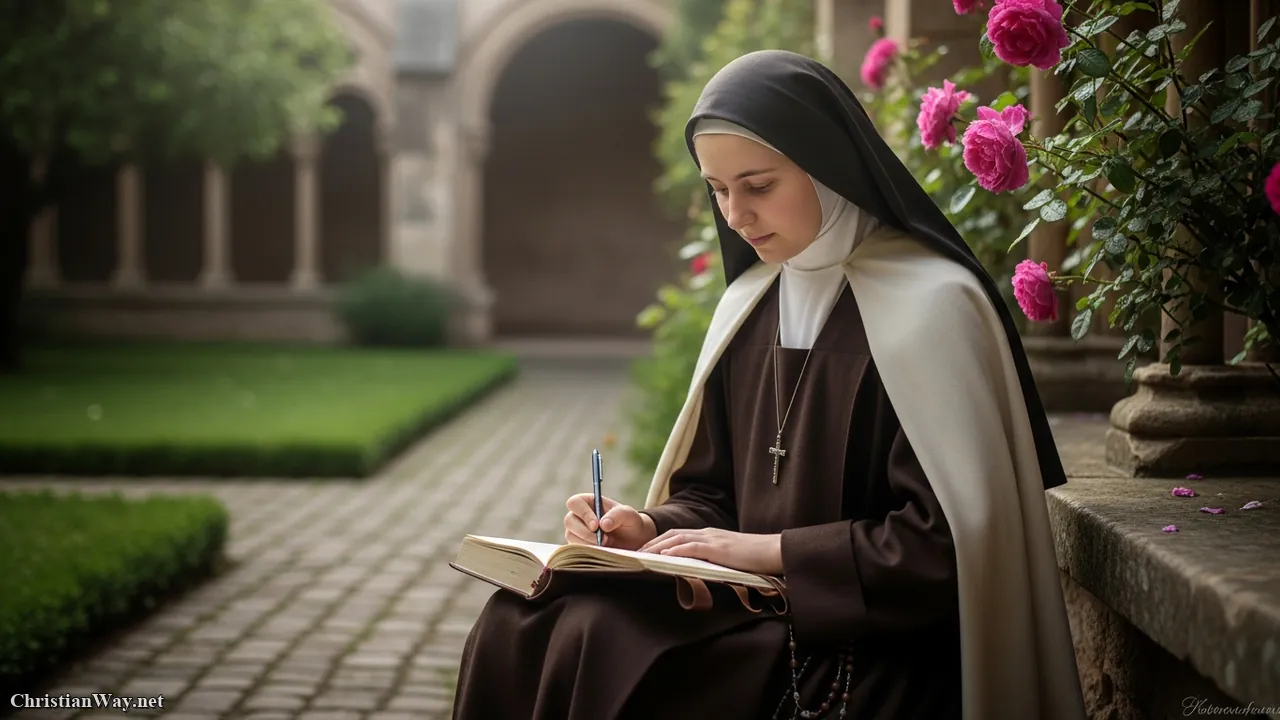
Thérèse revolutionized spiritual theology by democratizing holiness. She emphasized that God does not demand great deeds, but great love. Picking up a pin from the floor with love can save a soul. Her insights into the mercy of God are profound; she saw herself as a little flower in God’s garden, content to be exactly who she was.
In a world of “influencers” and high-performance pressure, Thérèse is a breath of fresh air. She tells the young person who feels average, unseen, or overwhelmed: You are enough. Your small efforts, your hidden tears, and your quiet prayers are treasures to God. You do not need to be famous to be great.
Spiritual Highlights
- Title: The Little Flower.
- Key Lesson: Doing small things with great love.
- Scripture: “Unless you turn and become like children, you will never enter the kingdom of heaven.” (Matthew 18:3)
Top 3. Blessed Chiara Luce Badano: The Light in Darkness
As we enter the top three, we meet a modern teenager who loved tennis, swimming, and pop music. Chiara Badano was a vibrant Italian girl associated with the Focolare Movement. At 17, she was diagnosed with a painful bone cancer. As she lost the use of her legs and faced agonizing treatment, she refused morphine so she could stay lucid and offer her pain to Jesus. She would say, “For you, Jesus. If you want it, I want it too.”

Chiara’s life is a masterclass in *redemptive suffering*. She did not waste her pain. She transformed her hospital room into a sanctuary of joy, comforting her parents and friends even as she died. She showed that joy is not the absence of suffering, but the presence of Jesus. Her nickname, “Luce” (Light), was given to her because of the brightness of her eyes even in death.
For youth facing depression, illness, or the “dark nights” of growing up, Chiara is a sister who understands. She teaches us that we don’t have to be victims of our circumstances. We can choose how we respond. We can choose love over despair, and in doing so, we become lights for everyone around us.
Spiritual Highlights
- Last Words: “Bye, Mum. Be happy, because I am.”
- Key Lesson: Joy is a choice, even in suffering.
- Scripture: “I rejoice in my sufferings for your sake.” (Colossians 1:24)
Top 2. Blessed Pier Giorgio Frassati: The Man of the Beatitudes
Pier Giorgio Frassati is the saint for the energetic, the adventurous, and the socially conscious. A handsome engineering student in Turin in the 1920s, he loved mountain climbing, smoking a pipe, and playing pranks on his friends. But underneath his rugged exterior was a heart on fire. He spent his free time serving the poor in the slums, often giving away his train money and running home so he could feed a hungry family.
Pope John Paul II called him the “Man of the Beatitudes.” Pier Giorgio integrates the spiritual life with the active life perfectly. He shows that being holy doesn’t mean being boring or withdrawn. He brought his friends to Mass, and he brought Jesus to the mountains. His life was a vertical ascent—both up the Alps and up toward God.
He is the perfect patron for young adults seeking balance. He challenges you to live life to the full—to study hard, play hard, and pray hard. He reminds us that the poor are not a statistic, but our brothers and sisters. If you want to know how to be a cool, modern Christian, look at Pier Giorgio.
Spiritual Highlights
- Passion: “Verso l’alto” (To the heights).
- Key Lesson: Holiness is an adventure; service to the poor is non-negotiable.
- Scripture: “Blessed are the merciful, for they shall receive mercy.” (Matthew 5:7)
Top 1. Blessed Carlo Acutis: The Saint in Sneakers
Finally, we arrive at our number one, a young man who speaks the language of the 21st century more than any other. Blessed Carlo Acutis, who died in 2006 at the age of 15, was a gamer, a programmer, and a regular kid who wore Nike sneakers and jeans. He used his computer skills to code a website cataloging Eucharistic miracles around the world. He famously said, “The Eucharist is my highway to Heaven.”

Carlo is the first “Millennial” saint (beatified). His theology is centered on the *Real Presence*. In a digital age where everything is virtual and fleeting, Carlo anchored his life in the tangible reality of Christ in the Bread of Life. He understood that the internet could be a tool for evangelization, not just a distraction. He saw the danger of becoming photocopies of social media trends and urged us to remain “originals” as God created us.
For every young person with a smartphone, Carlo is your intercessor. He shows that you can be holy while playing PlayStation, as long as Christ is the center of your heart. He challenges us to use technology for good, to limit our screen time in favor of altar time, and to realize that the greatest miracle is not found online, but in the Tabernacle next door.
Spiritual Highlights
- Legacy: The “Cyber-Apostle” of the Eucharist.
- Key Quote: “All people are born as originals but many die as photocopies.”
- Scripture: “I am the bread of life.” (John 6:35)
Conclusion: Reflect and Pray
My dear brothers and sisters, as we look back on these ten radiant faces, we see that holiness has no one “type.” It looks like a computer geek, a mountain climber, a brave girl, a runaway student. The Holy Spirit is the ultimate artist, and He wishes to paint a masterpiece using the canvas of your life.
Do not be afraid of your youth. Do not wait until you are older to love God with all your heart. These friends are cheering you on from heaven, ready to help you navigate the storms of this life. Ask for their intercession. Speak to them as you would a friend. And most importantly, listen to the voice of the One who called them—and is now calling you.
— Fr. John Matthew, for Christian Way