Dear friends in Christ,
There are moments in the life of the Church when the passing of a shepherd invites us to become still. The world may remember the speeches, the journeys, the public gestures, and the debates that surrounded him. But faith asks us to look more deeply. It asks us to remember a man not only through the office he held, but through the Gospel he tried to serve. So it is with Pope Francis, born Jorge Mario Bergoglio in Buenos Aires in 1936 and called from this earthly life on Easter Monday, 21 April 2025.
For more than twelve years, Pope Francis served as Bishop of Rome and successor of Saint Peter. From the first evening of his pontificate, when he appeared before the crowds in Saint Peter’s Square and asked them to pray for him, he revealed something essential about his understanding of leadership. He did not present himself first as a distant ruler. He stood before the Church as a man in need of grace, a pastor in need of prayer, and a disciple whose life belonged to Jesus Christ.
Pope Francis was loved by many because he spoke often of mercy, tenderness, the poor, the forgotten, the migrant, the wounded family, the prisoner, the elderly person who feels unseen, and the sinner who fears that there is no road home. He was also a figure who inspired discussion, concern, enthusiasm, and disagreement within the Church and beyond it. Such responses are not surprising. A pope who calls the world to conversion will often disturb the places where comfort has become more important than love.
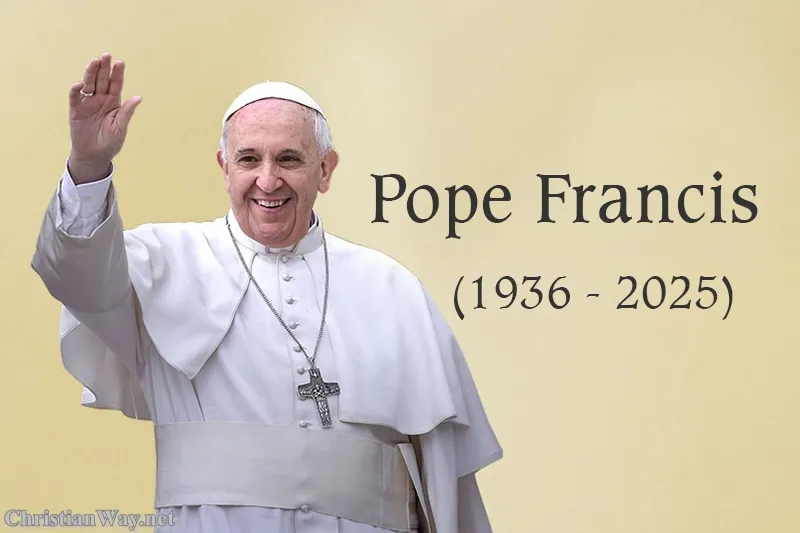
Pope Francis (1936–2025)
Yet beneath every gesture and every public word was a question that remained constant throughout his life: What does the Gospel ask of us now? Not merely what is convenient, familiar, or admired by the world, but what does Christ ask of His Church? Pope Francis repeatedly returned to the conviction that the Church must not become closed within herself. She must go out, as Christ went out. She must draw near, as Christ drew near. She must remember that the Lord is found not only in places of beauty and security, but also among those who suffer, those who are forgotten, and those who carry burdens too heavy to bear alone.
His life was not a perfect story, because no human life is perfect. It was the story of a man formed by prayer, illness, struggle, pastoral responsibility, and the relentless mercy of God. It was the story of a Jesuit who became a bishop, a cardinal, and finally a pope, while never entirely losing the accent of a parish priest who wanted to remain close to ordinary people.
To remember Pope Francis is not simply to look backward. It is to hear again the call of Christ: “Follow me.” It is to ask whether our own faith has become too comfortable, too enclosed, too concerned with ourselves. It is to ask whether we see the poor, forgive those who have wounded us, care for the world entrusted to us, and make room in our hearts for people whom society has pushed to the edges.
Biographical and Spiritual Profile
| Attribute | Detail |
|---|---|
| Birth Name | Jorge Mario Bergoglio |
| Lifespan | 17 December 1936 – 21 April 2025 |
| Birthplace | Buenos Aires, Argentina |
| Religious Order | Society of Jesus (Jesuits) |
| Pontificate | 13 March 2013 – 21 April 2025 |
| Papal Motto | Miserando atque eligendo — “By having mercy, he called him.” |
| Spiritual Emphases | Mercy, missionary discipleship, care for the poor, peace, fraternity, and care for creation. |
The Early Years: A Life Formed in Buenos Aires
Jorge Mario Bergoglio was born on 17 December 1936 in Buenos Aires, Argentina, into a family of Italian immigrant roots. His parents carried with them the faith, resilience, and traditions of families who had crossed the sea in search of a new beginning. Their home was not a palace of privilege. It was a home shaped by work, family affection, ordinary responsibilities, and the kind of religious faith that becomes woven quietly into daily life.
The young Jorge grew up in a world marked by social change, political uncertainty, and the deep contrasts often found in large cities. Buenos Aires was a place of culture, energy, ambition, poverty, and struggle. It was a city where wealth and hardship could exist only streets apart. Long before he became known to the world, he was learning to see human life in all its complexity.
His early years included ordinary interests. He enjoyed football, studied chemistry, and knew the normal hopes and uncertainties of youth. Yet God was preparing his heart through experiences that he could not have fully understood at the time. A serious illness in his younger years brought him face to face with human weakness and physical frailty. Such suffering can make a person bitter, fearful, or closed within himself. But in the life of Jorge Bergoglio, it seems to have awakened a deeper tenderness toward those who suffer.
Later in life, Pope Francis often showed a particular closeness to the sick, the elderly, people with disabilities, and those whose bodies or circumstances had made them feel forgotten. This tenderness was not merely an idea. It seemed to come from someone who knew that human strength is fragile and that every person needs mercy.
The Psalmist writes, “My flesh and my heart faileth: but God is the strength of my heart, and my portion for ever” (Psalm 73:26). These words speak to the hidden lesson of frailty. Our strength may fail. Our plans may change. Our bodies may weaken. But God does not abandon us. The Lord often uses the places where we feel most vulnerable to teach us how deeply we need Him.
The Mercy That Called Him
One of the most important moments in the spiritual story of Jorge Mario Bergoglio took place when he was still young. On the feast of Saint Matthew, he entered a church and experienced what he later described as a profound encounter with the mercy of God. It was not merely an emotional experience. It became a turning point in his understanding of vocation.
The Gospel tells us that Jesus saw Matthew, a tax collector sitting at his place of work, and said, “Follow me” (Matthew 9:9). Matthew was not a man admired by his society. He was considered compromised, morally suspect, and closely connected to a system many people resented. Yet Jesus saw him. Jesus called him. Jesus gave him a new future.
This Gospel scene became deeply important to the future Pope Francis. His episcopal and papal motto, Miserando atque eligendo, may be understood as a meditation on the merciful gaze of Christ: seeing a person with compassion and calling that person into a new life.
This is a truth every Christian needs to remember. God does not call us because we have already become perfect. He calls us because He loves us. He does not wait until our past is clean, our fears are gone, or our hearts are fully ready. He comes to us where we are. He sees us in our weakness. He knows our failures. And still He says, “Follow me.”
For Jorge Bergoglio, that call would lead him toward the Society of Jesus.
The Jesuit Path: Discernment, Service, and Mission
Jorge Mario Bergoglio entered the Jesuit novitiate in 1958. The Society of Jesus, founded by Saint Ignatius of Loyola, is known for its love of learning, disciplined prayer, missionary spirit, and desire to serve Christ wherever the need is greatest. Jesuit spirituality teaches believers to seek God in all things, to examine the movements of the heart, and to ask not simply what they want, but what God desires.
This spiritual formation shaped Pope Francis deeply. Throughout his life, he spoke often about discernment. In a world that urges people to act quickly, react emotionally, and follow every passing desire, discernment calls us to become still before God. It asks us to look honestly at our motives, to listen to Scripture, to seek wise counsel, and to ask where the Holy Spirit is leading.
Discernment is not simply choosing between good and bad. Often, the more difficult question is choosing between two things that both appear good. A person may wonder whether to remain in a familiar place or accept a new responsibility. A young adult may wonder about marriage, religious life, or another vocation. A family may wonder how to make a painful decision with love. A Christian may feel called to speak, yet be unsure whether silence would be wiser.
Pope Francis often reminded believers that God does not lead His people merely through rules and fear. He leads through grace, prayer, truth, conscience, and the patient work of conversion. This does not mean that Christian teaching becomes uncertain or that truth changes according to personal preference. Rather, it means that truth must be received in a heart willing to be changed by Christ.
The years of his priesthood and religious life were not always easy. He carried serious responsibilities within the Jesuit community during difficult years in Argentina. The country endured political violence, fear, social division, and human suffering. These were years that placed spiritual leaders under enormous pressure. The choices were not always simple, and the wounds of that period would remain part of the complicated history through which he lived.
Yet these years formed in him a kind of pastoral realism. He learned that human life is often lived in circumstances where every choice carries pain. He learned that leadership is not always about receiving applause. Sometimes it means carrying burdens quietly, making difficult decisions, and trusting God when there is no perfect answer.
A Pastor Close to Ordinary People
Before becoming pope, Jorge Bergoglio served as Archbishop of Buenos Aires and later as a cardinal. In these roles, he became known for a relatively simple way of life and for his closeness to ordinary people. He did not want the Church to become separated from the daily struggles of families, workers, young people, the poor, and those living in the crowded neighborhoods of the city.
The image of the shepherd was central to his spiritual vision. Jesus says, “I am the good shepherd: the good shepherd giveth his life for the sheep” (John 10:11). A shepherd does not care for sheep from a distance. He knows their needs, walks with them, protects them, and remains present when danger comes.
Pope Francis often spoke to priests and bishops about being close to the people entrusted to them. He believed that pastors should know the smell of hospitals, prisons, poor neighborhoods, family grief, and ordinary human struggle. His words were sometimes striking because they challenged the Church not to become too polished, too distant, or too concerned with preserving appearances.
But this message was never meant only for clergy. Every Christian is called to some form of shepherding. Parents shepherd children. Teachers shepherd students. Friends shepherd one another through sorrow. Older people shepherd younger generations by their wisdom. We all influence someone, whether we realize it or not.
The question is not whether we hold a title. The question is whether our life helps another person move closer to Christ.
The Evening of 13 March 2013
On 13 March 2013, Cardinal Jorge Mario Bergoglio was elected Bishop of Rome. He chose the name Francis, becoming the first pope to take that name. He was also the first Jesuit pope and the first pope from the Americas.
The name Francis immediately carried a message. Saint Francis of Assisi is loved across Christian traditions and throughout the world as a witness of humility, poverty of spirit, peace, care for creation, and love for the poor. By choosing this name, the new pope signaled that his pontificate would be shaped by simplicity and missionary concern.
When he appeared on the balcony of Saint Peter’s Basilica, he greeted the people simply. Before giving his blessing, he asked them to pray for him. It was a powerful moment because it revealed his understanding of the papacy. The Pope is not above the need for grace. He is not beyond weakness. He is a servant who must also be carried by the prayers of the Church.
The title traditionally given to the Pope is “Servant of the Servants of God.” Pope Francis sought to make this more than a formal phrase. He wanted the Church to remember that authority in the Gospel is not domination. It is service.
Jesus tells His disciples, “Whosoever will be great among you, shall be your minister” (Matthew 20:26). These words turn the logic of the world upside down. The world often measures greatness by wealth, power, influence, and the ability to control others. Christ measures greatness by love. He measures it by humility. He measures it by the willingness to serve without demanding recognition.
Pope Francis returned to this Gospel vision throughout his papacy. He often chose gestures that spoke without many words: visiting prisoners, embracing the sick, sitting with refugees, washing the feet of people who felt forgotten, and asking ordinary believers to pray for him.
A Church That Goes Out
One of the central images associated with Pope Francis was that of a Church that “goes out.” He warned against a Church that becomes too absorbed in herself, too focused on protecting structures, too afraid to encounter the wounded world outside her doors.
This does not mean that the Church should abandon worship, doctrine, prayer, or the life of the sacraments. On the contrary, the Church goes out because she has encountered Christ. She goes out because the Eucharist sends believers into the world with the love they have received. She goes out because the Gospel is not meant to remain behind closed doors.
The first disciples did not remain hidden after Pentecost. The Holy Spirit gave them courage to speak, serve, suffer, and proclaim the risen Lord. The Church began as a community sent outward.
Pope Francis often described the Church as a field hospital, a place where wounded souls could find care. This image touched many people because the world is filled with wounds that are not always visible. There are people carrying shame, grief, loneliness, addiction, broken relationships, fear of death, and the painful belief that God has rejected them.
A field hospital does not first ask whether a wounded person is worthy of help. It begins by tending the wound. In the same way, the Church must never lose the heart of Christ, who saw suffering people and was moved with compassion.
Mercy at the Heart of the Gospel
Mercy was perhaps the word most closely associated with Pope Francis. He returned to it in homilies, prayers, meetings, documents, and gestures of pastoral care. For him, mercy was not a softer version of Christianity. It was the heart of the Gospel.
Jesus does not call sin good. He calls sinners to repentance. But He meets them with mercy. When the woman caught in adultery is brought before Him, Jesus does not permit the crowd to destroy her. He says, “Neither do I condemn thee: go, and sin no more” (John 8:11). Mercy comes first, not because truth does not matter, but because a heart crushed by condemnation cannot easily hear the call to new life.
Pope Francis understood that many people carry wounds connected to faith itself. Some have felt judged, excluded, ignored, or treated as though their pain made them less worthy of love. Others have wandered far from prayer because they believed they could never return. Still others have become hardened by suffering and no longer know how to trust God.
His repeated message was that Christ does not close the door on the person who comes back. The Father in the parable of the prodigal son does not wait with anger. He runs to meet his child. He embraces him before the young man can fully explain himself.
This is the mercy Pope Francis wanted the Church to embody. Not a mercy that ignores sin, but a mercy that refuses to let sin have the final word. Not a mercy that erases moral responsibility, but a mercy that makes conversion possible.
The Jubilee of Mercy
The Extraordinary Jubilee of Mercy became one of the defining spiritual events of his pontificate. It invited Catholics throughout the world to return to prayer, confession, forgiveness, and the works of mercy.
The works of mercy are not abstract ideas. They include feeding the hungry, giving drink to the thirsty, welcoming the stranger, visiting the sick, visiting prisoners, comforting the sorrowful, forgiving injuries, and praying for the living and the dead.
These works reveal what mercy looks like when it becomes real. Mercy is not simply feeling sorry for someone. It is allowing compassion to move our hands, our time, our money, our attention, and our choices.
Pope Francis repeatedly reminded Christians that we cannot claim to love God while remaining indifferent to suffering around us. Saint John writes, “My little children, let us not love in word, neither in tongue; but in deed and in truth” (1 John 3:18).
This challenge is deeply personal. It asks us to look at our own lives. Who is hungry near us? Who is lonely? Who is grieving? Who needs forgiveness? Who have we quietly decided is not worth our patience? Who have we stopped seeing?
Mercy begins when we allow Christ to open our eyes.
The Poor and the Peripheries
Pope Francis often spoke about the “peripheries.” By this, he did not mean only distant places on a map. He meant every person or community pushed to the edge of human concern.
The peripheries include the poor person who cannot afford basic needs, the elderly person abandoned by family, the prisoner treated as though he no longer has dignity, the migrant living in fear, the child who feels unseen, the sick person who has become tired of hospitals, the disabled person treated as an inconvenience, and the lonely soul who carries sorrow in silence.
Jesus was never afraid to go to the edges. He touched lepers. He sat at table with tax collectors. He spoke with the Samaritan woman. He allowed children to come near Him. He stopped for the blind man crying by the roadside. He saw people whom others had trained themselves not to see.
Pope Francis believed that the Church must continue this movement of Christ. It is not enough to speak beautifully about charity while remaining far from those who suffer. The Gospel calls us to draw near.
This is not always easy. It can be uncomfortable to encounter poverty, illness, grief, or social injustice. It is easier to turn away, to say that someone else will help, or to protect ourselves from the pain of others. But the Cross tells us that God does not save humanity from a distance. He enters suffering. He takes it upon Himself. He remains present in the place of pain.
Seeing the Face of Christ
Jesus says, “Inasmuch as ye have done it unto one of the least of these my brethren, ye have done it unto me” (Matthew 25:40). These words are among the most demanding in the Gospel.
They teach us that the poor are not merely a social issue. They are a spiritual encounter. The suffering person is not only someone in need of our generosity. In a mysterious way, Christ comes to us through them.
This does not mean that poverty is good or that suffering should be romanticized. Christians must work for justice, practical help, dignity, and protection for those who are vulnerable. But it does mean that the poor have something to reveal to us. They reveal how dependent we all are upon grace. They reveal the emptiness of a life built only on possessions. They remind us that every human being has a dignity that cannot be measured by wealth or success.
Pope Francis’s legacy challenges us to ask whether our faith has become too private. Do we pray only for our own needs? Do we care only about the people who look like us, think like us, or belong to our circle? Or are we willing to go toward the person who feels forgotten?
Care for Creation and the Cry of the Earth
Another major part of Pope Francis’s teaching was his call to care for creation. His encyclical Laudato Si’ invited Christians and people of goodwill to recognize that the earth is not simply an object to be used without restraint. It is God’s creation, entrusted to humanity with responsibility.
The Bible begins with the beauty of creation. God sees what He has made and declares it good. Humanity is given a role of stewardship. We are called to cultivate and care for the world, not to exploit it carelessly.
“The earth is the Lord’s, and the fulness thereof,” says Psalm 24:1. This verse changes the way we see everything. The world does not belong to us in an absolute sense. It belongs to God. We receive it as a gift.
Pope Francis also insisted that care for creation cannot be separated from care for the poor. When land is damaged, water is polluted, forests are destroyed, or disasters strike, those with the fewest resources often suffer first. Environmental responsibility is therefore not only about protecting beautiful landscapes. It is also about protecting human dignity.
His call was not meant to become a source of fear or political division. It was a call to gratitude, humility, restraint, and responsibility. It invited families, communities, and nations to ask whether our way of living reflects love for those who will come after us.
A Spirituality of Gratitude
Modern life often teaches us to consume without reflection. We are encouraged to want more, waste more, and measure our worth by what we own. Pope Francis urged people to recover a spirit of gratitude.
Gratitude changes the heart. It teaches us to see food as a gift rather than something to waste. It teaches us to see water as a blessing. It teaches us to see a child, a tree, a garden, a meal, and a morning sky as signs of God’s generosity.
Christian care for creation is not worship of nature. It is worship of the Creator. We protect what God has made because we love the One who made it.
This spirituality can become practical in ordinary life. We can teach children not to waste. We can care for our neighborhoods. We can live more simply. We can refuse to treat people, animals, places, and possessions as disposable. We can remember that a grateful life is a freer life.
Dialogue, Peace, and the Culture of Encounter
Pope Francis served during years marked by war, political division, religious tension, and growing hostility between people who disagreed. He often called the world to dialogue, peace, and what he described as a culture of encounter.
A culture of encounter does not mean pretending that all people think alike. It does not mean surrendering Christian truth or abandoning moral conviction. Rather, it means refusing to treat another person as an enemy simply because they are different from us.
Jesus speaks with people others avoided. He listens. He asks questions. He tells the truth. He does not compromise the holiness of God, yet He never loses compassion for the human person standing before Him.
Pope Francis believed that Christians must bring this same spirit into a wounded world. Peace cannot grow where contempt is constantly fed. It cannot grow where people refuse to listen. It cannot grow where fear becomes stronger than love.
“Blessed are the peacemakers: for they shall be called the children of God” (Matthew 5:9). A peacemaker is not someone who avoids every difficult conversation. A peacemaker is someone who brings the spirit of Christ into difficulty. He or she refuses hatred. He or she speaks truth without cruelty. He or she works for reconciliation without pretending that wounds do not exist.
Pope Francis also encouraged greater friendship and understanding among Christians of different traditions. Catholics, Orthodox Christians, Anglicans, Protestants, and other followers of Jesus continue to carry differences in history, theology, and practice. Yet all who confess Christ are called to pray for unity and to love one another as brothers and sisters.
Christian unity does not mean shallow agreement. It means seeking the unity for which Jesus prayed: “That they all may be one” (John 17:21). This unity begins with humility, prayer, repentance, and the willingness to see Christ at work beyond the limits of our own preferences.
Synodality: Walking Together in Faith
One of the themes Pope Francis emphasized strongly was synodality. The word may sound unfamiliar, but its meaning is simple: walking together.
For Pope Francis, the Church was not meant to be a place where a small number of people speak while everyone else remains silent. He called for deeper listening among bishops, priests, religious, and lay believers. He wanted the Church to listen carefully to Scripture, Tradition, the saints, the poor, families, young people, those carrying pain, and above all, the Holy Spirit.
This did not mean that truth should be decided by opinion or popularity. The Church does not belong to passing cultural trends. She belongs to Jesus Christ. But listening is still necessary because the Church must know the real lives of the people she serves.
A pastor cannot care properly for people he never hears. A family cannot remain healthy when no one listens. A marriage cannot grow when each person is only waiting for a chance to speak. A Christian community cannot bear fruit when people treat one another as rivals.
Synodality, at its best, is a call to humility. It asks us to remember that we do not possess all wisdom alone. It asks us to pray before speaking. It asks us to listen not only for what confirms our own opinions, but for what God may be saying through another person.
The Church as a Pilgrim People
The Church is not a museum for perfect people. She is a pilgrim people, walking through history toward the Kingdom of God. Along the way, she must repent, be renewed, return to Christ, and learn again how to love.
Pope Francis often reminded believers that the Church must not become imprisoned by fear. A Christian who lives only to protect what is familiar may slowly lose the courage of mission. The first disciples were sent into a world that did not always welcome them. They carried the Gospel across cultures, languages, dangers, and misunderstandings.
The Church today still needs that courage. She needs faithful Christians who love Scripture, worship sincerely, serve the poor, protect the vulnerable, defend truth, and bring the peace of Christ into homes, workplaces, schools, and communities.
Walking together does not mean walking without direction. Christ is the way. His Gospel is the light. The Church walks together only when she keeps her eyes upon Him.
Suffering, Frailty, and the Final Easter
The later years of Pope Francis’s life were marked by increasing physical weakness. He endured illness, medical treatment, pain, and the visible limitations that come with age. Yet he continued to serve as long as he could, praying, speaking, receiving visitors, and carrying the concerns of the Church.
There was something profoundly human in this final season of his life. The world had known Pope Francis as a strong public figure, travelling across nations and speaking before enormous crowds. But age and illness gradually revealed another side of discipleship: the humility of receiving help.
Many people know this hidden cross. A person who once worked easily may become dependent on others. A parent may grow old and need the care once given to children. A strong body may become weak. A mind may become tired. These changes can be painful because they remind us that we are not masters of our own lives.
Yet weakness is not useless in the eyes of God. Saint Paul writes, “My grace is sufficient for thee: for my strength is made perfect in weakness” (2 Corinthians 12:9). The final years of Pope Francis’s life became a quiet witness to this truth. Even when outward strength diminished, prayer remained. Even when travel became difficult, his spiritual concern for the world continued.
He died on Easter Monday, 21 April 2025, during the octave of the Resurrection. For Christians, Easter is the proclamation that death does not have the final word. Christ has risen. The grave is not the end. Love is stronger than death.
We do not need to romanticize death in order to believe this. Death remains painful. It brings tears, separation, memory, and grief. But for those who belong to Christ, death is also placed beneath the light of the Resurrection.
Jesus says, “I am the resurrection, and the life: he that believeth in me, though he were dead, yet shall he live” (John 11:25). These words do not remove sorrow, but they give sorrow a horizon of hope.
The Legacy of Pope Francis
The legacy of Pope Francis will continue to be considered for many years. Historians will study his writings, his appointments, his travels, his reforms, his pastoral decisions, and the debates that surrounded his pontificate. Catholics will continue to reflect on his teaching about mercy, evangelization, the poor, creation, peace, dialogue, and synodality.
But perhaps his deepest legacy is not found in a single document or gesture. Perhaps it is found in the questions he placed before the Church.
Will we be a Church that goes out?
Will we make room for wounded people?
Will we care for the poor not only in words, but in action?
Will we forgive?
Will we pray?
Will we speak truth with love?
Will we remember that the Christian life is not about protecting our comfort, but about following Jesus Christ?
Pope Francis often called believers back to the simple center of the Gospel. Christ is not an idea. He is the living Lord. He is found in Scripture, prayer, worship, the sacraments, the poor, the wounded, the stranger, and the daily acts of mercy that quietly transform the world.
His life also reminds us that every pope is a servant, not a substitute for Christ. The Church does not belong to any one pope, personality, or generation. She belongs to Jesus. Every faithful pastor points beyond himself toward the Lord.
In remembering Pope Francis, we give thanks for the ways he called people to encounter Christ more deeply. We also remember that the Gospel he preached is now entrusted again to us. The question is no longer only what Pope Francis said or did. The question is what we will do with the grace God has given us.
Reflect and Pray
Dear friends, the life of Pope Francis invites us to look again at the heart of the Gospel. Christ sees the weak. Christ forgives the sinner. Christ draws near to the poor. Christ comforts the grieving. Christ calls His Church to go out in love.
Perhaps there is someone you have forgotten to forgive. Perhaps there is a person near you who feels unseen. Perhaps your own heart has become tired, fearful, or closed. Perhaps you have been carrying a burden that you no longer know how to bring to God.
Do not be afraid to begin again.
The mercy of Christ has not grown weak. The Gospel has not lost its power. The Resurrection has not become less true. God still calls ordinary people into lives of faithfulness, compassion, courage, and hope.
May we remember Pope Francis with gratitude, commend him to the mercy of God, and allow his witness to lead us more deeply toward Jesus Christ.
Lord Jesus Christ,
You called Pope Francis to serve Your Church
as Bishop of Rome and shepherd of Your people.
Receive him into the peace of Your eternal kingdom
and grant him rest in the light of Your mercy.
Teach us to be humble in service,
faithful in prayer,
merciful toward those who suffer,
and courageous in the work of the Gospel.
Open our eyes to the poor, the lonely, and the forgotten.
Give us hearts that forgive.
Make Your Church a place of truth, healing, holiness, and hope.
And lead us always closer to You,
who live and reign with the Father and the Holy Spirit,
God for ever and ever. Amen.
May the peace of Christ dwell richly in your heart, and may the witness of Pope Francis inspire you to walk with humility, mercy, and hope.
— Fr. John Matthew