Dear friends in Christ,
Few names in the Gospels are spoken with such sorrow as the name of Judas Iscariot. He was one of the Twelve. He walked the roads of Galilee with Jesus, heard the same parables, witnessed the same miracles, sat at the same table, and received the same call to follow. He was not a distant enemy who knew nothing of Christ. He lived close to the light. And yet his story became the story of betrayal.
For many believers, Judas is difficult to contemplate. His life confronts us with questions that touch the deepest mysteries of the human heart. How can someone walk beside Jesus and still turn away? How can a person hear words of mercy and yet remain closed to mercy? What happens when disappointment, greed, fear, or hidden resentment is allowed to grow in silence? And what does Judas teach us about freedom, repentance, despair, and the love of God?
It is easy to speak about Judas as though he were nothing more than a dark figure in the Passion story. But the Gospels do not present him as a cartoon villain. They present him as a real person, called by Christ and entrusted with a place among the apostles. His tragedy is not that he was created for betrayal. His tragedy is that he stood near the love of Christ and yet allowed his heart to move away from that love.
The story of Judas Iscariot should not lead us toward cold judgment of another soul. It should lead us toward humility. Every Christian must ask whether there are hidden places in the heart that we refuse to surrender to Christ. We may never betray Jesus in the way Judas did, yet we can still betray Him through dishonesty, indifference, pride, cruelty, greed, or the refusal to forgive. The story of Judas does not only belong to the past. It becomes a mirror held gently, but truthfully, before every human heart.
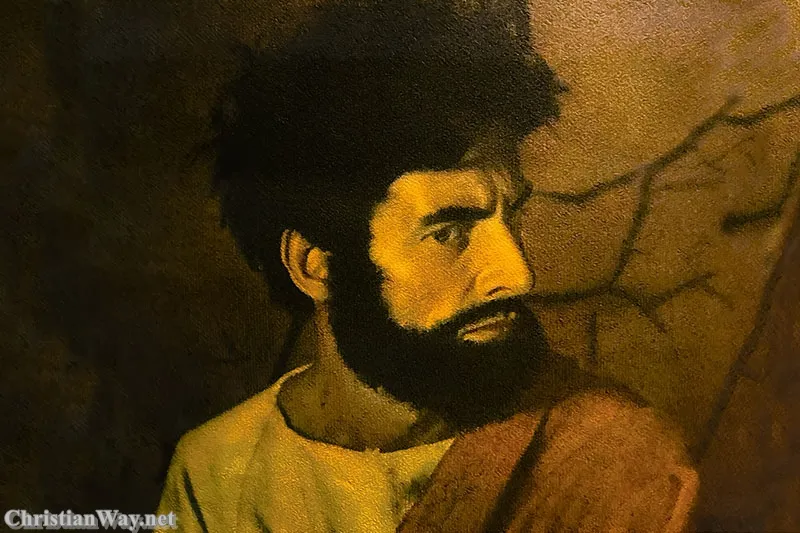
And yet even here, in the sorrowful memory of Judas, the Gospel continues to speak of mercy. Jesus did not cease to love Judas. He warned him, invited him, washed his feet, shared bread with him, and called him “friend” even in the garden. The mystery of Judas is not that Christ withheld grace. It is that a human heart can resist the grace that stands so near.
Called by Jesus and Counted Among the Twelve
Judas Iscariot was not merely someone who appeared near the end of Jesus’ earthly ministry. He was chosen among the Twelve apostles. The Gospel of Luke tells us that Jesus spent the night in prayer before choosing His apostles, and Judas was among those named (Luke 6:12–16). This detail is important. Judas was included in the circle formed by Christ Himself.
A Call That Was Real
The apostles were not chosen because they were already perfect. Peter would deny Jesus. Thomas would struggle to believe. James and John would sometimes seek their own honor. The disciples often misunderstood the Lord’s teaching and became afraid when the path grew difficult.
Judas too was called into this community of imperfect people. He heard Jesus teach about the Kingdom of God. He watched Him heal the sick, touch lepers, forgive sinners, calm storms, and welcome those whom society had pushed aside. Judas saw the compassion of Christ with his own eyes.
He was also entrusted with responsibility. The Gospel of John says that Judas kept the common purse for the disciples (John 12:6). This suggests that he was trusted with a practical task within the group. Even this detail carries a quiet warning. It is possible to have a role in religious life, to be near holy things, to work for a community, and yet still carry wounds or temptations that remain hidden.
The call of Judas reminds us that outward closeness to faith is not the same as inner surrender. A person may attend worship, know Scripture, serve in ministry, speak religious language, and still keep part of the heart closed to God. Christ does not force Himself into those hidden places. He knocks. He calls. He waits. But love, if it is truly love, does not destroy human freedom.
This is why the story of Judas is not only about betrayal. It is also about the dignity and danger of freedom. God invites us into life, but He does not turn us into machines. He gives us the fearful ability to say yes or no. He gives us the freedom to receive mercy or to resist it. And every day, in ways both small and great, we are asked again what we will do with the love offered to us.
The Slow Closing of the Heart
Betrayal rarely begins in one dramatic moment. More often, it grows slowly. A wound is left unhealed. A disappointment is hidden. A desire for control is protected. A small compromise is repeated. Resentment becomes familiar. The conscience grows quieter. What began as a temptation becomes a pattern, and what became a pattern begins to shape the heart.
The Gospels do not reveal every detail of Judas’s inner struggle. We should be careful not to imagine more than Scripture tells us. Yet they do show us that something had begun to grow within him before the night of betrayal.
The Fragrance of Love and the Love of Money
One revealing moment occurs when Mary of Bethany anoints the feet of Jesus with costly perfume. The fragrance fills the house, and the act becomes a beautiful sign of devotion and love. Yet Judas protests. He says that the perfume could have been sold and the money given to the poor.
On the surface, his words sound reasonable. Care for the poor is a holy concern. But the Gospel of John tells us that Judas did not speak this way because he cared for the poor, but because he had been taking from the common purse (John 12:4–6).
This passage is painful because it reveals how easily good words can hide a disordered heart. A person can speak about justice while acting selfishly. A person can use moral language to cover greed. A person can appear concerned about others while quietly serving only themselves.
This danger does not belong only to Judas. It can appear in all of us. We may use religious words to avoid repentance. We may criticize others in order to avoid looking at ourselves. We may speak loudly about principles while neglecting the people closest to us. We may even do good things, yet secretly desire praise, control, or power.
The Gospel invites us to ask not only, “What am I doing?” but also, “Why am I doing it?” The heart matters. Love for the poor matters. Service matters. Truth matters. But the Lord sees beneath the surface. He knows whether our actions arise from love or from a hidden need to protect ourselves.
When Disappointment Is Not Brought to Christ
Some Christians have wondered whether Judas expected Jesus to become a political Messiah who would overthrow Roman power. Others have wondered whether Judas became disappointed because Jesus refused the kind of earthly victory many people expected. Scripture does not give us enough detail to speak with certainty about every motive.
But we do know that disappointment can become spiritually dangerous when it is not brought honestly before Christ.
Many people begin their journey of faith with expectations. They expect God to remove suffering quickly. They expect prayer to solve every problem. They expect relationships to become easy. They expect the Church to be free from weakness. They expect life to unfold according to their plans.
Then hardship comes. A loved one becomes ill. A prayer seems unanswered. A trusted person fails. The Church disappoints. The future becomes uncertain. In those moments, the heart can either move toward Christ or begin to move away from Him.
There is no shame in bringing disappointment to God. The Psalms are full of honest cries. Jesus Himself prayed in Gethsemane with anguish. Faith is not pretending that pain does not hurt. Faith is allowing our pain to become prayer rather than bitterness.
Judas’s tragedy may help us see the importance of bringing hidden struggles into the light. A wound shared with Christ can begin to heal. A temptation confessed can lose some of its power. A disappointment spoken honestly before God can become a place of deeper trust. But what is hidden and protected in darkness often grows stronger.
Thirty Pieces of Silver and the Price of a Soul
The Gospels tell us that Judas went to the chief priests and asked what they would give him if he handed Jesus over to them. They agreed on thirty pieces of silver (Matthew 26:14–16).
The amount itself carries a painful symbolism. The One through whom all things were made was valued at the price of a slave. The Son of God, who had fed crowds, healed the sick, raised the dead, and offered forgiveness freely, was handed over for money.
What We Trade When We Lose Sight of Christ
It is tempting to imagine that Judas betrayed Jesus only because of money. Greed appears in the Gospel accounts, but the human heart is often more complicated than one visible motive. Betrayal may include fear, resentment, disappointment, ambition, confusion, or spiritual blindness.
Still, the thirty pieces of silver remain a haunting image. They ask us what we may be willing to trade for temporary gain. What do we sacrifice when we choose dishonesty? What do we lose when we allow money, status, pleasure, or approval to become more important than truth? What happens when we protect our image at the cost of someone else’s dignity?
Most betrayals do not happen in public. They happen in quiet decisions. A person lies to avoid consequences. A friend shares a private confidence. A worker acts dishonestly because no one is watching. A spouse allows resentment to grow in secret. A believer remains silent when courage is needed. A person chooses comfort over compassion.
The price may not be silver. It may be praise, security, influence, convenience, or the desire to avoid suffering. But every time we choose something lesser over the truth of Christ, we begin to understand the sorrow of Judas.
This does not mean that every sin makes us identical to Judas. The Gospel never invites us to despair. It invites us to repent. But it does call us to take sin seriously before it becomes a habit that hardens the heart.
The greatest danger is not that we are weak. Christ can meet weakness with mercy. The danger is that we begin to love our weakness more than we love the One who can heal us.
The Last Supper: Mercy Offered at the Table
The Last Supper is one of the most solemn moments in the Gospels. Jesus gathers with His disciples on the night before His death. He breaks bread. He shares the cup. He speaks of His body given and His blood poured out. He teaches them about love, service, prayer, and the coming gift of the Holy Spirit.
And Judas is there.
The One Who Washed the Feet of His Betrayer
The Gospel of John tells us that Jesus rose from supper, took a towel, and washed the feet of His disciples (John 13:1–17). The One who knew that Judas would betray Him still knelt before him. Jesus did not wash only the feet of Peter, John, James, and the faithful disciples. He washed the feet of Judas too.
This is almost too holy to understand. Christ knew the darkness that was approaching, and still He served. He knew that Judas would hand Him over, and still He bent down in humility. He knew the betrayal, and still He loved.
This does not mean that Jesus approved of what Judas would do. Love is not approval of sin. But it shows us that Christ’s mercy is not limited by our worthiness. He gives Himself even to those who resist Him.
There is something deeply comforting here for every person who feels ashamed. Christ knows the places in us that are weak, confused, selfish, or afraid. He knows the sins we have hidden from others. He knows the words we regret. He knows the betrayals, the failures, and the wounds we have caused.
And still He comes near.
The love of Christ is not naive. He sees clearly. Yet He does not turn away quickly. He continues to call. He continues to invite. He continues to place before us the possibility of returning.
“Is It I, Lord?”
During the supper, Jesus tells the disciples that one of them will betray Him. The disciples become sorrowful, and each begins to ask, “Lord, is it I?” (Matthew 26:22).
This question should remain in the heart of every Christian. It is easy to read the Passion story and look only at Judas. But the disciples’ question is more humble: “Is it I?”
Could I betray Christ through my impatience? Through the way I speak to my family? Through dishonesty in my work? Through the suffering I ignore? Through bitterness I refuse to release? Through the ways I use faith to judge others rather than love them?
The Christian life is not built upon comparing ourselves with the worst person in the room. It is built upon allowing Christ to search our hearts. The disciples’ question is not a cry of hopelessness. It is a prayer of humility.
“Lord, is it I?” means, “Show me where I need Your mercy. Reveal the places I cannot yet see. Do not let me become blind to my own heart.”
This is a prayer that can protect us from spiritual pride. The person who knows they need mercy is less likely to condemn others. The person who remembers their own weakness becomes more patient. The person who has received forgiveness becomes more ready to forgive.
The Kiss in the Garden
After the Last Supper, Jesus goes with His disciples to the garden of Gethsemane. There He prays in deep anguish, surrendering Himself to the will of the Father. The disciples struggle to remain awake. Soon, a crowd arrives with weapons.
Judas comes with them.
“Friend, Wherefore Art Thou Come?”
The sign Judas gives is a kiss. A gesture of friendship becomes the mark by which Jesus is handed over.
Matthew’s Gospel records that Jesus says to Judas, “Friend, wherefore art thou come?” (Matthew 26:50). The word is painful because Jesus does not respond with hatred. Even at the moment of betrayal, He addresses Judas with a word that still carries an invitation.
The love of Christ is astonishing. He does not pretend that Judas’s action is harmless. He knows the betrayal is real. Yet He does not curse Judas. He does not seek revenge. He speaks a word that leaves open the terrible question: Why have you come? What are you doing with the love that has been given to you?
This moment reveals the difference between the kingdom of Christ and the kingdoms of the world. Human beings often answer betrayal with betrayal, insult with insult, violence with violence. Jesus responds with truth and mercy. He does not escape the suffering before Him, but He refuses to become like those who harm Him.
For Christians, this is not an easy example. Most of us know the pain of being hurt by someone we trusted. Betrayal can come through a spouse, a friend, a business partner, a family member, a church leader, or someone whose love we believed was secure.
When betrayal happens, anger is natural. Grief is real. Boundaries may be necessary. Justice may be needed. But Christ calls us not to let betrayal destroy our capacity to love. He asks us to bring even this wound to Him.
The kiss of Judas reminds us that not every sign of closeness is true love. But the response of Jesus reminds us that genuine love remains holy even when it is wounded.
Peter and Judas: Two Failures, Two Different Responses
The Gospels place Peter and Judas near one another in the story of the Passion. Both fail Jesus. Judas betrays Him. Peter denies Him three times. Both are warned. Both are close to Christ. Both fall in a terrible hour.
Yet their stories do not end in the same way.
Peter Wept and Returned
After Peter denies Jesus, the rooster crows. Peter remembers the words of the Lord, and he goes out and weeps bitterly (Luke 22:61–62). His failure breaks him. But his sorrow becomes the beginning of repentance.
After the resurrection, Jesus comes to Peter by the Sea of Galilee. Three times Jesus asks, “Lovest thou me?” and three times Peter answers. The Lord restores him and gives him a mission: “Feed my sheep” (John 21:15–17).
Peter’s sin is not ignored. It is faced. Yet it is healed through mercy. Peter does not save himself by pretending nothing happened. He allows himself to be found by Christ.
This is the difference repentance makes. Repentance is not merely feeling sorry. It is turning back. It is bringing the truth of our failure into the light and trusting that Christ’s mercy is greater than our shame.
Judas and the Weight of Despair
The Gospels also describe Judas’s remorse after Jesus is condemned. He recognizes the gravity of what he has done. He returns the money and confesses that he has betrayed innocent blood (Matthew 27:3–5).
His sorrow is real. Yet sorrow alone is not the same as hope. A person can be crushed by guilt and still believe that there is no way back. This is the terrible shadow in Judas’s story: not simply sin, but despair.
Despair whispers that our sin is greater than God’s mercy. It tells us that we are beyond forgiveness, beyond healing, beyond return. It says that the door is closed forever.
But this is never the voice of Christ.
Christ’s mercy is deeper than any sin brought to Him in repentance. Peter denied Jesus, yet Peter was restored. Paul persecuted Christians, yet Paul became an apostle. The thief beside Jesus on the cross turned toward Him in his final hour and heard the promise of paradise.
The Gospel does not tell us to make light of sin. It tells us never to make sin greater than the mercy of God.
If anyone carries guilt so heavy that life feels unbearable, do not remain alone in that darkness. Speak with someone trusted. Seek a pastor, priest, counselor, doctor, family member, or friend. Ask for help. The heart may feel closed, but Christ still seeks the wounded soul. Mercy is still possible. There is always a path toward life.
What We May and May Not Say About Judas
Christians through the centuries have reflected deeply on Judas Iscariot. Some have spoken of him as the clearest example of betrayal and rejection of grace. Others have reflected on the mystery of his remorse and the limits of human judgment.
The Church does not give us permission to speak casually about the eternal destiny of any particular person. Judgment belongs to God alone. Scripture warns us about the seriousness of Judas’s betrayal, but it also reveals that the depths of a human soul are known fully only to the Lord.
The Mystery Belongs to God
We know that Judas betrayed Jesus. We know that his betrayal was grave. We know that Jesus spoke words of warning about it. But we do not stand in the place of God, and we do not see the final depths of another person’s heart.
This humility matters. It protects us from a cruel kind of religious certainty. When we speak about Judas, we must never do so with pleasure, as though another person’s fall makes us feel secure. Judas should make us tremble, not gloat.
He reminds us how near we can stand to holy things while still resisting grace. He reminds us that sin often begins quietly. He reminds us that we must not hide our wounds from Christ. He reminds us that despair is dangerous because it closes the heart against mercy.
At the same time, Judas’s story should make us cherish the mercy offered in Christ. The Gospel is not written to make us hopeless. It is written so that we may believe and have life in the name of Jesus.
Judas Iscariot and the Church Today
The story of Judas is not only about one apostle in the first century. It speaks to the Church in every age. Christians must be willing to face the ways betrayal can happen within communities of faith.
When Religious Life Loses Its Heart
Churches can become wounded when people seek power instead of service. Leaders can fail morally. Believers can use sacred language to hide selfish motives. Institutions can protect reputation instead of protecting the vulnerable. Communities can become more concerned with winning arguments than with living the Gospel.
These failures are painful because they happen in places where people expect to find Christ’s love. Yet the presence of betrayal within the Church does not mean Christ has abandoned His Church. It means the Church must return again and again to repentance.
Every Christian community needs the humility of the disciples who asked, “Lord, is it I?” We need to examine ourselves before blaming others. We need to ask whether we have made room for the poor, protected the weak, spoken truthfully, forgiven generously, and lived with integrity.
The story of Judas warns us against hypocrisy, but it should not make us cynical. Cynicism is another form of despair. It says that goodness is impossible, that every act of faith is secretly false, and that people can never change.
The Gospel says otherwise. Peter changed. Paul changed. Mary Magdalene changed. Zacchaeus changed. The apostles changed after Pentecost. Christ still changes hearts.
The Church is not called to be a gathering of people who pretend they have no sin. She is called to be a people who bring sin into the light and receive mercy together.
The Shadow of Judas in Every Heart
It may feel uncomfortable to say that Judas’s story contains a warning for all of us. Yet this is one of the most important ways to read the Gospel. We do not read Scripture only to identify the sins of others. We read it so that God may speak to us.
Small Betrayals That Need Healing
Every person knows moments of compromise. We know what it is to stay silent when we should have spoken. We know what it is to speak harshly when we should have been gentle. We know what it is to choose our own comfort over another person’s need.
We may betray Christ when we ignore someone who is suffering. We may betray Him when we act dishonestly at work. We may betray Him when we refuse to forgive. We may betray Him when we use religious language without love. We may betray Him when we protect our pride more carefully than we protect a relationship.
These are not reasons for despair. They are invitations to return.
The greatest difference between spiritual death and spiritual life is not whether we have failed. Every disciple has failed. The difference is whether we allow failure to bring us back to Christ.
The Lord does not ask us to hide from Him. He asks us to come into the light. He asks us to tell the truth. He asks us to let His mercy touch the place where we are most ashamed.
This is why confession, prayer, repentance, and honest conversation are such gifts in the Christian life. They prevent darkness from becoming a secret home. They keep the heart open. They remind us that sin grows in isolation, but grace grows in truth.
The Call to Remain With Christ
The story of Judas Iscariot teaches us that proximity to Jesus is not enough unless the heart remains open to Him. It is possible to know about Christ without surrendering to Christ. It is possible to hear His words without allowing them to change us. It is possible to serve in His name while quietly living for ourselves.
But it is also possible to return.
Staying Near the Mercy of God
The Christian life is not a matter of achieving perfect spiritual control. It is a life of remaining close to Christ. It is returning to prayer when we feel distant. It is reading the Gospels when our hearts become confused. It is receiving forgiveness when we have failed. It is asking trusted believers to walk with us when temptation or sorrow becomes too heavy.
Jesus says, “Abide in me, and I in you” (John 15:4). To abide means to remain. It means not running away when faith becomes difficult. It means staying near the One who knows us completely and still loves us.
Judas Iscariot – The Apostle Who Betrayed Jesus is a sorrowful title, but it does not need to be read only as a story of condemnation. It can become a call to vigilance, humility, and hope. It can remind us to take our inner lives seriously. It can teach us not to hide our pain. It can lead us to receive mercy before pride, fear, or shame closes the heart.
The Lord is always nearer than we think. He comes to us in prayer, in Scripture, in the sacraments, in the love of others, in the poor, in the quiet voice of conscience, and in the moments when we are finally honest about our need.
Reflect and Pray
Dear friends, Judas Iscariot remains one of the most sorrowful figures in Christian memory because his story reveals the terrible reality of a heart that turns away from love. Yet the deepest lesson of his life is not that sin is stronger than grace. It is that we must never hide from the mercy of Christ.
Judas was called. He was loved. He was warned. He was served by Jesus at the table. He was addressed as friend in the garden. His story should make us humble, because none of us stands secure through our own strength. We stand only by grace.
May we never allow shame to become despair. May we never allow disappointment to become bitterness. May we never allow small compromises to become walls around the heart. And when we fail, may we run toward Christ as Peter did, trusting that His mercy is deeper than the darkness we carry.
Let us pray.
Lord Jesus Christ, You knew the sorrow of betrayal and still loved to the end. Search our hearts and reveal the places where we have become divided, fearful, proud, or distant from You. Protect us from despair, heal us from hidden wounds, and give us the courage to repent when we have sinned. Teach us to receive Your mercy with humility and to offer that mercy to others. Keep us close to You, that we may never trade Your love for anything less. Amen.
May the peace of Christ dwell richly in your heart, and may His love guide every step you take toward Him.
— Fr. John Matthew