Dear friends in Christ,
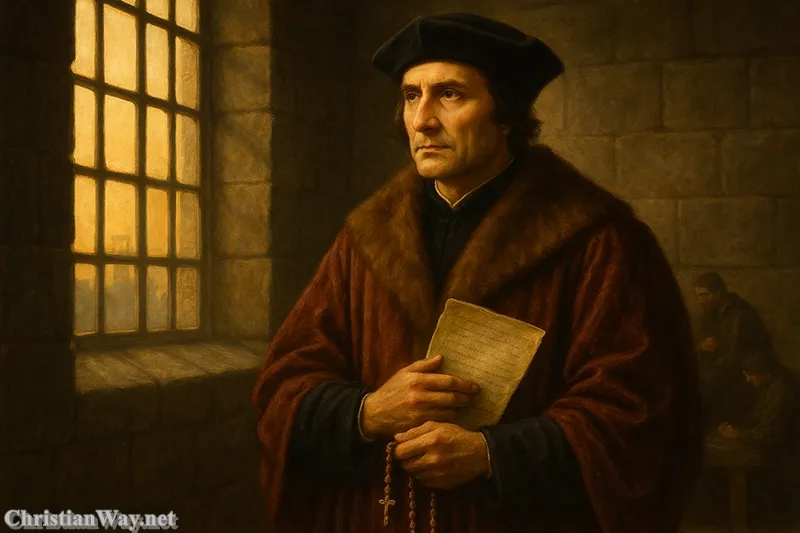
There are times when we dream of a quiet life with God. We long for a place where the noise grows still, where the heart can pray without interruption, where we can open Scripture slowly and hear the Lord speak beneath the burdens of the day. Many of us know this longing. We feel it after a difficult week at work, after a painful conversation in the family, after receiving troubling news, or when the world seems filled with voices that do not know how to be silent.
Saint Gregory the Great knew this longing deeply.
He desired the hidden life of prayer. He loved the Scriptures. He treasured the quiet discipline of monastic life. Yet God called him away from the solitude he cherished and placed him in the middle of a wounded city, a troubled Church, a divided society, and a world marked by famine, sickness, invasion, and fear.
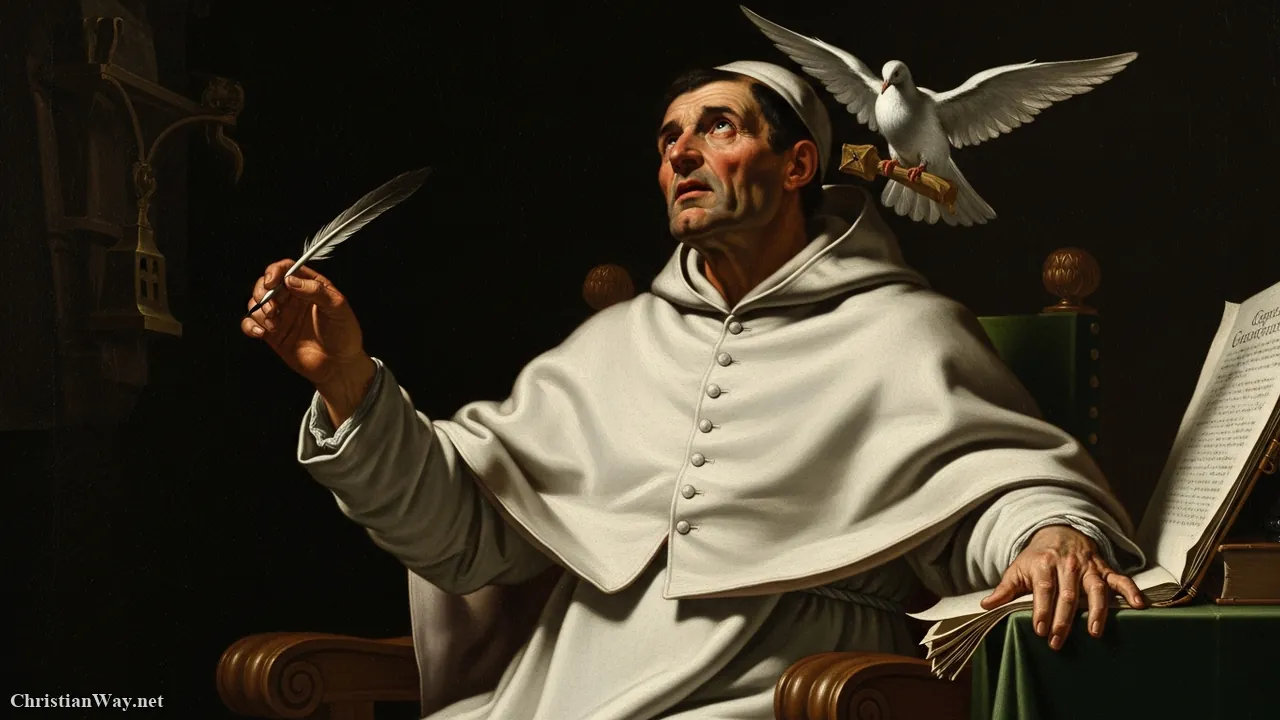
Gregory did not become holy because he escaped the burdens of life. He became holy because, when those burdens were placed before him, he accepted them as a call to serve Christ.
This is why Saint Gregory the Great (Pope Gregory I) speaks so powerfully to the Christian heart today. He teaches us that holiness is not always found where life is easiest. Sometimes God meets us in the duties we did not choose, in the people who need us, in the responsibilities that feel too heavy, and in the moment when we realize that love is asking more of us than we imagined.
Gregory was a pope, a teacher, a preacher, a monk, a diplomat, a writer, and a shepherd of souls. But before all these titles, he was a man who desired to belong to God. His greatness was not built on ambition. It was formed through humility. He did not seek power as a way to elevate himself. He received authority as a burden of service.
In an age that often teaches us to seek recognition, influence, comfort, and control, Gregory offers another vision. He shows us that a life becomes fruitful when it is given away. He reminds us that leadership is not about standing above others, but about carrying others toward Christ. He teaches us that prayer is not an escape from reality, but the strength to meet reality with a heart rooted in God.
A Heart Drawn Toward Prayer
Saint Gregory the Great was born in Rome around the year 540 into a Christian family of influence and public responsibility. He entered civic service and became prefect of Rome in 572, but the life of administration did not satisfy the deepest desire of his heart. He eventually left public office, transformed his family home into a monastery, and embraced a life of prayer, study, and spiritual discipline. Later, he served the Church in Constantinople before being elected Bishop of Rome in 590, a ministry he carried until his death in 604.
There is something deeply human in Gregory’s story.
He had ability. He had education. He had influence. He had experience in public life. Yet he discovered that even good work can leave the soul restless if it is not rooted in God. He knew that achievement alone cannot give the heart rest. A person may be admired by many and still feel empty. A person may have a respected career and still hunger for a deeper purpose. A person may be surrounded by activity and still remain spiritually alone.
Gregory’s monastic life became a place where he learned to listen.
He listened to the Word of God.
He listened to the silence of prayer.
He listened to the weakness within his own heart.
He listened to the ancient wisdom of the Church.
He learned that the soul is not healed by constantly speaking, striving, and proving itself. The soul is healed by receiving the love of God.
Psalm 46 says, “Be still, and know that I am God” (Psalm 46:10).
This verse does not mean we must abandon our responsibilities. It does not mean that Christian faith requires us to withdraw from the world. Rather, it reminds us that before we act, before we speak, before we decide, before we try to carry everyone else, we must remember who God is.
We are not the savior of the world.
Christ is.
We are not responsible for controlling every outcome.
God is.
We are not asked to carry tomorrow before tomorrow arrives.
We are asked to be faithful today.
The Longing for Silence in a Noisy World
Many people today live without silence.
We wake to messages. We work through notifications. We carry phones into meals, conversations, bedrooms, and even prayer. We may hear news from every part of the world within seconds, yet struggle to hear what is happening inside our own hearts.
The result is often not wisdom, but exhaustion.
We become anxious because we have received too much information and too little peace. We become impatient because we have trained our minds to expect immediate answers. We become distracted because stillness feels unfamiliar.
Saint Gregory gently invites us back to silence.
Not a silence of isolation.
Not a silence that ignores the suffering of others.
But a silence in which the heart can become honest before God.
Perhaps silence begins with five minutes before the day starts.
Perhaps it begins with sitting quietly after everyone else has gone to sleep.
Perhaps it begins with reading a few verses of Scripture instead of immediately reaching for a screen.
Perhaps it begins with a simple prayer:
“Lord, speak, for Your servant is listening.”
This prayer may feel small. But small prayers can become doors through which grace enters.
Gregory knew that a person who does not make room for prayer can slowly become trapped by activity. Even good activity can become heavy when it is no longer offered to God. We may serve our family, do our work, help others, lead a community, and still become inwardly dry if we never return to the source of love.
The Christian life needs both action and contemplation.
We need hands willing to serve.
We also need hearts willing to kneel.
Called From the Monastery Into a Wounded World
Gregory would likely have preferred to remain in the peace of monastic life. Yet Rome was suffering. Floods, famine, disease, political instability, and the threat of invasion had wounded the city and left many people afraid. When Pope Pelagius II died during a plague, Gregory was chosen as his successor, even though he resisted the office and preferred the hidden life he had known.

This part of Gregory’s life can comfort anyone who has ever been given a responsibility they did not seek.
Some people are called into leadership because they desired it. Others find themselves carrying responsibility because life has placed it before them.
A parent may not feel ready to care for a sick child.
A husband or wife may not feel ready to carry financial burdens.
A teacher may not feel ready to guide children who are struggling.
A worker may not feel ready to lead a team.
A person may not feel ready to care for an aging parent.
A Christian may not feel ready to comfort someone grieving.
Yet love often calls us before we feel prepared.
Moses did not feel ready to stand before Pharaoh.
Jeremiah did not feel ready to speak as a prophet.
Peter did not feel worthy to follow Christ.
Mary did not know how the mystery announced by the angel would unfold.
But God did not wait until these people felt strong. He called them, and then He gave them grace.
This is one of the great lessons of Saint Gregory.
God does not always ask whether we feel capable.
Sometimes He simply asks whether we are willing.
Grace for the Duty Before Us
There are responsibilities that can make us afraid because we imagine carrying them forever.
A young parent looks at the future and wonders how they will manage.
A person facing illness wonders how long the pain will last.
A family under financial pressure fears every new bill.
A worker looks at a difficult task and believes there is no way forward.
A believer trying to forgive an old wound wonders whether healing is possible.
But God rarely gives grace for an entire lifetime all at once.
He gives grace for today.
Jesus teaches us to pray, “Give us this day our daily bread” (Matthew 6:11).
Daily bread.
Daily strength.
Daily mercy.
Daily courage.
Daily patience.
The Lord may not show us the whole road. But He gives enough light for the next step.
Gregory had to lead Rome through hardship without possessing easy answers. He could not remove every danger. He could not heal every illness. He could not prevent every loss. But he could pray. He could organize help. He could encourage the frightened. He could protect the poor. He could speak peace where conflict threatened to grow.
This is how most of us are called to serve.
We may not solve everything.
But we can do the next faithful thing.
We can make the call.
We can prepare the meal.
We can offer the apology.
We can pray for someone in pain.
We can ask for help.
We can show up.
We can remain near.
“Servant of the Servants of God”
One of the titles closely associated with Saint Gregory is “Servant of the Servants of God.” He used this language to express a vision of authority rooted not in self-glory, but in humble service. Gregory understood that the higher a person’s responsibility, the more deeply that person must remember that all authority belongs to God.
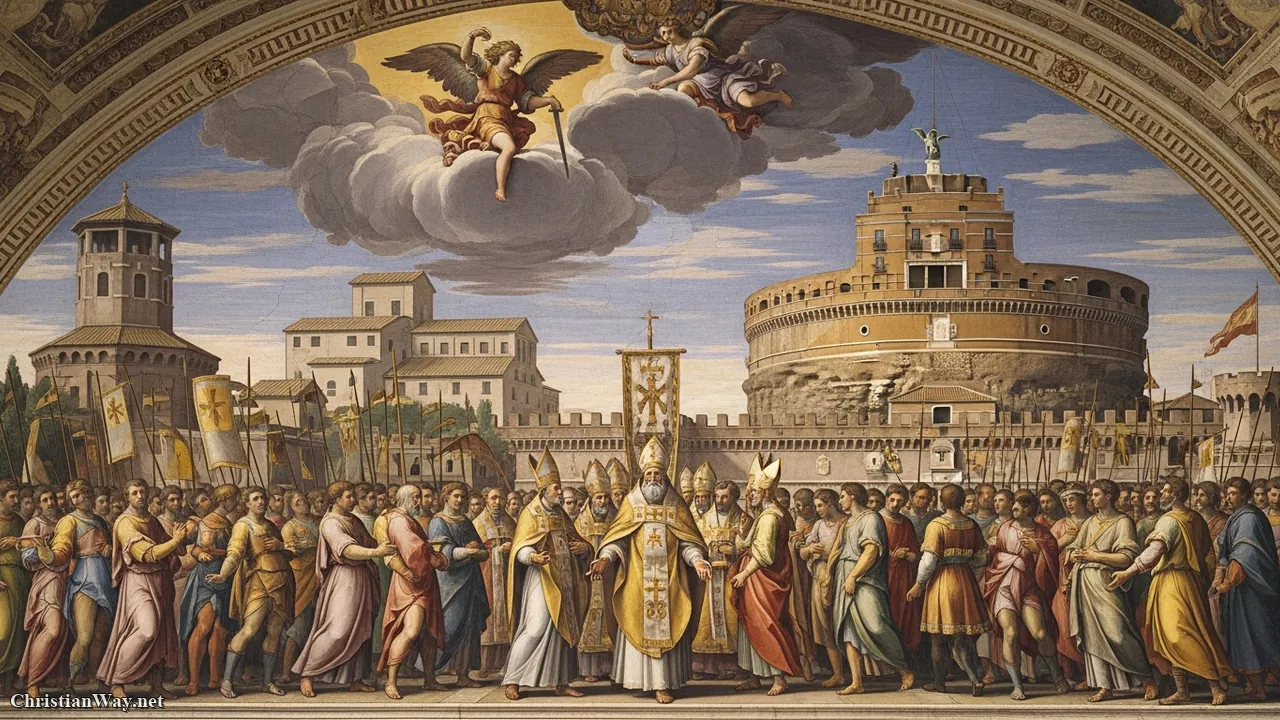
This title is beautiful because it turns the world’s idea of greatness upside down.
The world often says: Be important. Be noticed. Be first. Be admired. Make people recognize your success.
Jesus says: “Whosoever will be great among you, let him be your minister” (Matthew 20:26).
This does not mean that Christians must avoid leadership. Gregory himself was a leader. It does not mean that responsibility is unholy. Parents, teachers, pastors, managers, public servants, and community leaders all carry real authority.
But Christian authority must always be shaped by the example of Christ.
Jesus washed the feet of His disciples.
Jesus touched the sick.
Jesus welcomed children.
Jesus ate with those others rejected.
Jesus carried the Cross.
The Lord of heaven made Himself a servant.
This is the pattern Gregory tried to follow.
Leadership That Protects Rather Than Controls
A Christian leader does not exist to make others feel small.
A Christian leader does not use authority to satisfy pride.
A Christian leader does not demand obedience while avoiding sacrifice.
A Christian leader serves.
A father serves by protecting and guiding his family.
A mother serves by nurturing, teaching, and carrying hidden burdens.
A teacher serves by helping students grow.
A pastor serves by leading people toward Christ.
A manager serves by treating workers fairly.
A public servant serves by seeking the common good.
An older sibling serves by becoming a source of encouragement rather than domination.
This kind of leadership is not weak. It often requires great courage.
It takes courage to correct someone with gentleness.
It takes courage to admit a mistake.
It takes courage to listen when we would rather defend ourselves.
It takes courage to use power for the good of others instead of for personal comfort.
Saint Gregory reminds us that the strongest leader is not the one who makes everyone afraid. The strongest leader is the one who helps others become more faithful, more secure, more hopeful, and more able to live the life God has given them.
The Pastoral Rule and the Care of Souls
Saint Gregory wrote many works, including sermons, biblical reflections, letters, the Dialogues, and his great commentary on Job, often known as the Moralia. Yet one of his most influential writings was the Pastoral Rule, a work on the spiritual and moral responsibilities of those who guide others in the Church.
The Pastoral Rule was written for bishops and pastors, but its wisdom reaches far beyond clergy.
Gregory believed that a shepherd of souls must first examine his own life. A person cannot lead others toward holiness while refusing to seek holiness personally. A teacher cannot simply demand wisdom from others while ignoring wisdom in his own heart. A parent cannot teach forgiveness while refusing to apologize. A pastor cannot call people to prayer while neglecting prayer.
This is not meant to make leaders despair. No leader is perfect. No parent is perfect. No priest, teacher, or mentor is without weakness.
But Gregory teaches that spiritual leadership begins with humility.
We must allow God to correct us before we correct others.
We must seek mercy before we speak about justice.
We must learn to listen before we demand to be heard.
We must remember that people are not problems to manage. They are souls entrusted to our care.
Knowing the Person Before Us
One of Gregory’s pastoral insights was that people need different kinds of guidance. The grieving person needs something different from the proud person. The discouraged person needs something different from the careless person. The person wounded by shame needs something different from the person hardened by selfishness.
This seems simple, but it is deeply important.
Too often, we speak to everyone in the same way.
We give advice before we understand.
We correct before we listen.
We assume another person’s motives.
We speak from frustration instead of compassion.
Saint Gregory teaches us to see the person before us.
A child who behaves badly may be frightened.
A spouse who becomes distant may be carrying pain.
A colleague who speaks sharply may be overwhelmed.
An elderly parent who repeats the same story may be lonely.
A teenager who seems rebellious may be searching for attention, belonging, or truth.
This does not mean that wrong actions should never be addressed. Love sometimes requires correction. Boundaries matter. Truth matters. But correction becomes more healing when it comes from a heart that has first tried to understand.
Jesus asked questions.
“What do you want me to do for you?” (Mark 10:51).
“Why are you afraid?” (Matthew 8:26).
“Do you want to be made well?” (John 5:6).
He saw people not as crowds, but as persons.
A shepherd must do the same.
Scripture as Food for the Soul
Saint Gregory loved Scripture deeply. He did not study the Bible merely to become impressive or to win arguments. He believed that Scripture should become daily nourishment for the soul, shaping how Christians pray, think, speak, work, and love. He warned that knowledge without humility can become pride, but knowledge received in prayer can lead the heart toward God.
This is a message our age needs.
We have access to endless information. We can search almost any question within seconds. We can read opinions from thousands of people. We can collect facts and still remain spiritually hungry.
Information is not the same as wisdom.
Wisdom begins when truth becomes part of the life.
We may know that forgiveness is important, but wisdom begins when we forgive.
We may know that prayer matters, but wisdom begins when we pray.
We may know that every person is made in the image of God, but wisdom begins when we treat difficult people with dignity.
We may know that Christ calls us to serve, but wisdom begins when we notice the person who needs help.
Saint Gregory believed that the Word of God must reach the heart.
Reading the Bible With an Open Heart
Sometimes people feel discouraged when they open Scripture. They do not know where to begin. They worry that they will not understand everything. They may assume that Bible reading belongs only to priests, pastors, theologians, or people with much education.
But the Word of God is given for every believer.
Start simply.
Read a short Gospel passage.
Sit with one verse.
Ask, “Lord, what are You showing me?”
Do not rush to master every detail. Let the Word search you.
Perhaps you read the story of the Good Samaritan and ask whether there is someone you have passed by.
Perhaps you read the parable of the prodigal son and remember that God’s mercy is greater than your shame.
Perhaps you read the Beatitudes and recognize that Christ is calling you away from anger, pride, and fear.
Perhaps you read about Jesus calming the storm and remember that He is present in your own anxious season.
Gregory teaches us that Scripture should not remain distant.
It should become prayer.
It should become action.
It should become comfort.
It should become a lamp for the road.
“Thy word is a lamp unto my feet, and a light unto my path” (Psalm 119:105).
Compassion for the Poor and the Suffering
Gregory’s leadership was not only spiritual in a narrow sense. He cared deeply about hunger, poverty, displacement, and the daily needs of people suffering in Rome and beyond. He worked to ensure that the Church’s resources were administered with justice and mercy, and he regarded care for the vulnerable as part of the Church’s duty before God.
This is one of the most important parts of his witness.
Christian faith cannot remain only in words.
We cannot say that we love God while ignoring people who are hungry.
We cannot celebrate worship while treating workers unfairly.
We cannot speak about mercy while refusing to notice the lonely.
We cannot praise charity while living as though the suffering of others is none of our concern.
Jesus says, “I was an hungred, and ye gave me meat” (Matthew 25:35).
These words are not a suggestion for a few especially generous people. They reveal where Christ waits for us.
He waits in the poor.
He waits in the sick.
He waits in the child who needs protection.
He waits in the elderly person who feels forgotten.
He waits in the family who cannot pay their bills.
He waits in the refugee far from home.
He waits in the person ashamed to ask for help.
Mercy Must Become Concrete
It is easy to feel sympathy.
It is harder to let sympathy become action.
A person may say, “That is sad,” and then continue walking.
A person may promise prayer but never ask what practical help is needed.
A person may speak about justice but treat family members harshly at home.
Saint Gregory reminds us that mercy must take form.
It may be a meal prepared for someone who is ill.
It may be a phone call to a lonely relative.
It may be help with a child’s school fees.
It may be offering a ride to someone who cannot travel easily.
It may be listening patiently to a grieving friend.
It may be giving time, money, skill, or companionship.
Not everyone can solve poverty.
Not everyone can change a whole system.
Not everyone can carry every need.
But every Christian can become less indifferent.
Sometimes mercy begins with a question:
“What do you need?”
Sometimes it begins with a willingness to notice.
Sometimes it begins with refusing to turn away.
A Missionary Pope and the Sending of Augustine
Gregory’s pastoral vision reached beyond Rome. He sent Augustine of Canterbury and a group of monks to bring the Gospel to the Anglo-Saxon peoples in England. This mission became an important part of the shared Christian heritage remembered by Catholics and Anglicans alike.
This mission is a reminder that the Church does not exist only for itself.
The Gospel is always moving outward.
Jesus says, “Go ye into all the world, and preach the gospel to every creature” (Mark 16:15).
Yet Christian mission must never become domination.
We do not share Christ in order to make ourselves superior.
We do not speak about faith in order to win arguments.
We do not preach the Gospel as though people were objects to conquer.
We share the Gospel because every person deserves to know the love of God.
We share the Gospel because Christ has changed our lives.
We share the Gospel because mercy is too good to keep to ourselves.
Gregory’s mission to England reminds us that the Church is at her best when she sends people not with pride, but with humility.
Every Christian Has a Mission
Not everyone is called to travel to another country. Not everyone is called to preach publicly. Not everyone is called to write books or guide large communities.
But every Christian has a mission.
A parent has a mission to show children what faithfulness looks like.
A teacher has a mission to help young people discover truth and dignity.
A worker has a mission to bring integrity into daily labor.
A friend has a mission to remain near when someone else is suffering.
A young person has a mission to choose kindness when cruelty is popular.
A person who is ill may have a mission of prayer.
A grandparent may have a mission of intercession for the family.
A person who has experienced grief may have a mission of compassion toward others who grieve.
Mission begins when we stop asking only, “What do I want from life?”
Mission begins when we ask, “Lord, whom are You asking me to love?”
The Courage to Seek Peace
Gregory lived in a difficult political world. He sought peace where violence and invasion threatened communities. He wrote letters, negotiated, encouraged reconciliation, and worked to protect people caught in conflict. He knew that peace was not created merely by wishing for it. Peace required courage, patience, justice, and prayer.
How much our world needs this lesson.
There is conflict between nations.
There is conflict in families.
There is conflict in workplaces.
There is conflict in churches.
There is conflict inside our own hearts.
Sometimes we become so accustomed to anger that we no longer know how to seek peace.
We speak before we listen.
We assume the worst.
We hold onto old wounds.
We remember every insult.
We treat disagreement as betrayal.
Saint Gregory reminds us that peace is not weakness.
Peace is not pretending that evil does not exist.
Peace is not refusing to address what is wrong.
Peace is the courage to seek truth without hatred.
It is the willingness to forgive without calling injustice good.
It is the humility to apologize when we have caused harm.
It is the patience to wait when healing takes time.
It is the refusal to let resentment become the permanent language of the heart.
Peace Begins Nearer Than We Think
Many people pray for peace in the world while carrying war within the home.
We cannot solve every conflict among nations. But we can ask whether we are creating peace in the places God has entrusted to us.
Do we bring calm into our family, or more tension?
Do we speak gently to those we love?
Do we apologize when we are wrong?
Do we refuse gossip?
Do we let anger control our words?
Do we pray for people with whom we disagree?
Do we teach children that strength is not cruelty?
Jesus says, “Blessed are the peacemakers” (Matthew 5:9).
A peacemaker is not someone who avoids truth.
A peacemaker is someone who carries Christ into places where truth has been wounded by fear, pride, and anger.
A Saint for Those Who Feel Overwhelmed
Saint Gregory often felt the weight of responsibility. He loved prayer, but he had to manage public crises. He desired the stillness of monastic life, but he had to answer letters, guide bishops, care for Rome, respond to conflict, and carry the concerns of a wounded Church.
This makes him a saint for people who feel overwhelmed.
Perhaps you have too much to do.
Perhaps you are caring for children, parents, work, finances, and your own health at the same time.
Perhaps you are trying to remain faithful while your heart feels tired.
Perhaps you want to pray but do not know when to find silence.
Perhaps you feel guilty because you cannot do everything.
Saint Gregory tells us that the answer is not always to do more.
Sometimes the answer is to return to God.
We must learn to place our burdens before Christ.
“Come unto me, all ye that labour and are heavy laden, and I will give you rest” (Matthew 11:28).
This promise does not mean that every responsibility immediately disappears. It means that we do not carry responsibility alone.
We can say:
“Lord, this family belongs to You.”
“Lord, this child belongs to You.”
“Lord, this work belongs to You.”
“Lord, this grief belongs to You.”
“Lord, this fear belongs to You.”
“Lord, I do not know what to do, but I give You the next step.”
The Difference Between Faithfulness and Control
Many people become exhausted because they confuse faithfulness with control.
Faithfulness means doing what love asks of us.
Control means trying to guarantee every outcome.
Faithfulness means praying for our children, guiding them, protecting them, and loving them.
Control means believing that we can prevent every mistake they will ever make.
Faithfulness means working honestly and wisely.
Control means believing that we can force the future to become exactly what we want.
Faithfulness means seeking medical help, resting, and caring for the body.
Control means believing that we can avoid all suffering.
Gregory teaches us to be faithful without pretending to be God.
This is a great freedom.
We can work.
We can pray.
We can serve.
We can love.
Then we can place the results in the hands of Christ.
The Greatness of Humble Service
Saint Gregory is called “the Great,” but his greatness was not worldly greatness.
He was great because he prayed.
He was great because he served.
He was great because he cared for the poor.
He was great because he taught truth without treating truth as a weapon.
He was great because he loved the Church through hardship.
He was great because he used authority as a form of responsibility.
He was great because he remained a servant.
This is the greatness Christ teaches.
The world may remember the loudest voice.
God remembers the faithful heart.
The world may reward power.
God sees humility.
The world may praise success.
God sees sacrifice.
The world may measure a life by wealth, status, and recognition.
God measures a life by love.
Perhaps you feel that your life is too ordinary to matter. Perhaps you do not hold an important title. Perhaps your work goes unnoticed. Perhaps the people you serve do not always thank you.
Do not lose heart.
A life of hidden faithfulness is never hidden from God.
The meal you prepare in love matters.
The prayer you whisper for your family matters.
The honest work you do matters.
The forgiveness you offer matters.
The time you give to someone who is lonely matters.
The courage to begin again matters.
Saint Gregory the Great teaches us that a person does not need to stand above others to become great in the Kingdom of God.
We become great when we learn to serve.
Reflect and Pray
Dear friends, Saint Gregory the Great reminds us that God does not always lead us where we expected to go. We may desire quiet, but be called to serve. We may feel weak, but be asked to carry responsibility. We may long for a simple life, yet find ourselves facing situations that require courage, patience, prayer, and love.
Do not be afraid.
The Lord who called Gregory from the monastery into the wounded streets of Rome is near to you in the place where you are now.
He sees your hidden longing for peace.
He sees the work you carry.
He sees the people entrusted to your care.
He sees the fears you have not spoken aloud.
He sees the desire in your heart to remain faithful.
You do not need to know everything.
You do not need to carry every burden alone.
You only need to keep turning toward Christ.
Saint Gregory the Great, humble shepherd, wise teacher, and servant of the servants of God, pray for us. Teach us to seek God before seeking approval. Help us to pray when life is busy, to serve when love asks sacrifice, to lead with humility, and to care for those who are poor, lonely, or afraid. Strengthen pastors, parents, teachers, workers, and all who carry responsibility for others.
Lord Jesus Christ,
You are the Good Shepherd
who knows every soul by name.
Through the prayers of Saint Gregory the Great,
teach us to listen for Your voice in the quiet of our hearts.
When we are overwhelmed, give us peace.
When we are called to serve, give us courage.
When we are tempted by pride, give us humility.
When we see suffering, give us compassion.
Make our homes, our work, and our communities
places where Your mercy becomes visible.
May we love You in prayer,
serve You in our neighbor,
and follow You faithfully until we come home to You. Amen.
May the wisdom and humble courage of Saint Gregory the Great lead you into deeper prayer, faithful service, and the peace of Christ.
— Fr. John Matthew