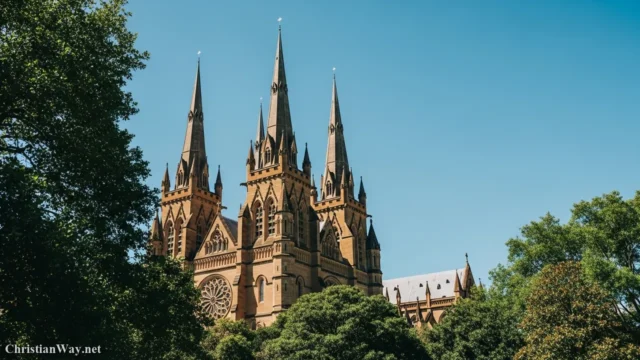
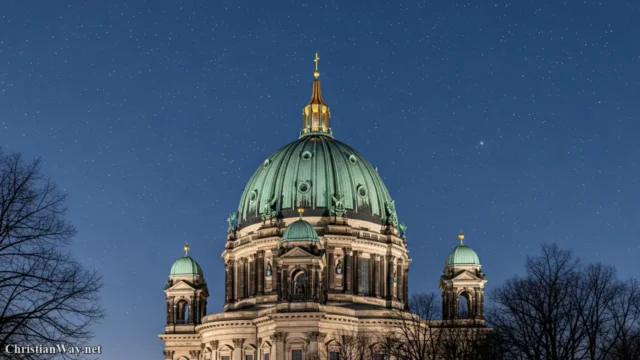
Explore the sacred beauty and profound history of Madrid’s most iconic Catholic sanctuaries, where every stone tells a story of faith.
Dear friends,
It is a joy to walk with you today through the sun-drenched streets of Madrid. Often, when we think of this vibrant city, our minds fly to its grand plazas, its bustling markets, and the regal air of its boulevards. Yet, for the seeker of the Divine, Madrid offers a much deeper rhythm. Beneath the surface of its modernity lies a heartbeat of prayer that has pulsed for nearly a millennium. To visit the Catholic churches in Madrid is not merely an exercise in admiring architecture; it is an invitation to step into a living tradition where the echoes of saints and the whispers of the faithful still linger in the cool, incense-scented air.
In my own travels, I have found that a church is more than a building; it is a “thin place” where the veil between heaven and earth seems to lift. In Madrid, this is especially true. Whether it is the soaring heights of the Almudena or the humble, mud-brick walls of the city’s oldest parishes, each site offers a unique perspective on the Gospel. As we explore these ten sacred treasures, I invite you to look past the gold leaf and the marble. Look instead for the devotion of the hands that built them and the peace that Christ offers to all who enter their doors.
As we journey through this list, let us remember the words of the Psalmist: “One thing I ask from the Lord, this only do I seek: that I may dwell in the house of the Lord all the days of my life.” May these sanctuaries serve as a reminder that no matter how far we wander, there is always a home waiting for us in the presence of God. Let us begin our pilgrimage through the “Villa y Corte.”
A Summary of Sacred Treasures
| Rank | Name of Church | Style / Primary Feature | Historical Era |
|---|---|---|---|
| 10 | Santa Teresa y San José | Eclectic / Neo-Gothic Dome | Early 20th Century |
| 9 | San Nicolás de los Servitas | Mudejar (Oldest Church) | 12th Century |
| 8 | Basílica de San Miguel | Italian Baroque (Convex Facade) | 18th Century |
| 7 | Real Monasterio de la Encarnación | Austrian Baroque / Relics | 17th Century |
| 6 | San Ginés de Arlés | Habsburg Classicism | 17th Century (Origins 12th) |
| 5 | Basílica de Jesús de Medinaceli | Pilgrimage Site / Nazarene | 20th Century |
| 4 | San Antonio de los Alemanes | “Sistine Chapel of Madrid” | 17th Century |
| 3 | San Jerónimo el Real | Isabelline Gothic / Royal | 16th Century |
| 2 | Basílica de San Francisco el Grande | Neoclassical / Massive Dome | 18th Century |
| 1 | Catedral de la Almudena | Modern Gothic / Catholic Seat | 19th–20th Century |
Top 10. Church of Santa Teresa and San José
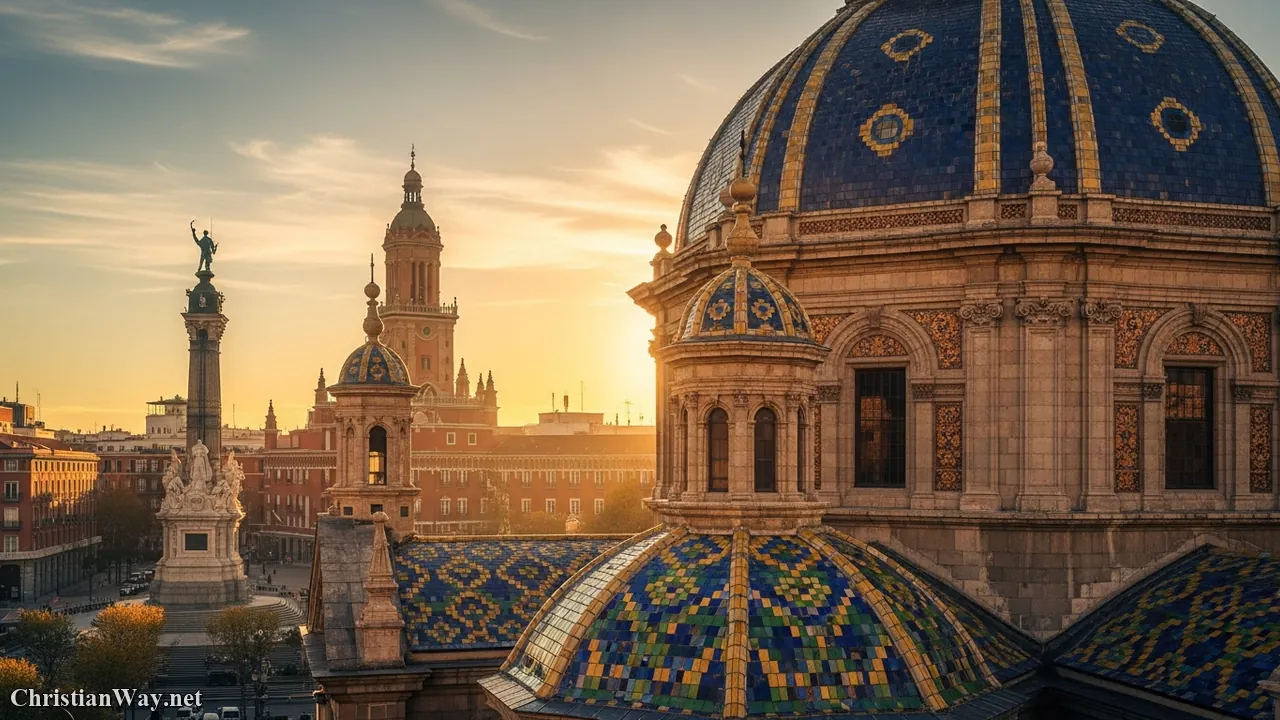
Standing tall near the Plaza de España, the National Temple of Santa Teresa and San José is a striking example of eclectic architecture that draws the eye upward. Completed in 1928, its colorful dome and neo-Gothic flourishes make it a landmark of the Carmelite tradition in the city. When you step inside, you are greeted by an atmosphere of profound silence that contrasts sharply with the traffic outside. The church serves as a reminder of the “Interior Castle” described by St. Teresa of Avila—a place where the soul can retreat into the presence of the Beloved. It was heavily damaged during the Spanish Civil War but rose from the ashes, symbolizing the resilience of faith.
Spiritual Highlights
- Admire the “Moorish-Byzantine” influences on the dome, representing the universal reach of the Gospel.
- “Let nothing disturb you, let nothing frighten you… God alone suffices.” — St. Teresa of Avila.
Top 9. Church of San Nicolás de los Servitas
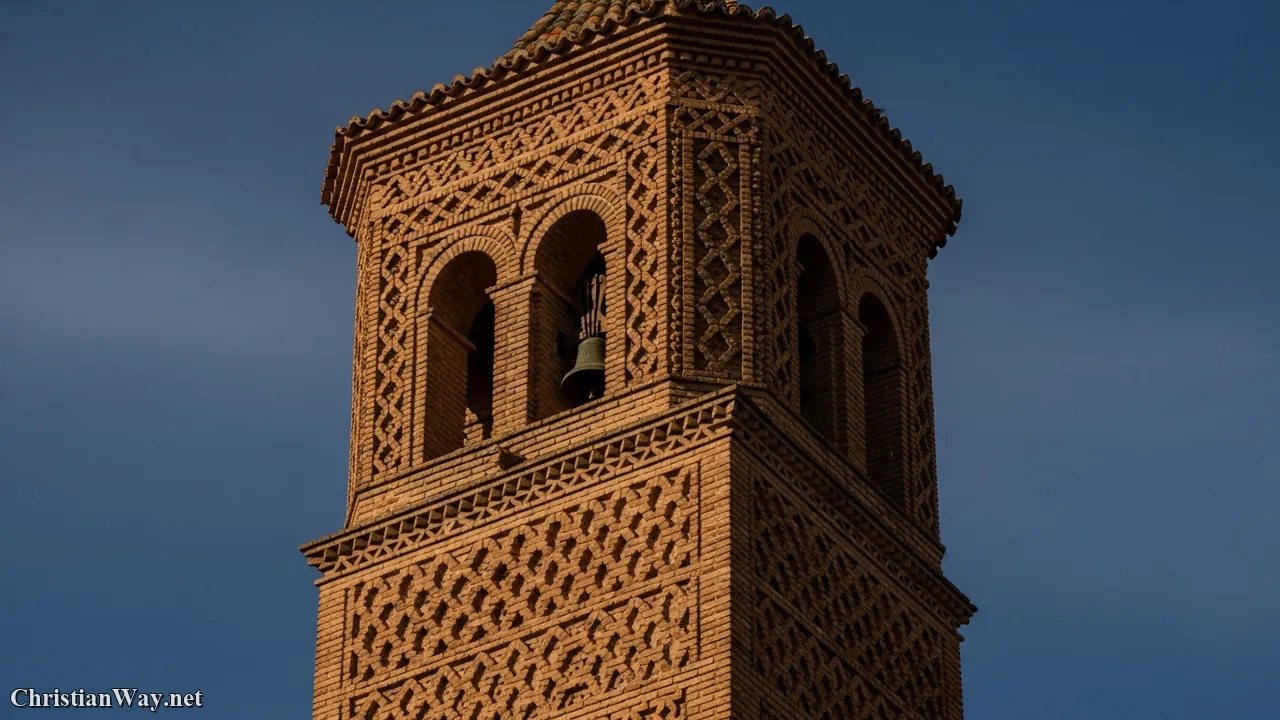
To enter San Nicolás is to step back into the very childhood of Madrid. It is the oldest church remaining in the city, and its 12th-century Mudejar bell tower stands as a testament to the complex, multi-layered history of Spain. There is something deeply moving about praying in a space that has witnessed nearly a millennium of human struggle and hope. The simplicity of the brickwork and the ancient horseshoe arches remind us that Christ is the same yesterday, today, and forever. Here, the noise of the modern world fades, and one can almost hear the prayers of the medieval faithful rising alongside our own.
Spiritual Highlights
- The Mudejar tower, a rare remnant of the medieval city’s Islamic and Christian fusion.
- Dedicated to St. Nicholas, the patron of children and those in need, echoing the heart of charity.
Top 8. Basílica de San Miguel
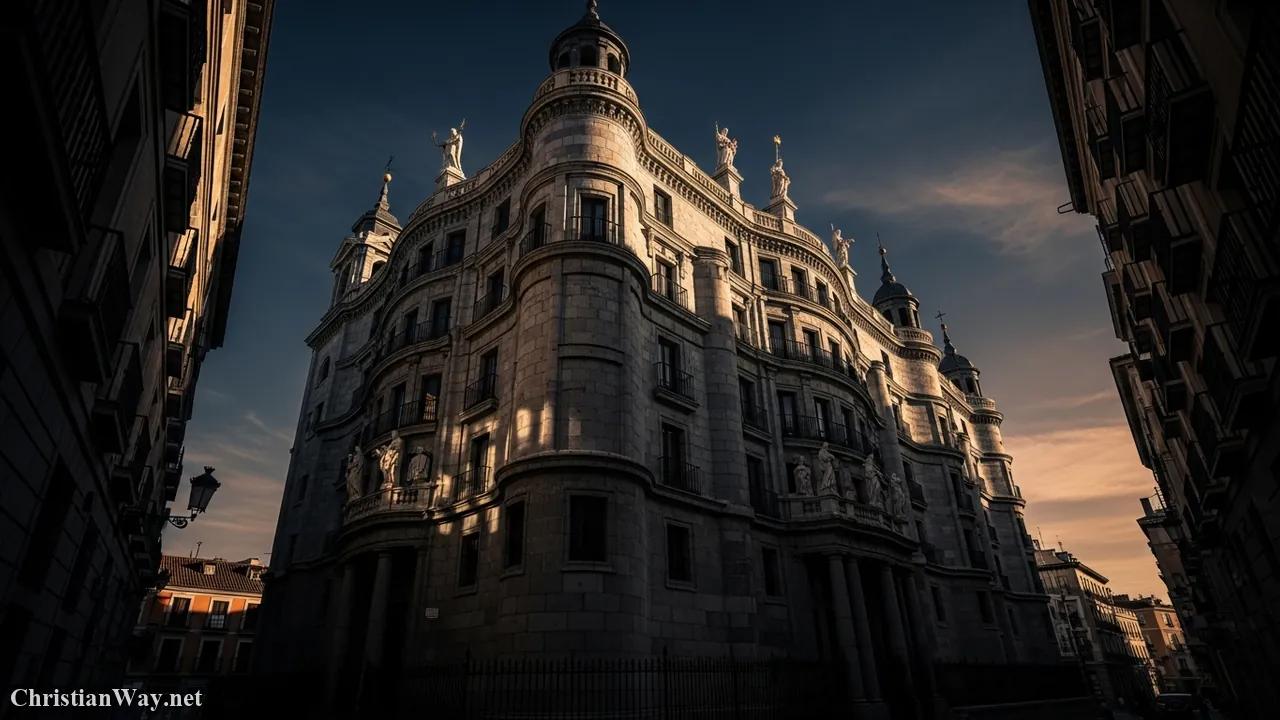
As we journey deeper into the heart of old Madrid, we encounter the Basílica de San Miguel. Its unique, convex facade—a rare example of Italian Baroque in Spain—seems to reach out and embrace the passerby. Administered by the priests of Christian Way partner organizations and Opus Dei, the basilica is a jewel of elegance and light. The interior is designed to lead the eye directly to the altar, reminding us that all our paths should ultimately lead to Christ. It is a place of refined beauty where the liturgy is celebrated with great reverence, offering a “wellspring in the desert” for busy professionals and weary tourists alike.
Spiritual Highlights
- The image of the “Cristo de la Fe y del Perdón,” a centerpiece of Madrid’s Holy Week processions.
- Observe the interplay of light and shadow, designed to evoke the mystery of the Divine.
Top 7. Real Monasterio de la Encarnación
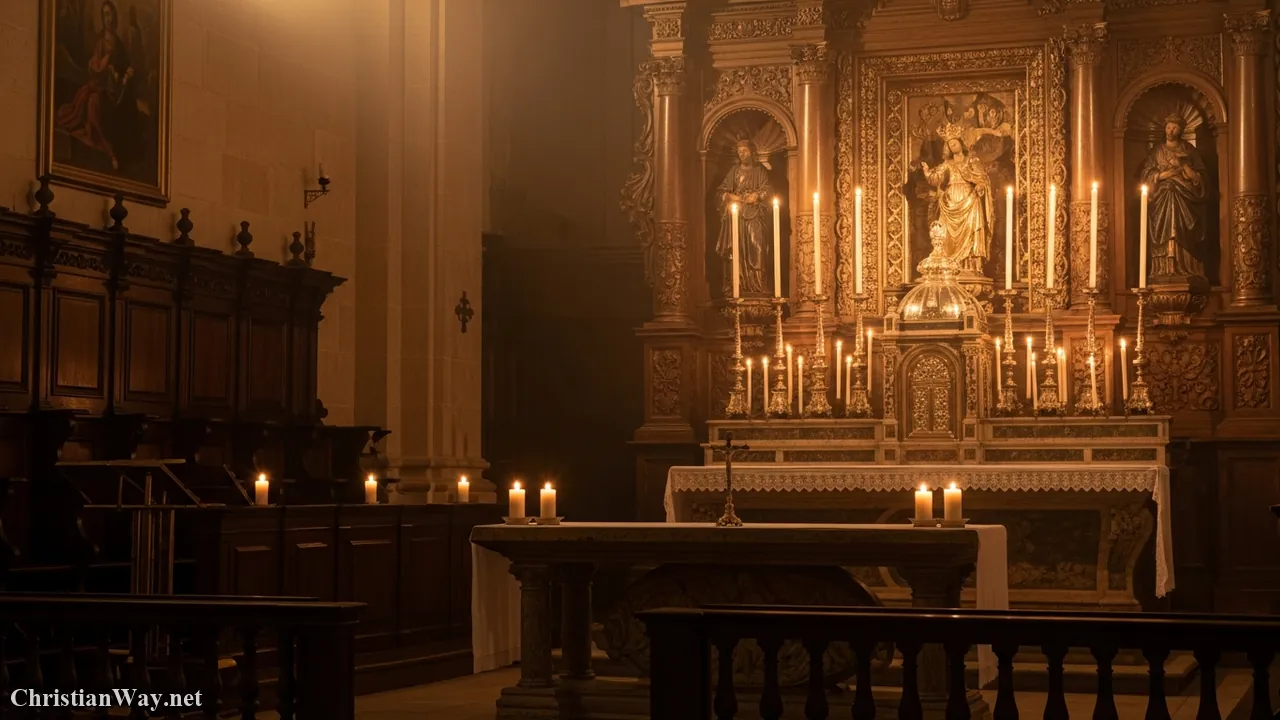
The Monastery of the Incarnation is a sanctuary of royal history and deep mystical tradition. Founded by Queen Margaret of Austria in 1611, it remains an active convent for Augustinian Recollect nuns. The “relic room” here is one of the most significant in the world, but the true treasure is the spirit of the Incarnation that permeates the walls. As we reflect on the Word made flesh, this monastery reminds us that God chose to dwell among us in the most humble of ways. For the believer, a visit here is an opportunity to contemplate the “Yes” of the Virgin Mary, which changed the course of eternity.
Spiritual Highlights
- The vial containing the blood of St. Pantaleon, which famously liquefies every year on July 27th.
- The frescoes by Bayeu in the main chapel, depicting the glory of the celestial realm.
Top 6. Church of San Ginés de Arlés
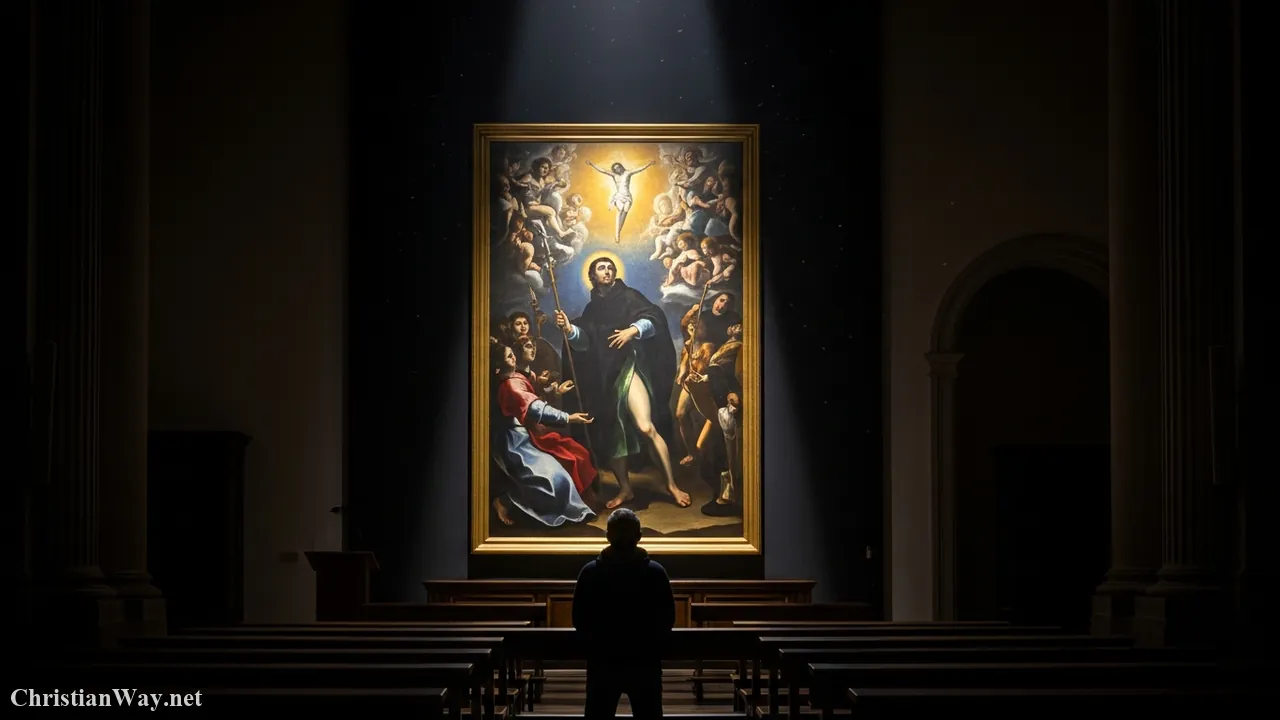
Located just off the busy Calle Arenal, San Ginés is one of the most storied parishes in Madrid. While the current structure dates back to the 17th century, its roots go much deeper into the city’s past. It is a church that has survived fires and wars, standing as a sentinel of faith in the city center. Inside, you will find El Greco’s masterpiece, “The Purification of the Temple.” This painting serves as a powerful pastoral metaphor: just as Jesus cleared the temple, we are invited to ask Him to clear our hearts of distractions and greed, making room for the Holy Spirit to dwell within us.
Spiritual Highlights
- The presence of El Greco’s artwork, a visual sermon on the sanctity of God’s house.
- A historic site where generations of Madrileños have celebrated the milestones of life.
Top 5. Basílica de Jesús de Medinaceli
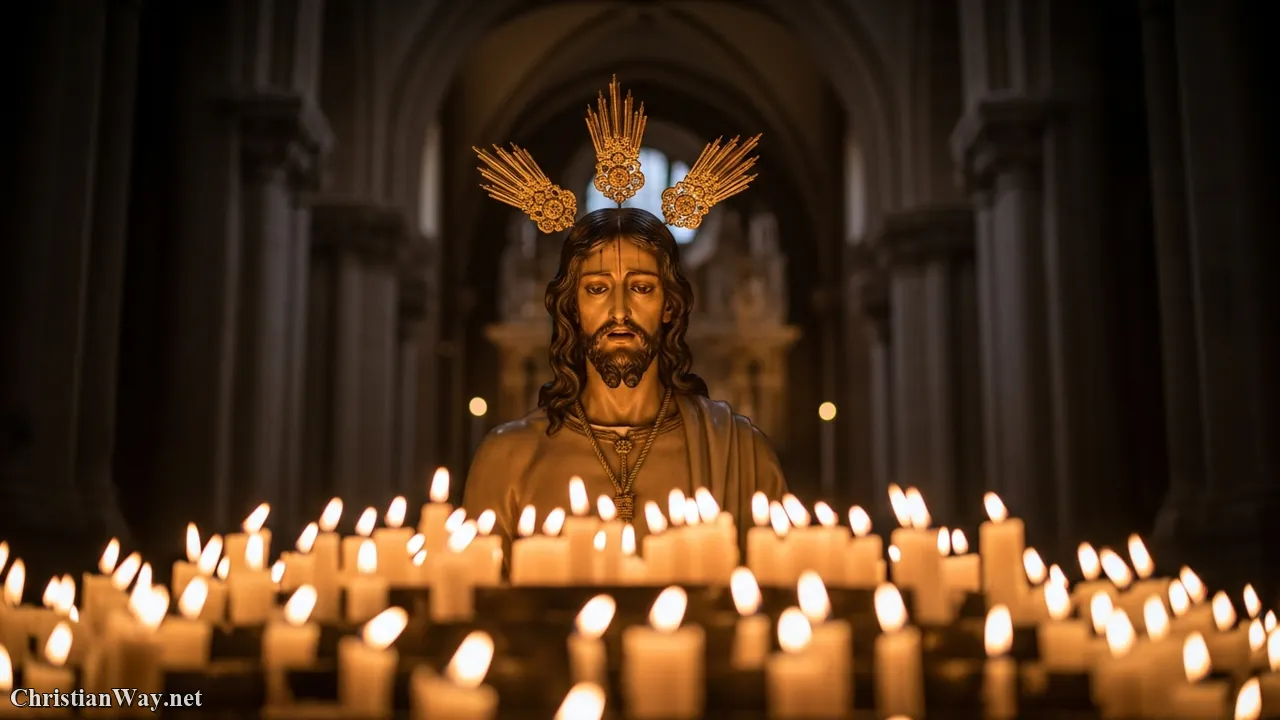
There are few places in Madrid where the devotion of the people is as palpable as it is at the Basilica of Our Father Jesus of Medinaceli. Every Friday, and especially on the first Friday of March, thousands of pilgrims queue for hours to kiss the feet of the 17th-century statue of Christ. This “besapié” is a profound act of humility and love. In a world that often prizes power and status, the sight of a soul kneeling before the “Man of Sorrows” is a powerful testimony to the truth that our strength is found in our surrender to God. Here, the broken-hearted find a companion in Jesus, who carried the weight of the world.
Spiritual Highlights
- The venerated image of the Nazarene, captured by the Moors and later ransomed by the Trinitarians.
- “Come to me, all you who are weary and burdened, and I will give you rest.” — Matthew 11:28.
Top 4. Church of San Antonio de los Alemanes
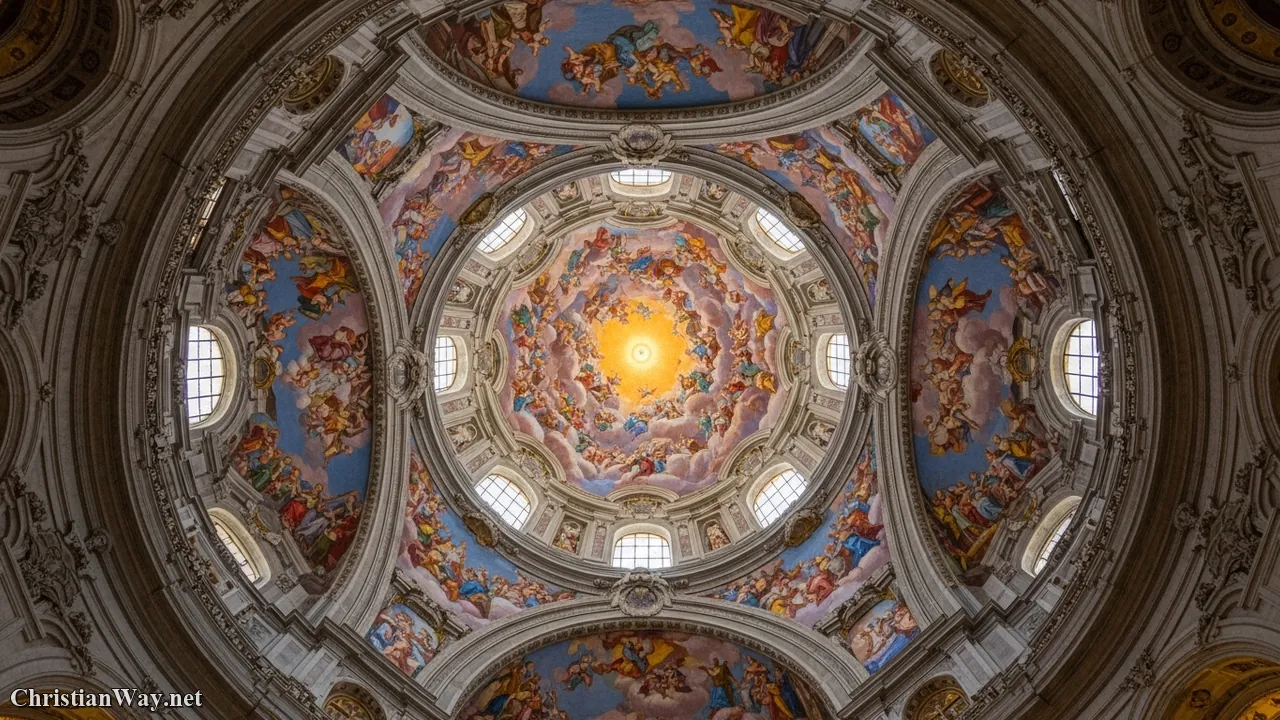
Often called the “Sistine Chapel of Madrid,” San Antonio de los Alemanes is a hidden gem that leaves visitors breathless. From the floor to the very top of the ellipsoidal dome, every inch is covered in magnificent frescoes. Originally built to serve Portuguese migrants and later German pilgrims, it is a church that speaks of the Church’s hospitality to the stranger. The overwhelming beauty of the paintings is meant to give us a foretaste of the Heavenly Banquet. It reminds us that our faith is not just a set of rules, but a beautiful, vibrant reality that transforms everything it touches.
Spiritual Highlights
- The unique oval floor plan, symbolizing the infinite and eternal nature of God’s love.
- The frescoes by Luca Giordano and Francisco Ricci, which narrate the life of St. Anthony.
Top 3. San Jerónimo el Real
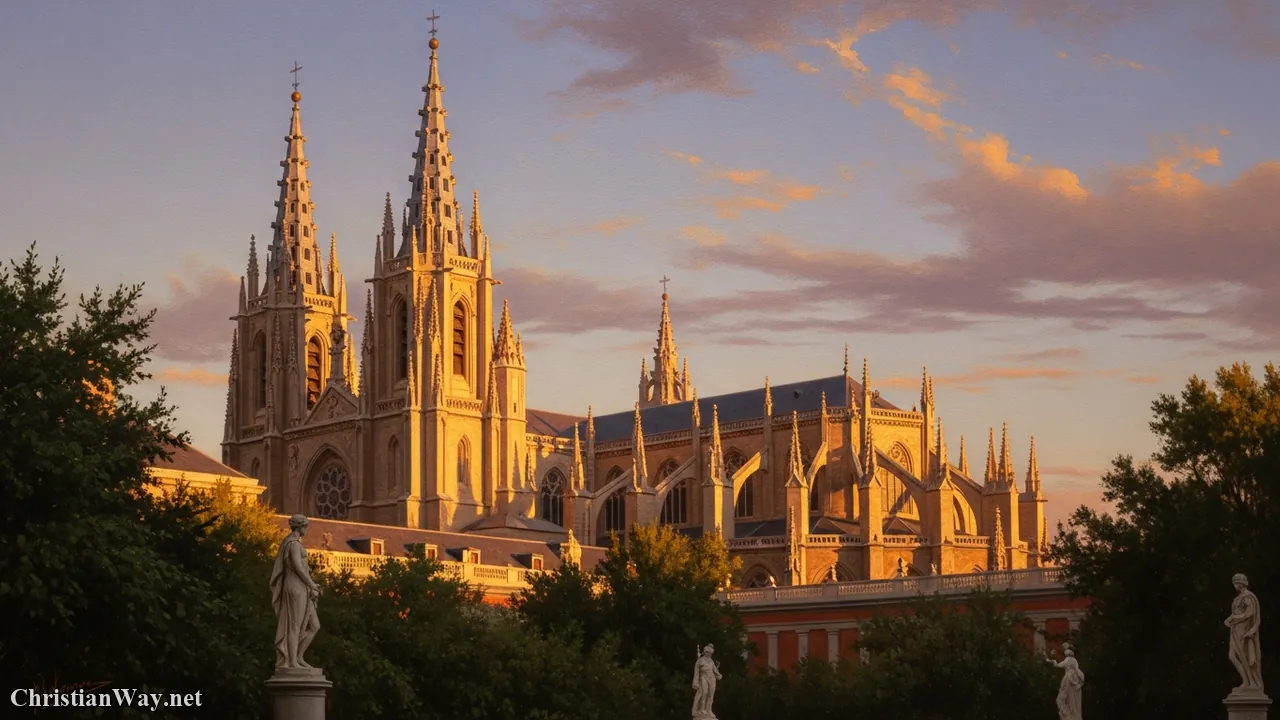
Perched on a hill overlooking the Prado Museum, “Los Jerónimos” was for centuries the church of the Spanish royalty. It is a place of solemn majesty, where kings were sworn in and royal weddings celebrated. Yet, despite its regal associations, the church maintains a sense of monastic peace. The Isabelline Gothic architecture, with its intricate stone carvings, reminds us that we are part of a kingdom not of this world. Walking up the grand staircase, one feels the invitation to leave behind the temporal cares of the city and enter into a conversation with the King of Kings.
Spiritual Highlights
- The historic connection to the Hieronymite Order, known for their devotion to study and prayer.
- The stunning late-Gothic architecture, a rarity in a city dominated by Baroque and Neoclassical styles.
Top 2. Basílica de San Francisco el Grande
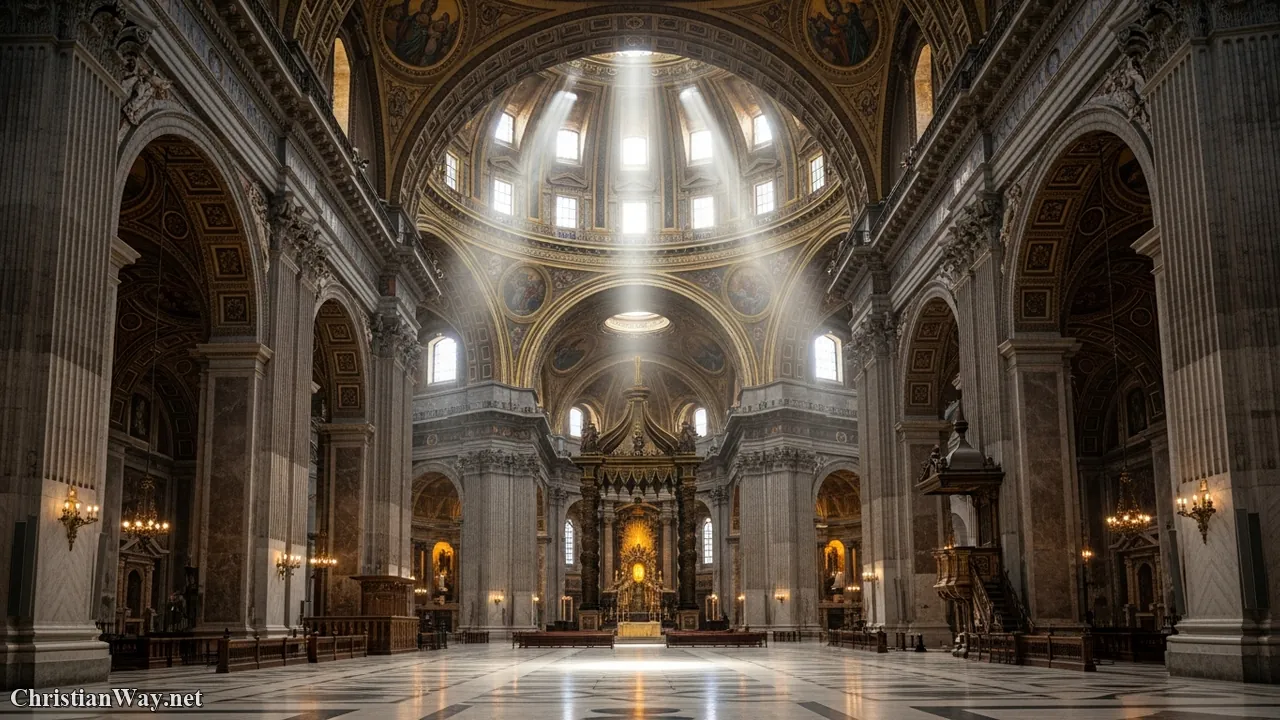
The sheer scale of San Francisco el Grande is enough to humble any traveler. Boasting the largest dome in Spain and one of the largest in Christendom, it is a monument to the grandeur of the Catholic faith. Legend says the site was originally founded by St. Francis of Assisi himself during his pilgrimage to Spain. Inside, the chapels are filled with works by Goya and Zurbarán, turning the basilica into a gallery of sacred art. However, the true power of the place is felt when you look up into the vastness of the dome—a reminder of the immense, all-encompassing mercy of God that shelters us all.
Spiritual Highlights
- The dome’s diameter of 33 meters, echoing the years of Christ’s earthly life.
- The stunning collection of Spanish art, used as a “Biblia Pauperum” (Bible of the poor) to teach the faith.
Top 1. Catedral de la Almudena
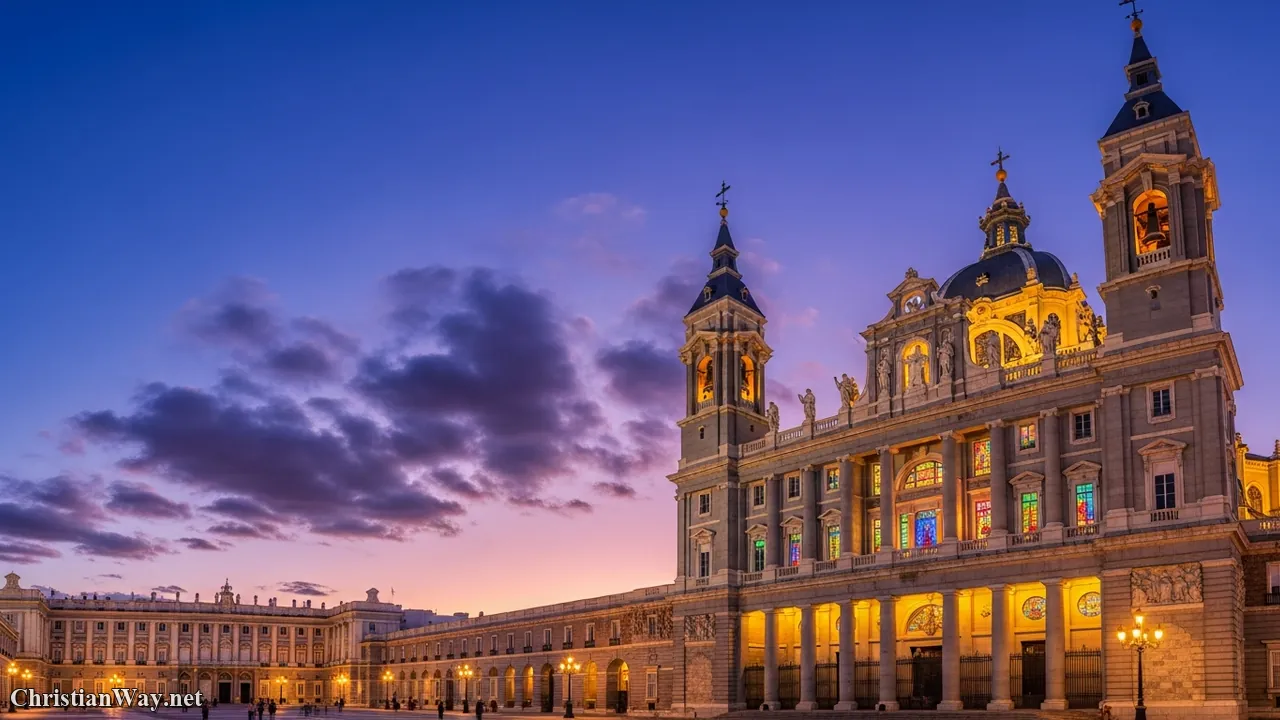
Finally, we arrive at the spiritual heart of the Archdiocese: the Cathedral of Saint Mary the Royal of the Almudena. Though its construction took over a century, finishing only in 1993, it stands as a bridge between the ancient and the contemporary. Its Neo-Gothic interior is surprisingly bright and modern, featuring vibrant pop-art mosaics and icons that speak to the “New Evangelization.” Facing the Royal Palace, it serves as a reminder that while earthly powers may rise and fall, the Church remains a steady beacon of hope. Here, under the gaze of the Virgin of Almudena, we find the culmination of Madrid’s faith—a sanctuary that is at once a fortress of tradition and a home for the modern pilgrim.
Spiritual Highlights
- The Blessed Sacrament Chapel with its stunning modern mosaics by Fr. Marko Rupnik.
- The 16th-century image of the Virgin of Almudena, the beloved patroness of the city.
Reading the Catholic Story Behind Catholic Churches In Madrid
Madrid’s Catholic churches reflect royal patronage, parish life, religious orders, modern urban expansion, and the broader Spanish tradition of sacred art. Their value lies not only in monuments but in the communities that continue to worship in them.
The Top 10 Catholic Churches in Madrid is best read as a map of communities as well as buildings. Architecture records only part of the story. Parishes are shaped by worship, language, migration, religious orders, schools, charitable institutions, clergy and lay leadership, and changing neighborhoods. A famous façade may attract the eye, but the lasting Christian significance of a church depends on the people who have prayed, served, celebrated sacraments, and buried their dead there.
A Practical Way to Compare the Churches
Instead of asking only which church is the ‘best,’ compare several dimensions separately: ecclesial role, historical period, architectural character, devotional importance, relationship to the local city, and present-day pastoral life. This produces a more informative picture than a single overall rank. It also explains why a modest historic parish can deserve attention alongside a monumental cathedral or basilica. In the context of Catholic churches in Madrid, that distinction helps keep the article precise without losing its pastoral purpose.
Questions Worth Asking Before You Visit
Before visiting, ask who worships here now, what liturgical or devotional practices shape the space, which parts of the building belong to different historical periods, and whether the site has current access or preservation rules. These questions turn a quick photograph into a more attentive encounter with history and faith. In the context of Catholic churches in Madrid, that distinction helps keep the article precise without losing its pastoral purpose.
How to Verify Details Before Planning a Visit
Information connected with The Top 10 Catholic Churches in Madrid can change after publication. Restoration projects, liturgical schedules, ticketing systems, security rules, parish boundaries, titles, and public access are all capable of changing. Before traveling, use the church, diocese, shrine, or heritage authority’s current information for practical details. This is especially important when a site is both an active place of worship and a major tourist destination.
Photographs Do Not Tell the Whole Story
Online photographs naturally favor dramatic façades and interiors, but Catholic churches in Madrid is better understood by noticing less obvious features: how the congregation enters, where the altar and ambo are placed, which chapels attract prayer, how old and new elements coexist, and whether local worship gives the building a different atmosphere from its tourist image. Attentive observation often reveals why a church matters to its community.
A Better Framework Than a Single Ranking
One way to deepen The Top 10 Catholic Churches in Madrid is to score nothing at all and instead ask a sequence of qualitative questions. What kind of church is this? When was the present building constructed, and what earlier communities or structures preceded it? Why do people travel there? Which artistic features are historically significant? What happens there liturgically today? Which claims are documented by official local or heritage sources? This framework produces a more durable article than relying only on superlatives.
Active Worship Can Change the Visitor Experience
Because Catholic churches in Madrid includes living Christian sites, visitors may encounter Mass, the Liturgy of the Hours, weddings, funerals, pilgrim groups, confession, Eucharistic adoration, concerts, or periods when tourist access is restricted. These are not interruptions to the ‘real’ attraction. They are evidence that the building still functions as a church. Respecting the liturgical life of the community is part of understanding the site accurately.
Restoration Is Part of the Story
Many celebrated churches have been restored, reconstructed, enlarged, or repaired after fire, war, structural failure, or changing liturgical needs. Restoration can preserve medieval or early-modern work while also introducing modern materials and interpretations. Readers of The Top 10 Catholic Churches in Madrid should therefore be cautious with phrases such as ‘unchanged since’ or ‘exactly as originally built’ unless the evidence is unusually strong.
Faith, Heritage, and Public Memory
Churches often carry national or civic meanings beyond their congregations. They can become symbols of a city, repositories of art, sites of mourning, or monuments associated with political history. Christian readers can acknowledge those public meanings while remembering that the ecclesial identity of a church is rooted in worship and community. Heritage and faith overlap, but neither completely explains the other. In the context of Catholic churches in Madrid, that distinction helps keep the article precise without losing its pastoral purpose.
Using the List for Deeper Research
A reader who wants to go beyond The Top 10 Catholic Churches in Madrid can build a small research file for each site. Record the official church name, ecclesial status, diocese, date of the present building, major rebuilding phases, architect when securely known, principal devotional or historical associations, and the source for any size or visitor claim. This simple discipline makes it easier to notice when travel websites repeat a statistic without defining it.
Respectful Language for Sacred Places
Writing about Catholic churches in Madrid benefits from vocabulary that respects both believers and historical evidence. A church may be described as sacred within the faith of its community without requiring every reader to share that belief. Conversely, an article can discuss architecture critically without speaking as if active worshippers are merely background to a tourist attraction. This balanced language is especially important on a site intended for readers from multiple Christian traditions.
The Best Lists Remain Revisable
Buildings are restored, titles change, new heritage research appears, visitor patterns shift, and congregations grow or decline. A responsible version of The Top 10 Catholic Churches in Madrid should therefore be open to revision. Editorial transparency is a strength: noting that a ranking reflects documented criteria at a particular time is more trustworthy than presenting every position as permanent fact.
A Reader’s Checklist for Sacred-Site Articles
When returning to The Top 10 Catholic Churches in Madrid, test each major claim by asking what kind of statement it is. Is it a measurable fact such as height or construction date? Is it an ecclesial designation such as cathedral or basilica? Is it a historical interpretation? Is it a devotional tradition? Or is it the author’s aesthetic judgment? Labeling these categories mentally prevents a ranking from blending objective and subjective claims into one voice.
For travel planning, current local information should always outrank an old list. Worship schedules, reservation systems, accessibility, restoration closures, dress expectations, and photography rules can change. For historical research, official church, diocesan, archival, and heritage sources should be preferred when they are available. That habit makes Catholic churches in Madrid useful not only for inspiration but also for serious study.
Why Sacred Buildings Continue to Matter
Even in an age of digital worship resources, churches remain embodied places. They gather people at a font, around Scripture and altar, within music and silence, among memories of generations. The strongest reason to study Catholic churches in Madrid is therefore not that the buildings are impressive objects. It is that they show how Christian communities have tried to give visible form to worship, memory, hope, and belonging in particular places.
One More Accuracy Check
Before treating The Top 10 Catholic Churches in Madrid as complete, separate what is timeless from what can change. Doctrinal claims and well-established historical facts may remain stable, while rankings, access information, population data, ecclesial titles, restoration status, and modern biographies can require updates. This final check protects the article from becoming outdated even when its central spiritual message remains useful.
Reflect and Pray
As our journey through the Catholic churches in Madrid comes to a close, I hope your heart feels a little lighter and your spirit a little more nourished. These buildings are not museum pieces; they are the “tents of meeting” where God continues to encounter His people. Whether you find yourself in the grand nave of a basilica or the quiet corner of a medieval chapel, remember that the most beautiful temple of all is the one God is building within you. May the peace of Christ, which surpasses all understanding, guard your hearts and minds as you continue your own pilgrimage through life.
— Fr. John Matthew, for Christian Way