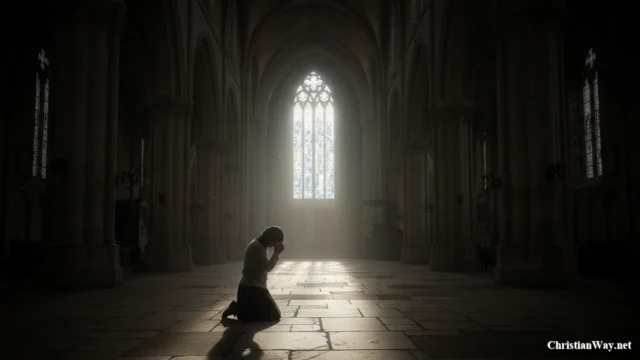
Many people turn to Proverbs seeking guidance for daily life, hoping to discover how God’s wisdom can shape choices, character, and the heart.
When people ask me about the message of Proverbs, I often sense a deeper longing behind the question. We all want to know how to live well — how to make choices that lead to peace rather than regret, meaning rather than confusion. Proverbs speaks to that very human desire. It does not float above real life; it walks straight into our homes, our work, our relationships, and even our inner thoughts.
At its heart, Proverbs teaches that true wisdom begins with reverence for the Lord. This is not fear in the sense of terror, but a humble recognition that God is the source of life and truth. When we place Him at the center, everything else finds its proper place. Without God, intelligence can become pride; with God, wisdom becomes a path of light. Proverbs gently reminds us that knowing about life is not the same as knowing how to live.
The book also shows us that wisdom is deeply practical. It speaks about honesty and self-control, about kindness in speech and diligence in work, about humility, patience, and mercy. Again and again, Proverbs contrasts two paths: the way of wisdom and the way of folly. These are not abstract ideas — they are choices we make each day. Through short sayings and vivid images, God teaches us that our small decisions shape the direction of our lives.
Most beautifully, Proverbs assures us that God desires to teach us. Wisdom is not reserved for the powerful or the learned; it is offered to anyone willing to listen. When we slow down, open our hearts, and allow God’s word to form us, we begin to see life differently. We learn that wisdom is not merely about success, but about becoming the kind of person who reflects God’s goodness in the world.
Reflection – A Closing Thought
May we learn to listen for God’s wisdom in the quiet moments of our day, trusting that His guidance leads us toward life.
Let us walk gently, choosing the path that draws us closer to Him and to one another.
A Fuller Christian Answer to What Is the Message of Proverbs
The question “What Is the Message of Proverbs” deserves more than a quick sentence because it touches the way Christians read Scripture, understand God, and live before Christ. Proverbs teaches wisdom for life under God: reverence for the Lord, disciplined speech, diligent work, just relationships, sexual integrity, generosity, humility, and prudent decision-making. The shorter answer already present in this article gives an important starting point, but the subject becomes clearer when it is placed inside the larger biblical story rather than treated as an isolated spiritual tip. A careful Christian answer should therefore ask what the relevant passages actually say, how the Church has received them, what common misunderstandings need correction, and what kind of discipleship follows from the truth.
The central passages for this discussion include Proverbs 1:1–7; Proverbs 3:1–12; Proverbs 8:1–36; Proverbs 31:10–31. Reading these texts together matters. One passage may give a command, another a narrative example, another a theological explanation, and another a prayer or promise. Christians do not honor Scripture by forcing every verse to function in the same way. They honor it by listening to each text in context and allowing the wider canon to deepen the answer. In the case of What Is the Message of Proverbs, this approach keeps the article both biblically grounded and pastorally realistic.
Reading the Biblical Witness in Context
Start with Proverbs 1:1–7. Before asking what it means for us, notice who is speaking, to whom, and why. Then read Proverbs 3:1–12; Proverbs 8:1–36 alongside it. The purpose is not to collect proof texts but to see a pattern. Biblical theology often emerges through repeated themes: God acts first, human beings are called to respond, sin distorts the response, grace restores what is broken, and the life of faith becomes a journey of trust, obedience, worship, and hope. Proverbs teaches wisdom for life under God: reverence for the Lord, disciplined speech, diligent work, just relationships, sexual integrity, generosity, humility, and prudent decision-making. This is especially relevant when the question is what is the message of proverbs.
Context also protects readers from overstatement. A verse may teach something true without answering every question that later theology asks. Narrative details can be significant without becoming universal rules, and poetry can speak truth through imagery without functioning like a technical definition. For What Is the Message of Proverbs, careful reading means letting the passages illuminate one another while resisting the temptation to make the Bible say more—or less—than the text supports.
The Key Theological Distinction
One distinction is especially important: A proverb is normally a wise generalization, not an unconditional promise that every righteous action will immediately produce a predictable outcome. This clarification is not a minor footnote. It often determines whether a Christian teaching becomes freeing and truthful or anxious and distorted. Many spiritual problems begin when two related ideas are treated as identical—for example, forgiveness and reconciliation, faith and emotion, divine sovereignty and fatalism, or reverence and fearfulness. Good theology slows down long enough to name those differences. For readers considering what is the message of proverbs, this provides a practical interpretive safeguard.
The distinction also makes room for real human experience. Christian teaching is not strengthened by denying grief, fear, confusion, temptation, trauma, or unanswered questions. Instead, Scripture repeatedly brings those experiences into the presence of God. A mature answer to What Is the Message of Proverbs therefore holds doctrine and pastoral reality together: truth is not softened into mere preference, but neither is it wielded without compassion or awareness of how people actually live.
How the Question Leads Back to Jesus Christ
For Christians, this subject finally leads to Jesus Christ. Christians read Proverbs within the whole biblical canon and see its search for divine wisdom fulfilled and deepened in Christ, whom the New Testament calls the wisdom of God. The New Testament does not present Christian spirituality as a collection of detached principles. Faith, prayer, holiness, salvation, Church, Scripture, mercy, and discipleship all take their shape from who Jesus is and what God has done through him. Keeping Christ at the center prevents the topic from becoming a self-improvement technique or a merely abstract debate. Applied specifically to what is the message of proverbs, the point helps keep conviction joined to humility.
This Christ-centered reading also changes the emotional tone of the answer. The goal is not to master what is the message of proverbs as though spiritual life were an exam. The goal is communion with God through Christ and growth into a life of truth and love. When believers fail, the gospel calls them to repentance and renewed trust rather than despair. When they succeed, grace leaves no room for spiritual pride. Christ remains both the source of hope and the pattern by which Christian maturity is measured.
What Christians Share—and Where Traditions Differ
Christians share the Old and New Testament Scriptures as sacred Scripture, although Catholic, Orthodox, Anglican, and Protestant traditions differ over the precise Old Testament canon and over the relation of Scripture to tradition and teaching authority. ChristianWay.net serves readers from more than one tradition, so fairness requires beginning with the shared center before describing genuine differences. A Catholic explanation should not be presented as though every Protestant uses the same categories, and an Evangelical shorthand should not be treated as the entire Orthodox or Anglican tradition. In the context of what is the message of proverbs, this keeps the answer from becoming either vague or rigid.
When traditions differ on a point connected with what is the message of proverbs, the responsible approach is to name the difference at the level where it actually exists: authority, sacramental theology, ecclesiology, justification, sanctification, devotional practice, biblical canon, or another defined issue. Differences should neither be blurred into a false sameness nor exaggerated into the idea that Christians share nothing. The ecumenical creeds, Scripture, and the confession of Jesus Christ provide substantial common ground, while official teaching sources help identify where language and doctrine diverge.
Common Misunderstandings to Avoid
Wisdom literature, prophecy, narrative, poetry, Gospel, letter, and apocalypse do not all communicate in the same literary way. Responsible reading respects genre, historical setting, and the larger canon. Applied to what is the message of proverbs, this warning matters because short online answers often turn a living Christian teaching into a formula. A formula promises control: say the right words, feel the right emotion, make the right declaration, and a predictable result follows. Biblical faith is more relational and more demanding. It includes trust when outcomes are not visible, obedience when feelings lag behind, and humility when a mystery cannot be reduced to a neat explanation.
Another misunderstanding is to use the teaching primarily as a tool for judging someone else. Jesus repeatedly directs religious truth toward repentance in the hearer before it becomes a weapon against a neighbor. Readers should therefore ask first how what is the message of proverbs exposes their own habits, fears, pride, avoidance, or lack of love. Christian truth is public and objective, but its first pastoral use is often self-examination before God.
Living the Teaching in Ordinary Life
Read a small section slowly, identify the virtue or folly described, compare related proverbs, and practice one concrete habit of wise speech or action. Read whole paragraphs and chapters, consult cross-references, notice genre, and ask what the text meant before asking how it applies. Prayerful reading and careful reading belong together. This is where theology becomes discipleship. A truth that remains only in the mind can be admired without being obeyed, while a practice detached from truth can become empty routine. Christian formation joins understanding and action so that belief gradually shapes speech, relationships, choices, and priorities. This is especially relevant when the question is what is the message of proverbs.
It is usually better to choose one concrete step than to make an impressive spiritual plan that cannot be sustained. In relation to what is the message of proverbs, ask what faithfulness looks like in the next twenty-four hours. It may be a prayer, an apology, a boundary, an act of service, a period of Scripture reading, a difficult truthful conversation, or simply the decision to remain patient. Small acts do not make grace small; they are often the place where grace becomes embodied.
A Responsible Way to Study the Topic
Read Proverbs 1:1–7 slowly, then read the passages around it. On a second reading, note every statement about God, every description of human response, and every promise, warning, command, or question. Then compare Proverbs 3:1–12; Proverbs 8:1–36. This method is intentionally simple. It reduces the risk of building a doctrine from a phrase detached from context and helps the reader see why Christians sometimes reach different conclusions about secondary questions. For readers considering what is the message of proverbs, this provides a practical interpretive safeguard.
After reading Scripture, consult the official teaching resources of your own Christian tradition and, when comparing traditions, use the other communion’s own sources rather than a hostile summary. For what is the message of proverbs, this is particularly important because internet explanations often confuse devotional custom with binding doctrine or present one school of thought as though it were universal. Good research should make an article more precise and more charitable at the same time.
Questions Readers Often Ask
Does struggling with this mean my faith is weak? Not necessarily. The Bible includes faithful people who fear, lament, misunderstand, hesitate, and still turn toward God. Struggle can become a place where faith is exercised. The more useful question is whether the struggle around what is the message of proverbs is being brought into truth, prayer, community, and responsible action or hidden behind shame and avoidance.
Do all Christians explain this exactly the same way? No. Christians share the Old and New Testament Scriptures as sacred Scripture, although Catholic, Orthodox, Anglican, and Protestant traditions differ over the precise Old Testament canon and over the relation of Scripture to tradition and teaching authority. The differences matter, but they do not remove the possibility of a careful shared answer at the level of Scripture and the historic confession of Christ. This is especially relevant when the question is what is the message of proverbs.
What if I do not feel immediate spiritual change? Christian growth is not measured by constant emotion. Conviction can remain faithful in dry seasons, and healing or maturity can unfold slowly. In what is the message of proverbs, perseverance, truthfulness, and love are often better measures than intensity.
Prayer, Worship, and Community
Christian understanding deepens when what is the message of proverbs is carried into worship and community rather than kept as a private idea. Scripture is heard among other believers, prayer places the subject before God, and community reveals blind spots that solitary reflection can miss. Historic Christian spirituality therefore joins personal devotion with the gathered Church. Even traditions that place different weight on liturgy, sacrament, preaching, or spontaneous prayer recognize that discipleship is not meant to be entirely isolated.
A simple prayer can begin: “Lord, show me what is true, correct what is distorted in me, and give me grace to live what I learn.” Then name the specific issue behind what is the message of proverbs. Ask for wisdom rather than merely the answer you already prefer. If another person is involved, pray for that person’s good as well as your own. Prayer does not replace study or action, but it can purify the motives with which study and action are pursued.
A Final Pastoral Perspective
Proverbs teaches wisdom for life under God: reverence for the Lord, disciplined speech, diligent work, just relationships, sexual integrity, generosity, humility, and prudent decision-making. That truth is worth returning to because Christian life is formed through repeated remembrance. We forget who God is, misread our circumstances, and drift toward fear or self-reliance. Scripture calls us back. The answer to What Is the Message of Proverbs is therefore not meant simply to satisfy curiosity; it is meant to help readers see God more truthfully and walk with greater faithfulness.
If this subject touches a place of weakness, begin without pretending. Read the passages above, speak honestly to God, seek wise Christian counsel, and take the next faithful step that is actually available. The aim is not spiritual performance but a life increasingly shaped by the Father’s love, the grace of Jesus Christ, and the work of the Holy Spirit. In that larger story, even a small question can become an invitation to deeper discipleship. This is especially relevant when the question is what is the message of proverbs.
Reading This Question Within the Whole Story of Scripture
The passages already listed become clearer when they are read inside the whole biblical story. Creation establishes that life is received from God; covenant shows that God forms a people; the prophets call that people back to faithfulness; the Gospels center the story on Jesus; the apostolic writings explain life in Christ; and Christian hope looks toward the renewal of all things. Placing what is the message of proverbs within this horizon prevents one verse or one experience from carrying the entire weight of the answer. It also shows why Christian doctrine is interconnected: what believers say about God shapes what they say about prayer, salvation, holiness, the Church, and the moral life.
A useful exercise is to summarize the teaching in one sentence, identify one passage that genuinely supports that sentence in context, and then name one practical implication that does not go beyond the text. Repeat the exercise after reading an official teaching source from your own tradition. If the wording changes, note why. This habit encourages conviction without carelessness and makes the study of what is the message of proverbs more reliable than repeating a familiar internet answer.
How to Discern Application Without Forcing the Text
Application begins after interpretation, not before it. Readers often approach Scripture with an urgent personal problem and immediately search for a sentence that seems to answer it. That desire is understandable, but a wiser process first asks what the passage meant in its own literary and historical setting. Only then should the reader ask how the enduring truth speaks into present circumstances. With what is the message of proverbs, this order helps protect against using Scripture merely to confirm a conclusion already chosen.
The best application is usually specific and proportionate. Instead of claiming that one verse settles every possible case, ask what attitude, action, warning, promise, or hope the text clearly supports. Then place that conclusion beside the teaching of Jesus and the wider canon. If serious moral, relational, medical, legal, or safety questions are involved, Christian wisdom may also require pastoral counsel and appropriate professional help. Faithfulness is not proved by refusing the forms of help that truth and love make available. For what is the message of proverbs, this keeps application both spiritually serious and responsibly grounded.
Why Patience Matters in Christian Understanding
Some Christian questions become clearer only over time. Scripture may give a firm center while leaving secondary details that require study, prayer, and conversation. This is not a defect in faith. The Bible itself contains people who wait, ask, misunderstand, receive correction, and grow. In relation to what is the message of proverbs, patience allows conviction to deepen without turning uncertainty into panic or complexity into an excuse for indifference.
Patience also protects charity. When Christians encounter a different tradition or interpretation, the first task is to understand what the other community actually teaches rather than respond to a caricature. Official catechisms, confessions, liturgical texts, and teaching documents are more reliable than hostile summaries. Careful listening does not require surrendering one’s convictions; it helps those convictions become more truthful, precise, and fair. That patience is a particular safeguard when studying what is the message of proverbs.
From Understanding to Formation
The purpose of Christian teaching is not simply to increase religious vocabulary. Truth is meant to form a people who worship God, love their neighbors, repent of sin, practice justice, forgive, endure suffering, and hope in Christ. The question of what is the message of proverbs therefore reaches its pastoral goal when it changes attention and behavior. A correct definition that never touches speech, relationships, money, work, prayer, or service remains incomplete as discipleship.
Formation normally happens through repetition rather than one dramatic insight. Worship trains desire, Scripture renews the mind, prayer opens the heart, service confronts self-centeredness, confession teaches truthfulness, and community exposes blind spots. These practices do not purchase grace. They are ways of responding to grace and making room for truth to become embodied over time. That slow process is often where the most durable Christian maturity is formed. In the case of what is the message of proverbs, formation matters as much as definition.
Holding Truth and Pastoral Wisdom Together
A mature understanding of what is the message of proverbs also requires holding together conviction and humility. Proverbs teaches wisdom for life under God: reverence for the Lord, disciplined speech, diligent work, just relationships, sexual integrity, generosity, humility, and prudent decision-making. At the same time, A proverb is normally a wise generalization, not an unconditional promise that every righteous action will immediately produce a predictable outcome. These two sentences belong together. Christian teaching becomes distorted when the first is repeated without the second, or when the necessary clarification is used to empty the central claim of its force. Scripture trains believers to live inside that tension: to confess truth confidently, acknowledge the limits of their own understanding, and remain teachable before God. That posture is especially important in pastoral questions, where a careless sentence can burden a wounded conscience or encourage a false certainty.
The final measure is therefore not whether an article about what is the message of proverbs sounds impressive, but whether it helps a reader read Scripture more faithfully and follow Christ more truthfully. Christians read Proverbs within the whole biblical canon and see its search for divine wisdom fulfilled and deepened in Christ, whom the New Testament calls the wisdom of God. In practice, Read a small section slowly, identify the virtue or folly described, compare related proverbs, and practice one concrete habit of wise speech or action. This does not solve every secondary question, yet it gives the reader a trustworthy path forward. Study should lead to worship, worship to obedience, and obedience to deeper love of God and neighbor. When those movements remain connected, theological depth becomes pastoral wisdom rather than information alone.
— Fr. John Matthew, for Christian Way