Dear friends in Christ,
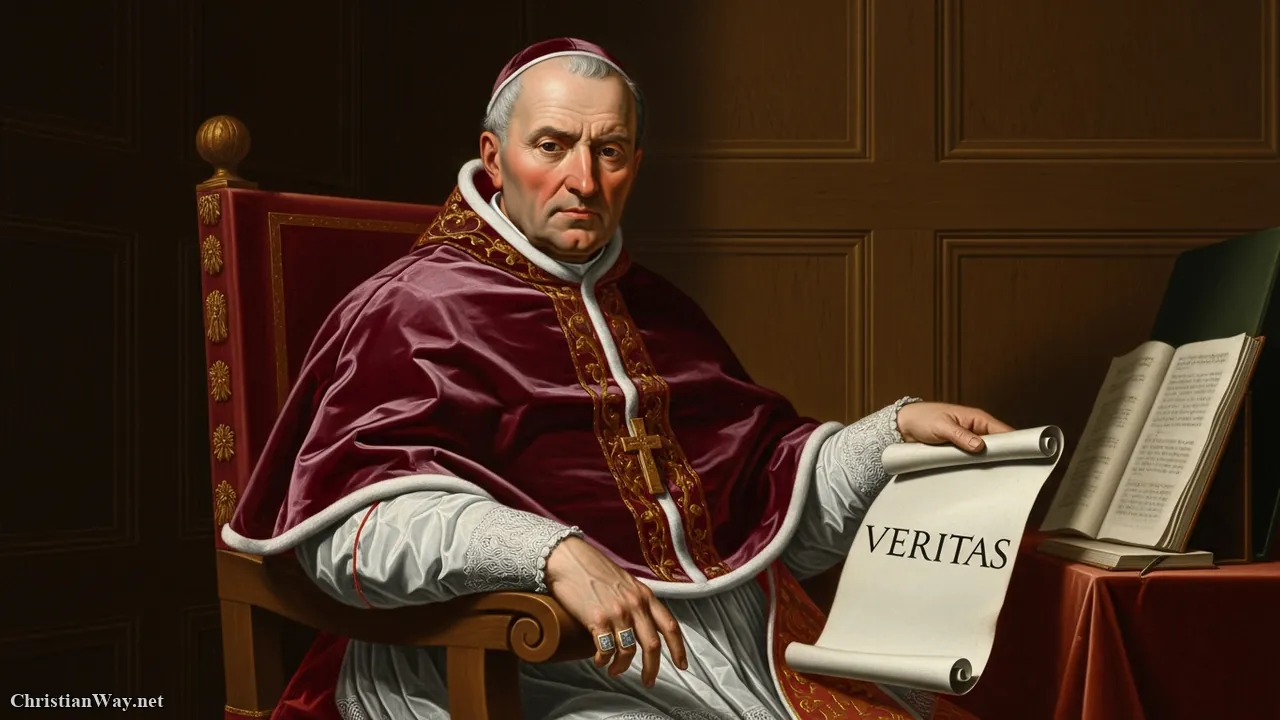
When many people hear the word cardinal, they may first imagine a red robe, a solemn ceremony in Rome, or the gathering of Church leaders after the death or resignation of a pope. These images are familiar, and they carry real significance. Yet beneath the visible signs, the calling of a cardinal is meant to be something far more spiritual than honor, rank, ceremony, or influence. It is a call to serve Christ and His Church with faithfulness, courage, prayer, wisdom, and humble love.
The Church has always needed shepherds. From the first apostles who left their nets to follow Jesus, to the bishops, priests, religious sisters, missionaries, teachers, and lay believers who serve quietly today, Christ continues to call people into different forms of responsibility. The purpose of every responsibility in the Church is not self-importance. It is service. Jesus said, “Whosoever will be great among you, shall be your servant” (Matthew 20:26). These words stand at the heart of every Christian ministry, including the ministry entrusted to cardinals.
Cardinals hold a special role in the Roman Catholic Church. They assist the Bishop of Rome, whom Catholics recognize as the Pope, in carrying the burden of pastoral leadership for the universal Church. Some lead dioceses in cities across the world. Some work in the offices of the Holy See. Some teach, guide, organize charitable work, strengthen local churches, or offer counsel on difficult questions facing the people of God. Their service can touch millions of lives, yet its deepest meaning remains simple: to help the Church remain close to Jesus Christ.
Still, the title itself should never distract us from the One whom every Church leader is called to serve. A cardinal is not the center of the Church. Christ is the center. A cardinal is not the source of truth. Christ is the Truth. A cardinal is not called to build a personal following. He is called to help the Church remain faithful to the Gospel, to the apostolic faith, and to the saving love revealed in Jesus.
This is why Cardinals: Faithful Servants of Christ and Guardians of the Church is not only a reflection on a Catholic office. It is also a reflection on the nature of Christian service itself. Every believer, whether Catholic, Orthodox, Anglican, Protestant, Evangelical, Pentecostal, or part of another Christian tradition, is invited to consider what it means to serve without seeking applause, to protect truth without becoming harsh, and to lead others without forgetting that Christ alone is Lord.
The story of the Church is filled with people whose titles were great but whose hearts became humble before God. It is also filled with warnings about what happens when spiritual authority is confused with worldly power. Therefore, to understand the vocation of a cardinal rightly, we must look beyond the color of the robe and the grandeur of ceremony. We must look toward Christ kneeling to wash the feet of His disciples.
The Meaning of a Cardinal’s Call
The word cardinal comes from the Latin word cardo, meaning a hinge. A hinge is not the door itself, nor is it the house. Yet it serves an important purpose by helping the door move, open, and remain connected. In a similar way, cardinals are meant to serve at significant points in the life of the Church. They are called to help support the unity, mission, worship, teaching, and pastoral care of the Catholic community throughout the world.
A Service, Not Another Sacrament
The cardinalate is not a separate sacrament. It is not another level of baptism, confirmation, priesthood, or episcopal ordination. Most cardinals are bishops, because their responsibilities usually involve major pastoral leadership in dioceses or service to the universal Church. Yet the title of cardinal itself is an office and dignity within the Roman Catholic Church, entrusted by the Pope to particular men who are asked to assist him in the care of the Church.
This distinction is important because it reminds us that Christian service is not measured only by titles. A cardinal may carry a great responsibility, but the grandmother who prays every morning for her family, the parish volunteer who visits the sick, the teacher who helps a child understand the Gospel, and the parent who teaches forgiveness at home all participate in the life of the Church. The Body of Christ needs visible leaders, but it also depends upon countless hidden acts of faithfulness.
Saint Paul teaches that the Church is like a body with many members. “The body is not one member, but many” (1 Corinthians 12:14). The eye cannot say to the hand, “I have no need of thee.” The hand cannot say to the foot, “I have no need of thee.” In the same way, no Christian ministry stands alone. Cardinals, bishops, priests, deacons, religious communities, theologians, catechists, parents, young people, workers, and the poor all belong to the one Body of Christ.
A cardinal’s role has meaning only when it is lived as part of this communion. His task is not to stand above the people of God as though he were untouched by their struggles. He is called to stand among them as a servant, a teacher, a pastor, and a witness to the mercy of Christ.
Called First to Remain With Jesus
Before Jesus sent the apostles out to preach, He first called them to be with Him. The Gospel of Mark says that Jesus chose twelve “that they should be with him, and that he might send them forth to preach” (Mark 3:14). This order matters. Before mission comes communion. Before preaching comes prayer. Before leadership comes discipleship.
The same is true for cardinals. Their first calling is not to meetings, documents, ceremonies, or public responsibilities. Their first calling is to Christ. They must remain close to the Gospel, close to prayer, close to the Eucharist, close to the poor, and close to the wounds of the people they serve.
Without prayer, Church leadership can become administration without a soul. Without humility, responsibility can become ambition. Without love, even correct teaching can become hard and distant. A cardinal who remains close to Christ is more likely to remember that the Church belongs not to human beings, but to the Lord who gave His life for her.
This is a lesson for every Christian. We may not be entrusted with large responsibilities, but we all face the temptation to become busy without becoming prayerful. We may work, serve, plan, organize, and speak, yet forget to sit quietly before the Lord. The example of every faithful Church leader should remind us that the most important work of faith begins in the heart that remains with Jesus.
From the Early Church to the Cardinalate
The office of cardinal developed gradually across the centuries. It did not exist in the same formal way during the time of the apostles. In the earliest centuries of the Church, leadership was centered on bishops, priests, deacons, and the local Christian communities gathered around them. The Bishop of Rome gradually came to rely especially upon clergy connected to the churches and charitable ministries of Rome, as well as bishops from nearby dioceses.
A Role Shaped by the Life of Rome
Over time, certain priests, deacons, and bishops became closely linked to the pastoral and administrative life of the Church in Rome. These men eventually formed the group known as cardinals. Their relationship with the Bishop of Rome became increasingly important, especially as the Catholic Church grew across continents and cultures.
The historical development of the cardinalate reminds us that Church structures often grow in response to practical needs. The Gospel does not change, but the Church must continually find ways to serve people faithfully in changing times. As communities spread, as questions become more complex, and as pastoral needs increase, the Church seeks forms of service that can help preserve unity and strengthen mission.
Yet structures must always remain servants of the Gospel. The Church does not exist to preserve offices for their own sake. She exists to proclaim Jesus Christ, to celebrate the sacraments, to form disciples, to care for the poor, to forgive sins, to teach truth, and to prepare hearts for eternal life.
A cardinal’s office, then, should never be understood as a worldly rank. In earlier centuries, Church titles sometimes became entangled with wealth, political influence, royal courts, and social privilege. History teaches us that whenever the Church becomes too comfortable with worldly power, her witness can grow weak. Jesus did not come to build an empire of human prestige. He came to reveal the Kingdom of God.
The most beautiful moments in Church history are not always found in grand halls or public ceremonies. They are often found in the quiet courage of those who remain faithful when faith is costly. Some cardinals have been scholars. Some have been missionaries. Some have cared for the poor during disease and famine. Some have defended the faith in times of confusion. Some have suffered exile, persecution, imprisonment, or death because they refused to abandon Christ.
Co-Workers of the Bishop of Rome
One of the principal responsibilities of cardinals is to assist the Pope in the leadership of the Roman Catholic Church. Catholics understand the Pope as the Bishop of Rome and as the successor of Saint Peter in a unique pastoral ministry of unity and service. Cardinals are among his closest collaborators.
Counsel, Prayer, and Shared Responsibility
The Pope does not carry the life of the Church alone. The Church is far too vast, diverse, and spiritually rich for any one person to understand every need in every place. There are local churches across nations, languages, cultures, and social conditions. Some communities live in peace and freedom. Others live under persecution. Some face secular indifference. Others face poverty, war, migration, political instability, or the wounds of division.
Cardinals bring experience from many parts of the world. Some come from large cities. Some have served in small dioceses. Some have worked in education, diplomacy, charitable missions, religious life, pastoral ministry, theology, canon law, or evangelization. Their role is not simply to offer opinions, but to help the Pope listen to the needs of the whole Church.
When cardinals gather with the Pope in formal meetings known as consistories, they are called to pray, discern, advise, and share responsibility. Their work may involve questions of doctrine, worship, social justice, missionary activity, clergy formation, safeguarding, care for families, relations with other Christians, dialogue with people of other faiths, and many other areas of Church life.
But behind every discussion should remain a simple question: What will help the people of God know, love, and follow Jesus Christ more faithfully?
This question protects the Church from becoming merely an institution. Institutions are necessary. They help communities organize, teach, serve, protect, and endure. But if structures forget the Gospel, they can become distant from the people they were created to serve. The greatest Church leader is not the one who appears most powerful. It is the one who helps others encounter Christ.
Shepherds of Local Churches
Many cardinals serve as bishops or archbishops in local dioceses. They know the daily reality of parish life, schools, hospitals, religious communities, families, youth, and the poor. They meet people in grief, baptize children, celebrate funerals, ordain priests, visit prisons, bless marriages, comfort those who are suffering, and encourage communities living through hardship.
This local pastoral work is essential. The universal Church is not an abstract idea. It is made visible in local communities where people gather to pray, hear Scripture, receive the sacraments, serve one another, and carry the Gospel into daily life.
A cardinal who serves well in a local church does not become distant because of his title. He becomes more responsible for being near. He must remember the names and struggles of ordinary people. He must listen to the poor, the elderly, the young, the grieving, and those who feel forgotten. He must speak truth with clarity, but also with a fatherly tenderness that reflects the heart of Christ.
The Church does not need leaders who seem unreachable. She needs shepherds who smell, in the language often used by pastors, like the sheep they serve. She needs leaders willing to walk into hospitals, poor neighborhoods, broken homes, and places of suffering without fear.
The Conclave: Prayerful Discernment for the Church
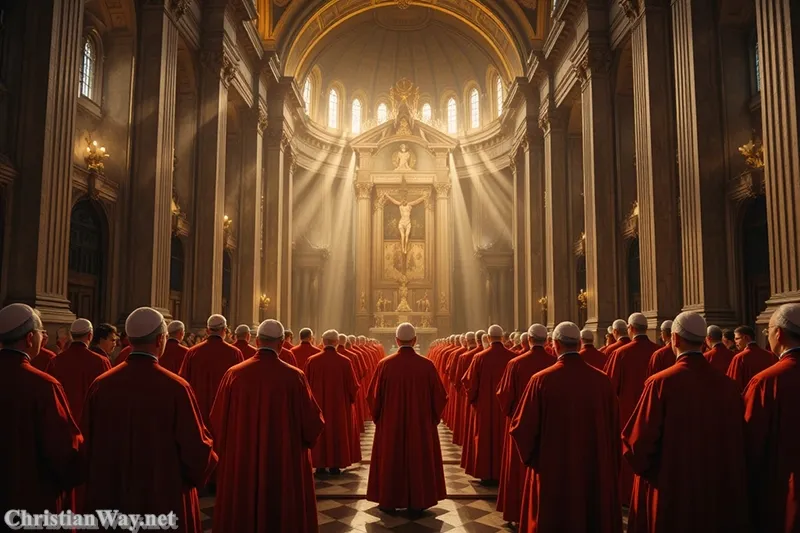
Perhaps the best-known responsibility of cardinals is their role in electing a new Pope. When the See of Rome becomes vacant, eligible cardinal electors gather in conclave to pray, discern, and vote for the next Bishop of Rome.
The word conclave comes from a phrase meaning “with a key,” referring to the enclosed setting in which the election takes place. Yet the most important reality is not the locked doors. It is the call to prayerful discernment.
More Than an Election
Modern people can easily view every election through the lens of politics. We may think immediately of campaigns, parties, arguments, strategies, influence, and public competition. But a conclave is meant to be something different. Cardinals are not called to choose a leader based on personal ambition, national interest, popularity, or human calculation alone.
They are called to ask what the Church needs at that moment in history. Does she need a voice of courage? A pastor of tenderness? A teacher of clarity? A missionary heart? A leader capable of healing division? A witness to the poor? A man able to call the Church back to prayer, repentance, and holiness?
No human process can remove human weakness completely. Cardinals, like all people, carry limits, cultural assumptions, hopes, fears, and personal perspectives. The Church does not teach that every decision made by Church leaders is magically free from human frailty. Yet Christians pray that the Holy Spirit will guide the Church, especially in moments of great responsibility.
The choice of a pope is not a moment for celebration of power. It is a moment for humility. The man elected is called to carry a cross. He becomes a servant of unity, a teacher of faith, a pastor for a worldwide Church, and a visible witness to Christ in a world that is often confused and divided.
The cardinals who vote are therefore called to act with profound seriousness. Their task is not to choose someone who will make the Church comfortable. Their task is to seek a shepherd who will help the Church remain faithful to Jesus.
The Whole Church Is Called to Pray
When a conclave takes place, the responsibility does not belong only to those inside the room. The whole Church is invited to pray. Catholics around the world pray that the cardinals will be open to God’s will. Other Christians often join in respect and hope, recognizing that the leadership of the Catholic Church affects the wider Christian family and the world.
Prayer is a reminder that the Church is not sustained by human planning alone. The first Christians prayed when they faced difficult decisions. Before choosing Matthias to take the place of Judas among the Twelve, they prayed, “Thou, Lord, which knowest the hearts of all men, show whether of these two thou hast chosen” (Acts 1:24).
That prayer remains fitting whenever the Church must make a serious decision. God knows the heart. God sees what we cannot see. God understands the future that remains hidden from us. Our role is to seek Him with humility.
Guardians of Faith: Guarding Means Serving
To call cardinals guardians of the Church does not mean they are owners of the Church. The Church belongs to Christ. He is her foundation, her head, and her Savior. Cardinals are guardians only in the sense that they are called to protect, preserve, and hand on what they themselves have received.
The Faith Is a Gift, Not a Possession
Saint Paul urged Timothy, “Keep that which is committed to thy trust” (1 Timothy 6:20). The Christian faith is often described as a treasure entrusted to the Church. It includes the Gospel, the witness of the apostles, the Scriptures, the sacraments, the worship of the Church, the teaching passed down through generations, and the call to holiness.
Cardinals, bishops, priests, theologians, and teachers are called to guard this treasure. But they must guard it as servants, not as people who possess truth for their own advantage.
To guard the faith does not mean refusing every question. It does not mean speaking harshly to those who struggle. It does not mean treating tradition as a weapon against wounded people. It means helping the Church remain rooted in Christ while speaking to the real needs of each generation.
Faithfulness requires courage. The Church cannot simply repeat whatever the world wishes to hear. Sometimes the Gospel challenges popular values. Sometimes it calls us to protect life when life is treated as disposable. Sometimes it calls us to forgive when the world encourages revenge. Sometimes it calls us to generosity when selfishness is rewarded. Sometimes it calls us to chastity, humility, honesty, and sacrifice when easier paths seem more attractive.
But the truth of Christ must always be spoken with love. Saint Paul writes that believers are to speak “the truth in love” (Ephesians 4:15). Truth without love can become cold. Love without truth can become shallow. The Church needs leaders who can hold both together: the courage to teach faithfully and the tenderness to accompany people patiently.
Guarding Unity Without Erasing Difference
The Catholic Church is global. Her members come from many nations, cultures, languages, and social experiences. This diversity is a gift, but it can also create tension. Cardinals are called to help preserve unity without treating unity as sameness.
The Church is not one culture wearing many costumes. She is a worldwide communion in which the same Gospel takes root in many different places. The prayer of Jesus remains before every Christian: “That they all may be one” (John 17:21).
Unity does not mean pretending that differences do not exist. Within the Catholic Church there are different spiritual traditions, rites, approaches to prayer, pastoral needs, and cultural expressions. Beyond the Catholic Church, there are also deep differences among Christians concerning authority, sacraments, ministry, worship, and theology.
Cardinals, especially those involved in ecumenical dialogue, are called to seek unity with honesty. True unity cannot be built through confusion or by ignoring real theological convictions. But neither can it be built through suspicion, contempt, or old hostility.
Catholics, Orthodox Christians, Anglicans, Lutherans, Reformed Christians, Baptists, Pentecostals, Evangelicals, and many others are called to remember that Jesus Christ is not divided. The path toward fuller unity may be long, but every act of charity, prayer, mutual respect, and shared service becomes a small answer to the prayer of Christ.
The Red Robe and the Witness of Sacrifice
The red clothing traditionally associated with cardinals is one of the most recognizable signs of the office. It is not meant simply to communicate status. Its deeper symbolism points toward sacrifice, courage, and the willingness to remain faithful to Christ even when faithfulness becomes costly.
A Reminder of the Blood of Witnesses
The color red has long been associated with the blood of martyrs. Christian history is filled with men and women who chose faithfulness to Christ over safety, reputation, comfort, or life itself. Some were bishops and priests. Some were religious sisters and brothers. Some were parents, workers, students, soldiers, children, and ordinary believers.
The red of the cardinal’s dress is meant to remind him that Christian leadership is never merely ceremonial. The shepherd is called to lay down his life for the sheep. This may not always mean physical martyrdom, though some Church leaders have indeed suffered persecution and death. More often, it means daily self-giving: long hours of prayer, difficult decisions, patient listening, hidden sacrifices, courage in the face of criticism, and faithfulness when no path seems easy.
Jesus said, “Greater love hath no man than this, that a man lay down his life for his friends” (John 15:13). Every Church leader must hear these words not as a decoration, but as a calling.
The red robe can also speak to ordinary Christians. We may never wear such a garment, but we are all called to a life of sacrificial love. A parent caring for a child through the night, a spouse remaining faithful during difficulty, a person visiting someone who is lonely, a worker choosing honesty instead of profit, a believer forgiving someone who has caused pain—these are small forms of laying down one’s life in love.
The Church is strongest not when she appears powerful, but when her people love sacrificially.
The Cardinal Close to the Poor
A cardinal’s service must never become separated from the poor. The Gospel is clear: Jesus drew near to those who were hungry, sick, overlooked, ashamed, and excluded. He warned against storing up treasure while ignoring those in need. He told His followers that what they did for the least, they did for Him.
The Poor Are Not an Extra Concern
Care for the poor is not a side project of Christian life. It belongs to the heart of the Gospel. A Church leader who speaks beautifully about doctrine but remains indifferent to suffering has not fully understood the teaching of Christ.
Cardinals often oversee dioceses, charitable organizations, schools, hospitals, missions, refugee services, and institutions that care for people in need. Their role may include decisions about resources, education, pastoral priorities, and public witness. These responsibilities are not merely administrative. They involve human lives.
A faithful cardinal must remember that every decision affects real people: families struggling to afford food, migrants searching for safety, elderly people living alone, children without stable homes, victims of war, people suffering from addiction, prisoners, people with disabilities, and those carrying grief no one else sees.
Saint Charles Borromeo, a cardinal and archbishop in the sixteenth century, is remembered for his dedication to reform, pastoral care, education, and service during times of hardship. Saint John Henry Newman, also a cardinal, is remembered for his intellectual depth, spiritual honesty, and devotion to conscience before God. Their lives were different, but both remind us that the Church needs leaders who join truth with holiness.
The poor do not need Christians who simply speak about them. They need Christians who know them, listen to them, defend their dignity, and stand beside them. This is true for cardinals, but it is equally true for every disciple.
A Catholic Ministry Within the Wider Christian Family
The office of cardinal belongs specifically to the Roman Catholic Church. Orthodox Christians do not have cardinals in the same way. Anglican, Protestant, Evangelical, Pentecostal, and other Christian traditions have their own patterns of leadership, including bishops, pastors, elders, moderators, teachers, presbyters, and mission leaders.
This difference should be acknowledged respectfully. The Christian family is marked by real theological and historical differences, and these differences cannot be ignored. Yet all Christians can recognize the spiritual questions raised by the cardinalate: How should leaders serve? How can the Church protect truth? How can authority remain humble? How can unity be pursued without losing faithfulness?
Shared Lessons Across Christian Traditions
Every Christian tradition has faced the temptation to confuse spiritual leadership with worldly importance. Every community has needed leaders who are prayerful, accountable, compassionate, and faithful to the Gospel. Every church has suffered when leaders have failed morally, spiritually, or pastorally.
The presence of cardinals in the Catholic Church can therefore invite Christians of all traditions to pray for those who carry leadership responsibilities. Pastors need prayer. Bishops need prayer. Priests and deacons need prayer. Ministers, elders, teachers, missionaries, theologians, and lay leaders need prayer. Leadership can become lonely. It can expose weaknesses. It can create temptations toward pride, fear, self-protection, and exhaustion.
The Church must never place leaders on pedestals so high that they cannot be corrected, supported, or loved. Christ alone is without sin. Every human shepherd needs grace.
The Temptations of Office and the Call to Humility
Whenever a person holds responsibility, temptation follows. This is true in government, business, families, schools, and churches. The more visible the role, the greater the danger of confusing service with self-importance.
Cardinals are not exempt from these temptations. History reminds us that some Church leaders have become too involved in political power, personal wealth, rivalry, or ambition. These failures have caused real wounds. The Church must face them honestly, repent where necessary, and seek renewal.
Jesus Warns Against Spiritual Pride
Jesus spoke strongly against religious leaders who loved titles, public recognition, and places of honor. He said, “He that is greatest among you shall be your servant” (Matthew 23:11).
This warning is not meant only for cardinals or bishops. It is meant for every person who serves in the name of God. The desire to be admired can quietly enter the heart. We may begin by serving generously, then slowly become attached to praise. We may start with a holy purpose, then become defensive when someone questions us. We may teach truth, yet forget to listen. We may speak about humility while secretly wanting control.
The cure for spiritual pride is not pretending that responsibility does not matter. Responsibility does matter. Leadership matters. Teaching matters. Decisions matter. But the cure is remembering that every gift comes from God and every authority must be used for the good of others.
A cardinal who kneels in prayer remembers that he is a servant before he is a leader. A bishop who visits the sick remembers that he is a shepherd before he is an administrator. A priest who listens patiently to confession remembers that mercy is greater than reputation. A Christian parent who apologizes to a child remembers that humility belongs in every home.
The Church becomes more beautiful when her leaders are not afraid to be human before God.
What Cardinals Can Teach Every Christian
The role of a cardinal may seem far away from daily life. Most people will never attend a consistory, enter a conclave, or work in a Vatican office. Yet the spiritual lessons connected to this vocation belong to everyone.
Faithfulness in Small Responsibilities
Every Christian has something entrusted to them. It may be a family, a friendship, a job, a parish ministry, a classroom, a neighborhood, a talent, a season of suffering, or a person who needs care.
We are all guardians of something. We are guardians of the words we speak. We are guardians of the trust others place in us. We are guardians of children who learn from our example. We are guardians of the poor and vulnerable people whose dignity may depend on our willingness to act. We are guardians of the faith handed down to us.
To guard something does not mean to hold it tightly out of fear. It means to care for it faithfully. A parent guards a child not by controlling every breath, but by loving, guiding, protecting, and teaching. A friend guards a confidence by refusing to gossip. A Christian guards the Gospel by living in a way that does not contradict it.
This is the deeper invitation behind Cardinals: Faithful Servants of Christ and Guardians of the Church. We are all called to protect what belongs to God by serving it with love.
The Need for Prayerful Discernment
Cardinals are called to make serious decisions for the Church. Yet every Christian faces decisions that require discernment. We may need to choose how to respond to conflict, how to guide a child, how to care for an aging parent, how to act honestly at work, how to forgive someone, or how to use our time and resources.
The world often tells us to make decisions quickly, based only on emotion, fear, money, or convenience. The Gospel invites us to pray. To discern is to ask, “Lord, what is faithful here? What leads toward love? What protects truth? What serves life?”
Prayer does not always give instant answers. Sometimes it gives us patience. Sometimes it reveals a hidden motive. Sometimes it leads us to seek wise counsel. Sometimes it gives peace after a long period of uncertainty.
The cardinals gathered in prayer before important decisions remind us that no Christian should be ashamed to pause before acting. The heart that listens to God often finds a wisdom that the hurried mind cannot see.
Reflect and Pray
Dear friends, cardinals are called to serve the Church in a particular way, but their vocation points toward a truth that belongs to every Christian: leadership is meant to be service, authority is meant to protect love, and faithfulness is meant to lead people closer to Christ.
A red robe, an ancient title, a public ceremony, or a place near the Pope can never be the deepest meaning of this calling. The deepest meaning is found in the Gospel: “Feed my sheep” (John 21:17). To feed the sheep is to teach the truth, protect the vulnerable, serve the poor, encourage the weary, correct with gentleness, and remain close to the Good Shepherd.
Pray for cardinals. Pray that they may resist pride and remain humble. Pray that they may speak truth without cruelty. Pray that they may make difficult decisions with courage and prayer. Pray that they may remain close to the poor, close to Scripture, close to the sacraments, and close to the wounded heart of Christ.
And pray also for yourself. Whatever responsibility God has entrusted to you, however small it may seem, ask for the grace to serve faithfully. You may not be called to lead a diocese, advise a pope, or guide a worldwide Church. But you are called to love the people placed in your path, to protect what is good, and to bear witness to Christ in the place where you live.
Let us pray.
Lord Jesus Christ, You are the Good Shepherd who knows Your sheep and gives Your life for them. Bless all cardinals, bishops, priests, pastors, and Christian leaders with humility, courage, wisdom, and love. Keep them faithful to Your Gospel and close to the poor, the suffering, and the forgotten. Guard Your Church from pride, division, fear, and self-interest. Teach every believer to serve without seeking praise and to carry the truth of Your love into the world. Amen.
May the peace of Christ dwell richly in your heart, and may His love guide every step you take toward Him.
— Fr. John Matthew