Dear friends in Christ,
Some phrases are small in lengope, and misunderstanding. Primus inter pares is one of those phrases. It is Latin for “first among equals,” and it is often used when speaking about leadership in Eastern Orthodoxy, especially the place of the Ecumenical Patriarch of Constantinople among the primates of the Orthodox Churches.
At first hearing, the phrase may sound like a technical expression meant only for bishops, historians, or people studying church government. Yet beneath it lies a question that touches every Christian heart: What does leadership look like in the Body of Christ? How can someone be first without becoming proud? How can authority serve unity without becoming control? How can the Church preserve order while remembering that Christ alone is Lord?
These questions are not merely historical. They belong to families, parishes, workplaces, friendships, and every community where people are called to care for one another. We have all seen what happens when leadership becomes self-protection, when authority becomes domination, or when those entrusted with responsibility forget the people they are meant to serve. We have also seen the beauty of leaders who listen, reconcile, encourage, and carry burdens that others cannot carry alone.
The Orthodox understanding of primus inter pares seeks to protect that second kind of leadership. It does not imagine the Church as an empire ruled by one human person. Nor does it imagine the Church as a loose collection of separate communities with no visible order, no shared responsibility, and no call to communion. It seeks to hold together two truths that belong together in the Gospel: Christ gives real responsibility to His servants, and every servant remains under the authority of Christ.
To call someone “first among equals” is not to deny that leadership exists. Nor is it to say that all bishops, churches, or communities must function as though no one has any special responsibility. Rather, it means that one person may be given a place of honor, coordination, initiative, and service while remaining fully within the communion of other bishops and churches. The first is not above the Church. The first is called to serve the Church.
This is why the phrase must be understood spiritually before it is understood politically. It is not a title for prestige. It is a reminder that the first place in the Church is always the place closest to the cross. Jesus did not define greatness by making others serve Him. He defined greatness by washing feet, carrying burdens, forgiving enemies, and giving His life for the world.
The question, then, is not simply, “Who is first?” The deeper question is, “What kind of firstness reflects Christ?”
The Meaning of Primus Inter Pares
The Latin phrase primus inter pares means “first among equals.” In Eastern Orthodox usage, it is commonly connected with the Ecumenical Patriarch of Constantinople, who holds the first place of honor among the primates of the autocephalous Orthodox Churches.
The word first matters. It suggests a real order, a recognized place, and a particular responsibility. The word equals matters just as much. It reminds the Church that the bishop who is first remains a bishop among bishops, not a separate kind of ruler above them.
First in Honor, Not Another Christ
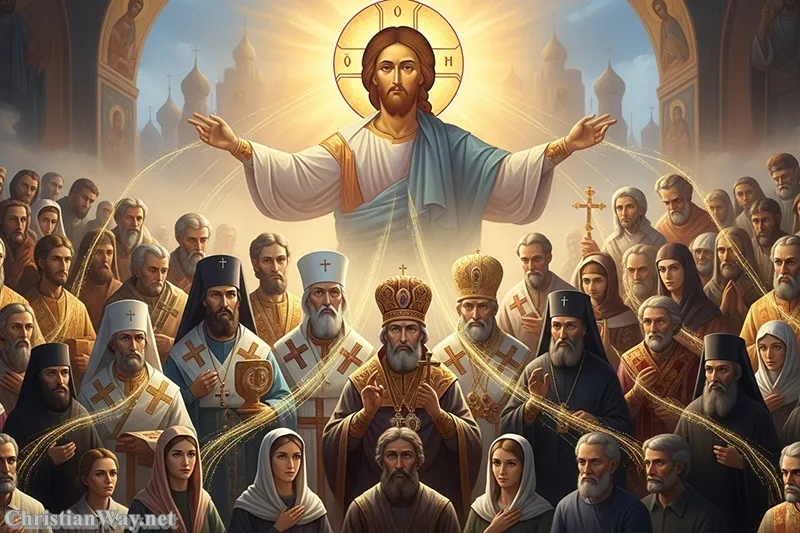
Eastern Orthodox Christians believe that Christ alone is the true Head of the Church. Saint Paul writes that God “gave him to be the head over all things to the church, which is his body” (Ephesians 1:22–23). No patriarch, pope, bishop, king, council, nation, or institution can take the place of Christ.
This truth protects the Church from spiritual pride. A bishop may be honored, but he is not the source of grace. A patriarch may preside, but he is not the Savior. A council may guide the Church, but it must remain obedient to the Gospel. The Church is not built upon the ambitions of human leaders. She is built upon Jesus Christ, crucified and risen.
When Orthodox Christians call the Ecumenical Patriarch primus inter pares, they are not declaring that he stands outside the communion of bishops. They are expressing the idea that he has a leading place within that communion. He may represent Orthodox unity in certain settings, encourage common action, call attention to urgent needs, receive guests, preside at gatherings, and serve as a visible point of connection among the local Churches.
Yet his role is not meant to become a personal monarchy. His firstness is not separate from the synodal life of the Church. He does not become the Church by himself. He remains part of the Church, accountable to the faith, councils, canons, and communion of the whole Body of Christ.
This distinction is essential. In the world, power often means the freedom to act without listening. In the Church, true leadership means a deeper obligation to listen. The one who is first must be the first to hear the cries of the suffering, the first to seek reconciliation, the first to encourage peace, and the first to remember that authority is given for service.
Equality Does Not Mean Sameness
The phrase “among equals” can sometimes be misunderstood. It does not mean that every bishop has exactly the same pastoral task, historical role, or responsibility. Different bishops may serve different dioceses. Some lead ancient patriarchates. Some oversee small local churches. Some are called to mission territories. Some serve communities that have lived through persecution, poverty, migration, war, or political upheaval.
Equality here does not mean that every role is identical. It means that every bishop shares in the same episcopal ministry and remains responsible before God for the people entrusted to his care. The first bishop is not a different species of Christian. He is not beyond correction. He is not above the Gospel. He does not possess a holiness that removes his human weakness.
The Church is most beautiful when her leaders remember this.
A father may carry special responsibility in a family, yet he does not become more human than those he loves. A teacher may guide a classroom, yet remains accountable for how that guidance is given. A pastor may preach and lead worship, yet he too needs prayer, repentance, forgiveness, and grace.
In the same way, primus inter pares describes leadership within communion. The first has a particular task, but never escapes the shared life of the Church.
The Church as a Communion of Local Churches
To understand this phrase more deeply, we must remember how Eastern Orthodoxy sees the Church. Orthodoxy is not meant to be a single centralized institution where every decision flows from one office outward. Nor is it meant to be a collection of unrelated national churches acting without responsibility for one another.
It is a communion of local Churches.
Each local Orthodox Church has its own bishops, clergy, faithful people, liturgical life, saints, pastoral challenges, and history. Some are ancient patriarchates. Some are autocephalous Churches that govern their own internal life. Some serve large nations. Others serve communities scattered across different countries and cultures.
Yet all are called to confess the same faith in the Holy Trinity, receive the same apostolic Gospel, celebrate the same sacramental life, and worship the same Lord Jesus Christ.
One Faith, Many Peoples
The Church has never belonged to one language or one nation. From the beginning, the Gospel crossed boundaries. The apostles preached in a world filled with different peoples, cultures, and languages. At Pentecost, people heard the mighty works of God in their own tongues. This was not an accident. It revealed something important about the Kingdom of God.
Christ gathers people without erasing them.
An Orthodox Christian may pray in Greek, Arabic, Romanian, Georgian, Slavonic, English, Korean, Swahili, Vietnamese, or countless other languages. The melodies may differ. The local saints may differ. The customs may differ. The history may differ. Yet the Church remains one because Christ remains one.
Saint Paul writes, “There is one body, and one Spirit, even as ye are called in one hope of your calling; one Lord, one faith, one baptism” (Ephesians 4:4–5).
This unity is deeper than culture. It is deeper than language. It is deeper than political borders.
The purpose of a first among equals is therefore not to erase the life of local Churches. It is to help preserve communion among them. A first bishop may remind the Church that no local community exists only for itself. Every Church receives gifts in order to share them. Every people receive the Gospel in order to bear witness to Christ among the nations.
Communion Is More Than Organization
It is possible to organize a church carefully and still lose the spirit of communion. Structures are necessary. Bishops are necessary. Councils are necessary. Canons are necessary. But none of these things can replace love.
A Church may have excellent order and still become proud.
A Church may defend tradition and still become harsh.
A Church may speak about unity and still refuse to listen.
A Church may preserve ancient worship and still neglect the poor.
True communion is not merely an agreement written in documents. It is a life of shared faith, shared prayer, shared sorrow, shared responsibility, and shared love.
When one Orthodox Church suffers persecution, the others are called to pray and care.
When one community is wounded by war, migration, hunger, or disaster, the others cannot say, “This has nothing to do with us.”
When conflict grows among Christians, the whole Church must grieve.
The phrase primus inter pares belongs within this vision of communion. It points toward a form of leadership that serves connection rather than isolation.
Primacy and Synodality: Two Gifts That Belong Together
One of the most important ideas in Orthodox ecclesiology is synodality. A synod is a gathering of bishops who pray, discern, discuss, and make decisions together for the life of the Church.
The word reminds us that the Church is not meant to be ruled through private will alone. Bishops are called to act together, to listen to one another, to remain accountable, and to seek the guidance of the Holy Spirit.
The Example of the Apostolic Church
The Book of Acts gives a powerful image of this shared discernment. In Acts 15, the early Church faced a serious question involving Gentile believers. The issue was not small. It touched identity, salvation, faithfulness to the law, and the future of Christian mission.
The apostles and elders gathered in Jerusalem. They listened. They spoke. They prayed. They remembered what God had already done. They searched the Scriptures. They discerned together.
Their final decision was expressed with humility: “For it seemed good to the Holy Ghost, and to us” (Acts 15:28).
This is not the language of self-importance. It is the language of a Church seeking God’s will together.
Orthodox Christians often see this apostolic pattern as a foundation for synodal life. Bishops are not called merely to protect their own position. They are called to seek the good of the Church. They must bring their particular knowledge, local experience, and pastoral concern into a wider communion of discernment.
The First Must Not Act Alone
Within this synodal vision, the first bishop has a meaningful role. He may gather the bishops, preside over a meeting, guide discussion, help preserve order, encourage reconciliation, and serve as a visible focus of unity.
But he is not meant to act as though the Church belongs to him.
The ancient canonical tradition often associated with Orthodox synodality teaches a reciprocal responsibility: bishops should recognize the one who is first among them, while the first should not make major decisions without the others. This balance is deeply important.
The first needs the others.
The others need the first.
Neither side can become self-sufficient.
This pattern protects the Church from two opposite dangers. The first is chaos, in which every person or local Church acts alone without concern for communion. The second is domination, in which one leader acts as though the wisdom, faith, and responsibility of the whole Church can be replaced by his own will.
The Orthodox ideal is neither chaos nor domination. It is conciliar love.
Leadership as Accountability
A leader who truly understands primus inter pares does not ask, “How can I make others obey me?” He asks, “How can I help the Church remain united in Christ?”
This requires courage. It may require speaking truth when people would rather avoid it. It may require calling people back to prayer. It may require helping Churches listen to one another when tensions are high. It may require bearing criticism, misunderstanding, or disappointment.
But it also requires humility. The first among equals must remember that he is not above the suffering of the people. He must remain close to the Gospel. He must listen to brother bishops. He must resist the temptation to turn honor into personal privilege.
The Church needs leaders who understand that authority is not possession. It is stewardship.
The Historical Place of Constantinople
In Orthodox usage, primus inter pares is most commonly associated with the Ecumenical Patriarch of Constantinople. The historical place of Constantinople developed over centuries as the city became an important center of Christian life in the Eastern Roman Empire.
The ancient Church came to recognize an order among the major episcopal sees. Rome held the first place of honor in the early centuries. Constantinople, often called New Rome, came to hold a prominent position because of its role as the imperial capital and its growing importance within the Christian East.
After the separation between Rome and Constantinople became enduring, the Ecumenical Patriarch of Constantinople came to occupy the first place of honor among the Orthodox patriarchs and primates.
Honor Carries Responsibility
This place of honor is not meant to be decorative. It suggests real responsibility for the unity and visible life of Orthodox Christianity. The Ecumenical Patriarch may receive visitors from other Churches, encourage dialogue, host gatherings, foster common witness, and serve as a public voice in certain situations.
The phrase first among equals therefore should not be understood as though the first bishop has no task at all. The first place involves responsibility. A leader who presides must often carry burdens that others do not see.
He may be called to bring people together when distrust has grown.
He may be called to speak for peace when communities are divided.
He may be called to remind Orthodox Churches that they belong to something larger than local history, culture, or politics.
He may be called to represent the Orthodox faith before other Christians, people of other religions, and the wider world.
All of these responsibilities can be understood as forms of service.
Yet they must remain rooted in communion. Honor does not become a license for independence from the Church. The first among equals remains accountable to the faith, the councils, the canonical order, and the shared life of the Orthodox Churches.
A First Place Without an Eastern Pope
It is important to speak carefully here. Orthodox Christians generally do not understand primus inter pares as equivalent to the Roman Catholic understanding of papal universal jurisdiction.
Roman Catholics understand the Bishop of Rome to have a unique universal pastoral office in the Church. Orthodox Christians, while recognizing that primacy has existed in the Church and that Rome held the first place in the ancient order of sees, do not generally understand primacy in the same universal juridical way.
For Orthodox Christians, the first bishop is not meant to become an “Eastern Pope.” The phrase primus inter pares is meant to preserve a distinction between primacy and supremacy.
Primacy means that someone may have a first place, a coordinating role, a responsibility for unity, and a recognized honor.
Supremacy would mean that one bishop possesses authority over the whole Church in a way that places all other bishops beneath his direct universal jurisdiction.
Orthodox theology has generally resisted that second understanding. It seeks to preserve the fullness of local Churches while maintaining visible communion among them.
This distinction should never become a reason for Christians to speak disrespectfully about one another. Catholic and Orthodox Christians differ seriously on the nature of primacy, the role of the Bishop of Rome, and the structure of ecclesial unity. These differences matter. Yet both traditions desire to remain faithful to Christ and to preserve the Church’s unity.
The right response is not contempt. It is careful study, honest dialogue, prayer, and a willingness to seek the healing of old wounds.
Why the Phrase Matters Today
The phrase primus inter pares may seem ancient, but it speaks directly to the struggles of the modern world. We live in a time when many people distrust authority because authority has often been abused. Others long for strong leaders because they fear confusion, conflict, and instability.
The Church must offer another vision.
She must show that authority can be real without becoming oppressive. She must show that unity can be meaningful without becoming uniformity. She must show that leadership can be strong without becoming proud.
The Modern Temptation Toward Isolation
Modern culture often teaches people to protect themselves by becoming independent from everyone else. We are encouraged to build a life in which we need no correction, no community, no shared responsibility, and no obligation to others.
But this kind of independence can become loneliness.
A person who never receives counsel can become trapped in personal blind spots.
A family that refuses forgiveness can become divided.
A parish that refuses accountability can become unhealthy.
A Church that thinks it needs no other Church can become narrow and self-centered.
The Christian life is not meant to be lived alone. We are members of one Body. We need the prayers, wisdom, correction, care, and companionship of others.
The idea of primus inter pares reminds us that mature leadership does not destroy communion. It strengthens it.
The Modern Temptation Toward Control
The opposite temptation is the desire to control everything. Some people believe unity can be preserved only if one person, group, or institution directs every decision. But this approach can wound the Church when it silences local responsibility, ignores the gifts of others, or treats people as objects rather than brothers and sisters in Christ.
The Gospel does not support domination.
Jesus told His disciples that rulers of the nations often exercise authority by controlling others, but “it shall not be so among you” (Matthew 20:26). Greatness in the Kingdom of God must take the form of service.
The first among equals is therefore a reminder that authority must be cruciform. It must take the shape of the cross.
It must be humble.
It must be patient.
It must be willing to bear burdens.
It must seek the healing of division.
It must never forget the poor, the wounded, the forgotten, and the weak.
Disagreement Within Orthodoxy About Primacy
It is important to speak honestly: Orthodox Christians agree that primacy exists in the life of the Church, but they do not always agree about how that primacy should be expressed at the universal level.
Some emphasize the Ecumenical Patriarch’s first place of honor and his responsibility to convene, coordinate, and serve the unity of the Orthodox Churches. Others stress more strongly that any broader exercise of primacy must be based upon consensus among the autocephalous Churches and must remain clearly subordinate to synodal life.
These conversations can become difficult because they involve history, canons, jurisdiction, autocephaly, local church boundaries, and the wounds of recent conflicts. They can also be influenced by political pressures, national memories, and human fear.
Holding Truth Without Hatred
For ordinary believers, it can be discouraging to see disagreements among Church leaders. We may wonder why Christians who share the same faith can struggle to remain united.
But the Church has always carried human weakness. Even the apostles had disagreements. The early Christian communities faced conflict. Saint Paul had to correct divisions. The history of the Church is not the story of perfect people. It is the story of God working through imperfect people who need grace.
This should make us humble.
We should not treat disagreements about primacy as entertainment or use them as excuses to despise another Orthodox Church. We should pray for wisdom. We should refuse to repeat inflammatory words. We should remember that the unity of the Church is not a political victory to be won. It is a gift of Christ to be received, guarded, and lived.
The Church needs people who can be firm in conviction without becoming cruel in speech.
It needs leaders who can preserve truth without seeking personal triumph.
It needs believers who understand that prayer may sometimes be more faithful than instant judgment.
The Meaning of Firstness in the Gospel
The deepest way to understand primus inter pares is not by beginning with church offices. It is by looking at Jesus.
When the disciples argued about who among them was greatest, Jesus did not tell them that greatness was meaningless. He redefined it.
He said, “He that is greatest among you shall be your servant” (Matthew 23:11).
This is the heart of Christian primacy.
The first is the one who serves.
The first is the one who listens.
The first is the one who carries the burden.
The first is the one who seeks peace.
The first is the one who does not run away from suffering.
The first is the one who remembers the people others forget.
Jesus Washes the Feet of His Disciples
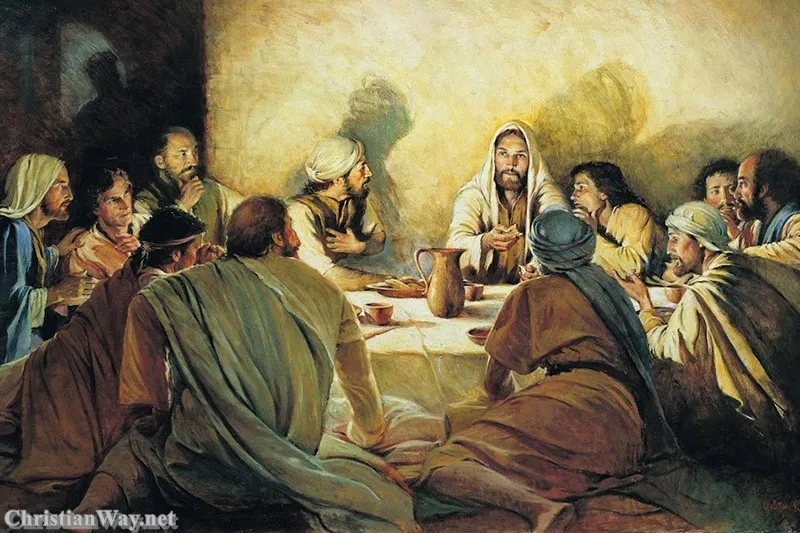
At the Last Supper, Jesus took the place of a servant and washed the feet of His disciples. This act remains one of the clearest images of Christian leadership.
The Lord of all became the servant of all.
He did not protect His dignity.
He did not demand that His disciples prove themselves worthy first.
He knelt.
He washed.
He loved.
Any Christian leader who reflects on primacy must return to this scene. The first place in the Church is not a throne from which to look down upon others. It is a place near the basin and towel.
A bishop is faithful when he knows the suffering of his people.
A priest is faithful when he listens patiently to a burdened heart.
A parent is faithful when they serve rather than dominate.
A teacher is faithful when they guide without humiliating.
A friend is faithful when they remain present in sorrow.
The Church becomes more like Christ when its leaders understand that honor is inseparable from sacrifice.
Primacy at Every Level of Church Life
Although the phrase primus inter pares is often used in discussions of patriarchs and Orthodox Churches, its spiritual pattern appears at many levels of Church life.
A metropolitan may be first among bishops in a region.
A bishop may have a leading responsibility within a diocese.
A parish priest may guide a congregation.
A parent may carry a special responsibility within a household.
A teacher may serve as a guide for children.
A community leader may help organize service, worship, or care for those in need.
In every case, the same question remains: Is leadership being lived as service?
The First Must Remember the Whole
A person with responsibility can easily become focused on protecting their own position. But Christian leadership asks something deeper. It asks the leader to remember the whole community.
A parish leader must remember the child who feels unnoticed.
A bishop must remember the rural village far from the cathedral.
A parent must remember the quieter child who does not ask for attention.
A church committee must remember the elderly person who cannot attend every meeting.
A pastor must remember the person who enters church carrying shame.
The first among equals is called to see more widely.
This is not because the leader is more important than others. It is because responsibility requires a wider heart.
The larger the responsibility, the greater the call to humility.
Primacy and the Eucharist
The Eucharist gives the Church its deepest image of unity. In the Divine Liturgy, believers gather not as separate individuals competing for spiritual attention, but as one Body offering thanksgiving to God.
The bishop, priest, deacon, choir, readers, children, elderly people, visitors, and those praying silently all have different roles. Yet the Eucharist is not complete because one person becomes central. It is complete because Christ is present.
The Church Gathers Around Christ
At the Lord’s Table, social status loses its ultimate importance. Wealth cannot buy a place closer to Christ. Education cannot make a person more loved by God. Influence cannot save the soul. The poor, the rich, the strong, the weak, the learned, the unlearned, the joyful, and the grieving all come as people in need of mercy.
This is why the Eucharist protects the Church from pride.
A patriarch receives Christ.
A bishop receives Christ.
A priest receives Christ.
A layperson receives Christ.
A child receives Christ.
All are nourished by the same Lord.
The first among equals must therefore remember that the first place is never a place apart from the altar. It is a place of responsibility before the altar.
The person who presides is not called to stand above the Eucharistic community. He is called to help gather it in thanksgiving, humility, and peace.
The Relationship Between Primacy and Autocephaly
The idea of primus inter pares is closely connected with the Orthodox understanding of autocephaly. An autocephalous Church governs its own internal life. It elects its bishops, orders its pastoral work, and serves the people entrusted to it. Yet it does not cease to belong to the wider Orthodox communion.
Autocephaly is not spiritual isolation. It is local responsibility within the one Church of Christ.
Freedom Within Communion
A healthy local Church needs freedom to serve real people in real circumstances. A Church in one part of the world may need to respond to poverty, migration, persecution, war, secularism, or the challenge of preserving faith among younger generations. Its bishops need to understand the language, culture, and wounds of the people they serve.
But local freedom must remain connected to the wider Body.
No Church invents its own Gospel.
No Church owns Christ.
No Church can treat other Orthodox Christians as unnecessary.
The first among equals can be understood as a visible reminder of this communion. The role points beyond local concerns and reminds every Church that it belongs to a larger family of faith.
This is not always easy. Human beings are tempted by national pride, historical resentment, political fear, and the desire to protect influence. But the Gospel constantly calls the Church back to something greater: unity in Christ.
The Danger of Nationalism
One of the great temptations facing any local Church is the temptation to confuse the Gospel with national identity. A people may rightly treasure their language, culture, saints, traditions, history, and homeland. These can be gifts from God.
But Christ is not the possession of one people.
The cross stands above every flag.
The Kingdom of God is greater than every empire.
The Church Belongs to Every Nation
Jesus sent His disciples to make disciples of all nations. The Gospel does not erase culture, but it judges every culture. It affirms what is good, but it calls every people to repent of pride, violence, racism, injustice, cruelty, and hatred.
An Orthodox Church may serve one nation especially, but it cannot become a spiritual property of that nation. It must remain open to strangers, migrants, the poor, and those who speak a different language. It must remember that every human being bears the image of God.
The role of a first among equals can become especially meaningful here. It can remind local Churches that their life is part of a wider communion that reaches beyond ethnicity and political borders.
The Church is not called to make one culture victorious over another. She is called to make Christ visible.
What This Means for Ordinary Christians
Most Christians will never attend a meeting of patriarchs, study ancient canons in detail, or participate in debates about universal primacy. Yet the spiritual meaning of primus inter pares belongs to everyone.
It teaches us that freedom and responsibility must remain together.
It teaches us that leadership should be humble.
It teaches us that unity does not require control.
It teaches us that service is the true shape of authority.
In the Home
Parents often carry a first responsibility in the home. But Christian parenting is not about controlling every thought, emotion, or choice of a child. It is about serving, teaching, protecting, listening, correcting with love, and helping children learn to trust God.
A parent is “first” not because the parent is more valuable than the child, but because the parent is called to carry a burden of care.
This is a sacred responsibility.
The parent must be willing to apologize.
The parent must be willing to forgive.
The parent must be willing to pray.
The parent must be willing to protect the weak and guide the young.
This is authority shaped by love.
In the Parish
A parish priest may be first in pastoral responsibility, but he must not become distant from the people. His ministry should draw people toward Christ, not toward admiration of himself.
A parish council may organize the life of a church, but it must remember the widow, the struggling family, the young person with questions, and the person who feels ashamed to enter through the door.
A choir may lead worship, but its music should help people pray rather than draw attention to performance.
Every role in the Church becomes holy when it serves communion.
In the Heart
Each of us also carries a small kind of primacy in our own life. We are responsible for what we do with the gifts God has given us. We are called to govern our words, desires, time, money, relationships, and choices with humility.
But we are not meant to rule our lives as though we belong only to ourselves.
We belong to Christ.
We need others.
We need the Church.
We need prayer.
We need correction.
We need forgiveness.
We need grace.
The Christian life becomes mature not when we say, “I need no one,” but when we learn to serve faithfully while remaining rooted in love.
Primus Inter Pares and the Hope of Christian Unity
The phrase primus inter pares also has meaning beyond Orthodox internal life. It raises important questions for the wider Christian family, especially in dialogue between Orthodox and Roman Catholic Christians.
Both traditions recognize that unity needs some visible form of service, leadership, and order. Both recognize that the Church cannot live only as isolated communities. Both honor the ancient Church and seek to remain faithful to the apostles.
Yet they differ significantly in how they understand universal primacy.
These differences should not be ignored or minimized. But neither should they be treated as excuses for contempt.
Truth and Love Must Remain Together
Jesus prayed that His followers would be one “that the world may believe” (John 17:21). Christian unity is not a superficial agreement that avoids hard questions. It must be rooted in truth.
Yet truth without love becomes hard.
Love without truth becomes vague.
The Church needs both.
The Orthodox understanding of primus inter pares can help all Christians reflect on the kind of unity Christ desires. It asks whether leadership can be understood as service. It asks whether primacy can remain connected to communion. It asks whether the first place can be shaped by humility rather than domination.
These questions are not obstacles to faith. They are invitations to deeper faithfulness.
Reflect and Pray
Dear friends, primus inter pares means “first among equals,” but its deepest meaning is not found in a title. It is found in the Gospel.
It reminds us that the Church needs order, but order must serve love. It reminds us that leadership is real, but leadership must remain humble. It reminds us that local Churches have their own life and responsibility, yet no Church belongs only to itself. It reminds us that Christ alone is the true Head of His Body.
The first among equals is called to serve unity, not personal ambition. He is called to encourage communion, not control. He is called to listen, not simply command. He is called to carry responsibility, not seek glory.
And this calling belongs, in a smaller but very real way, to every Christian. Wherever God has placed us, we are called to serve without pride, guide without domination, speak truth without cruelty, and remember that every gift we have is given for the good of others.
May we learn from Christ, who was Lord of all and yet washed the feet of His disciples. May we seek unity without fearing difference. May we accept responsibility without becoming proud. And may we always remember that the Church is not ours to possess, but Christ’s to love.
Let us pray.
Lord Jesus Christ, You are the true Head of Your Church and the servant of all who come to You in faith. Teach those who lead Your people to serve with humility, courage, and love. Protect Your Church from pride, division, fear, and the desire for control. Bless the Orthodox Churches with deeper communion, wisdom, and peace. Help every Christian to honor others, carry responsibility faithfully, and remain rooted in Your mercy. May Your Church become one in truth and love, so that the world may see Your light and give glory to the Father. Amen.
May the peace of Christ dwell richly in your heart, and may His love guide every step you take toward Him.
— Fr. John Matthew