Dear friends in Christ,
The word independence can sound beautiful or dangerous, depending on what we mean by it. In ordinary life, independence may suggest maturity, responsibility, freedom, and the ability to stand without constant control from another. Yet it can also suggest isolation, pride, separation, or the belief that we no longer need anyone else. The Christian faith calls us to a different vision. We are invited to grow in responsibility, but never to forget that we belong to one another in Christ. We are called to serve faithfully in the place where God has put us, yet never to forget that the Church is one Body, gathered around one Lord.
This is the spiritual meaning behind an autocephalous Church in Eastern Orthodoxy. An autocephalous Church governs its own internal life. It elects its bishops, appoints its primate, organizes its ministry, and responds pastorally to the people entrusted to its care. Yet its self-governance is not meant to become spiritual isolation. It remains united with other Orthodox Churches through the same faith, the same sacramental life, the same apostolic inheritance, and the same worship of the Holy Trinity.
The word may seem technical at first. It can appear in discussions about bishops, councils, patriarchates, church boundaries, or historical conflicts. But beneath these questions lies something deeply human and deeply spiritual. How can Christians live faithfully in different nations, languages, and cultures while remaining one in Christ? How can the Church be truly local without becoming narrow? How can leaders serve their own people responsibly while remaining humble before the wider Body of Christ? How can unity survive when human beings are tempted by pride, politics, fear, and the desire for control?
The answer is never merely structural. The Church can have the best organization in the world and still lose her heart if she forgets Christ. She can have councils, bishops, traditions, beautiful worship, and ancient customs, yet still become wounded by ambition or division. But when the Church remembers that Jesus is her true Head, every form of service can become an offering. Authority can become care. Local leadership can become mission. Diversity can become beauty rather than conflict.
An autocephalous Church is therefore not simply a church that is “free from another church.” It is a local Orthodox Church called to bear responsibility for its own life while remaining in communion with the whole Church. It is self-governing, but not self-created. It is independent in administration, but not independent from the Gospel. It is rooted in a particular people and place, but it belongs to the universal Body of Christ.
The mystery of the Church has always been larger than human borders. The Gospel was born in the land of Israel, proclaimed in Greek and Aramaic, carried through the Roman world, received in Africa, Asia, Europe, the Middle East, and beyond. In every place, Christ calls people to Himself. He does not erase their language, history, or culture. He sanctifies them. He gathers different peoples into one communion of faith, prayer, repentance, and love.
To understand autocephaly rightly, then, is to see both freedom and communion together. It is to see that a Church can have its own synod, its own pastoral responsibilities, and its own local life while still confessing with Christians around the world: “One Lord, one faith, one baptism” (Ephesians 4:5).
The Meaning Behind the Word Autocephalous
The word autocephalous comes from two Greek words: auto, meaning self, and kephale, meaning head. In Orthodox church language, it refers to a Church that is self-governing, not dependent upon another Church for its internal administration or mission.
Yet the word should not be understood in a worldly or political way. An autocephalous Church is not claiming to be its own source of truth. It does not create a new Gospel. It does not write a different Creed. It does not replace the apostles with local customs or national traditions. Its freedom exists within the faith received from Christ and handed down through the Church.
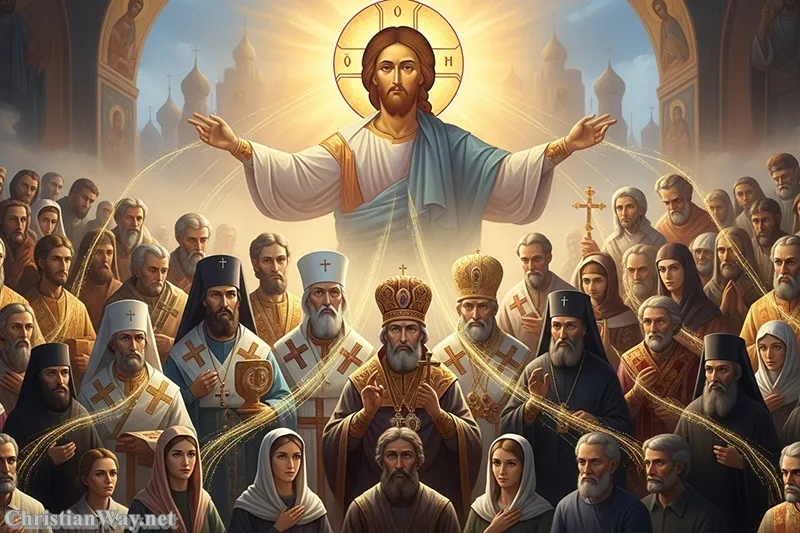
Christ Alone Is the Head of the Church
The New Testament speaks clearly about the true headship of Christ. Saint Paul writes that God “gave him to be the head over all things to the church, which is his body” (Ephesians 1:22–23). This truth is essential. No bishop, patriarch, council, nation, or local church becomes the ultimate head of the Church. Christ alone is Lord.
This means that even the most ancient and honored local Church must remain humble. A Church may have a long history, beautiful monasteries, great saints, learned theologians, and faithful people. These are gifts. Yet they are not reasons for pride. They are reasons for gratitude.
An autocephalous Church is free to govern its own life because Christ has entrusted it with real pastoral responsibility. But that responsibility is not ownership. A bishop does not own the people he serves. A synod does not own the Gospel it protects. A nation does not own Christianity because it has received the faith for many generations.
The Church belongs to Christ.
This truth protects us from two opposite dangers. The first danger is control: the belief that every local Church must be directed in every detail by an authority far away from the people’s real lives. The second danger is isolation: the belief that a local Church can define truth for itself without listening to the wider communion of believers.
The Orthodox vision of autocephaly seeks another path. It gives room for local responsibility while preserving the unity of faith.
Freedom for Service, Not Freedom From Love
True Christian freedom is never freedom from love. Jesus did not free His disciples so that they could live only for themselves. He freed them so that they could serve one another.
Saint Paul writes, “For, brethren, ye have been called unto liberty; only use not liberty for an occasion to the flesh, but by love serve one another” (Galatians 5:13). This is also a helpful way to understand autocephaly.
An autocephalous Church receives freedom in order to serve. It may respond to local pastoral needs. It may train clergy within its own context. It may preach the Gospel in the language of its people. It may establish schools, missions, charities, monasteries, parishes, and ministries suited to the needs of the place where God has planted it.
But the freedom is always meant to become service.
A Church that becomes self-governing but loses compassion has misunderstood its calling. A Church that becomes proud of its history but indifferent to the poor has forgotten Christ. A Church that speaks loudly about tradition but does not forgive, welcome, or serve has allowed the form of faith to remain while the heart of faith grows cold.
The purpose of independence within the Body of Christ is never separation from love. It is the strengthening of love through faithful responsibility.
The Church as Communion, Not a Religious Federation
When people first hear that Orthodoxy includes many self-governing Churches, they may imagine a loose collection of separate religious groups. But this is not how Orthodox Christians understand themselves. The Orthodox Church is not meant to be a set of competing national communities joined only by history or custom.
It is a communion.
One Faith Shared in Many Places
Orthodox Churches may differ in language, local customs, calendars, music, architecture, and cultural expression. The Divine Liturgy may be sung in Greek, Arabic, Romanian, Georgian, Slavonic, English, Vietnamese, or many other languages. The saints honored locally may differ. The pastoral needs of a village in Greece may not be the same as those of a city in North America, Africa, or Asia.
Yet the faith remains one.
Orthodox sources commonly describe the worldwide Church as a communion of local autocephalous and autonomous Churches that govern their internal affairs while remaining united in doctrine, sacramental life, canonical order, and worship.
This unity is not merely an agreement between organizations. It is rooted in Christ Himself. Christians are united because they confess the same Lord, receive the same Gospel, are baptized into the same Body, and gather around the same Eucharistic faith.
The Church is one not because every Christian speaks the same language, but because Christ is one.
The Church is one not because every culture has the same customs, but because the Holy Spirit gathers different peoples into communion.
The Church is one not because every bishop has the same personality, but because bishops are called to preserve the apostolic faith together.
The Eucharist Reveals the Meaning of Communion
The deepest image of Church unity is not an administrative chart. It is the Eucharist.
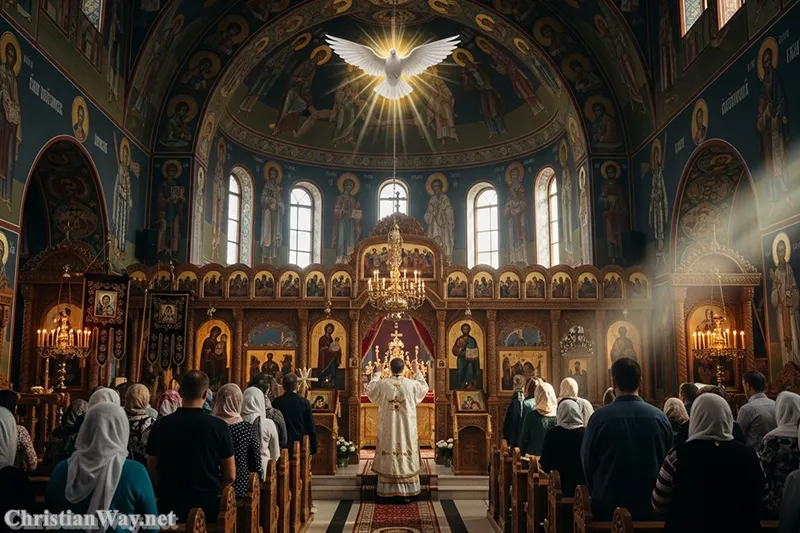
When Orthodox Christians gather for the Divine Liturgy, they do not gather simply as individuals seeking private comfort. They gather as the people of God. They hear the Scriptures together. They pray for the Church, the world, the suffering, the departed, and those in need. They offer thanksgiving. They receive the Body and Blood of Christ.
In Holy Communion, the Church becomes visible as one Body.
This is why division is always painful. It is not merely disagreement between leaders. It is a wound in the shared life of Christians who are called to gather around one table in love.
An autocephalous Church is therefore not independent in the sense that it can decide whether Christ matters, whether the Creed matters, or whether communion matters. It exists precisely because communion matters. It serves the people of God in one place while remaining connected to the larger family of Orthodox Churches.
How an Autocephalous Church Governs Its Life
Autocephaly has practical meaning. It concerns how a Church orders its internal life, appoints leadership, carries out mission, and responds to the needs of the faithful.
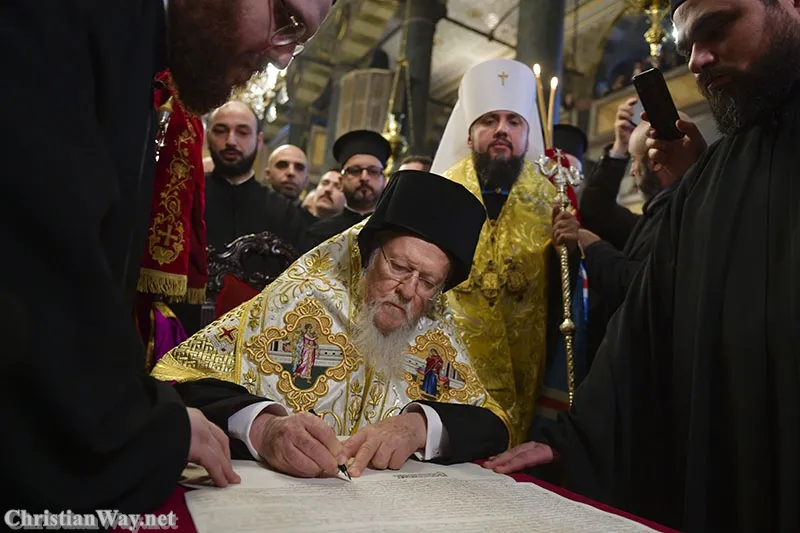
An autocephalous Church ordinarily elects its own primate and bishops, governs itself through its own synod and statutes, and conducts its relationships with other Churches directly. In some Orthodox descriptions, full autocephaly also includes the right to prepare Holy Chrism for sacramental use.
Bishops Serving Together in Synod
In Eastern Orthodoxy, bishops do not serve merely as individual leaders acting alone. They are called to serve together in synod. A synod is a gathering of bishops who pray, deliberate, seek wisdom, and make decisions for the life of the Church.
This reflects the conciliar spirit found in the New Testament. In Acts 15, when the early Church faced a difficult question about Gentile believers, the apostles and elders gathered in Jerusalem. They listened. They prayed. They discussed. They sought the guidance of the Holy Spirit.
Their final message included the beautiful words: “For it seemed good to the Holy Ghost, and to us” (Acts 15:28).
This does not mean that every council or synod is free from human weakness. Bishops are human. They can misunderstand, disagree, fear, or make poor decisions. The Church has always needed repentance, humility, and prayer.
But the synodal life of the Church reminds us that spiritual authority should not become private power. A bishop is not called to rule according to personal preference. He is called to serve with other bishops, listen to the faithful, preserve the Gospel, and seek the good of the Church.
Local Leadership and Local Responsibility
An autocephalous Church can respond more directly to the people within its care. It can address local pastoral challenges, provide theological education, train priests, organize charitable work, support families, encourage monastic life, and preach the Gospel in forms that speak to its own culture.
This is important because Christianity is not meant to remain foreign to the people who receive it.
When the Gospel enters a new place, it does not demand that every believer abandon language, music, culture, or identity. Rather, Christ purifies what is sinful, heals what is wounded, and receives what is good. The faith becomes rooted in the soil of a particular people.
A Church in one country may face the challenge of poverty. Another may face secularism. Another may live under persecution. Another may serve immigrant communities struggling to preserve faith far from their homeland. Another may be trying to translate ancient prayers into a language spoken by young people for the first time.
Autocephaly can help a Church meet such needs with greater responsibility and closeness.
Yet local responsibility must always be guided by the wider faith of the Church. A Church cannot excuse error simply because it is local. It cannot bless injustice simply because it has become culturally accepted. It cannot abandon the Gospel in order to remain popular.
Christ remains the measure.
The Ancient Principle of Local Responsibility
The idea that local Churches should govern their own affairs is not a modern invention. It has deep roots in the early Church.
The Second Ecumenical Council, held in Constantinople in 381, reaffirmed the principle that bishops should not intrude into the proper affairs of other regions and that each province should administer its own ecclesial life through its own synod.
A Church That Respects Place and People
This ancient principle reflects wisdom. A bishop who knows his own people can better understand their needs. He knows their language, their history, their suffering, their temptations, their hopes, and the particular challenges facing their communities.
A Church in a rural region may need to focus on preserving parish life across great distances. A Church in a crowded city may need ministries for lonely elderly people, students, migrants, or families living under economic pressure. A Church in a country marked by war may need to become a place of shelter and consolation. A Church in a secular society may need to help believers rediscover prayer, repentance, and reverence.
The Gospel does not change, but pastoral care must be attentive.
This is why local responsibility can be a gift. It allows the Church to become present to people where they truly live.
Jesus Himself entered a particular place. He was born in Bethlehem. He grew up in Nazareth. He spoke to fishermen in Galilee, religious leaders in Jerusalem, grieving families in Bethany, and strangers along the road. His message was for the whole world, but His love was never vague. He met real people in real places.
The Church is called to do the same.
Authority Must Remain Humble
Local responsibility can become beautiful when it is joined to humility. But it can become dangerous when it turns into self-protection.
A Church may begin to think, “Our people are better than others.” A bishop may begin to think, “My authority exists to protect my position.” A community may begin to think, “We do not need anyone outside our own tradition.”
These attitudes are not signs of spiritual maturity. They are signs that pride has entered.
The Church is local, but she is never merely local. She belongs to the whole Body of Christ.
The apostle Paul teaches that the eye cannot say to the hand, “I have no need of thee” (1 Corinthians 12:21). In the same way, no local Church should say to another, “We have no need of you.” The Church needs the prayers, wisdom, saints, and witness of believers in every place.
Autocephaly Is Not the Same as Autonomy
The words autocephaly and autonomy are sometimes used loosely, but they do not mean exactly the same thing.
An autonomous Church governs much of its own internal life but remains connected in a particular way to a mother Church. In common Orthodox usage, its primate may be confirmed by another Church, and it may receive Holy Chrism through that Church. An autocephalous Church, by contrast, has fuller self-governance in these matters.
Different Forms of Relationship, One Call to Faithfulness
This distinction should not become a reason for ranking Churches according to worldly ideas of importance. An autonomous Church is not spiritually inferior because it has a particular relationship with another Church. An autocephalous Church is not spiritually superior because it has broader administrative freedom.
The true measure of a Church is not the size of its territory, the number of its members, the beauty of its buildings, or the political influence of its leaders.
The true measure is faithfulness to Christ.
Does the Church preach the Gospel with courage?
Does it celebrate the sacraments with reverence?
Does it care for the poor?
Does it protect the vulnerable?
Does it teach children to pray?
Does it comfort the grieving?
Does it call sinners toward repentance without crushing them with shame?
Does it remain humble before the cross?
These are the questions that matter most.
The Church is not a competition between jurisdictions. It is a family called to serve the world in the name of Jesus.
Autocephaly Is Not Schism
Another important distinction must be made. Autocephaly is not the same as schism.
Schism is a break in communion, a rupture in the shared life of the Church. It may arise through disputes about doctrine, authority, discipline, politics, or personal conflict. Whatever its causes, schism is painful because it wounds the visible unity for which Christ prayed.
Autocephaly, properly understood, is not meant to break communion. It is meant to organize local Church life while preserving communion with other Orthodox Churches.
Self-Governance Within Communion
An autocephalous Church may elect its own bishops and govern its own internal affairs, but it still remains accountable to the faith of the Church. Orthodox teaching insists that no local Church can act as though doctrine, morality, sacramental practice, or canonical order belong only to itself. The life of each Church matters to the others.
This is a profound spiritual truth.
We are responsible for one another.
A parish is responsible for the people who worship there.
A bishop is responsible for the clergy and faithful entrusted to him.
A local Church is responsible for preserving the apostolic faith.
But every Christian is also responsible for the wider Body of Christ.
We cannot say, “What happens to others does not concern us.”
When Christians suffer persecution, the whole Church should pray.
When a community is struck by war, famine, disaster, or displacement, the whole Church should care.
When a Church struggles with division, pride, or moral failure, the whole Church should grieve and seek healing.
This is communion.
It is not always easy. It requires patience. It requires listening. It requires the willingness to admit that we may not see every question clearly. But it is the way of Christ.
The Difficult Questions Surrounding Autocephaly
The subject of autocephaly can become complicated because it touches history, geography, culture, canon law, and relationships between Churches. Questions may arise about how a Church receives autocephaly, who has the authority to grant it, how other Churches recognize it, and how jurisdiction should be organized in places where Orthodox Christians from many backgrounds live together.
These questions are real, and they should not be dismissed as unimportant.
Complexity Does Not Excuse Contempt
Christians sometimes become discouraged when they see disagreement among Church leaders. They may wonder why unity appears difficult. They may feel hurt when historical disputes seem to overshadow the Gospel.
We should be honest: human weakness can enter every level of Church life. Bishops and clergy are not free from fear, ambition, cultural prejudice, political pressure, or misunderstanding. History shows that Church disputes can become bitter when humility is lost.
Yet complexity should not lead us toward contempt.
It is easy to stand outside a difficult problem and speak harshly. It is harder to pray, listen, study, and seek peace. The Church needs people who can hold truth without hatred, conviction without cruelty, and love without pretending that difficult questions do not exist.
The history of autocephaly reminds us that Church structures must always remain servants of communion. Whenever structure becomes more important than love, the Church risks forgetting the One who washed the feet of His disciples.
The Need for Prayerful Discernment
Many Christian questions cannot be solved through speed, anger, or public pressure. They require prayerful discernment.
The early Church did not solve every disagreement in one day. The apostles sometimes debated strongly. Saint Paul and Saint Barnabas separated in their missionary work. Peter had to learn that Gentiles were welcomed fully into the people of God. The Church grew through struggle, prayer, repentance, and the guidance of the Holy Spirit.
This should give us patience.
The Church is not a human project that succeeds only when every person agrees immediately. It is the Body of Christ, carried through history by the grace of God. Christians are called to seek unity, but they are also called to trust that Christ remains faithful even when human beings struggle to live faithfully.
The Danger of Nationalism in the Church
One of the greatest dangers connected with local Church identity is the temptation to confuse Christianity with nationalism.
A people may be grateful for the way faith has shaped their history. They may honor saints, martyrs, language, music, architecture, and customs that have helped preserve Christian life through difficult centuries. This gratitude can be beautiful.
But the Church must never become the possession of one ethnicity, race, nation, or political movement.
Christ Is Not the Property of Any Nation
Jesus was born into a particular people and place, yet He came for the salvation of the world. After His resurrection, He commanded His disciples to make disciples of all nations.
The Gospel does not erase culture, but it judges every culture. It affirms what is good, but it exposes pride, injustice, cruelty, racism, violence, and hatred wherever they appear.
An autocephalous Church may serve a particular nation or people, but it must never teach that Christ belongs only to that nation or people. It must welcome strangers. It must care for those who do not share its language. It must remember that every human person bears the image of God.
The Church is strongest when she helps people love their heritage without despising others.
The Church becomes weak when she uses faith to justify hatred.
A Christian may love his homeland deeply. He may honor his ancestors. He may pray for his people. But his deepest loyalty belongs to Christ. The cross stands above every flag. The Kingdom of God is greater than every earthly kingdom.
The Blessing of Many Languages and Cultures
The Church’s unity does not require cultural sameness. Pentecost is one of the clearest signs of this truth.
When the Holy Spirit descended upon the apostles, people from many nations heard the mighty works of God in their own languages. The Gospel was not imposed through one language alone. God spoke into the hearts of people where they were.
The Gospel Takes Root in Every Place
An autocephalous Church can help the faith take root deeply within a local culture. It may encourage theology, hymnography, preaching, education, and pastoral care that speak clearly to the people it serves.
This does not mean altering the Gospel to fit whatever a culture desires. The Gospel must sometimes challenge the culture. It calls every people to repentance. It confronts injustice. It asks the proud to become humble. It calls the wealthy to remember the poor. It calls the powerful to serve.
But the Gospel can be expressed in the language, music, poetry, and beauty of a people without losing its truth.
A hymn sung in Arabic, Romanian, English, Greek, Georgian, or Swahili can glorify the same Christ.
A prayer whispered by a grandmother in a small village can rise before the same throne of God as the prayer of a monk in a great monastery.
A child learning the sign of the cross in one country belongs to the same Church as a child learning the Lord’s Prayer in another.
This is the beauty of catholicity: not uniformity, but fullness.
What Autocephaly Teaches Every Christian
Although autocephaly belongs particularly to Orthodox Church life, its spiritual lessons can help every Christian.
It teaches us that responsibility and communion must remain together.
It teaches us that leadership should be local enough to care for real people, yet humble enough to listen to the wider Church.
It teaches us that faith can take root in different cultures without becoming captive to any one culture.
It teaches us that authority is not a prize. It is a form of service.
Responsibility Begins Close to Home
Many people hear about Church structures and think only about bishops, patriarchs, councils, or large historical questions. But every Christian has a small place of responsibility.
A parent has responsibility for the spiritual life of the home.
A teacher has responsibility for the words given to children.
A friend has responsibility for the trust placed in them.
A worker has responsibility for honesty.
A church member has responsibility for prayer, generosity, and service.
A leader has responsibility to use influence with humility.
We cannot govern the whole world. But we can be faithful in the place where God has placed us.
This is a form of spiritual maturity. It is not the desire to control everyone else. It is the willingness to care for what has been entrusted to us.
No One Lives the Christian Life Alone
At the same time, no Christian is self-sufficient.
We need the prayers of others.
We need correction when we are wrong.
We need the wisdom of Scripture.
We need the worshiping community.
We need the saints.
We need forgiveness.
We need Christ.
The image of an autocephalous Church reminds us that mature responsibility never means isolation. We may be entrusted with real freedom, but freedom becomes holy only when it remains rooted in love.
The Church as a Family of Local Churches
One helpful way to understand autocephaly is to think of the Church not as an empire, but as a family.
A healthy family does not require every member to become identical. Children grow into adults. They form homes, take responsibility, serve others, and make decisions. Yet they do not cease to belong to the family. Their maturity does not destroy love. It deepens it.
In a similar way, local Churches may govern their own lives while remaining part of the wider Orthodox communion.
Unity Does Not Mean Control
Human beings often confuse unity with control. We may think that people can remain united only if every decision is made from one place. But the Church teaches another kind of unity.
Unity is not the silencing of every local voice.
Unity is not the destruction of culture.
Unity is not the demand that every Christian community look exactly the same.
Unity is shared life in Christ.
It is faith received together.
It is the Eucharist celebrated in communion.
It is bishops recognizing one another as servants of the same apostolic Gospel.
It is believers carrying one another’s burdens.
It is love that refuses to let difference become hatred.
The Church does not need sameness in order to be one. She needs Christ.
Autocephaly and the Mission of the Church
Every Church structure must finally be judged by one question: does it help people encounter Jesus Christ?
An autocephalous Church should never become busy only with internal matters. It exists for mission.
Sent Into the World
Jesus did not say to His disciples, “Remain only among yourselves.” He said, “Go ye therefore, and teach all nations” (Matthew 28:19).
The Church is sent.
She is sent to the poor.
She is sent to the lonely.
She is sent to children who need hope.
She is sent to families carrying grief.
She is sent to those trapped in addiction, shame, fear, or despair.
She is sent to people who have forgotten how to pray.
She is sent to people who have never heard that God loves them.
An autocephalous Church can carry out this mission in the language and circumstances of its own people. It can help the Gospel become close, understandable, and present.
But mission is never only about numbers or influence. It is about Christ.
The Church fulfills her mission when she makes Christ visible through worship, truth, service, repentance, mercy, and love.
The Cross as the True Shape of Church Authority
Whenever Christians speak about authority, independence, councils, bishops, or Church structures, they must return to the cross.
The cross reveals what true authority looks like.
Jesus did not save the world by force. He saved it through self-giving love.
He did not demand service from others. He washed the feet of His disciples.
He did not answer hatred with hatred. He prayed, “Father, forgive them.”
He did not protect His life at the expense of others. He gave His life for the world.
Leadership Must Be Cruciform
Every Church leader must remember this.
A bishop is not called to build his own reputation.
A priest is not called to dominate the people.
A council is not called to protect privilege.
A local Church is not called to glorify itself.
All authority in the Church must take the shape of the cross.
This means humility.
It means patience.
It means courage without aggression.
It means truth without cruelty.
It means the willingness to listen.
It means serving the poor.
It means protecting those who are weak.
It means remembering that every person stands before God in need of mercy.
An autocephalous Church becomes spiritually beautiful when its freedom is lived in this way.
Faith in Daily Life: Living as One Body
The subject of autocephaly may seem far removed from ordinary life. Yet its deepest message belongs to the home, the workplace, the parish, and the human heart.
Perhaps you are responsible for people who depend upon you. You may be a parent, a teacher, a caregiver, an employer, an older sibling, or a friend. You may feel tired beneath that responsibility.
Remember that authority is not first about having all the answers. It is about serving with love.
Perhaps you feel alone. You may be carrying a burden that others do not see. Remember that the Church is not only the people immediately around you. You belong to the Body of Christ. You are surrounded by the prayers of believers, the witness of saints, and the mercy of God.
Perhaps you are tempted to believe that your own group, family, nation, or tradition is more important than others. Remember that Christ died for the whole world. The Gospel enlarges the heart. It teaches us to love what is familiar without despising what is different.
Perhaps you are struggling to remain faithful in an ordinary life. You may be caring for children, working long hours, grieving someone you love, or trying to pray through a difficult season. Remember that the Church grows not only through great councils and public leaders. It grows through hidden faithfulness.
A quiet prayer.
A meal given to someone in need.
An apology offered after anger.
A child taught to trust God.
A lonely person visited.
A temptation resisted.
A word of mercy spoken when judgment would be easier.
These are small acts, but they belong to the life of the Body of Christ.
Reflect and Pray
Dear friends, an autocephalous Church is a sign that Christian freedom and Christian communion are meant to belong together. A Church may govern its own life, elect its own bishops, serve its own people, and carry out its mission in its own place. Yet it remains part of something greater than itself: the one, holy, catholic, and apostolic Church of Jesus Christ.
This truth can teach every believer something beautiful. We are each given responsibilities. We are called to serve faithfully where we are. But none of us belongs only to ourselves. We belong to Christ, and in Christ we belong to one another.
May we never confuse freedom with isolation. May we never confuse authority with pride. May we never confuse cultural love with contempt for others. May every Church, every family, every parish, and every Christian life become a place where the unity of Christ is made visible through humility, prayer, truth, and mercy.
Let us pray.
Lord Jesus Christ, You are the true Head of Your Church and the Shepherd of every people and nation. Teach us to serve faithfully in the places where You have planted us, while remaining humble within Your one Body. Bless all Orthodox Churches with wisdom, unity, courage, and peace. Protect Your people from pride, division, nationalism, and fear. Give bishops, priests, deacons, monastics, and lay believers hearts that seek not their own glory, but Yours alone. May Your Church bear witness to Your love in every language, every land, and every generation. Amen.
May the peace of Christ dwell richly in your heart, and may His love guide every step you take toward Him.
— Fr. John Matthew