Dear friends in Christ,
Some followers of Jesus are remembered especially for their words. Peter preached boldly at Pentecost. Paul wrote letters that still strengthen the Church. John gave us a Gospel filled with light, love, and eternal life. Saint James the Greater is remembered in another way. His recorded words are few, but his life speaks with great force. He was a fisherman, a son, a brother, one of the first disciples called by Jesus, a witness of sacred moments few others were permitted to see, and the first of the apostles to lay down his life in martyrdom.
The title Saint James the Greater does not mean that he was greater in holiness than the other apostle named James. It helps distinguish him from James the son of Alphaeus, who is often called James the Less. He was the son of Zebedee and the brother of John, the beloved disciple. Alongside Peter and John, James belonged to the small circle of disciples who stood especially near Jesus during some of the most mysterious and painful moments of His earthly ministry.
Yet James did not begin as a finished saint. He began as a man with a temperament, a family, ambitions, questions, and a heart that needed to be shaped by grace. The Gospels show him as earnest and zealous. Jesus even gave James and John the name “Boanerges,” meaning “sons of thunder” (Mark 3:17). There was fire in him. There was intensity. There was a desire to see God’s kingdom come with power.
Christ did not reject that fire. He purified it.
This is one of the tender lessons of Saint James the Greater. Jesus does not call only gentle, polished, spiritually mature people. He calls human beings as they are. He calls the impulsive, the fearful, the ambitious, the wounded, the proud, the uncertain, and the ordinary. Then, through prayer, service, failure, forgiveness, and love, He slowly transforms them.
James left his fishing boat to follow Christ. He witnessed the glory of the Transfiguration. He stood near Jesus in the darkness of Gethsemane. He heard the call to drink the cup of suffering. He received the Holy Spirit at Pentecost. Finally, he gave his life as a martyr, bearing witness that Jesus Christ had truly risen from the dead.
Saint James the Greater – Apostle, Martyr, and Son of Zebedee is not only a story about the past. It is a reflection on what happens when Christ takes an ordinary life and makes it courageous. It is a reminder that discipleship is not always comfortable, but it is always meaningful. It calls us to bring our zeal, our hopes, our weaknesses, and even our unfinished hearts to Jesus, trusting that He can turn them into lives that bear witness to His love.
A Son of Zebedee and a Brother of John
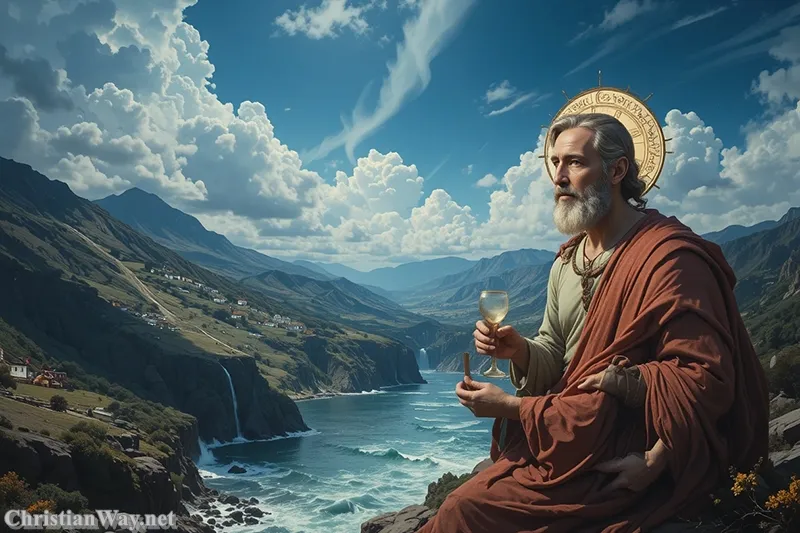
James first appears in the Gospel story as a fisherman. He worked with his father, Zebedee, and with his brother John beside the Sea of Galilee. Fishing was not a romantic occupation. It required early mornings, physical labor, patience, skill, courage in changing weather, and the willingness to work even when the nets seemed empty.
The Gospel tells us that Jesus saw James and John in their boat, mending their nets. He called them, and they immediately left the boat and their father to follow Him (Matthew 4:21–22).
Christ Calls People in Ordinary Places
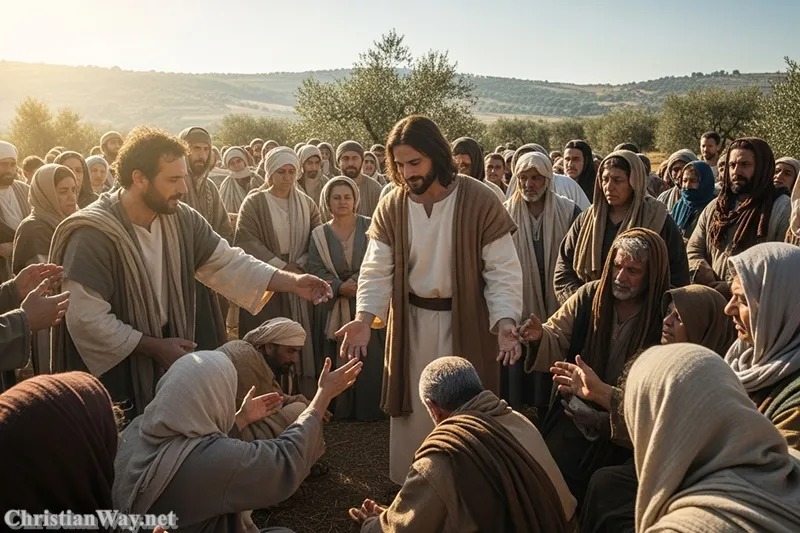
There is something beautiful in the fact that Jesus found James while he was working. He did not first call him from a palace, a religious school, or a place of public importance. He found him beside the water, with nets in his hands and family responsibilities around him.
This tells us that Christ still meets people in ordinary places.
He meets the parent in the middle of caring for children.
He meets the worker who feels tired after a long day.
He meets the student who is unsure about the future.
He meets the person working quietly without public recognition.
He meets the one who feels that life has become only routine.
James did not know that a day spent mending nets would become the beginning of a new life. Yet Jesus came near, spoke a call, and changed the direction of everything.
Many people wait for a dramatic moment before they believe God can use them. They think they must become more important, more educated, more talented, more successful, or more spiritually impressive. But Christ often begins with the life already in our hands.
The question is not whether we are extraordinary. The question is whether we are willing to follow when He calls.
Leaving the Nets
When James left his boat, he left more than work. He left familiarity. The nets represented a life he understood. They represented security, family expectation, daily rhythm, and the world he knew.
To follow Jesus required trust.
Every Christian is called, in some way, to leave nets behind.
For one person, the net may be resentment that has become familiar.
For another, it may be a hidden habit that slowly damages the soul.
For another, it may be fear of what people will think.
For another, it may be the need to control every outcome.
For another, it may be the belief that life cannot change.
Christ calls us away from whatever keeps us from loving Him freely.
This does not always happen in one dramatic moment. Sometimes we leave our nets slowly. We begin by telling the truth. We ask forgiveness. We turn away from an unhealthy pattern. We begin to pray again. We open the Gospels. We seek help when we cannot carry a burden alone. We take one faithful step.
James teaches us that following Christ is not first about having everything figured out. It is about trusting the One who calls.
James Among the Chosen Three
Jesus chose twelve apostles, but at certain moments He brought Peter, James, and John with Him more closely. This was not because the others were unloved. Christ loved each disciple. Yet these three were invited to witness events that would shape them deeply for the mission ahead.
James saw the glory of Christ, the power of Christ over death, and the suffering of Christ in a way that marked his life forever.
At the House of Jairus
When Jairus, a synagogue leader, pleaded with Jesus to come and help his dying daughter, Jesus allowed only Peter, James, and John to enter the room with Him. The child had died, and people outside were grieving. Yet Jesus took her by the hand and called her to rise.
The girl stood up.
For James, this was not merely a miracle to remember. It was a glimpse of the power of Jesus over death. The Lord who had called him from his fishing boat was not simply a teacher with wise words. He was the One before whom death itself could not remain final.
Every Christian needs this hope.
We live in a world where death enters every family sooner or later. We lose parents, children, spouses, friends, teachers, and people whose absence changes the shape of our lives. The Gospel does not tell us that grief is easy. Jesus Himself wept at the tomb of Lazarus.
But James witnessed something that pointed beyond grief: death does not have the final word in the presence of Christ.
The resurrection of the daughter of Jairus became a sign of the greater resurrection to come. It prepared James and the other disciples to understand that the One who raised a child from death would Himself rise from the grave.
The Glory of the Transfiguration
James was also present at the Transfiguration. Jesus took Peter, James, and John up a mountain, where His appearance was changed before them. His face shone, His garments became radiant, and Moses and Elijah appeared with Him. Then a voice from the cloud declared, “This is my beloved Son: hear him” (Mark 9:7).
For James, this moment must have been overwhelming. The Jesus he had known as teacher, friend, and master was revealed in divine glory.
The Transfiguration taught the disciples that Jesus was more than they had yet understood. He was not simply another prophet. He was the beloved Son of God. Moses represented the Law. Elijah represented the prophets. Both pointed toward Christ.
The Father’s command was simple: “Hear him.”
This remains the heart of Christian life.
We may hear many voices.
Voices of fear.
Voices of anger.
Voices that tell us our worth depends on success.
Voices that tell us revenge is stronger than forgiveness.
Voices that tell us faith is weakness.
Voices that tell us we are alone.
But the Father still says, “Hear him.”
Hear Jesus when He says, “Come unto me.”
Hear Jesus when He says, “Fear not.”
Hear Jesus when He says, “Thy sins be forgiven.”
Hear Jesus when He says, “Love your enemies.”
Hear Jesus when He says, “I am the resurrection, and the life.”
James saw the glory of Christ so that, later, he could remain faithful when the road became dark.
From Glory to Gethsemane
The same James who witnessed the Transfiguration was also brought near when Jesus entered the Garden of Gethsemane before His arrest. Again, Jesus took Peter, James, and John with Him.
This time there was no radiant mountain, no shining face, no voice from heaven. There was sorrow, darkness, prayer, and the approaching shadow of the cross.
Jesus said to them, “My soul is exceeding sorrowful unto death: tarry ye here, and watch” (Mark 14:34).
Learning to Watch With Christ
James had seen Jesus in glory. Now he saw Jesus in sorrow.
This is part of discipleship. We may love the moments when faith feels bright, when prayer seems easy, when worship lifts the heart, when answers come quickly, and when we can see clearly what God is doing.
But there are also Gethsemane seasons.
Seasons when we do not understand.
Seasons when a loved one is ill.
Seasons when a family is divided.
Seasons when work feels uncertain.
Seasons when grief becomes heavy.
Seasons when prayer feels like silence.
James was invited to watch with Jesus. Yet he fell asleep, along with Peter and John. Their weakness is painful, but it is also comforting. Even those closest to Christ struggled to remain awake in the hour of sorrow.
How often do we do the same?
We want to be faithful, but we become distracted.
We promise to pray, but we grow tired.
We want to stand beside someone in pain, but we do not know how.
We believe in Christ, yet fear still enters our hearts.
The Gospel does not hide this weakness. It shows us that Jesus knows it.
He does not stop loving His disciples because they are tired. He calls them again. He invites them to watch and pray. He teaches them that “the spirit truly is ready, but the flesh is weak” (Mark 14:38).
James learned that the glory of Christ and the suffering of Christ belong together. The mountain and the garden are both part of the journey. The Christian faith is not only about radiant moments. It is about remaining with Jesus even when the night grows dark.
A Son of Thunder Learns the Way of Mercy
James and John were called “sons of thunder.” The name suggests energy, intensity, and perhaps a readiness to act quickly when they believed something was wrong.
One moment in the Gospel reveals this clearly. Jesus and His disciples were traveling toward Jerusalem and entered a Samaritan village. The people did not receive Him. James and John asked, “Lord, wilt thou that we command fire to come down from heaven, and consume them?” (Luke 9:54).
Jesus rebuked them.
Zeal Must Be Transformed by Love
James and John loved Jesus. Their anger came from loyalty. They did not want the Lord to be rejected or dishonored. Yet their zeal needed to be purified.
They had not yet fully understood the heart of Christ.
Jesus did not come to destroy those who rejected Him. He came to save.
This is a lesson every Christian needs.
It is possible to care deeply about faith and still become harsh.
It is possible to defend truth and forget mercy.
It is possible to feel righteous anger and fail to see the humanity of the person before us.
It is possible to speak about Jesus while acting unlike Jesus.
Christ does not ask us to become indifferent to sin, injustice, or falsehood. He calls us to care about truth. He calls us to defend the vulnerable. He calls us to resist evil.
But He also calls us to love.
The fire in James was not destroyed. It was redirected. The man who once wanted fire to fall upon a village would later become an apostolic witness whose life was poured out for the Gospel.
This is what Christ does with human intensity. He does not simply erase personality. He transforms it.
The person who is strong-willed may become courageous in service.
The person who has suffered deeply may become compassionate toward others.
The person who once sought recognition may become humble.
The person who was quick to judge may learn patience.
The person who felt angry at injustice may become a faithful defender of the weak.
James teaches us that zeal becomes holy only when it learns the mercy of Christ.
“Can You Drink the Cup?”
One of the most searching moments in the life of James comes when his mother approaches Jesus with James and John. She asks that her sons may sit at Jesus’ right hand and left hand in His kingdom.
The request reveals ambition. James and John wanted a place of honor. They believed Jesus was the Messiah, but they still imagined His kingdom partly through the patterns of worldly power.
Jesus answered them with a question: “Are ye able to drink of the cup that I shall drink of?” (Matthew 20:22).
They answered, “We are able.”
The Kingdom Is Not About Status
Jesus did not shame James and John for wanting to be near Him. Their longing had something good within it. They loved Him. They wanted to belong to His kingdom.
But they did not yet understand what being near Jesus would mean.
To be near Him would mean not first a throne, but a cross.
Not first honor, but service.
Not first power, but sacrifice.
Not first public recognition, but faithfulness.
Jesus told them that they would indeed drink of His cup. He did not promise them the positions they desired. Instead, He taught all the disciples that greatness in His kingdom would be different from greatness in the world.
“Whosoever will be great among you, shall be your minister” (Matthew 20:26).
This is one of the deepest lessons James had to learn.
The world tells us to seek the highest seat.
Christ teaches us to serve.
The world tells us to protect our status.
Christ teaches us to wash feet.
The world tells us to make others notice us.
Christ teaches us to notice the forgotten.
The world tells us that success means being above others.
Christ teaches us that greatness means becoming a servant.
James the Greater would eventually drink the cup of suffering. But before martyrdom came, his heart had to be taught the way of humility.
The Cup of Christ in Our Own Lives
Most Christians will not be called to martyrdom in the same way as James. Yet every believer is called to drink, in some measure, from the cup of Christ.
This does not mean seeking suffering for its own sake. Christianity does not glorify abuse, injustice, or pain. We are called to protect life, seek help in danger, establish healthy boundaries, and care for those who are suffering.
But following Jesus does require self-giving love.
It requires forgiving when bitterness would be easier.
It requires telling the truth when dishonesty would protect us.
It requires serving when selfishness seems more comfortable.
It requires remaining faithful in the responsibilities God has given us.
It requires praying when the heart feels dry.
It requires trusting Christ when we do not yet see the outcome.
James teaches us that the cup of Christ is not empty suffering. It is a life poured out in love.
James After the Resurrection
The Gospels do not give us many details about James after the resurrection, but we know that he was among the apostles who witnessed the risen Christ, waited in prayer after the Ascension, and received the Holy Spirit at Pentecost.
The disciples who had once fled in fear became witnesses of the resurrection.
Something had changed.
Pentecost Turns Fear Into Witness
Before Pentecost, the disciples often struggled to understand Jesus. They argued about greatness. They feared suffering. They fled during His arrest. They hid behind closed doors after His crucifixion.
But the risen Christ came to them.
He forgave them.
He spoke peace.
He opened their minds to understand the Scriptures.
He promised the Holy Spirit.
Then, at Pentecost, the Spirit came upon them with power.
The apostles were not suddenly made perfect. They remained human. But they were no longer ruled by fear. They became witnesses.
James, who had once wanted to call down fire from heaven, now lived in the fire of the Holy Spirit. The Spirit did not teach him to destroy enemies. The Spirit taught him to proclaim Christ.
This is the fire every Christian needs.
Not the fire of anger.
Not the fire of pride.
Not the fire of religious superiority.
But the fire of love.
The fire of courage.
The fire of mercy.
The fire of faithfulness.
The fire that enables a person to say, “Jesus Christ is Lord,” even when the world does not understand.
The First Apostle to Die as a Martyr
The Book of Acts tells us that King Herod persecuted members of the Church and “killed James the brother of John with the sword” (Acts 12:2).
This brief sentence carries enormous weight.
James the son of Zebedee, the fisherman of Galilee, the brother of John, the witness of the Transfiguration, the disciple who slept in Gethsemane, and the one who had once asked for a place of honor in the kingdom became the first of the apostles to die as a martyr.
A Witness Sealed With His Life
The word martyr means witness. James gave witness not only through preaching or teaching, but through the offering of his life.
He had once declared that he was able to drink the cup of Christ. Later, by the grace of God, he did.
His martyrdom tells us that the resurrection was not merely an idea for the apostles. It was a reality strong enough to change the way they faced death.
James did not give his life because he loved suffering. He gave his life because he loved Christ more than fear.
The early Church understood this as a powerful testimony. The apostles had seen the risen Lord. They had received the Holy Spirit. They had been transformed. They could not deny the One who had conquered death.
For Christians today, James’s martyrdom is both humbling and strengthening.
It humbles us because faith is not a decoration for comfortable life. It is a commitment to Christ.
It strengthens us because Christ gives courage where human strength ends.
There are places in the world where Christians still face persecution, discrimination, violence, and pressure to deny their faith. James calls the Church to pray for them, stand with them, and remember that the suffering of one part of the Body belongs to all.
The Martyrdom of Daily Faithfulness
Not every Christian is called to die for the faith. Yet every Christian is called to live faithfully.
There is a daily kind of martyrdom in choosing love over self-protection.
A parent who sacrifices for a child is living this kind of witness.
A person who refuses dishonest gain is living this kind of witness.
A young believer who chooses integrity when friends pressure them otherwise is living this kind of witness.
A caregiver who remains patient through exhaustion is living this kind of witness.
A person who forgives without pretending that wrongdoing was acceptable is living this kind of witness.
A Christian who continues to pray through grief is living this kind of witness.
The life of James reminds us that courage is not always loud. Sometimes it is simply faithfulness in the place where God has put us.
The Later Traditions of Saint James
After the account of his martyrdom in Acts, the New Testament does not describe further details about James’s mission. Later Christian tradition connects him with missionary work in the western regions of the Roman world, especially the Iberian Peninsula.
According to long-held tradition, his remains are associated with Santiago de Compostela in Spain, which became one of the great pilgrimage destinations of medieval Christianity. This tradition has had a profound spiritual and cultural influence, especially in Western Europe.
Pilgrimage as a Sign of the Human Heart
Christians should speak humbly about later traditions when the historical evidence is not as clear as the New Testament witness. Yet the spiritual meaning of pilgrimage remains powerful.
A pilgrimage is more than travel. It is a visible reminder that life itself is a journey toward God.
People walk long roads because the heart is searching.
They carry grief.
They carry questions.
They carry repentance.
They carry gratitude.
They carry names of loved ones.
They carry burdens they cannot explain.
The pilgrim’s path reminds us that we are not meant to remain spiritually still. Christ calls us forward.
The road may be long.
The feet may grow tired.
The way may include uncertainty.
But God meets people on the journey.
Saint James has become associated with this image of pilgrimage because his life itself was a journey: from the fishing boat to the mountain, from the garden to Pentecost, from early ambition to humble witness, from following Jesus in Galilee to giving his life for the Gospel.
Saint James and the Unity of the Church
Saint James the Greater is honored across the Christian world. Eastern Orthodox, Roman Catholic, Anglican, Lutheran, and many Protestant Christians remember him as one of the apostles chosen by Christ.
This shared remembrance is important.
Before the divisions of Christian history, the apostles were already preaching one Lord, one Gospel, one baptism, and one hope.
The Apostles Lead Us Back to Christ
Christians differ in important ways about authority, sacraments, worship, and theological teaching. These differences should not be ignored. Truth matters.
Yet the apostles remind us that the Church belongs to Christ.
James did not call people to belong to his own personal group. He followed Jesus.
He did not give his life for a human institution. He gave it for the risen Lord.
He did not seek his own glory. He became a witness to the glory of Christ.
The path toward Christian unity cannot be built by pretending that differences do not matter. But it also cannot be built through contempt.
We honor the apostles when we remember that every Christian stands beneath the cross in need of mercy.
We honor them when we speak truth with love.
We honor them when we pray for one another.
We honor them when we serve the poor and protect the vulnerable together.
We honor them when we remember that Christ is greater than the wounds of history.
What Saint James Teaches the Modern Heart
The life of James may feel far away from modern life, but his struggles are familiar.
He knew ambition.
He knew impatience.
He knew fear.
He knew weakness.
He knew the temptation to defend faith without mercy.
He knew what it was to see glory and then face sorrow.
He knew what it was to be changed by the presence of Christ.
Christ Can Transform Our Fire
Perhaps you have strong feelings. You may become angry when you see injustice. You may be frustrated by hypocrisy. You may carry a desire to protect those you love. You may feel deeply and react quickly.
Do not believe that Christ cannot use you.
James was a son of thunder.
But Christ taught him mercy.
Your strength can become courage.
Your anger at injustice can become service.
Your passion can become prayer.
Your desire to be seen can become a willingness to serve quietly.
Your fear can become faith.
Christ does not throw away the human heart. He heals it.
Faithfulness Matters More Than Recognition
James was one of the inner circle, yet his story does not end with a public throne or visible success. It ends with martyrdom.
The world may not call this success. But heaven does not measure life as the world measures it.
The world remembers influence, money, popularity, and achievement.
Christ sees faithfulness.
The person who prays for a child each night may never receive applause.
The person who cares for an elderly parent may feel unseen.
The believer who chooses honesty may lose opportunities.
The person who forgives may never receive an apology.
The worker who serves quietly may never be recognized.
But God sees.
Saint James reminds us that a life given to Christ is never wasted.
Reflect and Pray
Dear friends, Saint James the Greater – Apostle, Martyr, and Son of Zebedee shows us that Christ can take an ordinary person and form a courageous witness.
James began as a fisherman. He followed Jesus before he understood everything. He witnessed Christ’s glory on the mountain and Christ’s sorrow in the garden. He struggled with ambition and zeal. He learned that the kingdom of God is not about taking the highest place, but about serving in love. He received the Holy Spirit and finally gave his life as the first apostle to die for the faith.
His life reminds us that discipleship is a journey.
Christ meets us where we are.
Christ calls us away from what binds us.
Christ teaches us to listen.
Christ transforms our weakness.
Christ turns zeal into mercy.
Christ gives courage when we feel afraid.
Perhaps today you are standing beside your own nets, uncertain about what God is asking of you. Perhaps you are carrying a fire within your heart that needs to be purified by love. Perhaps you are weary in a season of sorrow and need to remember that the glory of Christ remains true even in the darkness.
Bring your life to Jesus.
Ask Him to make you faithful, not merely successful.
Ask Him to teach you courage without pride.
Ask Him to give you a heart that serves.
Ask Him to help you follow Him one step at a time.
Let us pray.
Lord Jesus Christ, You called Saint James from his fishing boat and formed him into a faithful apostle and martyr. Call us again from whatever keeps us from following You freely. Transform our impatience into patience, our ambition into service, our fear into courage, and our anger into mercy. Strengthen all who suffer for their faith, comfort those who are weary, and guide Your Church into deeper love and unity. May we remain close to You in glory and in sorrow, trusting that Your cross leads always toward resurrection and life. Amen.
May the peace of Christ dwell richly in your heart, and may His love guide every step you take toward Him.
— Fr. John Matthew