Dear friends in Christ,
Every year, as December draws near, the world seems to soften. Streets glow with light, familiar melodies return, and even hearts long burdened by worry feel a quiet stirring of hope. Though languages differ and customs vary from land to land, something profoundly shared unfolds across the earth: humanity pauses to remember the birth of a Child who changed everything.
Christmas traditions around the world are more than cultural expressions or seasonal habits. They are living testimonies of how the Gospel took flesh not only in Bethlehem, but in the lives, histories, and imaginations of countless peoples. From candlelit churches to humble family tables, from solemn midnight prayers to joyful songs in the streets, each tradition becomes a local answer to a universal mystery: “Today a Savior has been born to you; he is Christ the Lord.” (Luke 2:11)
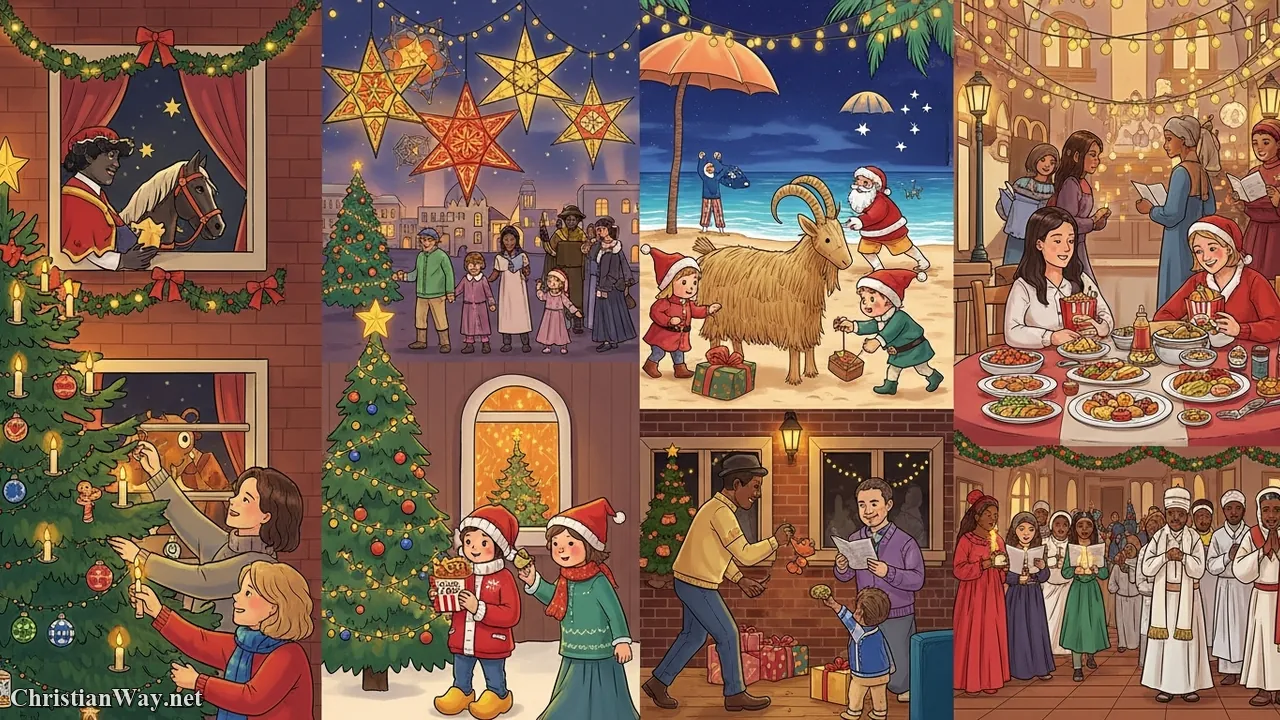
As we journey together through these traditions, let us look beyond their outward forms. Let us listen for the deeper harmony beneath them all—the quiet but persistent echo of Emmanuel, God-with-us, dwelling among His people in every corner of the world.
Christmas as a Universal Feast of the Incarnation
One Birth, Many Expressions
At its heart, Christmas celebrates the Incarnation—the moment when God chose not to remain distant, but to enter human history through vulnerability and love. This mystery is unchanging, yet the ways it is celebrated are richly diverse. Culture does not dilute the Gospel; rather, it gives the Gospel a voice that people can understand in their own hearts.
Wherever the Christian faith has taken root, Christmas has absorbed local symbols, foods, music, and rhythms of life. And still, beneath these differences, the same truth remains: God comes close, especially to the poor, the weary, and the forgotten.
Europe: Ancient Roots and Sacred Memory
The Heartland of Early Christian Christmas
In much of Europe, Christmas carries the weight of centuries. Churches built of stone and prayer hold memories of countless generations who gathered in darkness to welcome the Light of the World.
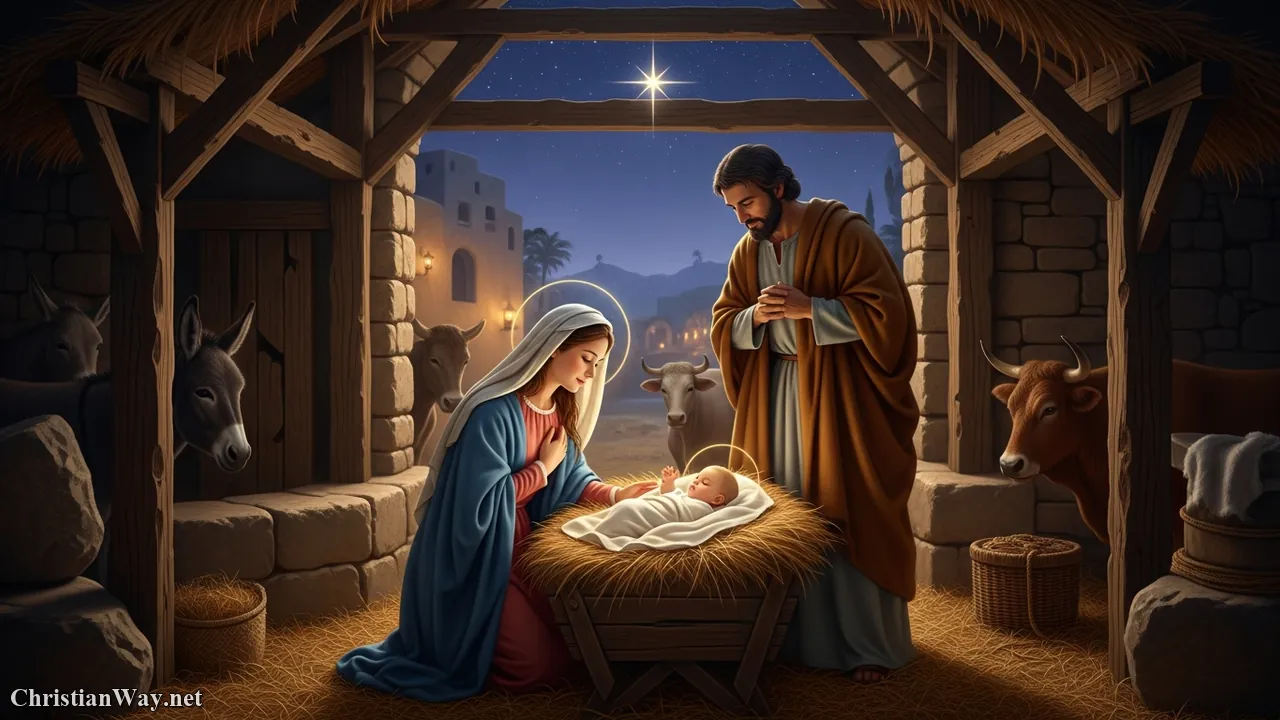
In countries like Italy, the Nativity scene—il presepe—is a central symbol. Families lovingly construct miniature worlds around the manger, reminding themselves that God entered ordinary human life, not an idealized one. In towns and villages, Midnight Mass remains a cherished moment when the faithful step out of winter’s cold into sanctuaries filled with candlelight and ancient hymns.
In Germany and neighboring lands, Christmas markets transform city squares into places of warmth and fellowship. Beneath evergreen wreaths and flickering lights, people share food, stories, and time—simple human gestures that echo the hospitality once denied to Mary and Joseph.
Across Europe, Christmas Eve often holds greater spiritual weight than Christmas Day itself. Families fast or eat simply, waiting together for nightfall, when joy finally breaks through restraint—much like salvation itself, long awaited and quietly revealed.
Eastern Europe: Vigil, Fasting, and Sacred Anticipation
Waiting for the Star
In countries shaped by Eastern Christian traditions, such as Ukraine or Poland, Christmas is preceded by deep preparation. Advent fasting reminds believers that true joy is born of longing and discipline.
On Christmas Eve, families gather only when the first star appears in the sky, recalling the Star of Bethlehem that guided the Magi. A meatless meal is shared, prayers are spoken, and Scripture is read aloud. An empty place is often left at the table—for the stranger, the poor, or Christ Himself, who may come unrecognized.
These customs teach a powerful lesson: Christmas joy is not hurried or shallow. It grows slowly, like hope in a waiting heart.
Latin America: Faith Alive in Community and Celebration
The Gospel Walked Through the Streets
In many parts of Latin America, Christmas is profoundly communal. In Mexico, the tradition of Las Posadas reenacts Mary and Joseph’s search for shelter. For nine nights, neighbors walk together from house to house, singing, praying, and finally opening doors in joyful welcome.
This living drama reminds communities that Christmas is not a private sentiment but a shared responsibility. We are called not only to celebrate Christ’s birth, but to receive Him in those who knock at our doors today.
Throughout the region, vibrant music, colorful decorations, and outdoor liturgies fill the season with life. Yet at the center remains a deeply Catholic devotion to the Child Jesus—often portrayed not as distant royalty, but as tender and approachable, close to family life.
Africa: Christmas of Light, Song, and Hope
Joy Rising from Faith
In many African countries, Christmas arrives not with snow but with song. In places such as Nigeria or Kenya, worship becomes an expression of the whole body—drums, dancing, clapping, and radiant choirs proclaiming the Good News.
Here, Christmas often highlights themes of liberation and hope. The birth of Christ speaks powerfully to communities that know suffering and resilience. Midnight services stretch into the early hours, not as obligation, but as joyful offering. The faithful come dressed in their finest clothes, bringing gifts for the poor, remembering that Christ is found most clearly among those in need.
African Christmas traditions remind the global Church that joy is not the absence of hardship, but the presence of God within it.
Asia: Christmas as Witness and Quiet Light
Faith Lived Gently
In much of Asia, Christians are often a minority, yet Christmas shines with a unique purity. In the Philippines—where Christianity deeply shapes culture—the season is marked by Simbang Gabi, nine dawn Masses offered in joyful anticipation. Long before sunrise, churches fill with faithful voices singing praise, a testimony of devotion carried through centuries.
Elsewhere in Asia, Christmas may be quieter, more inward. Small congregations gather discreetly, candles are lit in humble homes, and the Nativity story is shared with reverence. Decorations may be modest, but faith burns brightly.
These celebrations teach us that Christmas does not require abundance to be authentic. Even a single candle, lit in faith, can proclaim the Light of Christ to the world.
The Middle East: Remembering Bethlehem
Where the Story Began
In the lands closest to the Nativity itself, Christmas is marked by profound solemnity. In Bethlehem, believers gather at the Church of the Nativity, standing upon sacred ground where tradition holds that Christ was born.
Processions, ancient hymns in Arabic, and deep reverence characterize these celebrations. For Christians living amid tension and uncertainty, Christmas becomes an act of faith and endurance—a proclamation that peace is not a fragile dream, but a promise rooted in God’s faithfulness.
Here, Christmas strips away sentimentality and returns us to the stark beauty of the Gospel: God enters a broken world not by force, but by love.
North America: Family, Charity, and the Sacred in the Ordinary
Faith at the Family Table
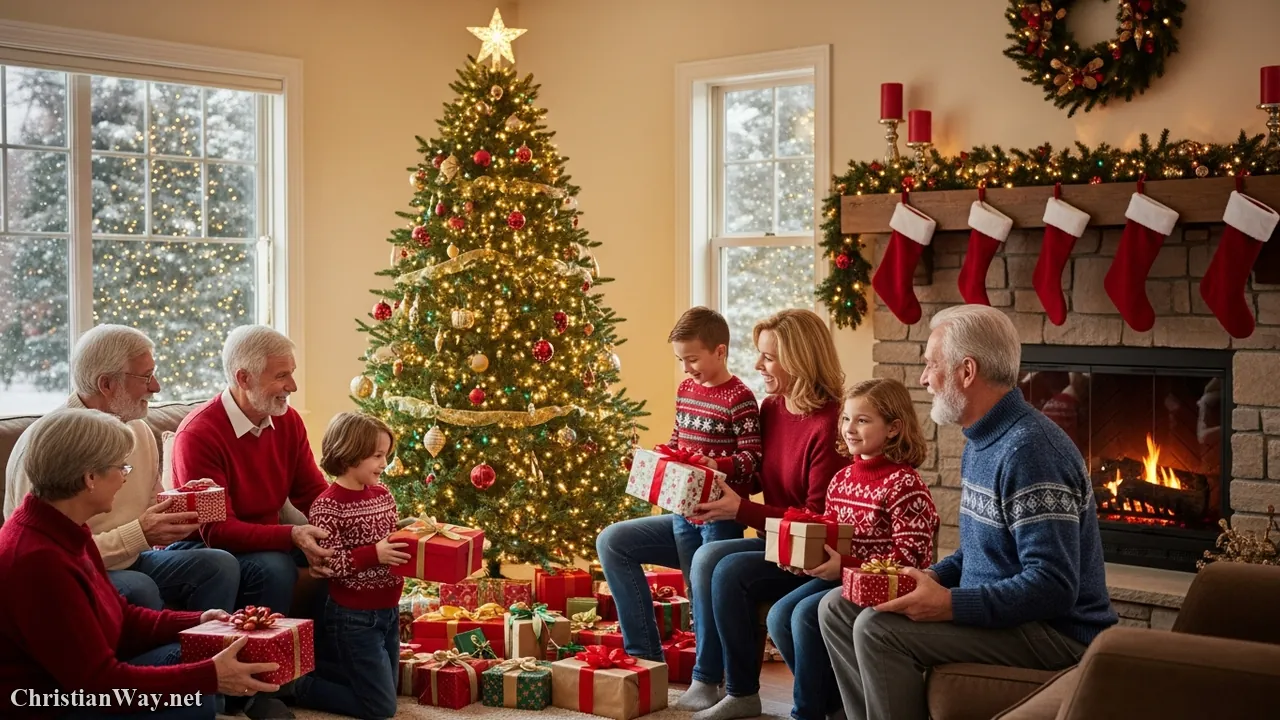
In countries like United States and Canada, Christmas is deeply woven into family life. Homes are decorated with lights and trees, gifts are exchanged, and meals are shared in abundance.
Yet at its best, Christmas here is also a season of generosity. Churches organize charitable outreach, families volunteer, and hearts open to those who are lonely or struggling. The Nativity scene—whether in a churchyard or living room—quietly anchors the celebration, reminding all that joy flows from humility.
These traditions invite believers to sanctify everyday life, allowing Christ to be born not only in churches, but in kitchens, conversations, and acts of kindness.
Oceania: Christmas in Summer Light
Joy under Open Skies
In places like Australia and New Zealand, Christmas unfolds in warmth and sunshine. Outdoor Masses, beach gatherings, and carols under the stars reshape familiar imagery, yet the message remains unchanged.
Here, Christmas reminds us that the Gospel transcends climate and custom. Whether beneath falling snow or summer skies, Christ comes to meet humanity where it lives.
What These Traditions Teach the Soul
Across all these cultures, one truth emerges with gentle clarity: Christmas is not owned by any one people. It belongs to the whole Church, and indeed to all humanity. Each tradition, in its own way, answers God’s gift with love.
Some traditions emphasize silence, others song. Some focus on fasting, others feasting. Yet all point toward the same mystery—the humility of God, the dignity of human life, and the hope that darkness does not have the final word.
Reflect and Pray
As we behold Christmas traditions around the world, we are invited to look anew at our own. Not to judge or compare, but to ask: How does my way of celebrating make room for Christ? Do our customs draw us closer to the poor, the lonely, and the forgotten? Do they deepen our gratitude for the gift of Emmanuel?
Let us pray:
Lord Jesus Christ, born in humility and glory,
You entered our world to gather every nation into Your love.
Bless the traditions by which Your people remember You,
And purify our hearts, that we may receive You anew.
May our celebrations become acts of faith, hope, and charity,
And may Your peace dwell among all peoples of the earth.
Amen.
— Fr. John Matthew, for Christian Way.