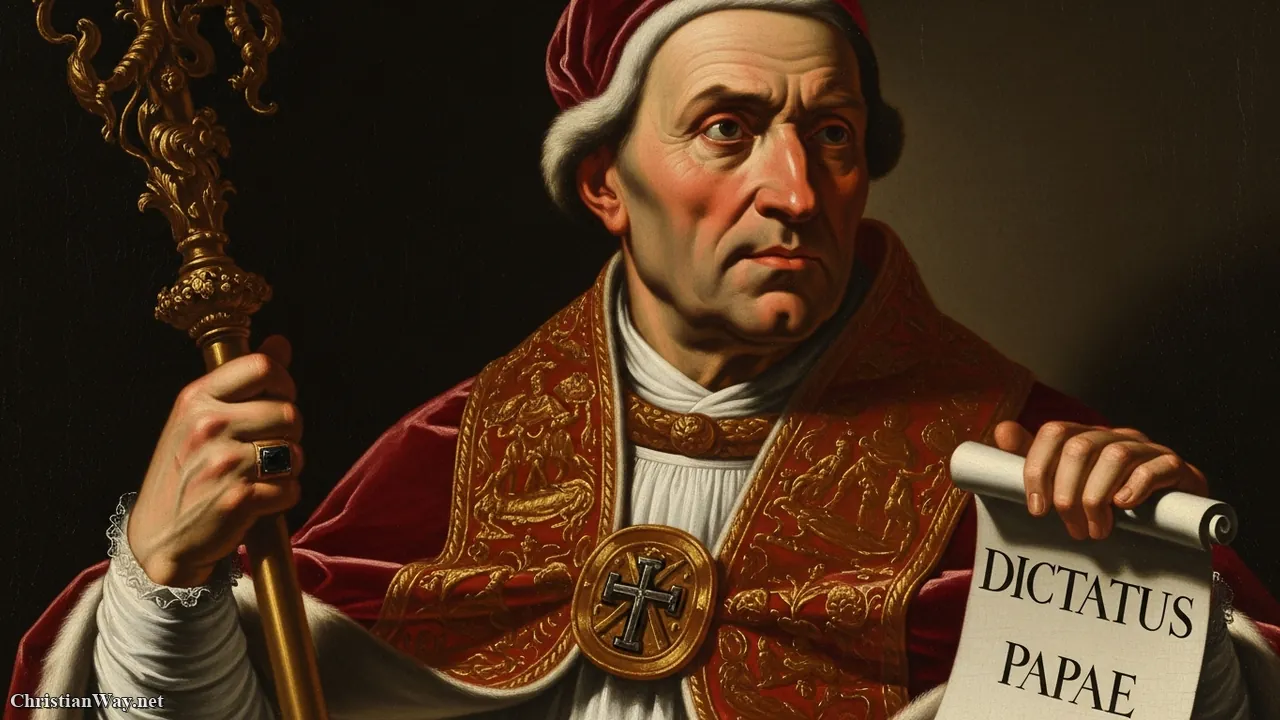
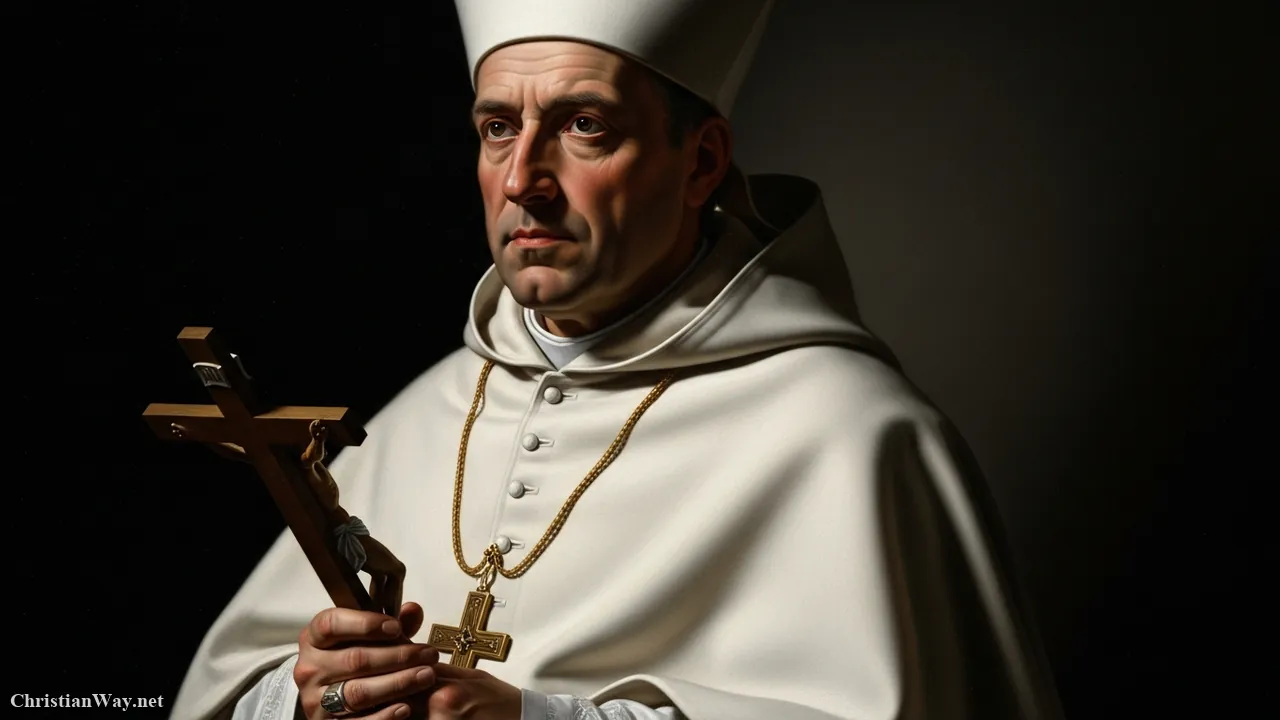
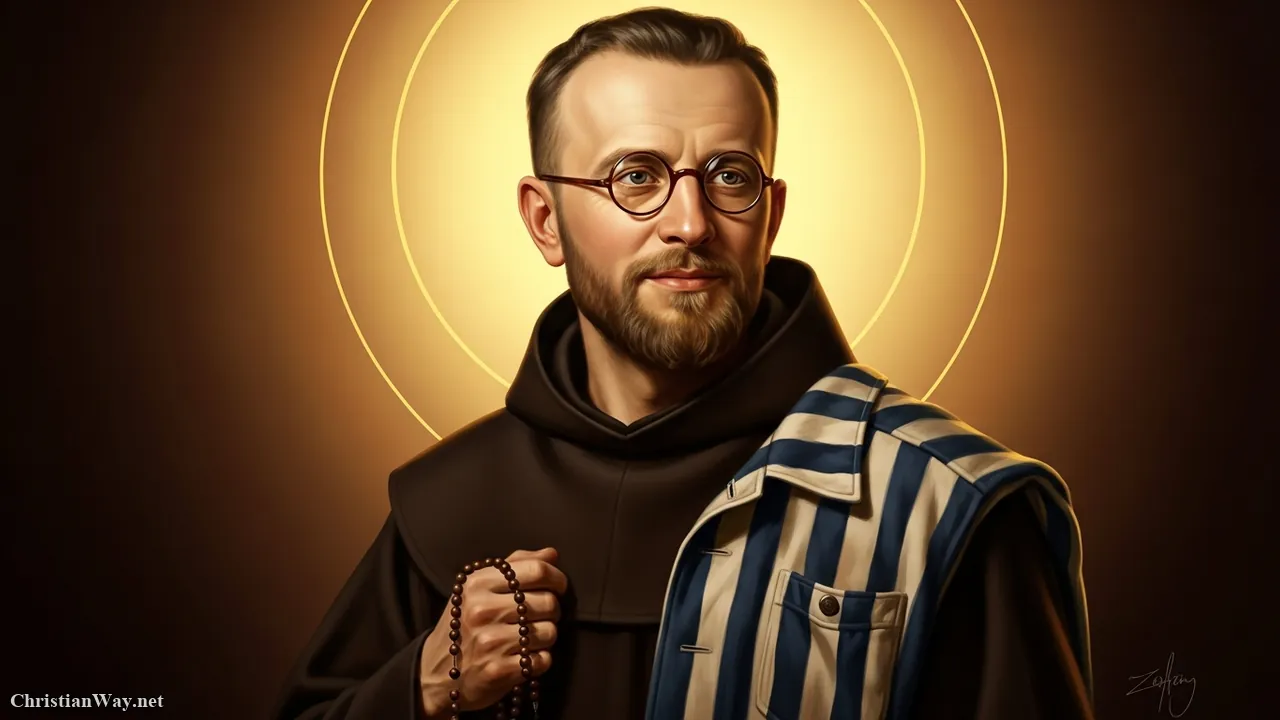
Welcome, beloved children of God. It is with a heart full of warmth that I introduce you to one of the most unexpected and transformative figures in the 2,000-year history of our Church: Saint John XXIII. Known affectionately as Il Papa Buono (“The Good Pope”), Angelo Roncalli was a man who, by all worldly metrics, should have been a footnote—a “caretaker pope” elected to keep the seat warm. Instead, he became a firestarter.

In a world chilled by the Cold War and a Church often retreating into a fortress of defensiveness, he stepped out onto the balcony not as a prince, but as a father. He did not issue condemnations; he offered an embrace. His life teaches us that holiness does not require a stern face, but rather a heart wide enough to hold the whole world. Let us walk together through the life of this peasant priest who taught us that the Holy Spirit is always ready to surprise us.
Profile of Holiness
| Attribute | Detail |
|---|---|
| Birth Name | Angelo Giuseppe Roncalli |
| Lifespan | November 25, 1881 – June 3, 1963 |
| Birthplace | Sotto il Monte, Bergamo, Italy |
| Service Period | 1958 – 1963 (Papacy) |
| Feast Day | October 11 (Opening of Vatican II) |
| Patronage | Papal delegates, Christian unity, The Second Vatican Council |
| Key Virtue | Oboedientia et Pax (Obedience and Peace) |
The Cradle of Grace: Historical Context & Early Life
To understand the man who would one day sit on the Chair of Peter, we must first look to the mud and the fields of Sotto il Monte, a small village in northern Italy. Angelo Roncalli was born on November 25, 1881, the fourth of fourteen children in a family of sharecroppers (mezzadri). The Italy of his birth was a nation in flux—newly unified, politically volatile, and deeply anticlerical in its governance. The Church had lost the Papal States and was struggling to find its voice in a rapidly modernizing world.
Yet, in the Roncalli household, the chaos of the world was secondary to the rhythm of faith. They were poor in material wealth but rich in piety. Angelo later recalled, “We were poor, but happy and confident in the help of Providence.” His early formation was not in the marble halls of power, but in the stable where his great-uncle Zaverio, a bachelor and the spiritual patriarch of the family, would read aloud from the Annals of the Propagation of the Faith.
It was here, amidst the smell of earth and the sound of the evening Rosary, that Angelo learned his first theology: that God is found in the ordinary. He was not a prodigy; he was a faithful son of the soil. This grounding in the reality of poverty would later armor him against the pomp and vanity that can tempt those in high office. He knew the smell of the sheep long before he became the Supreme Shepherd.
The Turning Point: Vocation and Conversion
Angelo’s call to the priesthood was less a lightning bolt and more a steady dawn. He entered the minor seminary in Bergamo at age twelve, a boy with a quick mind and a pious heart. However, his path to holiness was forged in the fire of the 20th century’s greatest tragedy: the Great War.
In 1915, Father Roncalli was drafted into the Royal Italian Army. He served first as a stretcher-bearer and later as a chaplain. This was his “conversion” from a theoretical theologian to a minister of mercy. He did not preach from a high pulpit; he knelt in the blood and mud, holding the hands of dying boys who cried for their mothers. He later wrote, “I thank God that I have read the souls of my soldiers by the light of the lamp of the hospital.”
This experience stripped him of any clerical pretension. He saw that the Church could not remain a distant, perfect society while her children were being torn apart by shrapnel. The war taught him that the Gospel must be a soothing balm for a wounded world. It was a lesson that would lie dormant in his heart, waiting for the moment, forty years later, when he would be in a position to heal the wounds of the nations.
The Great Labor: Ministry and Mission
For much of his life, Angelo Roncalli seemed destined for obscurity. The Vatican utilized him as a diplomat in what were considered “exile” posts: Bulgaria and Turkey. Yet, it was in these non-Catholic lands that his genius for friendship blossomed. In Turkey, he wore civilian clothes to not offend the secular government and utilized his diplomatic status during World War II to save thousands of Jewish lives, issuing baptismal certificates to help them escape the Nazi Holocaust. He was a bridge-builder in a time of walls.
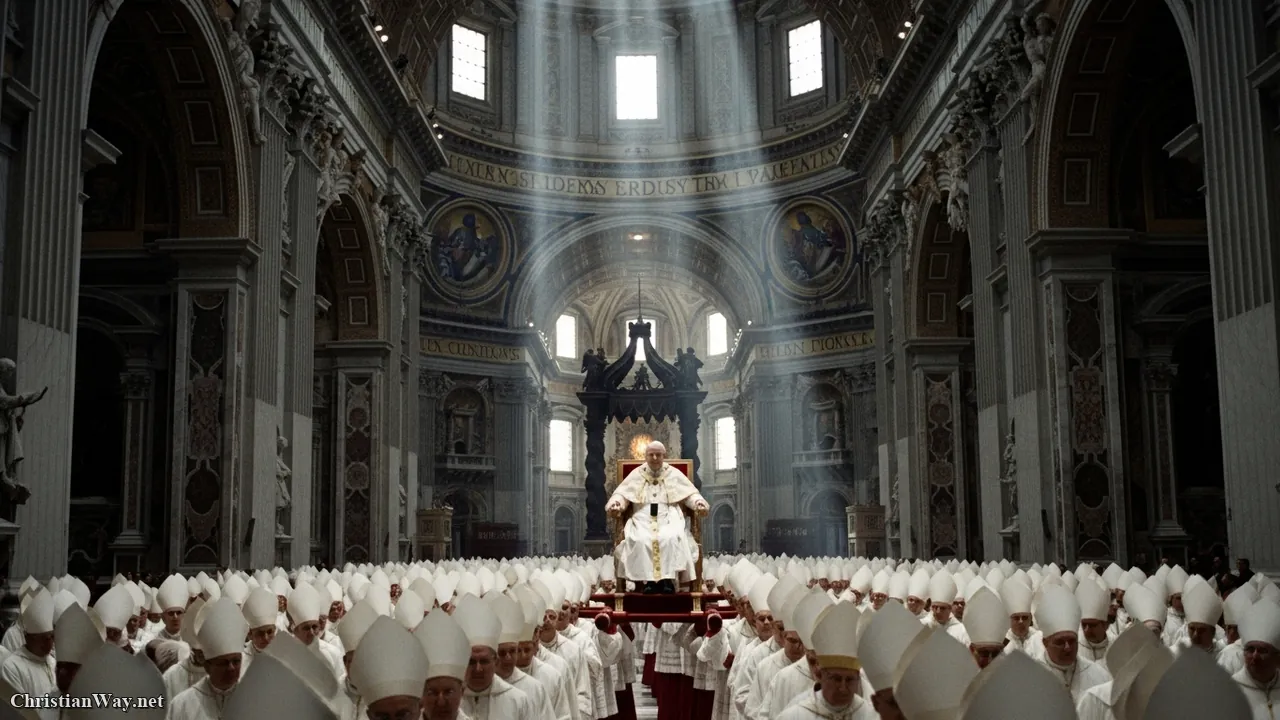
When he was elected Pope in 1958 at the age of 76, the world expected a “transitional pope”—an elderly placeholder to keep the ship steady after the long, dynamic reign of Pius XII. But the Holy Spirit is rarely predictable. Less than three months after his election, he announced his intention to convene an Ecumenical Council.
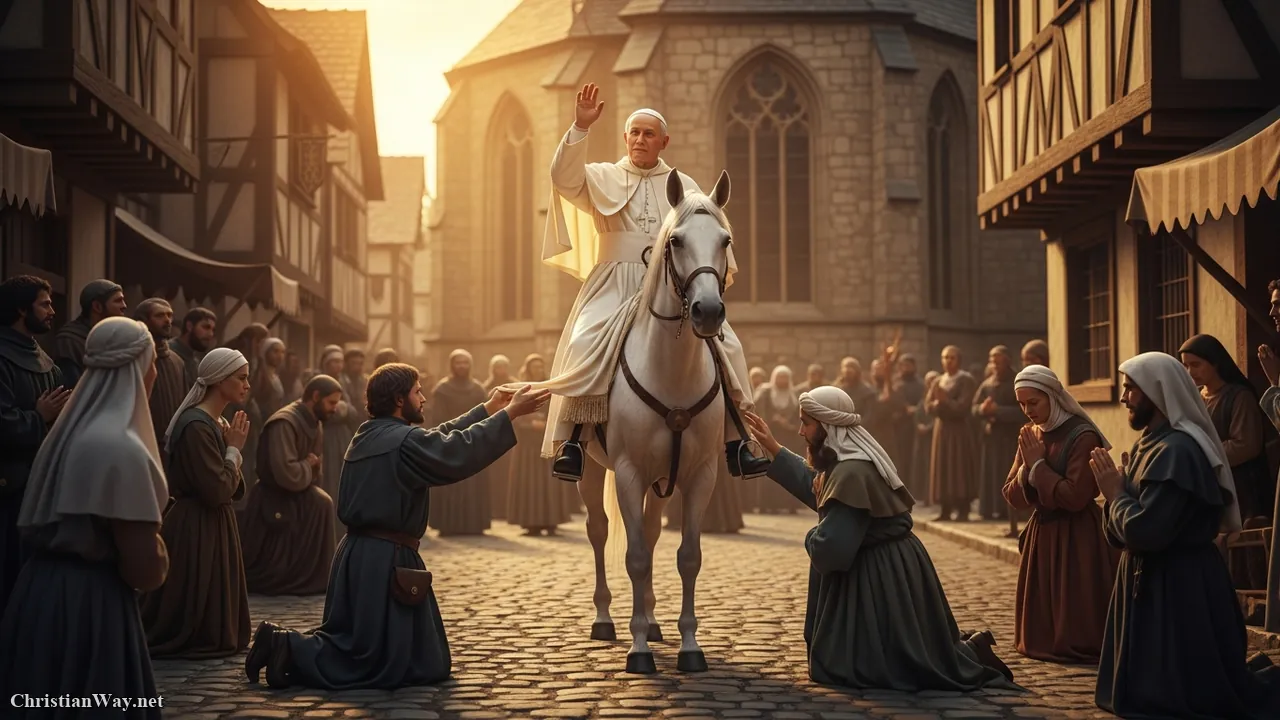
The Roman Curia was stunned. They advised caution; John XXIII chose courage. He famously opened the windows of the Vatican, metaphorically and literally. He visited hospitals and prisons, telling inmates, “You could not come to me, so I came to you.” On the opening night of the Council, he spoke to the crowds in St. Peter’s Square in his impromptu “Moonlight Speech,” telling parents to “Go home and give your children a kiss, and tell them it is from the Pope.” In that moment, the papacy ceased to be a monarchy and became a ministry.
The Teacher of Souls: Theological & Spiritual Legacy
St. John XXIII was not a systematic theologian like Aquinas; he was a pastoral theologian. His greatest intellectual contribution was the distinction he drew at the opening of Vatican II: “The substance of the ancient doctrine of the deposit of faith is one thing, and the way in which it is presented is another.” This insight allowed the Church to speak the eternal truths of Christ in the language of the modern world.
His two major encyclicals remain pillars of Catholic Social Teaching. Mater et Magistra (1961) addressed the dignity of work and the plight of the poor. But it was Pacem in Terris (1963), written in the shadow of the Cuban Missile Crisis, that shook the world. For the first time, a Pope addressed an encyclical not just to the bishops, but to “all men of good will.” He argued that peace could only be built on truth, justice, charity, and liberty. He became a moral voice that transcended the Iron Curtain, earning him the Balzan Peace Prize and the respect of atheists and believers alike.
His spiritual legacy is best found in his diary, Journal of a Soul. It reveals a man who battled daily with his own weight, his tendency to talk too much, and his feelings of inadequacy. Yet, his solution was always the same: total trust. His motto, Oboedientia et Pax, was not about blind servility, but a deep, listening obedience to God’s will that brings profound peace.
The Via Dolorosa: Suffering, Death, and Sainthood
As the Second Vatican Council began its momentous work, the Good Pope was dying. Diagnosed with stomach cancer, he endured intense pain with a smile, refusing to let his suffering distract the Church from its mission. He offered his pain for the success of the Council and for peace in the world.
In his final days, the world held a vigil. It was said that “the death of the Pope was like a death in the family” for the entire globe. As he lay dying on June 3, 1963, his last intelligible words were reported to be a prayer for Christian unity: “Ut unum sint” (That they may be one). He died as he lived—looking outward, desiring the embrace of all God’s children.
He was canonized on April 27, 2014, by Pope Francis, alongside Pope John Paul II. It was a fitting pairing: the Pope who opened the Council and the Pope who implemented it. But perhaps the most telling detail is his feast day. It is not celebrated on the day of his death, as is custom, but on October 11—the day he opened the Second Vatican Council. The Church thereby declared that his life was defined not by how he left this world, but by how he opened it to the Spirit.
Spiritual Highlights: Lessons for the Modern Christian
How do we live the “Way of John” in our frantic 21st century? Here are four lessons from the Good Pope:
- Just for Today: John XXIII followed a “Daily Decalogue.” One rule was: “Only for today, I will be happy and not wait for the rest of my life to be happy.” We must live in the sacrament of the present moment.
- Don’t Take Yourself Too Seriously: He famously said, “It often happens that I wake up at night and begin to think about a serious problem and decide I must tell the Pope about it. Then I wake up completely and remember that I am the Pope! Bitterness comes from taking ourselves too seriously.” Humility is the cure for anxiety.
- Open the Windows: Is your spiritual life stuffy? Have you built walls to keep “others” out? St. John teaches us to let the fresh air of the Holy Spirit blow through our certainties.
- See Christ in the Stranger: whether in a Turkish diplomat or a prison inmate, John looked for what united him to others, not what divided them.
A Prayer for Intercession
O Good Pope John,
You who preferred the simplicity of a father to the glory of a prince,
Look down upon us with your signature smile.
Teach us to trust in the Holy Spirit, even when the path is unclear.
Help us to open the windows of our hearts to those we fear or misunderstand.
Intercede for the unity of all Christians and the peace of the whole world,
That we may walk together in obedience and peace.
We ask this through Christ our Lord.
Amen.
— Fr. John Matthew, for Christian Way