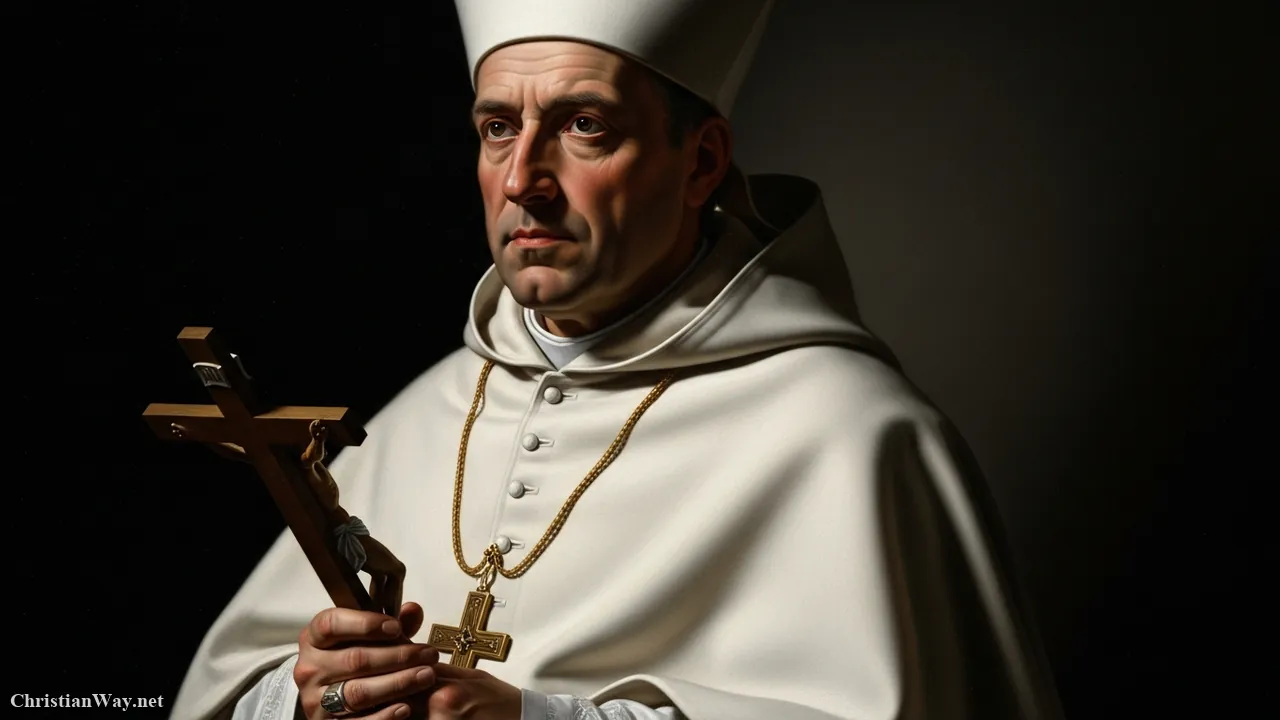
My dear friends, if you were to walk the streets on the 17th of March, you would see a sea of green, caricatures of leprechauns, and a celebration that often forgets its source. But strip away the commercialism, and you find a figure of towering spiritual magnitude. Saint Patrick was not merely a charmer of snakes or a banisher of pests; he was a giant of the faith who stood at the crumbling edge of the Roman Empire and stepped into the darkness to light a fire that would never be extinguished.
He was a man who called himself “a sinner, a most simple countryman, the least of all the faithful.” Yet, this humble bishop accomplished what the mighty Roman legions could not: the conquest of the Irish heart—not by the sword, but by the Cross. To understand Patrick is to understand the mystery of vocation: how God takes our deepest wounds and transforms them into sources of healing for others. Join me as we journey back to the 5th century, to walk the muddy roads of Ireland with the man who brought Christ to the ends of the earth.
Profile of Holiness
| Attribute | Detail |
|---|---|
| Birth Name | Maewyn Succat (Trad.); Patricius (Latin adopted name) |
| Lifespan | c. 385 AD – March 17, c. 461 AD (dates vary by source) |
| Birthplace | Bannavem Taburniae, Roman Britain (exact location debated) |
| Service Period | c. 432 – 461 AD (Missionary Bishop of Ireland) |
| Feast Day | March 17 |
| Patronage | Ireland, Engineers, Paralegals, Nigeria, Archdiocese of New York |
| Key Virtue | Missionary Zeal and Forgiveness of Enemies |
The Cradle of Grace: Historical Context & Early Life
To understand Patrick, we must first understand the world that was collapsing around him. He was born into the twilight of Roman Britain, likely near the western coast (scholars debate locations from Scotland to Wales). His father, Calpurnius, was a deacon and a minor Roman official; his grandfather, Potitus, was a priest. Yet, by his own admission in his Confessio, the young Patrick was far from holy. He was a nominal Christian, resting on the laurels of his family’s status, “ignorant of the true God.”

This was a world of fear. The Roman legions were withdrawing from Britain to defend a besieged Rome, leaving the coastlines vulnerable. The Irish—then known as the Scoti—were terrifying raiders who pillaged the British coast for treasure and human flesh. Patrick’s life was shattered at the tender age of sixteen. In a violent raid on his family’s estate, he was seized, shackled, and dragged across the Irish Sea. He went from a life of Roman privilege to the status of a piece of property, sold to a chieftain named Milchu in the rugged hills of County Antrim.
The Turning Point: Vocation and Conversion
It is often in the desert that God speaks; for Patrick, the “desert” was the cold, windswept slopes of Slemish Mountain. Stripped of his nobility, hungry, and terrified, the nominal Christianity of his youth was forged into iron faith through suffering. He writes:
“But after I came to Ireland—every day I had to tend sheep, and many times a day I prayed—the love of God and His fear came to me more and more, and my faith was strengthened.”
He prayed a hundred times a day and as many times at night, in snow, frost, and rain. The boy who didn’t know God became the man who could not live without Him. After six years of slavery, a voice spoke to him in his sleep: “You do well to fast, soon you will go to your own country.” Guided by Providence, he fled his master, walked 200 miles to a port, and found a ship. His escape was miraculous, but his heart had been irrevocably changed. Though he returned to his family in Britain, the cries of the Irish haunted his dreams. He famously recorded a vision of a man named Victoricus coming from Ireland with countless letters, one of which cried out, “We appeal to you, holy servant boy, to come and walk among us.”
The Great Labor: Ministry and Mission
Patrick did not return to Ireland with an army, but with a chalice. After years of formation—tradition places him at the monastery of Lérins or under the tutelage of St. Germain of Auxerre—he was ordained a bishop and sent back to the land of his slavery around 432 AD.
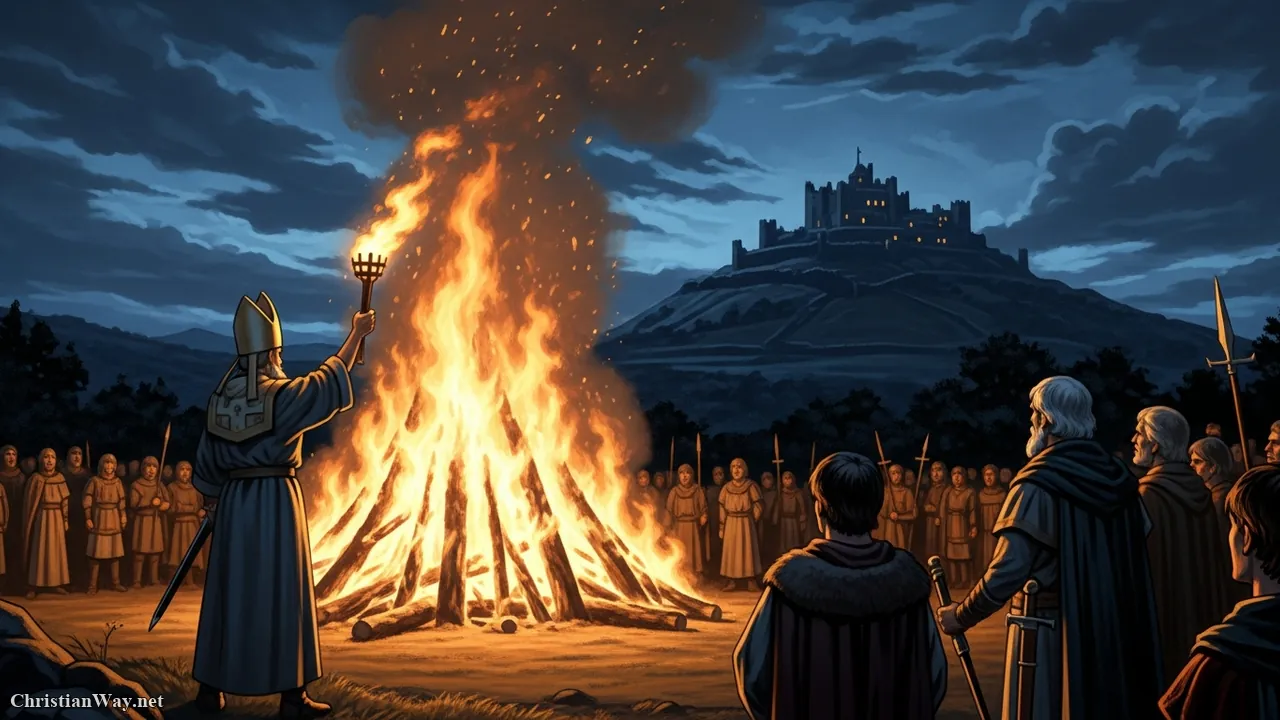
His ministry was a frontal assault on the spiritual darkness of Druidism. The most famous account of this confrontation occurred at the Hill of Slane. The High King Laoghaire had decreed that no fire could be lit until the royal fire at Tara blazed to celebrate a pagan festival. Patrick, celebrating the Easter Vigil, lit the Paschal Fire on the opposite hill. It defied the King and the Druids, shining as a beacon of the Light of Christ that conquers the darkness. When summoned to answer for his crime, Patrick preached the Gospel with such power that while the King remained pagan, he granted Patrick permission to preach.
Patrick traversed the island, baptizing thousands, ordaining priests, and encouraging women to a life of consecrated virginity—a radical concept in a warrior culture. He dismantled the idol Crom Cruach and replaced stone altars of sacrifice with the Eucharistic table. He did not merely convert individuals; he enculturated the faith, respecting Irish laws and customs where they did not conflict with the Gospel, planting a Christianity that was distinctly Celtic yet universally Catholic.
The Teacher of Souls: Theological & Spiritual Legacy
While often viewed as a man of action, Patrick was a profound theologian of Grace. His writings, the Confessio and the Epistola ad Coroticum (Letter to Coroticus), reveal a man deeply steeped in Scripture. He referred to himself as “unlearned” (rusticus), yet his command of the Bible was absolute; his mind breathed the Psalms.
The Trinity: The legend of the shamrock—using the three-leafed plant to explain the Three Persons in One God—highlights his ability to take nature, revered by the Druids, and use it as a stepping stone to Supernatural Truth. The “Lorica” or St. Patrick’s Breastplate, attributed to him, is a masterclass in Trinitarian theology: “I bind unto myself today the strong name of the Trinity.”
Justice and Dignity: In his Letter to Coroticus, we see a blazing prophet. When soldiers of a British chieftain raided Patrick’s newly baptized converts, slaughtering some and enslaving others, Patrick wrote a scathing letter of excommunication. He famously called them “fellow citizens of the demons,” asserting the dignity of the Irish people—who were considered “barbarians” by the Romans—as children of God. This is one of the earliest recorded arguments against the morality of slavery by a churchman.
The Via Dolorosa: Suffering, Death, and Sainthood
Patrick’s path was not easy. He faced death daily—twelve times, he says, his life was in jeopardy. He was imprisoned, mocked, and betrayed, not only by pagans but by jealous clergy in Britain who accused him of financial impropriety and dug up sins from his youth to discredit him. This betrayal cut him deeply, yet his response was always humility.
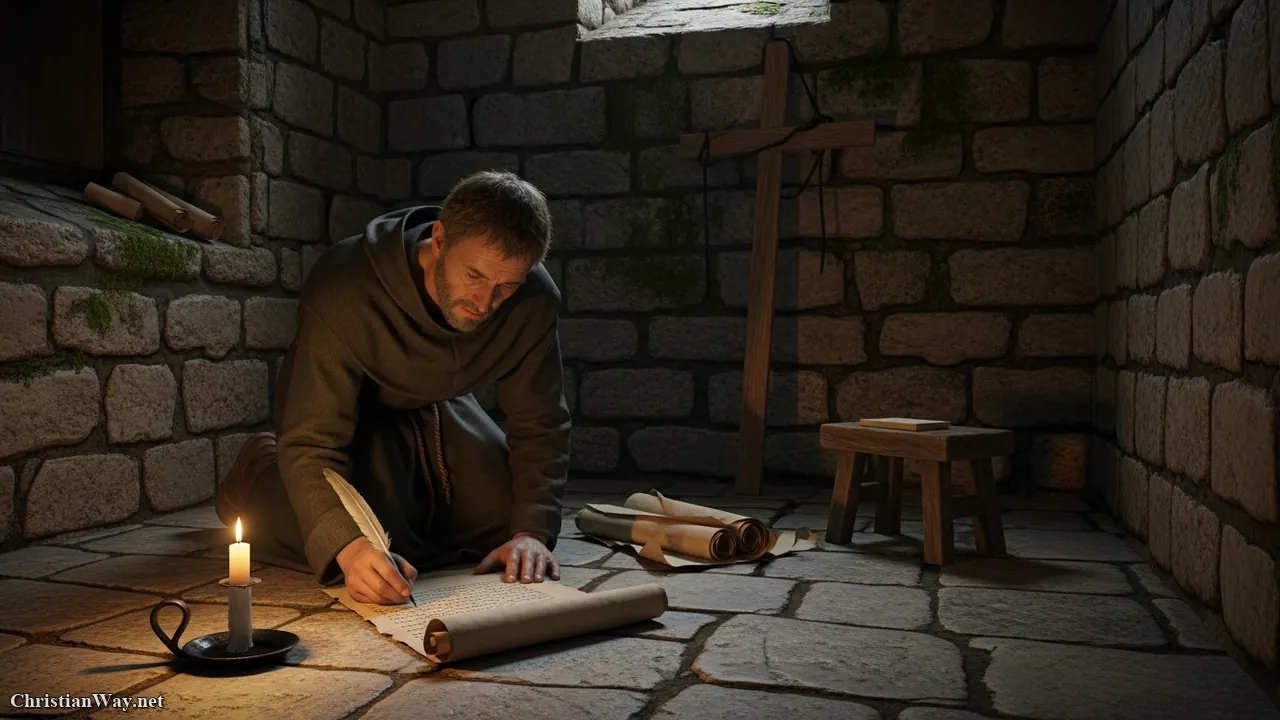
He refused to take gifts from kings or payment for baptisms to avoid any appearance of greed. He lived in poverty among the people he served. As his life drew to a close, he retired to Saul, the site of his first church. He died on March 17, likely in the year 461. He did not leave behind a wealthy estate, but a transformed nation. Within a century of his death, Ireland became the “Land of Saints and Scholars,” preserving Western civilization while Europe fell into the Dark Ages. His canonization was by the immediate and enduring acclaim of the people, a status ratified by centuries of reverence.
Spiritual Highlights: Lessons for the Modern Christian
What does a 5th-century bishop teach the 21st-century believer?
- Forgiveness is a Weapon: Patrick returned to the very people who enslaved him, not to seek revenge, but to offer them eternal life. He teaches us that our abusers are not outside the reach of God’s grace.
- Evangelization in a Post-Christian World: Patrick entered a pagan culture hostile to the Gospel. Today, we live in a secular culture increasingly hostile to faith. His method—authentic witness, intellectual engagement, and reliance on the Holy Spirit—is our model.
- Humility in Success: Despite converting a nation, Patrick never claimed credit. He attributed every success to the grace of God working through a “sinner.” We must remember that we are merely pencils in the hand of a writing God.
- Trust in Providence: From the sheep-hills of Antrim to the courts of Kings, Patrick trusted that God was guiding his steps. He teaches us to look for God’s hand in our own “captivities.”
A Prayer for Intercession
O God, who chose the Bishop Saint Patrick to preach your glory to the peoples of Ireland, grant through his merits and intercession that those who glory in the name of Christian may never cease to proclaim your wondrous deeds to all men. Give us the courage to face the darkness of our own times with the fire of faith, and the grace to forgive those who trespass against us. We ask this through Christ our Lord. Amen.
— Fr. John Matthew, for Christian Way