Dear friends, peace be with you.
In our walk of faith, we often look for signs—little whispers from the Divine that remind us we are not alone in this vast universe. The Church, in her wisdom, has always been careful with the miraculous, testing spirits and seeking truth. Yet, there are places on this earth where the veil between the temporal and the eternal seems so thin that it has, at times, been pierced completely. We call these places sanctuaries, not merely because they house stone and glass, but because they house the memory of a moment when God’s love became tangibly visible.
Why do we list these holy sites? It is not to chase after wonders for their own sake. As our Lord gently reminded Thomas, blessed are those who have not seen and yet believe. Rather, we look to these churches as “stones of remembrance” (Joshua 4:6). They are physical testaments to the Incarnational reality of our faith—that God is not a distant clockmaker, but a Father who steps into our history, into our mud and our messes, to heal, to warn, and to hold us.
As we journey through this list of Catholic churches with miraculous events, I invite you to read not just with your mind, but with your heart. Let the stories of humble peasant girls, doubting monks, and stormy nights remind you that the miraculous is often just a breath away from the ordinary. May these sanctuaries inspire you to find the miracle of grace in your own daily life.
Let us walk together toward the light.
Table of The Top 10 Catholic Churches with Miraculous Events
| Rank | Church Name | Location | Miraculous Event | Year of Event |
|---|---|---|---|---|
| 1 | Basilica of Our Lady of Guadalupe | Mexico City, Mexico | Miraculous Tilma & Roses | 1531 |
| 2 | Sanctuary of Our Lady of Lourdes | Lourdes, France | Healing Spring & Apparitions | 1858 |
| 3 | Sanctuary of Our Lady of Fátima | Fátima, Portugal | Miracle of the Sun | 1917 |
| 4 | Sanctuary of the Holy House (Loreto) | Loreto, Italy | Translation of the Holy House | 1294 |
| 5 | Church of St. Francis (Lanciano) | Lanciano, Italy | Eucharistic Miracle (Flesh & Blood) | ~750 AD |
| 6 | Basilica of the Holy Blood | Bruges, Belgium | Preservation of Christ’s Blood | 12th Century |
| 7 | Las Lajas Sanctuary | Ipiales, Colombia | Indestructible Image on Stone | 1754 |
| 8 | Jasna Góra Monastery | Częstochowa, Poland | Protection of the Black Madonna | 1655 |
| 9 | Basilica of Bom Jesus | Goa, India | Incorrupt Body of St. Francis Xavier | 1552 |
| 10 | Chapel of the Miraculous Medal | Paris, France | Origin of the Medal & Apparition | 1830 |
Top 10. Chapel of Our Lady of the Miraculous Medal (Paris, France)
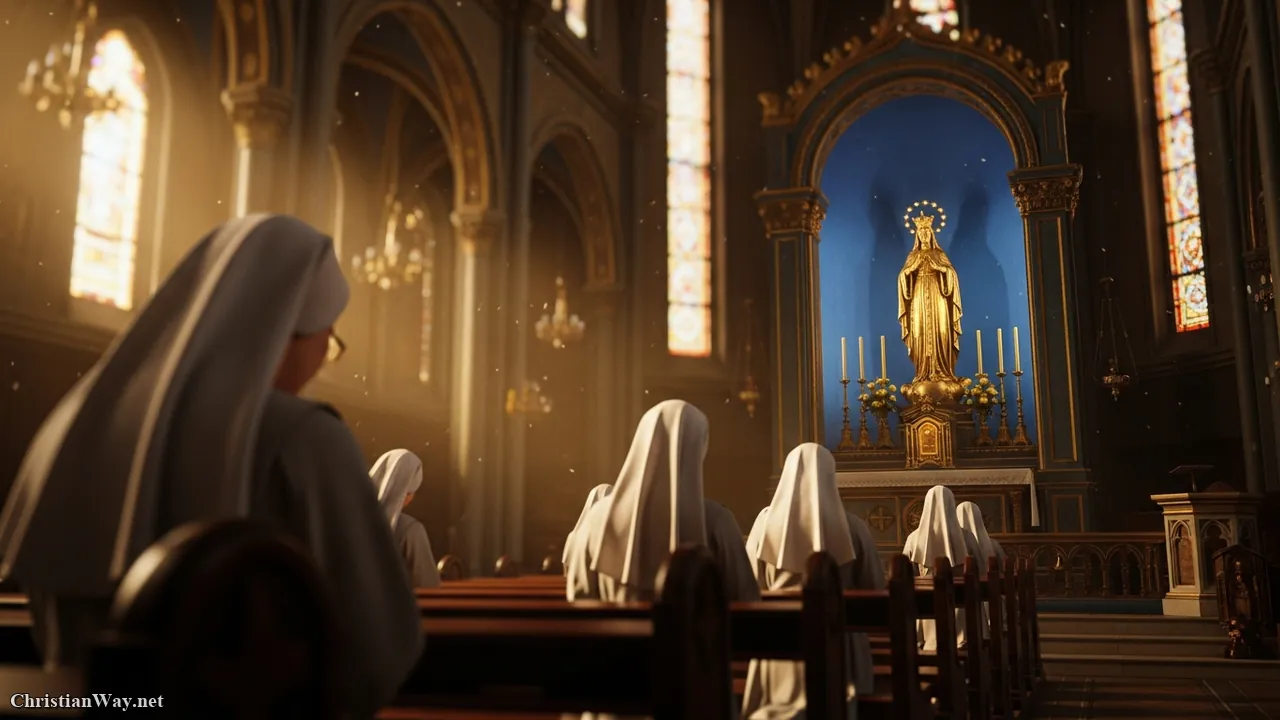
The Scene: Tucked away in the busy Rue du Bac is a chapel that feels like a secret garden of grace. It was here, in the silence of a November night in 1830, that a young novice named Catherine Labouré heard the “rustle of silk.” She looked up to see the Blessed Virgin, not distant, but standing upon a globe, rays of light streaming from her fingers. The atmosphere was intimate, a mother speaking to her daughter about the simple power of a sacramental that would soon circle the globe.
The Theology: This event reminds us of the mediation of Mary. The rays of light, she explained to St. Catherine, are the graces she wishes to bestow but that we forget to ask for. It challenges our pride; God often uses the small—a humble medal, a “weak thing” of this world—to confound the strong. The miracle here is ongoing, found in the millions of conversions and protections attributed to the “Miraculous Medal.”
The Application: Do you feel too small to make a difference? St. Catherine lived her life in obscurity, peeling potatoes and caring for the elderly, even after seeing the Queen of Heaven. This holy site comforts us with the truth that sanctity is found in hidden faithfulness. Wear your faith quietly but boldly.
Spiritual Highlights:
- Incorrupt Saint: St. Catherine’s body lies incorrupt beneath the altar.
- Scripture: “God chose the weak things of the world to shame the strong.” (1 Corinthians 1:27)
Top 9. Basilica of Bom Jesus (Goa, India)
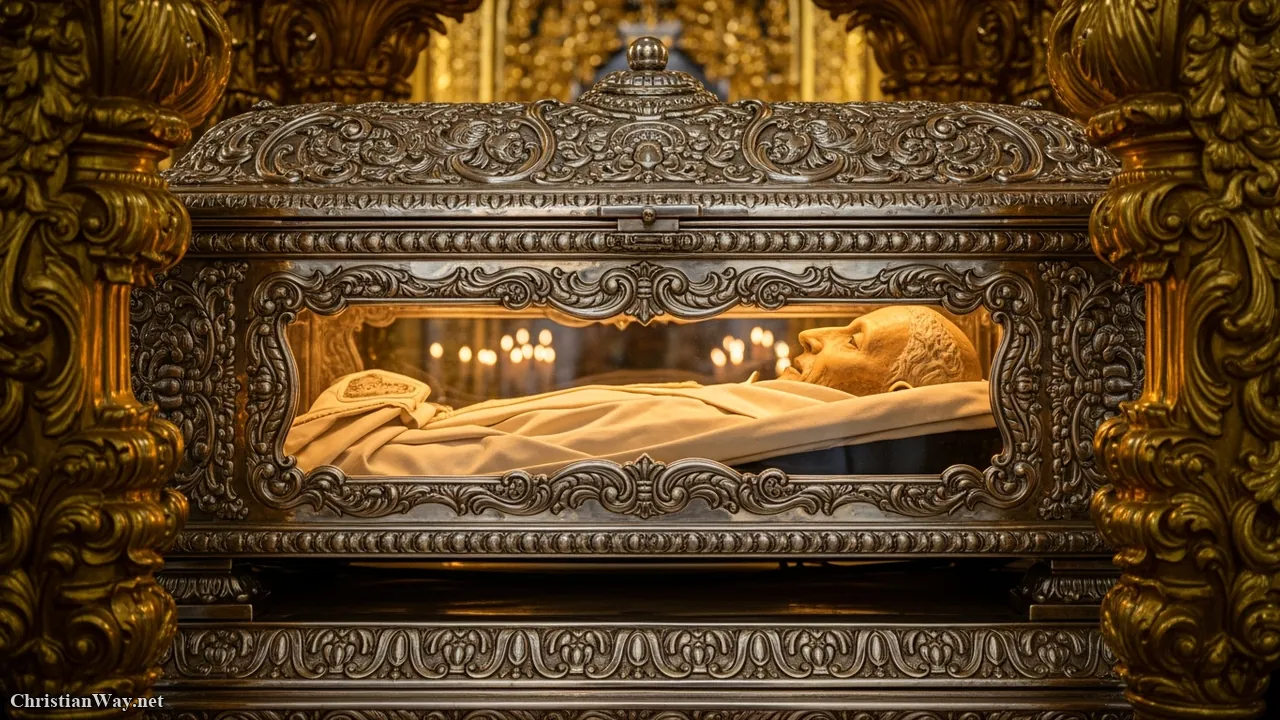
The Scene: The air in Old Goa is thick with humidity and history, but inside the Baroque grandeur of the Basilica of Bom Jesus, time stands still. Here lies the body of St. Francis Xavier, the great Jesuit missionary. Despite dying in 1552 on a lonely island off the coast of China, his body has defied the natural laws of decay for nearly five centuries. Pilgrims from across the East flock here, not just to see a relic, but to witness a man who looks as if he is merely sleeping, waiting for the call to preach once more.
The Theology: The incorruptibility of saints is a sign of the Resurrection. It is a foretaste of the glorified body promised to all believers. St. Francis burned with a zeal for souls that consumed his life but preserved his frame. It speaks to the power of the Holy Spirit that sustains us beyond death.
The Application: This miracle challenges our modern obsession with the physical body. We spend fortunes preserving our youth, yet true preservation comes from a life poured out for Christ. Are we as zealous for the Gospel as Francis was? His silent repose asks us: “What will you do for Christ today?”
Spiritual Highlights:
- Global Reach: St. Francis baptized an estimated 30,000 people.
- Scripture: “For you will not abandon my soul to Sheol, or let your holy one see corruption.” (Psalm 16:10)
Top 8. Jasna Góra Monastery (Częstochowa, Poland)
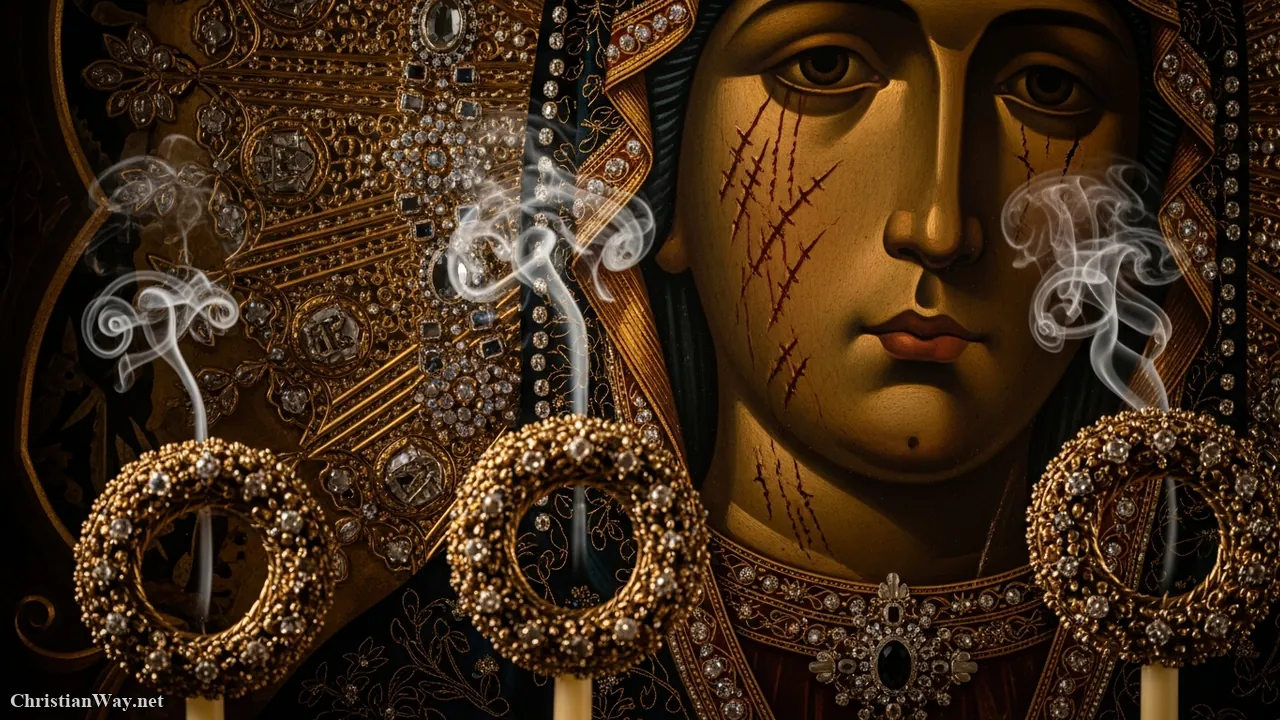
The Scene: High atop the “Bright Mountain” stands a fortress that is the spiritual heart of Poland. The miracle here is twofold: the survival of the monastery against the overwhelming Swedish “Deluge” in 1655, attributed to the intercession of Our Lady, and the icon itself. The “Black Madonna” bears scars—two slashes on her cheek from a Hussite sword that, legend says, “bled” and have refused to be painted over by restorers for centuries.
The Theology: This is a theology of the Suffering Mother. Mary bears the scars of her people. She is not a distant queen but a warrior who defends her children. The defense of Jasna Góra is a testament to spiritual warfare; when all earthly hope is lost, prayer remains the strongest weapon.
The Application: Many of us carry scars—emotional or physical—that we try to hide or “paint over.” The Black Madonna teaches us that our wounds can be part of our glory if we give them to God. She stands with the suffering, the oppressed, and the weary. You are never fighting your battles alone.
Spiritual Highlights:
- The Scars: The icon’s scars are a permanent reminder of shared suffering.
- Scripture: “A sword will pierce your own soul too.” (Luke 2:35)
Top 7. Las Lajas Sanctuary (Ipiales, Colombia)
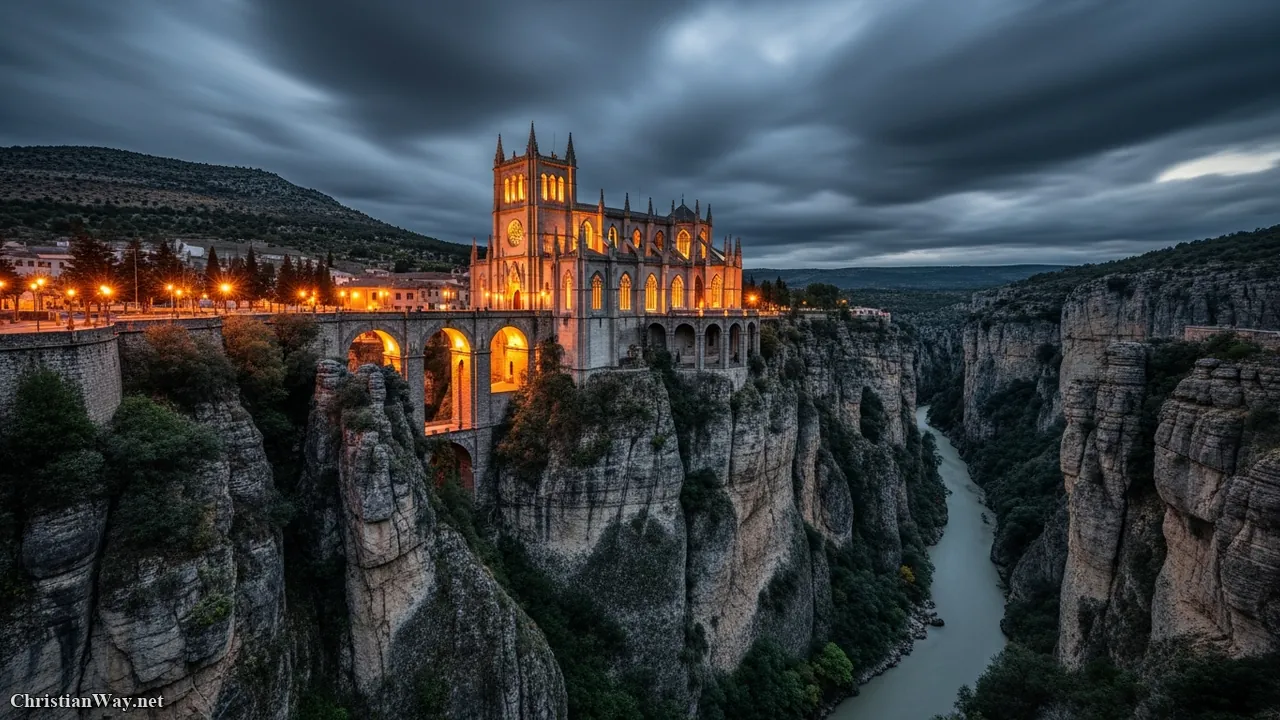
The Scene: Imagine a storm raging in a deep canyon in the Andes. A terrified mother and her deaf-mute daughter seek shelter between giant slate rocks (lajas). Suddenly, the silence is broken not by thunder, but by the daughter shouting, “The Mestiza is calling me!” Lightning reveals a brilliant image of the Virgin and Child on the rock face. To this day, the image remains vibrant; geologists have drilled into the stone only to find the colors penetrate deep into the rock itself—it is not paint, but part of the stone.
The Theology: This is the Incarnation etched into creation. Just as Christ took on human flesh, here the divine image seems to take on the very geology of the earth. It is a profound reminder that all creation groans for revelation. God meets us in our storms, often in the most rugged and unexpected places.
The Application: Perhaps you are in a “canyon” of life right now—feeling trapped or frightened by the storms around you. Las Lajas reminds us that these are often the precise places where God reveals His beauty. He is the Rock of Ages, present in the very hard places we try to avoid.
Spiritual Highlights:
- The Miracle: The image is not painted on the surface but permeates the rock.
- Scripture: “The Lord is my rock, my fortress and my deliverer.” (Psalm 18:2)
Top 6. Basilica of the Holy Blood (Bruges, Belgium)
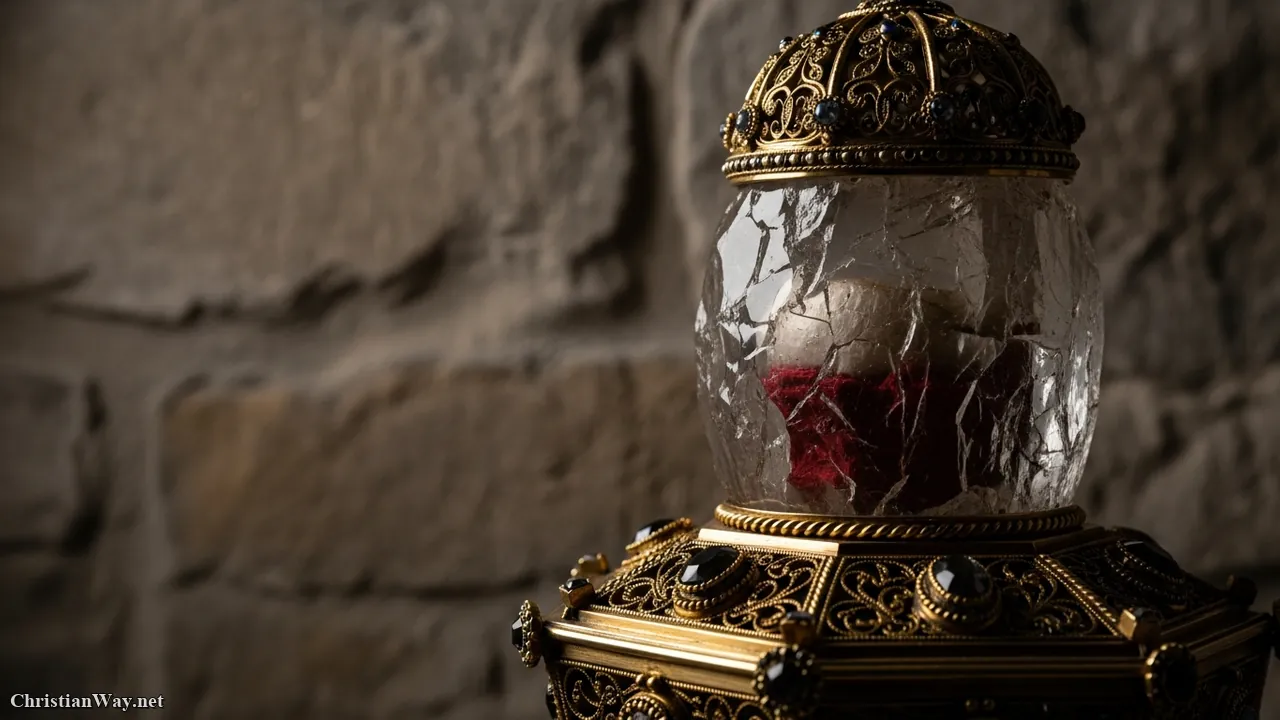
The Scene: In the medieval city of Bruges, a dark, Romanesque lower chapel contrasts with a soaring Gothic upper basilica. Here, guarded by the Brotherhood of the Holy Blood, is a phial of rock crystal. Tradition holds it contains a cloth soaked with the blood of Christ, brought back from the Crusades. For centuries, the blood was said to liquefy every Friday, a miracle that ceased in the 14th century, yet the presence of the relic continues to anchor the faith of the city.
The Theology: The veneration of the Precious Blood brings us to the foot of the Cross. It reminds us of the price of our redemption—not gold or silver, but the precious blood of the Lamb. Even without the active miracle of liquefaction, the relic serves as a silent witness to the historical reality of the Passion.
The Application: In a sanitized world, we often forget the messiness of love. This sanctuary forces us to confront the physical cost of our salvation. It calls us to reverence the sacrifice of Jesus and to pour out our own lives for others. The silence of the relic today invites us to a mature faith, one that believes even when the “spectacle” has ceased.
Spiritual Highlights:
- Procession: The annual Procession of the Holy Blood is a UNESCO intangible heritage event.
- Scripture: “You were bought at a price.” (1 Corinthians 6:20)
Top 5. Church of St. Francis (Lanciano, Italy)
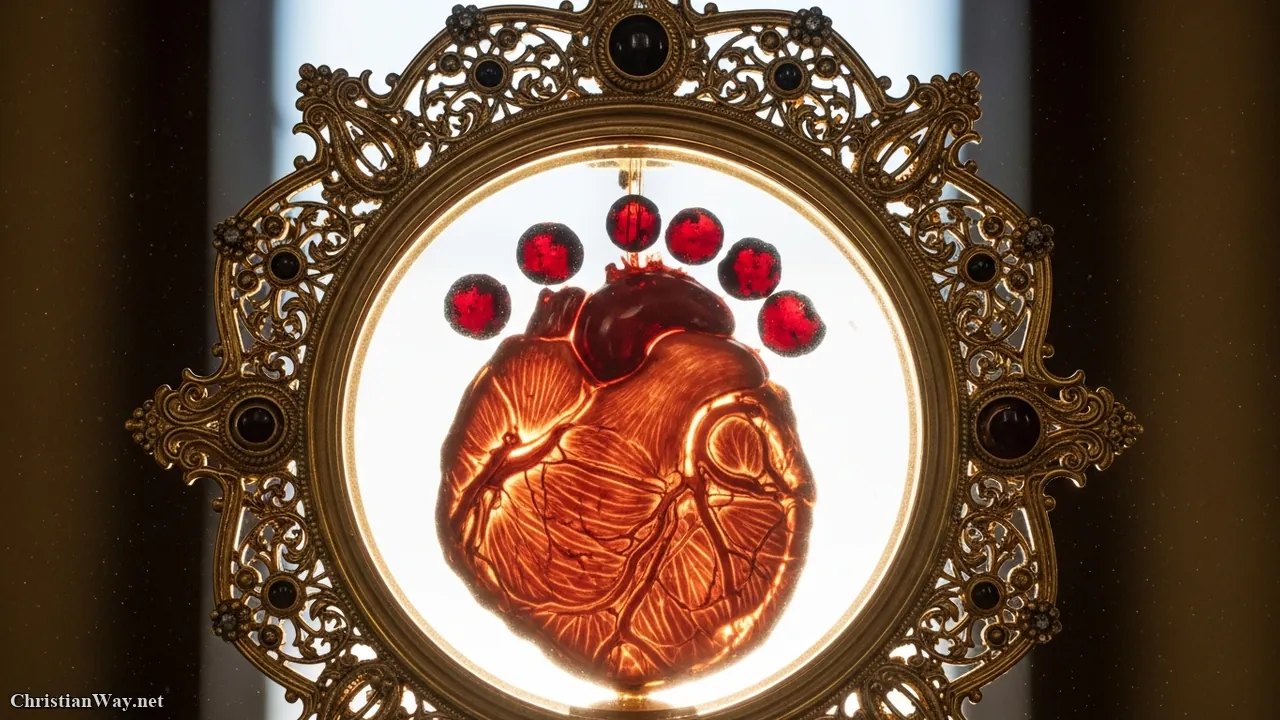
The Scene: In the 8th century, a Basilian monk struggled with doubt regarding the True Presence of Christ in the Eucharist. As he celebrated Mass, the host turned to living Flesh and the wine to visible Blood before his eyes. Today, visitors can stand inches away from the monstrance. Scientific studies in the 1970s confirmed the flesh is human cardiac tissue (myocardium) and the blood is type AB—the same found on the Shroud of Turin.
The Theology: This is the miracle of Transubstantiation made visible. Usually, the “accidents” (appearance) of bread and wine remain, but here, the veil is lifted. It is a direct answer to human doubt. The heart tissue signifies that the Eucharist is truly the Sacred Heart of Jesus, given for the life of the world.
The Application: We all face moments of doubt. “Is God really here?” “Is this just bread?” Lanciano is a gentle rebuke to our skepticism and a loving reassurance. When you next receive Communion, remember that you are receiving the very Heart of God. Let this miracle rekindle your awe at the Mass.
Spiritual Highlights:
- Science: The blood proteins are preserved as if fresh, despite being 1,200 years old.
- Scripture: “My flesh is true food, and my blood is true drink.” (John 6:55)
Top 4. Sanctuary of the Holy House (Loreto, Italy)
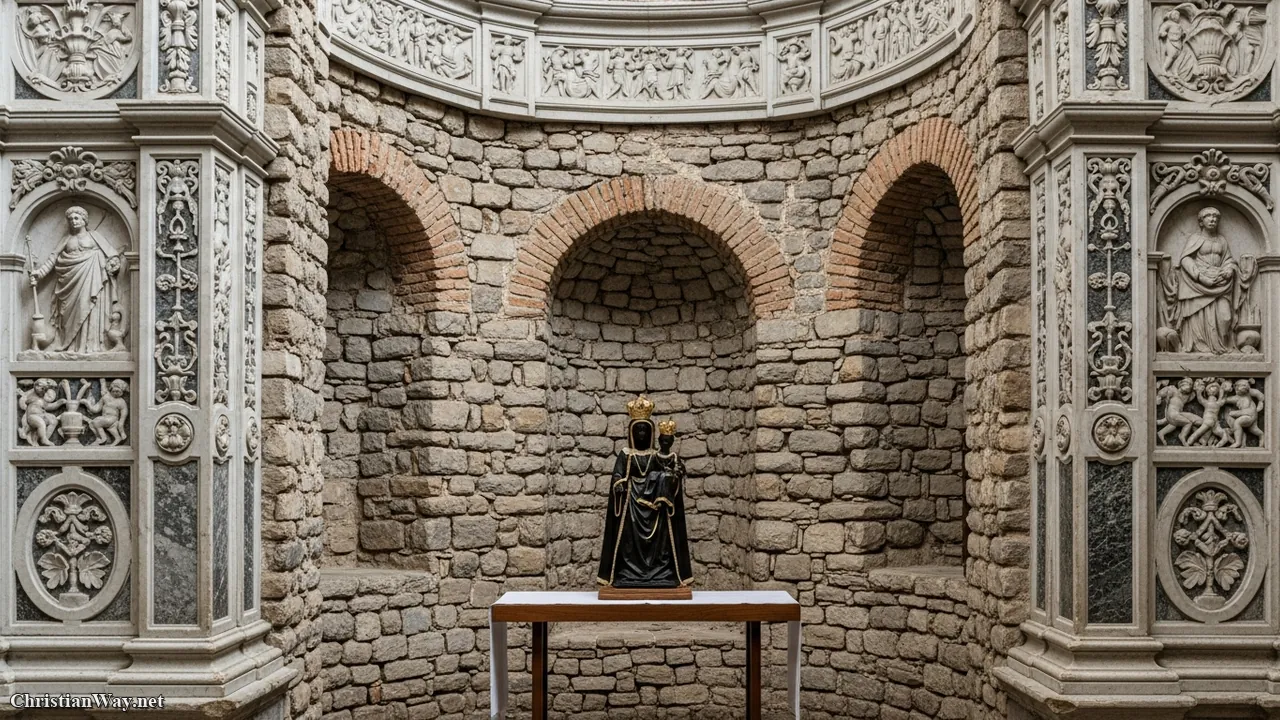
The Scene: Inside a massive basilica stands a small, humble structure: three stone walls. These are believed to be the walls of Mary’s house in Nazareth, where the Annunciation took place. Tradition and historical investigations suggest the stones were transported (by angels or, historically, by the celestial “Angeli” family of crusaders) from the Holy Land to Italy in 1294 to save them from destruction. The very stones echo with the “Fiat” that changed history.
The Theology: Loreto is the shrine of the Incarnation. It is about the domesticity of God. Jesus didn’t just appear as a man; he lived in a house, obeyed parents, and ate at a table. This “flying house” grounds our faith in the concrete reality of the Holy Family’s daily life.
The Application: This sanctuary sanctifies our own homes. It reminds us that our kitchens and living rooms are places of holiness. You don’t need to be in a monastery to find God; you can find Him in the washing of dishes and the raising of children, just as He was present within these three walls.
Spiritual Highlights:
- Graffiti: Ancient Judeo-Christian graffiti found on the stones matches that of Nazareth.
- Scripture: “The Word became flesh and made his dwelling among us.” (John 1:14)
Top 3. Sanctuary of Our Lady of Fátima (Portugal)
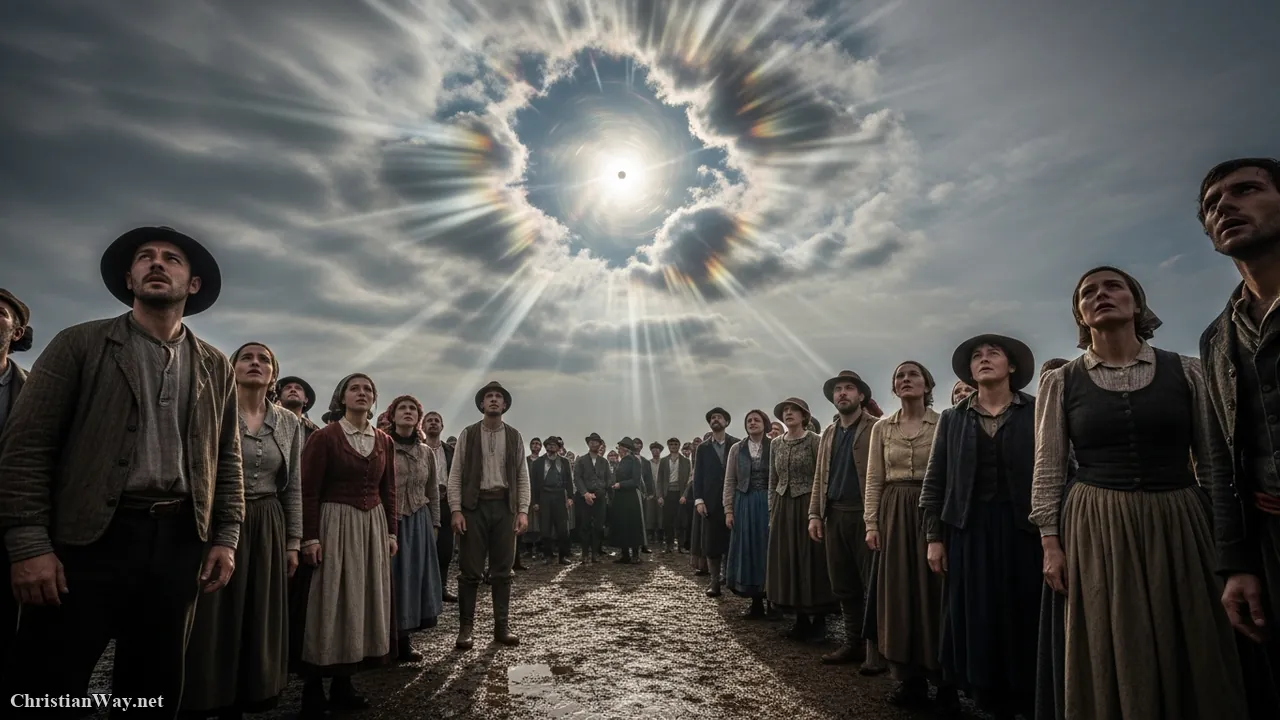
The Scene: On October 13, 1917, 70,000 people stood in the pouring rain in a muddy field. They were believers and skeptics, journalists and peasants. Suddenly, the clouds parted, and the sun appeared as a spinning disk of opaque silver. It “danced” in the sky and plummeted toward the earth, drying the mud and the people’s clothes instantly. This “Miracle of the Sun” was God’s signature on the urgent message of prayer and penance given to three shepherd children.
The Theology: Fátima is prophetic. It is a call to conversion in the face of modern atheism and war. The sun, the source of life for the earth, obeying the command of the Creator, demonstrates God’s absolute sovereignty over nature and history. It is a reminder that the “woman clothed with the sun” (Revelation 12) is our refuge.
The Application: The message of Fátima is as relevant today as it was in 1917. We live in anxious times. Our Lady offers a simple plan: pray the Rosary and offer sacrifices for sinners. It is a call to spiritual activism. Do not despair at the state of the world; instead, take up your beads.
Spiritual Highlights:
- Witnesses: The event was reported by secular newspapers like O Século.
- Scripture: “A great sign appeared in heaven: a woman clothed with the sun.” (Revelation 12:1)
Top 2. Sanctuary of Our Lady of Lourdes (France)
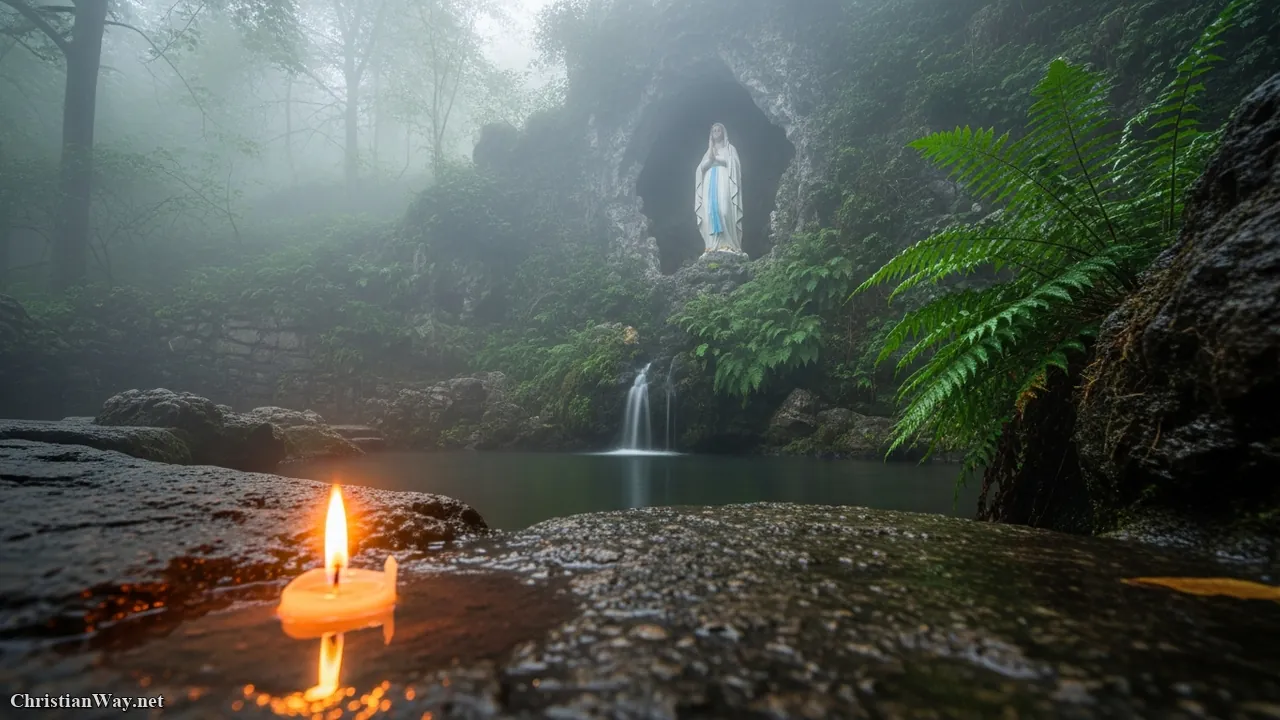
The Scene: A damp, trash-filled grotto called Massabielle. Here, in 1858, the Virgin Mary appeared to a poor, asthmatic girl named Bernadette. She asked Bernadette to dig in the muddy ground. From that mud flowed a spring of clear water that has since healed thousands physically and millions spiritually. The walls of the grotto are worn smooth by the touch of countless pilgrims seeking solace.
The Theology: Lourdes is the theology of the Immaculate Conception (“I am the Immaculate Conception,” the Lady said). It is also the sanctuary of suffering. Here, the sick are the VIPs. The water is a sacramental sign of baptismal grace and healing. God chooses the “foolish” things—mud and a peasant girl—to bring forth living water.
The Application: Lourdes teaches us how to suffer with dignity. Whether we are healed physically or given the strength to carry our cross, the miracle is in the peace found there. Turning to Christian Way, we find that the path to Christ often leads us through our own brokenness, just as the spring came through the mud.
Spiritual Highlights:
- Cures: The Medical Bureau has recognized 70 miraculous cures as scientifically inexplicable.
- Scripture: “Come to me, all you who are weary and burdened.” (Matthew 11:28)
Top 1. Basilica of Our Lady of Guadalupe (Mexico City, Mexico)

The Scene: It is the spiritual epicenter of the Americas. In 1531, a humble indigenous man, Juan Diego, unfolded his cloak (tilma) before the Bishop. He expected only Castilian roses—a miracle in winter—to fall out. But on the cactus-fiber cloth was the image of the Virgin, a mestiza woman, pregnant and wearing the stars of the sky. After 500 years, the fiber, which should have decayed in 20, remains intact, and the eyes of the Virgin reflect the scene of that very moment.
The Theology: This is the miracle of inculturation and evangelization. Mary came not as a foreign conqueror but as a mother, speaking the local language (Nahuatl) and wearing the symbols of the culture. She brought an end to human sacrifice by presenting the True Sacrifice of her Son. It is the perfect synthesis of the Gospel taking root in a new land.
The Application: “Am I not here, who am your Mother?” These words, spoken to Juan Diego, are spoken to you. The Top 1 miracle is not just the cloth, but the tenderness of God. No matter how far you feel from the Church or God, you are under her mantle. She is the Star of the New Evangelization, guiding us always to Jesus.
Spiritual Highlights:
- The Tilma: Maintains a constant temperature of 98.6°F, like a living body.
- Scripture: “My soul magnifies the Lord.” (Luke 1:46)
Reflect and Pray
My dear friends, we have traveled the world, from the mountains of Colombia to the streets of Paris. Yet, the greatest miracle is not found in a tilma, a spinning sun, or even a Eucharistic host. The greatest miracle is the conversion of a human heart. These sanctuaries are merely invitations—open doors waiting for you to walk through.
Do not let these stories remain as mere trivia. Let them challenge you. If God can preserve a cloak for five centuries, can He not preserve your soul? If He can turn the sun in the sky, can He not turn your sorrow into joy? I encourage you to pick one of these sites today—perhaps the one that touched you most deeply—and offer a simple prayer. Ask the Lord to reveal His miraculous love in your own ordinary life.
Would you like me to help you find a specific prayer or novena associated with one of these holy sites to deepen your devotion?
— Fr. John Matthew, for Christian Way