Dear friends in Christ,
There are seasons in life when the human heart longs not only for personal faith, but for a people with whom it can pray, grieve, rejoice, serve, and hope. A person may believe in God alone in a quiet room, and God surely meets us in that quietness. Yet the Christian life has never been intended as a lonely road. From the beginning, Jesus called disciples by name, gathered them around Himself, taught them to pray, shared bread with them, and sent them into the world together. The faith of Christ creates a fellowship.
The Anglican Communion is one expression of that fellowship. It is a worldwide family of churches that seeks to hold together a love for Holy Scripture, the faith confessed in the ancient creeds, the sacramental life of the Church, and a reverent pattern of worship shaped through generations. It is not held together by the claim that every Anglican in every place thinks alike. Nor is it a worldwide institution in which one central office directs every local church. Rather, it is a communion: a family of churches joined by history, prayer, shared faith, mutual care, and a desire to remain turned toward Jesus Christ.
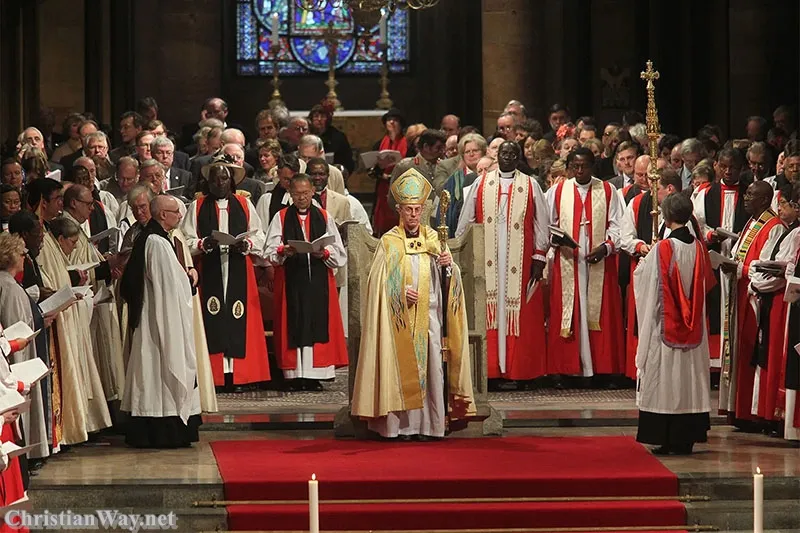
For many people, the word Anglican brings to mind England, Canterbury, choirs, ancient prayers, and the Book of Common Prayer. These are real and beloved parts of Anglican heritage. But the Anglican Communion is far wider than one country or one style of worship. It includes churches throughout Africa, Asia, the Americas, Europe, the Pacific, and many other regions. In homes, chapels, village churches, crowded cities, cathedrals, schools, hospitals, and places of quiet service, Anglicans seek to worship God and bear witness to the Gospel.
To understand the Anglican Communion well, we must look beyond stereotypes. It is neither simply a halfway place between other Christian traditions nor merely an inheritance from a particular nation. At its best, Anglican life is a patient attempt to receive the fullness of the Christian faith with gratitude: rooted in the ancient Church, shaped by the Reformation, nourished by Scripture and sacrament, and called to serve Christ in a changing world. Its story is a story of beauty and struggle, unity and difference, mission and repentance. Above all, it is a story that invites us to see the Church not as our possession, but as the body of Christ, sustained by His mercy.
A Fellowship Rather Than a Single Worldwide Church
The word communion is important. It speaks of a relationship deeper than cooperation and gentler than control. In Christian language, communion points toward the shared life God desires for His people: a life in which believers belong to Christ and therefore belong, in a real though imperfect way, to one another. When Saint Paul writes, “For we being many are one bread, and one body: for we are all partakers of that one bread” (1 Corinthians 10:17), he reminds the Church that its unity is not a human achievement. It flows from the Lord who gathers His people at His table.
The Anglican Communion is best understood in this light. It is a fellowship of autonomous national and regional churches, often called provinces, that share a historic relationship with the See of Canterbury and recognize one another as part of a larger Anglican family. The Communion’s official account describes this worldwide family as consisting of 42 independent national or regional churches and extending across more than 165 countries. This breadth means that Anglican life cannot be reduced to a single culture, political setting, or social experience. A congregation in a rural African diocese, a parish in Southeast Asia, a church in the Caribbean, and a cathedral in England may look very different, yet they may share the same Scriptures, the same creeds, baptism in the name of the Triune God, and a longing to follow Christ faithfully.
This structure can seem unfamiliar to those who expect every worldwide Christian body to have one central government. The Anglican Communion does not function as a single global denomination ruled from one headquarters. Its member churches govern their own local affairs through their own bishops, synods, clergy, and laity. They respond to the needs and laws of their own places. At the same time, they are called to remember that Christian freedom is never merely private independence. The freedom of one church is meant to be held alongside responsibility for the life, witness, and peace of the whole fellowship.
Communion, Autonomy, and Bonds of Affection
This balance between autonomy and interdependence is one of the Anglican Communion’s distinctive features. It can be beautiful, because it gives room for local churches to pray, serve, and speak the Gospel in ways attentive to their own people. It can also be difficult, because relationship requires patience, listening, and a willingness to remain in conversation when agreement is not easy.
Anglicans have often spoken of “bonds of affection.” The phrase suggests that communion cannot finally be maintained by rules alone. Churches remain connected by prayer, mutual regard, shared worship, common counsel, and the humble recognition that no part of the body of Christ sees everything perfectly. The bonds of affection are not sentimental. They ask something costly of us. They ask us to carry one another’s burdens, to restrain the impulse to dismiss those who differ from us, and to seek truth without abandoning love.
This is not a weak vision of unity. It is a deeply Christian one. Jesus prayed that His followers “all may be one” so that the world might believe that the Father had sent Him (John 17:21). Such unity does not require the erasing of every difference. The Church has always contained different languages, cultures, gifts, and ways of expressing devotion. But it does call believers to recognize one another as persons for whom Christ died. In a divided world, the patient work of communion can become a witness to the reconciling love of God.
Roots in the Ancient Church, Shaped by the Reformation
The Anglican Communion did not appear in history as something entirely new. Its roots reach back into the long Christian presence in the British Isles, where the Gospel was preached, monasteries prayed, bishops served, and generations of believers sought holiness long before the sixteenth century. Anglicanism received this inheritance of the ancient Church: the reading of Scripture, the Apostles’ and Nicene Creeds, the ministry of bishops, the celebration of baptism and the Lord’s Supper, and the conviction that the Church belongs to Christ across time and place.
At the same time, Anglican identity was profoundly shaped by the Reformation in England. The Reformation called Christians again to hear Scripture clearly, to proclaim salvation through the grace of Jesus Christ, and to make worship and teaching accessible to ordinary people. In this movement, English-language liturgy became especially important. Prayers once heard chiefly in Latin began to speak in the language of the people, allowing biblical truth to enter homes, hearts, and daily speech in a fresh way.
Yet Anglicanism has often resisted simple labels. Some people call it Protestant because of its Reformation heritage and its strong emphasis on Scripture and grace. Others see in it a catholic character because it preserves ancient creeds, sacramental worship, and episcopal ministry. In truth, many Anglicans have cherished both dimensions. They have understood themselves as reformed and catholic: reformed in the light of the Gospel, yet connected to the historic faith of the one, holy, catholic, and apostolic Church.
This way of speaking should never become a reason for spiritual pride. No Christian tradition possesses Christ as though He were a private treasure. Every tradition needs repentance, renewal, and deeper obedience to the Lord. Yet Anglicanism offers a particular witness: faith need not choose between ancient roots and living proclamation, between reverence and intelligibility, between the Church’s memory and the Church’s mission. It seeks, however imperfectly, to receive both with gratitude.
Scripture, Creeds, Sacraments, and the Historic Episcopate
One helpful way to understand Anglican faith is through the Chicago-Lambeth Quadrilateral. This statement, first framed in the nineteenth century, names four elements that Anglicans have offered as a basis for visible Christian unity: the Holy Scriptures as containing all things necessary to salvation; the Apostles’ and Nicene Creeds as sufficient statements of Christian faith; the two sacraments ordained by Christ, baptism and the Lord’s Supper; and the historic episcopate, locally adapted to the needs of different peoples and nations. The Quadrilateral was not intended to say that the Christian life is exhausted by four points. Rather, it sought to name a faithful and generous foundation upon which separated Christians might seek deeper unity.
Holy Scripture has a central place in Anglican life. In churches shaped by Anglican prayer, the Bible is not meant to be an occasional decoration for sermons or a book opened only for private inspiration. It is read publicly, prayed through the Psalms, heard in the rhythms of worship, taught to children, preached to congregations, and carried into the decisions of ordinary life. Scripture tells the great story of God’s creation, humanity’s wandering, Israel’s hope, Christ’s saving love, the gift of the Spirit, and the promise of a new creation.
The creeds likewise guard the Church’s memory. When Christians confess, “I believe in God the Father Almighty,” or proclaim faith in Jesus Christ and the Holy Spirit, they are not merely repeating ancient formulas. They are joining their voices with generations of believers who have stood in joy, suffering, persecution, uncertainty, and hope. The creeds remind us that faith is larger than our present opinions. They root us in the mystery of the Triune God and in the saving work of Christ.
Baptism and Holy Communion hold a special place because they are gifts given by Christ to His Church. In baptism, believers are welcomed into the body of Christ, marked by grace, and called to live as those who have died and risen with the Lord. In Holy Communion, the Church remembers Christ’s sacrifice, gives thanks for His mercy, and receives spiritual nourishment for its journey. Anglicans may use different language to express the mystery of Christ’s presence in the Eucharist, but the heart of the meal remains clear: Jesus gives Himself for the life of the world, and His people are called to receive Him in faith and love.
The historic episcopate is also part of Anglican self-understanding. Bishops are called to be pastors, teachers, guardians of the faith, and visible servants of unity within the Church. Their ministry is not meant to be a form of privilege or distance from the people. At its best, it is a ministry of service after the pattern of Christ, who washed His disciples’ feet. A bishop points beyond himself or herself to the Chief Shepherd, Jesus Christ, whose authority is always expressed in truth, humility, and love.
Prayer That Forms a People
One of the gifts most often associated with Anglican tradition is its life of prayer. The Book of Common Prayer, in its many forms and local adaptations, has shaped the worship of Anglicans for centuries. Its language has helped people pray when they did not know how to pray. It has given words for confession, thanksgiving, grief, marriage, baptism, burial, and the daily turning of the heart toward God.
There is a quiet wisdom in shared prayer. When we pray only with words of our own making, we can sometimes become trapped inside our own moods and concerns. But when we receive prayers formed by Scripture and carried by the faith of the Church, we are given language larger than ourselves. We learn to confess even when we feel defensive. We learn to give thanks even when life is difficult. We learn to intercede for the world even when our own needs feel urgent.
Anglican worship has often been described as both ordered and open. There is an order that protects worship from becoming merely a performance of personality. There is also room for local expression, music, silence, preaching, and the movement of the Spirit among the people. In many Anglican settings, the rhythm of worship follows the seasons of the Christian year: Advent’s longing, Christmas joy, Lenten repentance, Easter hope, Pentecost’s fire, and the ordinary days in which disciples learn to remain faithful.
The Church’s prayer does not remove believers from the world. It sends them back into the world with clearer hearts. A person who has prayed for peace cannot easily remain indifferent to violence. A person who has confessed sin cannot easily cherish resentment. A person who has received the Eucharist cannot forget that Christ’s love was given for the hungry, the wounded, and the stranger. Worship becomes real when it shapes the way we live after the final hymn has ended.
A Global Communion Held Together in Conversation and Prayer
The worldwide nature of the Anglican Communion is both a gift and a calling. The Communion brings together churches with different histories, economies, languages, social pressures, and patterns of ministry. This diversity can reveal the many-sided beauty of the body of Christ. It can also bring real tensions, because Christians do not face the same questions in the same way in every part of the world.
For this reason, the Communion has developed several “Instruments of Communion” to encourage consultation, fellowship, and shared discernment. These are the Archbishop of Canterbury, the Lambeth Conference, the Primates’ Meeting, and the Anglican Consultative Council. They are not four layers of centralized government. Rather, they are means by which churches can meet, pray, listen, deliberate, and strengthen their common life. The official Anglican Communion describes these instruments as serving unity and collaboration; the Lambeth Conference, first convened in 1867, gathers Anglican bishops from around the world for prayer and shared reflection.
The Archbishop of Canterbury is often misunderstood. The Archbishop is not a pope for Anglicans and does not govern every Anglican church around the world. Instead, the office serves as a personal focus of unity. The Archbishop convenes key gatherings and offers pastoral leadership among the churches, seeking to strengthen what Anglicans call the bonds of affection. The role is one of service: calling people together, encouraging prayer, and helping the Communion face its responsibilities with courage and humility.
Listening Across Distance
The Lambeth Conference gathers bishops from many parts of the world, traditionally at intervals of about a decade. The Primates’ Meeting brings together senior bishops from the member churches. The Anglican Consultative Council includes bishops, clergy, and laypeople, reminding the Communion that the Church’s mission is not carried only by ordained leaders. These gatherings can never solve every difficulty. But they make visible an important conviction: when matters affect the whole body, the body should not be silent.
Listening is one of the spiritual disciplines most needed in the Church today. It is easy to listen only for the moment when we may answer. It is harder to listen in a way that allows another person’s experience, pain, and faith to challenge our assumptions. A global communion asks Anglicans to hear brothers and sisters whose daily lives may be very different from their own. It asks wealthy churches to hear churches living under poverty or persecution. It asks churches in secure places to hear churches facing war, displacement, or religious hostility. It asks every church to remember that Christ’s body suffers wherever any member suffers.
This listening does not mean that truth no longer matters. Christian unity is never built by ignoring the Gospel or pretending that serious differences are insignificant. But truth must be sought with the character of Christ. The One who said, “I am the way, the truth, and the life” (John 14:6) also knelt to wash the feet of His disciples. The Church is most faithful when it speaks truth without contempt and listens without surrendering its love.
Mission: Serving Christ in a Hurting World
The Anglican Communion is not called merely to preserve a heritage. It is called to share in the mission of God. The Church exists because God loves the world. Christ sends His disciples not to hide from the world’s pain, but to carry His good news into it.
Anglicans often speak of the Five Marks of Mission: to proclaim the good news of the Kingdom; to teach, baptize, and nurture new believers; to respond to human need by loving service; to transform unjust structures of society and challenge violence; and to safeguard the integrity of creation and renew the life of the earth. These marks hold together word and deed, evangelism and compassion, personal faith and public responsibility. They remind the Church that the Gospel speaks to the whole person and to the whole of God’s world.
To proclaim Christ is not simply to win an argument. It is to bear witness to the One who forgives sins, heals the brokenhearted, restores the outcast, and overcomes death. To teach the faith is not simply to pass on information. It is to help people become disciples whose minds, habits, relationships, and hopes are gradually formed by Jesus.
To serve the poor and suffering is not an optional addition to the Christian life. Jesus Himself said, “Inasmuch as ye have done it unto one of the least of these my brethren, ye have done it unto me” (Matthew 25:40). Anglican churches around the world are called to respond through education, medical care, relief work, peacebuilding, care for refugees, advocacy for justice, and quiet acts of neighborly love. No church fulfills this mission perfectly. Yet the call remains clear: Christ meets us in the vulnerable, and our love for Him must become visible in the way we treat them.
Care for creation also belongs to this mission. The earth is not merely raw material for human desire. It is God’s good creation, entrusted to human care. When rivers are poisoned, forests destroyed, farms made barren, or communities left vulnerable by environmental harm, Christian love cannot look away. To treasure creation is to recognize that the world belongs to God and that future generations are our neighbors too.
Unity, Difference, and the Courage to Remain in Love
The Anglican Communion has known real disagreements. These disagreements involve theology, biblical interpretation, human sexuality, gender, authority, culture, and the nature of the Church itself. It would not be honest to speak of global Anglican life as though such differences did not exist. They are painful, and at times they have strained relationships deeply.
Yet there is a spiritual question beneath every disagreement: will Christians treat one another as enemies, or will they remember that they stand under the judgment and mercy of the same Lord? This does not mean that convictions should be softened until they mean nothing. Real love is not indifferent to truth. But neither is truth served by mockery, hatred, or the desire to humiliate.
In the Anglican tradition, there has often been a hope that Christians can remain in prayerful conversation even when unity is difficult. Such hope is not naïve. It can be costly. It requires repentance for our own blind spots, patience with those whose lives differ from ours, and courage to speak honestly without closing the door to grace.
The Church is not healed by pretending that pain does not exist. It is healed when people bring pain before Christ. He alone can create a deeper communion than human agreement can manufacture. At the cross, Christ carried the sin that divides humanity. In His resurrection, He created a people who are called to forgive, to seek reconciliation, and to keep believing that God’s mercy is stronger than our failure.
Anglican Faith in Ordinary Life
For many Anglicans, faith is not carried only in large gatherings or theological debates. It is carried in the ordinary days of life. It is found in the mother whispering a prayer before her children wake. It is found in the elderly man who opens the Psalms when loneliness comes. It is found in the student who chooses honesty under pressure, the nurse who treats every patient with dignity, the worker who refuses corruption, and the neighbor who brings food to a grieving family.
The daily offices of Morning Prayer and Evening Prayer offer a way to place ordinary time in the presence of God. Morning prayer teaches the heart to begin the day with gratitude and attention. Evening prayer teaches the heart to surrender the day, its joys and failures, back into God’s hands. Such habits do not make life free from trouble. They make room for grace within trouble.
The Anglican spiritual life also invites a certain spaciousness. It asks believers to read Scripture patiently, to keep silence when words are not enough, to pray the Psalms even when their feelings do not match the Psalm’s emotions, and to return again and again to the table of Christ. This is not a spirituality of escape. It is a spirituality that makes us more present: more present to God, more present to our neighbors, and more honest about the world as it is.
A parish church, at its best, becomes a small school of love. There, children learn that they are precious to God. There, young people are invited to ask questions without shame. There, families receive help in seasons of stress. There, people mourn their dead and remember the resurrection. There, strangers are welcomed. There, the lonely find a name and a place. There, ordinary believers discover that holiness often grows not through dramatic achievements, but through daily faithfulness.
The Anglican Communion and the Wider Church of Christ
Anglican identity should never become an excuse for separation from other Christians. The Anglican Communion has often understood itself as called to seek the visible unity of the whole Church. The Chicago-Lambeth Quadrilateral itself was framed with Christian reunion in view. This ecumenical longing matters because Christ has only one body, even though that body is visibly divided in history.
Anglicans share deep bonds with Roman Catholics, Eastern Orthodox Christians, Lutherans, Methodists, Reformed Christians, Baptists, Pentecostals, Evangelicals, and many others. There are important differences among these traditions, and genuine unity requires honesty about them. But there is also much that Christians share: the confession that Jesus Christ is Lord, the reading of Scripture, the worship of the Triune God, the call to holiness, and the command to love.
The world is often quick to notice Christian divisions. It sees our arguments and our failures. Therefore, every act of friendship, service, and prayer among Christians becomes a quiet testimony to the Gospel. When believers from different traditions feed the hungry together, defend the vulnerable together, pray for peace together, and speak of Christ with humility, they reveal that the unity Jesus prayed for is not merely an idea. It can be lived.
The Anglican Communion has a particular calling to this work because its own history has taught it the complexity of holding together ancient tradition, reforming conviction, local diversity, and global fellowship. This calling will always require humility. It will require Anglicans to receive gifts from other Christians and to confess where they have fallen short. But it also invites them to keep walking toward the day when the Church’s visible life more fully reflects the unity already given in Christ.
Reflect and Pray
Dear friend, the Anglican Communion is not finally about a name, a nation, a style of architecture, or a particular way of singing. At its deepest, it is about people who seek to belong to Jesus Christ and to one another in Him. It is about a fellowship held together by Scripture, prayer, sacrament, pastoral care, mission, and a longing for the unity of God’s people.
Perhaps you have known Anglican worship as a place of beauty and peace. Perhaps you are only beginning to understand this tradition. Perhaps you have been disappointed by the failures of churches or uncertain about your own place among Christians. Wherever you are, remember this: Christ is not distant from those who seek Him. He gathers His people with patience. He meets them in their weakness. He teaches them to pray, to serve, to forgive, and to hope.
Let us pray:
Lord Jesus Christ, You are the true Shepherd of Your people and the source of every holy communion. Bless the Anglican Communion and renew all Christians in faith, humility, and love. Give Your Church courage to proclaim Your Gospel, wisdom to seek justice, tenderness to serve the suffering, and patience to pursue unity. Teach us to hold fast to Your truth without losing the gentleness of Your heart. May Your peace dwell within us, and may Your grace make us faithful witnesses of Your love in the world. Amen.
— Fr. John Matthew