Dear friends, peace be with you.
When we speak of the “church,” we are, of course, speaking of the People of God—the living stones built upon the foundation of the Apostles. Yet, throughout history, the human heart has longed to build physical spaces that mirror the vastness of the Divine. We build high ceilings to draw our eyes upward; we stretch naves to remind us of the long pilgrimage of faith; we craft stained glass to catechize with light.
In compiling this list of the largest Catholic cathedrals in the world, we must make a gentle but important distinction that often confuses the faithful and the seeker alike. You will notice that the magnificent St. Peter’s in the Vatican is missing. Why? Because St. Peter’s is a Basilica, a shrine built over the tomb of the Apostle, but it is not a Cathedral. A Cathedral is specifically the seat (cathedra) of a Bishop—the mother church of a diocese. It is where the local Shepherd presides, making these buildings not just monuments of size, but centers of pastoral authority and care.
As we journey from the Neo-Gothic spires of the Americas to the marble mountains of Europe, let us not just admire the architecture. Let us look for the theology written in stone. These vast spaces were not built for empty glory, but to hold the prayers of millions, to offer a foretaste of the Heavenly Jerusalem, and to remind us that God’s mercy is wide enough to hold us all.
Come, let us walk through these hallowed doors together.
Table of The Top 10 Largest Catholic Cathedrals in the World
| Rank | Cathedral Name | Location | Approx. Area / Capacity | Spiritual Significance |
|---|---|---|---|---|
| 1 | Cathedral Basilica of Our Lady Aparecida | Aparecida, Brazil | ~12,000 m² (Interior) | The spiritual heart of Brazil; Marian devotion. |
| 2 | Milan Cathedral (Il Duomo) | Milan, Italy | ~11,700 m² | A “marble forest” dedicated to Mary. |
| 3 | Seville Cathedral | Seville, Spain | ~11,500 m² | The triumph of Christendom; Gothic grandeur. |
| 4 | Florence Cathedral (Il Duomo) | Florence, Italy | ~8,300 m² | Renaissance ingenuity praising the Creator. |
| 5 | Metropolitan Cathedral of Rio | Rio de Janeiro, Brazil | ~8,000 m² | Modern “Mayan” style; God in the city. |
| 6 | Cologne Cathedral | Cologne, Germany | ~7,900 m² | Reliquary of the Magi; endurance of faith. |
| 7 | Metropolitan Cathedral of Mexico City | Mexico City, Mexico | ~7,000 m² | Built on ruins; the faith of the Americas. |
| 8 | Amiens Cathedral | Amiens, France | ~7,700 m² | The perfection of French Gothic light. |
| 9 | Cathedral of La Plata | La Plata, Argentina | ~6,900 m² | Neo-Gothic majesty in the Southern Hemisphere. |
| 10 | Cathedral of Our Lady of the Angels | Los Angeles, USA | ~5,600 m² | A modern refuge of light and community. |
Top 10. Cathedral of Our Lady of the Angels (Los Angeles, USA)
We begin our pilgrimage in the City of Angels. Completed recently in 2002, this cathedral is a striking departure from the traditional European forms we are used to. Designed by Rafael Moneo, it is built of adobe-colored concrete, rooting it deeply in the Californian landscape and the Spanish heritage of the region. It does not rely on right angles; the walls shift and turn, much like the unpredictable journey of faith itself.
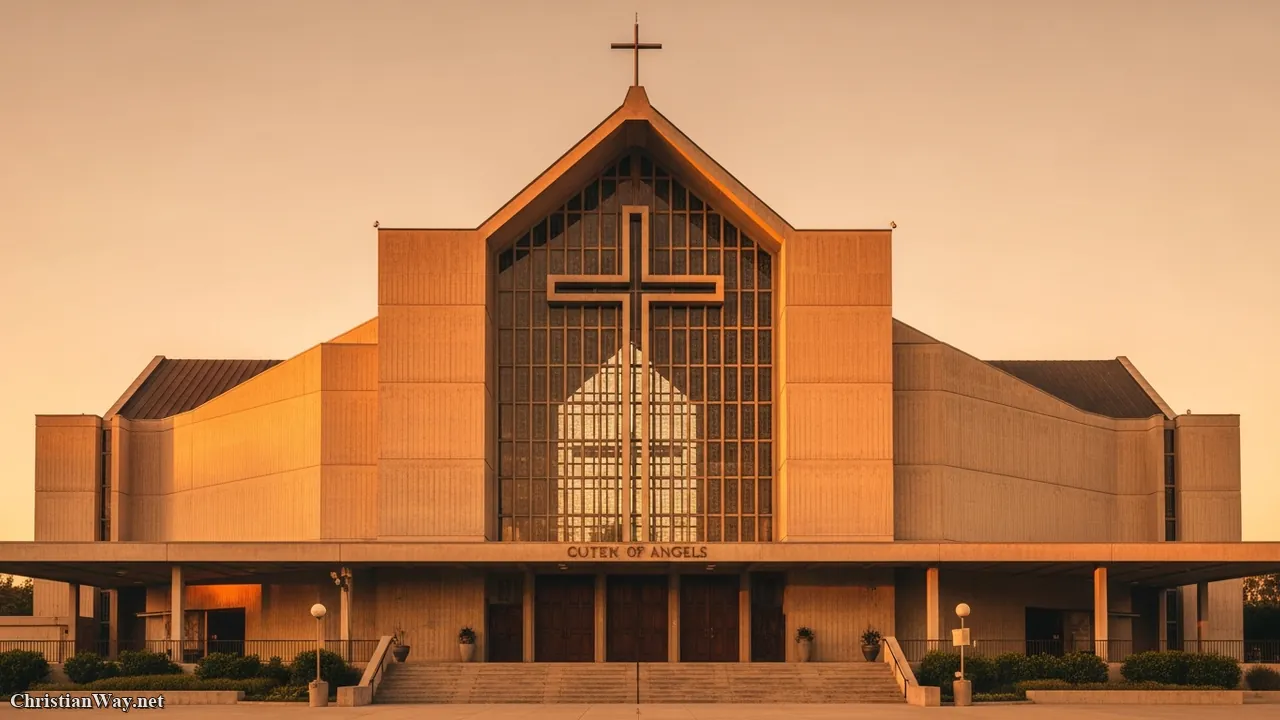
Theologically, this cathedral is a masterpiece of light. The windows do not feature pictorial stained glass but thin panels of Spanish alabaster. This diffuses the harsh sunlight into a soft, warm, golden glow that fills the sanctuary. It reminds the weary urban soul that God is not a harsh spotlight exposing our flaws, but a warm embrace of grace. The tapestries lining the nave depict the Communion of Saints—not looking down on us, but walking beside us, facing the Altar.
Pastoral Note: In a modern world obsessed with individualism, this space forces us to look forward, together. It challenges us to see the Church not as a museum of the past, but as a living body in the present.
Spiritual Highlights:
- The Alabaster Windows: Symbolizing the light of Christ filtering through our humanity.
- The Tapestries: Depicting ordinary people as saints, reminding us of our own call to holiness.
Top 9. Cathedral of La Plata (La Plata, Argentina)
Journeying south to Argentina, we stand before the immaculate red brick facade of the Cathedral of La Plata. Inspired by the great cathedrals of Amiens and Cologne, this Neo-Gothic giant rises from the pampas like a prayer made visible. Its foundation stone was laid in 1884, but it was not fully completed until late in the 20th century, a testament to the patience required in the spiritual life.
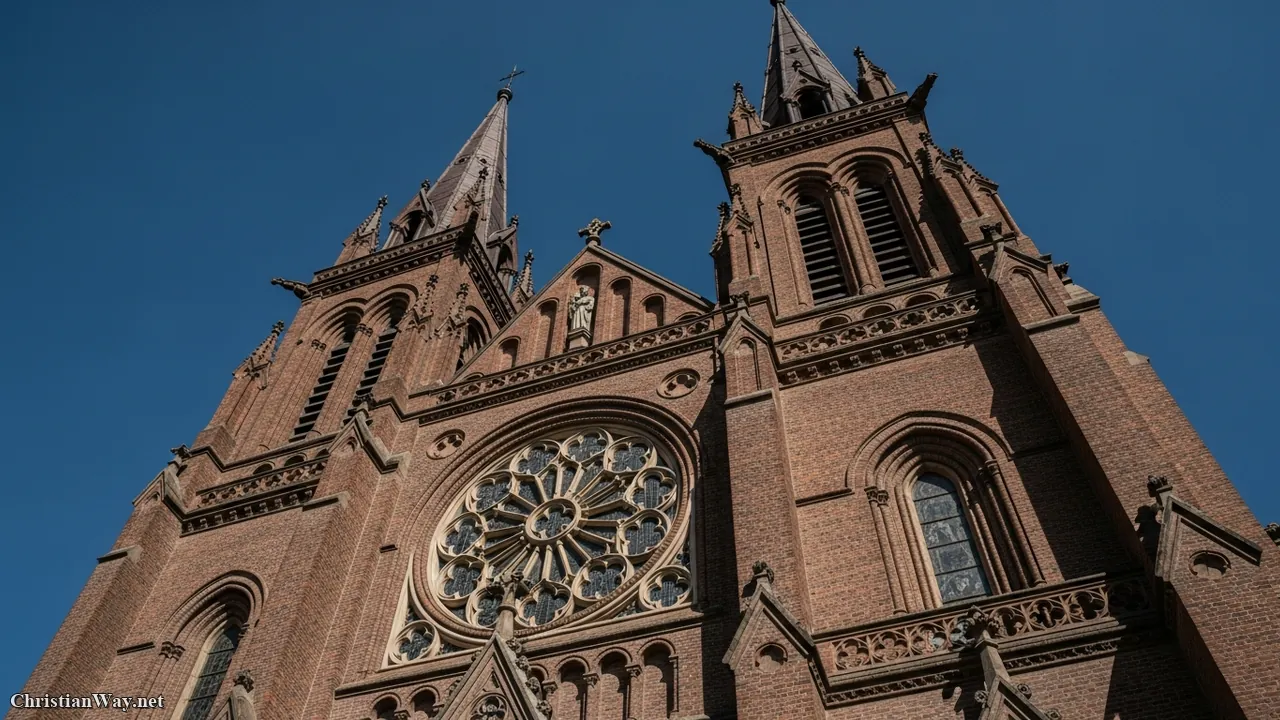
This cathedral is significant as a symbol of the faith deeply rooted in the culture that gave us Pope Francis. The verticality here is breathtaking; the eyes are immediately drawn upward to the vaulted ceilings and the high altar. It speaks to the transcendent nature of God—that He is high above, holy and distinct, yet He chooses to dwell among His people in the Eucharist.
Pastoral Note: The unfinished nature of this cathedral for so many decades serves as a comfort to us. We, too, are unfinished works. God is still building us, brick by brick, into a dwelling place for His Spirit.
Spiritual Highlights:
- Scripture: “He who began a good work in you will carry it on to completion.” (Philippians 1:6)
- The Floor Plan: A massive Latin cross, grounding the city in the sacrifice of Christ.
Top 8. Amiens Cathedral (Amiens, France)
We cross the ocean to France to witness the “Parthenon of Gothic architecture.” Amiens Cathedral is the largest cathedral in France by volume, spacious enough to fit two Notre-Dame de Paris cathedrals inside it. Built with astonishing speed in the 13th century, it represents the absolute peak of the High Gothic style, where walls seem to dissolve into curtains of glass.
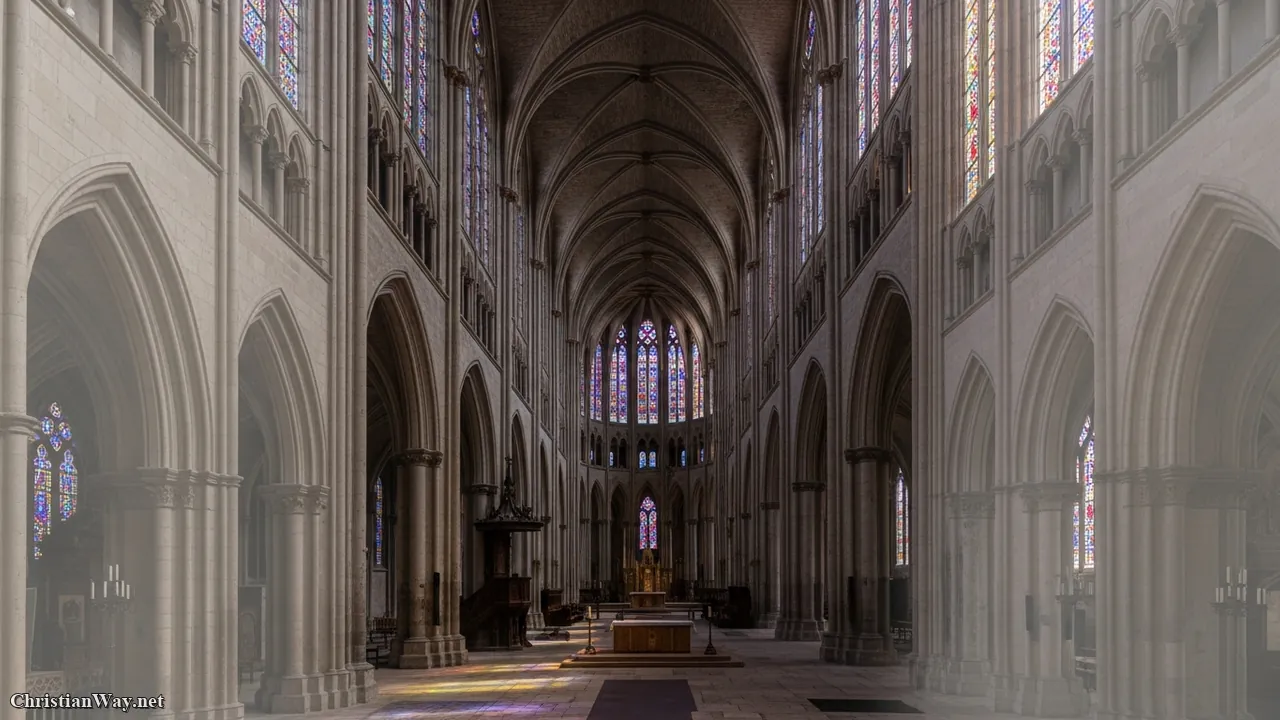
The theology of Amiens is one of illumination. The medieval builders wanted to bring the light of Heaven down to earth. The height of the nave (over 42 meters) was a daring engineering feat intended to make the worshiper feel small, yet elevated. It is a stone encyclopedia; the facade is covered in hundreds of sculptures teaching Bible stories to a populace that could not read, reminding us that art is often the first evangelist.
Pastoral Note: When you feel hemmed in by the troubles of this world, remember Amiens. It was built to create space—vast, open space—for the soul to breathe. God provides a spacious place for you (Psalm 18:19).
Spiritual Highlights:
- The Weeping Angel: A famous 17th-century sculpture symbolizing the sorrow and comfort of the Divine.
- The Labyrinth: A black and white path on the floor, symbolizing the pilgrimage to Jerusalem and the journey to the center of the soul.
Top 7. Metropolitan Cathedral of Mexico City (Mexico)
Standing atop the ruins of the Aztec Templo Mayor, this cathedral is a complex and imposing testament to the history of the Americas. Constructed over nearly three centuries, it blends Gothic, Baroque, and Neoclassical styles. It is a heavy, grounded structure, having survived sinking soil and earthquakes, much like the resilient faith of the Mexican people.
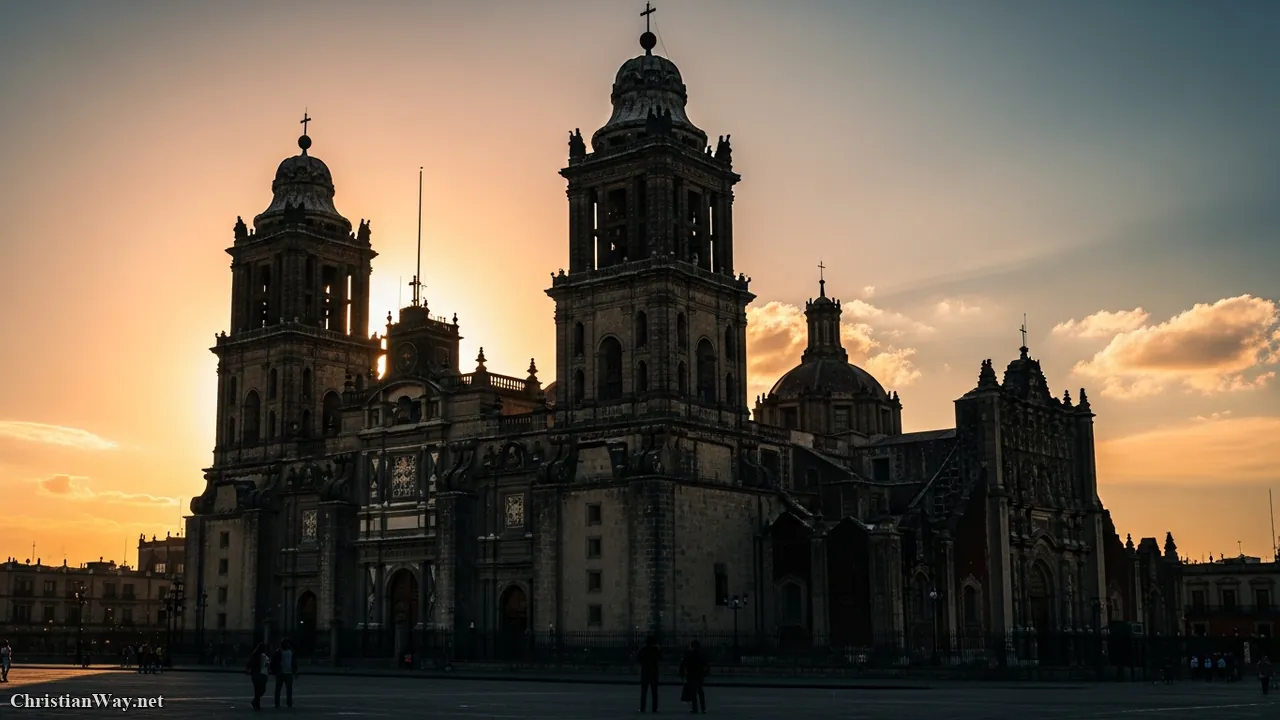
This is not a cathedral of airy lightness, but of gold-laden altars and dark stone—a “Chiaroscuro” of faith. It acknowledges the suffering and the conquest of the past but points toward the synthesis of a new people under the Cross. The Altar of the Kings is a golden explosion of Baroque art, asserting the Kingship of Christ over all earthly powers.
Pastoral Note: This cathedral is slowly sinking into the soft lakebed of Mexico City, yet it stands. It teaches us that even when our foundations feel unstable, the Church—supported by grace—remains. It is a sanctuary for the broken.
Spiritual Highlights:
- The Black Christ (Señor del Veneno): A beloved crucifix that tradition says absorbed poison to save a devotee.
- Ecumenical Spirit: A center for the diverse and vibrant expressions of Latin American Catholicism.
Top 6. Cologne Cathedral (Cologne, Germany)
Few silhouettes are as recognizable as the twin spires of Cologne (Kölner Dom). Construction began in 1248 to house the Relics of the Three Kings (the Magi), making it one of the most important pilgrimage sites in Europe. However, work halted for centuries, leaving a crane on the unfinished tower as a landmark until it was finally completed in 1880.
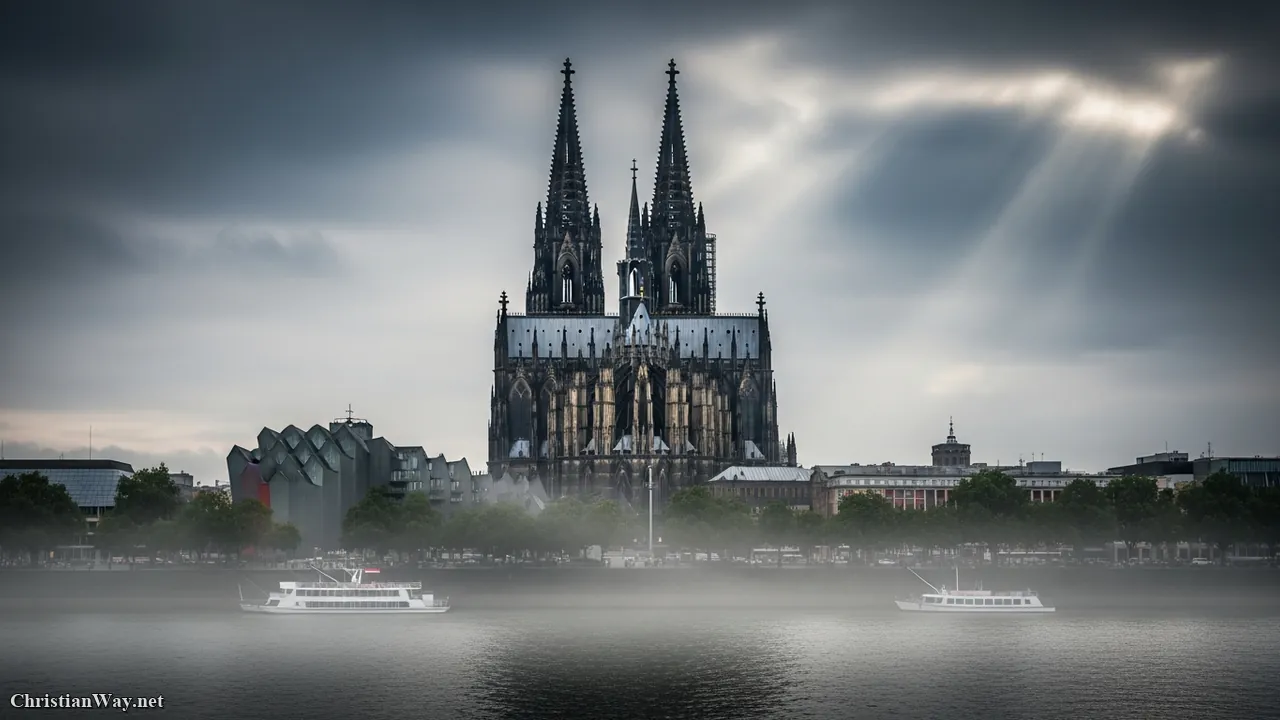
The theology here is one of Epiphany—the manifestation of Christ to the Gentiles. Just as the Magi journeyed from afar, millions still journey here. The cathedral suffered fourteen aerial bomb hits during World War II, standing tall amidst a flattened city. It became a symbol of hope that faith can survive the darkest nights of humanity.
Pastoral Note: If you are feeling “unfinished” or delayed in your spiritual growth, look to Cologne. God’s timing is not ours. What takes centuries to build often lasts the longest.
Spiritual Highlights:
- The Shrine of the Three Kings: A golden sarcophagus believed to hold the remains of the Magi.
- Scripture: “We saw his star when it rose and have come to worship him.” (Matthew 2:2)
Top 5. Metropolitan Cathedral of Rio de Janeiro (Brazil)
We return to Brazil for a structure that challenges every preconceived notion of what a cathedral looks like. The Cathedral of Saint Sebastian in Rio is a massive cone, reminiscent of ancient Mayan pyramids, rising 75 meters into the sky. Completed in 1979, its brutalist concrete exterior gives way to a breathtaking interior.
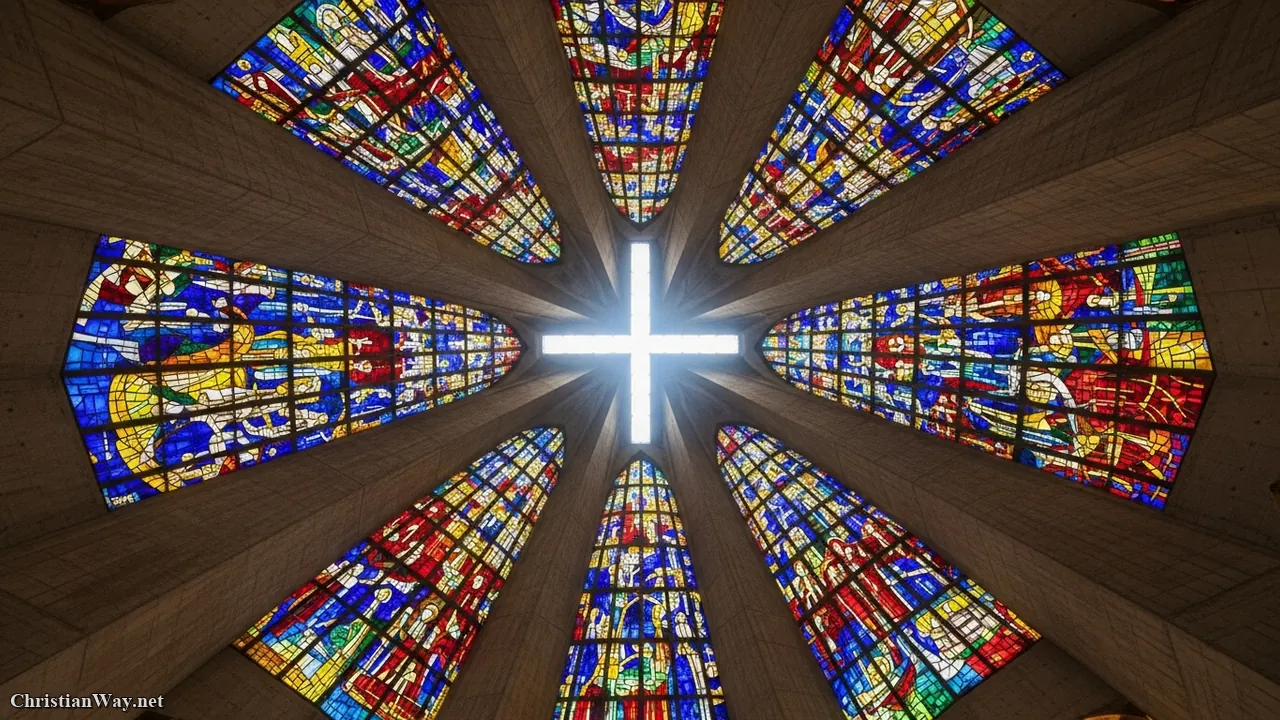
Inside, four colossal stained-glass windows stretch from the floor to the apex of the cone, forming a cross of light at the very top. This architecture speaks of convergence. All lines lead upward to the Cross. It suggests that in the modern, concrete jungle of the city, God is present. The absence of internal columns creates a vast, democratic space where no one is hidden from the altar.
Pastoral Note: Sometimes God appears in forms we do not expect. Do not look for Him only in the “traditional” places; He is present in the modern, the bold, and the new.
Spiritual Highlights:
- The Cross of Light: The transparent cross at the summit connects the church directly to the sky.
- Capacity: Standing room for 20,000 people, symbolizing the wideness of the Church’s embrace.
Top 4. Florence Cathedral (Florence, Italy)
Santa Maria del Fiore, with its iconic red-tiled dome engineered by Brunelleschi, is a hymn to the beauty of the Creator expressed through human reason and art. The exterior is a jewelry box of pink, white, and green marble, while the interior is stark and open, drawing the eye immediately to the fresco of the Last Judgment inside the dome.
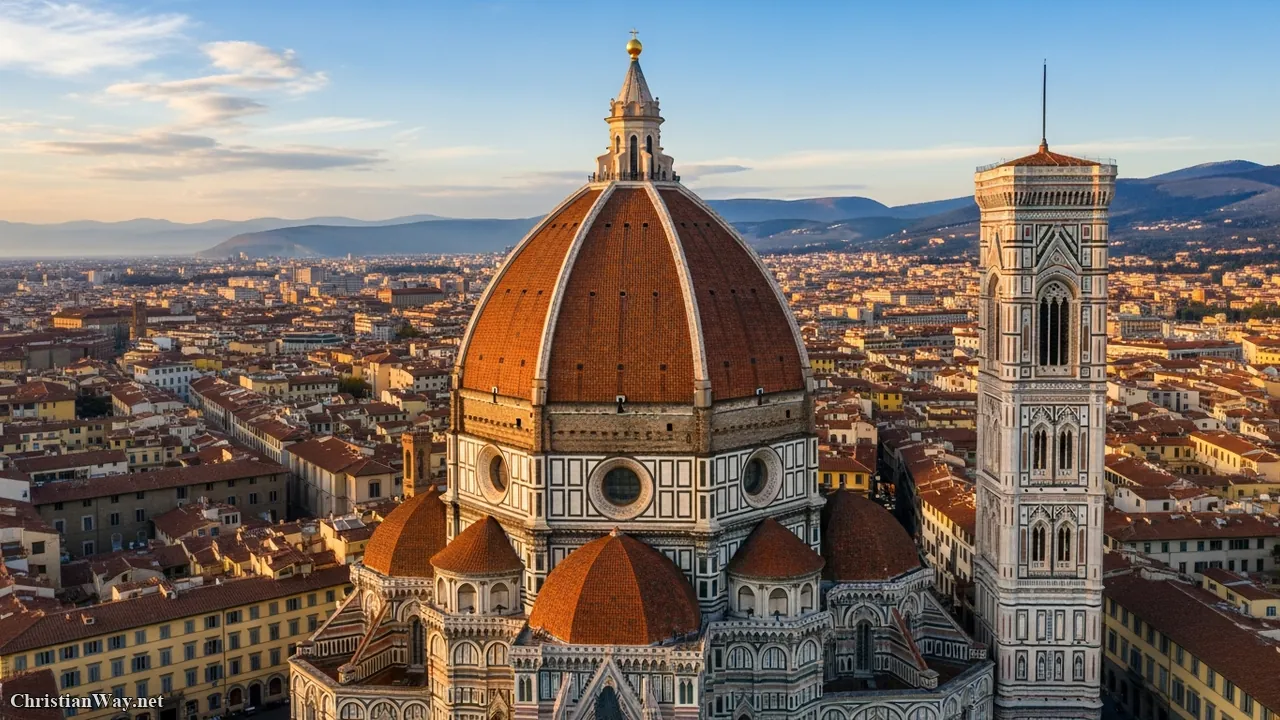
The theology of Florence is Humanism redeemed. It shows that human genius, when submitted to God, can create things of eternal beauty. The massive dome covers a vast octagonal space, representing the “eighth day”—the day of Resurrection and New Creation. It is a place that insists that beauty is a pathway to God (the Via Pulchritudinis).
Pastoral Note: Do not be afraid to use your talents, your mind, and your creativity for God. He gave you these gifts to build His Kingdom, just as Brunelleschi built the dome.
Spiritual Highlights:
- The Dome: A feat of engineering that remains the largest brick dome ever built.
- The Facade: dedicated to the Mother of Christ, the “Flower” of humanity.
Top 3. Seville Cathedral (Seville, Spain)
“Let us build a church so big that those who see it will think us mad.” This was the alleged declaration of the Chapter of Seville in 1401. They succeeded. This mountain of stone is the largest Gothic cathedral in the world. Built on the site of a great mosque (retaining the courtyard and the Giralda tower), it symbolizes the complex history of faith in Spain.
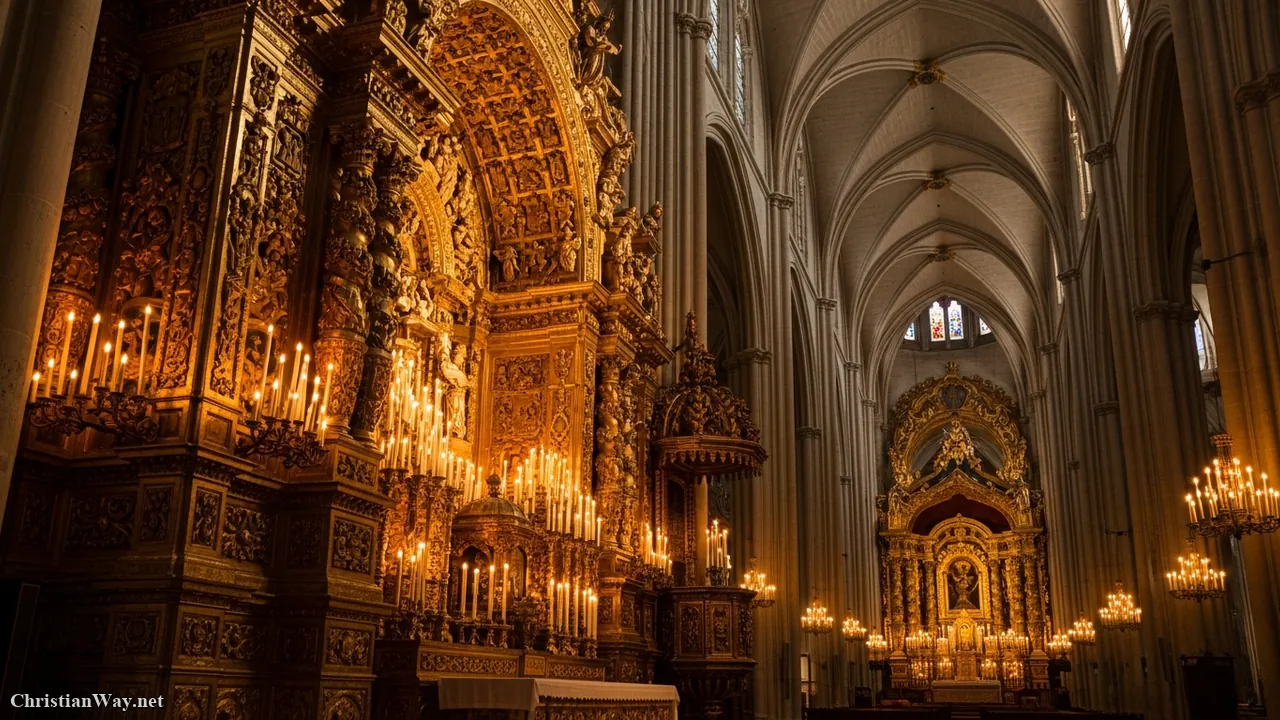
The vastness of Seville Cathedral is overwhelming. The golden main altarpiece (Retablo Mayor) is the life of Christ carved in gold, towering over the congregation. It proclaims the majesty of Christ the King. Yet, it also houses the tomb of Christopher Columbus, reminding us of the spread of the Gospel to the ends of the earth, with all the complexities that history entails.
Pastoral Note: The ambition of Seville reminds us to dream big for God. Our prayers are often too small; our hopes too narrow. God invites us to an expansive faith.
Spiritual Highlights:
- The Retablo Mayor: Considered the largest altarpiece in Christendom.
- La Giralda: The bell tower, formerly a minaret, baptized into Christian service.
Top 2. Milan Cathedral (Milan, Italy)
The Duomo di Milano is dedicated to St. Mary of the Nativity. It is a poem written in marble, adorned with over 3,400 statues and 135 spires. Construction spanned six centuries (1386–1965), meaning generations of stonemasons worked on it knowing they would never see it finished.
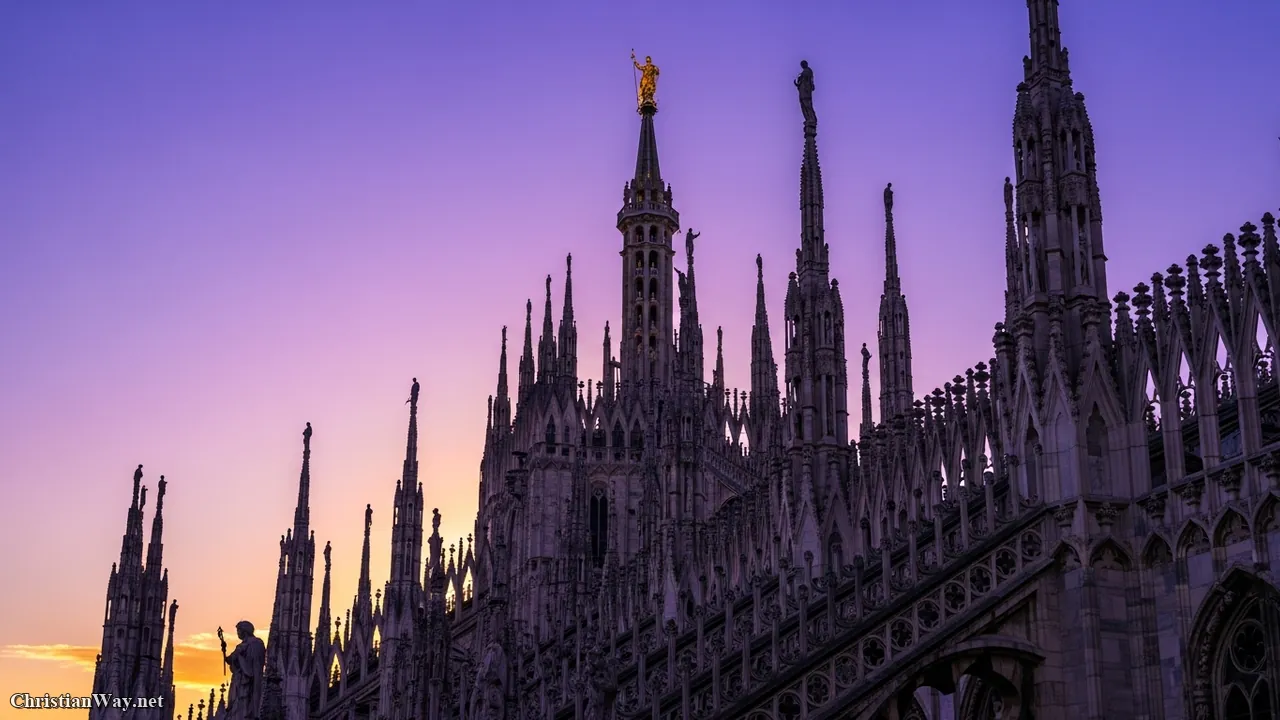
The theology of Milan is intercession. The forest of spires looks like a crowd of saints reaching up to heaven, with the golden statue of Mary (the Madonnina) at the highest point, presenting the city to her Son. It is a Gothic cathedral, but unique in its Italian style—broad, heavy, yet lacy and ethereal. It teaches us that the Church is a “Communion of Saints,” a vast family spanning earth and heaven.
Pastoral Note: The Duomo requires constant cleaning and restoration to keep its marble white. So does the soul. Do not neglect the sacrament of Reconciliation; it is the restoration of your spiritual beauty.
Spiritual Highlights:
- The Roof: Visitors can walk on the roof, amidst the spires, seeing the city from the perspective of the saints.
- The Holy Nail: A relic of the True Cross is suspended above the altar, brought down only once a year.
Top 1. Cathedral Basilica of Our Lady Aparecida (Aparecida, Brazil)
We arrive at the largest cathedral in the world. While St. Peter’s in Rome is a larger basilica, the Cathedral Basilica of the National Shrine of Our Lady Aparecida is the largest Cathedral (seat of an Archbishop) on earth. It is a modern giant, consecrated in 1980 by St. John Paul II, capable of holding 45,000 to 70,000 people within its complex.

The story here is not of wealthy kings, but of three poor fishermen who, in 1717, found a broken clay statue of Mary in their nets. After finding the head and the body, their nets were miraculously filled with fish. This massive cathedral was built to house that tiny, humble statue. The theology is the Magnificat: “He has cast down the mighty and lifted up the lowly.”
The structure is a Greek cross, ensuring that the altar is central. It is a place of noise, life, weeping, and singing—a true home for the People of God. It reminds us that the true greatness of the Church lies not in gold, but in the faith of the poor and the humble.
Pastoral Note: No matter how small or “broken” you feel, like that clay statue, God can build a mighty sanctuary around your life. You are the temple of the Holy Spirit.
Spiritual Highlights:
- The Image: The small terracotta statue of Our Lady of Aparecida.
- The Unity: A place where millions of diverse pilgrims become one family around the table of the Lord.
Reflect and Pray
As we close this list, friends, remember that while these stones will eventually crumble, your soul is eternal. These cathedrals are merely signposts. They are fingers pointing at the moon; let us not focus on the finger and miss the heavenly glory it points to.
Whether you worship in a massive cathedral or a small parish chapel, the miracle is the same: Christ comes down to dwell with us. May your heart be the truest cathedral, vast enough to hold His love and open enough to welcome your neighbor.
— Fr. John Matthew, for Christian Way