Dear friends in Christ,
In every generation, the Church is called to remember something that the world easily forgets: true greatness is not found in being served, but in serving. The world often measures leadership by influence, recognition, wealth, applause, or control. Christ measures it differently. He kneels before His disciples, washes their feet, touches the wounded, welcomes the forgotten, and gives His life upon the cross. In Him, authority is not a throne built for self-glory. It is a burden willingly carried for the good of others.
This is the light in which Catholics are called to understand the Pope. The Pope is often seen through the lens of public attention, world events, ceremonies, travel, difficult decisions, and the immense responsibilities of leading the Catholic Church. Yet beneath all these visible realities lies a simpler and deeper calling. The Pope is first called to be a servant of Jesus Christ, a bishop, a pastor, and a witness to the unity of the Church.
The ancient title, “Servant of the Servants of God,” expresses this vocation with beautiful humility. It reminds the Church that the Pope is not meant to stand above the people of God as though holiness belonged only to him. He is called to serve those who serve Christ: bishops, priests, religious, missionaries, parents, workers, the poor, the sick, the young, the elderly, and every believer trying to remain faithful in the ordinary struggles of life.
For Catholics, the Pope is the Bishop of Rome and the successor of Saint Peter, entrusted with a special ministry of unity and pastoral care. Yet this ministry cannot be understood rightly unless it is placed beneath the authority of Christ Himself. Jesus alone is the true head of the Church. Jesus alone is Savior. Jesus alone is the Good Shepherd who gives His life for the sheep. Every Christian leader, including the Pope, is only a servant of His grace.
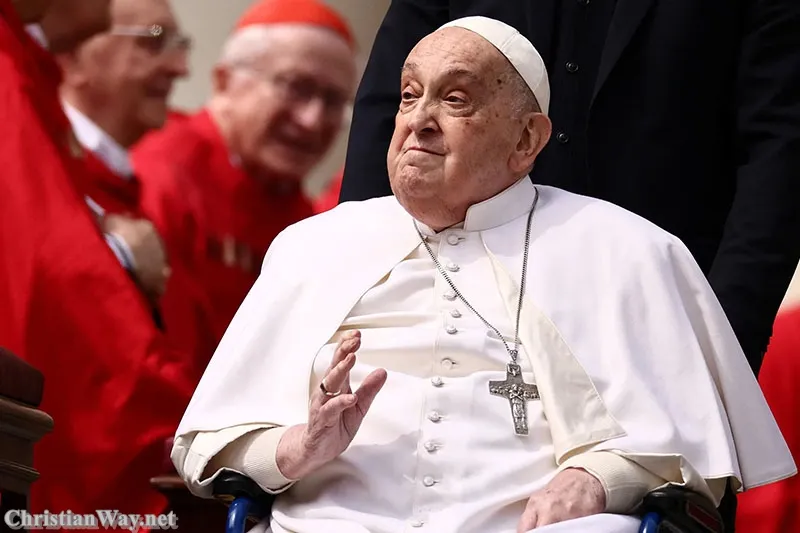
To reflect on The Pope: The Servant of the Servants of God is therefore not simply to think about an office, a title, or a structure within the Church. It is to reflect on the mystery of Christian leadership. It is to ask what it means to guide others without controlling them, to speak truth without losing compassion, to preserve unity without silencing conscience, and to serve the Church while remaining a humble disciple of Christ.
Christ Is the True Shepherd of the Church
Before Christians speak about Peter, bishops, priests, pastors, or the Pope, they must begin with Jesus. The Church does not belong to any human leader. It belongs to Christ.
In the Gospel of John, Jesus says, “I am the good shepherd: the good shepherd giveth his life for the sheep” (John 10:11). These words reveal the heart of all Christian ministry. A shepherd is not someone who seeks admiration from the flock. A shepherd is someone who stays near, protects the vulnerable, searches for the lost, tends the wounded, and remains faithful when the path becomes difficult.
Jesus is the only shepherd who does this perfectly. He knows every human heart. He sees the fears people hide, the wounds they carry, the sins they regret, and the hopes they barely dare to speak aloud. He does not abandon the weak. He does not become impatient with the lost. He does not turn away from those who have failed.
Every form of leadership in the Church must reflect this shepherding love. A bishop is called to serve as a shepherd. A priest is called to serve as a shepherd. Parents, teachers, catechists, and all who guide others in faith are called to serve in the spirit of the Good Shepherd. The Pope, in a particular way, is called to be a visible servant of this unity and care within the Catholic Church.
Yet the Pope is never meant to replace Christ. He points beyond himself. He is called to help people hear the voice of Jesus more clearly, to strengthen faith in times of confusion, to encourage the Church in mercy and mission, and to remind believers that they belong to one body in Christ.
This is why Christian leadership must always remain humble. When leadership becomes detached from prayer, truth, repentance, and service, it can become distorted. But when it remains close to Christ, it can become a channel through which people encounter the love of God.
The Cross Is the Measure of Christian Authority
Jesus gives His disciples a lesson that remains essential for every generation. He says, “Whosoever will be great among you, let him be your minister; and whosoever will be chief among you, let him be your servant” (Matthew 20:26–27).
This is not a small instruction. It overturns the usual human desire for power.
The Pope carries a role of great visibility and responsibility, but the Gospel teaches that this role must be understood through the cross. The Pope is called to lead not by seeking privilege, but by carrying the burdens of the Church. He must pray for those who are suffering, guide those who are confused, encourage those who are discouraged, correct what has gone astray, and remain close to those who feel forgotten.
There are times when the Pope must speak words that are difficult to hear. There are times when he must call the Church back to truth, repentance, and faithfulness. There are also times when he must offer comfort to those who are grieving, frightened, poor, persecuted, or wounded by life.
The authority of the Pope is most beautiful when it looks like the authority of Christ: firm in truth, gentle with the wounded, patient with the searching, and willing to suffer for the good of others.
The Bishop of Rome and the Memory of Saint Peter
Catholics understand the Pope as the Bishop of Rome and the successor of Saint Peter. This belief is rooted in the special role Peter receives in the New Testament.
In the Gospel of Matthew, Jesus says to Peter, “Thou art Peter, and upon this rock I will build my church; and the gates of hell shall not prevail against it” (Matthew 16:18). Jesus then gives Peter the keys of the kingdom, using language that has long been understood by Catholics as a sign of responsibility, service, and spiritual care.
Peter is not chosen because he is perfect. The Gospels make this very clear. He is generous, brave, and devoted, but he is also impulsive. He speaks quickly. He misunderstands Jesus at crucial moments. He promises courage, then denies the Lord three times during the night of the Passion.
Yet Christ does not abandon him.
After the Resurrection, Jesus meets Peter by the shore of Galilee. Three times He asks, “Lovest thou me?” And three times He gives Peter a mission: “Feed my lambs… Feed my sheep” (John 21:15–17).
This is one of the most moving moments in Scripture. Peter’s failure does not become the end of his vocation. His tears, repentance, and renewed love become part of his healing. Jesus does not choose a flawless man to care for His people. He chooses a forgiven man who has learned the depth of mercy.
For Catholics, the Pope stands in this spiritual memory of Peter. He is called to strengthen the Church, care for the flock, guard the faith, and serve the unity of believers. The Pope is not seen as a new Christ or a replacement for Christ. He is a servant entrusted with a difficult responsibility within the Church that Christ founded.
Peter’s Ministry Was a Ministry of Strengthening
Jesus says to Peter, “I have prayed for thee, that thy faith fail not: and when thou art converted, strengthen thy brethren” (Luke 22:32).
These words reveal something important about the Catholic understanding of the papacy. The Pope is called to strengthen the faith of believers. He does this through teaching, pastoral encouragement, prayer, decisions made for the good of the Church, and through his role as a visible sign of communion among Catholics throughout the world.
The Church is made up of many nations, languages, cultures, and communities. Catholics worship in great cities and quiet villages. They live in places of peace and places of war. They pray in cathedrals, homes, chapels, hospitals, prisons, schools, refugee camps, and hidden churches where faith is dangerous.
The Pope is called to remind this vast family that it belongs to one Lord.
This does not mean that every Catholic community is identical. The Church includes many spiritual traditions, liturgical customs, languages, and cultures. Unity does not erase these differences. Rather, unity means that believers remain connected to Christ and to one another through faith, charity, worship, and communion.
The Pope’s ministry, at its best, serves this unity. He helps the Church remember that no local community exists only for itself. Every parish, diocese, family, and believer belongs to a greater communion that stretches across the world and through the centuries.
The Pope as a Servant of Unity
Christian unity is not easy. Human beings carry pride, fear, wounds, cultural differences, personal ambitions, and conflicting opinions. These realities can enter families, communities, and churches. The history of Christianity includes moments of division, pain, misunderstanding, and separation.
For Catholics, one of the Pope’s most important responsibilities is to serve the unity of the Church. This does not mean creating a false unity where difficult questions are ignored. True unity cannot be built on silence, fear, or dishonesty. It must be rooted in truth, prayer, forgiveness, and love.
The Pope is called to help the Church remain faithful to the apostolic faith. He is also called to encourage reconciliation when communities become divided, to listen when people are suffering, and to remind believers that the Church is not a political group or a human institution built only on personal preferences.
Saint Paul writes, “There is one body, and one Spirit, even as ye are called in one hope of your calling; one Lord, one faith, one baptism” (Ephesians 4:4–5). These words do not deny the diversity of the Church. Rather, they remind believers that Christ is greater than the divisions that tempt them.
The Pope is often asked to speak to situations of conflict, war, poverty, injustice, persecution, migration, family breakdown, and moral confusion. He cannot solve every problem. No human leader can. But he can call people back to the Gospel. He can remind the world that every person has dignity. He can speak for those who are ignored. He can encourage peace where hatred has grown.
Unity Is Not the Same as Uniformity
The Catholic Church is not a single culture. It includes people from every continent, language, social background, and way of life. Some Catholics worship according to the Roman Rite. Others belong to Eastern Catholic Churches with their own ancient liturgies and traditions. Some live in places where Christianity has been present for centuries. Others belong to young churches growing in difficult circumstances.
The Pope’s task is not to make every Catholic look the same. His task is to serve communion.
This matters because unity can be misunderstood. Sometimes people think unity means that everyone must speak, pray, think, or act in exactly the same way. But the Church has always had variety. The apostles themselves were different in personality and mission. Peter, Paul, John, James, Thomas, and the others did not all serve in identical ways.
What held them together was Christ.
The Pope is called to preserve the essential unity of faith while respecting the many ways in which Christians live that faith within different cultures. He must encourage a Church that is rooted in truth but not trapped in narrowness, faithful to tradition but not closed to the living work of the Holy Spirit.
This is not an easy task. It requires wisdom, prayer, courage, listening, and humility.
Teaching the Faith with Truth and Mercy
The Pope has an important teaching role in the Catholic Church. He is called to help preserve and proclaim the faith received from the apostles. This includes teaching about Christ, salvation, prayer, human dignity, moral truth, the sacraments, the family, the care of the poor, and the call to holiness.
Yet the Pope is not the creator of the Gospel. He does not invent Christian truth according to personal preference. He is called to serve the faith that has been handed down through Scripture, the apostolic witness, and the living tradition of the Church.
This is why Catholic teaching describes the Pope as a servant of the Word of God. His responsibility is not to make the Church follow his personality. His responsibility is to help the Church remain faithful to Christ.
This ministry can require difficult decisions. The Pope may need to clarify teachings that have become confused. He may need to address moral questions that affect families and societies. He may need to encourage believers to remain faithful when the wider culture moves in another direction.
But truth must always be joined to mercy.
Jesus never separates truth from love. He speaks honestly about sin, yet He does not crush the sinner. He calls people to repentance, yet He also offers forgiveness. He challenges hypocrisy, yet He welcomes the wounded. He does not lower the call of the Gospel, but He walks with those who are struggling to live it.
The Pope is called to reflect this same spirit. The Church must speak the truth clearly, but it must never speak as though people were problems to be managed rather than souls to be loved.
The Pope Is Not Sinless or Beyond Need of Mercy
Catholics hold that the Pope has a special teaching responsibility, but this does not mean that he is sinless, perfect, or beyond the need for repentance.
Every Pope is a human being. He has strengths and weaknesses, gifts and limitations, virtues and blind spots. He needs prayer. He needs forgiveness. He needs the mercy of God just as every other Christian does.
This is important because Christians must never place any human leader in the place that belongs to Jesus Christ alone. The Pope may be loved, respected, prayed for, and listened to, but he is not worshiped. Worship belongs to God alone: Father, Son, and Holy Spirit.
Catholic teaching on papal infallibility is also often misunderstood. It does not mean that every word a Pope speaks is without error. It does not mean that he receives new revelation from God. It does not mean that his personal opinions are always correct.
Rather, Catholics believe that under specific and solemn circumstances, when a Pope formally defines a matter of faith or morals for the whole Church, he is protected from error by the Holy Spirit. This belief is connected to the Church’s trust that Christ will not abandon His people and that the faith handed down through the apostles will be preserved.
Even this teaching must be understood in humility. The Pope serves the truth. He does not stand above it.
A Father Close to Human Sorrow
The Pope is often seen at great public ceremonies, meetings with leaders, large gatherings, and moments of global attention. Yet much of the deepest meaning of his ministry is found in smaller and quieter moments.
It is found when he visits prisoners, embraces the sick, prays beside a grieving family, listens to refugees, comforts a child, speaks for the poor, or calls the Church to remember those whom the world has forgotten.
These gestures matter because the Gospel is always personal.
Jesus did not love humanity only in a broad and distant way. He loved particular people. He spoke to the Samaritan woman at the well. He touched lepers. He welcomed Zacchaeus. He wept with Mary and Martha. He noticed the widow giving two small coins. He stopped for the blind man who cried out from the roadside.
The Pope is called to reflect this pastoral closeness. He cannot personally meet every Catholic in the world, but his ministry should help the Church become more attentive to those who are suffering. He should remind believers that the poor are not invisible, that the elderly are not burdens, that children are not forgotten, and that every human person is precious before God.
The Voice of the Pope in a Wounded World
The world is often filled with noise. Nations speak with anger. People are divided by fear. Families carry burdens in silence. Many feel forgotten, lonely, anxious, or spiritually tired.
In such a world, the Pope has a responsibility to speak a word of hope. This does not mean offering easy answers to complex suffering. It means reminding people that human dignity does not disappear in poverty, sickness, old age, disability, migration, imprisonment, or failure.
The Pope can call the Church to defend life, care for creation, welcome the stranger, protect children, support families, and pursue peace. He can challenge believers to see Christ in the hungry, the homeless, the wounded, and the overlooked.
When this voice is faithful to the Gospel, it does not belong only to Catholics. It becomes a call to the conscience of the world.
The Pope’s words may not always be accepted. The Gospel itself has never been accepted easily by every generation. But the Church must continue to speak because silence can leave suffering people alone.
The Pope and the Wider Christian Family
The role of the Pope is understood differently among Christians. Catholics believe that the Bishop of Rome has a unique ministry as successor of Peter and visible servant of unity in the universal Church. Eastern Orthodox Christians honor the ancient importance of Rome but do not accept the Catholic understanding of papal jurisdiction and authority. Anglicans, Protestants, and other Christian communities also differ in how they understand the papacy, apostolic succession, and Church leadership.
These differences are real and should not be ignored. They touch important questions about authority, tradition, sacraments, unity, and the nature of the Church.
Yet Christians are called to speak about these differences with respect. The Pope should never become a reason for contempt, mockery, or hostility. Catholics should be able to explain their faith with humility. Other Christians should be received as brothers and sisters who sincerely seek to follow Christ.
Jesus prayed, “That they all may be one; as thou, Father, art in me, and I in thee” (John 17:21). This prayer remains a call to the whole Church.
Christian unity does not require pretending that differences do not exist. It requires truthfulness, humility, patience, repentance, and love. The goal is not to create shallow agreement. The goal is to grow closer to Christ, who alone can heal the divisions of His people.
A Ministry That Calls Christians toward Communion
At its deepest meaning, the papacy is meant to serve communion.
A Pope who truly serves Christ will not lead believers into pride or superiority. He will call them toward repentance, prayer, mercy, and mission. He will remind them that faith is not a possession to be defended harshly, but a gift to be lived humbly.
The Catholic understanding of the Pope can therefore be seen as a call to responsibility. The Church is not meant to drift according to changing fashion. It is called to remain rooted in Christ. It is not meant to fracture into isolated groups that no longer recognize one another. It is called to be one body, even amid diversity.
This is a difficult calling. It requires the Church to remember that unity is not created by human force. It is a gift of the Holy Spirit.
Supporting the Pope through Prayer and Faithfulness
Catholics are called to pray for the Pope. This prayer is not blind loyalty. It is an act of faith and charity.
The Pope carries burdens most people will never fully see. He is asked to make difficult decisions. He receives news of war, persecution, poverty, scandal, division, and suffering from across the world. He must guide a global Church while remaining attentive to the needs of real people.
He needs wisdom. He needs courage. He needs humility. He needs the grace to listen well. He needs the strength to speak truth. He needs protection from pride, fear, exhaustion, and isolation.
The faithful can support the Pope not only by praying for him, but by living their own vocation faithfully. A Church becomes stronger when parents pray with their children, when priests serve generously, when young people seek holiness, when workers act honestly, when communities care for the poor, and when believers forgive one another.
The Pope cannot carry the whole life of the Church alone. The Church is the Body of Christ, and every baptized person has a place within it.
The Best Response Is a Faithful Life
It is easy to speak about Church leadership from a distance. It is harder to ask how we ourselves are serving Christ.
Do we pray for those who lead us? Do we support the weak? Do we forgive when we have been hurt? Do we speak truth with kindness? Do we care for people who are lonely or poor? Do we remain faithful when no one is watching?
The ministry of the Pope should not make Catholics passive. It should remind them that every Christian is called to mission.
The Pope may serve as a visible sign of unity, but unity becomes real only when believers choose love over division, humility over pride, and mercy over resentment.
The Pope’s Ministry and the Call to Holiness
The Pope is not called to be a celebrity. He is called to holiness.
This is true of every Christian, but it takes a special form in those who carry public responsibility in the Church. The Pope’s words may reach millions, but his life must still be rooted in prayer. He must still confess his sins. He must still receive mercy. He must still place his burdens before God.
The greatest gift a Pope can offer the Church is not merely eloquence, intelligence, or strength. It is a life visibly centered on Christ.
A holy Pope does not draw attention to himself. He helps people see Jesus more clearly.
A holy Pope does not make the Church seem like a worldly institution hungry for power. He shows that the Church exists to serve, to heal, to proclaim the Gospel, and to bring people closer to the mercy of God.
A holy Pope reminds believers that the path of leadership is the path of the cross.
Reflect and Pray
Dear friend, the Pope is called the Servant of the Servants of God because Christian leadership must always return to the example of Jesus. Christ did not come to dominate. He came to serve. He did not seek a throne of comfort. He carried the cross. He did not turn away from the weak. He drew near to them.
The Pope’s ministry is meaningful when it reflects this love. He is called to strengthen the Church, preserve unity, teach the faith, speak for the vulnerable, and guide God’s people toward Christ. Yet he remains, like every believer, a servant in need of grace.
May we pray not only for the Pope, but for all who carry responsibility in the Church. May they lead with humility. May they speak truth with mercy. May they protect the vulnerable. May they remain close to Jesus, the one true Shepherd.
Let us pray:
Lord Jesus Christ, You are the Good Shepherd and the true Head of Your Church. Bless the Pope with wisdom, courage, humility, and love. Strengthen him in his calling to serve the unity of Your people, to proclaim Your truth, and to care for the poor, the wounded, and the forgotten. Protect him from pride and fear, and keep his heart close to Your own. Bless all bishops, priests, pastors, and Christian leaders, that they may serve not for themselves, but for Your glory and for the good of Your people. Amen.
May the peace of Christ dwell richly in your heart, and may the example of humble service lead you always toward the love of the One who came not to be served, but to serve.
— Fr. John Matthew