The Meaning of Christmas as a gentle return to love, hope, and inner light that unites hearts across cultures worldwide.
Dear friends in Christ,
Every year, as the season of Christmas draws near, something stirs quietly in the human heart. Beneath the lights, the familiar melodies, and the rhythm of long-kept traditions, there is a deeper longing—one that no decoration or celebration alone can satisfy. It is the longing to know that we are not alone, that God has not forgotten us, and that love is stronger than the darkness we often carry within.
Christmas is not first a story about joy, or peace, or generosity—though all of these flow from it. At its heart, Christmas is a revelation. It tells us something astonishing about God and something deeply consoling about ourselves. It speaks of a God who does not remain distant, who does not save from afar, but who chooses to come close—so close that He enters our history, our weakness, our vulnerability.

To understand the meaning of Christmas, we must allow ourselves to step away from the noise and return, in spirit, to a quiet night in Bethlehem. There, in the stillness of a stable, the eternal God chose to dwell among us, not in power, but in love.
God Chooses to Come Near
At Christmas, the Church proclaims a truth so profound that it can take a lifetime to fully receive: God became man. The infinite entered the finite. The Creator stepped into His creation. The One who holds the universe together allowed Himself to be held in human arms.
This is not merely poetic language. It is the heart of the Christian faith. As the Gospel of John proclaims, “And the Word became flesh and dwelt among us.” God did not send a message; He sent Himself. He did not offer instructions from heaven; He entered our condition from within.
The meaning of Christmas begins here: God desires closeness. He desires relationship. He desires communion with humanity, not as subjects trembling before a distant ruler, but as beloved children welcomed into His life.
This divine closeness is not abstract. It is tangible. God takes on a human face, a human voice, human hands that will one day heal the sick and break bread for the hungry. In the Child of Bethlehem, God says to the world, “I am with you. I know your life. I share your pain.”
The Humility of the Manger
One of the most striking elements of the Christmas story is not what God does, but how He chooses to do it. The Savior of the world is not born in a palace, surrounded by wealth and recognition. He is born in poverty, in obscurity, laid in a feeding trough meant for animals.
This is not an accident of history. It is a deliberate revelation of God’s heart.
The manger tells us that God does not save through domination or force. He saves through humility and love. He enters the world at its margins, identifying Himself with the poor, the overlooked, and the forgotten. From His very first breath, Christ aligns Himself with those who have no place, no voice, no power.
In the manger, God redefines greatness. He teaches us that true power is not the ability to control, but the willingness to give oneself. Christmas invites us to reconsider our own understanding of success, security, and worth. It asks us to look not upward toward worldly glory, but downward toward humble love.
Light in the Darkness
The birth of Christ takes place at night—a detail rich with meaning. Scripture often speaks of darkness as a symbol of fear, uncertainty, and suffering. The world into which Jesus is born is not peaceful or just. It is marked by oppression, anxiety, and spiritual longing.
Into this darkness, a light appears.
The angels announce “good news of great joy” to shepherds watching their flocks by night. A star shines in the heavens, guiding seekers from distant lands. Christmas proclaims that no darkness is so deep that God cannot enter it, and no night is so long that His light cannot reach it.
This is a message that speaks powerfully to our own lives. Many people approach Christmas carrying hidden burdens—grief, loneliness, regret, or fear. The meaning of Christmas is not that these struggles disappear, but that God enters them with us. Christ is born not into an ideal world, but into a broken one—because it is precisely there that His presence is needed most.
The Gift of Love, Freely Given
At the heart of Christmas is the mystery of gift. God gives Himself to us freely, without condition, before we have done anything to deserve it. The Child in the manger does not come in response to human achievement, but in response to human need.
This is grace.
Christmas reveals a love that is not earned, negotiated, or repaid. It is love offered simply because God is love. In Christ, God enters into the human story and binds Himself to it forever. He does not withdraw when humanity later rejects Him; He remains faithful, even unto the Cross.
The manger already points toward Calvary. The vulnerability of the newborn foreshadows the self-giving love that will define Jesus’ entire life. Christmas and Easter are not separate mysteries, but one continuous movement of divine love reaching out to redeem the world.
A Call to Receive, Not to Achieve
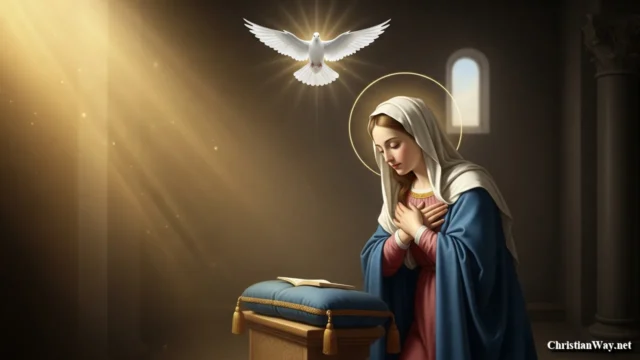
One of the quiet lessons of Christmas is that salvation begins not with our effort, but with our openness. Mary receives the Word in faith. Joseph receives the mystery in trust. The shepherds receive the message with wonder. None of them fully understand what is happening, yet they allow themselves to be part of it.
Christmas invites us into this same posture of receptivity. In a culture that prizes productivity and control, the birth of Christ teaches us the holiness of receiving. Before we do anything for God, we are invited to receive what He has done for us.
To celebrate Christmas authentically is not merely to give gifts, but to receive the Gift. It is to allow Christ to be born anew in the quiet spaces of our hearts—places that may feel small, imperfect, or unworthy, yet are precisely where God delights to dwell.
Christmas in the Life of the World
The meaning of Christmas extends beyond personal devotion. It carries implications for how we see one another and how we live in the world. If God has chosen to identify Himself with the vulnerable, then every human life carries infinite dignity. If God has entered history as a child, then humility becomes the path to peace.
Christmas challenges us to become bearers of Christ’s presence in our own time. It calls us to acts of mercy, reconciliation, and compassion—not as moral obligations alone, but as natural responses to having encountered divine love.
When we welcome the lonely, forgive the offender, or offer kindness without recognition, we participate in the ongoing mystery of the Incarnation. Christ continues to enter the world through the love of those who follow Him.
Reflect and Pray
As Christmas draws near, let us return once more to the stable in Bethlehem. Let us stand quietly before the manger, not rushing to explain the mystery, but allowing it to speak to our hearts. There, in the silence, God reminds us that we are loved beyond measure, known completely, and never abandoned.
May this Christmas renew in us a sense of wonder. May it soften what has grown hard and heal what has been wounded. And may the light that shone in the darkness on that holy night continue to guide us, gently and faithfully, toward the heart of God.
May the peace of Christ, born in humility and love, dwell richly within you and illuminate every step of your journey.
— Fr. John Matthew, for Christian Way
Deeper Christian Context for The Meaning of Christmas
The subject of The Meaning of Christmas: Why Christians Celebrate Jesus’ Birth becomes clearer when it is placed inside the larger Christian story rather than treated as an isolated fact or devotional curiosity. Christmas is first a confession about Jesus Christ: the eternal Son truly entered human history. Customs, family activities, meals, music, gifts, and cultural traditions are meaningful only when they remain connected to that central mystery. ChristianWay.net aims to distinguish the central convictions shared across historic Christianity from practices or interpretations that belong more specifically to Catholic, Orthodox, Anglican, or Protestant traditions. This perspective keeps The Meaning of Christmas connected to discipleship instead of leaving it as isolated religious information.
That distinction matters for both theology and spiritual life. A reliable Christian article should be able to say what Scripture directly teaches, what later Christian tradition developed from that biblical witness, and where different churches understand the same material in different ways. Readers do not need artificial certainty; they need a faithful map of the subject, enough historical context to avoid common myths, and practical guidance that points back to Jesus Christ. For The Meaning of Christmas, the practical value of the distinction is that it encourages faith without requiring exaggeration.
The Incarnation Is the Center of Christmas
Christian faith does not celebrate merely the birth of an inspiring teacher. Christmas proclaims the Incarnation: the Son of God became truly human without ceasing to be divine. Matthew and Luke tell the infancy narratives in different ways, while John gives the theological horizon with the confession that the Word became flesh. Those witnesses keep Christmas from becoming only nostalgia. The feast is about God’s initiative, humility, and saving presence. Readers exploring The Meaning of Christmas can therefore hold conviction and humility together rather than choosing one at the expense of the other.
What the Bible Says—and What Later Tradition Adds
Luke tells of Mary, Joseph, Bethlehem, the manger, the shepherds, and the angelic announcement. Matthew emphasizes Joseph’s obedience, the Magi, Herod, and the flight into Egypt. Popular nativity scenes often combine the two accounts and add details that Scripture does not specify, such as the exact number of Magi. Such traditions can be beautiful, but good teaching should identify them as later devotional imagination rather than present them as explicit biblical facts. Seen through The Meaning of Christmas, this becomes a concrete example of how Christian doctrine, history, worship, and daily life interact.
December 25 and the Christian Calendar
The New Testament does not give Jesus’ date of birth. December 25 became established in the ancient Christian liturgical calendar, while some Eastern churches celebrate according to calendars that place the civil date differently. The theological meaning of the feast does not depend on proving that Jesus was born on that exact day. Liturgical time gives the Church a recurring way to contemplate the mystery of the Incarnation. For this article, that distinction helps readers interpret The Meaning of Christmas without turning a devotional emphasis into a claim stronger than the evidence supports.
How Family Customs Can Serve Faith
In the context of The Meaning of Christmas: Why Christians Celebrate Jesus’ Birth, a family practice is spiritually useful when it makes room for Scripture, prayer, gratitude, reconciliation, generosity, and genuine attention to one another. A nativity scene can prompt reading Luke 2; a meal can become thanksgiving; gifts can recall self-giving love; music can lead to worship; an act of service can connect the joy of Christ’s birth with care for people who are lonely or poor. Applied to The Meaning of Christmas, the point is to keep Christ, Scripture, and the actual history of the tradition in the same frame.
Avoiding Two Opposite Mistakes
One mistake is to let commercial pressure swallow the feast so completely that Christ becomes decorative. The other is to treat every cultural custom as spiritually suspect. Christianity has always lived in cultures and has often transformed ordinary human practices—food, music, art, hospitality, family gatherings—by giving them a Christ-centered meaning. Discernment asks whether a custom serves love, truth, worship, and human dignity. That is especially important when discussing The Meaning of Christmas, because readers may come from churches that use the same Christian vocabulary in different ways.
Christmas Is Part of the Whole Gospel
The manger cannot be separated from Jesus’ ministry, cross, resurrection, and promised return. The child Christians adore is the same Lord who announces the kingdom, forgives sins, touches the excluded, gives himself on the cross, and rises from the dead. Keeping that whole story in view protects Christmas from sentimentality and gives its joy depth even for people who are grieving, displaced, ill, or facing a difficult year. In relation to The Meaning of Christmas, careful wording protects both spiritual seriousness and historical credibility.
A Simple Christ-Centered Pattern
A practical pattern is: read a Gospel passage, name something for which you are grateful, remember someone who needs prayer, share food or generosity, and make space for silence. Families do not need an elaborate performance to have a faithful Christmas. A small practice repeated with sincerity can form memory more deeply than a crowded schedule of religious activities done under pressure. This perspective keeps The Meaning of Christmas connected to discipleship instead of leaving it as isolated religious information.
Conclusion
The Meaning of Christmas: Why Christians Celebrate Jesus’ Birth ultimately points to the mystery that God comes near. Christian Christmas joy is not denial of suffering; it is hope born from the conviction that God has entered the human condition from within. When worship, family life, generosity, and celebration grow from that center, Christmas becomes more than an annual mood—it becomes a school of receiving and giving the love revealed in Christ. For The Meaning of Christmas, the practical value of the distinction is that it encourages faith without requiring exaggeration.
Questions Worth Asking
A reader can test an explanation of the meaning of christmas with several questions. What is the strongest biblical basis for the claim? How early is the historical evidence? Is the point universally Christian or specific to one tradition? Are important counterexamples or disagreements being hidden? What would change in prayer, worship, ethics, or community life if the teaching were taken seriously? Those questions often reveal whether an article is merely persuasive or genuinely informative. This perspective keeps The Meaning of Christmas connected to discipleship instead of leaving it as isolated religious information.
Shared Christian Convictions and Real Differences
Historic Christians share a large core of faith: the confession of the triune God, the lordship of Jesus Christ, the authority of the apostolic gospel, baptism, prayer, worship, moral conversion, and hope in the resurrection. Around the meaning of christmas, however, Catholic, Orthodox, Anglican, Lutheran, Reformed, Baptist, Pentecostal, and other traditions may emphasize different authorities or practices. Good ecumenical writing should identify agreement first, then describe disagreement in the terms each tradition would recognize. For The Meaning of Christmas, the practical value of the distinction is that it encourages faith without requiring exaggeration.
Charity in Theological Disagreement
When the meaning of christmas becomes controversial, the manner of disagreement matters. Christian charity does not require pretending that differences are unimportant, but it does require accurate description. A Catholic belief should not be refuted by a caricature no Catholic catechism teaches; an Orthodox practice should not be explained with categories foreign to Orthodoxy; Protestant diversity should not be reduced to one stereotype. Truth is served when disagreement becomes more precise, not more hostile. Readers exploring The Meaning of Christmas can therefore hold conviction and humility together rather than choosing one at the expense of the other.
Common Shortcuts to Avoid
Popular Christian writing about the meaning of christmas can become misleading when it turns a complex history into one dramatic sentence, treats a later custom as though it were explicitly commanded in the New Testament, or assumes that one denomination speaks for every Christian. Another shortcut is to reject a belief merely because its technical vocabulary developed later. Christian doctrine often becomes more precise in response to controversy. Historical development therefore needs investigation, not automatic praise or automatic suspicion. Seen through The Meaning of Christmas, this becomes a concrete example of how Christian doctrine, history, worship, and daily life interact.
From Information to Discipleship
The spiritual value of studying the meaning of christmas appears in the kind of person the study helps form. Does it deepen worship, truthfulness, repentance, courage, patience, charity, and hope? Does it make the reader more attentive to Christ and more ready to serve a neighbor? Theology that never reaches conduct can become sterile, while devotion without truth can become sentimental. Christian formation needs both understanding and practice. For this article, that distinction helps readers interpret The Meaning of Christmas without turning a devotional emphasis into a claim stronger than the evidence supports.
Reading the Bible in Context
The biblical material connected with the meaning of christmas should be read as part of whole books and not only as isolated quotations. Narrative, poetry, prophecy, Gospel, and epistle communicate in different ways. Context asks who is speaking, to whom, what problem is being addressed, and how the passage relates to the person and work of Christ. This approach prevents a devotional phrase from carrying more weight than the text itself gives it, while still allowing Scripture to speak pastorally to the present. Applied to The Meaning of Christmas, the point is to keep Christ, Scripture, and the actual history of the tradition in the same frame.
Faith and Historical Honesty Belong Together
Christian confidence does not require exaggeration. If a date is uncertain, it is better to say so. If a miracle claim has a limited ecclesial status, that status should be named. If a tradition preserves a story that cannot be independently documented, the article can call it a tradition rather than a proven event. This kind of honesty does not weaken the meaning of christmas; it protects readers from having their faith tied to claims stronger than the available evidence. That is especially important when discussing The Meaning of Christmas, because readers may come from churches that use the same Christian vocabulary in different ways.
Distinguishing Doctrine, History, and Devotion
Three levels are often mixed together when people discuss the meaning of christmas: doctrine, historical development, and devotion. Doctrine states what a church formally teaches. History studies how language, institutions, customs, and controversies developed over time. Devotion describes practices by which believers express faith. A practice can be old without being dogma, and a doctrine can be ancient even if later generations developed more precise vocabulary for it. Keeping these levels separate makes an article both clearer and fairer. In relation to The Meaning of Christmas, careful wording protects both spiritual seriousness and historical credibility.
Why This Topic Still Matters
The Meaning of Christmas is not only a question from the past. It touches how Christians understand God, Christ, the Church, worship, holiness, Scripture, community, or mission today. The historical setting may change, but believers still need to decide what deserves trust, how inherited practices should be received, and how faith should shape ordinary life. A mature answer therefore joins historical memory with present discipleship without confusing the two. This perspective keeps The Meaning of Christmas connected to discipleship instead of leaving it as isolated religious information.