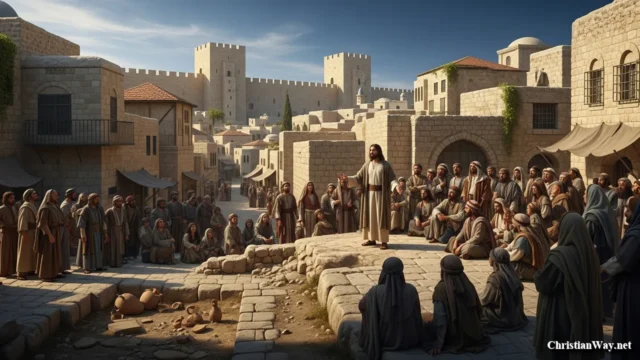
The Story of Christmas as a sacred moment when love enters the world, inviting humility, hope, and quiet inner renewal.
Dear friends in Christ,
Every year, as the world grows brighter with lights and familiar carols begin to echo through streets and homes, the human heart senses that Christmas is more than a season. Even those who no longer speak the language of faith often feel it—a quiet longing, a tenderness, a memory of something holy that once touched the soul. Christmas has a way of awakening in us a desire for meaning, for belonging, for hope that does not fade with time.
The story of Christmas is not merely a beautiful tale told to comfort children or decorate winter nights. It is the proclamation of a mystery so profound that the Church has contemplated it for centuries and never exhausted its depth: God Himself entered human history. The eternal Word took flesh, not in power or splendor, but in humility and vulnerability. In a small town, to a poor family, under an open sky, the Creator of all things became a child.
To reflect on the story of Christmas is to step onto holy ground. It is to allow our hearts to be softened again, our defenses lowered, our wounds gently touched by divine mercy. This journey leads us not only to Bethlehem, but inward—into the quiet places of our own lives where God longs to be born anew.
Let us walk slowly through this sacred story, listening not only with the mind, but with the heart.
The Long Night of Waiting
A world longing for light
Before there was a manger, before angels sang and stars guided travelers, there was a long night of waiting. Humanity, since the fall, had lived with a deep ache—a sense that something was broken, that the world was not as it should be. Sin had wounded the human heart, separating us from God and from one another. Yet even in this darkness, God never abandoned His people.
Throughout the pages of Scripture, we hear the cry of longing. The prophets spoke of a coming day when God would act decisively, when justice and peace would kiss, when sorrow would be turned into joy. Isaiah gave voice to this hope when he proclaimed: “The people who walked in darkness have seen a great light” (Isaiah 9:2).
This waiting was not passive. It was filled with promises, covenants, and signs of God’s faithful love. From Abraham to Moses, from David to the prophets, the Lord was gently preparing the world for the moment when salvation would enter history—not as an idea, but as a person.
Christmas begins here, in this holy longing. It reminds us that God often works slowly, patiently, allowing hope to grow across generations. When we feel that God is silent or distant, the story of Christmas assures us that He is still at work, even when we cannot yet see the light.
Mary: The Silence That Welcomed God
A heart open to the impossible
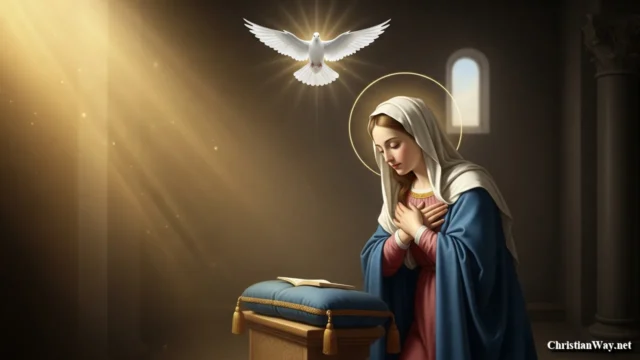
At the center of the Christmas story stands a young woman from Nazareth—Mary. She was not powerful, famous, or influential by worldly standards. Yet her heart was entirely open to God. When the angel Gabriel announced that she would conceive by the power of the Holy Spirit, Mary faced a mystery that could have filled her with fear.
Her question was simple and honest: “How can this be?” And when she understood that this was God’s work, her response became one of the most beautiful acts of faith in all of Scripture: “Let it be done to me according to your word.”
In that moment, the Word became flesh.
Mary teaches us that Christmas begins with listening. God does not force His way into the world. He waits for consent, for trust, for a heart willing to receive Him. Her quiet courage reminds us that God often chooses the small and the hidden to accomplish His greatest works.
In our noisy world, Mary invites us to rediscover silence—not emptiness, but attentiveness. Christmas asks us: Is there room in our hearts for God to act in ways we do not expect?
Joseph: The Strength of Obedient Love
Faith that protects and serves
Beside Mary stands Joseph, a man of quiet faith and steadfast obedience. When he discovered that Mary was with child, his world was shaken. Yet God spoke to him in a dream, reassuring him that this child was from the Holy Spirit and that he was to name Him Jesus.
Joseph’s greatness lies not in words, but in action. He trusted God even when the path before him was unclear. He protected Mary, journeyed with her to Bethlehem, and later fled with his family into Egypt to keep the child safe.
In Joseph, we see a model of faithful love—a love that listens, obeys, and serves without seeking recognition. Christmas reminds us that God works not only through miracles, but through ordinary faithfulness lived day by day.
Bethlehem: God Chooses the Small Place
A promise fulfilled in humility
Bethlehem was not a city of power or influence. It was small, overlooked, easily forgotten. And yet, centuries earlier, the prophet Micah had spoken of it: “But you, Bethlehem Ephrathah… from you shall come forth for me one who is to be ruler in Israel” (Micah 5:2).
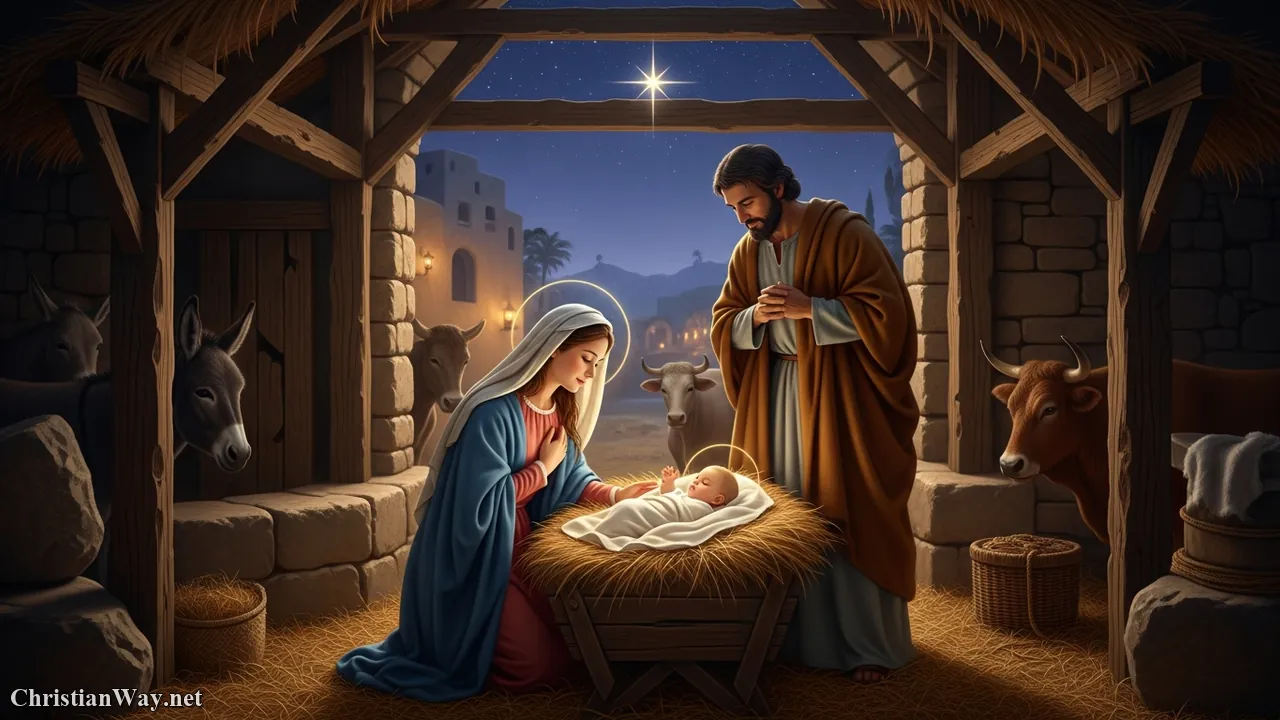
When Mary and Joseph arrived in Bethlehem, there was no room for them in the inn. The Savior of the world was born not in comfort, but in poverty. He was laid in a manger—an animal’s feeding trough.
This is one of the most startling truths of Christmas: God chose vulnerability. He did not enter the world with force, but with gentleness. He came not to dominate, but to dwell among us.
Bethlehem teaches us that God often enters our lives in places we least expect—in weakness, in simplicity, in moments that seem insignificant. Christmas invites us to stop searching for God only in grand experiences and to recognize Him in the ordinary.
The Manger: Love Without Defense
The mystery of the Incarnation
To gaze upon the manger is to confront the heart of Christianity. The child lying there is fully human—dependent, fragile, in need of care. And yet, He is fully divine—the eternal Word through whom all things were made.
This is the mystery of the Incarnation: God did not save us from afar. He entered into our condition. He experienced hunger and cold, joy and sorrow. He sanctified human life by living it from the inside.
The manger reveals the kind of God we worship—a God who comes close. A God who is not ashamed of our poverty or our wounds. A God who desires intimacy with His creation.
At Christmas, we are invited to kneel spiritually before the manger, not as spectators, but as participants. The child Jesus comes not only for the world in general, but for each heart in particular.
The Shepherds: The Gospel for the Poor
Good news announced to the lowly
The first to receive the announcement of Christ’s birth were not kings or scholars, but shepherds—men considered lowly and unimportant in society. An angel appeared to them, saying: “Do not be afraid; for behold, I bring you good news of great joy for all the people.”
This moment reveals the heart of the Gospel. God’s salvation is offered first to the humble, to those who live close to the margins. The shepherds responded not with hesitation, but with eagerness. They went in haste to Bethlehem and found the child just as the angel had said.
Christmas assures us that no one is too small, too poor, or too forgotten to be seen by God. In fact, those who know their need most deeply are often the first to recognize Him.
The Angels: Heaven Breaks Its Silence
Glory and peace embraced
The angels’ song—“Glory to God in the highest, and on earth peace to those on whom His favor rests”—echoes across centuries. It is not merely a celebration; it is a declaration of what God is doing.
Glory to God and peace on earth are not opposing realities. True peace flows from giving God His rightful place. Christmas reveals that when God is welcomed, harmony begins to take root in the human heart.
The angels remind us that Christmas is not only an earthly event. Heaven itself rejoices. The invisible world breaks into the visible. The distance between God and humanity is bridged.
The Star and the Wise Men: A Light for All Nations
A universal invitation
Sometime after the birth of Jesus, wise men from the East followed a star that led them to Bethlehem. They were not part of Israel, yet they were drawn by a divine sign. Their journey shows that Christ came not only for one people, but for all nations.
They brought gifts of gold, frankincense, and myrrh—symbols of kingship, divinity, and sacrifice. Even at His birth, the shadow of the cross is present. The child born in Bethlehem came to give His life for the world.
The wise men remind us that God speaks in many ways, and that sincere seekers will always be led to Christ. Christmas is an invitation extended to every culture, every language, every heart.
Christmas and Our Lives Today
Christ still seeks a dwelling place
The story of Christmas does not belong only to the past. It continues wherever Christ is welcomed. Each year, the question is quietly asked again: Is there room?
We may not have an inn or a manger, but we have hearts often crowded with worry, ambition, fear, and distraction. Christmas calls us to make space—not through perfection, but through openness.
Christ comes to be born in the places where we feel most fragile. He comes to bring light into our darkness, peace into our restlessness, hope into our weariness.
When we forgive, when we serve, when we choose love over resentment, Christmas becomes real again. The Word takes flesh in our actions.
Reflect and Pray
As we step back from the manger, let us do so slowly, reverently. The story of Christmas is not meant to be rushed. It is meant to be received.
May we learn from Mary to listen, from Joseph to trust, from the shepherds to seek, and from the wise men to offer our gifts. And may we never forget that the child of Bethlehem came for us—not to condemn, but to save.
Let us pray:
Lord Jesus Christ, born in humility and wrapped in love, enter the quiet places of our hearts. Dispel our darkness with Your light. Teach us to welcome You as Mary did, to trust You as Joseph did, and to adore You with simple hearts. May Your peace dwell within us, and may Your love be made visible through our lives. Amen.
— Fr. John Matthew, for Christian Way
Deeper Christian Context for The Christmas Story in the Bible
The subject of The Christmas Story in the Bible: The Birth of Jesus Explained becomes clearer when it is placed inside the larger Christian story rather than treated as an isolated fact or devotional curiosity. Christmas is first a confession about Jesus Christ: the eternal Son truly entered human history. Customs, family activities, meals, music, gifts, and cultural traditions are meaningful only when they remain connected to that central mystery. ChristianWay.net aims to distinguish the central convictions shared across historic Christianity from practices or interpretations that belong more specifically to Catholic, Orthodox, Anglican, or Protestant traditions. Applied to The Christmas Story in the Bible, the point is to keep Christ, Scripture, and the actual history of the tradition in the same frame.
That distinction matters for both theology and spiritual life. A reliable Christian article should be able to say what Scripture directly teaches, what later Christian tradition developed from that biblical witness, and where different churches understand the same material in different ways. Readers do not need artificial certainty; they need a faithful map of the subject, enough historical context to avoid common myths, and practical guidance that points back to Jesus Christ. That is especially important when discussing The Christmas Story in the Bible, because readers may come from churches that use the same Christian vocabulary in different ways.
The Incarnation Is the Center of Christmas
Christian faith does not celebrate merely the birth of an inspiring teacher. Christmas proclaims the Incarnation: the Son of God became truly human without ceasing to be divine. Matthew and Luke tell the infancy narratives in different ways, while John gives the theological horizon with the confession that the Word became flesh. Those witnesses keep Christmas from becoming only nostalgia. The feast is about God’s initiative, humility, and saving presence. In relation to The Christmas Story in the Bible, careful wording protects both spiritual seriousness and historical credibility.
What the Bible Says—and What Later Tradition Adds
Luke tells of Mary, Joseph, Bethlehem, the manger, the shepherds, and the angelic announcement. Matthew emphasizes Joseph’s obedience, the Magi, Herod, and the flight into Egypt. Popular nativity scenes often combine the two accounts and add details that Scripture does not specify, such as the exact number of Magi. Such traditions can be beautiful, but good teaching should identify them as later devotional imagination rather than present them as explicit biblical facts. This perspective keeps The Christmas Story in the Bible connected to discipleship instead of leaving it as isolated religious information.
December 25 and the Christian Calendar
The New Testament does not give Jesus’ date of birth. December 25 became established in the ancient Christian liturgical calendar, while some Eastern churches celebrate according to calendars that place the civil date differently. The theological meaning of the feast does not depend on proving that Jesus was born on that exact day. Liturgical time gives the Church a recurring way to contemplate the mystery of the Incarnation. For The Christmas Story in the Bible, the practical value of the distinction is that it encourages faith without requiring exaggeration.
How Family Customs Can Serve Faith
In the context of The Christmas Story in the Bible: The Birth of Jesus Explained, a family practice is spiritually useful when it makes room for Scripture, prayer, gratitude, reconciliation, generosity, and genuine attention to one another. A nativity scene can prompt reading Luke 2; a meal can become thanksgiving; gifts can recall self-giving love; music can lead to worship; an act of service can connect the joy of Christ’s birth with care for people who are lonely or poor. Readers exploring The Christmas Story in the Bible can therefore hold conviction and humility together rather than choosing one at the expense of the other.
Avoiding Two Opposite Mistakes
One mistake is to let commercial pressure swallow the feast so completely that Christ becomes decorative. The other is to treat every cultural custom as spiritually suspect. Christianity has always lived in cultures and has often transformed ordinary human practices—food, music, art, hospitality, family gatherings—by giving them a Christ-centered meaning. Discernment asks whether a custom serves love, truth, worship, and human dignity. Seen through The Christmas Story in the Bible, this becomes a concrete example of how Christian doctrine, history, worship, and daily life interact.
Christmas Is Part of the Whole Gospel
The manger cannot be separated from Jesus’ ministry, cross, resurrection, and promised return. The child Christians adore is the same Lord who announces the kingdom, forgives sins, touches the excluded, gives himself on the cross, and rises from the dead. Keeping that whole story in view protects Christmas from sentimentality and gives its joy depth even for people who are grieving, displaced, ill, or facing a difficult year. For this article, that distinction helps readers interpret The Christmas Story in the Bible without turning a devotional emphasis into a claim stronger than the evidence supports.
A Simple Christ-Centered Pattern
A practical pattern is: read a Gospel passage, name something for which you are grateful, remember someone who needs prayer, share food or generosity, and make space for silence. Families do not need an elaborate performance to have a faithful Christmas. A small practice repeated with sincerity can form memory more deeply than a crowded schedule of religious activities done under pressure. Applied to The Christmas Story in the Bible, the point is to keep Christ, Scripture, and the actual history of the tradition in the same frame.
Conclusion
The Christmas Story in the Bible: The Birth of Jesus Explained ultimately points to the mystery that God comes near. Christian Christmas joy is not denial of suffering; it is hope born from the conviction that God has entered the human condition from within. When worship, family life, generosity, and celebration grow from that center, Christmas becomes more than an annual mood—it becomes a school of receiving and giving the love revealed in Christ. That is especially important when discussing The Christmas Story in the Bible, because readers may come from churches that use the same Christian vocabulary in different ways.
A Sustainable Study Practice
Instead of trying to master the christmas story in the bible in one sitting, choose a small sequence: read the central biblical passages, consult one primary teaching source, read a reliable historical overview, and write down the distinctions that changed your understanding. Return to the topic after prayer and conversation with mature Christians. Slow study usually produces better judgment than collecting many confident answers from short online posts. Applied to The Christmas Story in the Bible, the point is to keep Christ, Scripture, and the actual history of the tradition in the same frame.
Common Shortcuts to Avoid
Popular Christian writing about the christmas story in the bible can become misleading when it turns a complex history into one dramatic sentence, treats a later custom as though it were explicitly commanded in the New Testament, or assumes that one denomination speaks for every Christian. Another shortcut is to reject a belief merely because its technical vocabulary developed later. Christian doctrine often becomes more precise in response to controversy. Historical development therefore needs investigation, not automatic praise or automatic suspicion. That is especially important when discussing The Christmas Story in the Bible, because readers may come from churches that use the same Christian vocabulary in different ways.
The Place of Mystery
Not every Christian subject can be reduced to a formula. Mystery does not mean contradiction or intellectual laziness; it means that the reality of God and salvation exceeds complete human comprehension. In studying the christmas story in the bible, Christians can make precise distinctions while still admitting the limits of language, historical evidence, and personal experience. Humility is not the enemy of conviction. It is part of learning to speak truthfully about God. In relation to The Christmas Story in the Bible, careful wording protects both spiritual seriousness and historical credibility.
Shared Christian Convictions and Real Differences
Historic Christians share a large core of faith: the confession of the triune God, the lordship of Jesus Christ, the authority of the apostolic gospel, baptism, prayer, worship, moral conversion, and hope in the resurrection. Around the christmas story in the bible, however, Catholic, Orthodox, Anglican, Lutheran, Reformed, Baptist, Pentecostal, and other traditions may emphasize different authorities or practices. Good ecumenical writing should identify agreement first, then describe disagreement in the terms each tradition would recognize. This perspective keeps The Christmas Story in the Bible connected to discipleship instead of leaving it as isolated religious information.