Jesus Christ in Orthodox Theology and Icons: The Eternal Word Made Visible in Love
Dear friends in Christ,
There are moments when the human heart grows weary of words. We may hear sermons, read Scripture, speak prayers, and still feel that something within us longs to behold the Lord more deeply. We long not merely to think about Jesus Christ, but to stand before Him; not merely to remember that He lived, but to know that He is living still. This longing is not strange. It belongs to the deepest movement of faith. The disciples themselves desired to see the face of God, and Philip said to Jesus, “Lord, show us the Father, and it sufficeth us.” Jesus answered with words that continue to echo through every generation: “He that hath seen me hath seen the Father” (John 14:8–9).
This confession lies at the heart of Orthodox Christianity. Jesus Christ is not simply a wise teacher, a holy prophet, or a distant religious founder. He is the eternal Son of God, the Word through whom all things were created, who took flesh from the Virgin Mary and entered fully into our wounded human story. In Him, heaven and earth meet. In Him, the invisible God makes Himself known. In Him, humanity is not abandoned to sin, death, fear, or loneliness, but is drawn again into communion with the living God.
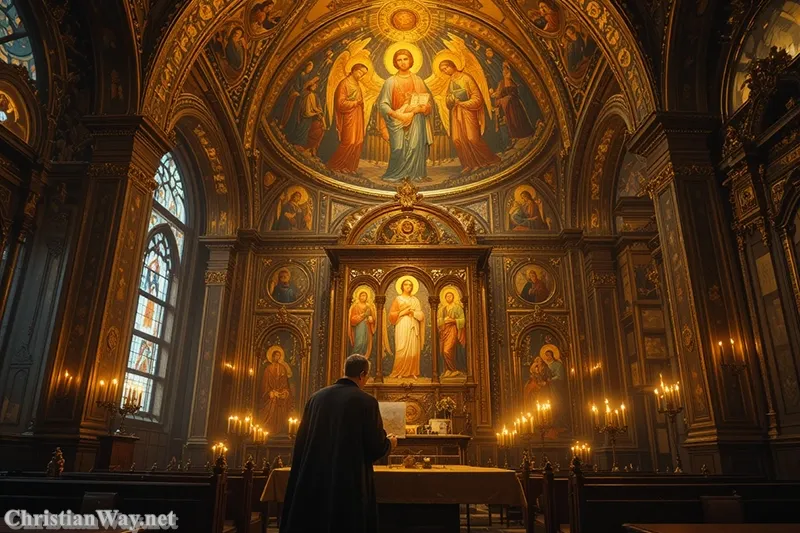
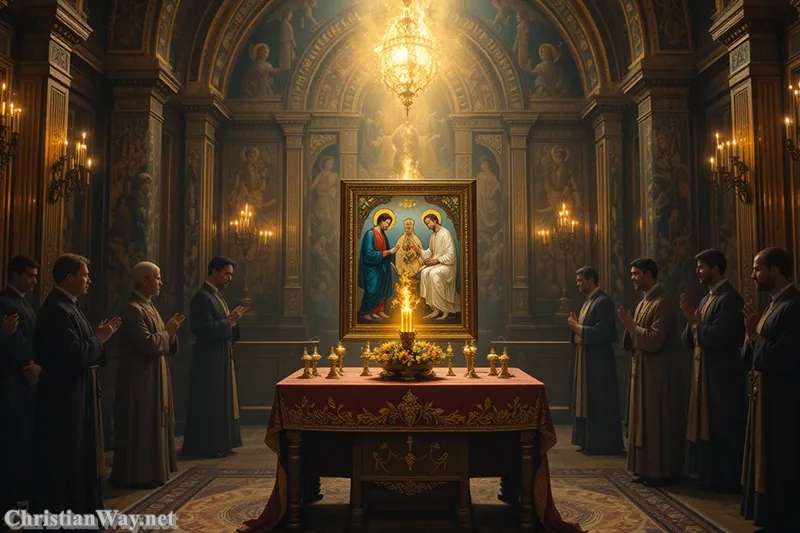
For this reason, the holy icons of the Orthodox Church are never meant to distract believers from Christ. They are meant to lead the heart toward Him. They are not decorations placed around the Gospel; they are visual witnesses to the Gospel itself. They proclaim that the Word truly became flesh, that God truly entered history, that the face of Jesus was seen by human eyes, that His hands touched the sick, that His tears fell at the tomb of Lazarus, and that His risen body still bears the wounds of love.
To stand before an icon of Christ is not to escape the world. It is to remember that the world has been visited by God. It is to gaze upon the One who entered our darkness without fear, who carried the cross without hatred, who descended even into death in order to bring life to those who had lost hope. Orthodox theology and holy icons invite us into this mystery slowly, reverently, and prayerfully. They remind us that Christianity is not only an idea to be understood, but a Person to be encountered: Jesus Christ, the living Lord.
Jesus Christ Is the Heart of Orthodox Faith
The eternal Word who became truly human
Orthodox theology begins and ends with Jesus Christ. Every doctrine, every liturgy, every feast, every prayer, every icon, and every act of mercy finds its center in Him. The Church does not first proclaim a philosophy of life or a moral system. She proclaims Christ crucified and risen. She proclaims that the eternal Son of God entered our human condition so completely that nothing truly human is beyond His redeeming love.
The Gospel of John opens with one of the most profound declarations in all of Scripture: “In the beginning was the Word, and the Word was with God, and the Word was God” (John 1:1). These words tell us that Jesus Christ did not begin in Bethlehem. Before the stars were formed, before the mountains rose from the earth, before any human voice called upon the name of God, the Son was with the Father. He is eternal, divine, and one in being with the Father.
Yet the wonder of the Gospel is that this eternal Word did not remain distant from humanity. John continues: “And the Word was made flesh, and dwelt among us” (John 1:14). The One through whom the universe was made entered the womb of Mary. The One whom heaven cannot contain accepted the limitations of a human body. The One who gives life to all things accepted hunger, fatigue, sorrow, tears, rejection, suffering, and death.
Orthodox Christians confess that Jesus Christ is fully God and fully man. He is not half divine and half human, nor is He merely a human person specially chosen by God. He is the one eternal Son of God, who took to Himself a complete human nature. He possesses everything proper to humanity except sin. He has a human body, a human mind, a human will, and a human capacity to suffer. Yet He remains eternally God, united with the Father and the Holy Spirit in the life of the Holy Trinity.
This truth was defended carefully through the early centuries of the Church because it matters deeply for our salvation. If Christ were not truly God, then He could not conquer sin and death from within. If He were not truly human, then our humanity would remain untouched by His healing. But because He is both fully divine and fully human, He becomes the bridge between God and humanity. He is not a bridge built from a distance. He is God Himself coming near, entering the broken places of our lives, and opening a path home to the Father.
The Council of Chalcedon in the year 451 expressed this mystery by teaching that Christ is one Person in two natures, truly God and truly man, without confusion, without change, without division, and without separation. These words may sound formal, but they guard something tender and life-giving. They tell us that when Jesus wept at Lazarus’ tomb, God was not merely observing human sorrow from far away. In Christ, God entered our grief. When Jesus stretched out His hand to touch the leper, God touched the untouchable. When Jesus cried out from the cross, “My God, my God, why hast thou forsaken me?” He carried even the cry of human abandonment into the heart of divine love.
This is why the Orthodox Church speaks so often about salvation as healing, restoration, and participation in divine life. Christ does not save us only by forgiving a legal debt. He saves us by uniting us to Himself. He takes what is wounded in us and fills it with His grace. He takes what is darkened in us and brings it into His light. He takes what is mortal in us and opens it toward eternal life.
Saint Athanasius, one of the great defenders of the faith, expressed this mystery in a memorable way: God became man so that humanity might share in the life of God. This does not mean that human beings cease to be human or become gods by nature. It means that through grace we are invited into communion with God. We are made children of the Father through the Son. We are transformed slowly, patiently, and lovingly by the Holy Spirit.
The Orthodox understanding of Christ is therefore never cold or abstract. It is deeply personal. Jesus Christ is the One who knows every human sorrow because He has entered it. He is the One who knows loneliness because He was betrayed and abandoned. He is the One who knows physical pain because His hands and feet were pierced. He is the One who knows death because He entered the tomb. And He is the One who knows how to lead us beyond death because He rose in glory.
The Incarnation and the Holy Face of Christ
Why the Church can portray the Savior
One of the most beautiful teachings of Orthodox Christianity is that the Incarnation makes icons possible. Before Christ came in the flesh, God was not seen in His divine essence. The Old Testament rightly warned Israel against making idols, because no created image could contain or represent the invisible and eternal God. The Lord said through Moses that the people had heard His voice but had seen no form. They were not to create images that would reduce God to something made by human hands.
But in Jesus Christ, something new and astonishing happened. The invisible God took visible flesh. The eternal Word became a human being with a real face, real hands, real eyes, and a real voice. The Son of God was held in the arms of Mary. He walked the roads of Galilee. He sat at tables with sinners. He blessed children. He carried the cross. He rose bodily from the grave.
Saint Paul wrote of Christ, “Who is the image of the invisible God” (Colossians 1:15). Jesus does not merely resemble God in a poetic sense. He reveals the Father because He is the eternal Son, sharing the divine life of the Father. When we see Christ in faith, we are brought into the mystery of the God who has made Himself known.
This is the theological foundation of the icon. Orthodox Christians do not paint icons because they believe that paint and wood are divine. They paint icons because God Himself chose to become visible in the humanity of Jesus Christ. The icon does not claim to capture the divine essence of God. No painting could do that. Rather, it bears witness to the mystery that the Son truly became man.
The icon therefore proclaims the Gospel of the Incarnation. It tells the world that Christianity is not a religion of escape from matter, the body, history, and human weakness. Christ did not save us by pretending to be human. He did not appear as a ghost passing through the world. He took flesh from the Virgin Mary. He sanctified the womb, the body, the home, the table, the tears, the work of human hands, and even the grave.
When Orthodox Christians honor an icon of Jesus Christ, they are making a confession of faith. They are saying, “The Word became flesh.” They are saying, “God has come near.” They are saying, “Humanity has not been rejected, but redeemed.” They are saying, “The face of Christ is not a myth, but the face of the One who loved us unto death.”
Saint John of Damascus, who lived during a time when icons were strongly opposed by some Christians, defended this truth with great wisdom. He taught that Christians do not worship matter as though it were God. Rather, they honor the God who chose to work through material things. The wood of the cross was material. The waters of baptism are material. Bread and wine are material. The human body of Jesus was material. Yet through these created realities, God gives grace and reveals His love.
There is something deeply consoling in this. Many people today feel divided from themselves. They may think that spirituality belongs only to the mind, while the body, daily work, emotions, suffering, and ordinary life remain somehow outside the reach of God. But the Incarnation tells us otherwise. Christ came into the whole of human life. He did not redeem only our thoughts. He came for our bodies, our homes, our wounds, our relationships, our memories, and our future.
The icon of Christ quietly announces this good news. It reminds the believer that God is not far away from the visible world. He has entered it. He has blessed it. He has transformed it through His presence.
What Is an Icon?
A window of communion, not a religious decoration
An icon is often described as a window into heaven. This phrase is beautiful, but it can be misunderstood if we imagine that an icon is merely a mystical object or a religious image with special power. An icon is not magic. It is not a charm, a lucky object, or a substitute for prayer. It is a sacred image that directs the heart toward the person represented.
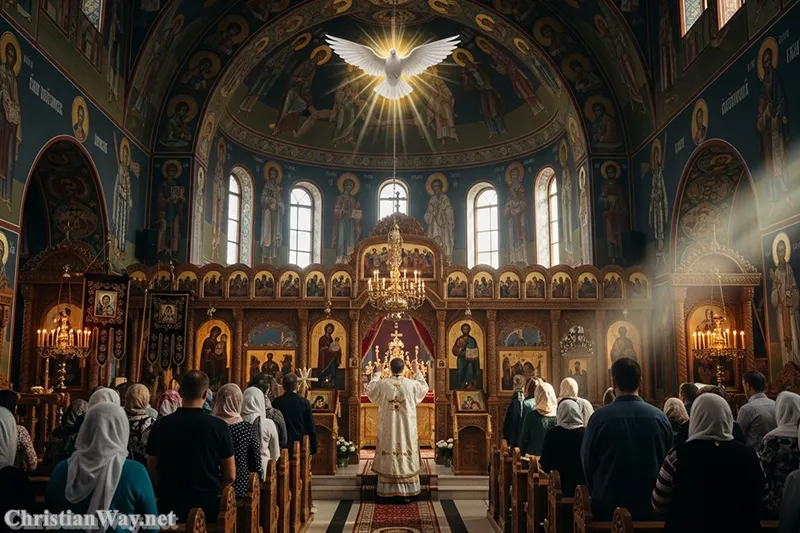
When an Orthodox Christian stands before an icon of Jesus Christ, the heart is invited to turn toward Jesus Himself. The honor offered to the icon passes beyond the painted surface to Christ, who is alive and present. In this sense, the icon becomes a meeting place of prayer. It helps the believer gather scattered thoughts, quiet the restless imagination, and remember that Christ is not merely an idea from the past. He is the Lord who sees, hears, loves, forgives, and calls.
Icons are often painted rather than simply described as “drawn” or “made.” This language reflects the reverence with which iconography is approached. Traditionally, an iconographer prays while working, follows the received patterns of the Church, and understands the task not as personal self-expression but as service to the Gospel. The goal is not to produce a realistic portrait in the modern sense. The goal is to offer a faithful visual confession of Christ and His saving work.
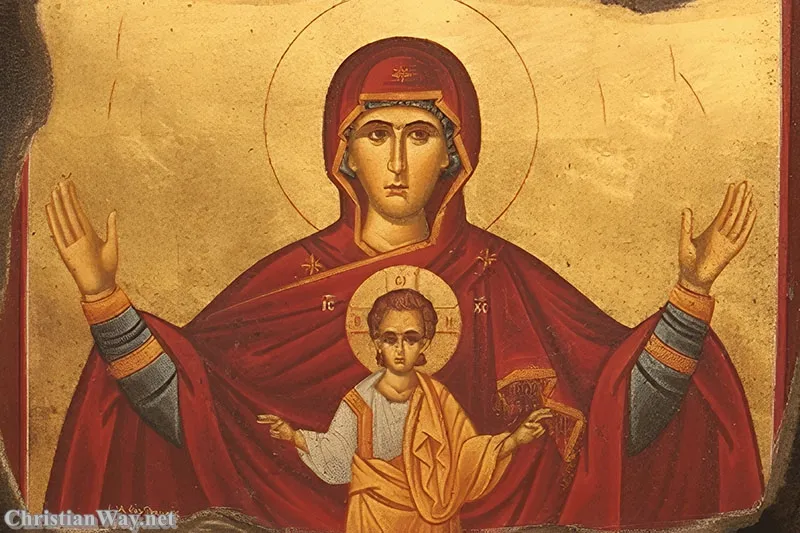
For this reason, icons often look different from ordinary paintings. They do not usually attempt to imitate natural light, shadows, or photographic detail. Instead, they use a spiritual language. The figures may appear still, peaceful, and luminous. Their eyes may seem large and attentive. Their bodies may be portrayed with a certain solemnity, not because the saints were less human, but because they are shown in the light of God’s kingdom.
The background of an icon may shine with gold, not to suggest worldly wealth, but to represent the uncreated light and glory of God. The saints may appear surrounded by halos, not because they are distant from us, but because the grace of God has transfigured them. Their faces are often serious, not because holiness is joyless, but because the icon invites us into a depth beyond passing emotion.
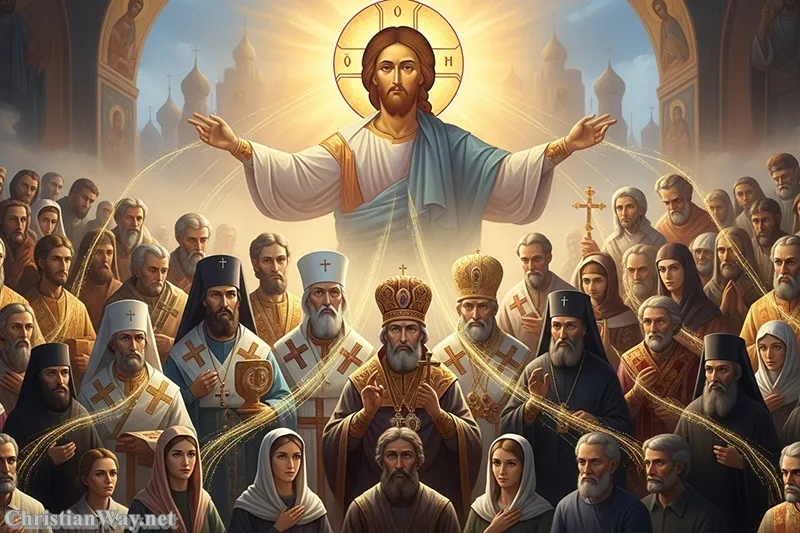
In icons of Jesus Christ, the halo usually bears the Greek letters often translated as “He Who Is.” This recalls the divine name revealed to Moses at the burning bush: “I AM THAT I AM” (Exodus 3:14). The icon silently proclaims that Jesus Christ is not merely a holy man of the past. He is the eternal Son, the One who is, who was, and who is to come.
The right hand of Christ is often raised in blessing, while His left hand may hold the Gospel book. These images speak gently but powerfully. Christ blesses the world with mercy. He holds the Gospel because He is the Word of God made flesh. He does not simply bring a message from God; He is Himself the living Word through whom God speaks.
The icon also teaches us that prayer involves more than speaking. Sometimes prayer means resting quietly before Christ. Sometimes it means lifting tired eyes toward His face. Sometimes it means allowing His gaze to search our hearts. In the Gospels, Jesus often looks upon people before He speaks to them. He looks upon the rich young man and loves him. He looks at Peter after the denial. He sees the widow, the sick, the sinner, the child, the grieving mother, and the thief on the cross.
An icon of Christ helps us remember that this loving gaze has not disappeared. The risen Lord still looks upon the world with compassion. He still calls people by name. He still receives the brokenhearted. He still says, “Come unto me, all ye that labour and are heavy laden, and I will give you rest” (Matthew 11:28).
Honor and Worship in Orthodox Christian Prayer
The difference between veneration and adoration
One of the most common misunderstandings about Orthodox icons is the belief that Orthodox Christians worship images. This is not the teaching of the Orthodox Church. Worship belongs to God alone: Father, Son, and Holy Spirit. No icon, no saint, no angel, no created object, and no human being may receive the adoration that belongs only to the Holy Trinity.
Orthodox Christians do, however, venerate icons. To venerate means to show honor, love, and reverence. In ordinary life, people understand that gestures of honor do not necessarily mean worship. A person may kiss a family photograph, salute a flag, bow before a judge, or preserve a loved one’s letter. The gesture is directed beyond the physical object toward the person or reality represented.
In a similar way, when Orthodox Christians kiss an icon of Christ or light a candle before it, they are not worshipping wood and paint. They are expressing love for Jesus Christ. The outward gesture becomes a bodily prayer. It says, “Lord, You are worthy of my love. You are present in my life. I remember You. I belong to You.”
The Seventh Ecumenical Council, held in Nicaea in 787, defended the veneration of icons by explaining that honor shown to an icon passes to the person depicted. This teaching protected two important truths. First, Christ alone is worshipped as God. Second, because Christ truly became man, His human face may be portrayed and honored without denying His divinity.
The Church’s concern was not artistic preference. It was the truth of the Incarnation. To reject every image of Christ as though the Savior could never be pictured might suggest that He did not truly assume visible human flesh. The Church therefore defended icons because she defended Jesus Christ as the Word made flesh.
At the same time, Orthodox Christianity warns against superstition. An icon is not meant to be treated as a machine for obtaining blessings or as a religious object that works independently of faith. Icons call the believer to repentance, humility, prayer, and love. They are not meant to replace the Gospel, the sacraments, acts of mercy, or the daily struggle to follow Christ.
An icon may be present in a home, but the true question is whether Christ is welcome in the home. A candle may burn before an icon, but the deeper question is whether love burns in the heart. A person may bow before the holy image of the Savior, but the real test of faith is whether that person is learning to bow in humility before God and serve others with compassion.
The beauty of icons is that they do not ask us to stop at the surface. They call us beyond appearances. They invite us to look at Christ until we begin to see the world differently: the poor as His brothers and sisters, the stranger as one He loves, the wounded as those for whom He died, and even our enemies as people called to grace.
Christ Pantocrator: The Ruler of All and the Gentle Savior
The icon that holds judgment and mercy together
Among the most beloved Orthodox icons is Christ Pantocrator. The word “Pantocrator” means “Ruler of All” or “Almighty.” At first glance, this title may sound distant or severe. We may imagine power as domination, force, or control. But the icon of Christ Pantocrator reveals a different kind of authority. It reveals the authority of the One who created all things through love, sustains all things through mercy, and conquers all things through the cross.
Christ Pantocrator is often shown facing the viewer directly. His gaze is steady, solemn, and compassionate. In one hand He blesses; in the other He holds the Gospel. He is the Judge of the world, but He is also the Savior who gave Himself for the world. He is the King of heaven, but His throne was revealed most clearly when He stretched out His arms upon the cross.
This is one of the great paradoxes of Christian faith. Jesus Christ reigns, but He reigns through self-giving love. He is victorious, but His victory comes through humility. He is all-powerful, yet He allows Himself to be rejected, mocked, beaten, and crucified. The world expects power to protect itself. Christ reveals power by giving Himself away.
The icon of Pantocrator invites us to place our lives beneath this holy authority. Many people fear surrender because they have known authority that wounded, controlled, or humiliated them. But Christ is not a tyrant. His lordship heals rather than crushes. His commandments are not chains but paths toward freedom. His judgment is not the cold judgment of someone who does not understand us; it is the judgment of the One who knows every hidden wound and still offers mercy.
When Christ says, “Follow me,” He does not call us into darkness. He calls us into life. When He says, “Take up thy cross,” He does not glorify suffering for its own sake. He leads us through the places of sacrifice and sorrow toward resurrection. When He commands us to forgive, He is not minimizing our pain. He is freeing us from the prison of hatred.
The face of Christ Pantocrator can therefore become a source of comfort for those who feel lost. His eyes seem to say that nothing in us is hidden from Him. He sees the shame we keep buried. He sees the prayer we cannot put into words. He sees the grief we have carried for years. He sees the weakness we try to conceal from everyone else. And still He remains before us, blessing us, holding the Gospel open, calling us toward truth and life.
In many churches, the icon of Christ Pantocrator appears in the dome above the congregation. This placement is deeply meaningful. As believers gather below, they pray beneath the image of Christ who fills all things. He is Lord over heaven and earth. He is not confined to one nation, one century, one language, or one culture. He sees every person. He holds the universe in His care.
Yet the Christ who fills the heavens is also the Christ who comes near to the smallest human need. He notices a widow’s offering. He pauses for the blind man by the roadside. He asks the woman who touched His garment, “Who touched me?” He prepares breakfast for His disciples after the resurrection. He speaks Mary Magdalene’s name in the garden. His greatness never makes Him cold. His glory never makes Him inaccessible.
This is the Christ whom the icon proclaims: the Lord of all creation and the friend of sinners; the Judge of the living and the dead and the Shepherd who searches for one lost sheep; the eternal Word and the child of Mary; the crucified One and the risen King.
The Gospel Written in Color
Icons as a school of prayer and memory
Icons are sometimes called theology in color. This does not mean they replace the written teaching of Scripture or the preaching of the Church. Rather, they allow the faith to be seen as well as heard. They help the believer remember the central mysteries of salvation in a way that speaks to the whole person: mind, heart, body, memory, and imagination.
An icon of the Nativity reminds us that the Creator entered the poverty of a manger. An icon of Christ’s baptism reveals the waters of creation being blessed by the One who came to renew the world. An icon of the Transfiguration shows the light of Christ shining upon the mountain and revealing the glory that awaits those who are transformed by grace. An icon of the Crucifixion leads us to the depths of divine love. An icon of the Resurrection announces that death has been trampled down and the gates of Hades have been broken open.
In Orthodox tradition, the icon of the Resurrection often portrays Christ descending into Hades, grasping Adam and Eve by the hands, and drawing them from the darkness of death. It is a powerful image of salvation. Christ does not rise only for Himself. He enters the depths where humanity is imprisoned and brings life to those who could not save themselves.
This image speaks deeply to every person who has ever felt trapped by sin, grief, fear, addiction, despair, or regret. There are places in the human heart that can feel like a tomb. There are wounds that seem impossible to heal. There are mistakes that can make a person believe that hope has ended. But the risen Christ enters even there. No darkness is deeper than His mercy. No grave is beyond His power. No sinner is beyond His call.
Icons also teach us patience. In a world of constant movement, noise, entertainment, and distraction, the icon asks us to slow down. It does not shout. It waits. It does not demand that we consume it quickly. It asks us to become still enough to pray.
Many of us are surrounded by images all day long. Screens fill our minds with advertisements, news, opinions, anxieties, comparisons, and endless desires. These images can leave the soul fragmented. They often tell us that we are valuable only if we are successful, beautiful, admired, wealthy, or powerful.
The holy icon offers another vision. It tells us that our true worth is found in being loved by God. It reminds us that Christ sees us not as products, achievements, or failures, but as beloved persons. It calls us away from the restless hunger to be noticed and toward the peace of being known by God.
To pray before an icon is not to flee reality. It is to allow reality to be healed by truth. It is to remember that the world is not owned by fear, violence, greed, or death. Christ has entered the world, and His light shines in the darkness.
Living with Christ and His Icons in Daily Life
Prayer that enters the home, the sorrow, and the ordinary day
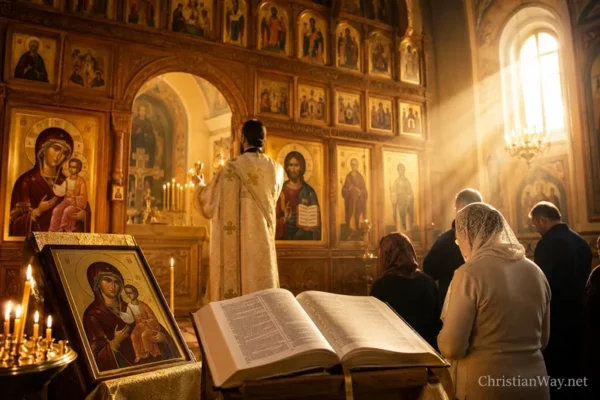
For many Orthodox families, icons are placed in a prayer corner of the home. This small space may include an icon of Christ, an icon of the Virgin Mary, perhaps icons of saints loved by the family, a candle, a Bible, or a prayer book. It becomes a quiet reminder that the home belongs to God.
But the presence of icons in a home is not about creating a religious display. It is about allowing Christ to become part of daily life. The icon is there when a family begins the morning. It is there when someone receives difficult news. It is there when a child is sick. It is there when a marriage is under strain. It is there when a person feels grateful, confused, lonely, or afraid.
There are days when a person may not know how to pray. The words may seem dry. The heart may feel numb. In such moments, simply standing before the icon of Christ can become prayer. One may whisper, “Lord Jesus Christ, have mercy on me.” One may sit quietly and allow the eyes to rest upon the face of the Savior. One may bring before Him the people who are suffering, the family member who is far away, the burden that cannot be carried alone.
The Jesus Prayer has a special place in Orthodox spirituality: “Lord Jesus Christ, Son of God, have mercy on me, a sinner.” This prayer is simple enough for a child, yet deep enough to accompany a person through a lifetime. It gathers the whole Gospel into a few words. It names Jesus as Lord. It confesses Him as the Son of God. It asks for mercy. It teaches humility. It reminds us that we live not by our own strength, but by grace.
When prayed before an icon of Christ, the Jesus Prayer can become a quiet encounter. We are not staring at an object. We are turning our heart toward the living Lord. We are bringing our weakness into His mercy. We are allowing His name to become a light within us.
This practice can be especially meaningful in times of suffering. The icon of Christ does not promise that faithful people will never face pain. The cross tells us otherwise. But it reminds us that no suffering is endured alone. Christ has entered suffering. He has carried it. He has transformed it from within.
When someone sits beside the bed of a sick parent, when a young person faces anxiety about the future, when a marriage is wounded by misunderstanding, when a family mourns the death of someone they love, the face of Christ can become a source of quiet strength. His eyes do not turn away. His blessing remains lifted. His Gospel remains open.
The icon also calls us to become more like Christ in the way we treat others. It is easy to honor an image of Jesus in church while failing to recognize His image in the people around us. Yet Christ teaches us that whatever we do for the hungry, the thirsty, the stranger, the sick, the prisoner, and the forgotten, we do for Him.
To pray before Christ’s icon is therefore also to be sent into the world with a changed heart. We are called to see the face of Christ in those who suffer. We are called to speak with gentleness, forgive more readily, serve more quietly, and love more faithfully. The icon is not meant to stop our eyes at the wall. It is meant to train our eyes to see Christ everywhere He comes to meet us.
A Gift of Beauty for the Whole Church
Seeing Christ with reverence and love
The Orthodox Christian tradition of icons is one of the Church’s great gifts to the wider Christian family. Catholics, Orthodox Christians, Anglicans, Protestants, and believers from many traditions may not all use icons in the same way, yet every Christian is invited to reflect upon the truth they proclaim: Jesus Christ is the visible image of the invisible God.
All Christians who confess the Incarnation share this central mystery. The eternal Son took flesh. He was born of Mary. He lived among us. He died on the cross. He rose again. He ascended in glory. He will come again. The icon calls us to linger before this mystery with reverence.
Perhaps this is one reason icons speak even to those who are not accustomed to them. In a world full of shallow images, the holy icon offers depth. In a world that often celebrates noise, the icon offers silence. In a world where people are often valued for appearance alone, the icon points beyond appearance toward the beauty of holiness.
The purpose of an icon is not to make us admire religious art from a distance. Its purpose is to lead us toward Christ. It asks us a gentle but searching question: When you look upon the face of Jesus, what do you see? Do you see a distant figure from history? Or do you see the One who knows you, loves you, calls you, and waits for your answer?
In the Light of Christ
Dear friends, Orthodox theology and holy icons draw us again to the heart of the Gospel: Jesus Christ is the eternal Word made flesh. He is fully God and fully man. He is the visible image of the invisible Father. He is the One who entered our world not to condemn it, but to save it through His love.
The icons of Christ remind us that God has not remained far from human sorrow. He has taken a face. He has spoken with a human voice. He has wept human tears. He has stretched out human hands upon the cross. And those hands, wounded yet victorious, are still raised in blessing over the world.
When life becomes confusing, when prayer becomes difficult, when the heart is tired of searching for answers, let us turn again toward Jesus. Let us remember that He is not absent from our struggles. He is present in the silence, present in the tears, present in the burden, present in the hope that refuses to die.
May the holy face of Christ draw you into deeper peace. May His eyes remind you that you are seen and loved. May His blessing rest upon your home, your family, your wounds, and your future. And may you come to know, more deeply each day, that the One who became visible for our sake is still near to every heart that calls upon His name.
Lord Jesus Christ, eternal Word of the Father, You took flesh for our salvation and revealed the love of God to the world. Heal what is wounded within us, quiet what is restless, and lead us from darkness into Your marvelous light. Teach us to see Your face in prayer, in Scripture, in the poor, in the suffering, and in every person You place upon our path. May Your mercy remain with us always, now and forever. Amen.
— Fr. John Matthew