Dear friends in Christ,
There are times when the human heart grows weary of things that feel temporary. We live in a world of quick messages, shifting opinions, hurried schedules, and constant noise. Many people know what it is to be surrounded by information and yet remain hungry for wisdom. They may have many choices and still feel uncertain about the path ahead. They may desire peace, but discover that peace cannot be found simply by arranging outward circumstances. Somewhere beneath the movement of daily life, the soul begins to ask a deeper question: where can I stand when everything else seems to change?
The Eastern Orthodox Church answers this question not first with a theory, but with a life. It offers a way of receiving the Christian faith as something lived, prayed, sung, tasted, remembered, and carried through every season of human experience. It speaks of a Church formed by the apostles, nourished through the Scriptures, gathered around the Eucharist, guided by the Holy Spirit, and strengthened by the witness of saints who learned to trust Christ through suffering, repentance, joy, and love.
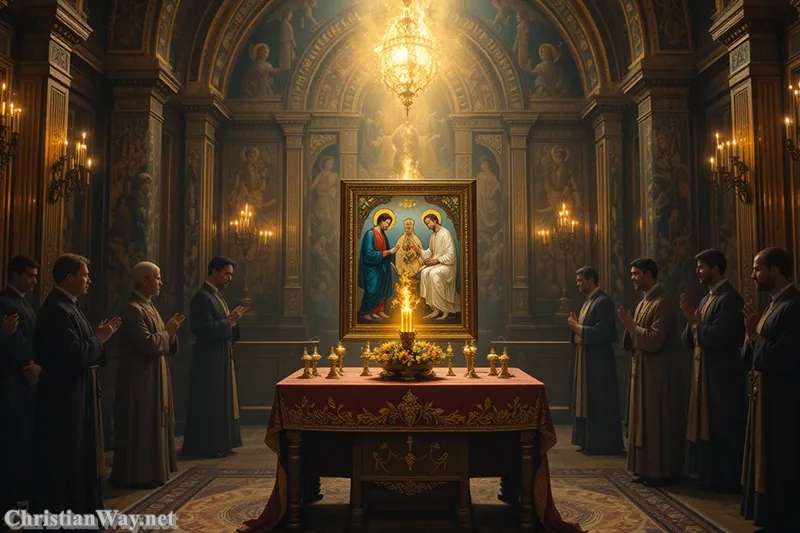
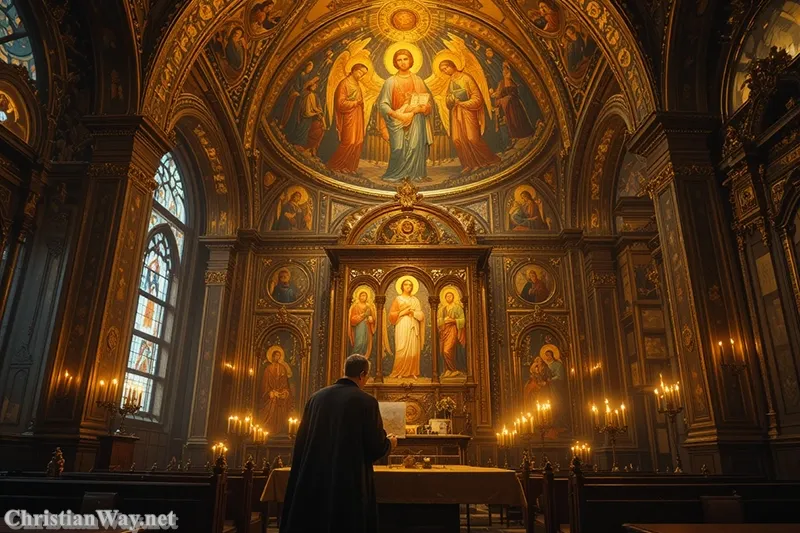
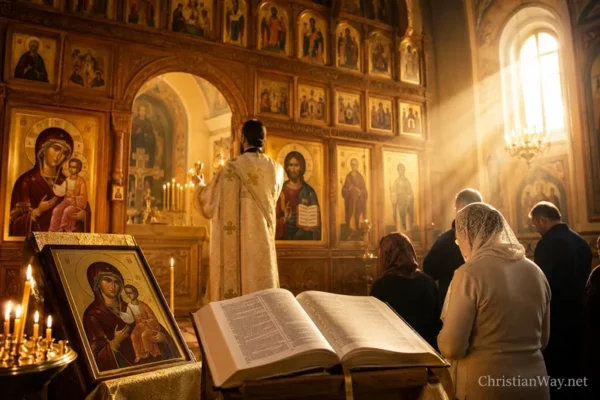
To enter an Orthodox church is often to sense that worship is meant to involve the whole person. There may be candles burning quietly, icons gazing from the walls, incense rising like a prayer, voices chanting ancient hymns, and believers standing together before the mystery of God. Yet the beauty of Orthodox worship is not meant to impress the eye alone. It is meant to awaken the heart. It reminds us that God is not distant from the material world. The One who created water, bread, wine, oil, wood, color, music, and human bodies is able to meet His people through the ordinary gifts of creation.
The Eastern Orthodox Church is often described as ancient, and this is true. It treasures the faith of the early Church, the testimony of the martyrs, the councils that defended the truth about Christ, and the worship passed down through generations. But Orthodoxy is not meant to be an escape into the past. It is a living confession that Jesus Christ remains the same Lord today: the One who calls the weary, forgives sinners, heals wounds, defeats death, and leads His people toward the Father.
For Orthodox Christians, the Church is not merely a building, an institution, or a collection of people who happen to share certain beliefs. The Church is the Body of Christ, a communion of believers called into one life through Baptism, prayer, faith, and the Holy Mysteries. It is a family that stretches beyond one nation, language, or generation. It includes the child learning the sign of the cross, the mother praying for her family, the elderly man whispering the Jesus Prayer, the priest serving a small parish, the monk keeping vigil in silence, the martyr who gave his life for Christ, and the countless hidden saints whose names are known fully by God.
To reflect on The Eastern Orthodox Church is therefore to reflect on the mystery of a people gathered by grace. It is to see the Christian life not as a private journey of self-improvement, but as a shared pilgrimage toward communion with God. It is to discover that faith can be both ancient and alive, reverent and tender, deeply rooted and quietly transformative.
The Church Belongs to Christ
Before speaking about history, bishops, liturgy, doctrine, or tradition, it is important to begin with Jesus Christ. The Eastern Orthodox Church does not belong ultimately to patriarchs, priests, theologians, emperors, nations, or institutions. It belongs to Christ.
Jesus says, “I am the good shepherd: the good shepherd giveth his life for the sheep” (John 10:11). These words reveal the heart of the Church. Christ is not merely a teacher who gives moral advice from a distance. He is the Shepherd who knows His people, seeks the lost, carries the wounded, and gives Himself in love.
The Orthodox Church receives this truth with deep reverence. Every bishop, priest, deacon, monk, nun, parent, teacher, and believer is called to remain beneath the authority of Christ. No leader is the true owner of the Church. No tradition exists for its own glory. No act of worship is complete if it does not lead the heart toward the living Lord.
This is why the Church is more than a human organization. Human organizations can be useful, and the Church certainly has visible structures, communities, laws, worship, and pastoral responsibilities. Yet Orthodox Christians believe that the Church is first a mystery of communion. It is the place where Christ continues to gather His people through the Holy Spirit.
The Church is seen not as a museum of holy things but as a living body. She remembers the past because Christ has acted in history. She cherishes the apostles because they bore witness to the risen Lord. She honors the saints because their lives reveal what grace can do in a human heart. But she also looks forward, because Christ is still calling, healing, and sending His people into the world.
A People Called into Communion
The word church can sometimes sound distant or formal. Yet in the New Testament, the Church is a gathering called together by God. It is a people who belong to Christ.
Saint Paul writes, “Now ye are the body of Christ, and members in particular” (1 Corinthians 12:27). This image matters deeply in Orthodox thought. A body is not a crowd. Each member has a place. Each member has a gift. Each member depends upon the others.
The person who prays quietly at home is part of the Church. The child who learns the Lord’s Prayer is part of the Church. The sick person who receives comfort through prayer is part of the Church. The poor person who comes seeking help is not outside the Church’s concern; he or she stands near the heart of Christ’s command to love.
This vision protects believers from thinking that faith is only about personal success. The Christian is never called merely to save his own soul while ignoring others. We are joined to Christ, and because we are joined to Him, we are joined to one another.
What “Orthodox” Means
The word Orthodox is commonly understood as meaning “right belief” or “right worship.” Yet it should be received with humility. It is not a word meant to make Christians proud or dismissive of others. Its deeper meaning is a desire to remain faithful to the truth of Christ and to glorify God rightly.
The Orthodox Church sees itself as continuing the apostolic faith confessed by the early Church, especially as that faith was clarified through the ancient councils, the writings of the Fathers, the sacramental life, and the worship of the Christian people. Orthodox sources describe this life as rooted in the apostolic community called by Christ and enlivened by the Holy Spirit.
This claim is not meant to suggest that Orthodox Christians have never struggled, failed, or needed repentance. The history of the Church contains human weakness in every age. There have been divisions, political pressures, personal ambitions, and painful wounds. But the Church continues to confess that the faith itself is received, not invented.
A child does not create a family from nothing. The child receives a family, learns its language, hears its stories, and grows into its life. In a similar way, Orthodox Christians receive the faith through the Church. They hear the Gospel, learn the Creed, enter the life of prayer, and gradually discover that the Christian life is larger than personal opinion.
Right Worship Is a Life of Love
Right worship is not merely saying the correct words. It is not only knowing ancient prayers or preserving beautiful ceremonies. Worship becomes true when it forms a heart that loves God and neighbor.
Jesus speaks of those who worship the Father “in spirit and in truth” (John 4:23). Orthodox worship is filled with reverence, but reverence is not meant to become distance. The purpose of worship is to bring the human heart into the presence of God so that it may be healed, humbled, strengthened, and sent outward in mercy.
A person may know the liturgy well and still need to learn patience. A person may honor icons and still need to forgive. A person may fast carefully and still need to become more compassionate toward the poor. Orthodoxy is not fulfilled by external correctness alone. It is fulfilled when the life of Christ begins to grow within us.
Scripture and Holy Tradition
One of the central features of the Eastern Orthodox Church is its understanding of Holy Tradition. This can be misunderstood if tradition is imagined as merely a collection of old customs.
For Orthodox Christians, Holy Tradition is the living faith of the Church. It includes the Scriptures, the Creed, the worship of the Church, the witness of the saints, the decisions of the councils, the teaching of the Fathers, the sacramental life, and the prayerful memory carried by generations of believers.
The Bible stands at the heart of this tradition. Orthodox Christians do not treat Scripture as a book separated from worship. The Bible is read in the Divine Liturgy, prayed through the Psalms, sung in hymns, remembered in feast days, and applied to the daily struggles of believers.
The Gospel is not only studied; it is proclaimed. The Psalms are not only admired; they are prayed. The words of Christ are not only analyzed; they are received as life.
The Orthodox Church reads Scripture within the communion of the Church because it believes the Bible was given to a worshiping people. This does not weaken the authority of Scripture. It protects the believer from turning the Bible into a tool for personal preference.
Tradition Is a Living River
Tradition is sometimes compared to a river. A river remains alive not because it becomes still, but because it continues to flow from its source.
The source of Christian tradition is Christ. The apostles received the Gospel from Him. The Church preserved and proclaimed it. Councils defended it when it was misunderstood. Saints embodied it in their lives. Parents taught it to children. Monks and nuns prayed it through the night. Priests preached it in villages and cities. Martyrs died rather than deny it.
The river has flowed through different languages, cultures, and lands. It has been sung in Greek, Arabic, Romanian, Russian, Serbian, Georgian, English, Vietnamese, and countless other tongues. Yet the water remains the same: Jesus Christ is Lord.
The Orthodox Church does not worship tradition. It worships God. But it receives tradition as a sacred inheritance that helps each generation remain close to the truth of Christ.
The Holy Trinity and the Person of Jesus Christ
At the center of Orthodox faith stands the mystery of the Holy Trinity: Father, Son, and Holy Spirit.
God is one, yet God is not solitary. The Father loves the Son. The Son receives and returns the love of the Father. The Holy Spirit is the living gift of divine communion. This mystery is not offered to Christians as a puzzle to master, but as the deepest truth about love.
Human beings are made for communion because they are created in the image of a God who is communion. We are not meant to live only for ourselves. We are made to receive love, give love, forgive, serve, and belong.
Orthodox Christians confess that Jesus Christ is fully God and fully human. He is not merely a wise teacher, a prophet, or a moral example. He is the eternal Word made flesh.
The Gospel of John says, “The Word was made flesh, and dwelt among us” (John 1:14). In Jesus, God enters human life completely. He knows hunger and weariness. He knows friendship and betrayal. He knows tears, pain, rejection, and death.
This truth is at the heart of Orthodox faith because salvation depends on it. If Christ were not truly God, He could not bring humanity into communion with God. If He were not truly human, He could not heal human nature from within.
The ancient councils defended this confession not because Christians wished to argue about difficult words, but because they understood that the identity of Christ shapes the hope of the world.
The Seven Ecumenical Councils
The Eastern Orthodox Church receives the first seven Ecumenical Councils as authoritative expressions of the apostolic faith. These councils addressed the central questions of Christian belief: Who is Jesus Christ? How is He both God and man? What does it mean to confess the Holy Trinity? How should Christians honor icons without confusing honor with worship?
The councils helped the Church proclaim that Jesus Christ is one divine Person in two natures, truly God and truly human. They defended the divinity of the Holy Spirit. They affirmed the title Theotokos for Mary because the child she bore is truly God incarnate.
Orthodox Christians believe these councils did not create new faith. They defended the faith already received from the apostles. The historic councils remain central to Orthodox self-understanding, especially in relation to the confession of Christ and the life of the Church.
Salvation as Healing and Theosis
One of the most beautiful gifts of Orthodox theology is its understanding of salvation as healing.
Sin is not only a legal failure or the breaking of a commandment. Sin is also a wound in the human person. It is the heart turning away from God, the mind becoming scattered, desire becoming confused, relationships becoming damaged, and the soul seeking life in things that cannot truly give life.
Christ comes as the great Physician. He does not simply tell us that we are sick. He enters our condition. He takes on human flesh. He bears suffering. He descends into death. He rises again.
Through Christ, humanity is not only forgiven; it is invited into restoration.
Orthodox Christians often use the word theosis to describe this transformation. Theosis is sometimes translated as deification or participation in the life of God. It does not mean that human beings become God by nature. God alone is uncreated. God alone is the source of all being.
But through grace, believers are invited to become more fully alive in Christ. Saint Peter writes that Christians may become “partakers of the divine nature” (2 Peter 1:4). Theosis means becoming more like Christ: more truthful, more compassionate, more free from sin, more capable of love.
The Orthodox understanding of salvation therefore includes forgiveness, but it also reaches further. Salvation is healing, renewal, communion, and transformation. A person is not merely declared to be distant from sin; he or she is gradually restored to the life for which humanity was created.
Grace Does Not Destroy Freedom
Orthodox Christians believe that salvation begins entirely with God’s grace. No one can earn divine mercy. No one can save himself by moral achievement, religious performance, or intellectual knowledge.
Yet God does not force the human heart. He invites. He heals. He strengthens. He waits for a free response of faith and love.
This is why Orthodox spirituality often speaks about cooperation with grace. God is always the source. But the believer is called to respond.
A person who receives forgiveness is called to forgive. A person who receives mercy is called to show mercy. A person who has been baptized into Christ is called to grow into the likeness of Christ.
This growth is not always quick. A person may need to repent many times. Old habits may take time to change. A wound may need prayer, confession, counsel, patience, and the support of a faithful community.
God is not impatient with the slow work of healing.
The Divine Liturgy: Heaven Touching Earth
For many people, the most memorable encounter with the Eastern Orthodox Church is the Divine Liturgy.
The chanting, incense, icons, candles, processions, Scripture readings, and sacred silence can feel different from the worship of many other Christian traditions. Yet Orthodox worship is not meant to be a performance. It is not an attempt to entertain or impress.
It is the prayer of the Church.
Orthodox Christians often speak of the Divine Liturgy as a place where heaven and earth meet. This does not mean that worship removes believers from the world. It means that the world is seen as it truly is: created by God, wounded by sin, and called to be renewed through grace.
Bread and wine are offered. Water is used in Baptism. Oil is used in anointing. Human voices sing the Psalms. Bodies stand, bow, cross themselves, and receive Communion. The material world is not rejected. It becomes a sign that God has entered creation through the incarnation of Christ.
The Eucharist at the Heart of the Church
The Eucharist, or Holy Communion, stands at the center of Orthodox worship. In the Divine Liturgy, the Church remembers Christ’s incarnation, cross, resurrection, ascension, and promised return.
Yet this remembrance is not merely looking backward. Orthodox Christians confess that Christ is truly present in the Eucharistic gifts. Bread and wine are received as the true Body and Blood of Christ in a holy mystery beyond simple explanation.
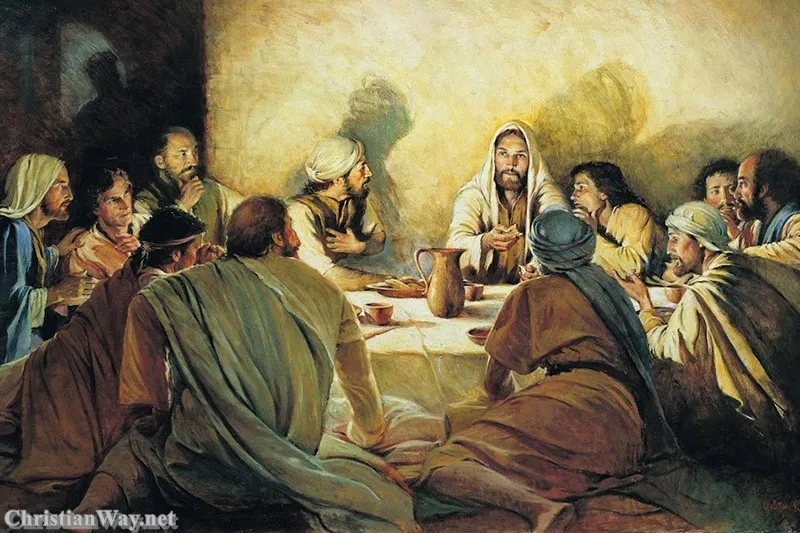
The Eucharist nourishes believers not only as individuals, but as a people. Around the holy table, rich and poor, young and old, joyful and grieving, all stand before the same Lord.
The Church becomes visibly what she is called to be: one body in Christ.
The Orthodox vision of the Church is deeply Eucharistic. The local community gathered around its bishop or priest is not merely a small part of the Church in a weak sense. It is a true expression of the Church’s life when it remains faithful to the apostolic faith and in communion with other local churches.
The Holy Mysteries
The Eastern Orthodox Church commonly speaks of seven Holy Mysteries: Baptism, Chrismation, Eucharist, Confession, Marriage, Holy Orders, and Holy Unction for the sick.
Yet Orthodox Christians often see the whole life of the Church as sacramental. The world is not magical, but it is capable of bearing signs of God’s grace.
In Baptism, a person is united to Christ’s death and resurrection. In Chrismation, the newly baptized is sealed with the gift of the Holy Spirit. In the Eucharist, believers receive Christ’s life-giving presence. In Confession, sin is brought into the light and healing begins. In Marriage, a man and woman are blessed to grow in faithful love. In Holy Orders, bishops, priests, and deacons are set apart for service. In Holy Unction, the sick are prayed for and anointed with oil.
These mysteries are not meant to become empty rituals. They are encounters with grace.
Confession as Healing
Confession holds an especially tender place in Orthodox spirituality. It is not meant to produce fear or humiliation. It is meant to become a place of truth and healing.
The believer does not come to confession pretending to be strong. He comes as someone in need of mercy. She comes with burdens that have grown too heavy to carry alone.
Confession teaches us that repentance is not self-hatred. Repentance is turning toward God.
The prodigal son does not return home because he has made himself worthy. He returns because he remembers the father’s mercy. The father runs to meet him. This is the heart of Christian repentance.
Icons, Mary, and the Saints
One of the most visible features of Orthodox worship is the presence of icons.
Icons may portray Christ, the Virgin Mary, angels, saints, biblical events, and holy moments in the history of salvation. To someone unfamiliar with Orthodoxy, icons may seem difficult to understand. Yet Orthodox Christians do not worship wood, paint, or images. Worship belongs to God alone.
Icons are honored because they direct the heart toward the person depicted.
The central reason icons matter is the incarnation. Because the Son of God truly became human in Jesus Christ, Christians can portray Him. The invisible God has made Himself visible in the face of Christ.
An icon does not attempt to capture the divine essence of God. It bears witness to the truth that “the Word was made flesh.”
Orthodox Christians often call icons windows into heaven. They remind believers that the Church is larger than what can be seen. The saints are not dead figures trapped in history. They are alive in God.
Mary, the Theotokos
The Virgin Mary is honored in Orthodox Christianity as Theotokos, meaning God-bearer or Mother of God.
This title does not make Mary divine. She is a human being, saved by grace. But she is honored because the One she bore is truly God incarnate.
Mary’s greatness lies in her humility. When the angel announces God’s call, she responds, “Behold the handmaid of the Lord; be it unto me according to thy word” (Luke 1:38).
Her life teaches believers that holiness is not self-exaltation. It is openness to God.
The Saints as Witnesses of Grace
The saints are remembered because their lives reveal what the grace of Christ can do in human beings.
Some saints were bishops. Some were martyrs. Some were monks and nuns. Some were parents. Some were poor. Some were scholars. Some lived hidden lives known only to a few people.
Their lives are not meant to make ordinary believers feel inadequate. They are meant to encourage us.
A saint is not someone who never struggled. A saint is someone who kept returning to Christ.
Bishops, Synods, and the Communion of Churches
The Eastern Orthodox Church is not governed by one universal bishop with direct jurisdiction over every Orthodox Christian throughout the world.
Instead, Orthodoxy is a communion of local churches, many of which are self-governing or autocephalous. These churches are united through shared faith, sacramental life, apostolic tradition, and communion.
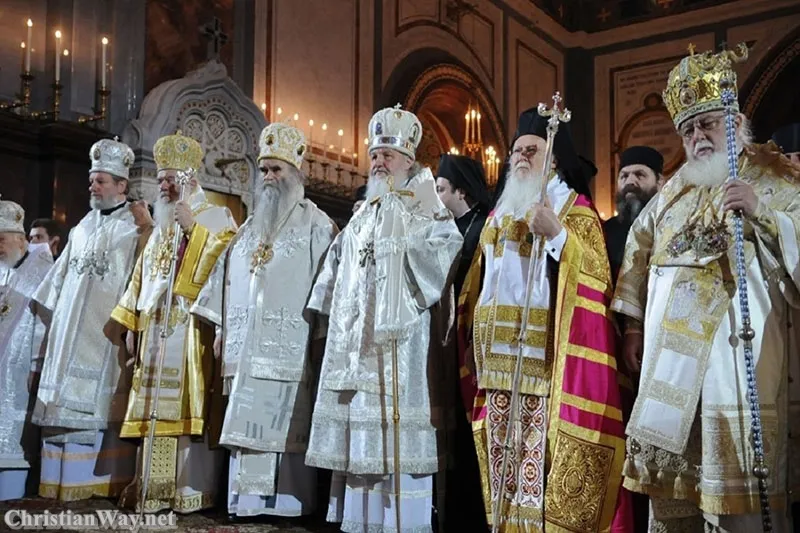
A bishop is called to be a shepherd, teacher, guardian of the faith, and servant of unity within his diocese. Orthodox Christians see bishops as successors of the apostles, entrusted with preserving the Church’s life and gathering believers around the Eucharist.
Orthodoxy also places strong emphasis on conciliarity. This means that the Church seeks to discern important matters through councils, synods, prayer, and shared pastoral responsibility.
The Church is hierarchical, but hierarchy is not meant to become domination. Orthodox teaching sees the Church as a communion of local churches, bound together by faith and sacrament, with authority ordered toward service rather than control.
The Ecumenical Patriarch
The Ecumenical Patriarch of Constantinople is traditionally honored as first among equals among the heads of the Orthodox churches.
This primacy is a primacy of honor and service. It is not the same as the universal papal jurisdiction understood in Roman Catholicism.
The Ecumenical Patriarch serves as a visible sign of unity, encourages dialogue, convokes certain gatherings, and represents Orthodox concerns in many public settings. Yet the Orthodox Church remains deeply conciliar, with each local church guided by its bishops and synod.
This can appear complex to those unfamiliar with Orthodoxy. But its spiritual purpose is important: no bishop is meant to believe that the Church belongs to him. The Church belongs to Christ.
A Brief History of the Eastern Orthodox Church
The Eastern Orthodox Church grew within the shared life of the ancient Christian Church.
In the first centuries, Christians in Rome, Antioch, Alexandria, Jerusalem, Constantinople, and many other places confessed the same Lord, celebrated the Eucharist, honored martyrs, and defended the faith against error.
Over time, differences in language, culture, politics, and ecclesial understanding became more serious between the Greek-speaking East and Latin-speaking West.
The separation commonly associated with the year 1054 was not a single event that instantly created two entirely separate Christian worlds. It was the result of centuries of growing estrangement. Questions concerning papal authority, the filioque clause added in the West to the Creed, political tensions, and the wounds caused by the Crusades all deepened the division.
The separation between Eastern Orthodox and Roman Catholic Christians remains painful because the two traditions still share so much: belief in the Trinity, the incarnation, apostolic succession, the sacramental life, the ancient creeds, and the honor given to saints.
Yet important differences remain, especially regarding papal authority and certain theological developments.
After the fall of Constantinople in 1453, Orthodox Christians continued to live under difficult political circumstances. Churches endured persecution, migration, social pressure, and cultural change. Yet the faith remained alive through parishes, monasteries, families, bishops, martyrs, and ordinary believers who continued to pray.
The Church Beyond One Nation
Eastern Orthodoxy is sometimes mistakenly associated with only one ethnic group or country. In reality, the Orthodox Church includes believers from many nations, languages, and cultures.
It is found in Greece, Romania, Serbia, Bulgaria, Georgia, the Middle East, Africa, Western Europe, the Americas, Asia, Australia, and many other regions.
The Orthodox Church must always resist the temptation to confuse faith with nationalism. Love for one’s culture can be beautiful. Gratitude for language and heritage can be good. But Christ is not the possession of any one people.
The Church belongs to every nation because the Gospel belongs to every human heart.
Monastic Life and the Prayer of the Church
Monasticism has played a central role in Eastern Orthodox Christianity.
Monks and nuns leave behind ordinary patterns of life not because family, work, and society are unimportant, but because they are called to offer themselves in a particular way to prayer, simplicity, repentance, and intercession for the world.
Monasteries have often become places of spiritual counsel, hospitality, learning, sacred art, chanting, and faithful prayer. In times of persecution or confusion, monastic communities have helped preserve the life of the Church.
Yet Orthodoxy does not teach that holiness belongs only to monks and nuns.
A parent caring for children can live a holy life. A worker acting honestly can live a holy life. A student seeking wisdom can live a holy life. An elderly person praying quietly at home can live a holy life.
The monk may pray in a silent cell. The parent may pray while washing dishes. Both can offer their lives to Christ.
The Jesus Prayer
One of the most beloved prayers in Orthodoxy is the Jesus Prayer:
“Lord Jesus Christ, Son of God, have mercy on me, a sinner.”
This prayer is simple enough for a child and deep enough for a lifetime.
It can be prayed while walking, working, waiting, grieving, or facing anxiety. It brings the heart back to Christ. It reminds us that we are not saved by our own strength.
The Jesus Prayer is not a formula meant to control God. It is a cry of trust. It teaches the believer to return again and again to the mercy of Christ.
Fasting, Mercy, and the Freedom of the Heart
Orthodox spirituality includes seasons of fasting, especially before Pascha, the celebration of Christ’s resurrection.
Fasting is not meant to make believers feel superior. It is not a test of religious strength. It is a way of learning freedom.
In a world that teaches every desire to demand immediate satisfaction, fasting gently says, “I belong to God.”
It teaches patience. It reveals attachment. It reminds believers of those who are hungry. It can help the heart become more attentive to prayer.
Yet fasting without mercy is empty.
A person may avoid certain foods and still remain full of anger, gossip, pride, or contempt. Such fasting has missed its purpose.
True fasting should make us more compassionate. It should teach us to share with those in need. It should make us more patient with those around us. It should lead us toward humility.
The Eastern Orthodox Church in Daily Life
The Orthodox faith is not meant to remain inside church buildings.
It enters the home, the meal, the workplace, the hospital room, the family conversation, the journey, the sorrow, and the small moments of ordinary life.
A family may light a candle before an icon and pray together. A parent may bless a child before school. A person may begin the morning with the sign of the cross. Someone facing a difficult decision may whisper the Jesus Prayer. An elderly believer may pray for grandchildren and friends by name.
These practices do not remove every difficulty. They do not make life painless. But they remind the heart that God is near.
The purpose of Orthodox life is not to become impressive. It is to become more open to grace.
Faithfulness in Small Things
The world often celebrates what is loud, dramatic, and visible. But the Church remembers that God often works through hidden faithfulness.
A person choosing not to speak harshly can become a witness to Christ.
A worker refusing dishonesty can become a witness to Christ.
A young person choosing kindness rather than cruelty can become a witness to Christ.
A parent praying for a difficult child can become a witness to Christ.
A neighbor bringing food to someone who is sick can become a witness to Christ.
The Orthodox Church teaches that holiness is not limited to great public acts. It is often formed through small acts of love repeated faithfully over time.
Orthodox Christians and the Wider Christian Family
The Eastern Orthodox Church shares with Catholics, Anglicans, Protestants, Oriental Orthodox Christians, and many other believers the central confession that Jesus Christ is Lord, that He died and rose again, and that the Gospel calls humanity to repentance, hope, and love.
Real differences remain. Orthodox Christians differ from Roman Catholics concerning papal authority and certain theological developments. They differ from many Protestant traditions concerning apostolic succession, sacraments, icons, saints, and the place of Holy Tradition.
These differences should not be ignored. Truth matters. Theology matters. History matters.
But Christians are never permitted to let disagreement become contempt.
Jesus prayed that His followers might be one (John 17:21). This unity cannot be built by pretending that all differences are unimportant. It must grow through humility, prayer, honesty, repentance, and love.
Orthodox Christians bring important gifts to the wider Christian family: a deep reverence for worship, a rich sacramental vision, the wisdom of the Church Fathers, the beauty of icons, the prayer of the saints, and the understanding of salvation as healing and communion with God.
At the same time, Orthodox Christians can recognize gifts in other traditions: the Catholic commitment to global charity and mission, the Protestant emphasis on Scripture and personal conversion, the Anglican love of ordered worship, and the evangelical desire to share Christ with courage.
The Body of Christ is wounded by division, but the Holy Spirit continues to call believers toward deeper love.
Reflect and Pray
Dear friend, the Eastern Orthodox Church is not simply a collection of ancient customs or beautiful ceremonies. It is a living confession that Christ has entered the world, carried the cross, conquered death, and continues to gather His people into the life of God.
It reminds us that faith is more than ideas. Faith is prayer when we are tired. It is repentance when we have failed. It is worship when the heart is restless. It is mercy when another person is hurting. It is the quiet decision to keep returning to Christ, again and again, until His love begins to shape the whole life.
Perhaps you are drawn to the beauty of Orthodox worship. Perhaps you are curious about icons, saints, the Divine Liturgy, fasting, or ancient prayer. Perhaps you are simply longing for a faith that feels rooted, reverent, and alive.
Begin with Christ.
Read the Gospels. Pray honestly. Ask God to lead you into truth, humility, and love. The purpose of every sacred hymn, every icon, every liturgy, every fast, and every act of worship is not to make religion feel distant and impressive. It is to bring the human heart nearer to the living Lord.
Let us pray:
Lord Jesus Christ, You are the true Shepherd and the life of Your Church. Thank You for the apostles, the saints, the worshiping community of believers, and the grace that continues to heal the human heart. Teach us to seek You with humility, to worship You with reverence, to receive Your mercy with gratitude, and to love our neighbors with patience and compassion. Heal the divisions among Christians, strengthen those who suffer for Your name, and draw Your people ever more deeply into the unity of Your truth and love. Amen.
May the peace of Christ dwell richly in your heart, and may His light guide every step of your journey toward the life that never ends.
— Fr. John Matthew