Dear friends, welcome. It is often in the smallest vessels that God pours His most potent grace. Today, we turn our hearts toward a saint who, though a child in years, possessed a spiritual maturity that rivals the great theologians. We speak of St. Maria Goretti, the “Little Flower of the Marshes.” In a world that often misunderstands the nature of love and freedom, her life stands as a radiant beacon, reminding us that true strength lies not in physical power, but in the purity of the heart and the courage to forgive.
Profile of Holiness
| Attribute | Detail |
|---|---|
| Birth Name | Maria Teresa Goretti |
| Lifespan | October 16, 1890 – July 6, 1902 |
| Birthplace | Corinaldo, Ancona, Italy |
| Service Period | 1890 – 1902 (A short life of witness) |
| Feast Day | July 6 |
| Patronage | Youth, teenage girls, purity, victims of crime, forgiveness |
| Key Virtue | Heroic Forgiveness & Purity |
The Early Call: A Lily Among Thorns
To understand the profound sanctity of “Marietta,” as she was affectionately known, we must first look at the soil in which she bloomed. Born in 1890 in Corinaldo, Italy, her family faced the crushing weight of poverty. When Maria was still very young, the Gorettis moved to the Pontine Marshes near Nettuno, seeking work as sharecroppers. It was a harsh, malarial environment, a place where survival was a daily struggle. Yet, amidst this physical hardship, the light of faith burned brightly in the Goretti household.

The defining tragedy of her early life came when malaria claimed her father, Luigi. At the tender age of nine, Maria looked at her grieving mother, Assunta, and said, “Mother, be brave, God will help us.” From that moment, a role reversal took place. While Assunta took to the fields to do a man’s work, Maria became the “little mother,” managing the household, caring for her siblings, and cooking for the farmhands. It was here, in the mundane service of domestic life, that her holiness took root. She did not complain; rather, she lived the beatitude, “Blessed are the pure in heart,” finding Jesus in the pots, pans, and mending of clothes.
The Great Work: A Witness to Dignity
Maria’s “great work” was not a long ministry of preaching, but a singular, heroic stance for human dignity and divine law. The Gorettis shared a farmhouse with the Serenelli family, including a troubled young man named Alessandro. As Maria approached her twelfth year, Alessandro began to fixate on her, making inappropriate advances and threats. Maria, possessed of a wisdom beyond her years, understood the gravity of sin. She did not merely fear for her safety; she feared for his soul.
The climax of her life occurred on a hot July afternoon in 1902. Alone in the house mending a shirt, Maria was cornered by Alessandro. When he attempted to violate her, she did not scream for help solely out of fear, but shouted a theological warning: “No! It is a sin! God does not want it! You will go to hell!” In a blind rage, Alessandro stabbed her fourteen times. Even in this moment of supreme violence, Maria’s concern was for the moral law of God. She exemplified the conviction that the integrity of the soul is worth more than life itself, a truth we cherish here at Christian Way as the foundation of Christian anthropology.
The Cross and the Crown: The Miracle of Mercy
The true miracle of St. Maria Goretti, however, happened not in the farmhouse, but in the hospital in Nettuno. Suffering from fatal wounds and unquenchable thirst, suffering her own Passion, the local priest asked her if she could forgive her murderer. Without hesitation, she whispered, “Yes, for the love of Jesus I forgive him… and I want him to be with me in Paradise.” She died shortly after, on July 6, 1902.

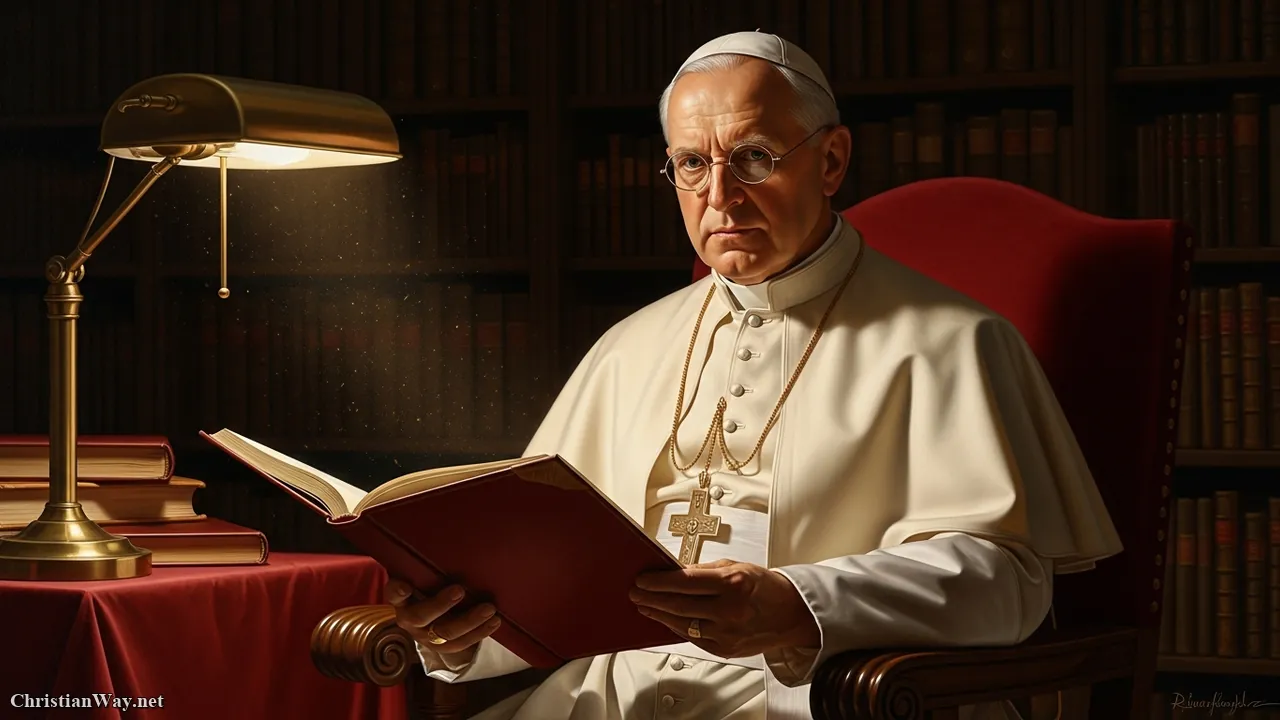
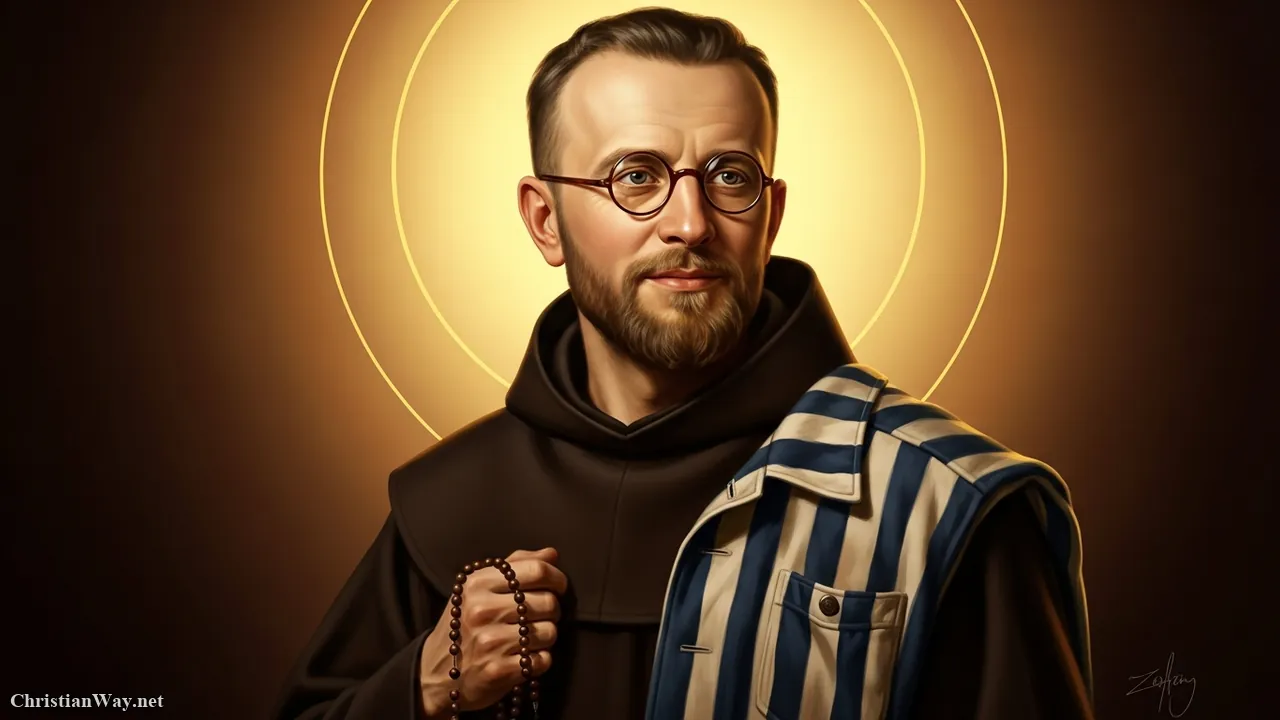
Her forgiveness was not merely words; it was active, redemptive power. For years, Alessandro remained unrepentant in prison, until Maria appeared to him in a dream, handing him lilies that turned into flames in his hands. This vision broke his heart of stone. He confessed his crime, served his time, and spent the rest of his life as a lay brother in a Capuchin monastery. In 1950, when Pope Pius XII canonized Maria, her mother Assunta was present—a historic first—and beside her stood Alessandro Serenelli, the man who had killed her daughter, now a weeping testament to the grace of God. This is the crown of her martyrdom: a love strong enough to save the one who took her life.
Spiritual Highlights
- The Primacy of the Soul: Maria teaches us that physical safety, while important, is secondary to the health of the soul. She valued her union with God above all earthly things.
- The Power of Forgiveness: Her absolution of Alessandro proves that no wound is too deep to be healed by mercy. Forgiveness is a choice that frees both the victim and the offender.
- Sanctity in the Ordinary: She became a saint not by doing great things, but by doing small things—cooking, cleaning, comforting her mother—with great love.
- Courage in Youth: Her life is a reminder to the young that they are capable of heroic virtue and are called to be saints now, not later.
A Prayer for Intercession
O Little Daughter of God, Saint Maria Goretti, you who were strong when you were weak, and rich when you were poor, hear our prayer today. In a world that often confuses pleasure with happiness, teach us the beauty of a pure heart. When we are hurt, lend us your courage to forgive those who trespass against us. Pray for the youth of our time, that they may find their dignity in Christ. Help us to see, as you did, that Heaven is our true home, and that no sacrifice is too great for the love of Jesus. Amen.
— Fr. John Matthew, for Christian Way