Dear friends,
There is a profound difference between a museum and a church, though in Italy, the lines often blur in the most beautiful of ways. When we step across the threshold of these ancient sanctuaries, we are not merely tourists observing the relics of a bygone era; we are pilgrims stepping into a living stream of prayer that has flowed for centuries. The stone walls before us have soaked up the tears of the penitent, the joys of the wedded, and the silence of the saints.
In my own walk as a priest, I have found that these holy sites serve as a “Fifth Gospel”—a testimony written not in ink, but in marble, mosaic, and light. They remind us that our faith is not an abstract philosophy but a historical reality. It happened here. Peter walked these roads; Francis prayed on this hill; the Eucharistic miracle stained this very linen. To visit these places is to anchor our drifting souls to the solid rock of Christian history.
As we journey through this list, I invite you to look beyond the architectural grandeur. Yes, the domes are breathtaking, and the frescoes are masterpieces. But look closer. Look for the tabernacle lamp that still burns. Listen for the echo of the Gregorian chant. These churches are not monuments to human ego, but offerings to the Divine Glory. May this guide serve not just as a travel itinerary, but as a roadmap for your own spiritual formation.
Let us walk together, with open hearts, into the sacred beauty of Italy.
Table of The Top 10 Oldest and Most Sacred Catholic Churches in Italy
| Rank | Church Name | Location | Spiritual Significance |
|---|---|---|---|
| 1 | St. Peter’s Basilica | Vatican City | The burial place of the First Apostle; the heart of the Church. |
| 2 | Basilica of St. Paul Outside the Walls | Rome | The tomb of the Apostle to the Gentiles and a symbol of mission. |
| 3 | Basilica of Saint Francis | Assisi | The resting place of the “Poverello” and a beacon of peace. |
| 4 | St. Mark’s Basilica | Venice | A golden testament to the Evangelist Mark and Eastern tradition. |
| 5 | Duomo di Milano | Milan | A Gothic hymn in stone dedicated to the Nativity of Mary. |
| 6 | Santa Maria del Fiore | Florence | A Renaissance masterpiece honoring the beauty of the Mother of God. |
| 7 | Basilica of Saint Anthony | Padua | A global center of pilgrimage for those seeking lost things and miracles. |
| 8 | Siena Cathedral | Siena | Known for its “graffito” pavement, depicting the path of redemption. |
| 9 | Orvieto Cathedral | Orvieto | Built to honor the Eucharistic Miracle of Bolsena. |
| 10 | The Pantheon (Santa Maria ad Martyres) | Rome | The ancient temple transformed to honor Mary and all Christian martyrs. |
Top 10. The Pantheon (Basilica of St. Mary and the Martyrs) — Rome
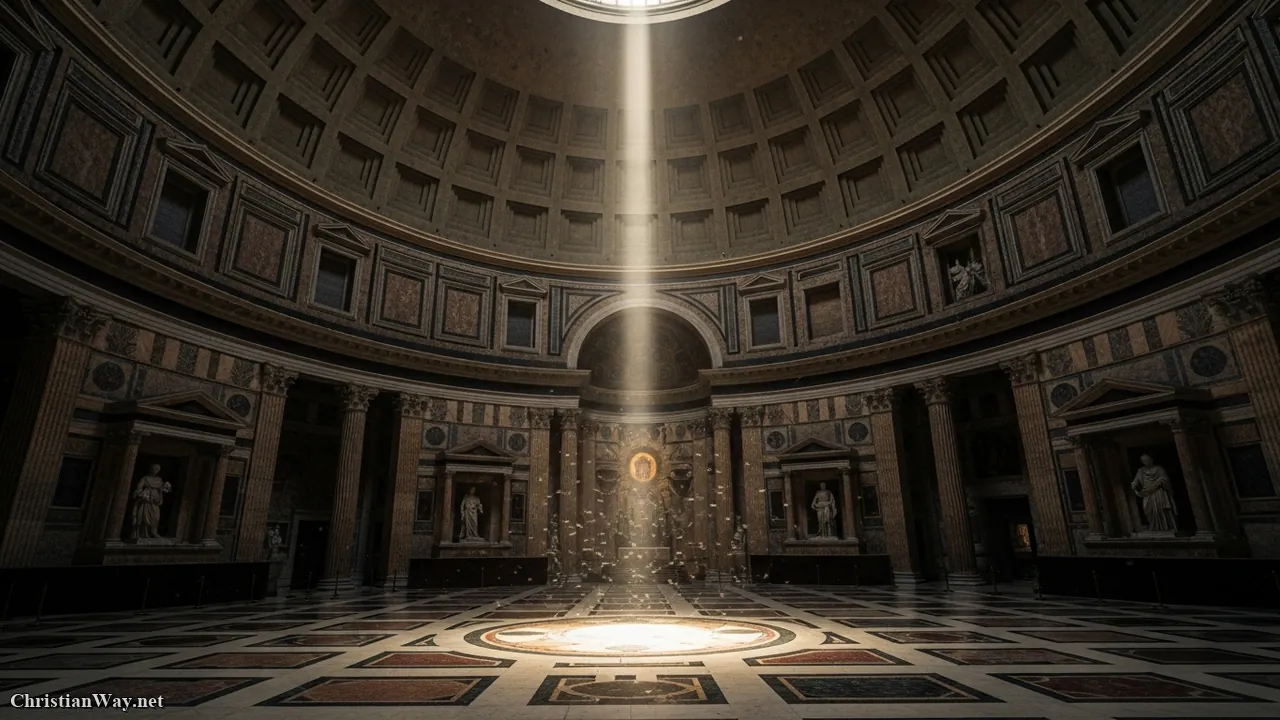
The Scene: Walking into the Pantheon is a disorienting experience in the best possible way. You pass through massive bronze doors, survivors of the Roman Empire, into a space of perfect geometry. The famous oculus—the unglazed eye in the dome—casts a single, moving spotlight of sun across the floor, or allows the rain to fall like tears into the center of the sanctuary. Once a temple to “all gods,” it was consecrated in 609 AD to the One True God, specifically honoring the Virgin Mary and all the martyrs.
The Theology: This conversion from pagan temple to Christian basilica is a powerful theological statement. The Church does not destroy culture; she baptizes it. Just as Christ redeems our fallen human nature, this building was redeemed from idolatry to become a house of prayer. The open oculus reminds us that our worship is always open to the heavens, and that the “eye of God” is ever upon us. It stands as a testament to the communion of saints—that “great cloud of witnesses” (Hebrews 12:1) who surround us.
The Application: In our modern lives, we often have “idols” that occupy the center of our hearts—work, status, or worry. The Pantheon invites us to perform a spiritual consecration of our own interior “temples.” Can we, like Pope Boniface IV did with this building, drive out the distractions and dedicate the center of our lives to Christ? It is a place to pray for the courage of the martyrs, asking that we might stand firm in our small daily trials just as they did in their great ones.
Spiritual Highlights:
- Feast Day: All Saints Day (November 1) actually has roots connected to the consecration of this church.
- Scripture: “For we are the temple of the living God.” (2 Corinthians 6:16)
Top 9. Orvieto Cathedral (Duomo di Orvieto) — Orvieto
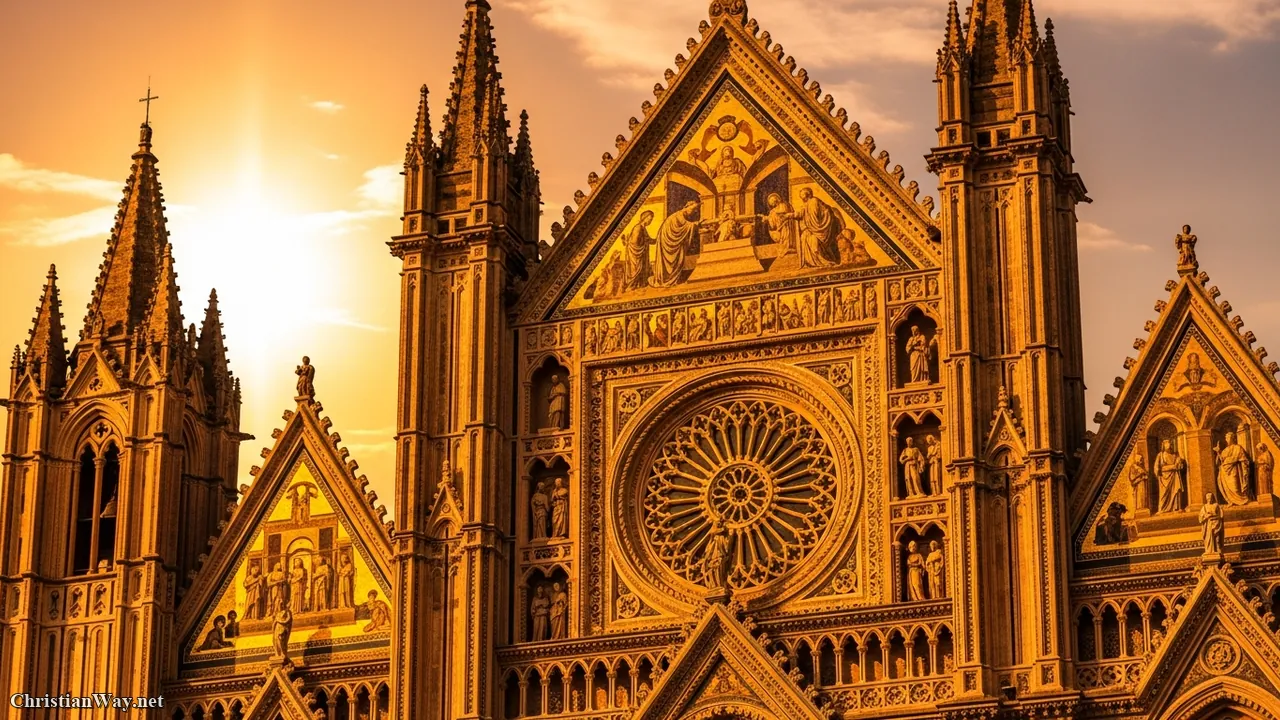
The Scene: Perched on a cliff of volcanic tuff, the façade of Orvieto Cathedral glitters like a golden monstrance against the Umbrian sky. It is a spectacle of mosaics, bas-reliefs, and intricate sculpture. But the true treasure lies within the Chapel of the Corporal. Here, preserved in a reliquary, is the blood-stained linen from the Miracle of Bolsena (1263), where a consecrated host began to bleed, dispelling the doubts of a skeptical priest.
The Theology: Orvieto is the architectural embodiment of the Feast of Corpus Christi. The entire building is a stone hymn to the Real Presence of Jesus in the Eucharist. The intricate façade tells the story of salvation, culminating in the Last Judgment, reminding us that the Judge who will come at the end of time is the same Savior present in the humble bread of the altar. It challenges the “symbolic” view of the Eucharist, confronting us with the physical reality of Christ’s sacrifice.
The Application: We live in an age of skepticism, much like the priest Peter of Prague who doubted the transubstantiation. Visiting Orvieto, or simply meditating upon it, asks us to examine our own reverence. Do we approach the altar with routine indifference, or with the trembling awe of Moses at the burning bush? Let this cathedral remind you that God is not distant; He is physically close to us in the Tabernacle.
Spiritual Highlights:
- The Relic: The Corporal of Bolsena, displayed prominently.
- Art: Luca Signorelli’s Last Judgment frescoes, which deeply influenced Michelangelo.
Top 8. Siena Cathedral (Duomo di Siena) — Siena
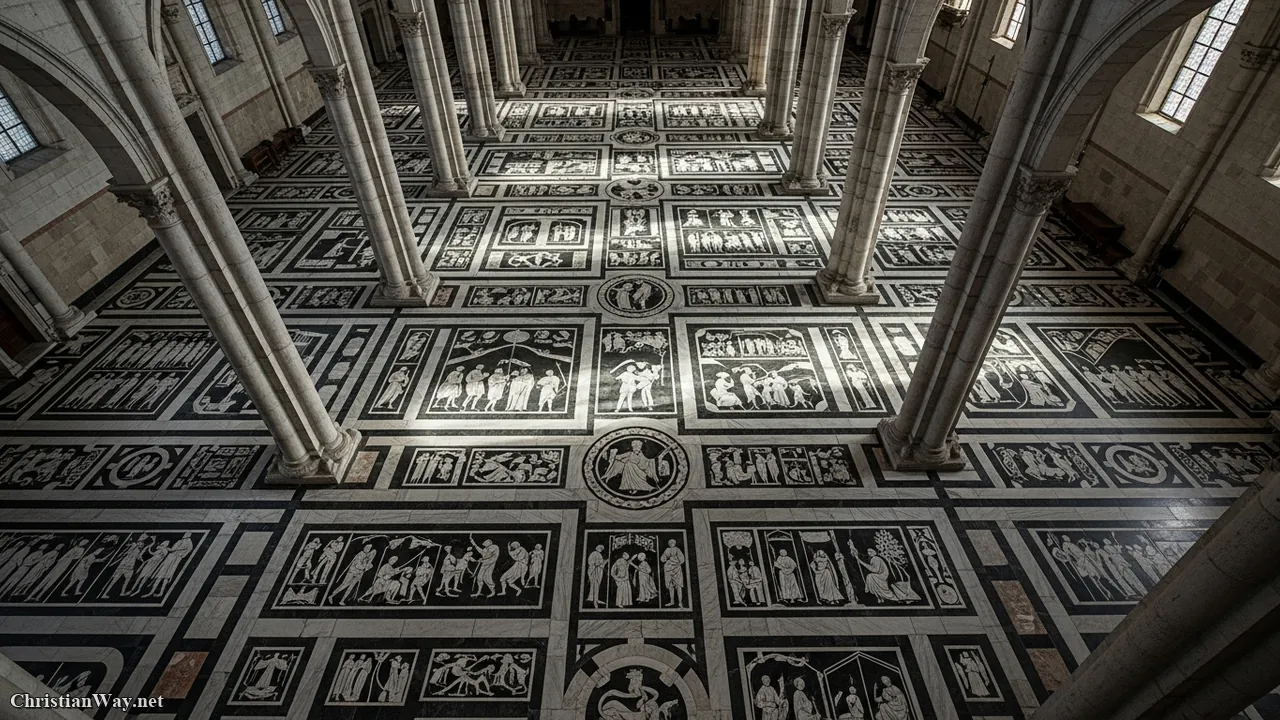
The Scene: In the heart of Tuscany stands a cathedral of striking black and white marble stripes, reflecting the colors of Siena. But unlike other churches where your eyes are drawn upward, here you must first look down. The floor of the cathedral is a sprawling masterpiece of 56 inlaid marble panels—graffiti in stone—depicting scenes from the Old Testament and antiquity. It is a visual Bible laid out beneath your feet.
The Theology: The pavement of Siena represents the earthly pilgrimage. We walk over the stories of the fall, the prophets, and the pagan sybils who grasped at the truth in shadows. As you move toward the altar, the art transitions from the human struggle to the divine redemption. It is a physical journey from the dust of the earth to the glory of the sanctuary. The “zebra” striping of the pillars reminds us of the dualities of life: light and shadow, sin and grace, death and resurrection.
The Application: Life is often a messy mosaic of confusing events. We sometimes feel we are walking in circles. Siena teaches us that even our “Old Testament” moments—our struggles and wanderings—are part of the path that leads to the Altar. Nothing is wasted in God’s economy. As you walk the floor of your own life today, know that it is leading you, step by step, toward the Holy of Holies.
Spiritual Highlights:
- The Pulpit: Nicola Pisano’s octagonal pulpit, a pivotal work in the history of sacred art.
- Scripture: “Your word is a lamp for my feet, a light on my path.” (Psalm 119:105)
Top 7. Basilica of Saint Anthony — Padua
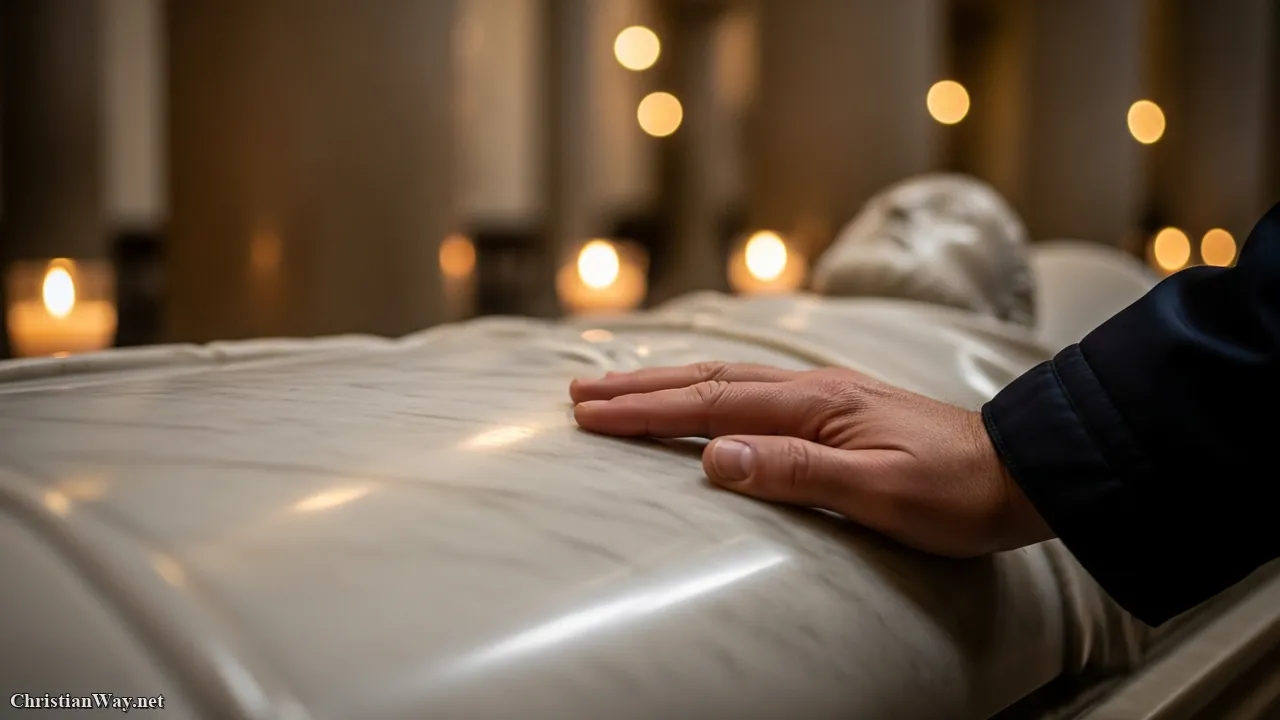
The Scene: Known simply as “Il Santo” (The Saint) to locals, this basilica is a chaotic, wonderful blend of Romanesque, Gothic, and Byzantine styles, topped with minaret-like spires. Inside, the atmosphere is thick with devotion. You will see pilgrims pressing their hands against the tomb of St. Anthony, whispering prayers in a hundred languages. It is not a museum of the cold past; it is a warm, beating heart of current faith.
The Theology: St. Anthony is often reduced to the “finder of lost keys,” but he was a powerhouse of the Gospel, a “Hammer of Heretics” who preached the Incarnation with fire. The basilica houses his tongue and vocal cords as relics—a testament to the power of the Word of God spoken through a human vessel. The architecture, mixing East and West, reflects the universality of the Gospel which Anthony preached to all who would listen (even the fish, as the legend goes!).
The Application: Many of us come to God only when we have “lost” something—health, peace, or hope. St. Anthony welcomes these petitions, but he always points us beyond the lost object to the Found Savior. If you are feeling lost today, spiritually or emotionally, rest in the knowledge that you are worth more than many sparrows. Press your hand, in spirit, against this tomb and ask not just for a miracle, but for the Miracle-Giver.
Spiritual Highlights:
- The Tomb: The Chapel of the Ark, usually adorned with photos and notes from the faithful.
- Devotion: The “Bread of St. Anthony,” a charity tradition for the poor.
Top 6. Santa Maria del Fiore (The Duomo) — Florence
The Scene: Dominating the skyline with its terracotta-tiled dome, Brunelleschi’s masterpiece is an icon of human ingenuity placed at the service of God. The exterior is a polychrome wonder of pink, green, and white marble. Yet, the interior is strikingly stark and empty. This contrast is intentional. The vast, open space draws the eye inevitably upward to the colossal fresco of the Last Judgment inside the dome, where Christ waits.
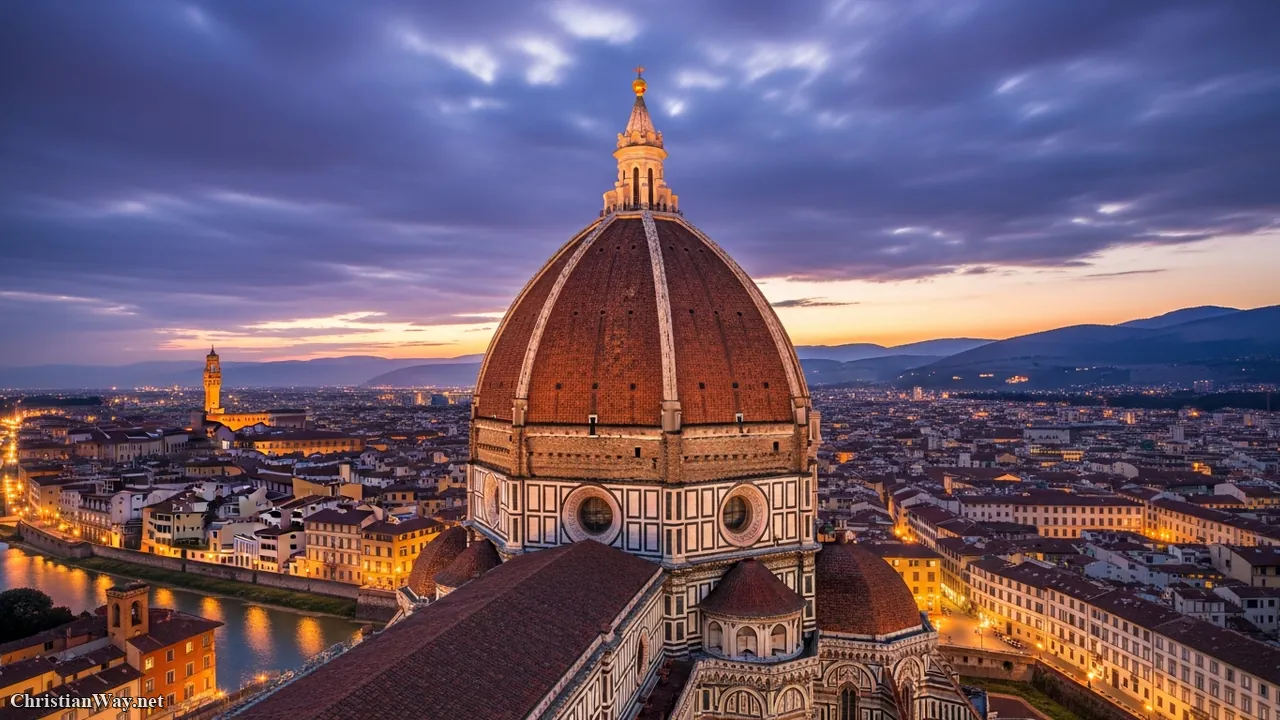
The Theology: This cathedral is dedicated to “Saint Mary of the Flower,” a reference to Christ, the fruit of Mary’s womb. The dome is an architectural representation of Mary’s protective mantle covering the city. Theologically, the engineering feat represents the elevation of the human mind towards the divine. It suggests that faith and reason are not enemies; rather, reason (engineering) builds the structure that Faith (the Liturgy) inhabits.
The Application: We often try to compartmentalize our lives: our “smart” professional side and our “spiritual” side. Florence’s Duomo challenges us to bring our best intellect, our highest skills, and our greatest creativity to God. He does not want a mediocre offering. He wants your “dome”—your highest achievement—to be built for His glory. Whatever your talent, use it to point the world, like this cathedral, toward Heaven.
Spiritual Highlights:
- The Dome: An engineering miracle by Filippo Brunelleschi.
- Scripture: “Unless the Lord builds the house, the builders labor in vain.” (Psalm 127:1)
Top 5. Duomo di Milano (Milan Cathedral) — Milan
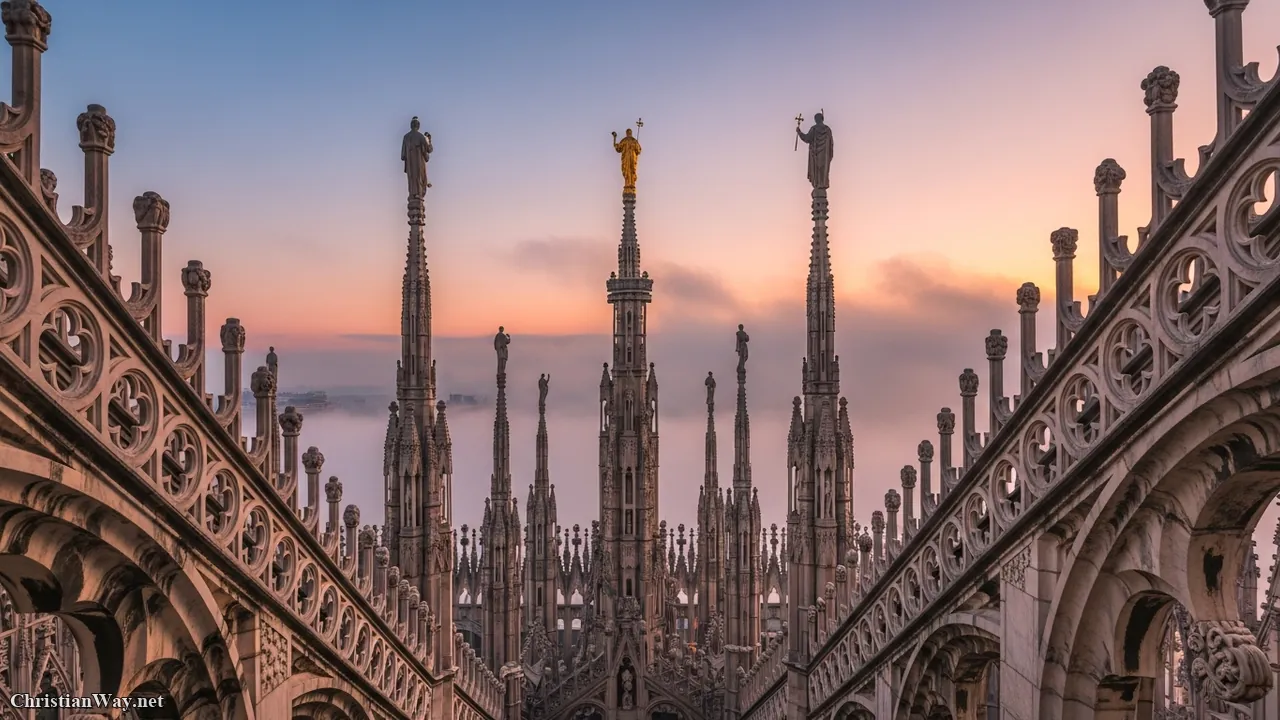
The Scene: It is a mountain of marble. With 135 spires and over 3,400 statues, the Duomo di Milano is the supreme example of Gothic architecture in Italy. It took nearly six centuries to complete, a multi-generational project of patience. At the very top stands the Madonnina, the golden statue of Mary, watching over the hustle of the fashion capital. Inside, the forest of massive pillars creates a twilight gloom that is pierced by the vibrant colors of some of the world’s largest stained-glass windows.
The Theology: Gothic architecture is designed to make you feel small, yet elevated. The vertical lines pull the soul upward. The sheer number of statues—saints, martyrs, and even boxers and everyday figures—reminds us that the Church is a vast body made of many different parts. It is a “stone litany.” The slow construction (over 500 years) is a theological lesson in itself: the City of God is not built in a day. It requires the faithfulness of generations.
The Application: In our instant-gratification culture, we want spiritual maturity now. We want our prayers answered today. The Duomo teaches us the sanctity of the “slow work.” God is chiseling you, year by year, into a cathedral for His Spirit. Do not be discouraged if the work seems unfinished. Like this great church, you are a work in progress, destined for glory.
Spiritual Highlights:
- Relic: The “Holy Nail” from the True Cross, suspended above the altar.
- Saint: St. Charles Borromeo, the great reformer bishop, is buried in the crypt.
Top 4. St. Mark’s Basilica (Basilica di San Marco) — Venice
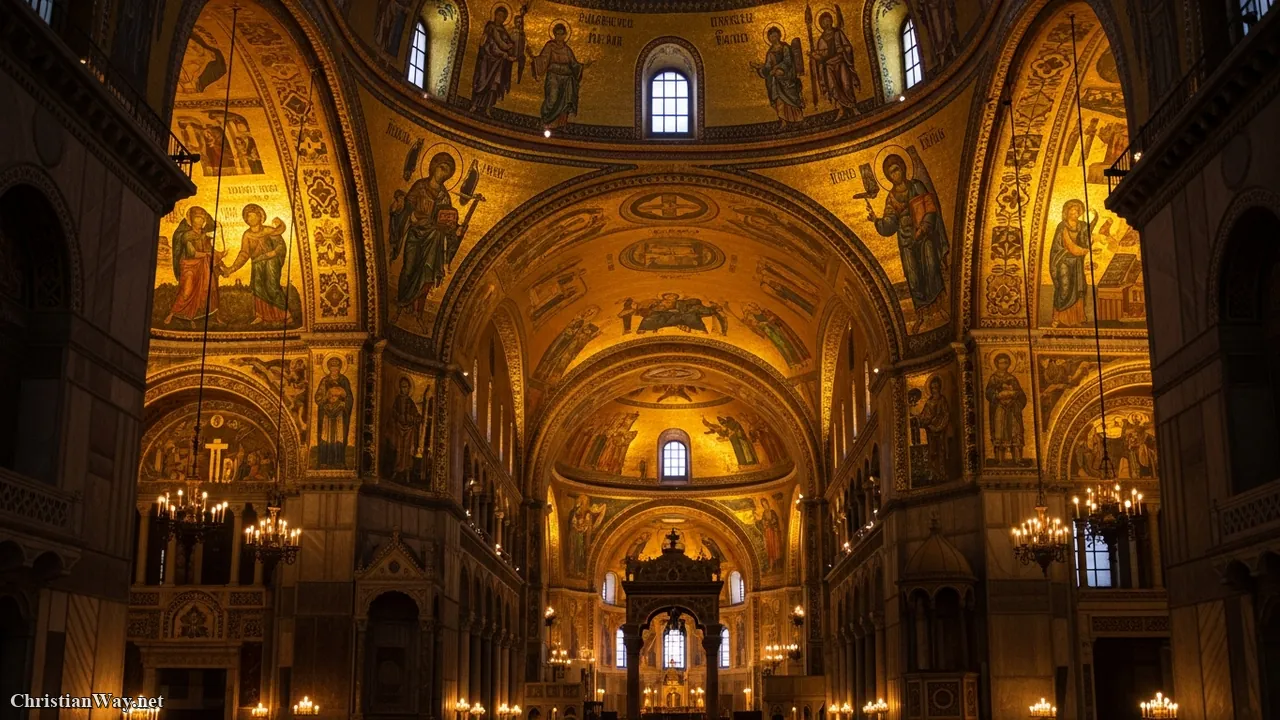
The Scene: If Milan is a mountain of marble, Venice is a cavern of gold. St. Mark’s is the most Byzantine of all Western churches, a testament to Venice’s connection to the East. The interior is covered in over 85,000 square feet of gold mosaics. The floor undulates like the waves of the lagoon. It houses the remains of St. Mark the Evangelist, stolen (or “rescued”) from Alexandria in the 9th century. It is mysterious, dark, and glowing with a supernatural light.
The Theology: Gold, in iconography, represents the uncreated light of God—eternity. When you stand in St. Mark’s, you are standing “inside” the Kingdom of Heaven. The five domes form a Greek Cross, symbolizing Christ’s victory over the four corners of the earth. The presence of St. Mark reminds us of the power of the Gospel record. This is the resting place of the man who wrote down the roar of the Lion of Judah.
The Application: The gold of St. Mark’s only shines when it reflects light. In the dark, it is dull. Similarly, we are called to reflect the light of Christ. We have no light of our own; we are simply the tesserae (mosaic tiles) in God’s great design. Furthermore, St. Mark’s reminds us to value the Scriptures. Do we read the Gospel of Mark with the same reverence that the Venetians built this basilica? Let us return to the text that tells us who Jesus is.
Spiritual Highlights:
- The Pala d’Oro: An exquisite golden altar screen studded with precious gems.
- Scripture: “The beginning of the good news about Jesus the Messiah, the Son of God.” (Mark 1:1)
Top 3. Basilica of Saint Francis — Assisi
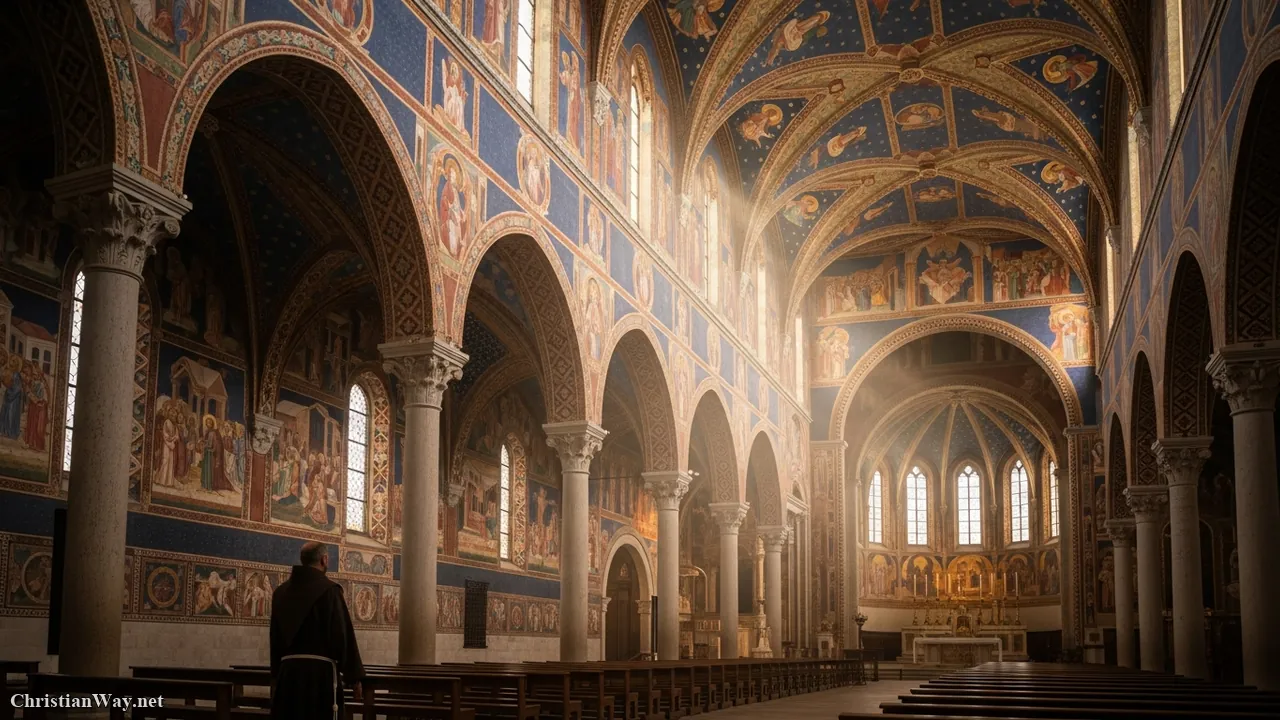
The Scene: Built into the side of the Hill of Paradise, this basilica is actually two churches stacked on top of each other. The Lower Church is Romanesque, dark, low, and crypt-like—representing the humility of Francis. The Upper Church is Gothic, airy, light, and filled with Giotto’s bright frescoes—representing the glory of the Saint in heaven. It is a place of overwhelming peace. Even the air in Assisi feels different, lighter, charged with the Franciscan spirit of Pax et Bonum (Peace and Good).
The Theology: This is the tomb of the man who tried to imitate Christ most perfectly. The theology here is the “Kenosis”—the self-emptying of Christ. Francis stripped himself of worldly wealth to be filled with God. The frescoes by Giotto revolutionized art by showing a human, emotional Jesus and a Francis who walked among real trees and birds. It affirms that creation is good and that holiness is accessible to the simple.
The Application: We live in a world of noise, accumulation, and conflict. Assisi asks us the hard question: What can we do without? What baggage are we carrying that prevents us from climbing the hill to God? St. Francis invites us to find joy not in possessing, but in being possessed by the love of Christ. It is the perfect place to pray for peace—in our hearts, our families, and our world.
Spiritual Highlights:
- The Tomb: A simple stone sarcophagus in the crypt, rediscovered in 1818.
- Art: Giotto’s cycle of the Life of St. Francis in the Upper Basilica.
Top 2. Basilica of St. Paul Outside the Walls — Rome
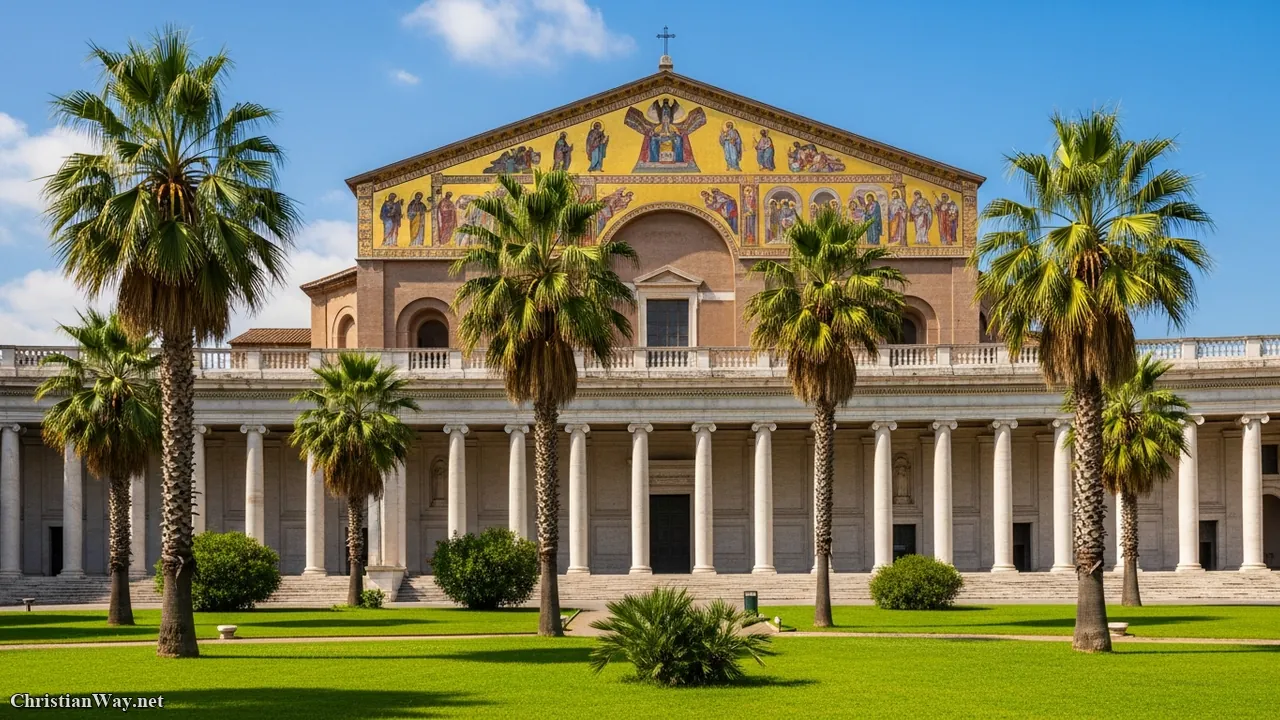
The Scene: Often overlooked by tourists rushing to the Vatican, this Basilica is a majestic, tranquil fortress of faith. It marks the spot where St. Paul was beheaded and buried. The vast interior, with its forest of columns and the gold mosaic façade, is breathtaking. A long series of portrait medallions of every Pope, from St. Peter to Francis, runs along the nave, visually connecting the roots of the Church to the present day.
The Theology: If Peter is the rock, Paul is the sword of the Spirit. This church is the sanctuary of the Word. It represents the missionary zeal of the Church. Paul traveled the known world to bring the “Good News” to the Gentiles (us). The chains of St. Paul are venerated here, a stark reminder that the Gospel often comes at a high personal cost. The line of Popes reminds us of the apostolic succession—the unbroken chain of authority protecting the deposit of faith.
The Application: St. Paul was a persecutor who became an apostle. No one is beyond the reach of God’s grace. This basilica stands as a monument to the possibility of radical change. It also challenges our passivity. Paul could not stay silent about Jesus. Can we? Are we willing to go “outside the walls” of our comfort zones to share the love of God with those who do not know Him?
Spiritual Highlights:
- The Relic: The chains that bound St. Paul while he was in prison in Rome.
- Scripture: “I have fought the good fight, I have finished the race, I have kept the faith.” (2 Timothy 4:7)
Top 1. St. Peter’s Basilica — Vatican City
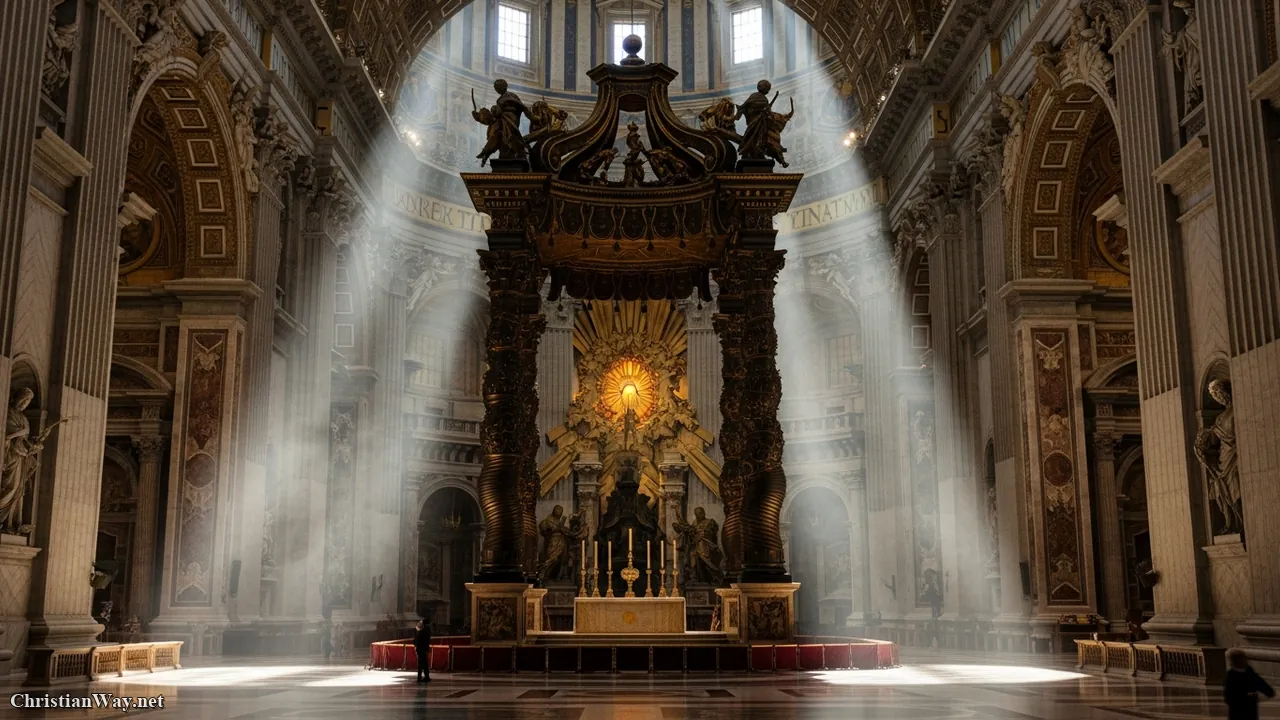
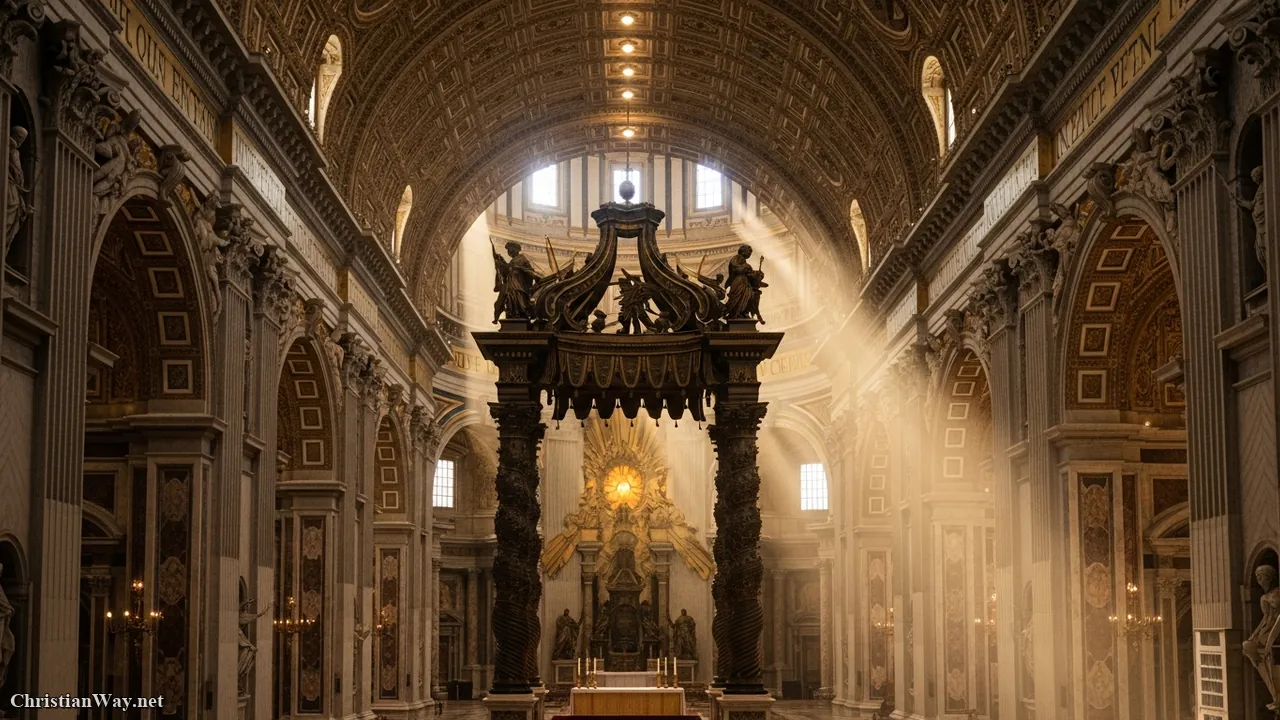
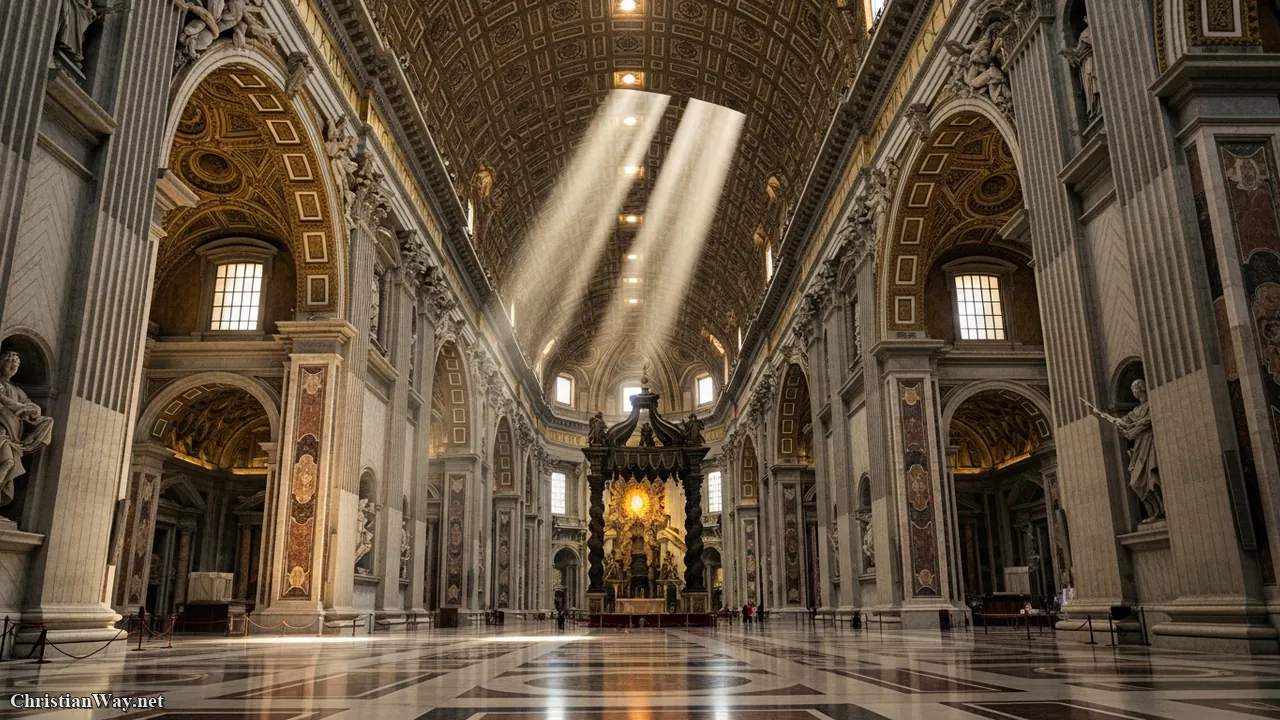
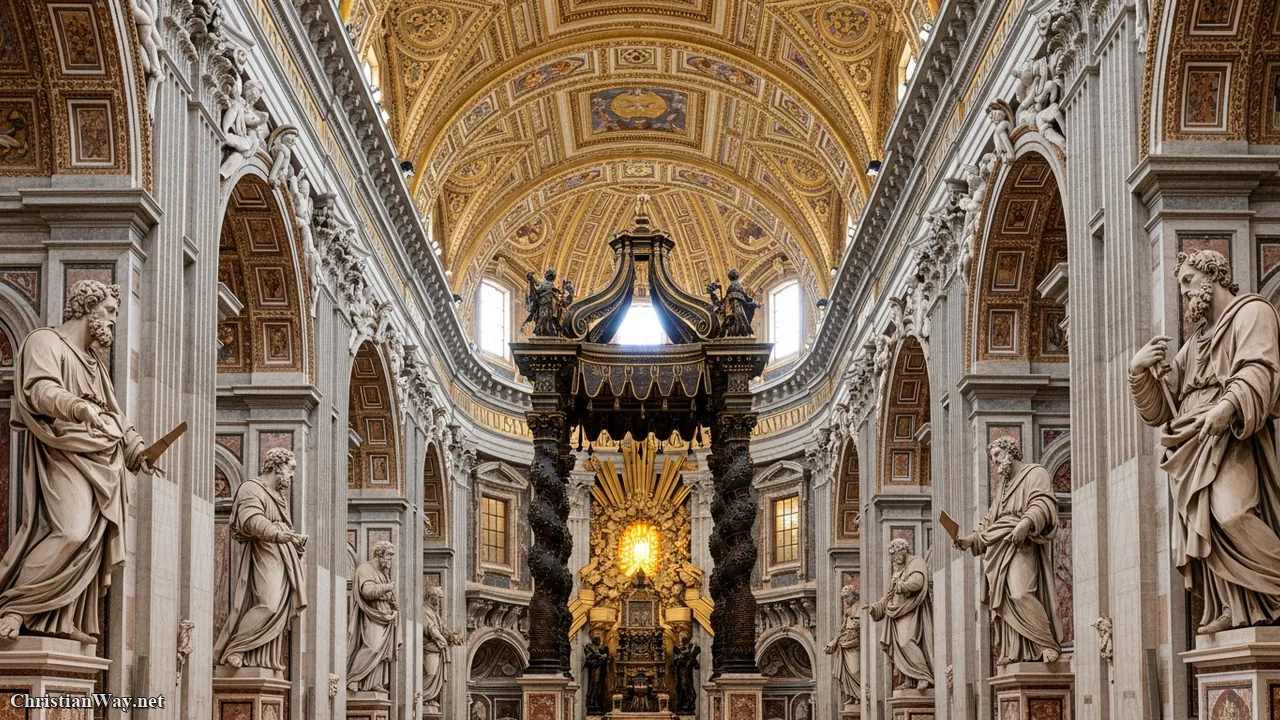
The Scene: It is the embrace of the Church. Bernini’s massive colonnade reaches out like two arms to gather the world into St. Peter’s Square. Inside, the scale is impossible to comprehend; you could fit the Statue of Liberty under the dome with room to spare. But the focal point is deep underground. Directly beneath the soaring canopy of the altar lies the simple earthen grave of a fisherman from Galilee. Peter is here.
The Theology: “Tu es Petrus”—You are Peter, and on this rock, I will build my Church. Everything in this basilica, from Michelangelo’s Pietà to the twisting bronze columns, serves to glorify Christ by honoring His vicar. It is the visible sign of unity for over a billion Christians. It asserts that the Church is not a human invention, but a divine institution anchored in history and the blood of the martyrs.
The Application: It is easy to be cynical about the institution of the Church, with its human flaws and history. But St. Peter’s calls us back to the promise of Jesus: “The gates of hell shall not prevail against it.” Standing near Peter’s tomb, we are invited to renew our loyalty not just to a structure, but to the Body of Christ. We are invited to say, with Peter, “Lord, to whom shall we go? You have the words of eternal life.”
Spiritual Highlights:
- The Altar: The Confessio, leading down to the tomb of St. Peter.
- Art: Michelangelo’s Pietà, a marble meditation on the sorrow and acceptance of Mary.
Reflect and Pray
My friends, we have traveled from the canals of Venice to the hills of Umbria, and finally to the eternal stones of Rome. But the most important pilgrimage is the one you make within your own heart.
These churches were built by imperfect people in difficult times, yet they stand as beacons of hope. They remind us that beauty is a path to God. I encourage you, if you are able, to visit these places—not just to take photos, but to kneel. And if you cannot travel, build a cathedral of prayer in your own home. The same God who dwells in the gold of St. Mark’s and the marble of Milan dwells in the silence of your heart.
May your journey be blessed.
— Fr. John Matthew, for Christian Way